Wall Street Week with Louis Rukeyser; 1037; Cleaning Up in Wall Street
- Transcript
Or. The. This program is made possible by a grant from the Martin Marietta corporation and by this and other public television stations. And. Wall Street Week produced Friday March 13.
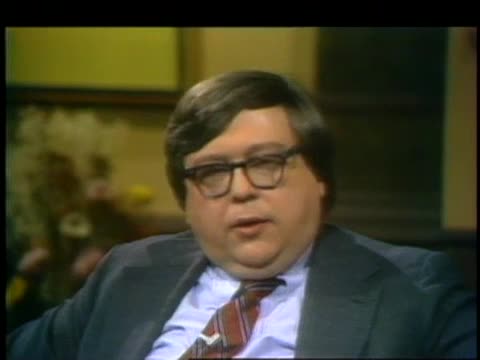
Your host for Wall Street Week is Louis real geysers. Our panelists are Frank gap below. Dan Dorfman and Robert Stovall. Tonight's special guest is Ray Dirks limited partner John Muir and company. Good evening through guys or this is Wall Street Week. Welcome back. Well this was a great week for stubborn persistence. There was for example the economy which came in with another round of statistics that continued to defy all those predictions of a double dip recession. Ever since last spring which turned out to be the only quarter of 1980 when the economy failed to grow. Doom criers who had missed in their forecasts have been warning us that we ain't seen nothing yet. But with such indicators as retail sales still gaining apparently everybody got the word but the economy which continues sluggish lead but unmistakably to advance.
And that was the stock market which according to pundits claiming infallibility was supposed by now to be in the middle of March massacre. Well it could still happen there's a lot of March Still to come. But so far it's roaring like a lion. The Dow Jones Industrial Average pushed up more than 21 points this week to its highest levels in more than two months and even flirted once again with the elusive one thousand mark. But why not. When there was so much stubborn persistence everywhere else on the scene. In Darkest Washington the Reagan administration stuck to its proposed 695 billion dollar budget. A number that in Washington is somehow regarded as lean and austere. And the Democratic leadership in Congress stuck to its view that the budget is as one senator put it cruel inhuman and unfair. Tune in next week for further surprises. And the mood even seems to have crossed the Atlantic. As the government of Britain. A country
next to which the US looks like a tax haven. Decided that part of the answer to its problems was you guessed it to raise taxes again. You don't catch them changing course on an important issue like that. In this mood of headstrong determination My guest tonight seems to fit perfectly. Ray Dirks is nothing if not persistent. For the better part of a decade he's been fighting the Securities and Exchange Commission and a fair chunk of the Wall Street establishment too. And now despite widespread criticism he's in the profitable Ficht of a new issues boom that could be the route to riches or bankruptcy for millions of investors. We'll ask him what will be up to next and how you might make a buck by following him. But first let's go to an arena that glorifies stubborn persistence. Not so much a bull market or a bear market as a mule market. And see what actually did happen this past week in Wall Street. And as the Dow Jones Industrial Average indicates the massacre
has once again been deferred encouraged by further reductions in short term interest rates the Dow charged through the nine hundred eighty level which had been something of an obstacle but faulted as it neared 1000 for the week though the Dow was up more than 21 points to nine hundred eighty five point seven seven and on the heaviest volume of trading in two months. Also pushing ahead with the broader composite indexes of the New York and American stock exchanges and the over-the-counter market all of which escape the Dow's Friday faltering and closed at their best levels since January. Alas though the suit compiled our technical market index and who wisely turned a bit more bullish last week have fallen back into what counts as the neutral zone. In other words they're not saying whether the Dow will gain the additional 19 points needed to surpass its 1981 high. I told you it was the year of the chicken. Those who hope to eat gold plated chicken were little more encouraged this week as their
favorite metal. Rose twenty five dollars an ounce in London that would still close the week below $500. The dollar in contrast fell against all major currencies hurt by the same fall in interest rates that were helping in the stock market. Well you can't please everybody. I can tell it would please me if you could tell me whether this market's going to a thousand next week. I'm not sure about next week but I'm confident going to go through a thousand next couple of weeks. It may well be next week. The consensus on Wall Street Lou is that the Dow will falter through a thousand and then all of a sudden expire drop down to 900 and conveniently allow all of the people that have been saving their billions of dollars in the money market funds to buy stocks. I think this time will go through. It will stumble around a bit and then go to a new high. Frank you mention the money market funds this week for the first time in history their assets exceeded 100 billion dollars what's the significance of that. Well first of all it means that there is real hemorrhaging out of the savings banks in the
SNL and so on which means that there's going to be that much less credit around for housing and capital investment. But to us in the stock market it means that all of this money is parked somewhere now not all of it's going to go into stocks some going to going to bonds but as soon as interest rates start to come down very quickly these people will panic and start putting pulling money out of the funds. We could see a buying panic not only in the bond market but in the stock market. The prime rate came down in some cases to seventeen and a half percent this week that's about four points below the high. Do you expect to see a significant further drop in the near future. Yeah our current sensing seems to be that the long demand out there is very very weak and I think that's a reason why rates are starting to falter and come down. Our target is about a 12 are you know my target is about 12 percent on a prime by mid year. That should be good for the stock market. Budget overall this is the second month in a row we've had a Friday the 13th is it going to be unlucky for the market is it now going to be unable to push forward in your view.
The French think Friday the 13th as a lucky day. Today the Irish are a corrective wasn't locking and you see I'm wearing a tie. Forecasting that in the US I don't think the 13th really makes an awful lot of difference to me there are four or five reasons why the stock market I think is going to be in a brilliant phase erelong Frank mentioned a few. Another one is these large takeover bids. The oil companies are going to pump another 8 billion dollars of liquidity or new money into stockholders pockets when they pay for these three metal companies out there buying assuming they're able to buy them but it's significant to investors I think that hey the smart oil companies are going to pay us a big premium over the market price for these stock stocks must be cheap. One of those companies you mention Kennicott was up $27 a share today. You had that one yesterday didn't it. Oh I missed that I didn't like the management. Then too often both these fellows are pretty optimistic. You share their view. No I'm afraid not. I think I think the market is going for it through a euphoric period
now. I believe interest rates are not going to come down very much more because the fact of the matter is the Federal Reserve has pretty much indicated it is going to keep credit tight. I also think that the market is a part of this rise is supposing that the regen is really going to get things done quickly. I'd like to see though how much of budget cutting he can really do how many tax cuts he can really put into effect. The fact of the matter is there are too many vested interest in this country I think to allow him to get through on the programs he wants. And when the market suddenly realizes he's not going to have everything he wants when we begin to see a kind of economy that really falters I think well you're going to see this market come down come down reasonably hard. I'm not looking for any four or five hundred thing I think with the. That could come down next next month to about 890 900. So you would think we'd have much more to go on the ups and I would I would think the UPS I would think we're we're pretty close to a time to sell. For the near term at least OK so we have a day off and sells I know
hopefully better than gravel. Well the jury's still out on jobs so that's why I say this is the point in the program when we usually pause for a round of viewer questions. Tonight though we're surrendering that time so that public television stations around the country are going to ask you some questions like Where is your checkbook and what's the highest number you can think of. After you've dug deep however we'll be back to our own entry ways so keep those cards and letters coming to us here at Wall Street Week Owings Mills Maryland 2 1 1 1 7. That's Wall Street Week Owings Mills Maryland. 2 1 1 1 7. Before we meet tonight's special guest Let's examine one of the most significant and controversial trends in investing in the last year. Offend with which he is closely associated. The boom in new issued. In 1980 spurred by the lowering of the capital gains tax. And some think by a rebirth of speculative frenzy the number of companies with initial public offerings of stock increased sharply to two
hundred thirty seven and they raised 1.4 billion dollars. Both records since the heady days of 1970 to. The size of these offerings varied from under a million dollars to the 101 million raised by Apple Computer which along with Genentech made the most publicized entries. The dizzy gyrations of a Genentech may well make investors ponder the performance of new issues. In fact it was a very good year for most new issues with nearly 82 percent showing again on December 30 first fewer than 15 percent showing a loss and the rest either unchanged or not quoted at all marks quite a change from the dark days of 1974 in 1975 when the number of new issues fell to 15 annually since the start of 1980. Nearly twice that number open brought out by one forum alone. Masterminded by the man we're about to meet tonight special guest writer.
Right welcome back nice to have you again. You know. I can't. Write Dirks is no stranger to controversy. The last time he was my guest he was in a dog fight with the Securities and Exchange Commission over his role in the uncovering of the equity funding scandal. A fight that is still going on. He's never been the establishment star and indeed before joining John Mayer and Company in 1976. He had been fired by six investment firms in 12 years and among the analysts he has hired since then is Jerry Reuben the onetime yuppie who now apparently shouts your pee for capitalism. And now Mr. durch is right in the middle of a new issues boom that many believe is downright dangerous for investors right. Your firm is bought out 29 new issues since the start of 1980 you've said you'd like to make it 50 even 100 want a loan. Why in your view has the climate for such offering suddenly improved so dramatically. Well first of all oh back in the 70s you know we had a bad stock market a lot of Wall Street firms even went out of
business. So there wasn't much going on in terms of companies going public in those days. I think we're back to a normal normality rather than a boom. I think the new issue market is just beginning. And when we bring out 30 issues or 40 issues a year and we think we're at the threshold of a tremendous upsurge in entrepreneurship in America and we're looking for more companies to underwrite the next few years. Right I sometimes think you would. You court controversy. You have been criticized for the quality of some of these companies and what do you say instead of saying the usual things which is we are prudent we are careful to where you say and I quote this we not only will bring out a company without any names. We will bring out a company without sales. Don't you think that that encourages a somewhat risky view of the stock market. Not really I think what we're looking for as a course is a management track record. We we want a management that can run a public company successfully. Therefore sometimes we look for a company that may not have any record of all of it not have any sales or earnings but we select the company based on the
management's track record and we go very thoroughly into the management background and we look for companies that may have an excellent record themselves but the most important thing of course investing in the market is management. Some of the biggest companies in the world fall down as you know of have fallen down over the last few years the smallest companies can thrive and the upside potential on new issues can be 10 times or even 100 times over five to 10 years. In fact though you've had some losers as I read the record and your new issues on balance have done well they're up you know average 58 percent. Right which is which is and up out of the. This has been a pretty good market. Suppose we went into a bear market. You're going to be able to survive in what's going to happen to the investors about these new issues. Oh well survive very well I think in a bear market and I think new issues will do well. For one thing there are many different types of issues we bring out we've not only brought out high technology issues some of which are speculative and entertainment issues but also insurance issues top of these that will thrive even in a recession. And I think the market is ready to accept the fact that there should be new
companies coming to the public. The public wants to buy a new issues they want to buy low priced stocks we try to price the stocks at low levels and that is attracting the public. So we're very optimistic about the new Asian market regardless of what happens to the stock market generally. The two most frequent questions about new issues are in times of question How can I judge them. And in times of greed How can I get them. Let's take them in reverse order. Can the typical small investor really get new issues. Well it's not that easy. It is true though that it's difficult for the average small investor to buy new issues particularly for the large brokerage firms many of them of course have rules against bringing out small issues in particular stocks priced under $5 a share under $10 a share. Those are the stocks of the most popular terms a new issues and if you want to buy those I would recommend the investor look for a smaller brokerage firms that specialize in those new issues and try to develop a relationship with a broker who perhaps has some good knowledge of how to get the new issues for whom are such investments suitable. I think for people in the who are working people
who are making money who are not dependent of course on on a check from Uncle Sam every day every month or so. The people who probably have anything from a few thousand dollars up to millionaires I think more importantly is what percentage should be put into issues and I would recommend anywhere from 5 percent up to 25 percent for the average person. If you're working and making money though you can invest in their wishes I think that's the best way to beat inflation. If you look at a prospectus for a new issue it will almost invariably contain so many caveats so many legal warnings that the layman is scared entirely the might of what he's read and how can you judge the good will from the bad ones. How can you tell. I think again you have to look at the track record of the management that's the best way and you can find that in the prospectus. It is true that the under full disclosure that the FCC is mandated which I think is a very healthy thing it does describe the prospectus describes all the negatives and therefore the real question is How good is the management in this management. These entrepreneurs who probably have money in the company that's another thing you should look for if the management's got money in the company own stock and it's a good manager
with a track record then I think you should take a serious look at it perhaps by that new issue. The FCC. Eventually tried to suspend you for a period because in its judgment you had told your clients news about equity funding namely that it wasn't any company at all. Rather than telling the world what's the state of your dispute now. Well do I really want a great victory about a month ago and it developed of course during that seven year period that I was funding the FCC that I had notified the Wall Street Journal before I went to the FCC and to other investors. And it also developed that the chairman of the FCC at the time Bradford Cooke was was in hot water and was eventually got into trouble for perjury and stuff six or seven times so I think having brought up the case against me they were very embarrassed and they laid it to rest pretty much about a month ago and I'm now appealing a modest censure to the U.S. Court of Appeals in Washington. But from all practical purposes I have no further problems. Why are you fighting the wrist slap. Well as a matter
of principle I feel that I did do right and also I feel it's important for security analysts to be vindicated and also to be protected from this kind of action by a government agency which I think is very unhealthy and if you were convicted of truth telling. That's right I think so. What is the story on inside information people want to know that all the time do insiders have information that the rest of people don't have and what we do about it. They do have information that others don't have it's bad when they act on it I'm certainly opposed to the use of inside information. I think it's being used a lot we've just seen it here in the last week or so particularly in takeover cases and I think the government is finally waking up the FCC is finally beginning to prosecute this type of action and it's about time. And I think the average person hopefully should not act on inside information should rely on good market advice and judgment and shouldn't really buy stocks on tips or rumors because that really can be a bad thing for himself and get him into trouble legally. So speaking of good market advice and judgment time to turn to our panel starting with I've got to thank you
the rate when I was with a life insurance company. You were one of the hottest life insurance analysts on the street. You made your reputation there. The life insurance industry has become less that attractive for most investors. What do you see ahead now. These stocks look cheap. Life insurance stocks what do you see ahead for the life insurance industry. The locks. Well the life insurance industry is as you said it's kind of in a slump. And right now I would buy I would buy life insurance companies that have terrific marketing organizations. One stock has done well and I think will do well as transport life insurance which is an especially marketing company another one is a sai group which is a specialist in special marketing programs direct mail programs and such as that. So I would buy Sai sells for just about $2 a share that might be an interesting one for people who like low priced stocks to do so. Ray in my years of observing the scene I recall that some firms that specialize in small underwriting Charles Plone more recently and then they underwrote a lot of stocks and the issues on the clients were breathing through long straws and then
both arms failed. Now you've had a few failures like the newspaper New York final. What are you doing that's different so you won't become another Charles plonk for example. Well first of all we have a very substantial Organization of Security analysts I'm a security analyst myself. We have about 40 security analysts who look at these issues and we also have a substantial corporate finance department consisting of 10 people we do thorough investigations on these companies. We have a compliance department we have all sorts of protection. Of course there's no full protection against fraud as I found out an equity funding so. But when you bring out 30 issues we would expect that the bulk of them of course to go up very substantially over a period of time because there are a small emerging rapidly growing companies and to protect ourselves we just have to get to know the management and get to know the companies as well as we possibly can with security analysts and good corporate finance people we can do that. You know it's right he'll tell you made to a shocking state you told him you should put anywhere from 5 to 25 percent of your investment assets
into new issues the same new issues are the ones God killed in 69 and 70 when Dad 90 95 to send someone out of the business. I mean are you really touting something that you're doing. Well I'm doing new issues and I believe in them. I think for the average investor who's making some money should invest a fairly substantial amount in their wishes because these are the company's going to grow in the future inflation running the way it is 12 15 maybe higher 12 or 15 percent. You've got to figure out a way to beat it. That's the way to beat it is to put your money behind managements who have a lot of money at stake in these companies go with the managements. Who are entrepreneurs. I prefer to invest in companies who have the fellow that founded the company running the company and who's got his money in the company and I think that I don't think it's very dangerous to put money with people like that this is the American way it's an age of entrepreneurship and I think this is a time to get in and there were issues where you are very persuasive fellow but I have a feeling there's a debate going on between ray direction Ray Dirks just over a year ago you published a book in which you gave very conservative advice you told people to pick stocks sell and
less seven or less times their earnings. Stocks selling for less than their book value and stocks whose companies were growing at 14 percent annually. Right. These new issues don't meet those criteria. Well I want to be direct and I believe one of them does we brought out an insurance company called security America Corp which sells around 7 has earnings about $2 and growing rapidly. But I would say that that the other another 50 percent of one's money should go in issues like that and I'm recommending some of the old conservative companies stickman surance companies like Hanover insurance and travelers and Aetna and a certain portion of one's portfolio should go into that. But my latest book as you mentioned has you when tells you when it seems conservative and I'm going to come out with another book called How to get rich before you get old and I think that will talk more about new if you'll cover the entire market. Will that be the same day. I think so yeah. You're darn good at this you've talked about the insurance stocks what other companies in the general market like that do you. Well I like some of the airline stocks Frontier Airlines U.S. Air is another
company starting up called mid-Pacific airlines in Hawaii which I think has a lot of future i particular like oil and gas exploration companies particularly the U.S. oil and gas companies and some of those include basic science systems I like some of the smaller companies low price such as American Pacific at $2 and Griffen petroleum around seven I think the U.S. oil and gas companies are a marvelous way to people for people who invest and make a substantial amount of money there's tremendous leverage in that business. I also like some technology companies of something called digital switch for example has a tremendous future around $7 and around 14 so I I'm looking at a wide variety of companies and different industries also the medical group that was one of the one of the companies you brought out was the digital that was that was a benefit that's different like we did on the right that and we're also following companies in the medical group we have a medical technology newsletter which has some interesting companies in it. One company we like is superior care. Another one that med Serco which provides health insurance is very. But I think a very unique way.
And as it is the answer I think to national health insurance that's another $3 stock obviously I like low priced stocks low and I think on the theory that they will eventually become high priced. That's correct. Yeah but they have to have value too. They're got to stop you're a dirty man who is bubbling with optimism and thinks that the happy days are here to stay for a while. With the usual cautionary notes that even a bright guy like Ray Dirks could be wrong I hope you'll be back with us again next week when my guest will be a leading expert on what many believe will be a leading beneficiary of Reagan's economic policies the banking industry. He's author So there I will try to find out if you want to put your investments where your money is to be an interesting evening. You can bank on that. Meanwhile this has been Wall Street Week. I'm live with that tonight. To obtain a written transcript of tonight's program. Send $1 to transcript.
Wall Street Week Owings Mills Maryland 2 1 1 1 7. That's $1 a transcript. Wall Street Week Owings Mills Maryland 2 1 1 1 7. Allow 4 weeks for delivery. Maryland residents include five cents sales tax. Wall Street Week is produced by the Maryland Center for Public Broadcasting funding for this program is provided by a grant from the Martin Marietta corporation. And by this and other public television stations the Maryland Center for Public Broadcasting is Solti responsible for the content of Wall Street Week.
- Episode Number
- 1037
- Episode
- Cleaning Up in Wall Street
- Producing Organization
- Maryland Public Television
- Contributing Organization
- Maryland Public Television (Owings Mills, Maryland)
- AAPB ID
- cpb-aacip/394-3331zpg5
If you have more information about this item than what is given here, or if you have concerns about this record, we want to know! Contact us, indicating the AAPB ID (cpb-aacip/394-3331zpg5).
- Description
- Episode Description
- The man who blew the whistle on WS's biggest scandal in '73 tells how he did it and discusses stocks. Ray Dirks, John Muir & Company - Guest; Robert Stovall, Dan Dorfman, Frank Cappiello - Panelists
- Series Description
- "Wall Street Week is an educational talk show hosted by Louis Rukeyser, who provides viewers with information on finances and the economy and conducts discussions with experts. "
- Broadcast Date
- 1981-03-13
- Asset type
- Episode
- Genres
- Talk Show
- Media type
- Moving Image
- Duration
- 00:26:24
- Credits
-
-
Copyright Holder: MPT
Producing Organization: Maryland Public Television
- AAPB Contributor Holdings
-
Maryland Public Television
Identifier: 45551.0 (MPT)
Format: Betacam: SP
Generation: Master
Duration: 00:26:46
If you have a copy of this asset and would like us to add it to our catalog, please contact us.
- Citations
- Chicago: “Wall Street Week with Louis Rukeyser; 1037; Cleaning Up in Wall Street,” 1981-03-13, Maryland Public Television, American Archive of Public Broadcasting (GBH and the Library of Congress), Boston, MA and Washington, DC, accessed April 5, 2026, http://americanarchive.org/catalog/cpb-aacip-394-3331zpg5.
- MLA: “Wall Street Week with Louis Rukeyser; 1037; Cleaning Up in Wall Street.” 1981-03-13. Maryland Public Television, American Archive of Public Broadcasting (GBH and the Library of Congress), Boston, MA and Washington, DC. Web. April 5, 2026. <http://americanarchive.org/catalog/cpb-aacip-394-3331zpg5>.
- APA: Wall Street Week with Louis Rukeyser; 1037; Cleaning Up in Wall Street. Boston, MA: Maryland Public Television, American Archive of Public Broadcasting (GBH and the Library of Congress), Boston, MA and Washington, DC. Retrieved from http://americanarchive.org/catalog/cpb-aacip-394-3331zpg5