Wall Street Week with Louis Rukeyser; 2119; A Hot Portfolio Manager
- Transcript
Lord. LAURA. Wall Street Week With Louis Rukeyser is made possible by the Corporation for Public Broadcasting and by the financial support of viewers like you by the travelers over 40 million Americans benefit from our
insurance investment services and managed health care. The travelers buy financial guarantee insurance company helping to provide investor security. FDIC Triple-A in a civil bond insurance. Tomorrow's security and by Prudential Securities the knowledge and resources you'll need to help make intelligent investments rock solid market wise. Produced Friday November 8. Our panelists are Alan. By James Grant and William gross. Tonight's special guest is Elaine Garza reli executive vice president. Shearson Lehman Brothers. Good evening I'm Louis Rukeyser This is Wall Street Week. Welcome back. Well this was the week when the American public finally had a chance to say whether it preferred the Democrats or the Republicans. And the answer came from the nation's
polls loud and clear. Neither of the above. The spin control audit some both sides of the political fence was spinning in their partisan soup's trying to make believe they hadn't heard the message. The Democrats professed to be vindicated and victorious because Harris Wofford walloped George Bush's former Attorney General Dick Thornburgh in the Senate race in Pennsylvania and the Republicans pretended to perceive their own landslide in their sweeping gains in the New Jersey and Virginia legislatures. And in the Mississippi governor's race but in the privacy of their own cages politicians on both sides confess that the only reason they did as well as they did is that the voters were not given an opportunity simply to vote no. Off year elections are traditionally considered a safe time for voters to register loud protests without worrying too much about who's replacing whom. And so it seemed the luckiest incumbents were those who didn't have to run this year and face the
wrath of voters clearly fed up with ever higher taxes. A standstill economy and a political status quo they perceive as smug and self-indulgent. Ironically from the economy's point of view the national verdict a plague on both your houses left that status quo pretty firmly in place in Washington and does seem to diminish the chance for dramatic action to improve the economy from either side. And so the stock market after spending three days trying to assess how things had changed made the profound decision that they haven't and the Dow Jones Industrial Average ended the week precisely to the penny where it closed the day before the election. The bulls and bears seem to be at the same standoff as the Democrats and the Republicans and with about as much public approval. Meanwhile back of the economy the news was neither as grim as the Democrats had contended nor as buoyant as the
Republicans kept hoping. Overall things remain glum so glum indeed that the Federal Reserve move the day after the election with its most sweeping interest rate changes since February dropping both its discount rate and the federal funds rate and inspiring the nation's banks to do the same with their prime rates. It was the fifth straight wood auction in the discount rate which at four and a half percent is now the lowest in nearly 19 years. The only thing tight about current Fed policy is the condition of those who keep drinking to each lowering of rates yet weak as the economy is there were more signs that it is not collapsing. Median home prices for example one of the chief concerns of millions of American families were on the rise again in the third quarter. The productivity of American workers scored its first increase in a year and even the nation's terrified retailers who keep fearing that this will be the year they cancel Christmas reported a modest improvement in their October sales.
All in all though it's a good thing the economy wasn't a candidate in this week's elections. It would have lost too. We tonight will talk with the most influential woman in Wall Street. Once again tonight will be defining the conventional wisdom with her latest call. But first let's look in on the conventional confusion in the stock market. The Dow Jones Industrial Average lost just under 11 points on Monday and spent the rest of the week deciding that nothing much had changed. The blue chip index ended the week right there where it closed Monday at three thousand forty five point six to the broader markets actually all finished up for the week with the over-the-counter composite showing the way to new all time records. No such drama among our ten chief elves who didn't budge from their previous week's reading a plus one on the market's technical outlook for the next six months. The bond market provided much of what drama there was this week. First worrying that nobody wanted the government's debt any more then
deciding that some folk probably did and ended the week with a surge for the highs of a month ago bringing in long term interest rates down again. And in case you have an active fantasy life know that in a survey for Sports Illustrated magazine the favorite want to be professions for male dreamers were in order athlete business leader and musician. While women chose singer author or doctor. Why doesn't anybody fantasize about being an economic commentator any more. Jim Grant you have been our biggest band all year and it's been a tough year for your forecasts. I think finally looking down things are wonderful in the world as I see it is in the throes of a credit contraction. What made the 80s go was that the marginal loan was extended by the extra banker in this cause the extra transaction to be consummated at all to the good of the GNP. What is happening now is the opposite the marginal banker has
learned to say no. And as much as growth occurs at the edge of the margin this seemingly subtle change has had important consequences and I think we are in the throes of a kind of financial Lyme disease. Certainly business line is easy and you know it's not fatal but it is debilitating and chronic. And I think that we are in for a lot more of it. President Bush tried to jawbone your marginal banker to be the looser in granting loans was that successful. No I don't think it is I think there are compelling financial reasons for this contraction in the consumer side you pay 19 percent to borrow and you earn 5 percent or less on your savings so there is every reason not withstanding the president to pay down debt. There are similar compelling reasons other sector of the economy as for real estate we still have a 20 percent vacancy rate and what fills buildings is not tax cuts but population. So given that given the scenario you've just outlined. To what extent do lower rates help. I don't think lower rates help much and I think that's going to be the continuing surprise what the Bulls would have
us believe is that we can lower rates indefinitely perhaps stopping at zero and perhaps not. But Mark denominated yields are one or twice what dollar diamond yields at nine and a half percent almost in deutsche marks and four and a half percent in dollars. So right now I think we are pushing the edge of that and there might be consequence in the foreign exchange market recently. Bill Gross you like to watch the interest rate market constantly What's your feeling about what's going on there. Well I think the critical element in terms of what John was talking about it has to do with a long term rate as opposed to the short term right. You mention that the Fed would lower in short term rates and long rates have done well this week but they're still at a relatively high level at 8 percent or so. I think what the Fed and what Mr. Bush needs to do is lower the long term rate to get housing started and to get the cycle moving as it has in the past. Well the Federal Reserve has pretty tight control of the short term rates but it's been less effective in the past and controlling long term rates how would you bring down long term
long term rates are dependent substantially on inflationary expectations what the economy needs what investors need as a perception of inflation for the next three four five years that stabilizes in the 2 to 3 to 4 percent area of long term investors are confident that we're not seeing another inflationary spiral. And I think that's indeed the case then long term rates stand a good chance of moving down substantially from here. It was the talk in Washington about getting the economy moving Were you in the bond market. I think it does the bond market is worried about fiscal stimulus they would much prefer to see a monetary stimulus a lower short term rates which in terms of an arbitrage level might even lower long term rates as well. But any sign of fiscal stimulus any sign that they may be trying to rejuvenate the economy be a fiscal push is a danger sign for the bond market. Well we've been for the half percent discount rate theoretically was another four to have points to go but how low realistically can we go.
Well we can only approach a certain point beyond which investors start to flee to foreign markets as Jim was alluding to. Once we move down to 3 or 2 percent if you want to move down to those levels I think that's a little ridiculous but if we did then foreign then our money might flee to Germany to France to other markets where rates are much higher and so that's the danger point for the dollar. ALAN BOND What's your assessment. Well I remain optimistic very optimistic for the direction of that with the prices I think we saw some very good news this week in the sense that the retail sales numbers were slightly better than most had anticipated. Also we get some better than expected news from IBM. The blue chip bellwether and just think that we've seen the worst in earnings in that they've trotted out we're going to see some improvement. And in fact I would look to overweight the retail sector because I think that that's what's going to lead the way out of this recovery as it's led the market in the first half. Well you alluded to two different groups the technology group which had been despondent for a while had a lively revival this week led by that IBM and it was the retail group depends on that mythical American consumer regaining his or her confidence. When do you think that's really
going to happen. Absolutely and I think that the consumer is going to regain that confidence over the next three to six months. I mean as you as we all know two thirds of the GNP comes from the consumer and we need that kind of momentum to get out of this to get the economy jump started. I think we're going to see that over the next three to six months as the spending patterns improve as a direct result of the lower rates. So things were looking up both for the economy and the markets in that you too. Absolutely. Let me well in any event balance it is time now to vote for our viewers. Jim Grant what guidance can you give to my fellow men of St. Louis who writes me all I have in my bag of tricks are shares in American gold and precious metals. Any chance of these going up in my lifetime. I'm an old bag of 70 and would like your advice and suggestions as Hourman gold is the money the central banks can't print is a hedge against Alan Greenspan and Nicholas Brady and the entire Democratic National Committee. It is an asset class as it's called. That
is almost universally scorned and derided. And my thinking is unprofitable to date is that gold has seen its worst and as for aging it's been a devastating year I began the year age 23 and now look at me. And so I would advise women to stand pat and to sell her gold at much higher prices to the doubters. If you're right she's just entering her golden years. Bill grows a number of us are concerned about the viability of variable annuities offered by insurance companies. So for the benefit of Chris Crawford of Scottsdale Arizona and to leave Oakland California and some others would you explain exactly how these annuities work and give us your view of their safety and their prospects. Well I don't know what the law is simply a stream of future payments a variable annuity has depended to some extent on the success of the stock market but in any case a stream of future payments that were down to their benefit either through their lifetime for a certain period of time whatever the problem with annuities at the moment is that most of them are issued by insurance
companies and some of the insurance companies all of executive life etc. are on very shaky ground and they stand to lose a portion of their annuities that they purchased in the past. I would suggest to be very careful and to approach an annuity much like a bond. Make sure that the life insurance company that issues the new ideas carries an A or higher rating. You can ask your broker or your insurance agent exactly what the rating is. It's a Moody's rating a Standard Poor's rating or rating by best income. Ok I'm done how would you respond to Vicky Hough of Wilton Connecticut who writes me as follows. Recently in the office where I'm employed there have been extraordinary number of pregnancies and births. I've also noticed the same phenomenon in various supermarkets shopping malls and other places where people gather. Are we experiencing a new baby boom. And if so what stocks would your guest suggest to take advantage of this expansion. Well Lou that's an industry that's caught my attention most recently as we're expecting our first little stock picker very
soon. I think there are a number of the birth rate has actually grown fairly significantly since 1907 and there are a number of ways to play that industry on the small and it depending on how much sleep you want to get at night there's a little company down south called Kitty products that manufactures children's infants assessor IIS and furniture companies groanings at about 64 percent of the last year or so they on the other end of the scale there are big companies like Gerber that have Buster Brown for the shoes which is done very well growing earnings at about 30 percent. And also allows you to play the food industry in the multinational aspect of that. There's also stride right which is a very attractive growth stock. So there are very many possible opportunities for her to invest in. We look forward to welcoming the new panelist. Now if you have any money questions with answers you would absolutely diaper. I'd be happy to pin down our panelists and get to the bottom of things. And remember it's you and me baby right here at Wall Street Week
Owings Mills Maryland 2 1 1 1 7. That's Wall Street Week Owings Mills Maryland. 2 1 1 1 7. Now before we meet tonight's special guest who has identified what she believes are 13 key stock market indicators 11 of which are now bullish in their second highest reading ever. Let's see both what they are and how she rates each of them right now as she cooks with a baker's dozen. First she looks at the earnings momentum of the Standard Poor's 500 stocks which she currently rates as bullish Next comes the momentum of the American economy which by her tests is coming off the bottom and now rates bullish. Then she measures the ratio of coincident indicators which track today's economy with lagging indicators which give a better picture of where we've been with the ratio currently up but not peaking she calls it bullish. Since people need money to buy stocks she counts up the free reserves in the banking system. Today she says this source of future buying power is Bush. The yield on three month treasury bills is favorable by her account
since it is still trending down. So that's bullish too. It's also a good sign she believes when the three month T-bill rate remains below the Federal Reserve discount rate even though that relationship change this week those rates are so close that she still regards this area as bullish. Similarly the tumbling rate on so-called federal funds that paid by banks on overnight loans among themselves also merits a bill with short term interest rates well below long term rates. Talk of still another book and she checks the momentum of growth in the money supply which she currently figures is rising and bullish. And if money is being pushed out faster than the economy is growing She figures that's a positive for the stock market. So today she calls that ratio bullish. Her heaviest weighted indicator of all compares the cash flow yield on the S&P 500 stocks with the return the average investor could get from a combination of three month Treasury bills and 30 year Treasury bonds. That when she says is now clearly bullish. With
valuation so important at work he tries to assess whether price earnings ratios on stocks have gotten ahead of themselves. She's less sanguine on that indicator which he rates only neutral. Similarly like most analysts she gets uncomfortable when too many people agree with her. So she checks a number of indicators of investor sentiment. The current level of skepticism as she sees it is no better than neutral. Still 11 out of 13 bullish to neutral and not a bear in the house. Is this lady on the level. To find out let's go over now and meet tonight's special guest Alain guys directly. Elaine welcome back. Nice to be always a pleasure to have you. Well anger as well as Wall Street's top rated practitioner of the art of quantitative analysis which sticks to the numbers and tries to take the emotion out of investing their own skill at numbers crunching as an executive vice president yes and Lehman has resulted in some spectacular calls lately including a well timed sell signal in 1907 and a neat double last year getting clients
first out then and in less than two months. He's tonight making a third appearance as my guest on this program. Elaine the financial press this week was full of predictions that the stock market is due for a bad tumble. You seem to have the opposite view. You see no chance of a sharp sell off here. I see very little chance that selloff it would exceed anywhere between 4 percent and 7 percent. I mentioned that this was the second most bullish meeting you've ever had when was the most bullish most bullish reading was last year. Toward the end of the year when the indicator shot up to 99 percent put the numbers on it how high would you expect the Dow to go based on your forecasts now. Well I have four valuation measures and they're each saying something different but if you took the average of all of them together and I look at the three month bill rate I look at long term interest rates. The S&P 500 earnings yield and the S&P 500 cash flow yield. And I have four different relationships and the worst gain is 34
50. The best gain is 4000 This is now within the next six months to 12 months. The next best gain is forty one hundred in the average. And this is as of the close in interest rates today thirty seven fifty five. Why do you think more people are not bullish. Well my indicators Usually when people are bullish in cash levels are very low. That's the time when I get a sell signal. When the economy is doing well when we're near a peak in the economy that's the worst time for the stock market and we're near the troughs in the economy like we are now. That's the best time so you really feel totally opposite of the indicators. Somebody is watching and says gee maybe she's right. But then this time where would you put money. To think of it where the stocks you would like this point. Well I like a lot of cyclical industries those industries that are tied to the economy. Paper industry looks terrific. Stock like Meade Corp.. I like
technology. Apple Computer is corrected quite a bit that looks excellent. I also like the tobacco industry Philip Morris and this is the first time I've like that in a while. And in the soft drink industry I like PepsiCo. And the first time in three years I've just upgraded a new industry life insurance it's the cheapest it's been in 10 years in the stocks tend to move before the earnings by a full year. And there we like capital holding. It was the usual warning that even though I'm going to strike out now and again what's your economic forecast as part of this how strong an economy do you. I just ran this two nights ago the new simulation on the economy and what we were thinking of course is going to be a weaker recovery than normal 3 percent real GNP compared to a normal recovery which is about 6 percent. But this is really interesting the slower the economy now the better it is for my models. The reason is that the bull market is now stretch out another six to nine months than what I had originally thought because we had a peak year to
year you know real GNP occurring in the second quarter of 92 and now it's not likely to occur until the third first quarter of 1903. So when the economy peaks it's bad for the stock market that means we can have a full year of a bull market from here. Sounds like a great parade but now for a little rain let's start Starting with them that lead to your indicator struck me as a really interesting one is the valuation level which is bullish and also the monetary stuff which is also bullish. How can you be bullish on the valuation of the Dow's on top of the day when it's at 30 times trailing earnings and have you bullish about the monetary climate when for the first time in postwar experience you're having actual contraction in m2. That's a good question. First of all on the valuation I found over the last over all the cycles that I study the valuation is different all the time. If you're in a recession the stock market sometimes looks out two to three years in terms of earnings gains when you're in a
third or fourth year of recovery the stock market sometimes only looks out a month or a quarter. So to look at the earnings now and they're also included in write offs that 30 times earnings. You've got to take write offs out in the correlation to the stock market. Dan is 92 percent versus reported earnings it is only 62 percent. And money supply M1 seems to be doing well that's what I look at. Len let me follow up on your comment on the economy. What if the economy exhibited slow growth for the next several years as opposed for the next several quarters and corporate profit growth was slow based upon that would you still be bullish on just I guess because that's what we're assuming we're assuming with the unwinding of debt that has to occur because the debt as a share of GNP is the worst since 1929. So we have to unwind that debt for the next four to seven years. The potential GNP growth will be close to a percentage point lower than it would have been without all this debt. But the slower the gross to the better it is for inflation the better it
is for inflation the better it is for the stock market in the bond market. So it's bullish for financial markets. Elaine for the individual investor who has been out of the stock market for much of this year and have the money in fixed income securities at one point given that they share your opinion on the outlook for the stock market at what point would you get into the stock market and how much should they look to put into this to the equities markets. Well I would say stocks and bonds are really the only place to be cash at 4.6 one percent is trash and real estate you're not going to get much of a return on so I would really overweight stocks close to 80 percent in bonds long term bonds close to 20. Very little cash 1 percent or nothing. Alem What's what's the other side what could change that would change your forecast. What could change the Fed can make a major mistake. And that's what happened in one thousand twenty nine that's why we had a depression. They allowed the M-1 money supply to fall by 50 percent which is not happening today. If they make a major mistake if the Fed begins to tighten and we don't recover and I think if they tighten that would be the only thing that would prevent
it. I don't expect a correction in the stock market greater than 4 percent to 7 percent unless one thing happens and this is the only thing we have to watch at this stage of the cycle. And the three month bill rate goes up to 6 percent and it's 461 today. That would be the time when we'd have the big correction but until then we don't predict that's going to happen for about a year or so. Well you're obviously sanguine The only other time you mentioned stocks on bonds. What's your bond forecast of a late trading range between seven and eight and a half percent on the long bond for the next year. Thanks very much. Language as well as usual outspoken clear cut and surprising to a lot of people will come back and check you on this one as as we have in the past thanks to the panel. Hope you'll be back with us again next week. They're going to be talking with one of America's top free enterprise blacks highly independent economist who regularly defies the conventional wisdom of most black politicians and other so-called community spokespersons he's Walter Williams And you can bet it will be alive leaving it right here.
Meanwhile it has been Wall Street Week. I'm Louis Rukeyser. Good night. Wall Street Week With Louis Rukeyser has been made possible by the Corporation for Public Broadcasting. And by the financial support of viewers like you by the travelers over 40 million Americans benefit from our insurance investment services and managed health care. But travelers by financial guarantee insurance company helping provide financial strength security liquidity FDIC triple-A bond insurance tomorrows security and by Prudential Securities the knowledge and resources you need to help make intelligent investments rock solid market wise for a printed transcript of this program. Send $5 to transcripts Wall Street Week With Louis Rukeyser Owings Mills Maryland 2 1 1 1 7. Transcripts are also available to subscribers of the Dow Jones news retrieval service.
From. Wall Street Week With Louis Rukeyser is produced by Maryland Public Television which is soley responsible for its content. This is PBS.
- Episode Number
- 2119
- Episode
- A Hot Portfolio Manager
- Producing Organization
- Maryland Public Television
- Contributing Organization
- Maryland Public Television (Owings Mills, Maryland)
- AAPB ID
- cpb-aacip-394-21ghxbm1
If you have more information about this item than what is given here, or if you have concerns about this record, we want to know! Contact us, indicating the AAPB ID (cpb-aacip-394-21ghxbm1).
- Description
- Episode Description
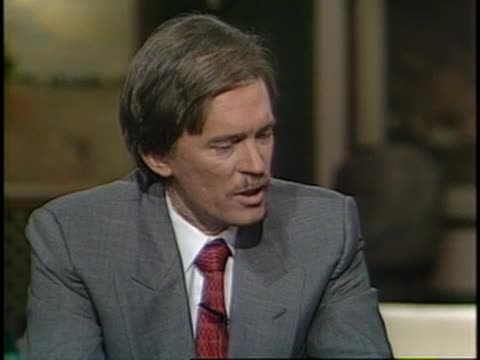
- We look at the state of the market with one hot money manager. Elaine Gazarelli, Shearson Lehman Brothers - Guest; Alan Bond, James Grant, William Gross - Panelists
- Series Description
- "Wall Street Week is an educational talk show hosted by Louis Rukeyser, who provides viewers with information on finances and the economy and conducts discussions with experts. "
- Broadcast Date
- 1991-11-08
- Asset type
- Episode
- Genres
- Talk Show
- Media type
- Moving Image
- Duration
- 00:28:29
- Credits
-
-
Producing Organization:
Maryland Public Television
- AAPB Contributor Holdings
-
Maryland Public Television
Identifier: cpb-aacip-5a67e19c11a (Filename)
Format: Betacam: SP
Generation: Master
Duration: 00:26:46
If you have a copy of this asset and would like us to add it to our catalog, please contact us.
- Citations
- Chicago: “Wall Street Week with Louis Rukeyser; 2119; A Hot Portfolio Manager,” 1991-11-08, Maryland Public Television, American Archive of Public Broadcasting (GBH and the Library of Congress), Boston, MA and Washington, DC, accessed July 22, 2026, http://americanarchive.org/catalog/cpb-aacip-394-21ghxbm1.
- MLA: “Wall Street Week with Louis Rukeyser; 2119; A Hot Portfolio Manager.” 1991-11-08. Maryland Public Television, American Archive of Public Broadcasting (GBH and the Library of Congress), Boston, MA and Washington, DC. Web. July 22, 2026. <http://americanarchive.org/catalog/cpb-aacip-394-21ghxbm1>.
- APA: Wall Street Week with Louis Rukeyser; 2119; A Hot Portfolio Manager. Boston, MA: Maryland Public Television, American Archive of Public Broadcasting (GBH and the Library of Congress), Boston, MA and Washington, DC. Retrieved from http://americanarchive.org/catalog/cpb-aacip-394-21ghxbm1