Wall Street Week with Louis Rukeyser; 1521; W$W's 15th Anniersary: America's Mind on Money
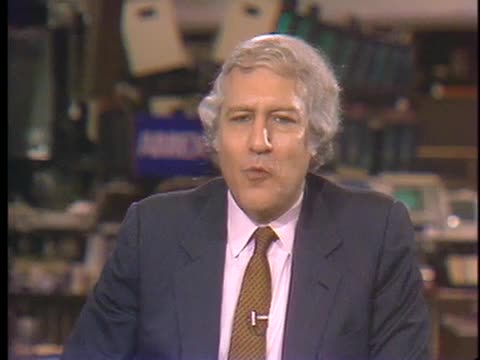
- Transcript
The. Wall Street Week With Louis Rukeyser brought to you by this and other public television stations and by grants from the Hilton Hotels Corporation Americas business address and Conradt international hotels a subsidiary of USA competition makes American business except Prudential based securities and investment firm with rock solid resources that's leading the way to the Future for Investors and disparate corporations providing high technology computer based system solutions to the complex problems of business
industry government and national defense from the American Stock Exchange produced Friday November 22. Our panelists are Frank cafi yellow and Carter Randall. Tonight's special guest is Walter be Wriston former chairman of Citicorp the City Bank. Good evening. I'm Louis Rukeyser. This is Wall Street Week. Welcome back. Wall Street you're a sentimental old fool. And I love you. I mean talk about knowing how to give a guy a perfect anniversary present. Here we are tonight for a very special occasion on the floor of the American Stock Exchange in New York. Not as you will already keenly have observed in Owings Mills Maryland to celebrate the 50th anniversary of Wall Street Week. And did the Big Apple
coldly close its core to us that it spurn our little anniversary and haughtily ignore our humble festivities. Not on your fiscal stereotype. Tonight as we gather to think back with affection and occasionally with horror on a fabulous and bizarre decade and a half in the world of televised money the so-called hard hearted capitalists who congregate in these precincts have lit some spectacular commemorative candles for us including at this very moment the highest levels ever recorded for the Dow Jones industrial average and a bundle of other market indexes in all the days since the lads started trading securities under a buttonwood tree near here. Two centuries ago and I want you to know Wall Street that we appreciate the thought the thanks I ever doubted that you were just a bunch of soft old sweethearts. But then come to think of it a grateful nation does owe us a one vote of thanks for what we've accomplished for the American
economy since Wall Street we first went on the air November 20th 1970. Consider some of the problems the nation faced then that no longer need trouble is today. First was the budget deficit. We had had a small surplus in 1969 for a heartening change. But on November 20th 1970 the worst news was that the government was willing to permit what one headline called a large budget deficit. How large. Why. Possibly it was set as high as 15 billion dollars. Now I ask you when's the last time you heard anyone in America worrying about a $15 trillion deficit. That's OK. You're welcome. Other creepy echoes of today's news reverberated through that long ago Friday. Bond prices staged their biggest advance in 13 years. The prime rate was cut following on the heels of a reduction in the Federal Reserve's discount rate and Americans were concerned about
productivity growth inflation and job. All problems long since put to rest as I'm sure you know is that economic nirvana wonderful. No wonder they grateful tonight we're going to review on tape and film some of the more awesome of the economic events of the last 15 years and talk absolutely live with the man who had such a key role in bringing change to the financial life of the average American and his or her checkbook. Citibank's Walter Wriston. But first let's put to rest all the mean things we've ever thought about Wall Street and go to the party those sweaty pies put on for our 15th anniversary. The Dow Jones Industrial Average which has now risen close to 170 points in two months. Set the pace by establishing new altitude marks on Monday Thursday and Friday. Lofted both by sentiment and by continuing evidence that interest rates and prices are behaving rather beautifully and that the
economy is not after all evaporated for the week. The Dow soared another twenty nine points to fourteen sixty four point three three. The New York Stock Exchange and Standard and Poor's 500 composite joined the Dow in the ionosphere of new records while the Amex and over-the-counter indexes are closing in on theirs set in 1983. As for ourselves they're down to minus 1 on their technical market index which the little fellows still rate no worse than neutral and it make sure that everyone was happy this week. Even gold and silver rose a tad. In this week of benign summitry it seemed appropriate to bring with me to New York. The two panelists who have appeared most often on Wall Street Week and to ask each of them to tell us now the most significant change he has noticed in the world of money over the last 15 years. Thank you. I think the most significant change Lou has been the wide variety of financial instruments available
to the average investor. In 1970 we had bond stocks a few options. Today we not only have those but we have varieties like Jenny Mae Sally maze. We have financial futures. It's just like a dazzling menu for hedging for anything. On balance I think it's good or bad. I think it's good. It's given us a lot of alternatives that it's you to hedge portfolios It's allows you to leverage. I think in the long run it's going to be good. Short term is very volatile for the market short term. It's made the markets more dangerous caught around what have you. I think there have been several changes Lou. One of course is that institutions have been more important in the marketplace than individuals and the individual has been out of the market generally speaking but several other things we put emphasis on investing for inflation or disinflation as opposed to grow stocks. We have done a lot of farm investing I think has become a world market rather than a domestic. And many many other things. You agree with Frank that it's become riskier. I think it's become
riskier. I think it's become more volatile. Certainly interest rates and market value prices have become much more volatile. All the more reason people have to keep tuning into Wall Street. Exactly and how to make you really feel better about life. Let's review the numbers we check each week and see how they've changed over 15 years. The Dow Jones Industrial Average stood at seven hundred sixty one point five seven. The night we first went on the air. The Dow has had its heart stabbing moments since then as we all know so well. But it now rests more than 700 points higher at fourteen sixty four point three three and in percentage terms. Every other market index has outstripped the Dow with the most impressive 15 year performance right here at the Amex whose index has more than quintupled. And we thought you might enjoy this summary of all the indicators reported by ourselves and their technical market index. On balance you'll see their advice has had a
bullish bias which given what's happened to stock prices in that time is certainly a relief to report. But despite all the charts and graphs and Wall Street not to mention the impressive three piece suits the securities markets can never operate in a universe of their own. As we found out all too often in our weekly get togethers. Over most of the last 15 years the headlines in the world of money were dominated by the war against inflation. And its many economic casualties. Meanwhile presidents from Nixon to Reagan kept consoling us with assurances that our woes would soon be behind us. In August 1971 with prices rising about as rapidly as they are now. A rate today considered swell but then deemed intolerably high. Richard Nixon came up with the popular non-solution of wage and price control. Three years later the rate of price increases had tripled to 12 percent.
Nixon was out and Gerald Ford produced the fascinating new weapon of wind buttons which was supposed to whip inflation now. But didn't. Jimmy Carter in turn blamed inflation on everybody from the sheiks of Annabi to the Visa card. Tried no fewer than seven different though one last ineffectual programs and saw inflation reach its highest levels of the decade. And so in 1980 with 7 percent unemployment and two straight years of double digit inflation. Carter's opponents scored with a simple question Are you better off and you were four years ago the question worked but that didn't mean that the new guy had all the answers either. In the end it took the Federal Reserve Board to contain the dragging of inflation with a painful squeeze on the money supply that sent the U.S. into its worst recession since the 30s at its fourth and little more than a decade.
Next though it was the pessimists turn to be surprised as the economy staged a strong and sustained recovery. But who would have thought that the engine of expansion under Ronald Reagan would be fueled by a record supply of red ink as the great economize or presided over budget deficits whose total surpass those of his 39 predecessors combined. And it certainly wasn't what he had promised before reaching the White House. What you gonna do after the war. You. Told. Him for times. I hear it lots more. I'm going into the surplus business. But if the surplus business slipped ever more distantly into the future. The Reagan Years clearly we're far from the B-movie remake. Many had predicted a renewed sense of national pride extended to the economic realm as well.
Young people no longer routinely sneered at the thought of capitalism. The doomsayers proved dead wrong on energy. With gasoline not only plentiful today but in real terms. Actually cheaper than it was 30 years ago. The US dollar saw the world over because of the strength of the American comeback and the high real interest rates prevailing here resumed its position as the global premier currency. Though that dazzling turnaround created severe price problems for American exporters and contributed to a record U.S. trade deficit. Meanwhile over the last decade and a half the U.S. financial system has undergone a remarkable transformation. Dramatic changes on the investment side began with the introduction of trading on listed stock options in 1973 and have since accelerated with fancy derivatives and stock index futures. Two options on those futures. But the endless permutations did not fall. The explosion of old fashioned dealing
in stocks themselves average daily trading on the New York Stock Exchange was less than 12 million shares. When we first went on the air its one hundred eight million shares today and there has been an even more spectacular shakeup in the once state and predictable business of banking. Deregulation and the pursuit of loopholes by imaginative bankers has blurred the boundaries that used to separate banks from each other. And from their non-bank competitors. Automatic teller machines have rendered banker's hours obsolete. And as America becomes coated in plastic. Some wonder whether cash will vanish completely. As we charge into the next 15 years. Perhaps no private citizens as 1970 has done more to change the old ways of doing financial business or Exidy a greater controversy and water be rested but retired last year as the longtime boss of the nation's biggest bank City Bank and
its parent city Corp.. What do you think is the most important financial change since 1970. Well I think the most important thing is the United States of America became a true common market being bound together with telecommunications. But more than that the United States became just one market in a global market. And we no longer can segregate the financial markets of the world. They're all tied together. So this has been a quantum increase in the channeling of capital where it wants to go. As you know many people complain that that trend has gone too far. They want to separate us from this great interconnection. They want to go back to some more rigid kind of currency standard. Jack Kemp says that Bill Bradley says that many others. What's your response to them. Well the answer to that is that the information standard has already are in place. The Bretton Woods Agreement and the gold standard and unlike the former
no one can resign from the information after Paul Volcker makes a speech anywhere on the face of the globe. It appears instantly on the screens in the trading rooms of the world and traders make a judgment about the dollar or about the French franc or the peso or whatever so that politicians do not like have all of their policies instantly judged by a marketplace which is now global Are you saying that we could never go back to something like the gold standard or a fixed currency standard. I don't believe so. And I believe the information standard is far more harsh than the gold standard because no one can resign from it. Politicians would like to destroy the television too. Well except when running for office. What else have we learned in the last 15 years and what do you think we haven't learned that we should have. But I think we learned first of all that the consumer in the United States had been ripped up for years by regulation. Q You were paying below market rates since there are
vastly more people who save in America than those who borrow and when rates were finally freed it became a very significant portion of the average consumer's income. And we see that if you lower the price of a CD why people are grumbling about it even though the conventional wisdom is that high interest rates are bad for the country. It depends on who owns the savings account the exact words you had a lot to do with the event you just mentioned. It will not come as a surprise to you when I confide to you that you are not always the most popular banker in America and your credit card operations and some of the others you move across the old traditional state lines. Many small bankers in America still regard you as the devil incarnate. Are you innocent or guilty of that charge. Innocent obviously what has happened is that the technology has destroyed political compacts state lines all the artificial barriers that have
been set up. The 800 telephone number and the piece of plastic made time and space are irrelevant. And whenever a local monopoly is invaded you can expect to have the people who operate it extremely happy. We still have more than fourteen thousand banks in America. How many do you think will wind up with. I don't know. There are 50000 financial intermediaries. And one of the biggest For example General Motors Acceptance Corporation 1983 made a billion dollars after taxes which was more than any bank in the world. So when you look at the financial system you have fourteen thousand five commercial banks you have savings and loans you have General Motors Acceptance General Electric credit. Household Finance hundreds of them and they are all being marginalized by the fact that technology will permit you to deal with them anywhere in this country.
Clearly removing the governmental restrictions on the interest that could be paid on savings was a boon to the consumer. But some of the other changes are not so universally beloved. Your own bank got in some hot water when they tried to restrict access to human beings on the part of those with less than five thousand dollars in assets as a plan to get computers going too far. Another thing that you referred to was that test in one branch of the thousand branches across the United States. The idea was to see whether you could induce people through monetary reward to use the machines more. The facts are that the machines now handle tens of millions of transactions every day. There are 20 million American women with children under 18 in the labor force. They want to bank when they wish to and not from when I came in the bank from 10:00 in the morning till 3:00 in the afternoon. So the machines are very integral part of most
people's lives. Given what you said about the world being on the information standard it would suggest that you are not one who believes that we need to protect domestic American industries. What would you say to these alien manufacturing industries and those who work in them. What has happened in America is incredible. In the last five years we've created 16 million jobs which are largely invisible to the world and we've lost a good many jobs in manufacturing and in other areas. And this is very comparable to what happens in any dynamic economy. But the answer is that we have to become a world class competitor in everything that we can through managed through labor through productivity and through automation and protective tariffs have never worked overtime and the consumer in America is getting a better product at a cheaper price than he or she would have gotten had our markets not been open.
What do you think will be the next significant change in this area. In a financial system I would suspect the next thing you can change is that the states under our federal system have really taken over the idea of interstate banking. And today one state after another and passing some form of interstate banking it has in fact gone back to the way the country was designed and preempted the federal government on this which is in gridlock and the subject is states rights debt and banking. No on the contrary the states are stepping up and inviting people from out of state come in Citibank going to South Dakota. They now handle some 5 million credit cards was only one example of what has happened. Let me invite our panelists to comment starting with Frank. I'll If you are one of the proposals for the banking system and I think you espouse this is to allow banks to do many other things to get into investment banking
buy and sell securities to have mutual funds and so on. What the critics say if you do is we're going to get back into trouble like we did in the 20s. That was one of the problems with the banks in the 1920s. How do you respond to that criticism. Well as you know better than I. The reason so many banks failed in their 20s was that the Federal Reserve refused to supply liquidity and had very little to do with the items which you mentioned. I think the chances of that happening again with that lesson before us are zero. Secondly banks get in trouble because they do not have a spread of risks. And that's why some small banks and small town have a hundred percent of their loans in a crop that fails in a different situation than a big money center bank but not more than two or three percent of its assets in any one place. Water all along that line. Many people today are worried about banks in general because of their big oil loan because of the big third world nation loans
because of agricultural loans. And we have seen some major banks go out of business. As a matter of fact is this a legitimate fear. No I don't think so. I think that you'll see institutions which will fail continue to fail are met and by the hundreds so far this year we've also seen 483 new things started. Seventy nine credit so people must be regarded as a good business and well-managed banks have written through the graters rollercoaster in the last 15 years than anyone has ever seen and come through extremely well. So I think the fear is misplaced. Why did you make somebody bomb loans to third world countries. Well the interesting thing that the bum loans is that they are all being serviced and paid while the good American real estate the people who spoke English in Chicago are in deep
trouble. So you're saying that this is not a problem that's going to land on the American taxpayer. No it will not land on the American taxpayer. Some of the loans will not get paid just to someone not get paid and every other sector of the economy. But the relative size of those opposite the relative size of the assets is getting smaller every day. A few years ago we were told that by now this would be a checklist society or a cashless society. Neither the checkbook nor cash seems to have evaporated either. I would doubt it. I think people like to have checks. They like to live on the float. They're very canny with their money. The idea of having your check in account debited instantly when you buy the new pair of skis has almost no charm for people in your pioneering of credit card expansion and you ran into the question of how good the credit of the average American is. What was your experience.
Well when we started off we had large losses. Since that time our losses contract dramatically and credit of the American people is extremely good. What you had to learn was how to handle an enormous number of people on an individual basis and still have a standard of credit which was except we now have it. Well as you've been mentioned prominently for virtually every important job in Washington certainly including Secretary of the Treasury and chairman of the Federal Reserve Board. That's between us guys. They want one of those jobs. Well I tell you no one has asked me. So you have said no on this subject. And I thank you. Thank you very much. You know you listen said that the new unregulated industry is going to attract a better class of banker. I don't know if they're going to come much brighter than the rest in the next generation. Thanks very much for being with us on the anniversary program.
Thanks to all of our panelists. And let me tell you we have to stop here for even the best the parties must eventually come to a close. I want to thank my marvelous anniversary guest walk rest and my two pounds with some friends for being with us tonight. And I want to thank two other groups who usually don't get a mention first of all the people who work so beautifully behind the scenes to bring you Wall Street Week. You'll see their names in a minute and take a look. This time there's not a clinker in the house. And second most sincerely. I want to thank you the viewers. They laughed when we sat down to play. Fifteen years ago they said nobody would ever watch a show like this on American television. And you are the ones who really proved them wrong. So let's have the last laugh together. More important let's go merrily unprofitably into the next 15 years. Next week we'll catch the holiday spirit. My guest will be Joseph Ellis. Wall Street's top analyst of retail stocks they'll tell us what America wants for Christmas. We want you this have been Wall Street Week. I'm with excited. Good night.
Wall Street Week With Louis Rukeyser has been brought to you by this and other public television stations and by grants from the Hilton Hotels Corporation America's business interests and of komrade International Hotel is a subsidiary of USA competition makes American business access Prudential Securities and Investment firm with rock solid resources that's leading the way to the Future for Investors and corporations providing high technology computer based system solutions to the complex problems of business industry government and national defense. For a transcript of this program send $2 to transcript Wall Street Owings Mills Merrill Lynch 2 1 1 1 7. That's $2 to transcripts. Wall Street always Mills Merrill 2 1
1 1 7. Maryland residents please add 10 cents. Sales down. Wall Street Week transcripts are also available to subscribers of the Dow Jones news retrieval service. Wall Street just produced by Maryland Public Television which is solely responsible for its content
- Episode Number
- 1521
- Producing Organization
- Maryland Public Television
- Contributing Organization
- Maryland Public Television (Owings Mills, Maryland)
- AAPB ID
- cpb-aacip/394-18rbp6s7
If you have more information about this item than what is given here, or if you have concerns about this record, we want to know! Contact us, indicating the AAPB ID (cpb-aacip/394-18rbp6s7).
- Description
- Episode Description
- We celebrate our 15th anniversary from the floor of the American Stock Exchange. Walter Wriston, Citicorp/Citibank - Guest; Carter Randall, Frank Cappiello - Panelists
- Series Description
- "Wall Street Week is an educational talk show hosted by Louis Rukeyser, who provides viewers with information on finances and the economy and conducts discussions with experts. "
- Broadcast Date
- 1985-11-22
- Asset type
- Episode
- Genres
- Talk Show
- Media type
- Moving Image
- Duration
- 00:28:16
- Credits
-
-
Copyright Holder: MPT
Producing Organization: Maryland Public Television
- AAPB Contributor Holdings
-
Maryland Public Television
Identifier: 45582.0 (MPT)
Format: Betacam
Generation: Master
Duration: 00:26:46
If you have a copy of this asset and would like us to add it to our catalog, please contact us.
- Citations
- Chicago: “Wall Street Week with Louis Rukeyser; 1521; W$W's 15th Anniersary: America's Mind on Money,” 1985-11-22, Maryland Public Television, American Archive of Public Broadcasting (GBH and the Library of Congress), Boston, MA and Washington, DC, accessed January 6, 2026, http://americanarchive.org/catalog/cpb-aacip-394-18rbp6s7.
- MLA: “Wall Street Week with Louis Rukeyser; 1521; W$W's 15th Anniersary: America's Mind on Money.” 1985-11-22. Maryland Public Television, American Archive of Public Broadcasting (GBH and the Library of Congress), Boston, MA and Washington, DC. Web. January 6, 2026. <http://americanarchive.org/catalog/cpb-aacip-394-18rbp6s7>.
- APA: Wall Street Week with Louis Rukeyser; 1521; W$W's 15th Anniersary: America's Mind on Money. Boston, MA: Maryland Public Television, American Archive of Public Broadcasting (GBH and the Library of Congress), Boston, MA and Washington, DC. Retrieved from http://americanarchive.org/catalog/cpb-aacip-394-18rbp6s7