Wall Street Week with Louis Rukeyser; 2845; Live From Rio
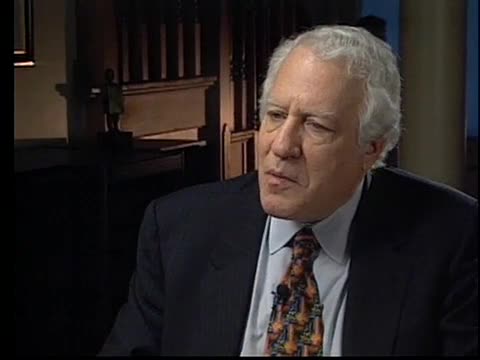
- Transcript
Were A. World. War for nearly three decades. America's most popular program about the economy people and their money. Will Street Week With Louis Rukeyser is made possible by the annual financial support from viewers like you. By Prudential Securities with more than 50 600 financial advisors nationwide for dental securities provides solutions for a lifetime of investment needs.
That's the power of the rock at work for you by the financial consultants of AGM. Who realize that investors like investments. Come in whole shapes and sizes. A.G. it. Is. Because. Dribble. By Oppenheimer Funds. Where a long term approach to investing has helped put financial security in the hands of millions of Americans. Oppenheimer Funds the right way to invest. And buy the Calphalon fund. A small company. Aggressive growth funds. From Rio de Janeiro produced Friday May 7. Our world grows more improbable with the passing of each increasingly bizarre year. Who would have thought that the carefree beach of Copacabana.
Legendarily known for the erotic beat of the Samba and the daring of the Fung bikini. Would be at the center of the world's most serious financial crisis of 1999. Good evening I'm Louis Rukeyser. Welcome to a very special Wall Street Week from Rio. Tonight we're going to travel as well even farther south on the turbulent Latin American landscape to Buenos Aires that most elegant least European of all American capitals where Argentina astonished the world by solving the continent's endemic problems of strong inflation and feeble currencies and is now ironically proving that no good deed goes unpunished. Argentina's relationship to Brazil is akin to Canada's relationship to the United States once memorably described by a Canadian Prime Minister Pierre Trudeau as like sleeping next to an elephant. And the very fact that Argentina's currency remains
firmly tied to the U.S. dollar. While Brazil's has just suffered a globally disturbing devaluation means Argentina's products look too expensive to Brazilians. And the current recession is hitting even deeper to the south. For the US all this is unsettling at best and potentially a good deal worse. When Brazil gave up on trying to protect the value of its reality in January. Global investors were struck with a horrible sense of investment deja vu. It was all so much like the way the Asian crisis started a couple of years ago with unexpected devaluation followed by financial collapse followed by the downbeat conviction that third world markets are better described not as emerging but as submerged. Yet there have been dramatic and hopeful developments as the seasons change this year here in Brazil which was last year the world's ninth largest economy.
As usual the U.S. taxpayer helped the International Monetary Fund with substantial U.S. backing. Let a forty one point five billion dollar rescue that calmed investors and short circuited the spread of panic throughout the developing world. Brazil itself helped with a tough new president of the central bank and a well publicized program of consumer resistance to the expected torrent of price increases. Tonight we'll look at the historic changes in the two powerhouses of South America in Argentina which are early in this century was the world's fastest growing nation. And it's still not completely come to grips with the causes of its economic deterioration. It's the largest political party is still called power in the east and Brazil which accounts for more than a third of the entire Latin American economy and has been our largest trading partner. What is so proudly chauvinist Dick that it still requires visas of American citizens
virtually uniquely among the world's major countries. And has vigorously resisted any closer ties to the Yankee dollar. Here on this volatile continent. Whereas Secretary of State Madeline Albright reminded us this week we still find the world's most unequal distribution of income. You will hear during this half hour from the key figures who have reshaped the economies of Argentina and Brazil. And from an expert on what all this means to the average American and where there might be exciting new opportunities to add to your own financial security by looking in far far south of the border. But first let's check what happened in Wall Street in the week just passed. The Dow Jones Industrial Average continuing to benefit from the market's dramatic shift away from its previous leaders. Growth stocks in general and technology in particular. And for the kind of old line value stocks featured in the Dow went soaring past
11000 for the first time and closed at a record above eleven thousand thirty. Up more than 240 points for the week and extending its six week run past twelve hundred points. But none of the broader indexes did as well though the small stock Russell 2000 inched to a nine month high. The tech heavy Nasdaq took another beating as its volatile Internet stocks went through an especially severe stretch of financial downtime. Our elders are on chains at a consensus plus for continuing to predict at least another 5 percent Dow advance in the next three months. And our halos again go to the five who were correctly bullish three months ago. Part of the bad news for high flying growth stocks which thrive best when interest rates are low was that Bonds had their worst week in two months. Hurt by some cautionary words from Federal Reserve Chairman Alan Greenspan and fears about big government debt sales
next week. But though the 30 year Treasury bond yield rose above five point eight percent its highest in nearly a year. Economic reports remained moderate. And go that traditional harbinger of genuine inflation took its biggest loss in more than a year today after Britain said it would sell more than half its reserves and buy bonds with the proceeds. So with the world coming down let's go flying back down to the global news makers in Brazil. To hear the economist tell it you might think the mood in Brazil is completely depressed these days. What worry has never been a conspicuous feature of the Brazilian nature. Most Brazilians prefer dancing the samba. To wringing their hands. True things have not been easy since the Brazilian government allowed its currency to devalue in January. But here in Rio de Janeiro a bustling in vibrant city built around its famous
beaches the temple remains strikingly upbeat. Bathers still flock to Copacabana. America Nahr stadium the world's largest sports venue still fills with 150000 and mild mannered families. There are still girls in Ipanema and people still rely on the Rio to buy their morning groceries. Even though much of life here in Rio seems unchanged. Brazilians did have a genuine crisis on their hands last January when the Rio was devalued. Following a few years of economic stability after the currency was introduced in 1994 replacing the discredited Cruzeiro unchecked government spending and a burgeoning bureaucracy led to huge fiscal deficits nearing 8 percent of gross domestic product in 1998. Apparently lacking the discipline to control spending the government shocked the world markets by devaluing its currency. Well many observers fear the worst. The currency has
stabilized months ahead of the hoped for schedule and it now looks as if Brazil may be providing some happy surprises for the world. And here in the huge metropolis of Sao Paolo Brazil's stock market considered a nearly terminal at the time of the January devaluation reflected the nation's remarkable comeback by more than doubling in the three months following its panic lows. But while the tempo is picking up in Brazil. Argentina is doing a notably different dance. You're in the land of the gauchos on the pompous Argentina's vast expanses still produce enough beef to export worldwide along with wheat soybeans and sugar cane. But Argentina is smaller in both population and wealth than the Brazilian province of South Paolo alone
and Argentina's export performance largely depends on the Brazilian market. While Brazil appears to be bouncing back Argentina's economy remains a victim of the changes to its north. When Brazil devalued its currency the move made Argentine products prohibitively expensive to Brazilian. Argentine exports to Brazil quickly plummeted. So Argentina's government continues to take pride in its rock hard currency. Many workers here in Buenos Aires and elsewhere in Argentina are scared by a slowing economy and both the threat and the growing reality of layoffs. The Argentine auto industry has already been hit 60 percent of the cars assembled in Argentina are exported to Brazil. Since the Brazilian devaluation in January production of this Ford assembly plant near Buenos Aires has dropped by half. With Argentines also buying
fewer cars 50 percent of the workforce here was laid off last month. Argentina's currency may still be stable. But its economic future is far from certain. To help get a handle on where Argentina may be headed. I spoke with Dr. Domingo Cavallo who authored Argentina's so-called convert ability plan in 1991 while he was Minister of Finance at the turn of the last century. Argentina had one of the highest standards of living in the world. What happened. I didn't think there was a sort of leading nation in terms of growth it seems 1870 to 1930. But unfortunately since 1930 and the beginning of this decade we lost. In terms of our relation with the world we became isolated as a nation. And at the same time our governments try to expend too much and printed a lot of
money to pay for those expenses and inflation and expanded. And of course the economy stagnated. It is only during the 90s that we have started again to be weather related not only our neighbors but the rest of the world. We have opened up many investment opportunities and we were able to remove the inflation from our economy and that was key for the recovery of India. Or you have much of the credit for that coming to you. Argentina has led the way in South America in stabilizing this currency and conquering inflation. Ironically that seems to be hurting here now because its harder to sell Argentine products in Brazil another personal has devalued its currency. What would be your single most important piece of advice for Brazil right now. They had to create a monetary system like ours that will then facilitate integrating our two currencies in that will give diversity as
the great benefit of reducing their interest cost on their public that from 10 percent of GDP right now to probably less than a 5 percent of GDP. How should people in the US now regard the economic outlook for Argentina for Brazil and for Latin America generally. I think in the Southern Cone of Latin America that is where a sale in Chile would away in this region there will be a high growth in the next decade and low inflation because Leon's will find their way out of this recession without introducing inflation. I think we will find a way to work out a monetary system that will reduce uncertainties and will generate lower interest rates and lower the cost of our capital in our region. Then we will get very rapid productivity growth and that is the key.
RETURNING TO ARGENTINA YOU were the architect of truly a monetary miracle that stabilize the currency by tying the peso to the Dow or so that every peso is as good as a dollar it back by a dollar's worth of hard currency. But you have opposed the proposal two dollar rise to go just to U.S. dollars as the currency of Argentina. Alan Greenspan seems no more anxious than you would have the dollar the currency of Argentina. I think that. Alan Greenspan is easier in the sense that for the time being the Fed will pay attention to the State of the U.S. economy in conducting and monetary policy. Ten years from now for example to have got his union in all the Americas I am sure that Alan Greenspan by then would say OK we'll pay attention to your demons fear and now we is very useful to use the letter I sent as they're not they've got it because thanks to the letter we have lowered inflation lower interest rates.
By the way we had a U.S. dollar that I know is the best way and that way leaves they're all open for always but I see the end to convince that our seniors that they should follow the same approach which is acceptable for them something that doesn't happen with the sation or you know let the decision because I would never be acceptable for the president. Back in Brazil. There are still plenty of difficult problems beneath the breathtaking natural beauty. Both inflation and devaluation have hit Brazil's highly visible underclass particularly hard. This oceanfront real estate in Rio is occupied by one of the favelas or shantytowns that the city's hillsides. Abject poverty remains an open wound in Brazil. Effectively excluding a food 25 percent of the urban population from the economy is bonkers. The man most responsible for restoring investor confidence in Brazil is a
Wall Street insider and former fund manager for George Soros the new president of Brazil's central bank. Our Mineo Fraga the Mr. Clean who has so far brilliantly succeeded a man just arrested for allegedly providing insider information on the January devaluation are many oh you're being hailed as this year's Superman of central banking for rescue in Brazil after Russia traumatized the world by default you know this debt last year causing concern throughout the emerging nations. How did you do it. Well I'm flattered by what you're saying but really the response started before after Russia and when Brazil realized it was going down the wrong path on the fiscal side. A major correction has taken place and will outperform dark targets for the last six months. The floating exchange rate was overshooting a bit but thanks to that and I think to some indications that we're going to stick to our low
inflation. Targets markets have turned around the IMF and the support from the banks also came in handy I would say. Your friends in Argentina argue that Brazil's currency should be tied more closely to the U.S. dollar. What's your view. We beg to disagree I think they've done a great job in Argentina but we're a larger economy we're not as open and we feel that the floating exchange rate makes a lot of sense for us and that's where we're heading. While the currency is stabilize you've avoided runaway inflation. You've avoided default on your domestic debt but the country still in a recession. The benchmark interest rate is still a painful Thirty two percent. What's the outlook now for Brazil's economy. The outlook is improving. We have with the government shrinking its fiscal deficit we have now more room for private investment for private borrowing. And that's the indications now we're getting is that investment is recovering. The forecast for GDP this year
is changing fast. Just three months ago we were thinking it would be a decline of 4 percent or so. And we're looking now at one and a half and the second half of the year looks looks a lot better in large part I would say because our corporate sector is very under leveraged there's really no balance sheet destruction here like what you've seen in Asia. Your personal actions and your global credibility have done a great deal here but there's still a feeling that Brazil must take major reforms in spending and in taxation. Realistically are these going to occur. First I have to say that I couldn't agree more and so does the president. If I'm allowed to speak for him we have for the next three years enough in our hands to produce good budgetary results but we're focusing on the future and and the idea is exactly what you said. And we have won a lot now in Congress called the fiscal
responsibility law which will change the nature of fiscal policy in Brazil's real change in regime. We have a second Social Security. Reform round planned for later this year and also tax reform. And there is a consensus in Brazil that this has to happen and we're going to go ahead and push for your exports. George Soros gave you a boost the other day by announcing somewhat grimly that my quote the global financial crisis is now officially over. Was he right or premature. Well it's hard to say George looks ahead and sees things way into the future and I certainly hope he's right. We're not counting on on good times we're trying to get ready for for some turbulence but I do agree that the sense of crisis that you had with Mexico Asia and Russia may be behind us for some time. Yeah.
Before you became a distinguished international statesman you were very successful trader in international markets. In a nutshell what advice would you give Americans about Latin American investments today. I have a lot of hope for the future in Latin America the region is addressing its problems. We have for instance throughout the region reform Social Security Systems resume is coming at the end of the queue here but that's very positive. It's a stable socially peaceful region with I'd say very market friendly attitudes and I would encourage investors to take a hard look plus asset values are on the cheap side. So a good time to buy I think. I think so. With me now for further insight into what all this means for U.S. investors is Eduardo Cabrera the treif Latin American strategist from Merrill Lynch. Most Americans who invested in emerging markets in recent years have been deeply
disappointed. Can they really expect a long term improvement now. It's been a very difficult five years for emerging markets in Latin America. But we believe that the global environment is turning very favorable for emerging markets in the Latin America region. What are the best buys at today's prices in Latin America. Well we think of Brazil the Brazilian market is our favorite market in the region and we think there's tremendous value in the market. We're beginning to see interest rates come down quite aggressively in that market. We think they can continue to come down to the 20 percent range and we think from a valuation point of view of Brazil does hold the most attractive valuations in the world. What are your favorite stocks here in Brazil we like LSP that is the the local carrier phone carrier in Brazil 45 percent of all the phone calls of either All Region 8 or terminate by speak. It has some of the best management in the region and it's one of the cheapest telcos in in the Latin America region.
To what extent is Argentina now suffering from its own strength relative to Brazil. Well we think that you know Argentina has is clearly in a downward trend. We think by the second half of the year you could begin some so that you could see some stability in the country in economic activity. Clearly I think they have to do further to try to improve the competitiveness versus Brazil. Would you do any investing in Argentina. Well we're looking at several stocks there we like Telefonica the Argentina the phone company that is going to continue to grow. You see in the Internet side grow very aggressively in data transmission. We also looked at the banks. We just upgrade the banking sector in Argentina very healthy with growth expected to pick up in the year 2000. Which areas would you deliberately avoid on this continent. Well I think when you look at the region U.S. investors don't have a lot of exposure to the region so I emphasis is trying to get them to increase the exposure in this very attractive region.
100 years ago South America was described as the coming continent. Today it's been described as the coming continent. When's it going to come. Well it's it's a very good question I think the region has had a it's going through a transition phase I think what's important to highlight is that we have seen the collapse the commodity cycle we've seen the collapse of the international marketplace in terms of liquidity in the last year in the region as being able to absorb that and is beginning a recovery phase that has exceeded expectations instead of a last decade like we saw in the 80s. It's really become a last a last month for the region are you beginning to see economic recovery in the region. Are they going to come closer to the U.S.. Well I think you're already beginning to see people talk about the conversion of Mexico with the U.S. And we believe that if the region continues to implement structural reforms it's a matter of time before you actually begin to see the modernization of the region in a convergent toward us way.
Italy where we do have to stop with the hope that this beautiful and exciting continent will continue on the comeback trail and I hope you'll be back with us again next week when we return to the U.S. for a look at the vital commodity that is adding to the inflation scare this spring oil. My guest top rated oil analyst Paul Tang is one of the most astute Opeth watchers this side of Riyadh. Meanwhile this has been Wall Street Week. I'm Louis Rukeyser. Good night from Rio. Wall Street Week With Louis Rukeyser was produced in association with Ruth Kaiser television incorporated five Maryland Public Television made possible by the annual financial support from viewers like you. By Prudential Securities. With more than 50 600 financial advisors nationwide credential securities provides solutions for a lifetime of investment needs. That's the power of the rock at work for you by the financial
consultants of A.G. Edwards. Who realize that investors like investments. Come in all shapes and sizes. A.G. Edwards dad be comfortable. By Oppenheimer Funds. Every year millions of Americans place their financial futures in the hands of one mutual fund company. Oppenheimer Funds the right way to invest. And buy the Caliph might find. A small company aggressive growth fund. For a printed transcript of this program and send $5 to transcripts. Wall Street Week With Louis Rukeyser Maryland Public Television Owings Mills Maryland 2 1 1 1 7. Transcripts are also available to subscribers of Dow Jones interactive. This. Is PBS.
- Episode Number
- 2845
- Episode
- Live From Rio
- Producing Organization
- Maryland Public Television
- Contributing Organization
- Maryland Public Television (Owings Mills, Maryland)
- AAPB ID
- cpb-aacip/394-16pzgvs9
If you have more information about this item than what is given here, or if you have concerns about this record, we want to know! Contact us, indicating the AAPB ID (cpb-aacip/394-16pzgvs9).
- Description
- Episode Description
- We visit South America for the first time, talk with Brazil's Central Bank President and explore the Eduardo Cabrera, Merrill Lynch; Domingo Cavallo, City of Buenos Aires; Arminio Fraga, Central Bank of Brazil - Guests. (Betacam also available)
- Series Description
- "Wall Street Week is an educational talk show hosted by Louis Rukeyser, who provides viewers with information on finances and the economy and conducts discussions with experts. "
- Broadcast Date
- 1999-05-07
- Asset type
- Episode
- Genres
- Talk Show
- Media type
- Moving Image
- Duration
- 00:28:00
- Credits
-
-
Copyright Holder: MPT
Producing Organization: Maryland Public Television
- AAPB Contributor Holdings
-
Maryland Public Television
Identifier: 46475.0 (MPT)
Format: Betacam: SP
Generation: Master
Duration: 00:26:46
If you have a copy of this asset and would like us to add it to our catalog, please contact us.
- Citations
- Chicago: “Wall Street Week with Louis Rukeyser; 2845; Live From Rio,” 1999-05-07, Maryland Public Television, American Archive of Public Broadcasting (GBH and the Library of Congress), Boston, MA and Washington, DC, accessed April 1, 2026, http://americanarchive.org/catalog/cpb-aacip-394-16pzgvs9.
- MLA: “Wall Street Week with Louis Rukeyser; 2845; Live From Rio.” 1999-05-07. Maryland Public Television, American Archive of Public Broadcasting (GBH and the Library of Congress), Boston, MA and Washington, DC. Web. April 1, 2026. <http://americanarchive.org/catalog/cpb-aacip-394-16pzgvs9>.
- APA: Wall Street Week with Louis Rukeyser; 2845; Live From Rio. Boston, MA: Maryland Public Television, American Archive of Public Broadcasting (GBH and the Library of Congress), Boston, MA and Washington, DC. Retrieved from http://americanarchive.org/catalog/cpb-aacip-394-16pzgvs9