Black Horizons; 3116; Recollection Rag
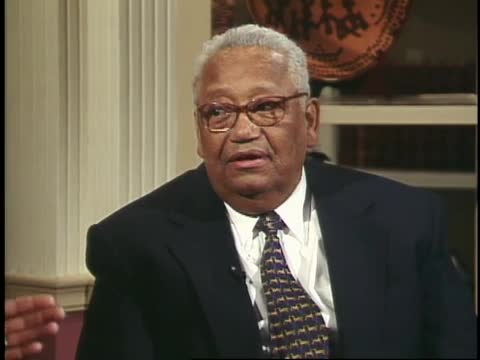
- Transcript
Welcome to Black Ariseons, I'm your host Chris Moore, thanks for tuning in. On tonight's show, we'll meet two legendary local journalists who literally changed the face of news, both here and nationally. Plus, you may know her as our producer and movie reviewer, but Minette Seat is also on on Q contributor. Tonight she brings us the story of a business owner who made a dream come true for herself and her community. And we'll also get to meet the winners of this year's Black History Month Community Leader Awards, WQED Multimedia and Duquesne Lights annual tribute to some of the best and brightest in our community. Our first community leader award winner is Need, the Negro Education Emergency Drive. Take a look. WQED Multimedia salutes the 2003 Duquesne Light Community Leaders. Need, the Negro Education Emergency Drive was founded 40 years ago to assist African -American students seeking higher education. Needs Executive Director is Sylvester Pace, a former Needs Scholarship recipient.
What this is really truly about is trying to prepare a student for the workforce and also to encourage them to come back. WQED Multimedia salutes the 2003 Duquesne Light Black History Month Community Leaders. Please stay with us throughout tonight's program for more community leader award winners. Tonight we're saluting two pioneers in the field of media, Regis Bavanna Senior and George Barber. In a time when African -American reporters were rareties in mainstream broadcast media, these two gentlemen helped pave the way for me and future generations. Mr. Bavanna was a print journalist for the Pittsburgh Post Gazette who moved into television at Channel 11. While Mr. Barber wrote for the Pittsburgh Courier before joining the on -air staff as a news reporter at KBKA. Gentlemen, welcome to Black Arise's. I am honored and flattered to have you here. You know, when Manette and I first came up with this idea, we thought it would be great. But when I started, when you sent us pieces of your work, my judges dropped to the floor as I listened
to the work that you all have done. And I have to tell you, this piece we're going to look at in a second, Mr. Bavanna reminds me of the first while they have new days, but with a lot more bite to it. You must have scared a lot of people with this piece. Oh, I'm telling you. Tell us about it. What was it called for? Actually, this was produced for one of the government agencies. This was the height of the 60s and attitudes were just changing and a lot of traditional leadership was being fragmented. And suddenly, community leaders were coming up to the center stage. And they came in a mix of dashikis and various levels of rage in terms of black power and black is beautiful. So this agency felt, well, look, we still have to give these people their rights. And we have to understand what's coming in the door in these various mix of attitudes. So as a consequence, we went around and shocked this here in Chicago. We did a very sophisticated training manual so that all of the regional officers of this agency could look at that and understand the attitudes that
were coming in the door for black America. Okay, we're going to take a clip of it and I'll look at it and I'll clip up and adjust the second one. But let me turn to Mr. Barbara for a second because he's a man who's truly I stand on his shoulders because he was the first black to report for KDK. Now we're weekends doing talk radio. What was it like to go down there from the courier, man? Well, to go there from the courier, it was, I had expected a lot of problems and so forth. But the one problem came up from a young man was a good friend of mine. It was always reporting for the courier. So one day, one day, I decided to bring this thing to a head. So I said to my friend, I said, hey, I'd like to see the editor's office. So anyhow, Susie came in the editor's office. I took my glasses off and told him what I do to his head. And after that, we got along fine. But you know, I don't know. You know at Nesoth, they give a title, a crazy, the crazy guy, you know what I'm talking about. I was kind of a, that was a hot shot report. I figured there wasn't anything that I couldn't do. So as we told,
yeah, young turk, yeah. And so as we thought, it was a good experience and I, especially getting the cover. Now, now in the mid 60s, there was a lot of turmoil going on through a civil rights movement. And you wanted to go to sell my Alabama to cover that march, but KTK wasn't really ready to send you there, right? KTK. And concern for your safety. Yeah, KTK, neither KTK nor Group W that we worked for. And so at this staff meeting, it was said that we're not going to cover it. We're going to depend on a wire service. And to me, firing guts report, I said, that's silly. That's what happened in the reaction. I'm the only reason in the sun. And so I said, hey, they'll kill a white reporter. What will they do to you? That was Jack Ways, my friend. And so as a result, I told him about the occupational hazards. I started out with the police and the fireman and that time, the blackboard jungle and the schools. And I said, my father was a coal miner. I used to go to the pit opening and go and see him go in there and did it. So this was nothing, right? So, yeah, so and their and reported should have occupational hazards. As a result, I
found myself on a plate ahead for Montgomery's scared stuff. All right. Well, we're going to play just a short portion of that. Mr. Barbara is brought with him an amazing audio recording made during his coverage of Dr. Martin Luther King's 1965 march to Selma, Alabama. He covered the march for KTK radio. Dr. King did return with an estimated 25 ,000. And his sincerity also got the government to protect the marchers with 1 ,800 federalized Alabama National Guardsmen, some 1 ,000 regular army troops, helicopters and light planes and some 100 FBI agents and federal marshals. The who's who of the 25 ,000 people could be looked on as an example of the drawing power of the mystique of Dr. King. They were the great, then the dear great, the humble and the not so humble, the blind and the crippled. There were elderly people and the young and children and they belonged to every conceivable race, creed and color. And they walked the 50 miles. One was 60 -year -old Mrs. Eddie Myers
of Marion, Alabama. Well, we were in a march for freedom, say, you know, that we might have a better time. In other words, I am the role myself, you see, you know, I am marching for the cause of my children of better life to live, you know, a better time in this world, because I'm in my 60s and you know I came the hard way. You're doing pretty good here. Yes, it's normal not to be, but we make me some hair. And there were the concerned white citizens of Alabama and blind Joel Young, a former white amateur boxer of Atlanta, Georgia, a white man led by a Negro friend. Mr. Barb, you sit there and listen to that. I wonder what you think. I just thank the good Lord for those wonderful people and what they did. Also, I thank God for being able to
give them to contribute. I thought that, you know, that the only contribution I could give would be my professionalism to the cause. And if I happened to die or be killed, which I escaped pretty close quarters three times, that it would be my contribution. And one of the photographs, you walking past the National Guard or the Civilized National Guard or something there, standing there, you look like you're demonstrating instead of covering it, you know, you're never lying between actually having that microphone and that recorder we can see over your shoulder and some of the shots and actually demonstrating that you, you had to step across a not step across one of the other. Well, I tell you, I felt as a reporter, I had that liberty of freedom and I was going to do, God was go across any lines that were there. I had to get the story. And so I did feel good when I was, I see the picture and I felt good. I felt real good to be able to contribute. And so not only did these reports air on KTK, but all over the group W System at the time. Yes, yes, yes. But that must have been an autumn, man. You were in an ask the right one. Yes, yes, yes. That's great. Mr. Mabon,
you were talking early about the film clip that you brought, but you also produced something on Pete Demperio on Westinghouse High School's 1965 championship team, which was a thrill too. It certainly was because he was such a unique, remarkable man who in his rough exterior had a heart of gold. And consequently, the guys sought through this very quickly and they really came to respect him and understand what he was trying to do is build their character. Now let's go back to the clip that we're about to see in just a second. Now you say it was created for federal agencies to sort of train the employees to understand how they were going to have to deal with people. Absolutely. If someone came in to say the Social Security Administration and wanted to get their rights, they would do them. The interviewers had to look past Daeshiki's rage, rough language and everything to make sure he got what was due to it. So it was a very part of a very sophisticated training program and it worked well. All right. What you'll see next is a part of a documentary by Regis
Pabana Sr. made in the late 1960s on the state of urban black America. This is particularly disgraceful in a nation that can claim so many technological first. This is a place where the crowded conditions are almost beyond description, such as in a major city where in 28 buildings, 28 ,000 people live and 20 ,000 are children. Where the slum landlords are sometimes the city's banks, where young black people attend schools named after white men, which teach subjects the students cannot and will not ever use. Where retail stores charge prices higher than those in the suburbs and credit when it is available has an interest rate that borders on being illegal. Unemployment is not the exception but the rule. A crime is understandable as a normal way of trying to maintain some reasonable existence, even when it affects other black people who live in the same environment. Despite all of this,
many black citizens do make it and they make a positive contribution to this country and continue somehow to believe that it is a reasonably good place to live. The white Americans way of life then has created such a horrible condition for black living but has not killed a spirit of the black man who, while he cannot forget his passage to this land, often does remember the promise that it provides. In his newfound pride in his blackness and its heritage, the black man is striving to make those promises real with a strength and assurance and even militants that frightens much of white America. You scared people to death with that stuff, weren't you back in the 60s? We were talking about the reality and the rough rhetoric of the 60s. You know, a rage was abroad in the land. Various degrees. Rides were going on. Rides were going on. And the biggest interviews and by the way, the
young man who was doing the narration at the time was the American Airlines captain. He was a very fine pilot. He went on to find a career in TV in Chicago. Captain James Dillman. Did he do weather? Yes, he did. We and I were friends and I didn't have, I had a little budget and he came in an hour. He could fly for free. I guess that helped out. Now, I wonder if either you, gentlemen, start with you, Mr. McBonus, see a lot of change in the time. I mean, you covered momentous events, the riots of the 60s, all of that stuff. And I just wonder because you wrote and produced that piece that we just saw. What changes you've seen in the last 40 to years or so? Well, of course, I think we, Black middle class, has become a reality due to the opportunities that came out of those attitudes. And so consequently, I see a great change all for the better. I think blacks are working in corporate America at levels never once thought out. I think housing is available in just about any communities, longsaking for the price of
the home. So there have been a lot of positive changes and a lot of progress, which isn't to say there are challenges of the day, but on a relative scale, it's better now than what it once was. Mr. Barb, what do you think? Oh, I've seen tremendous changes indeed. I'm not happy with the progress because I look at broadcasting and I wonder if we are that much further than where we were before. But I've seen tremendous changes indeed, especially in the south, in the north -east, especially in the south. When I was there, I had to be very careful, very, very, very careful indeed. And I remember, but today, today there is a freedom that is really, really unbelievable to me. I wonder, very quickly, 30 seconds for both of you, 15 seconds of peace, you first Mr. Barb, you look back on this work. Did you realize you were making history too at the time? I did to a certain degree. I did. Yeah, I did, yes, yes. Mr. Barb, I wanted to wear, but at the same time, it was so real,
the experiences that we were having that I went on to try to do and reflect it as accurately as I could. Well, Jim, and I just stand on your shoulders. You guys carried the ball before I was even thinking about being in this field, and I'm so glad you did, because you paved a way for me and so many others. Thank you so much. My hat's off to you. And my hat to you, because the tradition, the way you're carrying this tremendous of you. Well, thank you. Indeed, a pioneer to that. It's all due to you guys. Regis Pabana, Sr. George Barber, are only two of the people who helped to change the face of local media. In the weeks to come, we'll pay tribute to Moor Pittsburgh's pioneers in media here on Black Horizons. And speaking of pioneers, youth works and its executive director, Richard Garland, are our next Black History Month community leaders. WQED Multimedia salutes the 2003 Duquesne Light Community Leaders. Youth Works is a nonprofit organization dedicated to making a difference in the lives of area young people. Richard Garland is Youth Works executive director. We have to teach our
kids, work skills, life skills, you know, how to act when they come in the workplace, showing up on time, how to do a resume, you know, how to present yourself at our interview. You know, all those things that people don't think is crucial, our kids need that. By combining the resources of community, corporate, and advocacy groups, youth works provides job counseling, training, referral, placement, and follow -up. WQED Multimedia salutes the 2003 Duquesne Light Black History Month Community Leaders. There's Duquesne Light, WQED Multimedia Award winners that you've been seeing tonight are selected by a jury of their peers to celebrate their accomplishments and contributions to our community. Our next community leader is Dr. Nancy Washington. WQED Multimedia salutes the 2003 Duquesne Light Community Leaders. Dr. Nancy Washington is a woman of many talents. From professor
of psychology at the University of Pittsburgh to assistant to the university's chancellor, she has been a lifelong advocate for minority health, education, and the arts. When someone says, do you want to play bridge, do you want to play golf, or do you want to come down to a homeless shelter and help give out food to us? When I come down to a homeless shelter, and sort of, this is what I want to do. This is the way I want to spend my life. The recipient of numerous awards and citations, she is a treasured supporter of the City and Region. WQED Multimedia salutes the 2003 Duquesne Light Black History Month Community Leaders. Did you know that Black Horizons producer and movie review of Manette Seat is also an on -cute contributor? She's also a producer there. Well, it's true, it's true. This piece aired originally on our nightly magazine, but just in case you missed it, here's Manette Seat's cover story.
Maybe people don't think of grocery stores as dreamy places. With an adventure, waiting around every corner. Or hiding under a pile of chipcane. But Debbie Hickman does. In fact, this giant eagle is a dream come true. I visited Debbie Hickman at the giant eagle, her giant eagle, on Frankstown and Verona roads. It was a shop and save until a few years ago. When that closed, the stores stood vacant, leaving shoppers in Grocery Lembo until the spring of 2002. This 27 ,000 square foot store isn't the chain's biggest, but it does have some very special features. For one thing, it's one of the few giant eagles that
actually comes with its own gas station. Second one in Algonne County, our first one is a can port. So this is very exciting for us, and it's very exciting for this whole neighborhood, you know, because we didn't need, we needed something here in this area. That's the wrong number for that one. And it's the only independent giant eagle that's owned and operated by an African -American business woman. Debbie's worked practically every end of the giant eagle stores, from the checkout to the corporate office. When she decided to go for a store of her own, she knew what she was getting into. I would put all stillers. It can't happen. You look at the companies, what statement of values, and I believe that when I just believe that what they stood for was, what they stood for. Karen! I was luckily to have support from my family, my husband, everybody. You still have to stay focused and do what you want to do. And just take the bumps and you get back
up, you brush yourself off, you get back, and say, okay, let's do this again, but this time I won't do that. So, you know, and it comes. Despite how much fun it looks, running your own grocery store is a serious undertaking, and sometimes you need a co -conspirator. We are my granddaughter, we prayed on it, and we prayed on it. We prayed in this lot. We counted the faces. And it was our little secret. And we counted each parking space where the customer and employees were parked. It was just me and her. We come up here and we pray on it a lot. Debbie relies on her faith and her family. And one of her strongest supporters is her daughter and accounting manager, Michelle Holmes. Michelle has a master's from the University of Maryland, and she puts it to good use. So, are you the tough guy? Are you the one that says, no, we can't spend any more money? That is me. I'm the no person. No, no, no, no, no, no. So, yeah, I'm the screw genestore. That's a nice little role reversal for you though, after being the daughter. Yes. Sometimes it's hard to get her to listen to me, but she, you know, when I show her to figure, she
listens. What's your favorite part of the store? Favorite part of the store is actually, I like the bakery department. I get to do the school tours. So, when the schools come and they wanted to tour the store, I'm the tour leader. So, I get to go around all the different departments and show the children, the different fruit, exotic fruit, and stuff. And we do samples in every department. And then sometimes I had to make decorate cupcakes. Those are new items, tags. We're really here in a service community. That is her role. It's just to be a service to the community. We're not really here to make big profits. Enough to pay the bills though. You need to pay the bills. But we're just here to just service the community and be helpful in any way that we can. All the ad items, you want to be 100 % ad. Debbie's daughter Michelle isn't the only one who's in on this family business. Her mom is the store's official greeter. Well, I'm great to people when they come in and admit
them adios when they leave. Debbie's giant eagle has a true neighborhood feel. There's lots of chatting and shopping and people treating each other like family. What you guys making? Talian bread. And the sense of being in a place where a woman's dreams can come true. You have to also prepare yourself. You can't wait. A role for something to happen. You have to prepare yourself. Go after your dreams no matter what anyone says. You stay focused to your dreams and you fall asleep. You're going to love me. Amen to that. Stay true to your dreams. If you missed any of our community leader profiles, they'll be airing throughout February here on WQED TV 13. Our final community leader in the field of business is Glenn Mahon. WQED Multimedia salutes the
2003 Duquesne -like community leaders. Glenn Mahon is a partner at Reed Smith, one of the country's top law firms. From his early community involvement to his role as chairman of the Allegheny County Airport Authority and the Urban League of Pittsburgh, he is an active and integral part of our region's past and future. I integrated this firm in 1973 to be sitting here today as a partner in a top 20 law firm on the planet. It's absolutely amazing. I think it's a tribute to I guess God's blessing and Providence. WQED Multimedia salutes the 2003 Duquesne -like Black History Month community leaders. Well that brings us to the end of another installment of Black Horizons. Be sure to join us next Friday night at 10 and Sunday afternoon at 2. On behalf of all of us here,
have a great weekend. Set pieces donated by Macondo and by the History Store, Craig Street and Forbes Avenue. I want to be here now. You
You You
- Series
- Black Horizons
- Episode Number
- 3116
- Episode
- Recollection Rag
- Producing Organization
- WQED (Television station : Pittsburgh, Pa.)
- Contributing Organization
- WQED (Pittsburgh, Pennsylvania)
- AAPB ID
- cpb-aacip-3348db45b8f
If you have more information about this item than what is given here, or if you have concerns about this record, we want to know! Contact us, indicating the AAPB ID (cpb-aacip-3348db45b8f).
- Description
- Episode Description
- No description available.
- Series Description
- WQED’s Black Horizons was launched in 1968 and was designed to address the concerns of African American audiences. More than just a forum for the community, the series served as a training ground for Black talent in front of and behind the camera. Through the decades, the program featured various hosts and producers until Emmy winning journalist Chris Moore took over the program in the 1980s. He was later joined by Emmy winning producer Minette Seate before the program evolved into WQED’s Horizons in the 2000s.
- Broadcast Date
- 2001-02-23
- Asset type
- Segment
- Topics
- Public Affairs
- Media type
- Moving Image
- Duration
- 00:26:50;16
- Credits
-
-
Producing Organization: WQED (Television station : Pittsburgh, Pa.)
- AAPB Contributor Holdings
-
WQED-TV
Identifier: cpb-aacip-410277e8539 (Filename)
Format: Betacam: SP
Duration: 00:16:38
If you have a copy of this asset and would like us to add it to our catalog, please contact us.
- Citations
- Chicago: “Black Horizons; 3116; Recollection Rag,” 2001-02-23, WQED, American Archive of Public Broadcasting (GBH and the Library of Congress), Boston, MA and Washington, DC, accessed April 4, 2026, http://americanarchive.org/catalog/cpb-aacip-3348db45b8f.
- MLA: “Black Horizons; 3116; Recollection Rag.” 2001-02-23. WQED, American Archive of Public Broadcasting (GBH and the Library of Congress), Boston, MA and Washington, DC. Web. April 4, 2026. <http://americanarchive.org/catalog/cpb-aacip-3348db45b8f>.
- APA: Black Horizons; 3116; Recollection Rag. Boston, MA: WQED, American Archive of Public Broadcasting (GBH and the Library of Congress), Boston, MA and Washington, DC. Retrieved from http://americanarchive.org/catalog/cpb-aacip-3348db45b8f