Jim Cooper's Orange County; Japanese Americans in Orange County
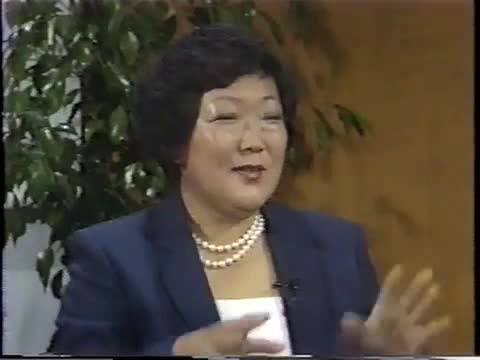
- Transcript
Jim Cooper's always Johnny as made possible by grants from Disneyland park and I would say it's a new attraction. Star Tours now boarding passengers for a space flight adventure by signal landmark incorporated developer of Southern California real estate and builder of Landmark homes by the Peter and Mary Muth foundation by the cream Foundation and by supporting viewers of this television series Orange County now have more than 35000 Japanese-American residents many of them second and third generation U.S. citizens. As a community they have contributed much in leadership. Volunteer is in business agriculture the arts in civic life. Many were detained during World War Two and internment camps while their sons served in a highly decorated U.S. Army combat regiment. They live in paste with Orange County's high tech sophisticated lifestyle but most of them also find time to value and remember the rich Japanese cultural heritage. I'm Jim Cooper and today I'll talk with several Japanese Americans of Orange County and a professor who has given this community very much study.
The place is the Orange County Buddhist church in Anaheim and this is a very special day. It's a celebration called cottonmouth story honoring the birth of Buddha on April 8th in the year 560 B.C. in a flower garden in India. The inside of the temple could be one of many to be found in Japan where Buddhism had been one of the major religions for 12 centuries. But this event takes place each year in modern day Orange County. In addition to its religious significance it is also an annual flower festival that we call the many cultural and artistic legacies brought here by thousands of first second and third generation Japanese Americans in Orange County. At events both outside and inside the Japanese cultural artistic martial arts and literary heritage
is celebrated in the festival it takes on the air of a county fair. But with many Japanese performing and visual arts along with popular modern games nothing is more uniquely Japanese than the cultivating arrangement and display of miniature trees called bonsai still cherished and knowledgably practiced in Orange County. For centuries the growing reading and admiration of Coit by colored fish of the carp family have been a tradition in Japan a part of any festival in Japan or among Japanese Americans in Orange County. It's a lavish display of exotic fish like giant boats. Like the literature calligraphy and poetry of the music is a rich
cultural heritage here shock demonstrated by Japanese Americans. He was there for the competition the. Construction of the flu. The Japanese skill cultivated for centuries. Japanese American students learn a conventional writing at school but also learn the ancient art of calligraphy by special teachers. It is still a highly regarded art form sword making in Japan dating back to the 11th century is regarded as a proud and formidable craft. Not only the firing and tempering of the steel but elaborate engraving on a samurai sword in the scabbard are among the pride the examples from many local collections. The Making and collecting of ceramic and porcelain dolls is another art form that has made the six thousand mile journey across the Pacific from Japan to Orange County. Jimmy Coney dolls and other ceramic and porcelain dolls are valued by many local collectors and as exhibit of watercolors by Arcade Tomei the art of our brush painting is displayed. It depends on the subtle interplay of shading of the bold
and dark broke at attention weight the subject matter. To become a master requires years of practice work and dedication. Many forms of the martial arts from Japan are studied and taught in Orange County as a karate part of the demonstration at the Buddhist flower other show and at the festival where judo and Aki dough the unique grace and gentle movements of Japanese traditional dancing is another popular event at the heart of my story bizarre. This is Hoshi's are adults in costume of the type worn for hundreds of years by Japanese dancers. Entitled The traditional dancing for marriage performed by Charlene and Tina you see that this election is entitle shiny cause in which the singer becomes a trap and in the modern life of Orange County where high technology modern finance freeway and a sophisticated lifestyle are so much in evidence the serene Japanese cultural legacy seems to have a special gentling.
That that interesting little cultural interlude. Now let's go to meet our guests. Carol come on I mean with form of the mayor of Villa Park the first Japanese-American woman to be american any mainland USA city. She served eight years on the city council and four years on the Planning Commission. She had an M.A. degree in nursing and as a registered health nurse. Last year she was the first place finalist for the Orange County woman of the year award for Orange County magazine. She is currently national president of the lung association. Its own Nita born in Santa Ana is a pioneer agricultural business man in Orange County with s Anita and son. A graduate of UC Davis he was a varsity football player and was elected captain of the UC Davis football team the first Japanese-American to be elected captain of any U.S. college football team while his parents were
in an internment camp in Arizona. He served in the highly decorated U.S. Army for forty second Regimental Combat Team. Dr. Art Hanson is a professor of history and director of the Oral History Program at California State University Fullerton He now serves as coordinator of the history department of graduate studies since 1983. He has directed a special study on history and culture of Japanese-Americans in Orange County sponsored by Japanese-American Council of the historical and cultural foundation of Warren County. And Jean Takumi zenana attorney is National Council for the Japanese American Citizens League a third generation Japanese-American. He previously served as national secretary treasurer of the league. He is a member of the legislative Education Committee lobbying arm of the JCL and he's been active in the legislation recently passed to provide redress funds for Japanese-Americans interned during World War Two. But you all have such an interesting perspective on Orange County. I think maybe let me go to you as the professor who has looked at this and give us a quick capsule of the waves of immigration
that contributed most of the Japanese-Americans who came to Orange County. Most of the Japanese who came to the. United States came via Hawaii although many came directly and the biggest boom in movement over to this area was around the turn of the century up until 1920 for when immigration was cut off through the oriental exclusion act. The people that came over here did a number of things worked on the railroads were farm laborers and worked in the canneries and in the cities they started in little towns Little Tokyo and in a variety of urban. You know those days when your whole state of California with respect to Orange County itself as far as we could document first person of Japanese ancestry was somebody who worked as a servant really and a large estate in the city of Orange and this was about 1893. For some people then that worked before the turn of the century in the citrus industry around Orange and then
the biggest push came with the rise of the celery industry in the early years of the 20th century and Ellery celery Fountain Valley this very area we're here right now. So a large influx of Japanese Americans at an in 1013 an alien land law was passed which disallowed people of Japanese ancestry to buy land. By that time there were only three or four families that actually own land here one of them actually was a mister and it is the father who purchased land west of Santa Ana. After that period. Between 1013 in one thousand twenty four is when a lot of the single males over here went back to Japan or through the picture bride system acquired wise and started to raise families. Picture brides picture brides. The the the population in Orange County by the time of the evacuation in one thousand forty two was around eighteen hundred Japanese-Americans after the war. Only a third of those returned to the county immediately. There was a 600 population here and
then it's grown since that time. As Orange County participated in the suburbanization process Japanese-Americans moved from Little Tokyo into places like Gardena places like Monterey Park and then out to Orange County town. I think we could go to you and myths that tell us about that. I find it intriguing that the story about the picture of brides where young males would go out and you tell us a little bit of math. And yes my my father came over here as a 17 year old migrant and I 1897 adventuresome in those days. But he landed in Portland and moved down into the Alameda area and was a schoolboy for three or four years then migrated down below a cyclist's area. He became he was with a little Christian background. OK much more so and. Through the arrangement of Methodist minister they call it by sharpening but then
that was arranged. He he met my mother through the Christian circles and my mother was had a Christian background from way back in Nagasaki days they were married 1015. But let me go back a little further and say when my father was a bachelor he had a he was on a horse and buggy riding from Los Angeles to San Diego when he passed through Santa Ana Salis church steeples and decided that when and if he did get married why he would raise his family in Santa Ana. And this is 19 or 5 he bought a parcel of the original 15 acres in 19 or 7 and he moved there the least at least the ground until he was married. We moved he moved out there with my mother in 19 16 and the three neither sons were born in with Santa.
That's where you and and and so near Fairview and so on where the crops that you would raise. Well 1917 my father was the first commercial asparagus cooler in Orange County and we still retain the green spare farms and that's where it originated way back in the early or late teens so he would have been you say that you were nice yes. Now but tell me about your children and your grand Well I have four children. Oh let's see. My youngest one is going on 30 to my oldest one is forty two. They've all gone to university. Two of them the graduated USC one is in the real estate. My son is in the import export business. I have a daughter that's a dental hygienist and my youngest one the Berkeley Graduate School of Architecture is
practicing architecture in San Francisco. So no one is in the Parmalee business right. I think you think Carol you are a modern Orange County woman. You're you're you're a sheet of credit in volunteer ism and contributions to Orange County are too long to have me mention them all. What what keeps you going. What drives you as your old common Ami's civic worker for Orange County. I think it's really the people that you meet in the area of volunteerism. Many many dedicated people who are doing good things for the community and you know for example meeting these gentlemen. I had not met our Hazza before getting involved with historical culture foundation and of course he has been very instrumental in helping us get together other components of the Japanese community because before that time was really basic associated with Japanese Americans here English county of course we have other groups of business people who have come from Japan and the project has helped us to bring together these various individuals of the Japanese in year many of
the things that you do with Carol are so much things of them that a lot of good citizens do in Orange County you're interested in the lung association you're interested in your nursing profession how do you find time then to keep the part of you that is concerned with the Japanese cultural heritage that you have. How do you balance that. With some difficulty from time. But really it seems to balance itself out. Sometimes it's more activity in one area and the other in some pledges that we're going to save. We've just recently come through big headlines of something like a hundred twenty thousand Japanese-Americans who were interned 60000 of whom will get reparations. You were in the midst of that fight. Can you tell us a little bit about that. Yes my representation and just kind of was to discuss that we address the the the reparations fight for redress in the Congress and send the United States for redress and reparations for the
hundred and twenty thousand people that were interned during World War I too in camps around in various parts of the country Wyoming California amounts and higher mountain was in Wyoming and many others and many of the people felt in the late 70s that reading the Constitution that it was our civic duty to use the features in the Constitution to try to repair the damage to the Constitution of the United States that the internment represented. And many of the nice A's in science A's. Second and third generation began our effort in Congress and in the Senate and now for the White House to get a bill of reparations for the wrongful internment of US citizens during the war. And you feel that this whole thing that our country has come through has strengthened our Constitution that strengthened our democratic values.
I think that the great interest of the third generation especially me I did not go to camp but in the course my parents did is that it is our duty and understanding the Constitution that we have to repair this black hole as I have told other congressmen and senators that I get that are behind this. You know as a country. Yes because under military necessity even to this day it is good law that you can turn citizens without a hearing. Coming from that racial group and that exception to the Constitution is a complete mistake and it's got to be corrected. Why is it being corrected. Yes I mean I have to ask you meant you were serving in the 440 second at the same time your parents were in camp. What was it like at that time. Well many with my many G.I. eyes would ask me what are you doing here. And I always knew you had your parents around kept my brothers around camp and I so I'm just trying to make the best of the situation
we were under war hysteria basically and I think that made us sort of an example of what Japanese American citizens can do and I think that that the history of the 442 and the rest of the people that served in the Pacific go well prove that. And then the good citizenship has been demonstrated again and again and again that you and your brothers have been good citizens of our county. This community has been the Japanese-American community have been contributing members of our Orange County better community maybe you have some thoughts on that. I think that the three people that are represented here all had diverse backgrounds but all of them impinge on the single greatest epic that rivets Japanese-Americans together and that is the experience of the evacuation. And if there was one thing that came out of the evacuation that was good for Japanese Americans which turned out to be very good for this country is that they had a chance to understand first then what
oppression is and to be able to use that experience to make sure that other people didn't have it. And I think that their forthcoming nature intellectually emotionally spiritually has in large part derived from not only the evacuation but the the years and years of discriminatory actions that were leveled against them. But we now become the beneficiaries of that. The Constitution becomes the beneficiary because it's a strengthened document it's to strengthen society. I think we and I say we all of us in Orange County benefit from the infusion of the integrity and the cultural gifts that come to us from the Japanese-American community. I have to show some of these things that we had that were lassie you know who is a member of the commission the Japanese American Council. I'd like to show that in this lovely scroll over here. This is a scroll that came from the ATO period. In Japan and it's a lovely thing the colors are just as vibrant now and as typical of the kinds of work that we have that some of the art museums have that kind of
work. I think it's a lovely thing to look at. And this comes from a private collection that comes to Orange County. I'd like to also look at at this hip hop sheet that's over here and this is just hit by cheese from also from a private collection. It's 235 years old an antique warmer with design of scenery of the moon. It's made of bronze and silver It's a lovely thing this and that. The other one is as an antique oval box with the covering of the end the oval box has has a tortoise shell ivory mother Pearl. It's made of bamboo but it had gold and silver inlay. This is from the ATO period of somewhere around the year seventeen hundred. And it's a lovely thing. I'd like to show also this is a presentation that was done for us by Michi Burl who is a Japanese American but learned her U.K. Binah training in Japan. She's located close to Mesa and has given us this lovely
creation which is more than just flowers it represents serenity and it's a nice park it's still very much alive as we saw in our On a month story festival. Carol what would you like to say about your involvement in the vitality of the Japanese American community in Orange County. Clay as you I'm sure are aware that the Japanese community does not reside in any particular sector or section that we're generally aware of fairly well. Just curious throughout. The experiences here have of course changed over the years there's a difference between our participation now and in contrast to what it was 20 30 years ago. I have found the community to be very open and receptive to our participation and we really have the opportunity to be able to do what we can do to improve our entire community. Is it fair to say there's any kind of overt or covert discrimination of any
kind about our Japanese-American community anymore. There I would believe it to be some more and the covert nature rather than overt but I think most of us approach the issue as the person perhaps not being totally informed as to what the various cultures can contribute in the way someone might just want to mention here this is one of the purposes of the historical cultural foundation. It's to provide the opportunity for people of various cultures here in Orange County to be able to share our culture and our values with one another with the general population. And is it a wonderful experience. Mitch how do you feel about that is there any covert or overt discrimination existing anymore in Orange County and I'm sure it exists to a certain degree but then by and large I think the the American people throughout the county have opened the doors. I've served on an rotary Hospital Foundation board and and these are opportunities that I think if
if you're asked you should not decline but step forward and participate and this is basically the big difference between pre-World War 2 and post war that the Japanese American people are more involved in community and in the fire that you would encourage your son or daughter or Devon to get infused in all of the road out of their lives or their lives or the hospitals or the the march of dimes or whatever as a product mat my every I think about you I am with that Eugene's question. And I had the pleasure of talking with your young son. On the phone I think about your young son growing up but he wanted to know more about rock music in the baseball than usual than he will ever know about the Eagle period a man marked as like baseball in a place in the fountain. There are youth baseball he participates in all of the things that that are available to us in the county. He's very much your average American boy. But I think it's up to us to remind him of the positive
values of Asian culture family and responsibility to duty education and to community and I think we will impress that upon him if we can to the degree a modern parent can impress anything on a child he'll still play soccer and he'll still wear he'd still wear blue jeans and he'll go to the dances and they'll know Bob Rock and all those oh yeah where oh as we as we weave into the into the fabric of America we've become part of it. As as I no longer know Japanese market as it does not know any Japanese and he will continue to grow as an American as opposed to being in Japanese. I think all of us you know when we did a program recently by the Vietnamese were boat people. And what struck me is that we're all both people we came here by boat it's my my ancestors came here by boat. And from Ireland from England. So I think we have to think that but that's what makes America great that we are worth and we value
our American institutions and still can think of our own cultural background. I have to ask you a question I think they do an enormous amount of books that you've done here. It's got to be one of the great studies in all of America about the people. How many of the volume Did you have. These are volumes of oral histories. Yeah I do want to preface what I say by saying that I didn't do those. Actually the the History Committee of the Japanese American Council historical cultural foundation for many did those. And this was a joint effort. They are bilingual of the 15 that the council did. Seven of them are bilingual and eight were done with nice a and they were done in English language exclusively. But we never could have gotten the project off the ground if we didn't have a wonderful gift. Of and this is one of the advantages of a multicultural community a large Japanese business community here. The wives in that community many of them were college graduates. Many of them who are adept at not only the English language but but English Literature ing and Anglo American
culture they came over here and served as as interpreters as translators as transcribers had just been a wonderful gift. And how many volumes are we in this particular issue 15 volumes 8 of those are our English language and seven of them are bilingual and then counties are Japanese nationals who are here brought into business due to come over here do business in Orange County as apart from born Japanese Americans of Orange County to help with this. Well kind of a fusion of both. We had lots of Japanese Americans that helped on that too as well as what Japanese Americans would call myself hockey again which means that like Asians and so it was a multiethnic effort and I think that's why the product is not only the important thing but the process was important as well as the product. Jean what's your wish for the future and Japanese American community growth. When I think air of the Japanese Americans have a lot to offer the American society an re
reading trying to input that into the society. Our our commitment to family and community. You have a thought What's your thought future about Mutimer as each generation arrives I think the children get more into the American way of life in the the the flow of Americanism. And that's OK didn't that's alright with me. Maybe in another generation too they'll recognize their heritage. I really didn't realize how valuable the heritage was until I went back to Japan and saw how industrious the race of the Japanese race was Daryn thank you very much. Our time's up now and I want to thank our guest today for the comments on the interesting story of Japanese-Americans in Orange County. I'm going Cooper. Thanks for being with us. Jim Cooper's Orange County is made possible by grants from Disneyland park and outside
its new attraction. Star Tours now boarding passengers for a space flight adventure by signal landmark incorporated developer of Southern California real estate and builder of a landmark OEMs by the Peter and Mary move foundation by the cream Foundation and by supporting viewers of this television series.
- Series
- Jim Cooper's Orange County
- Episode Number
- 619
- Episode Number
- Tape Number 38
- Producing Organization
- PBS SoCaL
- Contributing Organization
- PBS SoCal (Costa Mesa, California)
- AAPB ID
- cpb-aacip/221-67wm3m0f
If you have more information about this item than what is given here, or if you have concerns about this record, we want to know! Contact us, indicating the AAPB ID (cpb-aacip/221-67wm3m0f).
- Description
- Episode Description
- The episode looks at Japanese Americans who reside in Orange County and how they continue their Japanese traditions in the United States. A visit to a local Japanese festival showcases specific traditions, including music, Bonsai tree cultivation, calligraphy, sword making, manufacture of ceramic and porcelain dolls, water color painting, martial arts, and dance. An academic historian provides historical context, explaining the different immigration waves. One guests recounts his experience in a Japanese internment camp.
- Episode Description
- This item is part of the Japanese Americans section of the AAPI special collection.
- Series Description
- Jim Cooper's Orange County is a talk show featuring conversations about local politics and public affairs.
- Created Date
- 1988-06-09
- Asset type
- Episode
- Genres
- Talk Show
- Rights
- Copyright 1988 KOCE-TV
- Media type
- Moving Image
- Duration
- 00:28:59
- Credits
-
-
Director:
Boltz, Bill
Guest: Kawanami, Carol
Guest: Nitta, Mitsuo
Guest: Hansen, Arthur A.
Guest: Takamine, Gene
Host: Cooper, Jim
Producer: Miskevich, Ed
Producing Organization: PBS SoCaL
- AAPB Contributor Holdings
-
KOCE/PBS SoCal
Identifier: AACIP_1238 (AACIP 2011 Label #)
Format: VHS
Generation: Master
Duration: 00:30:00
If you have a copy of this asset and would like us to add it to our catalog, please contact us.
- Citations
- Chicago: “Jim Cooper's Orange County; Japanese Americans in Orange County,” 1988-06-09, PBS SoCal, American Archive of Public Broadcasting (GBH and the Library of Congress), Boston, MA and Washington, DC, accessed June 3, 2026, http://americanarchive.org/catalog/cpb-aacip-221-67wm3m0f.
- MLA: “Jim Cooper's Orange County; Japanese Americans in Orange County.” 1988-06-09. PBS SoCal, American Archive of Public Broadcasting (GBH and the Library of Congress), Boston, MA and Washington, DC. Web. June 3, 2026. <http://americanarchive.org/catalog/cpb-aacip-221-67wm3m0f>.
- APA: Jim Cooper's Orange County; Japanese Americans in Orange County. Boston, MA: PBS SoCal, American Archive of Public Broadcasting (GBH and the Library of Congress), Boston, MA and Washington, DC. Retrieved from http://americanarchive.org/catalog/cpb-aacip-221-67wm3m0f