For the Record; 1509; Melvin Patrick Ely
- Transcript
fb richard randall fuller this will calling for a pretty large chunk of his plantation to be parceled out among his ex slaves so he's setting up a neighborhood of free african americans in the very personally where they had spent half a lifetime drilling a slave and where their brothers and sisters and cousins and they still were working as slaves on the surrounding plantations for the record collection funding is provided by the prairie foundation and by the third quarter for serving the commonwealth of virginia for the russians have created in partnership with the university of virginia's miller center of public affairs at the
conversation on politics policy and the presidency for the record and turning from steady as betty at deshazo pdf this is for the record madden american community where blacks and whites work side by side in business together attend church together and marry each other now message to be an existing in the old south and the darkest days of slavery and seventeen ninety six richard rende off a cousin of thomas jefferson emancipated nineteen the slaves and providing them with three hundred and fifty acres of land the former free black community the story of israel hill and prince edward county is a story of race in american life that is still unfolding today with me to discuss this now forgotten someone and to draw parallels with modern day race relations is nolan patrick diehl a professor of history and black studies at the college when america the two thousand five winner of the bancroft prize for his book israel on the apple macs southern experiment
and black freedom and seventy nine case there's a war of not really looking for the records say it's a great pleasure to be here and he mentioned in a story about three hundred fifty acres in virginia and accountants around it really did begin as a story that has so a grown man a high school teacher in fact i opened at one point was remembering the history textbook the virginia history textbook that we have used in richmond in the seventh grade and how the slanted towards the southern point of view and then i went back to my old school to see if i could get a copy and infection and it did get a copy of of that for a book which i didn't know that there were no longer use in the book but they had a big stack of decommissioned books one of which they gave to me it took its place on my shelf and years later when i was in graduate school i opened the book one day and ahn found this sentence that said richard randolph of bizarre in cumberland county freed his slaves and
set them up as small landowners on israel hilton prince edward county period end of discussion no identification and who richard randolph was why he did this and especially what became of these these fried african american so i spy made a metal noted that time that if i ever got the chance i'd like to try to uncover the story ultimately i spent the decade of the nineties trying to do just that and the result is this book randolph doesn't and about the genesis of israel so richard randolph as you said was a young cousin of thomas jefferson they were both members of the famous randolph clan which was very wealthy richard agreed with thomas jefferson that slavery was morally indefensible but he differed from jefferson onto point first of all richard randolph believed that blacks and whites were literally created equal whereas jefferson suspected that whites were superior jefferson believed that if slaves were ever emancipated the free people would have to be
moved out of this country or at least move away from whites because the two races could never live together as free people and harmony richard deitsch hey liz if he believed in exactly the opposite because richard randolph left this will calling for a pretty large chunk of his plantation to be parceled out among his ex slaves so he's setting up a neighborhood of free african americans in the very vicinity where they had spent half a lifetime drilling as slaves and where their brothers and sisters and cousins and they still were working as slaves and the on the surrounding plantations fortunate for them he died early well he he he was very prompt this man he sat down at the age of twenty six to write a will which most of us don't i don't do an upset prudent and then within months he in fact was dead we don't know why whether it was this sudden illness whether he knew he was terminally ill he did i probably what wasn't prompt was the actual fraying of these african american people because richard
reynolds father had mortgaged all but five of them you could mortgage slaves in those days the same way we mortgage a house now and until those mortgages were paid off these people couldn't be free it took richard reynolds well fourteen years to accomplish that so israel hill in fact was not fundamentally content christmas time they didn't what has that the community wants it doesn't begin to be set up and how does it function in the old south you know how does a group of free blacks in virginia function and slave society well it's it's a perfectly natural question because this is a society which legally defined free african americans is that what i'd have to call third class citizens they couldn't vote they couldn't serve on juries they couldn't even testify against a white defendant a court of law they had to carry papers certifying their free status and some years they have to pay a special tax that white people didn't have to pay they didn't have free blacks did have a couple of very meaningful right one is that they could buy
hold sell and bequeath property including real estate and decent turnout have been very industrious black folk who but who who worked many many hours each day an accumulated money and in fact became entrepreneurism developer some of them in the neighboring town of farmville so one of the one of the ways is real hill made made good on its promise was described by sheer hardwork entrepreneurship and having done that legally israelites as they call themselves won the respect of the ways with him a good business the other very important right that it turns out african americans have those who are free and old virginia was that they can actually file civil suits against white people so it can't testify against a white defendant if the full weight fellow attack shoot you can element to court and sue him for assault and i found at least nineteen instances where free black
people did some whites for assault and for those cases they won their suits even though they were appearing before all white court injuries the situation that you're describing here is one where free blacks were still second or even third class citizens but they had more rights than the popular view of african americans in the nineteenth century what kind of relationship did this free black community helped with the local white community and how they interact and go to church together and we talked in the introduction here about marrying each other well let's talk first about the church the fargo baptist church which still exists in that town was founded making thirty six by white baptist pastor at the first two actual members to join or salmon feel white who were free african americans of israel hill they were quickly joined by nearly two dozen whites some of them wrote rather prominent in farmville and prince edward county and apparently the whites who joined the church
saw nothing odd about it joining a congregation who's founding members had been free blacks and one of the if you get out as little about our inner marriage between blacks and whites what was nobody on israel hill who had a white's bass but that i found a number of cases elsewhere in prince edward county where a man of color and it usually be a man of elf mixed their racial background or maybe not always would take is his wife a white woman in one case there was actually an official marriage bond taken out in the other later cases it being illegal action to marry across racial lines people would would create a de facto marriage or common law marriage which would say they live together in many cases for a lifetime they raise children some cases like indictment grandchildren now does this mean that all whites in prince edward county were accepting of this know because five of the six cases i can document i know about because some white person went to the grand
jury and and and press charges so clearly they're there is a diversity of opinion in the white community about how much freedom free blacks ought to have that dominant position seemed to sort of live and let live as long as those people are causing trouble part but the threat to us leave him alone i wanna go a little deeper into the relationship between whites and blacks in prince edward county how did just a simple fact of buying and selling goods factor into how they related to each other did this if that was some level inequality black says many blacks had things that whites wanted goods and services that some of these people when these black folk were were highly skilled craftspeople some of the most possessive became entrepreneurs and it turns out that so black business folk in the way business folk had pretty much the same as six weeks we think of the old south as sort of a genteel society where people
were pursuing the almighty dollar and it's not so pleased as forest region is concerned the people who had the most esteemed in prince edward county before the civil war with the people who knew how to make a dollar invested in her and two there were black senior added to that there were whites who knew how to do that they did business with one another usually very smoothly and it turns out by the way that a lot of the black and white folk get that business also went to church together so it's it is that there's an interlocking network of relations that didn't create racial equality but created a kind of civil tone to life and even a kind of friendliness that looking back this dc that virginia in the mid part of the nineteenth century many before that was actually pretty good place to live if you were a free person of color this was a profoundly unjust and exploitative society over jenny and the old self and i constantly hard on this because it's
it's it's too easy to start thinking like was pretty good at that this was a society after all in which more than ninety five percent of that african americans in this county were enslaved they were boarding sold his property they changed hands as gifts exchanged glances and payment of dabbling there was a very active internal slave trade selling virginia slaves down to the gulf states to pick cotton and even if you were free african american you were exempt from all of us not only we deprive a third of their rights were many the rights of white citizens but i found a couple of free blacks who married and slave law and then one of them saw the master of his wife go bankrupt his wife was actually put on the auction block by the sheriff to be sold to make good on those debts this man philip bowman was his name actually had to attend an auction and that money to buy his own wife innkeeper at the hands of slave traders tony white of
israel he'll had five and slaves children who entered a partial doubt among three separate masters one of whom carried three of tony's children often missouri i'm quite sure he never saw them again as the shadow of slavery up falls on everybody and everything contains everything in this society and it must be that the book is a wonderfully written he's about a number of different figures who were there and one of my first name hercules can you tell us a little bit about him and what can a role he played within this community well if i'd have the the freedom to name three of founding fathers roy hill i could've done better than to have chosen the name hercules this was in fact the man's name hercules white he was the patriarch of what became the sort of first family of israel hill but its beginnings were humble he had been around off slave he worked with his hands he was a carpenter a coop for a tour of the soil a slaughter and dresser of hogs karl haller of cargo he did all
of these things and he was one of the first to go free he used all these goals to make money to invest money unfortunately died within eighteen months of the founding of israel held that when he died he was owed hundreds of dollars but by white men and black vest that was a small fortune in those days and it was he who left for science and and other relatives several of whom became that became in their own right very prosperous though developers of land in farmville i wanted to talk about a paradox to put ford in the book dealing with the role that slavery played and making life for free blacks actually a little bit better and how the local situation was much different than the situation's viewed large water jug traditionally historians have said that's that slavery existence of slavery made life terrible for free blacks because whites wanted to treat all african americans as if they were enslaved and that was a good bit of truth in that the existence of slavery as i said cast a pall on the lives of
every person of color at the same time i don't get the feeling out of the research that i've done that fit the typical white person in prince edward county fellow physical fear when he or she thought about free blacks and that's partly because they weren't all that mirrors no one in town to free prisoners in prince edward county and the generation before the civil war was a black person but we're still only talking about five hundred people in a county of twelve thousand i don't think whites it would it would not occur to wait to get my free black neighbors that come in the dark of night in an and cut my throat the other ninety five percent of the african americans are control through the institution of slavery and that ironic since slavery not only works the detriment of free blacks but maybe in a perverse sort of way benefit your work that weaves together there's compelling tale from well
over a century ago how do you as a historian gather together fragments and have you had you get the story out it's the historical record it was a challenge because we're dealing with a population of almost none of whom were given access to education so we don't have their letters we don't have diaries i found maybe as many as ten sentences written by free african americans so it then becomes a question of going through dozens and dozens of cartons of county records that's the bad news good news is there a lot of county record for prince edward county they were never destroyed or that they weren't lost they were burned in a fire so if you if you go through these cartoons sheet by she by chic through the va the blackened gritty grimy london fifty years in a settled on up and accumulate enough tiny needles out of this huge haystack after a period of years they start to sort of form patterns and you can try to put the story together i have to say that was the real challenge of writing this book i was a
foreign a little bit more to modern day virginia and go back to this idea of the paradox that you have very friendly relations at the local level because of the kind of white almost hysteria hysterical concern about black citizens and look at prince edward in the nineteen fifties and nineteen sixties this is this is another seeming paradox i'm going to try to portray it is not quite so paradoxical but the prince edward county ifs if so if a person has heard of it here she is usually heard of prince edward because it was the one locality in the entire south which during the school desegregation crisis actually abolished public schooling didn't just close this just close the schools for a period of weeks as in charlottesville are or norfolk actually eliminated public schools for a period of five years how could that have happened in the same county in which i described fluid black white religion before the civil war i don't know the detailed
answer i would have to do the kind of recent meticulous research for the century after the civil war that i did for the ad years before but well there's this about a threat of volume to have a measurable of long enough to pull it off but it would be it would be a neat wholly surprising story i think i do see though one parallel between the antebellum period nineteen fifties in both periods there was a formidable strong inventive assertive african american community we've talked about the black israelites and what they achieve people don't realize that in the nineteen fifties farmville virginia is one of the places where the civil rights movement began with the teenage black students at the black high school walked out on strike and demanded equal school conditions some of them preceded to become plaintiffs in the court case that we now know as brown vs board of education that case directly covered
prince edward county so thats the black community asserting itself in both periods the differences before the civil war there was no possibility of black folk demanding equality demanding political empowerment it was just not feasible in the nineteen fifties what were african americans demanding immigration equality political empowerment precisely those three things and once those demands are on the table the whites who held power prince edward county circled the wagons determined that they were going to take a stand there that would defend the entire white south against the specter of desegregation look at taking that from that point what happens to israel though what is it like now for going down highway fifteen to me find it you can find it israel hill today is as mortgage and i'd say geographic feature that it
is the type of community that used to be there's still about half a dozen families who live there all book that they're all african american families all but one of the houses is a twentieth century house and then the mice were kept houses but there's no particular has sparked interest to them there is one late nineteenth century house on the top of his rodeo and which i was privileged an interview a pro walker heart will who grew up on is really early twentieth century she's no longer with us but a great thrill that i was sitting in that house on israel talking about talking to somebody said she was imprisoned then she was a descendent envy of the family oral tradition spoke of the of the community have been founded by four liberated blacks now if you go two miles beyond israel hilda farmville you'll find some interesting things there too because these very schools the segregated character which were so vigorously defended today reintegrate in the last twenty years the white population has returned to the public schools in prince edward
county they are stable integrated now they do a good job academically the group that that threw the black community elements of the white community in of farmville have gotten together and prince edward county and they took they've taken the old black high school and turned it into a civil rights museum they have secured from the general assembly of virginia reparations for the black children who were denied schooling from nineteen fifty nine to sixty four so so when prince edward county certainly has its ups and downs and i would say that unless the last generation where where honor of a kind of pleasing upswing there's still plenty to be fixed but there's a larger unity separate schools well they were they were some of its segregated by law of course when i started i started public school in nineteen fifty seven and graduated nineteen seventy so i was there in the years when when desegregation was actually taking place i was actually privileged to be there of something i wouldn't
have given a phrase heavy think that experience factored into your own development historical interest in this topic so it has that has everything to do with what i've what i've made my career until i am i was raised in the church where we were taught that their jesus loved everybody of all colors in school we were taught that all americans or cred all people are created equal and all americans have equal rights and yet you were living in a society where at a certain age you discovered that that that wasn't true then the desegregation of schools put me and people like me in a privileged position of being awarded to sit next to african american pearson to get to know them as people and then to the flight women just as the system became intolerable i want to know how we how we got that what they have in their country have in our region become the way that it was and of course what we could do about it and that's what led me to the study of history in a serious way
i wanna hear a quick question on that broad question about the state of racial issues in the united states your first book was on radio program called amos n andy and he introduced a number of ideas about the relationship between white views of black images and think what have you what would you say is the state of race relations in the united states today as it's much better than it was obviously in the nineteenth century in terms of israel will both you can take that israel is building in just talked about and situate it now are things that much better in prince edward county i think they're better in prince edward county than they were certainly before emancipation and they're better now than they were then the nineteen fifties and sixties i actually believe in in integration i don't believe that and eva's needs to do to give up our own character is as people
but i do believe in integration as old fashioned as that may be and you have a degree of of integration a place like prince edward county perhaps more there than you have on some of the major cities there the rights that african americans have i think it makes a great deal of difference to have the right to vote and to have a voice and the polity that governs here i think that has been the emergence of an african american middle class which is a sizable which is solid which is secure these are all good things and at the same time there are millions of people who have been left behind who are as poor as they've ever been who are perhaps more for second more forgotten and they have ever been and we get serious serious work to do but i did tell my students that were better off now than they were then we were in the world and into which i was born and i firmly believe that no thank you so much for joining us today on for the record it's been a pleasure talking about the slice of
virginia history is not just about virginia writes about the american experience of going to great pleasure nolan patrick healy is author of israel on the aftermath which won the bancroft prize and two thousand five the staffing group of the guys the gators charlottesville for production partners at the notion of public affairs at the university of virginia i can germany please join us on the next with a record for more information about guests and topics on four the record visit our website at debbie you debbie wu that idea stations dot org the
company thank you for the record production funding is provided by the perry foundation and by the burn carter foundation serving the commonwealth of virginia for the record is created in partnership with the university of virginia's miller center of public affairs to bridges a vhs copy of this program sent a check for twenty one ninety five to the address on the screen or call for three four to nine five seven six seven one please reference the program number
- Series
- For the Record
- Episode Number
- 1509
- Episode
- Melvin Patrick Ely
- Producing Organization
- WHTJ (Television station : Charlottesville, Va.)
- Contributing Organization
- VPM (Richmond, Virginia)
- AAPB ID
- cpb-aacip-19166f22abe
If you have more information about this item than what is given here, or if you have concerns about this record, we want to know! Contact us, indicating the AAPB ID (cpb-aacip-19166f22abe).
- Description
- Episode Description
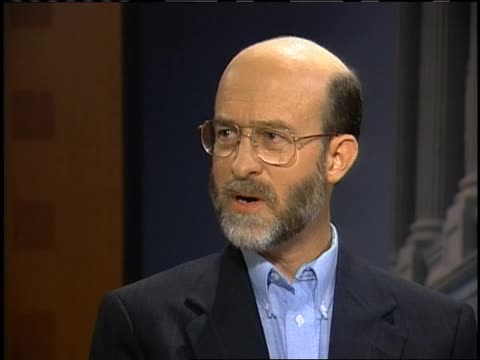
- Kent Germany interviews Melvin Patrick Ely about race and policy in America
- Copyright Date
- 2005
- Asset type
- Episode
- Genres
- Interview
- Topics
- Public Affairs
- Subjects
- Race relations from the past to present, Bancroft Award, book “Israel on the Appomattox”,
- Rights
- TBA
- Media type
- Moving Image
- Duration
- 00:27:22.742
- Credits
-
-
Director:
Nichols, Bill
Producing Organization: WHTJ (Television station : Charlottesville, Va.)
- AAPB Contributor Holdings
-
WCVE
Identifier: cpb-aacip-1460626009a (Filename)
Format: Betacam: SP
Generation: Dub
Color: Color
Duration: 00:30:00
If you have a copy of this asset and would like us to add it to our catalog, please contact us.
- Citations
- Chicago: “For the Record; 1509; Melvin Patrick Ely,” 2005, VPM, American Archive of Public Broadcasting (GBH and the Library of Congress), Boston, MA and Washington, DC, accessed August 10, 2026, http://americanarchive.org/catalog/cpb-aacip-19166f22abe.
- MLA: “For the Record; 1509; Melvin Patrick Ely.” 2005. VPM, American Archive of Public Broadcasting (GBH and the Library of Congress), Boston, MA and Washington, DC. Web. August 10, 2026. <http://americanarchive.org/catalog/cpb-aacip-19166f22abe>.
- APA: For the Record; 1509; Melvin Patrick Ely. Boston, MA: VPM, American Archive of Public Broadcasting (GBH and the Library of Congress), Boston, MA and Washington, DC. Retrieved from http://americanarchive.org/catalog/cpb-aacip-19166f22abe