¡Colores!; 1401; Albuquerque's Historic Neighborhoods; AHN INT Robert Romero 1; Interview with Robert Romero 2
- Transcript
We're going to please and any time, okay, and do that one more time, please. Okay, and any time, okay, and hold it there, please. Okay, and any time. Do you want to reach on that box again and just fill all of that stuff and move it around?
Okay. All right. All right, wait.
Okay, It's going to get nice and good, it's going to get nice and good, it's going to get nice and good. Okay, good. Some of them are general questions, some of them are about the concept of the neighborhood.
The show is going to feature six neighborhoods in this town. It's going to feature Old Town, Martinez Town, Saw Mill, then we're going to go to Union Highland, then Montevista, and then we're going to close up with Princess Jean. The job of this documentary is to do several things, but one is to celebrate the neighborhood, the concept of the neighborhood, because it's something that I think we forget about as a city. And the celebrate neighborhood, celebrate neighborhood in its history, what's going on now in the neighborhood, and what the holds are from the neighborhood. But in so far as trying to do something that is honest, not just plot, we need to talk about the issues, what every neighborhood has got issues. So I think the saddest neighborhood, and I feel comfortable saying this because I've said this to them too, from my perspective, the saddest neighborhood at this point is Princess Jean, facing terrible problems. And they're the newest neighborhoods.
Well, they're the newest neighborhood in this documentary, certainly. But one of the big problems, they've got is that a lot of people who live there, or a lot of houses there are rental houses. And so, you know, and those people who own this house don't live there, they're renting them out, of course, to whoever. And so there are lots of problems to come with that. You just drive the neighborhood and you see, and this is one of those big, peace, higher documentary questions. What do you think a neighborhood is? What does it mean to you? My concept of a neighborhood is a place of being, a place where there's life. There's, of course, any neighborhood composed of a variety of uses in most important family. Does history, does having the ability to look back and say, I remember this place from childhood, and I know my parents grew up here. And does that play a role in neighborhood?
Neighborhood, to me, of course, is a place of being. In my case, for example, I was born and raised in the house where I now currently live. My parents built this house as the US house in a compound that my family owned in the Son of Barbara area of Martinez town, for example. And to me, it's a basis of being comfortable. It provides tradition for my children. My child, actually, will have one daughter, but nonetheless, for her, by value. And that's another thing that does, it provides value, continued value for me to know that I'm in a place where there's culture and there's life. And then there's the continuation of what I see, traditional value. Kind of mind. Stop taking this. I've seen you've done this before. And granted, some of these questions are going to seem, at times, a little bit repetitive.
Don't be afraid to repeat yourself. Sure. Because I'm not, if you won't let you do it in the program, we'll edit it out. I'll ask you this question. Do you think that you live in a neighborhood? And if so, why? Actually, do I live in a neighborhood? I do live in a neighborhood. I think this neighborhood is more than a neighborhood. It's a village. This village actually is composed of different people who have come in bringing in different traditions from throughout the state. Not necessarily just the state, but from the entire Southwest and our neighbor to the South Mexico. So it's a village that is international in both people, traditions, and culture. So what's it like walking down the street in this village? Tell me what the feelings are. And know that we're probably going to use a lot of what you say as VO for footage will shoot some of you walking in the street, the neighborhood, the different people in the neighborhood. It's a light tummy. It's like I'm not from here. I'm from wherever.
Well, walking down the street in Santa Barbara, Martinez, down is like walking down the street or, as I say, a kayak, you know, a street in Spanish, in a northern New Mexico village, where you have the houses close to the street where there's still the values of families that are coming out and sitting in their front porches, watching life go by and you watch them as they watch you. That is something that I love about this community. It continues to be that way. I think the people that are continuing to move into this village, as I call it, this neighborhood, continue to bring that sort of tradition. I still see the young people coming out sitting in their front porches, sitting in their front yards, looking at life as it goes by. Life, of course, because it's changed as the city changes around us. You know, I love the concept of people living in this neighborhood from many different generations.
You've got people who work here, you know, in the 20s and 30s. Is it probably before that? Is that correct? You've got people who were born in this neighborhood very recently. So you've got many generations here. Does that add to the depth of the neighborhood and the experience of life here? Talk to me about that. Well, life in this neighborhood, of course, is composed of many age groups. We still have, and we're fortunate that we have people that not only live here, they were born here back in the early 1900s. And I think we still have a few that are late 1800s. Up for the most part, those that have also come in from other places like Chirileid, Torion, Tahique, Updorf and Mora, Taos, then come in when they were young people as when their parents moved into Martinez town. They bring in culture tradition, they bring in the Guentos, as we say, the stories of different cultures that they experienced in their childhood where they came from as they were, as it was told to them by their parents.
So in doing so, you have a lesson, a history lesson here that you can actually pick up on by just speaking to people. You go to church, and there they are congregating, and they're talking about the good old days, or they're talking about something that they see that, oh, I remember that, when I was a kid, I used to experience similar to that, but in this sort of different format. So you have a good variety, a good mix of people who can actually teach you about the continuance of a family neighborhood in life through the culture that we experience here in Santa Barbara, Martinez town. Stop here, please. That's great. Tell me about what's going on here now, and the problems that this neighborhood has faced is facing now, perhaps you see facing the future and what you're dealing with. So Santa Barbara, Martinez town, as a village, as any village will experience a nap in the down, depending on the population.
The population thrives on the economy, and if the economy is good, the population stays. If the economy isn't well, then they move to where they can actually make a living. And unfortunately, we suffered a decline in our population, as the city grew around us, and jobs became plentiful, simply sales, and not necessarily around us. There was a time where people from here walked to work. We didn't have to take a vehicle to work. As those things actually declined, so did our village, so did the neighborhood. And we were faced with houses that were once owned by, of course, people who made a living here. Let's go ahead and stop down for a second. The issues, the problems that this neighborhood faces. And as people actually moved down to the neighborhood to find a better life because of the growing population around us, our housing stock began to decline. Our families began to move out, and the houses that were once occupied by the owners are now occupied by renters that are, of course, brand new, but don't have, and don't bring the same value, the same tradition, and the same ownership of a household that the owner actually has for the most part.
So we have a decline in housing conditions. We have a lot of substandard houses. We have, then, that breeds a lot of other problems such as gang and drug and alcohol abuse. And it's known that those things go hand in hand. It's one of the very reasons why we as a neighborhood association, me being a member of the neighborhood association, we decided that we're going to do something about that. We're going to change this trend. And together with help from our city father, the city of Albuquerque, our police department, our city council, we were aided in our effort to turn this problem around, to address the issues of drugs, the gangs, and, of course, the decline in our housing stock. And we've done wonders in that area as a matter of fact, in order to continue populating our church, our schools, with our own people, our children, rather than to have people come into the neighborhood to attend mass or services here.
We thought we would review the situation in terms of single family housing as a new housing infills opportunity, rather than apartments or townhouses that bring in, again, the people who really don't have the ownership in the neighborhood and in their housing stock. We were fortunate with the help of these people that I just mentioned that we have now 32 new housing units, 32 opportunities for young families or families who have already been in existence with children, other places, moving into our neighborhood to give us that population edge that we need for our churches and our schools, and, of course, the community. Make it vibrant, again, and make it a place of community and neighborhood and friends, family. What role does the church play in this community?
Well, we have two churches in this community, and we are very fortunate that we have both the Second Presbyterian Church, which is the oldest of the two churches. Of course, they played historically, they played their instrumental in providing not only the religious but the spiritual need that we need there, but also an educational need that they provided, and the social services need that they provided for us as well. Then we have the Catholic Church that provides, of course, the spiritual need, the religious need from a different denomination, if you will. But, again, they were instrumental in the educational opportunities that we have. We were one of the few inner-city neighborhoods that had a Paralcul school through the Catholic Church. We were one of the few inner-city neighborhoods, of course, that had the Presbyterian Church that offered a lot of opportunity to our children by providing sense of community. They provided the only community center if you want to call it that, but a place for kids to gather and not necessarily be bothered about whether they're there because they're Catholics or Protestants or any other kind of religious religion.
And they're there because of a need for recreation, a need for to get together and educate them and provide a literacy component to what they were doing. So the two churches have been instrumental in providing that to us. So we've been lucky. Without them, I think we would not be here today, the neighborhood. We would not be here today because we weren't afforded an opportunity to have a community center as other neighborhoods in the valley have. They operated in terms of providing not only that community center service to us, but also a senior service where a senior can then go and display the talents that they have, whether it be for art, ceramics, or anything else that the seniors like to do. Bingo, for example, they provided that opportunity for them as well without having to leave the neighborhood. So they provided a place so that we could recreate, get together as friends and educate us.
Thank you. We do have a very unique situation inside of our Martinez town with our two churches. As a matter of fact, it's unusual for an inner city neighborhoods such as ours, which we weren't at the time. Martinez town actually started back in the early 1800s, 1832. And the purpose of that was because Mr. Martinez, who was known as Martin at the time, then changed his name to Martinez later, brought the Presbyterian influence to this neighborhood back in the early 1800s, established the first Spanish Presbyterian church here in the city of Albuquerque. And so the Presbyterian church then, as the influence grew, became more influential in our life because it provided a lot of social service opportunities for us. It provided a lot of recreational opportunities for us.
Of course, that was through the efforts of one John Menall, Reverend John Menall, who the Menall High School is named after, not necessarily him, but his brother and himself, James and John Menall were instrumental in a lot of the Presbyterian activity here. So they established the church back in the 1800s, 1889, I think it was when they established the Presbyterian church and laid the foundation for the church itself to thrive in this neighborhood. And it was around that time that the San Felipe Church, that served this area, decided that they needed a mission here in Santa Barbara Martinez town, actually Martinez town. And they sent, of course, the mission up here and established the community of Santa Barbara. And in Santa Barbara, they created the Mission Church of San Ignacio de Loyola. And that started out as, again, as a mission church, but then as it grew and as the population came into Martinez town in Santa Barbara, the farming community that we were at the time, the church again took root and became a parish church.
So then, of course, there was a time and period in the early 1900s that the two churches competed against each other. And of course, it's history and we're proud of that. I sort of equate this to North and South Ireland because even as a child myself growing up here in the neighborhood, we were not allowed to go to the Presbyterian Church for any recreational services. If you were actively involved in the Catholic Church, of course, that was a rule. There was even a rule that we couldn't even go to the YMCA. And if the Archbishop knew that we were going to the YMCA, we were actually, we had to go to confession and confess our sins, I guess. And it was this division of religion. Then, of course, it was not until the early 60s through John Paul the 23rd that we were able to then come together as one religion under God, if you will, and then necessarily have any animosity starts each other.
But it worked well. Again, there was a period of time where they both competed and now there's a period of time where we're together. Has it made the community now a stronger community? Actually, the churches, as I alluded to before, they have made, again, the community a strong place to be. They provided a strong place for a strong sense of being, of spiritual being, wanting to then get together as neighbors rather than not get together as neighbors, because we now have a unified neighborhood rather than a divided neighborhood. Great. Let's not take this. I want to ask you a little bit about that.
Historically, Martinez down started back in the 1800s as a compound to house the family of Martin, Mr. Martin, who later became Mr. Martinez. And of course it became, then the compound became known as Martinez Town, or Plaza de los Prototantes, Martinez. And of course, they started out as a small compound, a small village that was actually walled similar to a fort, would be walled, if you will, in the old days. To protect themselves from all things, the Native American attacks, the Indian attacks at the time, we even have history that shows that we were attacked at one time, in period by the Confederate soldiers from Texas, making their way up to Santa Fe, making a stop here. And since Martinez Town was separated from Old Town in those days, of course we were easy targets, so they would come in and fill in and take whatever they wanted on the way up to southern Colorado rather. At any rate, the history is rich in that it started out as a family compound, and then it was added to because of religious environment, if you will.
I think Mr. Martin was not too happy at that time with the Catholic Church, and therefore he then brought in the Brzebiterian influence, and of course he was instrumental in establishing a church called the Spanish Brzebiterian Church, which later became the second Brzebiterian Church that was actually then built, made stronger through the efforts of the Menol brothers, James and John. Reverend James and John Menol, and of course they established the first church, if you will, in Martinez Town known as the Second Brzebiterian Church, of course he was also known as the Spanish Brzebiterian Church. And of course the history then continues with the Catholic Church moving in and establishing their influence through the Son of Ignacio Church on top of the hill, and establishing a new community called Santa Barbara.
Both communities at the time existed just across the street from each other, with Mountain Road being the dividing line, if you will. Mountain Road, of course, has a history of its own, because it was the road that people from the Old Town area used to get up to the Tihedas and into the Tjuli area to collect the game, the wood, and the fuel that they needed for survival. But that actually aided us in establishing a trade route between this little compound and this little area known as Martinez Town in, now Santa Barbara, with the Old Town area. We also had opportunities to trade with other people who were traveling from South, as far down as El Paso and then even in from Chihuahua, Mexico, all the way through the Camino Real, because Edith Boulevard, which is now the main road through the village, was known at one time as the High Road to Bernalillo in up to Taos, which was then the Camino Real, a branch of the Camino Real, the main branch, obviously, was forstreet that ran through Budellas and all the way through what is now downtown and up into Bernalillo from that point along the river.
So we had those two trade routes, if you will, so that actually brought in a lot of activity, and so that established a lot of economy here to the point where Martinez Town in Santa Barbara grew to have their own two churches. We had our own credit union, called it a little bank, but it was still where everybody banked. We didn't have to go downtown for any banking services. We had our own cleaning services, our own grocery stores. Actually, I think we had more grocery stores here at one time that we do now in the area within one mile of Martinez Town in Santa Barbara. We had 11 grocery stores here, or small stores, but nonetheless, they provided the staples that we needed for the area. And of course, we had one of the oldest public schools, Santa Barbara School, and it was a county school at the time, one of many county schools, but one of two that are still in existence today.
The other one is Old Armijo School down in the Armijo area of the valley. So we had educational opportunity through the public school system. We have religious opportunity through the churches that we had. And of course, we had the economy as our population grew and as the city of Albuquerque grew around us. Obviously, we went from a farming community, which was our main way of making our living, to working in a sawmill, to working in the spring or complex that provided then concrete batching, for example, and other kinds of activities for the men. The men in those days, the women stayed home. They were home makers. But we went from farming to blue collar working. As a railroad came in, a lot of the warehouses established themselves, and we were able to then find jobs there. And what's unique about that is that we didn't have to drive to these venues, to these workplaces. Men would get up in the morning, have breakfast for them, a way they went with a lunchpale, down to Broadway, down here to the sawmill, over to the downtown area to work in the railroad yard, and all within walking distance.
If we had to go any place else, obviously, as the city grew, and as our village continued to grow with the city, bus service was provided. So we would take the bus to go downtown, to go into old town. So we had public transportation. So there was really not a need for total dependence on a vehicle, if you will, private vehicles. So we had public transportation. So you talked about this. It seems to me, can you stop different from that? Based on some of the stills I've seen then. Right. As the, both neighborhoods, Santa Barbara and working this down in the early days, it was established. It was established, obviously, as an agricultural neighborhood of compound, a village, where the houses primarily were, if you will, take eat it as it runs through now. And at that time, it was not known as the full of art. It was just a main road. It was the high road. The houses would be on the east side, and along the sand hills.
And then the fields would be on the west side, and they would actually be watered through the Asakia, the Barrelas. It was the main Asakia that ran through and provided the opportunities for us to have water. To water our plants, which was mainly corn, some sugar beet, and some other alfalfa, those kinds of rotating kinds of things. But from what is now known as central all the way up here to Menol, they were on the west side of Edith, you would see nothing but fields, and a little bit of orchards as well. So we were agricultural and, of course, rural in nature. What's unique about that today is that you still see some narrow streets in Santa Barbara and Marquinhos down the people wonder, well, how come you provided such a narrow street? Well, they were not meant to be streets. They were paths from the houses along Edith that led into the fields.
And then as families grew, and there was a need to provide more housing, then they were given a place within the property to provide a house. And then, of course, those paths later became streets, or cajones, alleyways, as we call them, to get down into that part of the property and before you get into the field. I understand. Great. No, that's going to be perfect, because there's some wonderful photographs. I'm sure you've seen some of them. The only kind of cajones is you're going to stop. No.
- Series
- ¡Colores!
- Episode Number
- 1401
- Raw Footage
- Interview with Robert Romero 2
- Producing Organization
- KNME-TV (Television station : Albuquerque, N.M.)
- Contributing Organization
- New Mexico PBS (Albuquerque, New Mexico)
- AAPB ID
- cpb-aacip-191-9351cfc6
If you have more information about this item than what is given here, or if you have concerns about this record, we want to know! Contact us, indicating the AAPB ID (cpb-aacip-191-9351cfc6).
- Description
- Episode Description
- Raw footage shot for ¡Colores! #1401 “Albuquerque's Historic Neighborhoods.” This episode views neighborhoods as extended family with a sense of history. The following six neighborhoods are featured: Old Town, Martineztown, Sawmill, Huning Highland, Monte Vista, and Princess Jeanne Park.
- Raw Footage Description
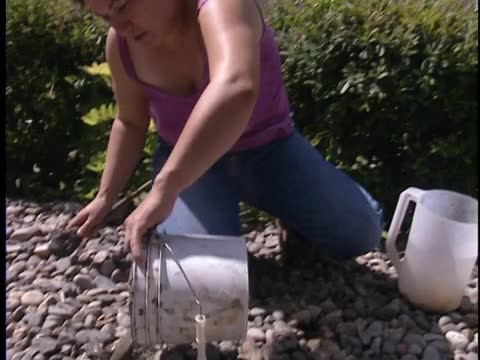
- This file contains raw footage of a woman working on a tile mosaic and carrying about a box of tiles. File mainly consists of an interview with Robert Romero about Martineztown neighborhood in Albuquerque (New Mexico).
- Created Date
- 2002
- Asset type
- Raw Footage
- Media type
- Moving Image
- Duration
- 00:30:30.117
- Credits
-
-
Interviewee: Romero, Robert
Producer: Purrington, Chris
Producing Organization: KNME-TV (Television station : Albuquerque, N.M.)
- AAPB Contributor Holdings
-
KNME
Identifier: cpb-aacip-c9a37fdf705 (Filename)
Format: Betacam
Generation: Original
Duration: 01:00:00
If you have a copy of this asset and would like us to add it to our catalog, please contact us.
- Citations
- Chicago: “¡Colores!; 1401; Albuquerque's Historic Neighborhoods; AHN INT Robert Romero 1; Interview with Robert Romero 2,” 2002, New Mexico PBS, American Archive of Public Broadcasting (GBH and the Library of Congress), Boston, MA and Washington, DC, accessed April 4, 2026, http://americanarchive.org/catalog/cpb-aacip-191-9351cfc6.
- MLA: “¡Colores!; 1401; Albuquerque's Historic Neighborhoods; AHN INT Robert Romero 1; Interview with Robert Romero 2.” 2002. New Mexico PBS, American Archive of Public Broadcasting (GBH and the Library of Congress), Boston, MA and Washington, DC. Web. April 4, 2026. <http://americanarchive.org/catalog/cpb-aacip-191-9351cfc6>.
- APA: ¡Colores!; 1401; Albuquerque's Historic Neighborhoods; AHN INT Robert Romero 1; Interview with Robert Romero 2. Boston, MA: New Mexico PBS, American Archive of Public Broadcasting (GBH and the Library of Congress), Boston, MA and Washington, DC. Retrieved from http://americanarchive.org/catalog/cpb-aacip-191-9351cfc6