New Mexico in Focus; New Mexico in Focus #421; 421; Net Neutrality
- Transcript
for the production of New Mexico in focus, provided by the McEun Charitable Foundation. Ahead this week, the battle over the future of the Internet comes to New Mexico, and there's no shortage of opinions on the issue. Access to this communications infrastructure and this day in the age, I think, is pretty much of a civil right. Plus, new ripples in the local media landscape as an entire new staff is laid off. What it will mean for the state of local journalism. The Mexico in focus starts now. The news about the closing of the online news site that a Mexico independent came out on Wednesday on Facebook and Twitter of all places. Officials say the site may return in the future in some form if new funding sources can be identified. But in the meantime, the entire new staff has been laid off and another local news voice has been effectively silenced. This week on the Mexico in focus, opinions about what went wrong and what impact the loss will have on local journalism. The independent was one of the first truly local online news outlets in New Mexico, and this week the battle over the future of the Internet
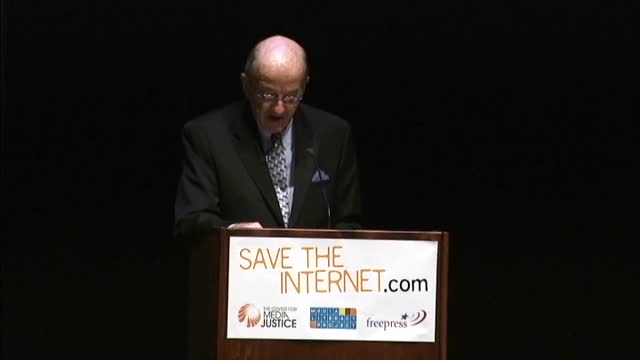
landed right here in Albuquerque. A town hall in the future of the web attracted more than 400 people to the National Hispanic Cultural Center. They came in large part to support the idea of net neutrality and here from FCC Commissioner Michael Cops. Net neutrality is the idea that all content on the Internet should be treated equally and that Internet service providers shouldn't discriminate between different types of content or create tiered levels of broadband speed for higher paying customers. Here are some of the highlights of the event. We are here tonight to discuss the future of the Internet. This debate is about more than AT &T and eBay, Comcast, or Google. It's about the future of all communication in America. More and more the country is moving online and the future of the Internet is important to the future of news and journalism, education and entertainment, innovation and the economy and community engagement and democracy. Democracy
should not be for just a few. America cannot afford to have a digital divide between haves and have nots and between those living in big cities in the rural countryside. This is not just about competitiveness I'm talking about. It's about justice too long delayed for people who have been too long denied. Because there is a lack of meaningful competition in the broadband marketplace, we are seeing higher bills for poor service while our poor and rural communities are left out altogether. We see this first hand in the Native American communities. The National Broadband Plan found that fewer than 10 % of residents on tribal lands have access to broadband service. But instead of spending money and time on building out networks to unserved and underserved communities like ours, the phone and cable companies are spending money lobbying in the Washington to kill net neutrality. Not
all of our populations have access to the tools and technologies they need to thrive in the 21st century. It's an national disgrace and we need to fix it. We know there's a correlation between how our communities are portrayed in the media and the government policies that place control of the media in the hands of a few. This is why the debate in Washington over net neutrality and our free speech online is so vital to the future of our communities. Today, the Internet is an open network, which means that no company or government body has centralized control over the free flow of information. Right now, unlike broadcast media, nobody gets preferential treatment on the Internet. Everybody's speech, websites, and other content gets treated the same. The Internet has the lowest barriers to entry for our communities. And this is critical because we own so few radio, TV, and cable outlets. Without network neutrality, discrimination will become the rule and our voices will become marginalized. If you run an Internet company, you're just as
good in moda as you are in Manhattan. And so I will put our human capital here in New Mexico against any state in this country, the innovation, the love, the family, the entrepreneurial skills. If we give our children access to the Internet, we teach them media literacy skills. They will shine in a 21st century economy. Most of us understand how important the Internet and access to high -speed broadband are to the future of our country. This is an incredible technology that intersects with just about every great challenge the nation confronts, whether it's jobs or education, or energy, or health care, or our civic dialogue. There is no solution for any one of those problems that does not have a broadband component to it. We have a technology now with more power to bring about good than any communications advancement in perhaps all of history. And the question is, will we use it in such a way as to maximize its small, de -democratic potential? Or will we turn this too over
to special interests, engage keepers, and toll booths collectors who will short circuit with this great new technology is capable of doing for our country. The Internet was born on openness, it flourished on openness, and it depends upon openness for its continued success. And we must never allow the openness of the Internet to become just another pawn in the hands of powerful corporate interests. Net neutrality is a crucial issue for New Mexico where the digital divide is still alive and well. According to a recent study, we rank 47th in broadband access with more than half the population lacking a connection. Here to talk more about the issue and next steps in the Net neutrality fight is Andrea Kijada, executive director of the Media Literacy Project of New Mexico, one of the sponsors of Tuesday Night's Town Hall. Thank you so much for being here. Thank you for having me, Ken. Putting on the event quite an undertaking. And one of the things I don't think people realize is
that wasn't just a local event in many ways. Right. While it was the culmination of much of the on -ground work that the Media Literacy Project has been doing for the past two years with our local partner organizations, this event and the future of Internet Town Hall was co -sponsored by the Center for Media Justice free press along with the Media Literacy Project. And it was the second in a series of town halls and another one in Minnesota. Yes, in August. Yes, in August, Minnesota had the first one and New Mexico was honored to have the second future of the Internet Town Hall. And it's just been an amazing ride. Lots of partnership, both nationally and locally. And FCC Commissioner Cops, he talked about this on Tuesday night as a civil rights issue. And you hear a lot of talk about Net neutrality, freedom of the Internet as a free speech issue. I assume that's your take on this as well. And can you talk a little bit about what this means to you and the organization? Sure. Not only do we see it as a free speech issue, but the Internet is essentially
the cornerstone to a 21st century economy. And Net neutrality is the bill of rights to ensure that every American has equal access to participate in that economy. And for us, when we look at local communities and rural communities and all the communities that are in New Mexico, given what's going on with the economy today, we know that everyone deserves equal access to participate. Folks, it was our Tuesday night. I also heard, I had those numbers at the beginning, we ranked 47th, less than half with the Internet access. But if you take pockets, it's even worse. And when you look at the Native American community, something like 10%, right, that have reliable, dependable, regular Internet access. Yes. And that 10 % is a national number. So when we say 10 % of Indian country is connected, that's looking across the entire country. So you're going to have various Native communities that are going to be more connected and some that are not connected at all. And so you'll see that disparity as well. And when we're talking about the issue of freedom, I think it could still be sort of a muddy area for people.
So without net neutrality, pain is the worst case picture. What are some of the things that you think can happen if we don't enforce and institute these rules? Without net neutrality, what we'll have is a tiered system, where we're going to have even less opportunity to tell our own stories, to voice our own opinions. And these are promises made throughout the years with various types of media. We were made that promise with radio, that we would all be able to access radio and participate in radio, and we've seen what has happened as it's become corporatized. And the same thing with television. We were made that same promise that television will be this amazing opportunity. We're all going to be able to participate. And again, corporations came in, and it looks very different now than the idea of television versus the reality of television. And the internet has always been free. That we've always had internet freedom. We've always been able to get on, create, innovate, which is what this country champions, is innovation and ingenuity. And we want to be able to
continue that. And without net neutrality, we won't be able to have that. And that means that a small company in Mora won't be given the same access to reach an audience or to reach consumers as a business in Manhattan. And we don't think that that's okay, that we want Mora to have the same opportunities as Manhattan. So there's a couple avenues to achieve your goals. The Congress could step in, haven't shown much willingness to do that. The FCC could also step in and enforce net neutrality rules. They've been a little reticent too. But there's a couple of ways that the FCC can even approach this. And one would be reclassification of internet. Can you talk a little bit about how they look at the internet now and how you'd like to see that change? Sure. So what it is is that the FCC has currently designated internet as an information service and not a communication service. And what that has meant is that when they were taken
to court by Comcast, the court decision ruled that FCC may not have even had the authority to take it to the court because anything going on with the, it was a bit torrent case. And that anything with, that had to do with the internet, they didn't have jurisdiction over because it was an information service. So what we're saying is we need, and what we're asking, is we are asking for the FCC to reclassify broadband as a communication service. And the people have spoken, not just in New Mexico, but also in Minnesota at the town halls. And all across the nation, the people are speaking now and saying we want this reclassification. And in terms of that court case that you were just talking about, it had to do with Comcast versus BitTorrentSight, which are these large, massive sharing sites on the website where people can share movies or music. But they take up a lot of broadband and can slow down other people's internet access.
And so Comcast, their argument was they were trying to keep that, in a way, a level playing field so that other people aren't slowed down by these massive sites. And then, in another case, you have spammers and other people who have the ability to inundate the web with what is a nuisance, at least for most people. And so a lot of people say that we don't need an equal playing field here because then you're going to give spammers the same sort of rights as musicians or artists or other people who want to get reliable and good content out on the internet. Do you have an argument against that? I think the bigger issue that we need to really be asking the internet companies and the telcos is how much spectrum do we really have? When we know that we have speeds that are incredibly higher in other countries and we keep being told that we have to slow down or we have to slow down certain speeds and give priority and access to and sort of create this tiered system, I think our bigger question is
why don't we have as much spectrum as other countries? And what's the issue and is it really a spectrum issue or not? And I think that's where we really have to push the corporations to be much more transparent about the spectrum that essentially is ours. And we also see right now where there's talk of broadcasters being offered the opportunity to auction off part of their spectrum that would get a share of that and then the government would be able to use that. So a lot of people say bottom line, however you look at this, it's really just all about the money. Is that sort of the way you see it too? Sadly, we are convinced at this point that the telcos, especially when they're wanting to do backdoor deals and not wanting to be transparent, when we have Verizon or Google meeting with the FCC privately, and meanwhile, we the people are on the mic stating our name, saying what we want and we're being very clear and transparent, we're not convinced that they have the
people's best interest. And so time is not necessarily running out, but you guys really want something done on this by the end of the year. Why is that? We would like to see the FCC reclassify broadband in December. We want to see that happen before the year is out, and before the new Congress comes in in January. And is that because of the Republican gains in the House and maybe not as a friendly environment to bring these issues before them? Well, we're concerned that it might not be seen as a priority once that happens, and so it has less to do with where someone might stand on the issue, as much as the issue even going to be on the table after January. Because a lot of Republicans, including some of the ones who want to be on the committees that would oversee the telecom industries, feel like this is a free market situation. We should let the free market decide this issue. And they also tend to point to the FCC is something we've heard a lot about in the last five to ten years, an agency that may overreach regulatory, that if it's really about freedom of
information and access, this is a group that may be a little trigger -happy on censorship, for instance. And so it probably won't be as favorable environment, too, even if it does come up. Certainly. Although we don't have to look far when we think about what happens in the free market. We have oil spills, we have miners being harmed. So I think we need to also question, what is it that corporations are really wanting to gain? And what is it that the people need? And so you will know before too long about this December deadline, because the agenda for the FCC's they meet once a month, and the agenda for December comes out, I think the 24th or the 25th of November. What if it's not on the agenda in December? What's the strategy then? Well, our plan is that it will be on the agenda. I can say that we will be hand -delivering all of the testimonies that were done at the Town Hall on Tuesday, not just the ones that were done on the mic. We had a video camera in the hallway as well, and we had people leaving video testimonies. We've had a phone number all week that people have been leaving their
testimonies on the phone. So we will be personally hand -delivering those to the FCC. Minnesota has already been delivered, and we will continue to push. And our plan is to make sure that it happens in December. And even if that's successful, I'm sure you guys know that you're probably going to face a legal battle in this fight, no matter what. Any worries about that? At this point, we want to see the reclassification happen. We also want to see with the new Congress, we're hoping that we can extend the Universal Service Fund to include broadband. And so that will be another step that we will fight regardless of the outcome of net neutrality. And what's the sort of the temperature of the New Mexico Congregation, congressional delegation on the issue of net neutrality? Where we know that they stand is we know that they are fully in support of the extension of the Universal Service Fund. We worked with them this year, and they sent a letter to the FCC about that piece. Around the net neutrality issue,
we are still gauging, you know, various, various ones are, I think, a little more hesitant to make a clear stand on that particular issue. And we will continue to work with them. We are following up with Heinrich, and we'll have a delegation meeting there. We're hoping to also have one with Udall's office. So we're going to continue to meet with them and be in conversation. So where can people go if they weren't able to go Tuesday night, they want to give one of those testimonials, make their voice heard, what avenues can they take? Please call our number. We set up a Google number, and that number is 505 -609 -8547. And state your name, where you're from. Tell us your story, and let us know that you want to have Commissioner Genakowski reclassify broadband as a communication service. And again, that number is 505 -609 -8547. And if you can do it in 90 seconds, that would be helpful. Thanks so much for being here. We appreciate your time and your work. Thank you. Thanks, Kevin. We've got more with Andrea Cajada on our website. Just look for the New Mexico and Focus link at knme .org. Right now, let's send it back to Gene for more opinion and
insight on this fight with our line panelists. Our regular is, they're all off this week, but who cares? We've got some great familiar phrases around the table starting with. Marisa de Marco, managing editor of the weekly alibi. Tom Garrity, an old friend here. He's president of a local PR firm, the Garrity Group. Also with us this week, Phil Marquez. You remember him for last week, a former talk show radio host at 15 .15pm. And we welcome back our good friend Antoinette Cedillo Lopez, professor of law at UNM. Now, guys, the net neutrality fight has been going on for a long time. Looks like it's going to go on for a little bit longer for sure. We had our interview with Kevin and our guest talking about Antoinette. What's, what the problem is so far with net neutrality. Partly is there's a co -mingling of terms here. Digital divide versus net neutrality. We are 47th of the country as far as folks getting wired. That's a divide. That's a huge divide. That's a huge gulf. But on net neutrality, the FCC commissioner was here and we had his
group in the event on Tuesday. What's your sense of where this is headed at this point? Because it's become very tricky for a lot of people. Well, I think the problem is, is making money off the internet. That's sort of the foundational problem. The big companies think they know how to make money and money talks. But I think there's a relationship between them. For example, my mother lives in Las Chabas. She has a very hard time getting internet access. It's not very good. It's not very fast. That divide is also with access. I think it's a really important issue. And I think they're on to something. I think it's important that everybody get the same level of service. And it's important that content be neutral. And it's important that editing of information doesn't happen. So I really like the idea of net neutrality. And I think they're on to something. I hope it goes there. But the politics don't look good. Sure. Absolutely. Tom, good to see you. But your group does a little work with Comcast. Not on this issue of net neutrality, but we want to get that out there. Your sense of it coming
from the providers side, meaning the Comcast, the Quest, and those folks of the world. These people are wrestling with some very serious issues about traffic management, and engineering when you really get down to 80 % of the net traffic they handle. Spam, it's bots, it's a lot of big problems. Is there, in fact, a problem with trying to segregate some of this stuff out and create a tiered system? Well, I think, and again, thank you for claiming the disclosure there. With regards to net neutrality, I think what we have is a solution in search of a problem. All that, from the research that I've looked at or looking at, is simply a toll road being set up. And even though we don't have a lot of toll roads in New Mexico, if you get on a toll road and any other state you pay for access, you don't have any control over the restaurants you go to, the gas where you can get gas. But it runs parallel to the public interstate. They both get to the same destination. They're just two different vehicles. So I don't really think that, I think, again, it is a solution in search for a problem. One of the things that a lot of folks don't take into account is the kind of support that these organizations give
when it comes to providing support for like 9 -1 -1 services, for example. The priority is placed with 9 -1 -1. Whereas if it's totally open, 9 -1 -1 calls could be determined based on, or could be routed based on who's watching a Bristol Palin video on YouTube. You know, because it really, you know, if there's no order, you know, basically chaos reigns. Marisa, again, net neutrality, the idea that it can be the same for everybody. Spammers, you, Phil, Antoinette, anybody, Tom, myself. Is that an appropriate system looking down the road? Is this, in fact, possible to be open, neutral, as Antoinette just mentioned, and everyone gets the same amount of bandwidth? Is that actually possible in this world? I think that the internet has been, in a lot of ways, the great equalizer. And it's allowed a lot of people opportunities to create businesses, to gain attention for themselves, to create a presence in the larger kind of information
community. We actually sent a reporter named Sam Adams down to the FCC hearing, and he got to speak with Commissioner Cops. And they were unable to really pin down when we're going to see this happen, when this is going to be on the FCC's plate, but they said probably in 2011. And part of the problem is that now the FCC is going to be kind of running up against a Republican Congress. Phil, again, you know, the idea that folks have to pay for certain tiered systems to get certain amounts of information, you know, rubs a lot of people the wrong way. But we have examples of that already in this country for other things. Is this something the public could eventually support at some point, and the carriers get their way, or is this fight winnable to have everything as flat as possible? This is about money. ASCAP BMI. Familiar name for broadcasters. You pay a fee every month so that you can use the music when you hear a commercial. That commercial music has been paid for. Every media in the country has to pay ASCAP BMI to use broadcasting rights to use that music.
What you're going to see happen, I think eventually, is that there's going to be a charge. And a good example is let's say you go to Starbucks. Starbucks pays a fee of $50 a month to have the internet. But yet they serve 15, 20 people outside using the wireless. Is it fair to the provider that 15 people get it for free? Those are the questions that it comes down to. We can talk about neutrality and equal and all that good stuff. But the bottom line is it's really coming down to pay to use. And a finding a way in which to charge the people to use it. Very similar to what we were talking about earlier and off the air. Eventually, enjoy NFL football on free TV. Eventually, you will pay to watch football. The move is that direction. The question is how fair will it be and can people afford it? And tonight, come here. Go ahead. I think there's an important point here in that we already do pay for internet. And that we're talking about is the ability for everyone to freely access information. So we're not talking about free internet for everyone and we're not talking about it. It is about being able to
see whatever you want to on the internet. Here's my question on that. And just be devil's advocate for a second. I have not read anyone advocating for the fact that somebody needs to have their internet speed slowed down to make room for somebody else. Or the fact that you're going to have to pay something different because somebody else is doing something. Is this a bit of a stocking horse here? I don't see it. I don't see how people are proposing this. So I'm not quite clear where the fight is coming on net neutrality, where people are coming from. I think proponents have argued that companies could block access to competitive competitors' websites, to say things about them that they don't like. So the proponents of net neutrality are talking about a kind of censorship. And that seems to be where the fight is coming from. It's really anti -culture of the internet because one thing that's exciting about the internet is information wants to be free. And so even when people try to censor and try to do that, you sort of can't. And people are able to get things out there that was really
in distribute things. It was really hard to distribute before. Now yes, some of it includes spam and other things we don't want. But I think once you have companies controlling the information, it is going to be controlled. And there are going to be sites that won't get the traffic that they get now. And it's just because the company decides that. And that's the problem. Yeah. And Tom, again, another devil's out of the question. The original court fight against BitTorrent. One of the file sharing sites that slurp a ton of, they push out a ton of bandwidth. What is the matter with charging those guys? A little bit of extra money as opposed to you and I. Who are uploading email or uploading pictures of our kids and whatever. We're using tiny bits of information. What is the matter with charging people who upload tons of information? You know, I mean, you know, with. I don't think that there's an issue with that. I mean, we're in a capitalistic society. You know, if people are going to want to use and have access to high internet speeds for their own commercial reasons, sure,
you know, they should pay for it. But I'm not convinced that the current legislation or the current thoughts of saying, let's quick hurry up, let's create some legislation or let's create some type of regulations. Just overnight, just to appease, you know, a few special interests is necessarily in the best interests of all internet users. Because, you know, it didn't, you know, the internet started not as, you know, a social experiment started out as an engineering tool. And all of a sudden they have, you know, rules and regulations brought in without thoroughly studying the issue, I think, is potentially disastrous. I think at the end of the day, you mentioned that word engineering. It's an engineering problem for these people. They're managing a lot of traffic. I'm not saying they're right or wrong. I'm just saying, this is a difficulty for them. Let's see how this all shakes out. Go ahead, please. In financial, for sure. Let us know what you think about the issue of net neutrality. You can always drop us a line on Facebook or Twitter. Ha -ha, or shoot us an e -mail at infoqs at KeanuMe .org or give us a call the old fashioned way 277 -1246. You can watch the entire town hall from the National Hispanic Cultural Center on our website. Just head to KeanuMe .org and follow the New Mexico and Focus
link. We've also got more information about net neutrality and the FCC there as well. Still ahead this week on the line, Thanksgiving is less than a week away. The holiday is filled with many traditions and here in New Mexico many of those traditions are tied up in the food we eat. Local author and photographer Sharon Ederman's new book, Chronicles Some of Those Tasty Traditions and we've got your preview. It's so inspiring that these traditions keep families together, keep people on the land. There's no separation. And in a way, it's all about New Mexico's soul food. And it is where the soul of our culture is. Back here now at the line round table. We welcome all opinions on the important discussions and debates of our day. Local journalism took a big hit this week with the announcement that the online news outlet in New Mexico independent was effectively closing shop. The website came along at a time when the community was still coming to grips with losing the Albuquerque Tribune, still a heart breaker around these parts. Now news
consumers are left to confront the full force of losing two acclaimed and renowned journalistic entities. Fill the independent really, really made an impact in two and a half years. I mean, when you really get down to it, these folks and those people that work there reshaped how news gathering and dissemination worked in this state. So where do we go from here? Is this model viable? Is this a warning of what's going on here? This is a prime example of mirroring paper product print. What you're seeing is print 5 % down nationwide in subscriptions. Print has had a terrible time selling advertising and maintaining that advertising. Millions of dollars to spend this election, most of electronic, very little bit, went to print. Some internet, if you went to certain sites, the ads popped up in front of you so that you could vote for someone. But the issue is, will people be willing to pay for information? And the question is, is what information do people want to pay for? So you look at it from a free enterprise system, whether or not people were willing to spend the money to look at this particular
internet news program. Whether or not they could raise the funds either through private or through advertising. And I think it really comes down to that, which is proof again that if you don't have that base of advertising and marketing, I don't care what you put out there, it's just not going to last. Marisa, for example, the alibi, you don't pay to get it off the rack, it's for free, but you're supported by advertisers. And is that model, again, can you migrate that very model? You have a very vigorous website presence as well. I'm going to throw that in there and having great success with it. Is this model possible that you can almost do a newspaper type alibi type thing on an internet website and be financially viable? Yeah, absolutely. I think it's definitely viable whether you're talking about something that's for profit or non -profit. I think that when I was researching this article in 2008, the New Mexico independent had a huge amount of contributions. They didn't have as many a couple years down the road. And in one of the articles that mentioned that the people running the site had only secured when your
commitments from the contributors. And so I don't think that the problem is necessarily that either NMI's model doesn't work or that it wasn't valuable or award -winning or did amazing things for this community. But it just didn't work out this time. Now, to stay with you, I'm sure you guys wrestle with this all the time. Your publishers, your bosses, do we charge for the alibi or do we not? Do you think it's something that folks, I mean, they proved a point, NMI. They proved a point. They have quality. At some point, do you think it has to be a situation where you're willing to spend, I don't know, a dollar a day, a ten bucks a month, whatever it is. Is that a viable option? I don't know if they wrestle with the idea of charging for the alibi. I think that we're working in the model that is succeeding across the country, which is that the paper is free. And historically. And it works. And we have advertisers, and I think NMI was free. And
I think that their model could have worked. Yeah. And I guess I just want to say to you that they did a lot of really amazing work in New Mexico. They broke a lot of stories. They brought together a lot of journalists to cover elections and the legislature. They live -blogged the legislature. And it's kind of at a time where political news teams are smaller and smaller and smaller. So it was a really good opportunity to create kind of a very large news team that was made above journalists from all different kind of media outlets. And it created a filled kind of a coverage gap that should occur in this state. And Tom, what Marisa is describing is the pain of losing a hip of just what she described. That's why this is so painful. Because what they did was so tremendous and interesting. So what's your thought about the future of sites like this? Well, I think when we take a look at how far journalism has come on the internet. We can see also parallel with that how much the internet has changed over the last five, six, ten years. Back five, six, ten years
ago we had sites like Excite and at home that were the top search engines. Now it's like they don't even exist. So the model is continually changing. I think the bigger concern for all of us here is the rise of the citizen journalist. What training do they have to be a citizen journalist? And do they know how to get those sides of the story? Know what hearsay is? Know what, you know, how attributions are handled. You know, I think that is really the bigger issue that's hitting us. It's just manifesting itself right now as far as how news organizations represent themselves on the internet. I think the Wall Street Journal, New York Times, have been very successful in showing, you know, subscription patterns and things of that nature. But those publications are targeting a tremendously older demographic. You know, the real opportunity, I think, for a lot of organizations, as we've seen with the alibi, as well as with other, you know, leading niche news organizations, is that how do you capture the younger subscriber? What are they willing to pay for? Do they want to get the news on their phone, or are they going to actually go through a website like Facebook, probably not?
You know, but it's an evolving model, and so it's going to be exciting to see, but I think at the base of it all, is how are we training folks to understand what journalism is all about? And I think that's what will ultimately threaten, you know, our society as a whole, is, you know, what training do they have? And, you know, how are they? Are they just the better marketer, or are they the better journalists? I think the New Mexico independent show that the better journalists are now looking for work. Well said, please. That was interesting in researching this article. I hadn't realized that it was a nonprofit. I thought they were making their money on advertising. And so that it was a nonprofit model, and that the funding sort of started drying up. Like they hadn't gotten the funders to commit for a longer term. So I think it's really viable if they had a better business plan. And so I hope they come back. It's sad to see them, but I think you're right. Just media is going to have to evolve, and they're just going to have to figure out a longer term business plan, because they were awesome while they were around. Interesting,
isn't it? You've been around the whole media for different times, radio, print, and all this kind of thing. Again, you know, San Diego has a fabulous online news source, all San Diego ex -real reporters from San Diego papers. Is that what it's going to take versus what Tom mentioned to the citizen journalists? Do we have to have trust in what we're reading, that we trust these people, have the chops to vet these kind of things? Three years ago, we were talking about news, closed down in Albuquerque. I'm rather in Denver. One of the first things that the group wanted to do was form a news program on the internet. Unfortunately, it's having a hard time. There is yet to be a decision made by the consumer that says, I'm willing to pay X amount of dollars for internet news. Some of the national news, there's a conflict between a newspaper. For example, saying, look, I'm going to put out all these papers. I'm going to put all these pages. I'm going to do all this distribution. I'm going to put out reporters. I'm going to do my editorial, et cetera. And then I'm going to give it away free on the internet. How do I justify it? How do I balance that? You'll find that a lot of newspapers are taking parts and bits and pieces of their daily, and throwing it on instead of the whole paper so that you are
forced to go out and really read it, you have to buy that paper. So there is a real balancing act there, but the reality of it coming down to it. It comes down to money because no matter how you do it, somebody's got to sell it so that they can deliver it so that you can read it. That's a good point right there. Now, New Mexico in focus has had the pleasure to collaborate with the New Mexico Independent on many projects, from mayoral forums to election coverage and beyond. They are a talented bunch, dedicated journalists who did yeoman's work without a lot of resources, meaning they were underpaid. On the local media landscape, they'll slowly be missed by us, their readers. We wish them all the luck in the future. We at New Mexico in focus are proud of the fact that our partnerships with many of the independent staff will continue. And that includes former managing editor Gwyneth Dolan, who also serves as a correspondent here on the show. She found a little time this week to get everyone in the holiday spirit by sitting down the Sharon Neederman, author of the new book, New Mexico's Tasty Traditions. Sharon Neederman, your new book, your fourth book comes out at the beginning of December. It's called
New Mexico's Tasty Traditions. This is wonderful. Thank you, Gwen. May I make one? I'm trying to correct it. It's actually my tenth book. Your tenth? But the fourth I've illustrated with my own photos. Oh, we were just talking about your photos. It's almost half photography. There are tons of pictures in here. One of the things that struck me about this book is that I think it really captures a part of New Mexico that we don't necessarily often see in these books. You've really tapped into cowboy culture in here. And a lot of urban albuquerque culture. It ties in everything. Tell me about some of the cowboy stories in here. One reason why I love New Mexico so much and I think you share my love of it in this way is that we live in so many parallel universes. We can go from urban albuquerque to cowboy culture very quickly. And I've been very, very fortunate to have entrated that culture through my associations with ranch women and the New Mexico Beef Council. And I have always
found their life ways and their stories extremely interesting and inspiring. And I am a real believer in the revitalization and the preservation of urban life. And it's almost like now with people turning their front yard gardens into tomato patches and abiaries and chicken coops. It's like the rural life is coming to the city. It is. And so there's a lot of history in here, but it's also very up to the minute. One of the historical things in here that surprised me there's a recipe for something. I don't even know how to pronounce. Potica? Potica? Yes, that is potato bread. And that's been a great quest of mine. I set out on that quest many years ago to find out what was potato bread. Now let me just say that it is really a cake. It's really not a bread. I want to call it a bread because I'm going to convince myself that the calories involved in a bread are fewer than those involved in a cake. That may be why it's called a bread. But
potato bread was a specialty of people who lived in the coal mining camps. And my quest was to find out, well, is this a Hispanic product? Is it Italian? Is it Slavic? Because all the different cultures seem to make it. And I found out through my research and interviews, and of course the tasting of many Potica breads, that it is a Slovenian bread originally. And the people in the mining camps, it was so beloved at a custom, at Christmas time, and Easter, and holidays, taught it to all their neighbors, and it caught on. So you'll find it in areas like the area where I live. A lot of people have treasured memories of it in Gallup, where there was coal mining, and all the way up into the Midwest and Wyoming, in any place where there was a mining culture. Is this something we can get at restaurants now? I think it's something that you have to have an 80 -year -old plus Ukrainian grandma to get it. Because only you have to be at least 80 years old to be able
to roll the dough out thin enough on the dining room table and prick it with your knitting needles. That is a skill, isn't it? But there are some younger women taking it up now. It's kind of an all -day deal, as they say on the ranch. Right. There are some other special things that you've pulled into here. One of the recipes struck me. Chile is Steal Nuevo Mexico, which is chicken with lemon grass and Chilean caramel sauce. Now, that sounds Vietnamese to me. Well, I think it's a new twist. One of my goals with the book was to go beyond red and green. There were so many wonderful books that really celebrate all things red and green. And this recipe that you're talking about comes from a very interesting woman, a lady who grew up in Chimayo. Left went to San Francisco, had a career in marketing, and felt that call to come back to Chimayo. So, and take up her grandmother's six acres. And she now grows Chimayo Chile there from the heirloom seeds,
the land -race chili seeds of Chimayo, watered by the local Assequias. And she also grows flowers and dries them and makes wonderful, wonderful, beautiful arrangements. So she comes to the local use of Chile with the big city spin. Well, this is magnificent because this looks to me like a dish that I'm familiar with that I think is called caramel chicken, or chicken in a clay pot, kind of an often done with pork, too. I had this in hand noise, matter of fact. But it does have the Chimayo chili, but lemon grass, fish sauce, and caramel sauce. I can't wait to try this. This is not chicken and regular red chili. It's quite a fusion. It really is. And that's what I loved about doing this book is I can go deeply into the people's, the individual people who shared their stories and their recipes with me so generously. And find out the roots of them. And as you said, the history, the history of the utensils, the history with how things are grown and produced. And I think it's so
inspiring that these traditions keep families together, keep people on the land. There's no separation. And in a way, it's all about New Mexico's soul food. And it is where the soul of our culture is. And I think as we go along when, and no one knows this better than you, that the our personal health and the health of the planet are inseparable. They are one and the same. And I'm amazed to see that even in the couple of years since I began this book about three years ago, began pulling my essays together for it. I had an essay on urban gardeners. And it was kind of a little bit of a cookie idea then. And now we're all doing it. So I think that these ideas are catching on very fast. So tell me about the process of putting the book together. You wrote, this is published by New Mexico Magazine. And you wrote for New Mexico Magazine for many years. But not all of these started out as stories for there. How did you put this together? Well,
about half the book is started out as assignments from various publications, because I did freelance all over the state for a long, long time. So they started out perhaps as shorter articles for, I remember I did a big story for the Sage Magazine of the Albuquerque Journal on Women in Agriculture. And Sunset Magazine, New Mexico Magazine, Urban Companion. And about half the book I then went out and specifically wrote for the book. And so I expanded these essays. And they are the result of my wanderings and meanderings for 20 years all over the state. And finding those great little roadside cafes and just following my instincts, following my bliss you might say. Well, they make you seem very lucky. I'm envious. I want to go back and retrace all of your steps here. It just is a chronicle of what looks like a whole bunch of grand experiments. We were talking earlier. You were so nice to bring me a jar of jam. And I've been looking at your
choke cherry section here. I have had some magnificent choke cherry jams and sauces and syrups up north in New Mexico. And this has got me excited to do it. Well, yeah, that's a story on foraging that originally appeared in the Urban Companion. And as you know, I live up north. And my husband is a local born and raised northeast New Mexico Colfax County guy. And he grew up foraging. So he's taught me a lot about it. He grew up foraging for mushrooms and dandelions. And now it is one of our great summer fall pleasures to go foraging and simmer on canyon. And this year alone, we found wild plums. I think I brought you a jar of wild plum and choke cherries and wild apricots and also apples. In addition, this year when up in sugary canyon, I have also found wild raspberries, dandelions. And there's a lot to it. You really feel like you're in the garden of Eden when you're out there. And you realize that the great spirit has
provided us with such a wealth and section abundance. And it's up to us to cherish it and care for it and appreciate it. So my mother -in -law now deceased taught us how to make the jelly. And now it's our family tradition. You know, choke cherries, I haven't seen them on the bush, but they look to me like currents. Do they have, and they have a similar flavor, quite tart. Quite tart and actually inedible unless they're prepared. They have to be dried or cooked. Interesting in my research, I found out that the choke cherry was pounded together with buffalo meat and dried and rolled up. And it became pemican, which became a staple. The acidity of the berries would have helped to preserve it. And became a perfect traveling food. Now, this is your tenth book. I won't ask you how many years ago it was that you published your first, but more than ten. That's safe. Tell me just for a minute, how has the publishing business changed since you started in the book industry? Well,
I think we all know that publishing is in a huge transition right now. And I can just speak about it from my own point of view. I think by concentrating in a niche, which I have. And I believe about writing that we each have our own path and we have to follow that. It just seems to me that by exploring and celebrating a particular niche, I have been able to go forward with the book projects I have wanted to. My next book coming out after this one, the one I'm working on right now is called Shrines and Signs, Spiritual Journeys Across New Mexico, which is another visit to many, many festivals and ceremonies and is a thrilling book to put together. And then there's one coming online right after that having to do with a cache of papers and photos I have found buried in the Ratton Public Library, revealing photos of Lucien Maxwell and the Maxwell Land Grant. And many, many
wonderful documents that have been forgotten. And that's in the process of becoming another book. So I guess as far as the publishing industry goes, yes, I now have two blogs. Yes, I Facebook like crazy. And I love, you're my Facebook friend, Graham. I love social media. And I just think you have to be open to each one as it comes along and to not be afraid of change and not to be afraid of learning the new technologies. I just took a blogging workshop last weekend as a matter of fact. And I'm looking at doing some e -books out of little essays I'm putting together right now. I've read your blog. I think you're great at blogging. Thank you, Gwen. Thank you very much. So are you collecting ideas through social media? Are you doing crowdsourcing for some of your recipes or for ideas for places to go and visit for your new books? Are you getting ideas on Facebook? I get lots of ideas and I love sharing ideas on Facebook. Absolutely. And recipes too, for sure. And they will be on my new
blog, which is called New Mexico's Tasty Traditions. This has changed so much, even since I started writing when people would send me recipes printed on paper in the mail. No, nobody does that anymore. No, no, no. All I can say is open your arms and embrace it. And it's totally rich and abundant as any other form. As my friend Miriam Sagan says, there is a straight line between the mimeograph machine and the blog. And it's opening up ways of expression, but they're not necessarily what we grew up with or learned about in school. So how are you going to celebrate the publication of this book? Oh my gosh, are you asking me where I'm going to eat after the first book signing? Well, that's a good question. Tell me, where are you going to eat? I'm debating a few places, actually. The first one will be in Santa Fe at Collected Works at 4 o 'clock, December 4th. The Albuquerque kick off. Please come if you can. It will be at Book Works on Rio Grande at 3 o 'clock, Sunday, December
5th. So then there'll be another signing in Las Vegas on December 12th at Tom on the Range. And I really want to give thanks and credit to my wonderful team. My designer, Betty Brotsky, is responsible very much for the look of the book. And I'm so grateful to her for allowing me to sit beside her and collaborate in the wonderful way she interpreted my ideas for the book. And that's why I started taking pictures, Gwen. As you know, you're on assignment and a photographer gets sent. And so often, the photos that come out are not in line with what you had in mind for your source of thought. I better start taking my own pictures. And so Betty Brotsky did a fabulous job with that. And my editor, of course, my longtime editor, collaborator and friend Emily Drovansky at New Mexico Magazine. Very grateful to them for being so receptive to my ideas and working with me on them. Well, congratulations on the book. And thank you for being with us here today. Thank you so much, Gwen. See you soon.
Now, rhetoric, for perhaps not reason, takes flight as we go on the clock and give each of the following topics just one minute as a group. Now, with the years busiest travel day coming up, the Transportation Security Administration or TSA is catching a lot of flack over their new full -body scanners as well as their put on the gloves touchy -feely. Let me see if you've got a bomb on you thing, which many see as a privacy violation. Some are even encouraging people to protest by refusing to be scanned the day before Thanksgiving. Americans are raised to expect privacy, Tom. But let me ask you a question. You know, the TSA guy took a beating in Congress because no one's happy with this. All the late -night comics I have in a field, they have full -body scans which are supposed to be destroyed. Suddenly, they're out there, huffing and post, had 100 of them, you know, the whole thing. Is this going too far or is this an appropriate level of security to be safe? You know what? I've traveled, let me see, about eight times over the last three weeks. And as far as going through the screening process, it's just a cost of doing business. I mean, I want to make sure that when I get on a plane that I'm safe, I'm okay with doing what needs to be done as long as, you know, a
reasonable restraint is used and, you know, how the information is secure. Was it your view that with the pat down, did you have the pat down? I didn't, actually. You did not have the pat down. All the times I went through the full -body scanner and they just said go on right through. Sure, sure, sure. I saw Sully on TV, the famous pilot saying the pilots are not happy with going through these scans. And their concern is radiation. Right. But I had a pat down if I was flying from Madrid a few years ago and for some reason they decided they were going to pat me down. And it's shocking. It is very shocking. And I can see why the American public is like, oh my god. So we'll see. It's something we're not used to. Ten seconds, Bill. Security. That's what we have to pay the price for the security of 9 -11. Terrorists have done us a number and we're all paying a price for it. Maurice, I'm going to hold you off on that one. UNM has been denied a liquor license for the renovation of the pit. Some people are mighty mad. City councilors cite concerns over public safety and specifically drunk driving after games. But UNM lawyers claim the school is outside the council's jurisdiction, pointing the alcohol sales marisa at the isotopes park as an example. Are they right on that? What's the difference between the pit and isotopes park? I'm not
sure what the difference is between the pit and the isotopes park. Maybe whoever made the decision to give the licensing is really the difference in this situation. I think that we always have to be concerned about drunk driving. I think there's a number of ways to deal with that concern. And right now, universities across the country are selling alcohol at stadiums to pay for renovations that happened at the stadium. UNM and Brigham Young are the only two universities in the Mountain West Conference that do not sell beer at the games. Interesting. Was there a little something actually going on here? Is UNM just not getting a break from anybody for anything right now? Yeah, yeah. For fair use for reasons. Wow. Go Lobos. They're winning. Big. Basketball, rather. Here's a, I'm not one of those that wants to say drink or don't drink, but I really don't see alcohol at the pit. All you've got to do is go to a game like I went through the other night. The crowd went absolutely nuts on the calls. And I
was sitting there thinking, man, if you had a bunch of these guys putting away their booze, we would have been in real trouble. Good one there. Now, a farmington area case where three men allegedly kidnapped, a developmentally disabled Navajo man in Burne, Swastika, and other white supremacist symbols into his skin has gone federal with hate crime charges. This is the first time that the 2009 hate crimes law has been invoked in New Mexico Internet. And, you know, we had a good role about this some months ago here on the line. And, you know, a hate crime charge is a very big deal. So, what are we to do here about this? Is this, in fact, the appropriate stance on this, so this kind of thing just gets dealt with completely? It's interesting because this is the first time in New Mexico that they use this, basically, what is this enhanced sentencing for this kind of racially motivated conduct. And I think it's going to be interesting for the public to watch it and see. Because I think there are a lot of people who are very concerned about this kind of legislation. They said, we already have kidnapping laws. We already have the laws that these hate crime, why do we need the enhancement?
And I think this will illustrate to people, maybe this is why we need the enhancement. This kind of really nasty, racially motivated, cruel acts. Maybe we should do something more. And Tom, you know, up in the four corners, there's folks talking to each other in a positive way to get past a lot of this stuff. It's jumped off a lot of different things. Yeah, you know, evil has many different faces. And it's a tragedy. I'll be interested to see how this plays out. Hopefully, it will play out. So, you know, it starts and continues the discussion that this type of thing ever happens. Ten seconds, Phil. There's been a lot of racial tension over the years in Parminton. And the Native American in the community. But I think over the years that community has worked very, very hard to change that. And I think that it's very careful not to judge the community by the actions of certain crazies. Well said. Now, Arizona surprised the nation by voting to legalize medical marijuana, which will be available to the patients by next year. Yet, doctors are able to prescribe, excuse me, thousands of medicines that the public was never
asked about, because they're expected to understand the pros and cons. For example, they're never asked to vote about oxycontin, valium, viagra, the litamide years ago. Marisa, isn't that the weirdest thing that marijuana, medical marijuana, goes to a public vote? Is that the strangest thing? But Arizona found a way to do it. It becomes such a highly politicized issue for something that is essentially a medical concern. I think that as Arizona moves forward, there's going to be a lot of tension there, because every sheriff and every county attorney in Arizona came out against the proposition as it was coming up. And so it creates a kind of situation where a law is enacted, and then do people feel safe participating, given that it's still illegal federally. And to get it off of the ground is always very awkward. We interviewed a doctor who spoke about being nervous to give the prescriptions, because he's afraid of losing his DEA license. Those are the tensions that are happening in all the 15 states that have
made medical cannabis. We're going to let that voice be the voice of this minute very well done there. Now, we've read out a time on the clock, but you can see our panelists tackle additional topics of the week by following the link to the NMIF page on our homepage, that's canemy .org. That's all the time we have for this week's show. Join us next week for our latest public square installment. This month, we traveled to the eastern part of the state to get thoughts and opinions about the challenges of making sure our children have access to quality health care, even if they live in remote parts of the state. Hear the conversation and find out what their participants and state leaders think can be done to make sure there are enough medical professionals to serve these important communities. Until then, thanks for watching and stay enchanted in Mexico. you
you you you
you you you
you you you
- Series
- New Mexico in Focus
- Program
- New Mexico in Focus #421
- Episode Number
- 421
- Episode
- Net Neutrality
- Contributing Organization
- New Mexico PBS (Albuquerque, New Mexico)
- AAPB ID
- cpb-aacip-191-644qrnmf
If you have more information about this item than what is given here, or if you have concerns about this record, we want to know! Contact us, indicating the AAPB ID (cpb-aacip-191-644qrnmf).
- Description
- Description
- Net Neutrality
- Media type
- Moving Image
- Duration
- 01:03:34.165
- Credits
-
-
Guest: Ifill, Gwen
Host: Grant, Gene
Panelist: Marquez, Phil
Panelist: Sanchez, Laura E.
Panelist: Knudsen, Jon
Panelist: Martin, Sophie
Producer: McDonald, Kevin
- AAPB Contributor Holdings
-
KNME
Identifier: cpb-aacip-67ccbe2a1ab (Filename)
Format: XDCAM
Generation: Master
Duration: 00:58:21
-
KNME
Identifier: cpb-aacip-057987f1b74 (Filename)
Format: XDCAM
Generation: Master
Duration: 00:58:21
If you have a copy of this asset and would like us to add it to our catalog, please contact us.
- Citations
- Chicago: “New Mexico in Focus; New Mexico in Focus #421; 421; Net Neutrality,” New Mexico PBS, American Archive of Public Broadcasting (GBH and the Library of Congress), Boston, MA and Washington, DC, accessed April 2, 2026, http://americanarchive.org/catalog/cpb-aacip-191-644qrnmf.
- MLA: “New Mexico in Focus; New Mexico in Focus #421; 421; Net Neutrality.” New Mexico PBS, American Archive of Public Broadcasting (GBH and the Library of Congress), Boston, MA and Washington, DC. Web. April 2, 2026. <http://americanarchive.org/catalog/cpb-aacip-191-644qrnmf>.
- APA: New Mexico in Focus; New Mexico in Focus #421; 421; Net Neutrality. Boston, MA: New Mexico PBS, American Archive of Public Broadcasting (GBH and the Library of Congress), Boston, MA and Washington, DC. Retrieved from http://americanarchive.org/catalog/cpb-aacip-191-644qrnmf