¡Colores!; 1401; Albuquerque’s Historic Neighborhoods; Cleto Duran, Interview 1
- Transcript
Me I was able to hear you next week. No, but the real question is, what do you get interviewed me? Maybe we'll turn around and have Clinton interview both of us today. We'll sit there. Right? That would be the miracle of... I'm the sanctuary. What would you title the interview? What would you title the interview? What would you title the interview for us? What would you title the interview? Yeah, the interview is like let's say, do you interview both of us? Pervidos. And you're an interviewer of... You're an interviewer of us? What would you title the interview? What would you title of the show for you? Like, when there's... When I put that conversation, I'm pronouncing the word, that's... When I say pronouncing, I'm pronouncing the word. That's not comparable. That's pretty good. That is pretty good. And all done. And then my mother... Shimmie's two days. When so, was it any good? Was it good? You're downright, it was good. Delicious.
You know, it reminds me a lot of hash. Hash, mm-hmm. The mom used to make hash a lot. Do we have any? Fifty. Like, uh... Masking tape. Over there... What do you want? Masked tape. Do we have any... Is that help at all? Yeah, absolutely. Okay, but let me get something there so they stay there then. Is there no going to stay there? No, that's stay there. So we're all able to open up a little bit. How do you open up a little bit? Then one of my fingers, one of my fingers. You said you're going to say something. I knew I knew it was going to say something. Yeah, I understood that. But I hope I made your state. Your visit over here. Enjoyable anyway. Absolutely. More than enjoyable. More than enjoyable.
More than enjoyable. Okay, let's try to piece it up a little bit. Bit of mesa. Let's go. Do you guys ever, um... Guess we'll go out to eat around here. What's your favorite restaurant? Not it. On this side. Okay. Do you want some water? No, I'm good, thanks. Yeah, this is... This is going to look really good. This is going to look very nice. I don't think you tell me... Tell me your name, you know, who you are and where you live and how long you've lived in this neighborhood. My name is Cleto Durán. And I've lived in Old Town, here in Old Town, all my life, as well as all my family, because my ancestors came to this town in the year 1706, under the conquistador, Dom Pedro Chavez Durán, who was the captain of the Francisco Queiro de Valdez.
And I come from Dom Pedro Chavez Durán clan. And so tell me a little bit. Were you, uh... You see what I'm talking? Yeah. So tell me, tell me who you are, your name is, and tell me where it is you live and how long you've lived here. Okay, my name is Cleto Ené Durán. Ené for my mother's last name, no one is. And I have lived here all my life. My family has been in the Albuquerque, or in Old Town since the year 1706. And I claim as an ancestor to Dom Pedro Chavez Durán, who was the captain of the Francisco Queiro de Valdez when they settled in Albuquerque. I was born on San Pascual, just a few blocks from the church, and all of my family was born there, and home that my grandfather had given to my mother and my father.
And we have lived here all of our lives, except one of my brothers who moved to California, and he passed away in California. The rest of us all lived right here in Old Town. Fantastic. Let's do some glasses, sir. There you go. Okay, great. So tell me, do you think that you live in a neighborhood? Do I live in a neighborhood? Yep. What was that again? So do you think that you live in a neighborhood? Do I live in a neighborhood? No, do you think that you live in a neighborhood? Yes, I sure do. I live in a neighborhood, yes, because the people of Old Town have always been a part of our lives, and although the many of the people that were residents here have moved away either to the north. Can I stop right there? Man, this is unacceptable. Yeah.
I don't know what to do. I think he's got a light. Yeah. That's great. So I'm going to ask you this question more time, Plato. Do you think that you live in a neighborhood? Yes, I certainly do. A neighborhood that is slowly disappearing because of the commercialism of the town, but I still feel that we are part of Old Town. I think that the churches kept us together as a neighborhood, although many of the people come from farther away from the Old Town Plaza, but I still think of the area where I was born, where I came from, as a neighborhood. It is a neighborhood, although most of the places have become commercial buildings or businesses, I should say it's still a neighborhood. And then having asked you that, I want to just backtrack a little bit and ask you, so what do you think a neighborhood is? The neighborhood is an area where people live, where people do their business,
where people gather, where people have their roots. That is a neighborhood to me. Good, that was excellent. Okay, so tell me a little bit about what it's like living here. What your memories are, like, you know, to go all the way back to your childhood. Oh, as a child, it was beautiful. Growing up in Old Town to me was a beautiful experience. Something that I shall cherish till the day I die. I grew up in the family of nine. I was a last of nine children, and my mother's brother lived right two houses away from us, and they had 12 children.
And we all lived out here. The neighborhood kept us together for the churches, what really kept us all together. Because, you know, our lives, I've mentioned this many times to a lot of people, that the church has always kept us together and has been the center of our lives. So I find that my name, my childhood, and the idea of living in Old Town, I wouldn't live anywhere else. If you told me that you were going to give me, or that I had won a house up in the Northeast Heights, or on the West Missile, I said thank you very much, but I'm going to stay in Old Town, because this is where my roots are. And most of the family now, that is my generation, or the second generation, we still live around the neighborhood. Some of them have moved up to the Northeast Heights and some to the West Side.
But we are still all together here. We gather together for funerals, or for weddings, or for baptisms, and we still have Old Town as a center of our lives. So I feel I am a part of La Plaza Vieja. So tell me what this, take me back in time a little bit about. What Old Town was like when you were growing up? Well, as I grew up in Old Town, I remember a lot of things. Mostly the activities now. In Old Town, at the time when I was growing up, there were only three or four businesses in the Old Town Plaza. There was the Antony of the Heels Grocer Store on the North Side of Romero, way at the very end of the road. Then there was Charlie Mann, who came in from Valencia, New Mexico, and opened a store right where the basketball shop is. And then there was Louis Pringles Grocer Store in Floreses,
or as Meat Market. And to me, that was where we all did our businesses. When we went up town, it was a preparation that required several days of planning to go to La Plaza Nueva, as we called it, the New Town. Because many of the stores were larger and they had a better selection. We didn't need to go to La Plaza Nueva or New Town to buy clothing because Louis Pringles Store had a lot of the, they had clothing, they had groceries, everything that Janita was there. And so growing up in Old Town was something that was beautiful. And going to town was, because you know that we didn't even have to go to town to go to the movies because don't want some more in where the La Plaza Nueva is right now.
There were two store buildings right there, right in the block where La Plaza Nueva is right now. And he used to show movies quite regularly on weekends. And he was a very enterprise and person. And sometimes the film would break. And in Spanish, he would sing, Venga and Maniana and his Insaniana Maslarga come tomorrow and I'll show you a longer picture. And he would always say that, you know, we only paid a nickel to get in. But that nickel was hard to come by. And also that we always went on the second story. Right before the dining room is right now on top, there was a second story there in that building. So we had that entertainment. And then again, as I said, the entertainment, the activities in the church kept us busy. Now again, all of us here in Old Town were struggling. Our parents, remember, there was no industry out here.
So all of our friends, parents, as well as mine and our relatives, we all had a little garden in the back that kept us very busy. Every house had a pig for Christmas. They had maybe a cow, but for sure chickens or rabbits. And so we were kept busy with the many things that required us to live by. So if the only places that hired a lot of people were the Breastlumber Company, which was on Samil and 12th, and going all the way up to 19th Street, I think there's a new housing building going in that area there. And so that we had irrigation. We had our own garden. We produced everything we needed because if we didn't, you say there wasn't too much work, other than the Santa Fe shops and Breastlumber Company.
So that we had to stay home. We had chores to do is growing up. Everybody had chores to do. Mine was cleaning the cows, barns, every Saturday, the chicken coop, and scrubbing the outhouse. Now you may think that that is funny, but remember that that was way before we had any sewage in Old Town. And that was a weekly show that all of us had to do. We had our jobs to do. All of us youngsters. Of course, we always had our 10 cents to go to town on Sundays at the past time, the 8th or on Central Avenue, for a dime. And one nickel to buy a candied apple or something after the movies. Let me sub right there. Did you guys have a bit? No. I was hearing you just to hide his thumb. I didn't know what that was. That's fantastic. I want to ask you something.
I was really good. Is that good? Is that good? No, that's probably good. Comcune. I tripped on your purse. See? It doesn't look like you wanted it, man. No, the first time I got into it. I didn't. How about you even tied it? You think about it even tied it. I want to ask you to take us back in time. Take us back in time, 70 years. Tell us what this place sounded like. What the smells were like. Well, people that didn't know Old Town, you see, because Old Town did not start becoming an attraction until the 30s. Old Town Plaza. I'm talking about Old Town Plaza. The entertainments were the Old Town Dance Hall, which was right on the corner of Rio Grande and Central. That was a weekly entertainment center, because everyone went out there for dances.
The fellows came up from Los Griegos, Los Candellarias, Martinez, Bareilles, San Jose. They'd come all the way up to Old Town because it used to call it Old Town Society Hall. Not that it was a society-high class. It meant that the organization that owned that place was the Museum of the American Protection Society of Mutual Protection. And so that's why they called it La Sociedad. And that was a place where everybody went to anything. And then the Plaza, there wasn't anything in the Plaza, except the activities of the church. But then again, the annual San Felipe Fiesta, when it was a large gathering of people there. And so we, growing up, it was like being isolated. And we, like I said, we entertain ourselves at home, and we went to school.
The elementary school, the Catholic school used to be right, where the sister's combat is located right next to the church. I went to school there from the first grade up to the fifth, believe it or not. In 1927, the school was moved over to the Old Courthouse, which has since been demolished. And it's now a playground for San Felipe School. And then Old Town School, the public school, was on Rio Grande, or about half a block from Central Avenue. And that's about what one would see in Old Town at that time. I'm sorry, let me stop right there. Old Town was like, you know, back in the 20s and the 30s. Well, I can tell you, I can tell you that in the 30s, the activity in Old Town is just going for groceries, going for meat at the Floresios Amores Meat Market.
And there were also other little houses in there that had a business. Although there were two of them, one was patronized by the Hispanic element. And the other one was patronized by the Anglo element. And there were public houses. I don't want to mention any names, but they were houses, the public houses of Bordeaux and what we'd call them up. Old Town was not, it's not what it is today. As I said, we had activities in the plaza. Now, let's look at it now. We went to church. Masters held every single day of the year. We went to the services during the liturgical activities of the church. For example, at Lent, we went in every single Wednesday and Friday, stations of the cross,
and then Holy Week, the whole week was devoted to the church. Then came the Fiesta, since I've mentioned before. And the Fiesta, that's when everybody and his grandmother came to Old Town for the celebration. Going to Old Town was only to do business at either other stores. Oh, one more thing that was said there. On the North East corner, no, I'm sorry. South East corner of what is the complex of La Placita was a frow walk, which was known Carlos Sabeglas frow, which is a blacksmith shop, the fairier. And then everybody took their horses to have a shout there in Old Town Plaza. Not in the plaza itself, but more or less on Old Town Road. And the interest in La Placita parking lot. And so a lot of kids used to spend some time in there because, you know, what could you see that? You don't see it anymore, but that was an attraction for us.
And going to the park on Sunday was another thing. Going just to walk in and around the park, playing jacks or whatever there was to be done. But Old Town was a quiet place other than the church activities. Great. You know that there were a lot of residential places there in Old Town when I was growing up. And as I said, there were only four or five places of business in there, every single area, every building all around from mountain road all the way up to Central Avenue. There were residential homes. There were only four business places and all the buildings were occupied as residents. For example, where La Placita is right now in the back of it, there were rentals, some of the four people that couldn't afford to my dinner at home, rented places there in La Placita.
So people, there was activity going on in that there were people living in all the homes on the south side of the plaza. As you see it today, there were only two business places, Respringer's house and Floreses of Mora. And then of course, the post office was on the site where one, I think it's the Roadrunner Curious Shop, that used to be the post office. And then on the west side, there was the central metal house and in the corner right there on the north west side of the plaza were homes. There were all rentals. And so that people lived in the plaza. People lived in all the streets going into the plaza, and they were Romero, San Felipe, San Pascual, San Oton Road and Montenores. They were all residential homes.
Now there was no, there was, there wasn't any livestock there. The livestock and the gardens were all outside. In other words, outside of the plaza itself were on San Pascual, Mountain Road, what they call Hollywood today or Mountain Road. All of those, everybody had a place in there. But Old Town itself, in the 30s, up to the 30s, we had family homes. So what do you think about what Old Town has become today? Today Old Town is a tourist attraction, and rightly so, because it is something that started as a church. With a church, somebody had the bright idea that Old Town could become another, I guess, Ovena Street, like a Los Angeles. And all the people started selling their homes to people who wanted to turn it into business.
But from the 30s, I would say, from the 1930s, from 1933 on or 1934, the people started selling their properties and moving out. And it has become a commercial building. I think it is good, Old Town can no longer grow. It can only go north. It can no longer go east because of the museums and the three museums that we have right now. And going south, it can only go across Central Avenue. So what do you think is the future of Old Town? The future of Old Town? I hope it remains as a tourist attraction for Albuquerque, because it is the number one attraction in Albuquerque.
The only thing that I do not want, I would not like to see, let me put it that way, because what I want is one thing, what people want is another thing, I would not like to see any changes in San Felipe Church that is as far as construction, remodeling and all of that, because it is a historic place. And it is the one place that started making Old Town a tourist attraction. In attracted people, because the building is over 200 years old right now. And here in Albuquerque, we have a habit of destroying old builders. And doing it like the Almerado Hotel, the Franciscan Hotel, and all of those buildings, the Old Town Courthouse, all of those buildings were destroyed and yet they were beautiful buildings. I hope that never, never, never happens to San Felipe. And I hope that it will remain that way. I will probably be gone.
And when I like for our future generations to come to Old Town and see something that was there from the year 1700 and say, something still standing there. I said, this place is still standing up. Can you imagine the walls five feet thick in there? And it's still standing up? There's still being used. It's not a museum. It's a working and an active live church. I believe that. You know, we're going to be there on Saturday. We're going to be shooting there. I want to ask you something. These are more general questions. What's up with them? Yeah, it's nice. These are more general questions. Any neighborhood for that matter? I've seen a lot of neighborhoods fade away. I think of one as Martinez down, for example. Martinez is a leader, not just to have three dance halls right I needed. One right after the end, right close to the church. And it was a very thriving community. And people have moved away to better themselves.
I think I, a young agent, now come. I'm thinking very much of the little lady, Mrs. Martinez, I think, where they built the cultural center who wouldn't move out at all after so many arguments and fights with her. She died there. I admire that little lady because she stood up for what she wanted to do. Old town is thriving. And it's going to, we're going to have more people coming in, but it's going to be in the Oscars of the Plaza. I hope that they'll see you. But real estate is coming up pretty good right now, but real estate community is coming up right now. At one time, but real estate was a very thriving community with the railroad shops right there. And the people there all had jobs, so naturally, and it's been revived. And I'm glad to see that coming up.
Doranis is reviving a little bit. The younger people want to move out. They say, oh, we don't want to live out in this area here. Let's go out to Paradise Hill. Let's go out to Taylor Ranch. Let's go up in the Northeast High, and we're going to have a house away from here. Everybody wants to improve themselves. And I think that they're doing the right thing for their children. But as far as this fellow is concerned, I want to die in a place like this. I want to be right here. And I think that my family feels the same way. We want to be part of the old town. And many of the people that are still very active in the church there's nothing like La Plaha Vieja. I think that you can see it by the number of people that attend the church, or the masses, or the services. In San Felipe, every Saturday, and every morning, the church is full.
Of course, there are a lot of tours that come in, because I have been in the church over 200 years old. The only ones that can put clean to that would be some of the old churches in Northern New Mexico. They're like truces in all of those other places. But here, I think that the neighborhood is very close, somehow rather, the people of Old Town are very close. There are some newcomers coming in. But there are a few old towners still in there and the churches keeping us together. So let me ask you, going back to the concept of the importance of the neighborhood. The neighborhood has a entity, as a phenomenon, that they provide themselves. They have pride in that they move forward. Well, there are people... I'm talking now about the Hispanic people, all right? The Hispanic people are very closely needed. They stick together quite a bit.
And I think that the neighborhoods that are still surviving and will survive are the ones that have a large majority of Hispanic residents. And I think that's one of the things that I think is helpful to a neighborhood. Improvements? Yes, improvements are going all the time. Going on all the time, and Old Town, for example, look at the beautiful parks that we have in Old Town. Once people start planting, and I'm a person that loves to plant flowers and whatnot, once people start taking pride in their homes, fixing them up and their yards, they're going to stay there. You're seeing it. In all the neighborhoods, for example, Barelos is doing it. Duranis is doing it. Martinez Town is getting to work very hard at it because of the neighborhood problem in there.
And Hispanic people want to be together. They want to live with their own kind. I hate to say that, but they like to live with their own kind. We have a saying in Spanish, every ship with its own herd or its own flock. Why is this so important to them? Hispanic are always individualistic there that is saying, we have been here so long that we feel that we must stick together. I don't know. I feel that way. I feel that way. I feel that people are... I don't know how to put it. I don't want me... I'm not a racist. I don't want to bring that into...
I'm not a racist. But I think that people want to be themselves. Good. Thank you.
- Series
- ¡Colores!
- Episode Number
- 1401
- Raw Footage
- Cleto Duran, Interview 1
- Producing Organization
- KNME-TV (Television station : Albuquerque, N.M.)
- Contributing Organization
- New Mexico PBS (Albuquerque, New Mexico)
- AAPB ID
- cpb-aacip-191-09w0vv01
If you have more information about this item than what is given here, or if you have concerns about this record, we want to know! Contact us, indicating the AAPB ID (cpb-aacip-191-09w0vv01).
- Description
- Episode Description
- This is raw footage for ¡Colores! #1401 “Albuquerque’s Historic Neighborhoods.” As Albuquerque continues to grow by leaps and bounds, the question comes up as to what will keep us together as a city and as a community. With a little research, it becomes evident that the city’s neighborhoods are our heart and soul. With Albuquerque’s 300th anniversary coming up, it was time to see what is at the heart of some of our neighborhoods: to share their individual histories, challenges and successes. It is also evident that if Albuquerque is going to succeed as a community then it will succeed because of the health and success of its neighborhoods. Also, there are many dedicated people making a difference in their neighborhoods who do not receive any attention, this documentary is an opportunity to acknowledge their hard work and share it with other neighborhoods!
- Raw Footage Description
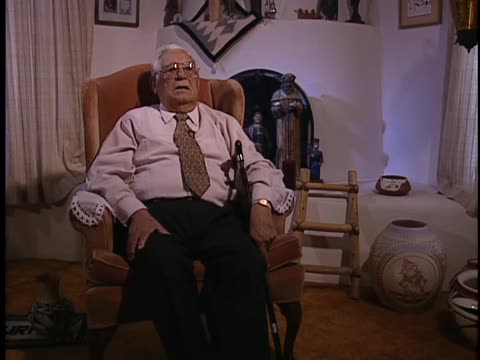
- Cleto Duran talks about living in Old Town Albuquerque.
- Asset type
- Raw Footage
- Media type
- Moving Image
- Duration
- 00:31:00.259
- Credits
-
-
Interviewee: Duran, Cleto
Producing Organization: KNME-TV (Television station : Albuquerque, N.M.)
- AAPB Contributor Holdings
-
KNME
Identifier: cpb-aacip-c91db58c5a6 (Filename)
Format: Betacam: SP
Generation: Original
Duration: 00:30:00
If you have a copy of this asset and would like us to add it to our catalog, please contact us.
- Citations
- Chicago: “¡Colores!; 1401; Albuquerque’s Historic Neighborhoods; Cleto Duran, Interview 1,” New Mexico PBS, American Archive of Public Broadcasting (GBH and the Library of Congress), Boston, MA and Washington, DC, accessed April 5, 2026, http://americanarchive.org/catalog/cpb-aacip-191-09w0vv01.
- MLA: “¡Colores!; 1401; Albuquerque’s Historic Neighborhoods; Cleto Duran, Interview 1.” New Mexico PBS, American Archive of Public Broadcasting (GBH and the Library of Congress), Boston, MA and Washington, DC. Web. April 5, 2026. <http://americanarchive.org/catalog/cpb-aacip-191-09w0vv01>.
- APA: ¡Colores!; 1401; Albuquerque’s Historic Neighborhoods; Cleto Duran, Interview 1. Boston, MA: New Mexico PBS, American Archive of Public Broadcasting (GBH and the Library of Congress), Boston, MA and Washington, DC. Retrieved from http://americanarchive.org/catalog/cpb-aacip-191-09w0vv01