The Line; 204; Phil Casaus, John Carey, Paul Gessing, and Sandra Begay-Campbell
- Transcript
The governor's got a plan to make sure more people get to know the governor's plan. The governor's got a plan. Make sure more people have health insurance, but is it fit for the legislature? Intel's rocky outlook and do we depend too much on the computer chip giant to boost our economy? Negative campaigning, hot button issues or maybe cold hard cash, what's the best way to drive people to the polls this November? We'll explore all the options coming up on the line. Why do you think all of that's going to change? I'm Gene Grant, your host for the line. I'm joined by some new faces as Margaret Montoya and Whitney Chashire are both enjoying
a little R&R. With me tonight are Paul Guessing, president of the Rio Grande Foundation, Phil Cassal's editor of the Albuquerque Tribune, John Kerry, president of the New Mexico Association of Commerce and Industry, and UNM region, Sandra Brigade Campbell. Nearly 400,000 new Mexicans are without the protection of health insurance coverage. Governor Richardson is determined to change that. He's unveiled a series of proposals this week that would expand the state's Medicaid program at a cost of $77 million. He's also set up a high level panel to explore the possible possibility of a universal coverage for all new Mexicans. Of all the governor's ideas, they still require the legislative approval, John. And how do you see these ideas that he's got coming up in their chances in the legislature and with the business community that you work a lot with? I think the fact that New Mexico has one of the highest percentage of uninsured in the nation probably means something will pass a legislature. However, the devil's in the details. And one thing that's important to note about the whole health care debate is we as Americans
can be a little inconsistent. We want affordable, accessible, world-class, cradle to grave health care without paying for it. So I think one of the important questions to ask for the viewers and everyone else is when you see a plan that purports to ensure everybody or improve the system, always ask who pays for it? How is the cost shared? How much is covered by the insurance industry? How much by consumers? How much by physicians? How much by the state and federal government? And it's very complicated and there are no easy solutions. And if there were an easy solution to this problem, we would have found it. How about for those viewers that own a small business and they can't afford or at this point have not covered their employees? Part of this plan is to help or to have, excuse me, employers kicking on part of this. What are you hearing around the state when you travel the ACI about that plan? We're halfway through our statewide issues round tables and one of the top three issues, particularly from small business people, is the inability to provide health care insurance for their employees.
And often what happens is a small business can't offer it all or when they offer it the copay is so high that employees gamble and opt not to take it. So a lot of the uninsured or not poor people who don't work, there are people with small business employment who either choose not to pay the copay or whose employer can't afford it. And that's a really tricky situation because a small employer is faced with having health insurance or cutting employees and I had a perfect example in my own office about two years ago we were interviewing someone and I asked the HR person I was going to be part of the final interview session and I said what's the monthly cost for health care? And she gave me a number and I said well we pay half of that don't we? She said that is half. So I think everybody at all levels whether you're a large corporation, a medium sized business, a small business or a sole proprietor, you're really struggling with how much you can offer and companies that even five years ago might pay a hundred percent for an employee and
maybe fifty percent per family have dropped that. Some of the largest corporations that do business in New Mexico now pay less for their employees than they did just a few short years ago. Paul with the Rio Grande Foundation, Paul guessing have you guys been looking at the situation too? What are you seeing out there? We have looked at the situation. We have some real concerns with the governor's proposal. The only aspect of it that really makes sense is finding out why people are not insured and one would think that maybe this would be a good idea to explore before you go and massively expand this program that has some real inefficiencies and has some real problems. We've been talking about ways to reform Medicaid as a program and we're looking at ideas from out of state like Florida, what Jeb Bush has done there and what South Carolina is doing. Hopefully it's involved giving more control over the health insurance dollars, a finite amount of resources to individuals so that they can then make decisions and prioritize in their own lives rather than having a government top down program throwing more money at it
and then hoping that it helps people who are just expected to take whatever the government gives them. Phil, you've been looking at this insuring your coverage at the Tribune. What do you see the shaken out this dichotomy between the employee needs and the employer needs? Where do you see this all? Well, I think what's really going to be interesting to me is how much of the governor's political capital he's willing to invest next year on this because if he can come up with a plan that will get through the legislature and works, it has great ramifications, not only for the state but for his political future. And I think after last year where I think he probably didn't invest as much of his political capital into some issues as maybe he could. He's got an immense amount of muscle. If he can find a way to do that, I think he's got a great shot of really changing a lot of things that happen with health care around this state. And I think in no way, it's quite a thing to say, I took a state that really had a really struggling health care system at best to all of a sudden saying, we've got a plan.
Can you really quantify that in two years? I doubt it, but it's something to have. And I think it would change the whole paradigm of what you're looking at in health care in Damascus today. Sandra, going on Phil's point, Massachusetts had a war for long over two years to get to the universal plan. The universal plan from the governor is very ambitious. I mean, is this the part that's probably going to be the most troubling to get through the legislature's feel saying? I mean, this is a big, a lot of money at stake here. I think so because the university is so involved with the hospital and all of that uninsured care that somebody has to compensate for. We see that as a huge piece to running a hospital, one largest in the state. So his huge impact on the university, and if the governor can pull this off, I think he'd give him some good kudos. Have you guys been at the table with the governor's people on this? Are you aware of any talks that UNMH has been discussing with you? Oh, I believe so. We had a health care summit about a six months ago or so. And a lot of those issues had to come to the forefront, the large amount of cost, what
Bernalillo County shares without other counties putting in what they should be paying. So there's a lot of disparity in what we can do and what needs to be done. Paul, let me ask you this. I mean, John made the point that not necessarily, or is it poor folks without coverage? We're talking working people to make a choice not to pay their vague, so to speak. What about that? I mean, I hear what you're saying about a government top down, you can't really make people cover themselves. Can you? Absolutely. I was young a few years ago and between jobs and decided to go without health insurance for a short time, I could have prioritized that into my budget and I didn't. I just thought, hey, I'm healthy, I can do this. And I think that you have to find out at least what percentage of the population is young healthy and just choosing to go without it, you know, who is prioritizing, you know, cable television over health insurance.
You got to explore the issue much more thoroughly before you go and throw a bunch of money at it. John, is that part of your cycle also, this is an education issue with your business owners when you go around the state and talk to rural business versus center of the state and that kind of thing? Are folks unclear what's coming and they need? Sandra brought up a good point. First subsidizing uninsured people now, UNMH, St. Vincent's, all the hospitals that we've traditionally call county hospitals are obliged to treat people who show up. So we're subsidizing this now. So the question is, how is the cost of portion and who pays for it? Do we pay for it by taxing people with property taxes for county hospitals? Do we have a direct subsidy from the legislature through the general fund? Do we increase Medicaid coverage where we get some of that money leveraged through additional federal funds? So again, it comes back to who pays for it and how is the cost of portion? Well, I'd like to see how this one plays out. The governor's got his work cut out of for him for sure.
It's big, it's ambitious, but I think it fills on it. If he can pull something off, this leads to something for the governor that could be very interesting for 2008, so we'll have to see how this one plays out. Up next, Intel is on a roller coaster ride, I'm sure you've read. Just a few weeks ago, the chip maker announced layoffs that will affect the reorantial plant, then the company's earnings report sent the stock market tumbling. All this comes less than a year after sandable, county issued about $20 million in IRBs or industrial revenue bonds with a so-called clawback provision, which penalizes Intel if the workforce is reduced. Paul, we've been down the road with IRBs in the city and in the state for a long time. I'm thinking about the old Phillips semiconductor plant, a lot of controversy with that. They're gone now, Intel is not going anywhere, but where do you see this shaping up? Is this a sign of something that maybe we've laid too many taxpayer eggs in one technology basket? The short answer is yes. You cannot form economic policy around incentives for individual businesses. That involves government officials picking and choosing who they think has the latest
and greatest idea what technologies are going to come to the forefront. The government is not set up in a way to be that innovative and having that foresight. What you have to do is have good, solid, pro-growth economic policies, low taxes on income and productive activity. The grocery seats tax and the pyramiding problem is a real problem with that in the state. What we need in New Mexico is to leverage some of these good times we're having right now with further and more aggressive tax cuts. Richardson should be credited for lowering the income tax a significant amount, but we need to further that and the foundation has actually done some research outlining why now would be a good time to move forward instead of just cutting the income tax to 4.9% to continue phasing it out all the way towards elimination. Interesting. Phil, the Tribune covered this dust up a lot back when, I mean, there's always a dust up with IRBs.
That's for sure. Evidently come up. What's your take on it when you see both sides of this? We've got the proponents that don't like IRBs, like Paul's group, but then those who feel like it's a competitive tool, we have to have in our bag to compete with other states, IRBs. What do we amount on that? I think IRBs are, you know, they're obviously a dual-age sort because we love IRBs if what they think they're going to attract new businesses. The government is, and it's funny because we're talking about government maybe not being the best folks to find and attract new businesses, but government's into it more than it's ever been. What is eclipse? What are some of these other businesses that really government has, the weather didn't bring them in by itself? I actually think what you're going to find with IRBs and some of the things with Intel's IRB probably are a little more promising than old IRBs before we just gave them to the Philipses and watched them leave and that was it. Some of the clawback provisions, I think, are probably the only parachute we have. But you have to ask yourself this question. If you're not going to be able to eliminate tax down to zero, you've got to ask yourself,
how are you really going to attract them at the same time? Everybody else is doing the same thing in Arizona, in Texas, almost every state in the union now is looking for new businesses and trying to use government's fulcrum to do that. I don't know if there's an answer, but I do know this. If you said, okay, well, we're going to, the government's going to let government get out of our ass government to get out of it. The question is, who is pushing those folks to come here under this, under anything approaching what we have today? I don't know. Some entity, I would say, has to do that. Otherwise, they'll just look to the next city that's going to give them incentive. We've got to put some means of trying to attract them to our state and if that's some mechanisms we have, I guess we should utilize them because there's just a cutting-edge business really can help the economy. A lot of folks, when you talk about ARBs, feel like when they do go south, that's money out of the taxpayers' pocket. There's a lot of confusion about that.
Every time it comes up, where do you see ARBs just in general in the future? I mean, every time there's a new mayor, a new city council, the whole attitude changes overnight. Do you have any predictions on where you see this thing headed or? No, I think it's just, like you said, depends on who's in power and what kind of strategy they have, but it really reflects where we're headed in the nation. It's a Republican presidency. You're going to see big push on businesses doing what they need to do, less government. My political stance is the government has to try to pull these businesses into the communities, otherwise things don't change. That's right. John, ARBs, good idea? Yeah, I think Phil probably made the best point. You can't unilaterally disarm. There's very intense competition, particularly in the mountain states, and we're competing with Colorado Springs, Tucson, Phoenix, Oklahoma City. Those are all pro business, pro growth, low tax, right to work states. In our incentives, and the three most important ones are the implant training, the investment tax credit, and the industrial revenue bond. They put us on a level playing field with some other states where we might not be competitive
in all areas, because you can't be competitive in every area, you know, property tax, income tax, school systems. So those three incentives have been huge in our ability to track the general mills and the Intel's and others, and I would argue there's probably a net positive. If you take all of the incentives, the jobs created, the multiplier effect, as opposed to taking money out of the treasury, it's a net positive, and then finally, the U.S. Supreme Court had a chance to take a look at this about six months ago on an Ohio incentive, and there was a constitutional argument that a state can't offer an incentive that favors it state over another, and unfortunately, they didn't hear the case on procedural grounds, but until they do, I think you're going to see all 50 states continue their competition, and I think as long as there's competition, we need to compete with the best. Paul, it all seems to make some logical sense, what we just heard from these other folks. Again, why does the foundation feel like IRBs just can't be a benign part of our diddy bag? What's the problem?
Cities and states are always going to have incentives that they're going to take out of their gooddy bag to distribute to certain businesses that they want to attract. We're not saying that that should be completely eliminated. We're just saying it's a sub-optimal way to do things. It's kind of like a baseball team. Instead of developing a farm system with good talent from within, you go out and try to sign the high price for the free agents. I mean, if you're the New York Yankees, you can do that, but New Mexico is not the New York Yankees. New Mexico is a small market environment, so we need to be more frugal, try to have the low across the board, rates, taxes, business-friendly regulations to encourage companies to develop here, small businesses, and then they'll get bigger, and then they'll be here already. We won't have to give these huge benefits to outside firms to come here. This one's not going to end. We'll see how it plays out again, depending on the next mayor. The next city council will see how it works. The airways, however, are filled with negative campaign ads already, and the general election
is still more than three months away. Phil, you're no stranger to politics here. I'm curious, these guys have broken the gentleman's agreement to wait until after Labor Day to get into the gloves of politicking, but people want more voter turnout. Is upping the calendar going to help this, or do you think it's going to turn people off quicker? How do we get more folks to turn out for the vote? Generally speaking, I would say it would probably turn people off. I think this election with Madrid and Heather Wilson, I think, is going to increase interest. It's obviously a big race. I think that the Democratic Party has made its last stand against Heather in this district with Patricia Madrid, and I think they're going to do everything they can. My gut feeling, and it's only that because you never know what turnouts are going to be until turnout actually shows up, but I actually think we're going to see a big turnout in that race, because I think it does break down along a lot of different ideological lines in a town that has in a district that
is fairly evenly split ideologically. I tend to think it will increase interest. I know our interest as a newspaper is very high, but I also think that we will be able to, you will be able to see a lot of things that maybe you haven't seen before in a race. You will see the, we'll be talking about Iraq, I think, more than ever has been ever talked about before, certainly in the last election. And I also think that we will be able to, you're going to talk a lot about income and class issues that for a lot of good reasons have never been part of a congressional campaign. I tend to think that they will be part of that this debate this time, and I think folks will get into it. Yeah, the Tribune, specifically the Trib report, this week that it's interesting. Wilson and Majored came out with support in a letter to the House chair asking for increase in the minimum wage at the federal level. So it's interesting how they're taking a lot of the same positions, but they're being negative.
Why so negative so early? Do you have a thought on that Sandra? It's, it's, you know, trying to dream of attention and get people to at least engage and have dialogue. I think, you know, a lot of apathy, we need to get people to pay attention to those issues. The war is a huge endeavor. If you believe we need to get out of it, you have one candidate. If you believe we need to have an ongoing battle, you have another candidate. I like to, actually, the interest for me is two women in the state of New Mexico having a shot at a powerful position. We have a lot of women voters. Maybe that'll be a good turnout and see how they particularly look view at these issues. You know, at the national level, was it the fear of further war that brought out the women voters and voting for President Bush? Who knows? And the analysis, you could figure that out, but hopefully that'll turn some heads to get people interested again. John, the business community tends to be a real show me kind of a culture. Are they seeing anything yet that means anything at this point? Is it just easier to turn it all off and wait until the real talk starts for a business owner at this point? Well, unfortunately, the reason candidates do negative campaigning is
it works. And all of their campaign advisors say the first thing you have to do to win is tear down your opponent. So we all complain about it, but unfortunately it works. The other thing you're seeing now is more or less a permanent campaign. You know, the presidential election is not until 2008. There's something in the paper every day about people going to New Hampshire and Iowa and what's Bill Friss doing, what's Hillary Clinton doing, and then looking closer to home at our congressional district here with Heather Wilson, house members are up every two years. So it's as soon as you finish one campaign, you're getting ready for the next one. And the other thing going on in this district is because of redistricting and gerrymandering around the country of the 435 house seats, only about 30 or truly swing seats that can go either way. So both the Republican Party and the Democratic Party are putting tremendous resources into this race because this is one of a handful of races that will determine whether Dennis Haasturder Nancy Pelosi is speaker of the house. So that's why you see this huge interest. And the other fascinating thing is
while the seat has been Republican since 1968, it's a majority Democratic registration district, Senator Kerry carried the district, Pete Domenici carried the district, so it goes back and forth. And you have about 20% of the voters in this district that can go either way. You know, 40% are going to be D, 40% or R, you're not going to change them. They're both battling for that 20%. That's right. And every last single nose count counts so much. And Paul, I know if you heard about this, a crazy idea in Arizona to hold a lottery for a million dollars for some lucky voter. And in an attempt to drive more people to the polls, but is that a fairly repugnant idea to you? I mean, that's not civic duty, is it? It is a repugnant idea. The last thing we need is having very close elections determined by people who only showed up to vote because they could maybe get rich at the polls. That's not the way our democracy was designed to function. And, you know, I'd much rather have a low turnout with, you know, very educated, passionate people
on both sides who really believe that their candidate is the right person for the job, rather than having, you know, 80, 90% turnout in having people just there because they want to get rich. And we don't need to engage in that sort of, that sort of, pandering to a lowest common denominator. It's such a crazy idea, Senator. I'm wondering if this might catch on in some, and somebody else might kind of try it just to get themselves in the paper. And you never know. They had no problem getting signatures to get this on the ballot, as you could imagine, which is why. Well, you know, I think the bottom line is we need people to care about what's happening in government and caring and buying a ticket or not the same thing. So I like crazy ideas, but this one's a little bit too wild in my mind. You think it would be, it's the kind of thing where I think if you really want people engaged though, I think in the long run, this is up to the candidates to engage them. And too often. And I think you see this in the ads that you're seeing right now. The negative ads that you see and we'll see smack of somebody thinking it up in Washington, somebody who thought about it six months ago, a year ago, they've been doing that
kind of research for a long time. I would much rather instead of saying Heather Wilson said I approved this message. What I think would be a lot more engaging and probably at least more accurate is for them to say I'm Patricia Madrid and I investigated this message. I looked at this message. I actually thought about this message. Rather than a campaign strategy just doing it for them. And that's probably what you're getting. That's the real key is that they have got to not just take responsibility for whatever it is they say, by the way, which goes out the window in a week. But to actually do the work that would that indicates that they thought about this message about their opponent, about what they say. That's the real key. And I think as long as voters sense that this is a prefabbed ad, not unlike your cereal or something else or somebody, or what's wrong with somebody else's cereal, you're going to get that. You're going to continue to see people say, well, I can, you know, I can get Captain Crunch over here. And maybe I won't buy Captain Crunch. Maybe the best bet for all of us is just not pick up our phones for those recorded
messages after the clock from now until November. Let's go to our round robin. Speaking of round tables, it's something we started last week and we go around the table and ask folks to maybe make a prediction or two and see what's bubbling under there that, you know, doesn't sometimes make the headlines. But one that has Phil, I think you were thinking about, let's start with you. What do you think it about for our round robin? I think what's going to be really interesting in the next week and for the foreseeable future until this decision is made is we're going to see a lot about the 505 versus 575. Who gets it? Where it goes and who is 505? You know, I've been here a long time and I think one of the most interesting things is who's more New Mexico than your neighbor? And I think that what you're really going to see is it's going to break down to me in the division between how the rest of the state looks at Albuquerque. Because Albuquerque, I think people in Albuquerque would be surprised if they went out of town and talked to folks in Las Cruces or Farmington or Jal or Tuchum Carey and understood that the arms length relationship, those folks feel
to Albuquerque. Forgetting the fact that Albuquerque is a big economic engine to this state and really is the home to a lot of ex-Tuchum Careyans and ex-Los Crucins and ex-Silver Cityans. I think you're going to see that and that's going to come up where Albuquerque fits. If Albuquerque doesn't get 505, there will be a huge outcry from Albuquerque saying I can't understand that. Same thing in reverse. Albuquerque once again gets it. I don't think it's a real pleasant look at the way we look at one another urban versus rural, but I think it's real and I think it's something that people will want to take a look at as they deal with this. Sandra, what are you seeing out there? Oh, let's see, the UNM Presidential Search is going on. There's three regions we've been meeting with constituency groups all summer. It's been exciting. I think we've met over 120, 130 people, individuals giving feedback and people would think they'd be all over the map, but actually they're very consistent. I think the message I keep getting is they want a strong leader. They want someone who loves the university.
I think many people really want the best for UNM. We all know what situation we have to deal with with the presidency and people not staying for very long. People would love to have someone stay for a very long tenure. I think it's an important position. I think it's a critical decision we'll be making in the next six months. I've been privileged to be a part of two of the Presidential Search full length of all the searches. As an engineer by training, I'm analyzing how we can do better and what we can do to really entice that right person to come to UNM. So that's exciting. You've never done that. That's for sure. John, what are you seeing out there? Well, we've had a couple of very high profile corruption trials recently and they made the Wall Street Journal in New York Times. So I applaud the governor for setting up his task force on ethics reform and I serve on that. We're looking at some pretty difficult issues. Most states have campaign contribution limits. We don't. Should we go to contribution limits? Should we limit gifts to elected officials? Should we have an independent ethics commission? Over 35 states have an
independent ethics commission. So we're looking at what other states are doing. We're bringing in experts and we're going to try to come up with laws and policies that if it doesn't totally eliminate bad behavior that we can minimize it, knowing that you can't legislate morality. That's right. Paul Foundation, what are you guys looking at these days? One thing that we're really looking at is tax and spending limitations, changing the constitution to really slow the growth of government. In the last few years, New Mexico's budget has grown by 78% a year. This is an unsustainable pace and when the economy or when the oil and gas market slows down, it's going to be a real problem for the state. How do you address that preemptively? One way is what Colorado has done. They have limited spending growth and taxes. Spending can grow only by inflation and population growth, the combined effects of those growths. They also have limits on taxes. People have to be able to vote on tax increases. So it's a good double
protection for taxpayers and it's made Colorado one of the most attractive places in the country to set up business. So it gets back to the whole intel issue but it is a way to New Mexico will be looking at. John Dendall is going to make an issue in his race against Governor Richardson and it's something the foundation is going to stand right in the wings to promote anything that protects the taxpayers of the state. Thank you all for those. Thank you for coming tonight. We really appreciate it. That's all the time we have. I invite you to share your thoughts on today's program by logging on to our website. It's at www.canmtv.org forward slash forum. Just click on the line. Let us know what you think we should be talking about next week. Up next is in focus. Breaking the cycle of poverty. State leaders new attempts to crack down on payday loan companies. I'm Gene Grant. We'll see you next week.
- Series
- The Line
- Episode Number
- 204
- Producing Organization
- KNME-TV (Television station : Albuquerque, N.M.)
- Contributing Organization
- New Mexico PBS (Albuquerque, New Mexico)
- AAPB ID
- cpb-aacip-191-053ffcnn
If you have more information about this item than what is given here, or if you have concerns about this record, we want to know! Contact us, indicating the AAPB ID (cpb-aacip-191-053ffcnn).
- Description
- Episode Description
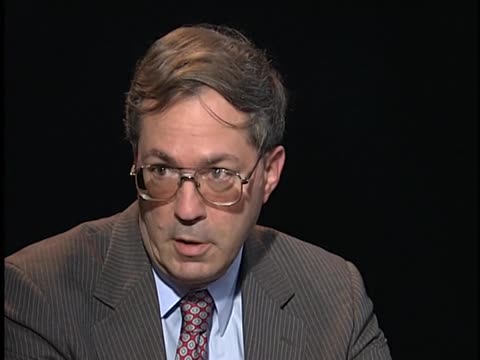
- On this episode of "The Line," we discuss Governor Richardson's new health care initiatives, Intel's outlook, the use of city incentives like Industrial Revenue Bonds, Negative Ads, and Voter Turnout. Guests: Phil Casaus (Editor, Albuquerque Tribune), John Carey (President, New Mexico Association of Commerce and Industry), Paul Gessing (President, Rio Grande Foundation), Sandra K. Begay-Campbell (UNM Regent). Host: Gene Grant.
- Description
- John Carey, Paul Gessing, Phil Casaus & Sandra Begay-Campbell
- Broadcast Date
- 2006-07-28
- Asset type
- Episode
- Genres
- Talk Show
- Media type
- Moving Image
- Duration
- 00:30:35.334
- Credits
-
-
Producer: McDonald, Kevin
Producer: Kamins, Michael
Producing Organization: KNME-TV (Television station : Albuquerque, N.M.)
- AAPB Contributor Holdings
-
KNME
Identifier: cpb-aacip-6964f3c6f29 (Filename)
Format: Betacam SX
Generation: Dub
Duration: 00:32:00
If you have a copy of this asset and would like us to add it to our catalog, please contact us.
- Citations
- Chicago: “The Line; 204; Phil Casaus, John Carey, Paul Gessing, and Sandra Begay-Campbell,” 2006-07-28, New Mexico PBS, American Archive of Public Broadcasting (GBH and the Library of Congress), Boston, MA and Washington, DC, accessed December 10, 2025, http://americanarchive.org/catalog/cpb-aacip-191-053ffcnn.
- MLA: “The Line; 204; Phil Casaus, John Carey, Paul Gessing, and Sandra Begay-Campbell.” 2006-07-28. New Mexico PBS, American Archive of Public Broadcasting (GBH and the Library of Congress), Boston, MA and Washington, DC. Web. December 10, 2025. <http://americanarchive.org/catalog/cpb-aacip-191-053ffcnn>.
- APA: The Line; 204; Phil Casaus, John Carey, Paul Gessing, and Sandra Begay-Campbell. Boston, MA: New Mexico PBS, American Archive of Public Broadcasting (GBH and the Library of Congress), Boston, MA and Washington, DC. Retrieved from http://americanarchive.org/catalog/cpb-aacip-191-053ffcnn