¡Colores!; 1403; Ed Romero
- Transcript
This program was supported in part by the Center for Regional Studies. It was at the University of New Mexico. It's only when you get older, do you realize what culture is, or why you grew up as you grew up? I think that Ambassador Mero, he sees himself as someone who is benefited in measurably. From the artistry, from here, from the people, from the context that he lives in here. He feels that he wants to share that with other people. I think it's very simple. Next, on Kuonautis.
It was an incredible cloud in the sky. My dream again comes here. This is a story of a small town boy who makes it big. Edward Mero came to New Mexico from the San Luis Valley in Colorado. He started a small business that became a multi-million-dollar environmental venture, and has used his success to enrich the lives of the young people of New Mexico. Edward Mero is a man who lived halfway around the world, serving as Ambassador to Spain and Angola. He has built ridges of understanding between New Mexico, Spain and Angola,
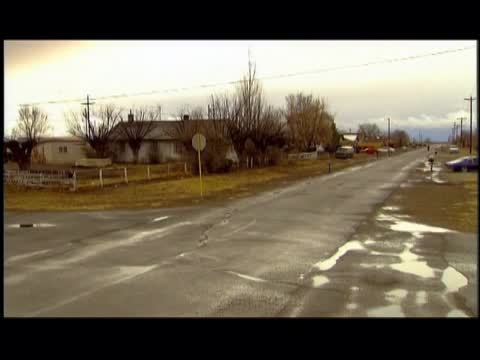
and calls kings and presidents his friends. This is the story of Edward Mero, a man who sat with royalty, but never forgot his humble beginnings. It's only when you get older and you realize what culture is, or why you grew up as you grew up. Early on, I appreciated the fact that I could speak Spanish as well as I could. Spanish was really my first language. I learned English in the second grade. In school, he was called by his middle name, Leroy. I was sort of assistant to the assistant football coach, and I got to see New York play ball.
You could hurt that kid. And when the brain was over, who was at the bar, you knew everybody, and everybody knew him. He was a happy-go-lucky all the time. And then since he played the piano, while everybody kind of hits him. I'd like to listen to him play the piano. A specific type of music, like Guun Nasal Valses, or thesis, played by strings, mandalins, the tires, and the pile of music. You grew up on that, and you just realized they'd run a lot of people had music for us. Your games, or used to play various games that were unknown outside of our radio. And consequently, the only influence that we really had was, as far as I'm concerned, and going to play that influence, the support of influence that we had involved in, all the vibes that grew up in, and Elmo also. We knew there was a distinct difference, but the difference didn't really hit me
until after I left SUNY College. But early on, Ed understood the importance of knowing his history, of knowing his heritage. The culture of New Mexico was very rich, was a rich tree by your early pioneers. And one of those organizations was the Vaterina Bialosam, the Mr. Pan de Jesus, Nasal Eno, commonly known as Petitentes. They were founded in Spain in the 1200s, and they migrated to New Mexico with the Onete Expedition in 1598. My grandfather was a community leader, and he was also a religious leader within the Confledia, or the fact that he then. Their practices, at that time of their grandfather, were the same as Ed and for centuries. The church did not particularly agree with some of their practices.
Two of those practices were that they wouldn't tell them that they were, they covered their heads, their warheads. And another part was a flagellation during Holy Week. The Archbishop at that time lay me as community to them for a time. After a series of negotiations, after a few years, they were brought back into the church. There was a Murada here, and Murada was where you're, but in the other this year, Petitentes worshipped. There wasn't exactly a church, but as close as you can get to it. Here they were conducted services, and they have a lot of their valorios, their various rights. My grandfather was, they had one of my order here for a while, the elder brother. So I became very familiar with this building that was here. Another organization that was very important
was the SPM DTU, who was founded in 1900. My grandfather and my great uncle, helped found the organization. So throughout Southern Colorado, and Northern New Mexico, this organization was probably, along with the Petitentes, the most important one in this particular geographic area. I'm also at Colorado, is primarily an agricultural community. When I was about 11, 12 years old, we had a neighbor that would take a crew. The mornings come back in the evening, you would take him to pick peas, or cut lettuce, what have you. So I asked him to ask my father if I could go for them for just one day. I came home with a hand for the quarters, and I was so happy to have those quarters. I enjoyed those days. It was a beautiful wonderful day. It was Mike Mendez. That was the beginning of writing my own patrix, so to speak.
Ed decided to enlist in the military during the Korean War. It was his first time away from his family, and his insular community. Here you're thrown in with a lot of different cultures, and the dominant one, of course, was the angle culture. And this is why I really got an education in terms of realizing that there were histories and cultures, and were distinctly, completely different than mine. And wonderful cultures were different than mine. I think the start of my breaking away from the isolated, supportive, wonderful culture that I grew up in. After his stint in the military, Ed continued his education by attending college in California. During my college days, I was working until midnight, two o'clock in the morning, and a machine shop on piecework. You know, how many gadgets you turned out you got paid on. And I read an ad in the paper,
stating or saying that you can make $1,000 a month, working three and four hours a day. It sounded pretty good. I answered that ad, and there was an encyclopedia ad. And I'd never seen a pitch before in my life, but now I heard one, and I self-worth hope, line, and synchron. But Ed was really about to fall, hook, line, and sinker, for a girl from the little town of Al Golanis, New Mexico. Ed and I met at a friend's house. We were introduced, and we had a very good time. Then her sister came over, and so they asked us if we wanted to go try out their new car. And I made sure that I sat next to the guy at that time. I was just overtaken by it. It was a beautiful woman that I saw. The following day, he called me and said, I'd like to go out with you,
and I said, fine. So we made a time and day. We were going out to dinner. We had dinner. And he was very, very truthful. I had one problem and that I was engaged at the time. But not withstanding that, I just wanted to see more of this particular, particularly a wonderful girl. So I called her the following day and asked her if she would go out with me. She said, no. I called her again, I called her. Finally, she relented and we went on a date. I was looking at her, and I realized that this particular person I was in love with. And he left for Christmas vacation. While he was gone, the boy I had been dating, that was going to school in Sarasota, Florida, came back with an engagement ring. And of course, you know, I was just not ready to accept the ring. I got to my brothers. I kept talking about this wonderful one that I had met by the name of Kaitama.
He said, you're very much a love, aren't you? I said, is that what it is? And she said, absolutely. You're very much a love. I knew I was. So on the other next day, my fiance was no more in love than I was. So he broke up immediately. Two days later Ed calls me and I thought he was calling from California. And he said, I've got to see him. I said, Ed, where are you? He said, I'm here in Albuquerque. And I said, oh, okay. He said, I've got to see you. That evening, he said to me, over dinner, well, I want you to know. He said that I think I am falling in love with you. And when you fall in love with me, we're going to get married. I started laughing. And I just thought it was a very funny thing that this fellow might have dated just several times was bring so presumptuous that I would fall in love with him in Marion. And that's all history because a year later in October, we were married. And I think he's still giving me orders.
As Ed and Kayyatana started raising their family and realized that as the commission salesman, he would spend a great deal of time away from them. He wanted to be closer to home. So we started as a solar American. And after a few years, solar America became advanced sciences and environmental engineering company. From days of it being a consulting company, a two person operation my wife and I, we built it to 600 and 80 employees. We had built it to revenues of about $70 billion a year. So it was a very successful company. When you ask if it was beyond my wildest dreams, I really can't say that because I always had the hope and the expectations of the dream of being successful in my own business. As Ed's business was booming, he wanted to give back to his community. His memories of his mother's service
and the Democratic Party inspired him. I remember my mother's activity and realized it's an important politics was. And I was inspired by the philosophies of various politicians. I was inspired by John F. Kennedy. I was inspired by Johnson and what he did to implement Kennedy's programs. What inspired Ed was that he saw that these men and really the Democratic Party in general were addressing the needs of the less fortunate and quite often the less fortunate were minorities. He also saw that Democrats were making social changes through legislation like the Civil Rights Bill and programs like Medicaid. He now understood that the government could help that it could make a difference. Being Bernalillo County Chairman was the real beginning of Ed's involvement
in national politics. Ed continued to work in positions in the Democratic Party, which culminated with his service to the Carter administration as he served on the President's Advisory Committee for Trade Negotiations. I became a member of this, a member of that, and I was able to die with President Carter. I was able to die after that with President Clinton. I got to know them on a personal basis. President Carter went to visit me in Spain. President Clinton went to visit me in Spain. So these political relationships became personal relationships. Ed became a major fundraiser for the Democratic Party. He raised $750,000 for Bill Clinton's Presidential Campaign. After work he served on the President's Hispanic Advisory Committee. I was on President Carter's National Finance Committee. I was on President Clinton's National Finance Committee. I was on Vice President Gore's National Finance Committee.
The story's Ed had heard his entire life from his father and grandfather came to life as the boy from Alamosa became ambassador. Growing up as a child, my grandfather would talk about Spain, but he never had been to Spain. His grandfather had never been to Spain. His grandfather never been to Spain, but my grandfather would talk about Spain. We knew where we came from. My first step to Spain was an experience I never forget. I started thinking of the fact that 400 years ago our families left this country and they went across the ocean and here 400 years later, we are coming back and I was very emotional to say the least. A few days later they arrived for me
to go present my credentials to the King of the Palace. On the trip there, I had a long flash breath on my child. As I thought about it was my grandfather. He would say about Spain, my father, how proud he would be. I think I think about it as a how proud I was. I just had the sense of all you were as we'd say. Prior to that, it was a different sense of my head before. I was proud of me. When I heard my national anthem being played, being misquoted to present my credentials to the King, I just got extremely emotional, too straight to coming on my eyes.
And the political officer, I see the next to me, this pad in me, on my knee. And anyhow, I was able to compose myself, fortunately, love to do a viable job of presenting our credentials to the King, but it was a wonderful, beautiful moment in my life. Edromero is officially the first Hispanic in history to serve as U.S. ambassador to Spain. It also had the honor of serving as ambassador to Andorra, a small but proud principality on the border between France and Spain. Ed's connection from the old world to the new goes back 400 years. When his ancestor Bartolomeiro Mero arrived in New Mexico from Spain in 1598. In 1999, Antonio Mancenio, the mayor of Ed's Spanish ancestral home, Corral de Almagel, honored Ed and his family by naming a town plaza after him.
While serving in Spain, the Ramirez entertained people from all over the world at the U.S. Embassy. When we walked in, I was stunned by how beautifully the family had decorated, that had set up the house and it was like walking into a museum, actually. And it was. The Albuquerque Museum, loaned ambassadors Romero several pieces of art by New Mexico artists. Their hope was not only to provide beautiful art that would live with the Romero's file they were in Spain, surrounding them with the landscape and culture of New Mexico, but also to introduce visitors to the embassy with a stunning and unique art of New Mexico. In Spain, Ambassador Romero also supported a tour of a show mounted by the Maxwell Museum on the campus of the University of New Mexico, of an exhibition of the work of contemporary Santeros.
It is precisely because it is gone full circle that it's so powerful and so important. The Santeros were informed and inspired by Spanish colonial art in the beautiful churches in Northern New Mexico. They created beautiful pieces that were in an exhibit that travels back to Spain and people in Spain were moved by what Santeros in New Mexico have done with these images and how they portray and express them. It's beautiful. Ambassador Romero also sought to reinvigorate New Mexico's historic ties to Spain by establishing institutional links that would far outlast his tenure in Madrid. A very high-level link was made possible by a generous gift from Ebert Rolá, a major Spanish energy company. Ebert Rolá funded the Prince of Asturios Endowed Chair in Information, Science and Technology at the University of New Mexico, named in honor of the heir to the Spanish throne. When Ed first arrived in Madrid,
he handed the cultural affairs officer of the embassy a list, a list of priorities of things he wanted to accomplish as ambassador. One of those things was to establish an endowed chair at the University of New Mexico. So Ed approached Ebert Rolá about funding the chair and initially the president, Enigoyo Riol, agreed that he would help Ed and fund part of the chair and Ed jokingly told him, well, no, I wouldn't want to insult you by asking you only to fund part of the chair. I want you to do the whole thing. And they had a laugh about it, but of course Ed was serious that he wanted Ebert Rolá to be the sole funder of the chair. Well, the very next day, it had word that Ebert Rolá had agreed to fund the entire endowment for this chair. Back in New Mexico, the seeds planted by Ed Romero-Blossom and New Mexicans prospered. The Chamber of Commerce was formed.
I think it was a lot of out of frustration that the small business people were not necessarily being taken care of, especially the Hispanic businesses. Good afternoon, Albuquerque is done on chamber this year. There was a number of individuals led by Ed Romero to start his final chamber of commerce. Today, the Hispanic Chamber here in Albuquerque is one of the largest in the country. It has received many national awards for its performance as serving the small business community not necessarily just the Hispanic community, but zooming in on the small business community. The National Hispanic Cultural Center is a dream of many New Mexicans for years. Ed Romero helped make that dream a reality. Well, the journey that we took getting it to where it is today it really started in 1983 with this dream of starting having a location, having the buildings
and having the material to push to work with to preserve this culture. We have three main galleries. The galleries are divided into three sections. And it wasn't easy. There was a lot of skepticism as to whether we should have it, shouldn't have it, whether it should be here in Albuquerque, whether it should be as large as we envision that Ed Romero was very, very instrumental in making this dream a reality. But perhaps Ed Romero's greatest legacy will be the work he has done to help the children and Hispanic youth of New Mexico. The Ed Romero's philanthropic work has been wide. He believes that every child should have the opportunity to be who he or she wants to be.
And that takes a lot of help anytime from a lot of lives. And I think that the commitment that he has and to make sure that every child has that opportunity had been very nice. Right here it says, I think people are legitimate daughter. This is where the parents are, the child can get baptized and assist with the grandparents. I think that Ambassador Romero's commitment to the culture of Mexico comes from the fact that he enjoys it so much. He has for many years, he's benefit, he sees himself as someone who has benefited in measurably. From the artistry from here, from the people, from the context that he lives in here. He feels that he wants to share that with other people. Thanks very simple. Real success is about family, they were raised, how they raised their kids.
Success to me is, did I raise my children properly? Did I give them a good example as a mother? It is a father, yes. And they are doing that, just that for themselves and for their children. And so I think that our children are definitely successful. I think that our children are definitely successful. Again, it's not what they have or what they hope to have, but they will see in the eyes of their children what we see in the eyes of our children. Your heritage, your history, and... Most important to Admiral Meadow is knowing who you are and where you come from. He is a man who cherishes his heritage and treasures his culture, his roots. I've committed myself to tell children to tell youth, tell others
just how wonderful it is to be, who they are, just how great it is for them to have the sense of pride and appreciation of who they are. I'm committed to that. And I think that once they get to the point of realizing who they are, and it is how wonderful it is to be, who they are, that will have a lot more success in keeping our kids in school. They'll have a lot more success in business. They'll have a lot more success in their future. My sense of pride and hope is being passed on to others. I'll just go with that third or fourth
row.
- Series
- ¡Colores!
- Episode Number
- 1403
- Episode
- Ed Romero
- Producing Organization
- KNME-TV (Television station : Albuquerque, N.M.)
- Contributing Organization
- New Mexico PBS (Albuquerque, New Mexico)
- AAPB ID
- cpb-aacip-191-02c867mh
If you have more information about this item than what is given here, or if you have concerns about this record, we want to know! Contact us, indicating the AAPB ID (cpb-aacip-191-02c867mh).
- Description
- Episode Description
- In this ¡Colores! meet Ed Romero, The Albuquerque Museum's Notable New Mexican. In this program, we take you on the journey of Ed Romero's remarkable life, from the potato fields in the San Luis Valley in Southern Colorado to the procession at the Royal Palace in Spain. This is a story of a small town boy who wins international success! Ed Romero grew up in Alamosa, in Southern Colorado, hundreds of miles from any city. His ancestors arrived in North America in 1598 from Spain. He came from a close-knit Hispanic family that worked hard, lived simply and Spanish was spoken in the Romero home. From humble beginnings as a farm laborer and then as a door-to-door salesman, Ed's entrepreneurial spirit led him to become one of the most successful Hispanic businessman in the country, creating a multi-million dollar business, Advanced Sciences, Inc. He is a prominent civic leader, philanthropist and has used his wealth and influence to help fellow Hispanics and New Mexicans. He is a champion for a culture he loves and has worked tirelessly to promote the State of New Mexico throughout the world. He gives generously to improve the quality of life for New Mexicans, especially children. He encourages everyone to have pride in their culture - to celebrate who they are through their language and traditions. Since their first visit to Spain, Ed and his wife Cayatanna hoped that someday they would call it home. Ed was honored in 1998, by serving as the first Hispanic United States Ambassador to Spain and Andorra. He has built bridges of understanding between New Mexico and Spain. At the end of the day, Ed Romero, the man who has dined with kings and joked with Presidents, explains that the most important things in his life are his family, his language, his culture and traditions. He says: "Now as I approach my 70th birthday and autumn of my life, I spend more time reflecting on what some consider my success in business and later on my career as ambassador. I always thought it came about because of my growing up as I did, in a nurturing Hispanic environment that was supportive of my language, my culture and me." Funded in Part by the Center for Regional Studies at the University of New Mexico.
- Description
- No description available
- Created Date
- 2003-05-07
- Asset type
- Episode
- Genres
- Talk Show
- Media type
- Moving Image
- Duration
- 00:27:27.279
- Credits
-
-
Producer:
Purrington, Chris
Producing Organization: KNME-TV (Television station : Albuquerque, N.M.)
- AAPB Contributor Holdings
-
KNME
Identifier: cpb-aacip-0029e6774dd (Filename)
Format: Betacam: SP
Generation: Original
Duration: 00:30:00
If you have a copy of this asset and would like us to add it to our catalog, please contact us.
- Citations
- Chicago: “¡Colores!; 1403; Ed Romero,” 2003-05-07, New Mexico PBS, American Archive of Public Broadcasting (GBH and the Library of Congress), Boston, MA and Washington, DC, accessed August 9, 2026, http://americanarchive.org/catalog/cpb-aacip-191-02c867mh.
- MLA: “¡Colores!; 1403; Ed Romero.” 2003-05-07. New Mexico PBS, American Archive of Public Broadcasting (GBH and the Library of Congress), Boston, MA and Washington, DC. Web. August 9, 2026. <http://americanarchive.org/catalog/cpb-aacip-191-02c867mh>.
- APA: ¡Colores!; 1403; Ed Romero. Boston, MA: New Mexico PBS, American Archive of Public Broadcasting (GBH and the Library of Congress), Boston, MA and Washington, DC. Retrieved from http://americanarchive.org/catalog/cpb-aacip-191-02c867mh