For the Record; 1507; David Roll
- Transcript
these johnson basically had to cut them at the way below what they felt they should that there were there some statements indicating that johnson actually want to get rid of the court are made statements like that we will no longer have a need for activities landing so the marine corps and by the bern porter foundation preserving the commonwealth of virginia for the russians have created in partnership with the university of virginia center of public affairs the conversation on politics policy and the president for the record a lot and germany from the studios of it is today shows for pbs this is for the record in nineteen thirty seven president roosevelt ordered lewis johnson to build up the military in preparation for war two in nineteen forty
nine president truman ordered the same with johnson to dismantle the military arsenal he had built up only ten years earlier in both administrations which johnson succeeded in carrying difficult and unpopular missions in both cases he was fired the question that we will look at today on for the record is who is butch johnson i joined me today to discuss this important yet forgotten figure is david role an attorney who co authored the book was johnson and the army of america david roth welcome to for the record it really quick quote comes from liz johnson and i want you to talk about the process of writing this book with a co author mcfarlane when johnson was leaving assert your defense in his departing speech he said when the hurly burly is done and the battle was one i trust the historical find my record of performance credible my service is honest and faithful commensurate with the trust that was placed him in the best interest of these international
events we're that historic effect fallen talking about what kind of process did you have as co authors putting this book together to solve political process to write about myself and how to do it with another person i am well is gravy and this is maybe unique because my co author and i started this book twenty twenty five years ago and now he stopped working on and about twenty years ago so he put him through for five years into the basic research and then he became involved in college and university administration eventually became president which is an adorable and so this manuscript it really was a bunch of notes in the manuscript and some chapters and there was a structure to it but it's sad and file cabinets until and i discovered it and basically i took it from there we agreed
wholeheartedly on sort of a fundamental thing about jobs which is has he probably lack any real principles it's a stunning indictment i know but you know it is which is not a bad thing for a politician writes it's not and it's not it's not i suppose that unusual but i mean if you look at least a little war preparations for work too but then when asked to dismantle the armed forces he carried out with incredible vigor so you know there's not a lot of principle there are what it is principle was to achieve high office and possibly the president that was his objective mcfarlane and myself agree on that one hundred percent were never had a work dispute about it yeah
i think that in characterizing the presidencies that the roosevelt presence in the truman presidency we essentially agreeing we took a somewhat contrarian view truman i would see him as someone lacking a vision lacking a sophisticated international vision and and the nation's suffering because of that that's not a popular view is not a view shared by the majority of the story and we agreed on that and we've certainly a great amount of incredible ambition and strength of franklin roosevelt so look this is not a hot this is not a man who was just not a man that no neither of us did back in a fire that in that you know i mean the long range is a great things giving is getting ready for two yes he got president truman elected but he was incredibly
difficult content court's intention was intolerant imperious arrogant personality and he could not survive government very long and he didn't have a johnson and roosevelt didn't know each other know whether what happened was as soon as roosevelt got into the white house which is early nineteen thirty three johnson was still national commander roosevelt desperately needed johnson's health because johnson basically was the voice of the veterans and could deliver the veterans vote on the issue of bonuses and disability payments was paramount for the veterans and for roosevelt roosevelt could not afford to give in to the veterans and at the same time accomplish his goals are for economic recovery in the midst of the depression so he needed jobs to help hold off the veterans while he put his new deal in place and
so within a few weeks of his election johnson was in the white house meeting with roosevelt and his people and helping roosevelt map out a plan for jobs and had to play a very delicate role on the one hand he was the representative the veterans on the other hand he wanted to court the favor of roosevelt and he was politically very sophisticated and he loved his way up through that isis relationship to build his way up to become in essence a chief of industrial locals they should have run four hour two years the veterans movement to get into the white house and to befriend roosevelt he then became a great supporter of roosevelt and i worked hard for him not only in veterans' issues but in the nineteen thirty six campaign johnson basically deliver the veterans' vote for roosevelt roosevelt got elected and then in nineteen thirty seven roosevelt was was trying to decide what to do about the war department
and johnson was a candidate to become head of the war department and so i just desperately wanted to be the head of the war department and in roosevelt's cabinet that didn't happen at least one that didn't have the second in charge second nature of what happened was roosevelt wanted to put this guy was doing what i would ring was assistant secretary war wad of roosevelt made him secretary of war and many as just to come and the administration as the number two may just say now one of the normal number one man and they went back and forth on that and then that's where the story begins because so johnson yeah well he thought that the roosevelt had promised that if you would come and industry says the number two man he would surely be made number one head of the war department so he came in thinking that a promise made that he would be shortly promoted to be a head of the war department
and this is a blizzard the arming of america i was just involved in arming america for two and one with his legacy one we when we were remembering those jobs as soon as he came into the war department as assistant secretary of war he has statutory authority over procurement and a lot of other things having to do with war materiel and because the secretary of war was essentially an isolationist and was resisting were preparation johnson was in a position to work with roosevelt to help prepare the nation for war and that effort began in nineteen thirty eight where roosevelt and johnson worked often on sometimes almost daily sometimes johnson was in the doghouse work often i'm with roosevelt to prepare the industrial mobilization plan that was eventually used were were killed so you remember franklin roosevelt as well as we do it work for a man like butch johnson well i certainly help maybe not
but he was he was very helpful in and be an often behind the scenes in helping was a vote get ready for warren roosevelt could not be public about a lot of the things that were going on because of the unit pre eminence of the isolationist in the market first years movement for him to be very cautious so johnson with roosevelt's tacit approval johnson worked a lot of behind the scenes to help us get rid of course he was let go you said he was fired i say he was deathly relieved in june of nineteen forty five so we never had a chance to see his plans actually put in place or be the dion seen one that was planned to put in place what do you do during the war went back his law practice and they won one to make a trip to india to represent you know just days after that of the earth at a somewhat taken away from you makes the he builds the machine he gets it ready and then it has taken away they felt they felt terrible about being on the outs and
wrote lots of telegrams to the roosevelt sang and ready to serve put me in coach stay behind the scenes and then eventually roosevelt found a place for him was about how will always wanted johnson to be around them and he offered a lot of jobs during the war but the one job that that johnson took one big public jobs johnson took was to become the special representative or roosevelt india nineteen forty two because you know stretch and then was worried in that the japanese invaded they needed somebody go over there and work out a deal to get the indians to defend the country against a potential japanese attack and the unions were then very much interested in getting and johnson bought this was a job that was worthy of home alice i wasn't his it wasn't his number one choice on a mission and the personality lose johnson how i wanted to write that you want to be president and those sort of envision and eventually becomes
part of a presidential campaign in nineteen forty eight an inch is largely responsible berkeley's to a major degree for harry truman's remarkable comeback victory is most momentous decision in my view was his decision to step forward in the fall of nineteen forty eight when no one else would not to become the chairman of the finance committee for the truman's election campaign it was the first week in september and truman believe it or not at that point did not have any boy as the finance chief you know he had been turned down by bernard baroque which outraged truman had been turned down by some of other people and he asked johnson to do it and johnson thought about overnight and said i'll do it it put his own fortune on the line he did a magnificent job with very little time members of the september the election was in november and he basically help to finance the i was a star
campaign would show was by many by many light so regarded as so as as the key to to the to truman's upset victory no one thought german could win in nineteen forty eight johnson took a huge risk he was a gambler it was a gambler and you know he knew that was when oil is win or lose it would help his law practice so when truman one and it out and here he was in the forefront of those being considered today defense secretary says it was not well you know a lot of people said it was a pay off you finance chair does the job and gets its the big defense jobs but no he had he had earned his way he had he had been in the odd what was the predecessor the defense department and the war department under roosevelt roosevelt thought he did a great job and everybody and
that really looked at the war department thought he did a good job so he had the background he knew how to supply an army and he had the year and then he had the diplomatic expertise which got him in india are so any new truman for more war were there weren't real good friends i don't just didnt break in play poker with the gay or it wasn't invited with a k and he was so not it not from an insider but truman wanted him not only because he raised money at old but also he wanted the toughest means s o b that he could find because truman's number one priority when he got elected in nineteen forty eight and faced the economic problems of the country in nineteen forty nine his number one party was to reduce the defense budget cut to the bone any good that somebody's incredibly tough to do it so what i
do is an early in nineteen forty build up this massive military presence and then he's responsible for getting rid of it and doing both of them at times when politics were necessarily knowing it easier really difficult this was at the height of the early part of the cold war in our series tensions on the ground wind y z going to push forward and you take the mantle and tremendous and to dismantle just this baby that he helped create it that's the great irony that is the great or preparation advocate and then truman said you gotta dismantle it wise to do it because he wanted indication number one it was the only way he could become secretary defense he had promised rumor that he would help him achieve his objective which was to cut the defense but there was no other ways kennedy's secretary defense he had to promise that in those
discussions right after when trayvon was doing his transition as he received within the military and included donald rumsfeld today there's a lot of tension between the military brass and also what was reaction was johnson i'm there was suspicion a lot and thought he was a partner not just a political a politician lawyer political guy not fixer was a little bit of that is a wheeler dealer air about him you know i had a lot of business ties but you know in the end the army and the army chief of staff omar bradley ended up having a considerable respect and regard for johnson got along well with omar bradley i gotta well along well with the second year force and that's a well simonton but with his successor a member were you didn't get along was with the navy because there was the great revolt of the animals and summer night johnson is a big supporter of power that's right international basically they felt they put all their eggs in the basket the
atomic bomb and the blitz theory and that meant the air force would would reign supreme the air force would get all what what little money there was the air force would get and then the army would be next and the navy would be the ideal of the tail and so the navy knew and the marine corps either work they'll just basically i had to and cut them at our way below what they felt they were they should get and there are their work there are some statements indicating that johnson actually want to get rid of the marine corps tyrell it made statements like that we will no longer have a need for anthony as landings because without the atomic bomb so what we knew the marine corps for what you can imagine what that did not too long after that he realized the that need for the marines and the navy and the army because of the korean war is right it made all the statements that he'd won the
battle of what he'd won the battle against the admirals caught and hugh you made great progress toward cutting back the defense budget hot damn cutting back on training and all the things that you did which were exactly what truman wanted him to do but then in june of nineteen fifty the north koreans and they did we didn't use the a bomb we had to defend our whole peninsula in a ground war and we were not prepared thousand jobs and that that's part of why truman doesn't go with theirs as a story of political intrigue behind this lots of injury jackson in nineteen forty nine was actually the day he was angling to be president in nineteen ninety two to two were angling for the democratic nomination eight there were stories in nineteen forty nine that might just not be a viable candidate he just might be out from the democratic nomination so he was maneuvering
politically and trying to gain support amazingly enough from some republicans he out he did some things in terms of making alliances with senator robert taft at that time he was so he was courting he was courting by john macarthur he was so he opened a back door channel of communication to the chinese national lessons according to china lobby and then he out he also under the summer nineteen fifty was ordered by truman throughout to tell macarthur but he could make a speech on is a famous speech to dfw and johnson bought that turnout that order and it in it enraged truman really for a magician known any order he was an iconic figure remember he if
he had not been back to the united states since so well before two but he was a huge presence in american politics and of course a lot of people thought he would run for president nineteen fifty two and you know he had this up or about and that everything he did was invincible so when johnson was ordered by the president to order macarthur to withdraw his speech and it became a very difficult for johnson to carry out any barks twice and then he finally found a way to do it and the truman didn't forget so there a lot of reasons why truman felt that just immediately god mountain strange johnson had an epic battle with many dean acheson which in a lot of ways parallels some of the battles between your donald rumsfeld and colin powell dean acheson said that the state department exactly jackson and
acheson first of all they just like any sector stated any secretary defense there the foreign policy tends to run into defense policy and so they're always going to be tensions but with johnson an actress and it went beyond just the normal turf wars they really loathe each other number one their personalities couldn't have been more different acheson had a way of the as marks the voice that you now when you talk to diva was like yours pritchard that he was not that she was condescending he thought johnson was a lightweight and johnson could stand there just because absent he looked talk rest and acted like a british diplomat and johnson dollars a phony issue and the mustache he had vigorously hear the city in it
you know just thought of a pretender plus we had very you know a very substantial foreign policy differences with with acheson acheson was regarded as soft on communism and the republicans were calling for his scalp and johnson thought it was soft on communism so johnson felt that for most of taiwan needed to be defended and acheson was waffling on this so they had personal distaste for one another that was well known in washington had very substantive policy differences and it was outright war everyone knew that johnson won to get acheson how the administration but in meanwhile truman was relying on actions so it it was a war that had to be stopped it looking at their jobs and for what we think is that the lesson he believes what what
is it that most torn about and i think now two or three things one what he did to help us get ready for war chair which was significant and important and then you know that that's his place in history really are i think that second labor decision he made to if basically finance truman's election campaign in nineteen forty eight was a momentous decision in terms of the nation's history but what the you know what the publishers and the critics and the book reviewers probably will remember more than anything it's not so much a job to go for what johnson reveals about the two presidents that is served on to our greatest presidents and so threw his eyes and his actions we see franklin roosevelt you know has a sophisticated international and that's consistent with a lot of
historians going to move cautiously by india's way and we see that and how he dealt with johnson in getting a nation ready through his eyes and actions we see truman in a different way we see someone who lacks sophistication lacks nuance again lot of historians have said that but we also see that truman got himself back into a lot of corners in which the only way out was through confrontation a rather than through diplomacy or destiny over and so was johnson was truman's instrument of confrontation we see you know the potential for you know for their johnson the truman had made different decisions and was less confrontational the way one
about things things might've been much different so what we're seeing is it is is the leadership strengths weaknesses political sky as the strengths and weaknesses of roosevelt and truman through johnson's hi it's david thank you so much for some love for the record dave rawlings co author of the book louis johnson and the arming of america the staff and crew at it as tj here in charlottesville our production partners at the notion of public affairs at the university of virginia again germany please join us on the next for the record for more information about guests and topics on four the record visit our website ad debuted debbie wu that idea stations dot org they need to pay thank you
for the record production funding is provided by the perry foundation and by the burn carter foundation serving the commonwealth of virginia for the record is created in partnership with the university of virginia's miller center of public affairs to gorge is a vhs copy of this program sent a check for twenty one ninety five to the address on the screen or call for three four to nine five seven six seven one please referenced the program number
- Series
- For the Record
- Episode Number
- 1507
- Episode
- David Roll
- Producing Organization
- WHTJ (Television station : Charlottesville, Va.)
- Contributing Organization
- VPM (Richmond, Virginia)
- AAPB ID
- cpb-aacip-17f6dd3d172
If you have more information about this item than what is given here, or if you have concerns about this record, we want to know! Contact us, indicating the AAPB ID (cpb-aacip-17f6dd3d172).
- Description
- Episode Description
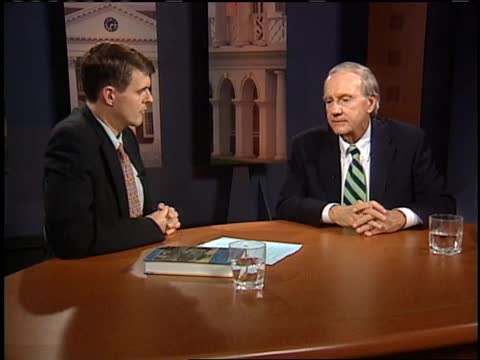
- Kent Germany talks with David Roll military policy and his book, "Louis Johnson and the Arming of America"
- Copyright Date
- 2005
- Asset type
- Episode
- Genres
- Interview
- Topics
- Public Affairs
- Subjects
- Arming the military, disarming the military, industrial revolution, Trumans campaign, WWII, White House.
- Rights
- TBA
- Media type
- Moving Image
- Duration
- 00:27:11.638
- Credits
-
-
Director: Germany, Kent B., 1971-
Producing Organization: WHTJ (Television station : Charlottesville, Va.)
- AAPB Contributor Holdings
-
WCVE
Identifier: cpb-aacip-27a2241d2db (Filename)
Format: Betacam: SP
Generation: Dub
Color: Color
Duration: 00:30:00
If you have a copy of this asset and would like us to add it to our catalog, please contact us.
- Citations
- Chicago: “For the Record; 1507; David Roll,” 2005, VPM, American Archive of Public Broadcasting (GBH and the Library of Congress), Boston, MA and Washington, DC, accessed April 3, 2026, http://americanarchive.org/catalog/cpb-aacip-17f6dd3d172.
- MLA: “For the Record; 1507; David Roll.” 2005. VPM, American Archive of Public Broadcasting (GBH and the Library of Congress), Boston, MA and Washington, DC. Web. April 3, 2026. <http://americanarchive.org/catalog/cpb-aacip-17f6dd3d172>.
- APA: For the Record; 1507; David Roll. Boston, MA: VPM, American Archive of Public Broadcasting (GBH and the Library of Congress), Boston, MA and Washington, DC. Retrieved from http://americanarchive.org/catalog/cpb-aacip-17f6dd3d172