Talking Point; Panel of Mayors
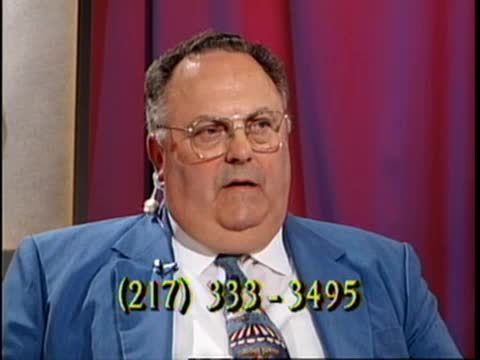
- Transcript
. .. .. . . . .. .. .. .. .. .. .. . . . . . . .. .. . .. . .. ..
.. .. ... .. .. .. Good evening, and welcome to Talking Point. For the program tonight, we have assembled a panel of mayors from East Central Illinois. We ask them to make a list for us of the issues that most concern them.
As you might expect, there is considerable overlap in those lists. We'll be talking tonight about economic development, public safety, and community image among other things. And also a little later in the program, we will give you the chance to talk with them as well. Our guest tonight are Dan McCollum, his mayor of Champagne. He served as mayor since 1987. Before that, he served on the Champagne City Council. He's particularly known for his involvement in environmental issues. He's also taught classes on the history of Champagne County, and he's been city historian. Todd Seddathwaite is mayor of Urbana, this past April. He was elected to his second term. He studied political science. At the U of I, he's been a small business owner and a Peace Corps volunteer. Bob Jones is the mayor of Danville. He was elected in 1987. He's now serving his third term. Before that, he served for eight years as treasurer of Vermillion County. He is also a small business owner. And our fourth guest is the mayor of Decatur, Terry Holly. He was elected in May of 1995. Before that, he was a member of the Decatur City Council.
He's vice president of Smith Barney, that's an investment firm. Now, as we all talk, you should be thinking about the questions you'd like to ask. We'll give you the chance to do that a little later in the program. Thank you all very much for being here. As I mentioned, beginning of the program, one of the things we did just to have some topics for conversation. We said everybody will give us your top four issues, the things that really concern you, the things that you're working on in your communities. And probably it's no surprise that the one issue that was on everybody's list was economic development, essentially. So maybe we can start on talk a little bit about that. And I'll maybe I'll start out here with these two guys because maybe I'm just a little bit more familiar with Champagne and Urbana, but obviously I want everybody to come in on the program on the question. There has been, in Champagne, tremendous growth, both in the Northwest and the Southeast of the city and in Urbana, really efforts to grow the city, particularly in the southeastern part of the city. And well, everybody seems to be in favor of growth.
I suppose that there are folks that will get in arguments about just exactly what one should be doing. What kind of business do you want to attract? What kind of growth do you want to see? For any mayor, how much latitude do you have? How many options do you have? Or when you sit down and think about what you could do to encourage development and encourage business growth, particularly, is that really kind of a short list? You know, I'll start with Dan McComb. Well, first of all, I think you need a policy of just what kind of incentives you're going to offer. I think winging it from business to business is, or enterprise, enterprise is not good policy. Also, I think, and particularly with respect to Champagne, we've never offered economic incentives for retail. We've always had strong retail. And I'm just not going to undermine existing retail by trying to draw a new retail.
And there's a saturation point, which I believe that we may have reached some time back. In terms of bringing real economic growth, which I consider as productive jobs, the Allen Brad Day project would be a very good one in the Northwest Champagne. Actually, our wealth-creating jobs, high pay. There's not simply sales clerk-type jobs. And I think this is the kind of thing that communities want. I might add one other thing, and that is, the cities need to be equally conscious of redevelopment of the existing city as at least on a par and maybe even more important than growth at the fringes. I think the sprawl type of development, which we're experiencing, is actually creating more long-term cost to the city in terms of the sprawl and servicing this dispersed area than the compact development that cities used to have. So I have made a point, and I think been fairly successful in offering equal incentives
or equal to or greater incentives for redevelopment inside the city. I want to astound slightly the same question. I think that maybe there hasn't been the same kind of growth in urbanity that there hasn't been champagne, but I think that there are people in urbanity that are really concerned about the sprawl issue, particularly, and what's going to happen? So the same question. What sort of options do you have, or are options really limited? Well, we can't actually tailor a particular part of the city for a particular business. We have to take advantage of opportunities that are presented to us. And what we can do is do planning through land use, through zoning on our comprehensive plan. And we can have a strategy for what we want to do when an opportunity presents itself to us. And we've got a very comprehensive list of our financial plan of what kind of incentives that we will give. And we've got a couple of rules that we go by. And we try to attract something that's
going to create more than one type of revenue source for us. The cities, unlike school districts and park districts, have multiple sources of revenue. We have sales taxes, utility taxes, property taxes. We get some grant monies from the federal government, the state government. We have fees, notably our parking system, that all bring money into the city. So when we try to attract a business, we want to try to attract those that generate multiple sources of revenue for us, such as sales tax in addition to the property taxes and utility taxes. And so when we make an investment in bringing a business in, we want to be sure that we get our return back in a certain amount of time. As we look at it like a corporation, which we are, we're a municipal corporation, we have to look at the bottom line. And our rule of thumb has been, if we can't get generate our investment back within five years, we don't want to do it.
And we like to look at our investment in the terms of infrastructure, some of the infrastructure that we've done lately is in road improvements, stormwater drainage improvements, sometimes utility relocation, particularly, and as Dan says in downtown areas, where there is existing infrastructure that does not necessarily meet the needs of a new development. So we've got a number of rules that we try to live by as far as financial incentives and as far as location is concerned. And try to get up a good mix, because any community to have a good tax base has to have a diversity. You can't make it on residential developments alone. You have to have a component of commercial so you can get your retail mix and industrial as well. The year two cities, Decaturan, and then will have historically been manufacturing cities and big industry towns.
Is that something that you think can continue or are you thinking about development, which you can do in other kinds of development? Well, we're certainly hoping that we can, at the same time, attract new industries, satellite industries, of the bigger corporations that we have, indicator at the present time, as Mayor McCollum said, also keeping in mind that retention is probably more important that most of the jobs that will be created will be keeping jobs that we have in helping companies that are already in our cities have the opportunity to grow. All of us, I think, basically have the same arsenal of weapons, the TIFF districts, the enterprise zone, infrastructure, and incentives that you can show to a prospective company coming to your city. We also like to look at our cost of living as an incentive, because we have one of the lowest cost of living in central and I, a good school system. These are the things that the companies, when they look at the overall package,
whether they're going to stay in your city or a new company looking to locate possibly in any of our cities, it's not just the site. Can you give them water, sewer, all the infrastructure? Basically, most of us, if the jobs are there, are willing to bend over backwards to give that to them, but oftentimes they'll go beyond that to look at the overall quality of life, especially for a new company coming in. Do I want to put my employees and my family into this type of environment? And that's one thing we're working very hard on, as you mentioned, an image to help attract and also retain the jobs that we have. It's critical for all of us. With the dollars we have that have to be stretched farther and farther these days, economic development, and I'm sure while we all mention that is our number one concern. Well, you had that same kind of experience finding that particularly it's getting more and more difficult if you're trying to, say, attract business or you're trying to keep existing business that it's a very competitive atmosphere and you're there at saying to you,
well, what are you going to do for us? That's very true, Dave. And I think you have to look at the difference between commercial development, which we call retail sales. One of the things that Danville has really hadn't had a lot of it for the last 20 years. And part of it, we had to make a move for infrastructure, new streets, new sewers, water, and also looking the same as Todd, and the fact that we're looking at developing 70 acres with that. And Walmart was the anchor that started that, and then Lowe's Lumber Company come in another location. Then when you get into the industrial development, then you have a different ball game. A lot of those are looking not necessarily for a lot of incentives as far as dollars and cents, but look at cost. What's it going to cost to build a plant? What's going to cost for electricity? What can this, you do to help educate through their new employees? And we have a junior college at his first class
in computer and other areas of machine operation through the computers. So the incentives are getting tighter. And of course, they get tighter as not only in the state and federal funds shift in how they're allocate them, and our TIFF districts can only be so big and do so much with those. And they involve all of your taxing bodies, and everyone needs all their taxes. So incentives are something that you have to work very hard at, and sell not only the incentives, but other good qualities, as the mayor said, our education program, our quality of life, our parks, things to do about the community and its location, incentives are still very important though to certain developers. Do you all find, I wonder that you're having to compete more than you used to with smaller communities that are located near yours? Well, I don't think there's any question that there are dependent communities, subdivisions,
which exist because our cities exist. And there is a perception that there are high taxes, and there's lower quality of life in cities. And so people have been attracted to these rural settings or these semi-rural settings. The irony is, of course, that other people going the same direction, impact upon them, and then they're, of course, they're out of kilter because people are moving in on them. But it is in the long-term, a self-defeating process. If the health, and I've said this in terms of just locally, if the health of champagne and urban are compromised by the growth of bedroom communities and our fringe or further out, and our ability to provide quality services declines, the economic situation of all of these dependent communities will be jeopardized as well. So, again, there is this perception that a higher quality of life often exists out there.
I question that, but there's a lot of people that are operating under that assumption. And I think it's a real challenge to cities. I'm interested in this, also, this image question. It wasn't one of the things on the list that you, the Todd Sand. Is that something that you think about and for the city of Urbana, or do you think that Urbana has such a solid image and its positive image? It's not particularly something that you think about. Well, we think about image, but, you know, we try to be a very professional city. And I think our current city staff is extremely professional and the services that they deliver. A lot of people, every year, come in contact with our city staff from one department or another, whether it's public works, police, fire, community development, what have you. And they generally have a positive experience when they deal with city staff because they're fair, they're impartial, they're professional, they do their jobs very well. But it is a, you do want people to know
about the good things that the community is doing, that the city's doing. And I know a lot of communities have a newsletter that they put out. Of course, we can get a lot of news out over the cable broadcasts of our council meetings. Both Champaign and Urbana right now with the last cable agreement have our own cable channel. We have UPTV and we can put out public service announcements. We broadcast the council meetings, school board meetings, and we can put out information about city programs that people are likely to be asking questions about, our recycling program, leaf pickup, and that type of thing. And we can run, you know, most commonly asked questions. So the image issue is something that's out there and we try to do it in multiple of different ways. But we have not gone with a city-wide newsletter or having a professional company in and do a brochure for us or anything like that. That was one of the things on your list. And I'm curious about what you think,
perhaps the image of Decatur is and how you would like to see people see it differently. That's one of the reasons I'm here tonight. That was one of the three issues in our campaign two years ago. I've born and raised in Decatur and planned on remaining there indefinitely at the voters request. But I think some of this is perception versus reality, how we see our city and how the media not just local, but some of the things that we've had happened in our city in the last couple of years have given us a false image of the type of a city where you wouldn't want to live or remain or bring a new company into. And that's the type of image that we're trying to change through a whole array of programs that we started over the last two years. And it's more for the people that have grown up in Decatur than for the people that have come into this city. We talked to people that have lived there five, 10 years. And I think it's a great city.
The people that are the most negative about it are the people that maybe have never gotten outside to come back and see what they really have. And that's what we're working on through an image campaign called Reach for the Future that we started and had a lot of success with that. Getting the community to look at the positives. And we all try to do this. We're all cheerleaders for our communities, be out in front. And there are many more positives and negatives on all of our cities, I'm sure. Let me take a moment here. I won't tell people who are watching that in a minute or two we'll begin taking your calls. And if you do have questions for the panel, the number to call is 333-3495. If you live outside the 217 code area, you may call collectisms. We get some folks lined up. We will not take calls. I think it was you that was the other fellow who had image on the list. Let me ask you that same question about how you think people see Danville and perhaps how you would like them to see it. Well, I think Danville and Decatur are very similar in the fact that we are older communities,
older manufacturing communities, and our people, too, view us more critical than those that have come in from other plants and have relocated in Danville. We had a strategic planning process a year ago. We had over 3,500 people involved over 180 meetings. And image was one of the important issues on everyone's mind. And I think it started us looking at the fact that we had a lot of rental units. And we started a rental registration and rental cleanup rehab programs of some of our older communities. The image was just kind of an out front issue downtown with some older buildings that were occupied. Those type of things, I think, that older business districts suffer when you have the shopping centers move out of town and you're left with the empty buildings downtown, what to do with them. We're working on a downtown plan with the state of Illinois. Those things to bring us back up to make us feel good.
I think we've kind of rounded the corner, as Todd mentioned, the services provided by the city through the streets and sanitation department and hauling away all household debris and et cetera has helped in that area. Police department getting rid of all cars that are inoperable in various parts of the city. Those kind of things is on the mind of some of the neighborhoods. Then on the rest of us is kind of an image that we perceive that when you drive in the dam what we'd like for you to see the beauty side and not be worried whether you come in on Vermont Street or come in on Gilbert Street. You're looking at a good, clean, healthy, valuable city. The people are taking care of their properties. And I think that also speaks well of your education program and also leads an image with those people visiting, they wouldn't mind living in Danville. For Champagne and Urbana, I suppose that the thing when people hear Champagne and Urbana,
the very first thing, maybe the only thing they're going to think of is University of Illinois. Now I'm sure that it's great advantage for both cities. Are there some ways that you think that perhaps that immediate association with the university actually works against you? Well, I've never heard it really work against us at all. We're very proud to be the home of a world-class university like the University of Illinois. It is the number one employer by far. I think it's 12 to 15,000 people employed at the university. And of course, health care is the second highest with covenant, Christie, Carl. And I think there's probably what maybe five or 6,000 employed in that industry. So the university, I think good boys, one out of six people in Champagne County. And so that's something you can't ignore. But I think they've been well, I've been mayor of easy to work with. I mean, there are sometimes where the university's interests conflict with Champagne's interests and Urbana's interests. But I think we've been able to deal with those in a professional way.
It is a unique situation when your largest employer is tax exempt. And so that does present some challenges to us that other communities don't have. But by and large, the university makes these two towns. And we're very proud to have it here. I would say the number one image booster that a city can do is provide quality, city services, basic services, have a city that works. I've often been asked what Champagne or Banna would be like without the University of Illinois. And I say, well, Paris or Monticello. We'd be reasonably prosperous, rural, county seat. And I mean, it's kind of a responsibility that we carry, as well as having an economic advantage. There are a lot of places that somehow parts of the state that seem to think that we have some special existence and special treatment and so forth.
But we carry the responsibility, I think, fairly seriously. The idea of providing quality services, and that means for students as well, because where you live six months in a day is where the census department says you live. And these are our citizens. Even though they may think they're from Hensdale, Chicago, or Decatur, or wherever, they are our citizens for the period of time they're in school here. It's a challenge, but I would say, all in all, the university has been moving toward the community in terms of outreach, having multiple degrees from the University of Illinois here. I have a strong attachment to the university. I guess my goal is to try to make sure that the metropolitan area includes variations with urbana are of the highest quality we can possibly maintain. I think there's a responsibility. We have a couple of colors to stand out with. So why don't we do that? We'll talk with them. We'll start with a color in Lincoln. And this is line number two.
Hello? Yes. I'm getting very concerned about our very small urban sprawl that is going out in the west side of Lincoln, small eating places, et cetera. They're using the most wonderful farmlands in the world. Isn't there anybody concerned about this? I would certainly say I'm very concerned about it. I would say the cities are not in a strong position to deal with this issue. I think it's going to have to be dealt with on the state and national basis. I think the national government is going to be the one that ultimately has to step in and try to conserve farmland. We do probably the poorest job of any industrialization and caring for productive agricultural land. And I think it's going to come on us. Again, towns are competing against each other. We've got electricity that can be put anywhere.
We can put a plant anywhere. Transportation, you've got a highway almost everywhere. It means that the old rust belt type cities are now being sucked dry by all sorts of other communities that are trying to track the same businesses. And I think it's a very destructive kind of a pattern. I'm very concerned, I think, that if the caller is looking for help, it cannot come from cities. We simply don't have the powers to control the variables. And is there nothing you can do in terms? I mean, I guess one of the alternatives would be to encourage people to come build in existing cities, get them put them in the downtown. Put redevelopment on a par with development at the fringe. Well, and that's what the tifters are designed to do. And so when the state created the tif laws, I don't know, I think in the late 70s or something like that, they identified incentives that cities can give to development
that takes place in urban and blighted areas. And the tools that they set up within those tif districts are significant. And we've been able to use the tif districts on development after development. We've done a lot of downtown and near downtown developments. I'd say I can think of at least four off the top of my head. And so that's been very useful. So the state has done its job. And municipalities need to, the state legislation enables municipalities to set up the tifs. So it does have to both the city and the state to have a responsibility to set those up and make them work. But I think it's been a useful tool. But that doesn't mean you're not going to have development on the outskirts of town, too. I think you're going to see both of the development in both downtown areas and on the urban fringe. And I think, too, you have to look at history. Going back when we had urban renewal, we no longer have that funds from the federal government to assist us in clearing land.
And when you look at a developer coming in and needs 80 acres, where do you go into existing downtown Danville, Decatur, or Banner, Champagne, and pick up 80 acres of land. So these huge complexes, rather as they're warehouses or new industries, building 165 to 300,000 square foot facilities, it puts pressure on the farmland. And certainly, we try to use as little as we can. And some of it, maybe not the best farmland, depends on your location of your development. We need maybe a little more help from the federal government. Here they are, switching their budgets over on top of us and unfunded mandates, et cetera. So we don't really have the money to clear land downtown. And then that's pretty expensive to get everybody to agree on a price. Danville had a urban renewal project. It took about 14 acres. And we have town center one, which is fairly successful. It took a lot of grief.
There was a lot of animosity over that thing. And people didn't really want it done. They thought they were destroying half the town. It came back from producing like $20,000 here in come to 650,000 just in sales tax alone. So urban renewal does work, but it takes a lot of money. It takes a lot of organization. One of our TIFF projects, grocery store at the corner of Maine and Vine, right on the outside of our downtown area. They put together 10 acres. And I think there were 17 or 18 property owners. It's not easy to get all those parcels together, like it would be on the outskirts of town, just like Bob was saying. So it is a unique challenge to develop in the urban areas of a city. Let's talk with somebody else. We have a color in Danville. Line number one. Hello. Any questions? Let me take a look at that. Let me take a look at that. OK, all right. Yeah, we have a lot of violence going on and coming to police officers, how do you propose to handle this?
How much evidence is enough evidence to pursue a case on police violence? I'm not sure that we couldn't hear you very well, man. So I'm not sure that we really got a full question. If it's violence in general or is it violence by police? I think that the violence by police officers, not all police officers, we have a lot of great police officers in our community. But we have a lot to have patterns of misconduct, this behavior, these problems need to be looked into. How are you going to address this, Mr. Mayor? I think we have been addressing those. And I think every city is concerned about the conduct of the police department. And certainly, we're no different Danville. We have internal affairs. We also have other police officers that investigate those and do a thorough report and interview witnesses and also take statements from those people that would be victims.
And that's not what's done in my case, Mr. Jones. And the case was dismissed. They said not enough evidence. In all reality, there was witnesses come forward. There was an injuries obtained by a police officer and the Human Relations Commission says there's not enough evidence. How do we get from step one to step two? We can't turn it, it can't be turned over to the internal affairs unless human relations turns it over to Dan or- Well, not knowing the case that you're talking about. It's very difficult for me to know every case. I do get all the reports from the Human Resources. If there is any charges brought against the police department, Human Resources Office set up to investigate those citizens complaint first in cooperation with the police department. And if they feel that there is necessary evidence, there is an internal investigation done
by our internal investigating officers. There's four of those officers that conduct that hearing involving the witnesses and et cetera, not knowing your particular case, I don't really know how to comment on it. And I'm not really sure that in this setting, we can do much. I have to point out, though, that it's not a guarantee outcome that because you make a complaint, it's going to be sustained. And again, I don't know anything about this case. We do get complaints in the Champaign Department. The point is, we do investigate them. These are not easy times to provide police services. And I can tell you that not every complaint that is made is sustained. Another one of the issues that I want to talk a little bit is about his crime and the concerns that we are starting to see an increase in crime in smaller and smaller towns. Baby, that's just one of the things
that we used to think of as being primarily a big city problem that we're starting to see in smaller communities, medium-sized towns, and even smaller ones. How much of a problem is that what are you doing to address people's concerns on that issue? I think any crime is too much crime. Although the recent numbers indicate that overall statistics, the crime is on the downswing in medium to large-sized communities, which goes back to Mayor McCollum's comment about people leaving the larger cities to go to the suburbs to get away from a problem that maybe is not as bad as they might perceive. Although what we are seeing in Decatur is that even though our overall crime is down, the amount of violent crime has been increasing, especially, non-jubinals. So we have several programs in place and have an anti-violence task force that began meeting a couple of weeks ago to address that from a totally community viewpoint from all sectors involving neighborhood organizations,
not just the police department, to be reactive, but to look at the real causes of why these juveniles are out committing these types of crimes. Many of them are dropouts from school. They're not gainfully employed. A lot of them are tied to gangs and the drug trafficking in our community. And we are dealing with that on two different levels. One, the proactive and one, the reactive. The reactive side is the side that gets most of the publicity. The task force, ex-drug bust, we do probably one a month in Decatur with the combined resources from several departments because of the cost involved. We have added police officers to our police force. However, I know and all the other mayors here do also that just putting more people on the street is not going to translate into a lower crime rate. It's the effectiveness of that policing and getting community support from the neighbors in the neighborhoods that have the higher crime rates that are going to be the most effective resource in really combatting this, along with jobs.
David, I think it's a pipeline question ultimately. If you're having problems with juveniles and unfortunately it's moving to younger and younger and younger individuals, the point is that this has an incubation period starting at probably birth and even maybe prenatally. And I think Todd and I have made a major investment in what we've called Project 18 in Champaign-Urbannon Champaign County to one assess the needs of at-risk children by simply trying to find dropout rates, achievement rates, teen births, on and on. All the areas where we can pick up good data. The idea being that it will help us to focus our resources in a way that will help pinch off the pipeline. We're not going to be able to rest our way out of these problems. I think the other thing is that over time, there's a greater demand for accountability. We're going to have to find out whether
we're doing better or not. I mean, is the program or the programs that we're investing our money in working? I will say one other thing, and it tends to be rather controversial these days, that I think as long as the current national drug policy remains in effect sort of a drug version of prohibition that we're not going to get ahead of the problems. I think that the national drug policy is a failure. We've got to rethink that. In Danville, Dave, we have similar to Decatur. We have hired six new police officers. We are doing community policing through a federal grant. That's been really effective where we have three officers right in the community. It puts a concentrated demand power into a particular area where you've had some high crime. When we reduced that down, we've made a lot of arrests from petty theft of bicycles to recognizing and getting rid of neighborhood drug houses. Very well received by the community.
We also stepped up additional police patrols and hiring back over time for supervision of our city parks and other areas where we knew that there was some high crime. And as Mayor McCollum said, with the drug policies, we're very active with the Meig and Sheriff's Department in cooperating together and cracking on drugs. And I have to agree with Mayor McCollum as long as we go with an appeasement policy of the drugs. And we don't go after the users and make it just equal to fine as alcohol is today. We're not going to solve this problem with the drugs. We arrest them on North Street. And they moved to Ciminary Street. We arrest them on Ciminary and they're on Fairchild. So they move as quick as we can. And the courts are filling the jails full. And all of us are having troubles with our county jails,
not having enough room to house these prisoners. And the judges are wanting them off the street. And so I think drug is a big pusher of our crimes, particularly our home invasions, people breaking in the steering, stealing different things to sell to pay for their habit. We have had a lot of success in the last year with community policing and our police department are coping with it as best they can. And of course, we get a lot of calls. And everyone thinks if there's traffic in and out of a particular house, that's a drug house. And we do go and look at those situations. And many times, we do find that that's the case. And in a lot of times, it's not the case. But the big thing is the help of the community. I know in the community policing, that particular thing has turned around because the people are backing our police officers. And they're coming forth with names of individuals that don't live in the community.
They're coming from either out of town in some cases or across town and are causing the problem. So there's no real easy answer. I think you have to look at national statistics and say when Danville last year was a good year for us. All major crimes were down. We didn't have any homicides. So we feel that things that we're doing in the police department certainly are making an effect. And that's only happening because the public is backing us. Without the public helping, you can have a police officer on every corner and not be successful. Well, that's true what Mayor Jones is saying. We've started community policing. And it's really been successful in a number of cases because the people out in the community are willing to talk to police officers. And you're building that trust between community members and the police force. They're willing to say when they see something that's unusual in their neighborhood. You know, we don't have enough police officers to be able to look at every single neighborhood and police at 24 hours a day.
So we have to count on the people that live there and tell them whenever they see something unusual, give us a call and we'll try to check it out. And so it's been really helpful to start up the, we call it UCAP. It's our advisory committee from the neighborhood to the police department. They tell us where they think, you know, something suspicious is going on. And we tell them about policing too and how that when they call about, you know, allowed somebody playing the stereo too loud next door, that that call might not be answered right away because there are a lot of other hot items that may be going on at that particular time. So it's helped in both ways. It helps us to understand what the community concerns are and give us information about particular neighborhoods and it helps the citizens to understand what the inner workings of the police department and the dispatch system are as well. So the community policing's been very important. But I agree with Dan that we're not gonna arrest ourselves out of any problem and we need to get services
to people, particularly the ones where every community has got them where you go back to the same location, time and time again, you know, the police go there, maybe nothing will happen for another two, three weeks. And the police will go there again. And something is, you know, systematically wrong with the people in that house. They may need some services, some counseling. Perhaps there's just a lot of illegal activity going on there. So we try, with the community policing, we try to take the approach of problem solving and if they do need some other services, job training or what have you that we try to get those people directed in the right way so that they can actually solve the problem rather than just put out the fire for now. One thing I'm curious about, I wanted to ask each of you, it's a little off the line of what we have been talking about here, but this is the question. In each of your cases, roughly how much time being mayor takes in a given week. I want to hear from everybody, or a given month.
How many hours you spend? My first term, I kept very careful track, noting the number of hours in every given day that I spent on city business. And it's of course something that can't be predicted because you never know exactly. The one thing about being mayor is that there's no day that's the same as any other day. And I spent my first term on average of 55 hours a week working on the job. That was the first four years. It dropped down to about 45 the second term and it's dropped considerably on my third term. I would like to say that I've got it down so well that I don't think. But that's not really true. I think perhaps in my case, the major issues that I ran on and tried to implement are pretty much either they've been defeated or I've resolved to the extent that I'm satisfied. So it's really the one thing about being a mayor
is that it's really as much time. It'll suck up all the time you want to devote to it. And if you've got an agenda, it takes time to work through it. How much time do you think you spent? Well, I haven't cataloged it as well as Mayor McCollum has, but I'd say it's got to be in around 50 hours a week. And there's some weeks where you're going from seven o'clock in the morning till nine, 10 o'clock at night, every single night of the week. And then events on the weekends as well. So I mean, it's a seven day a week, 24 hour a day job, most of the time. And I think I try to be as accessible as possible. Most people get me at work because I'm there quite a bit of the time. But I've been thankful that I'm available at home, but people have not necessarily found it necessary to call me at home. I do get, I'd say probably two or three calls a month at home, but that's about it. Most people try to get me at the office. But I'd say probably 50 hours a week.
About the same. It varies in my situation. We have a full-time city manager. Mayor's job indicator is just part-time and name only some days. But on all events of importance, they expect the mayor to be there. And as Dan said, you can be as punctual as you can. I try to attend as many of these events as possible. I think it's important if we're trying to build image for the city to be more proactive, more positive. And I don't show up or nobody from the city shows up. That presents a poor image to the people in the community with my other job and being a father. And there are some days that are very, very hectic. And as the other mayor said, it's a seven-day-a-week job. It's not just Monday through Friday. Some dying Saturdays and Sundays are busier than Monday through Fridays. Well, in all of your cases, this is considered a part-time job. Not in Danville. Oh, not a full-time. Well, you're a full-time. Both Todd and Bob are mayoral,
older, manic forms of government. We're a city manager, council manager type. So that is a, say, we are the chief executive officers in their cities. We were three or four different hats besides running the council and seeing to the needs of the council and sharing those committees. We also are executive officer for the city. So we work hand in hand with all the departments. And also for the PR, for the city, as the mayor stated, we go to all the functions that we can go to and read a lot of proclamations and cut ribbons on the new businesses. And thank God we've got those new businesses that cut ribbons for. And to Qantas Club, when they have the district governor and Lions Club and those things in the 10 service clubs regularly, and I think that's very important. It gives you an accessibility to people in a different walk alive.
They have different problems. I don't suppose I go to too many functions. I don't wind up taking my notebook out and writing down problem about a street, a pothor, a sewer, someone didn't get their garbage picked up. And I imagine I spend at least 60 hours a week. It's life and a fishbowl. Well, I'm sure that it is when people would feel that, and I'm sure that people would feel that any time that they see one of you, they could call you on the street and chew on your ear for a while, or that even people would think, well, I'm just going to call this guy at home. I have something extremely important. I have to talk to this person, and I don't care if the guys have dinner or watching television or whatever. He is the mayor and darn it. I'm going to call a guy and talk. But that's not always true. I agree with Todd. At least in my experience, the first couple of months, I got a few calls at home, but beyond that, they were positive calls. People are coming up with complaints, and I want this taken care of right now. But that's died down quite a bit.
I don't know whether you can read into that that we're doing a good job, or you're not getting to the people that really have the problems, not that you don't get calls during the day. When I finish my other job and go downtown in the mayor's office, there's usually a list of the little pink slips there anywhere from a dozen to two dozen of people that have called between eight and three o'clock. And if you're doing a good job for those folks, those are the folks we work for, our employer, you better call them back, especially if you're going to plan on running for reelection. David, in my case, since there is a council manager form, and the actual administrative day-to-day administrative work outside of liquor is handled by the city manager. But I came in with a pretty serious and aggressive political agenda, and I ground away at it pretty hard. I've had some losses and some gains. But that's what really sucks up the time. You have to build support not only amongst your own council members, and that means, in my council, five votes for any given issue, but you've got to go out and sell it to the public.
And I spent a lot of time in the first two terms doing that. That's why I'm concentrating now on no new, great initiatives. What's the salaries? How much do you make? Well, let's see. I just got re-elected, I think the salary for this second term is going to be around $38,000, $39,000. And how much do you make? This is my third term, the third term at $45,000. And how much do they pay you guys? $4,000. $4,000. How much? $25,000. $2,500? No, $25,000. I'm not moving to Decatur. Your job is safe. You're now, this is going to be your last term. I would say that that's the direction. What is there a particular thing that you feel that you have accomplished, that you feel most pleased with? Well, I set out with a number of items that I wanted to deal with and they tended to be quality of life type issues.
And drainage, while it's an infrastructure question, has been a major issue because it is a quality of life, ultimately, type of an issue. And with the Boneyard somehow looking towards a resolution of sorts, I think I can feel pretty good about that. I think the social questions that I've had a lot of help from first Mayor Markland and now Todd, who has provided major efforts in terms of trying to quantify the social liabilities that we have with Project 18. That has been a huge load and a sense of accomplishment, closing the city hospital, which we really had no business operating and we're losing tons of money. I have a lot of feelings of accomplishment in a sense, but I have a lot of areas where I felt that even in spite of the major amount of time I put into them, solid waste management was one really didn't turn out very well. So I think if you think you're going to take this job
and go out there on a high, it's not going to happen. The best you could do at least it seems to me is to think that perhaps it wouldn't have been as good if somebody else had done it. I tell you what, we've got a calling here in Decatur. So I wanted to get to them and maybe I'll ask that. Others among you, your greatest hits question, but let me go to this person in Decatur in line number two. Hello? Yes, sir. I would like to ask any or all the mayors about removing nitrates on the water. We have a bad situation where people are subsidized and but nitrates on their land to lose production. And then they're subsidized to set aside acres to take land out and production. I feel like nobody has a right to that danger other people's help to make money, even a farmer. And I was wondering, instead of all the gush you talk,
it always goes on about a great cooperation with farmers. How would they feel about lobbying to get a state clean water act to grow heavy, putting fertilizer, nitrates, sectors, pesticides, pesticides, herbicides, and all these other chemicals on land that ends up going into the city water that we drank. Once they're in there, it's very expensive to get even the portion of them out. And the time to get nitrates out of the water is to stop them going in there to begin with. And Decatur, we kind of got a specialty bad problem in our representative. It's a large farmer and he really has no interest in helping them off that line. Thank you very much. OK. You want to miss you? This is an issue that Mayor Jones and I can talk to unfortunately with the aquifer of YouTube gentlemen. Don't have to worry about that problem.
Made the iron content, but certainly not nitrates. How long it takes them to work down into that body of water, but hopefully it's a long, long time. The caller mentioned this problem. Decatur's faciness, and I know Danville is as well. It's a problem we are addressing in the watershed, which covers some 760 square miles of watershed that drains into the Sanguine River. That's our water supply. We are facing an unfunded mandate from the IEPA that if our levels do not get down to an acceptable level to the state by next year, we will be forced to put on about $15 million worth of nitrate removal equipment to our existing water production plants that will probably be used maybe three or four times a year. When the levels exceed 10 parts per million, that's when we have to would have to go on a nitrate alert. We actually do it at eight parts per million, which we give out free bottle water to women that are pregnant or families that have infants.
We're trying to do the upstream program in hopes that it will bring the numbers down so we don't have to go out and spend these dollars that we really don't have to put this equipment on our water production plants. Well, Elliot, what can you do, essentially? Well, we're funding a series of seminars that our soil and water conservation district is putting on with the farmers to try to instruct them about no-till land management practices that will prevent the runoff into the watershed and also using alternatives to nitrogen on the ground. Of course, you're talking about a person's livelihood here, the less nitrogen, the less production they get off of that acreage and that's their business. So the farmers are listening. We have had some success in some of them using alternatives to this that have performed well. It's the clock sticking, as far as we're concerned. We have to come up with a solution that's acceptable to the state of Illinois by next year or else. We're going to have to face this financial dilemma that
right now we don't have the money for. We're in the same boat. We actually operate about the same. One of the things that we are trying to do, and we don't own our own water company, so it's a private entity. One of the things they are trying to do is to go north of the Danville about 10 to 15 miles and hit the Muhammad Aquifer in an effort to pump water into the system so that it will dilute the nitrate level. If they're not successful at that, they'll have to put in the nitrate equipment to remove it. And that is an expensive process. Our water company has went through a lot of innovation. Our water bills have doubled in the last several years for the new improvements. We have a new plant that was a 10 or 12 million dollars and a lot of new infrastructure and new water lines to take care of existing business plus entice new. We can produce 14 to 15 million gallons of drinkable water a
day, and that pretty well satisfies our needs now we're down to actually using about 10 million. So some people think that we're not doing anything about it, but we certainly are, and we have had a lot of conferences with the farmers and certainly the University of Illinois, and the State Conservation Department has worked with us. It's not going to be an easy answer as the mayor stated. It is the farmer's income, and to be the same if you owned a restaurant and said, you can only sell one hamburger or one dairy queen ice cream cone per month. You wouldn't be able to make a living at that. So it's, it is a happy meeting that we're going to have to work out and certainly with our science we can. I want to try and get, we're almost at the end of the time. I want to try and get at least one more call and pardon me if we're just sort of jumping in on you. But there's another decatur person, it's line number three. See what's on their mind. Hello.
Hello. I wonder if the mayors have any other opportunities while they have this evening to get together and discuss their problems and maybe learn something from each other's experiences? How much do you all get a chance to talk with one another about what's going on in the world? Todd and I were at a meeting this past weekend where there were 90 mayors. And there are most cities in Illinois, members of the El Nogginas League. There's an annual meeting where mayors get together there. We haven't done as well as we probably should have in terms of regional meetings. Todd and I see each other sometimes three or four times a day. But I don't really have not had the interchange with Dan Miller, Decatur, that I believe would have been helpful for us. That's true. We don't get enough of these just to sit around and talk and basically the issues are similar. But we do have maybe different approaches to them. But as we've heard, we're all very busy to try to get that time and we'd have to make time.
But I think it would be worthwhile. Well, I think that we're probably about at the end of our time. So maybe we will have to leave it at that. And perhaps we can do it again another time. So at least we'll provide you with one more opportunity to sit around and talk. We want to thank all of our guests for tonight. Dan McCollum, he's mayor of Champagne. Todd, Sattathwaite, mayor of Urbana. Danville, mayor, Robert Jones. And also Terry Hallie, mayor of Decatur. Our program, talking point, will return in two weeks. That is on May 15th. So we hope, if you can, you'll join us then. In the meantime, tune in for our radio talk show, Focus 580. That's weekday mornings at 10 on our companion station, WILO Radio, AM 580. For now, thanks for watching and good night. Thank you. To purchase a VHS copy of this program using Visa, MasterCard, or Discover, call 1-800-528-798-0.
Please have the credit card number and expiration date ready. To order by mail, send a check for 24-95, payable to the U of I, WILL TV, to videotape sales, WILL TV, 1110 West Main Street, or Bana, Illinois, 61801. Please allow 3-4 weeks for delivery. To purchase a VHS copy, payable to the U of I, WILL TV, 1110 West Main Street, 1-800-528-798-0.
To purchase a VHS copy, payable to the U of I. To purchase a VHS copy, payable to the U of I. To purchase a VHS copy, payable to the U of I.
To purchase a VHS copy, payable to the U of I. To purchase a VHS copy.
- Series
- Talking Point
- Episode
- Panel of Mayors
- Producing Organization
- WILL Illinois Public Media
- Contributing Organization
- WILL Illinois Public Media (Urbana, Illinois)
- AAPB ID
- cpb-aacip-16-15p8d4ms
If you have more information about this item than what is given here, or if you have concerns about this record, we want to know! Contact us, indicating the AAPB ID (cpb-aacip-16-15p8d4ms).
- Description
- Episode Description
- In this episode, host David Inge speaks with four mayors from East Central Illinois about their major concerns and projects as mayors. Guests include Dan McCollum of Champaign, Todd Satterthwaite of Urbana, Terry M. Hawley of Decatur, and Robert E. Jones of Danville.
- Description
- Talking Point is a public affairs talk show featuring in-depth discussions with experts. The show also asks viewers to call-in with their own questions for the guests.
- Copyright Date
- 1997
- Asset type
- Episode
- Topics
- Public Affairs
- Public Affairs
- Rights
- 1997 University of Illinois Board of Trustees
- Media type
- Moving Image
- Duration
- 01:02:09
- Credits
-
-
Director: Henry M. Radcliffe III
Guest: Terry M. Hawley
Guest: Robert E. Jones
Guest: Dan McCollum
Guest: Todd Satterthwaite
Host: David Inge
Producer: Henry Szujewski
Producing Organization: WILL Illinois Public Media
- AAPB Contributor Holdings
-
Illinois Public Media (WILL)
Identifier: cpb-aacip-da19a5b04dc (Filename)
Format: U-matic
Generation: Master
Duration: 01:00:00
If you have a copy of this asset and would like us to add it to our catalog, please contact us.
- Citations
- Chicago: “Talking Point; Panel of Mayors,” 1997, WILL Illinois Public Media, American Archive of Public Broadcasting (GBH and the Library of Congress), Boston, MA and Washington, DC, accessed April 4, 2026, http://americanarchive.org/catalog/cpb-aacip-16-15p8d4ms.
- MLA: “Talking Point; Panel of Mayors.” 1997. WILL Illinois Public Media, American Archive of Public Broadcasting (GBH and the Library of Congress), Boston, MA and Washington, DC. Web. April 4, 2026. <http://americanarchive.org/catalog/cpb-aacip-16-15p8d4ms>.
- APA: Talking Point; Panel of Mayors. Boston, MA: WILL Illinois Public Media, American Archive of Public Broadcasting (GBH and the Library of Congress), Boston, MA and Washington, DC. Retrieved from http://americanarchive.org/catalog/cpb-aacip-16-15p8d4ms