Vietnam: A Television History; Interview with Ngo Minh Kha, 1981
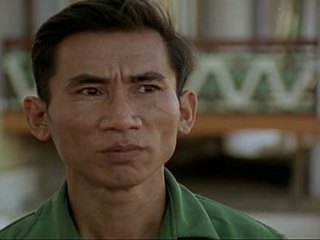
- Transcript
Interviewer: Please tell us about the preparation for the attack on Ban Me Thuot , about how you led the tanks through the trails in the forest, about the attacks on Gia Rai and Kon Tum , about the construction of the ferry across the Srepok River 50 kilometers from here and the shelling... Please go ahead. Ngo Minh Kha: Before March 10 the provincial authorities had already decided on the strategic attack on Ban Me Thuot . Before the attack, all the various armed units had coordinated the attack. Interviewer: Please repeat your story on the attack on Ban Me Thuot . Ngo Minh Kha: Before the attack on Ban Me Thuot , all the various armed units of the Liberation Army had made careful preparation. First of all, the preparation was made a long time ahead of time. And, in order to distract the enemy in Ban Me Thuot , our forces attacked various other areas such as in Gia Rai and Kon Tum and in Pleiku . And in order to fool the enemy of our objective... Let's start all over again, I am kind of... Interviewer: Please begin with the narration on the preparation of the attack.
Ngo Minh Kha: Before attacking Ban Me Thuot , our forces had already attacked Gia Rai , Kon Tum , Pleiku and a number of other areas around Ban Me Thuot . This was to prevent the enemy from knowing of our objective in assaulting Ban Me Thuot . As for the attack itself, we had made careful preparations. Tanks were used in the attacks. So as to prevent the enemy from finding out that our tanks were coming, we used artillery to shell the enemy continually during the night of March 10 and the morning of March 11 . When the tanks arrived at the city line, the infantry and other units also arrived to attack the enemy. Interviewer: Please tell us again of the preparation for the attack on Ban Me Thuot . Ngo Minh Kha: Preparations were made a considerable time before the attack. Infantry units, tank units and artillery units were all in place before the attack. Before the tanks advanced on Ban Me Thuot , they converged on a place about 100 kilometers from here. From there to Ban Me Thuot , there was no road and hence they had to cut through the forest. Before the tanks could enter the city, the engineer corps had to build bridges over the Srepok River river which were able to support the tanks, weighing 35 tons each. Ngo Minh Kha: In order to prevent the enemy from finding out that the tanks were coming, we, first of all, attacked many other places such as Gia Rai , Kon Tum , Pleiku and many other areas. And on March 10 and 11 , just before the tank were rolling into the city, the commando units and various infantry units closed in on the city. In order to allow the tanks to come in, the artillery units shelled continually, sometimes in quick salvos and sometimes more deliberately, for about two days so that the enemy would not be able to hear the rumbling noise of the tanks. When the tanks were already on the city limit itself, they were accompanied by the other armed forces in the coordinated occupation of Ban Me Thuot .
Interviewer: Please describe to us what it looked like in Ban Me Thuot when you entered the city on March 11 . Which were the places where we had occupied and which not? And please tell us the scene at the traffic island where the six streets meet and where we captured the two colonels. Ngo Minh Kha: At 13:55 on March 10 our forces began its assault on Ban Me Thuot . In the night of the eleventh, we entered the city along with the armed units. I knew at that time that our tank units and infantry forces had already liberated the area where the six streets meet in the city of Ban Me Thuot . We were also attacking the Regional Military Headquarters of Darlac . Ngo Minh Kha: And, by the afternoon of March 11 , we had taken care most of the 23rd Infantry Division, the Mai Hac De ammunition storage area and the L l9 airstrip. On March 11 , Colonel Nguyen Trieu Luat , the provincial chief of the puppet regime, was arrested in the coffee plantation west of the 23rd Infantry Division Headquarters. And we also captured Vu The Quang , the deputy commander of the 23rd Infantry Division, at the coffee plantation while they were trying to flee. Therefore, on March 11 , a number of places around the city of Ban Me Thuot such as the headquarters of the 23rd Infantry Division, the L-19 airstrip...
Interviewer: Please tell us again what it looked like when you entered Ban Me Thuot . What had we managed to take over by then and whether the enemy's resistance was strong. Also please tell us about the capture of the two colonels. Ngo Minh Kha: On the night of March 11 I entered the city of Ban Me Thuot . And, as I knew at the time, from 5 a.m. till 11 p.m. three attacks were mounted on the area of the traffic island where six streets meet. The enemy did mount some counterattacks, but these were defensive counterattacks. By around 10 a.m. on March 11 we occupied the area around that traffic island. Then we advanced on the enemy's Regional Military Headquarters. After that, in the afternoon of March 11 , we began to attack the 23rd Infantry Division as well as targets such as the L 19 airstrip, the Mai Hac De ammunition storage area and the artillery and armored vehicle centers. Ngo Minh Kha: By the afternoon of March 11 , we already took over the area of the 23rd Infantry Division. Colonel Nguyen Trieu Luat, the provincial chief, was captured by us in the area belonging to the 23rd Infantry Division. We also captured Vu The Quang, the deputy commander of the 23rd Infantry Military Division, at the coffee plantation along with other officers who were accompanying Quang. We also captured a number of tanks in that area. This was in the coffee plantation, which was west of the 23rd Infantry Division Headquarters.
Interviewer: When the puppet troops fled, how panicky were they? Tell us how they stripped themselves of their uniforms and threw their guns away and even put on women's clothes in the effort to flee.
Ngo Minh Kha: The puppet troops were really panicked. It was total confusion when they tried to flee and to surrender. They threw their guns down the wells and down outhouses. They put on civilian clothes, including clothes they stole from the inhabitants, in order to escape. They even put on women's clothes in order to escape. They were really panicked and were in total confusion. There units had disintegrated and they were simply fleeing for their lives.
- Raw Footage
- Interview with Ngo Minh Kha, 1981
- Producing Organization
- WGBH Educational Foundation
- Contributing Organization
- WGBH (Boston, Massachusetts)
- AAPB ID
- cpb-aacip-15-vm42r3p88q
If you have more information about this item than what is given here, or if you have concerns about this record, we want to know! Contact us, indicating the AAPB ID (cpb-aacip-15-vm42r3p88q).
- Description
- Episode Description
- Ngo Minh Kha describes the battle on Ban Me Thuot, part of North Vietnam's Campaign 275 in 1975 to capture the Central Highlands. He describes diversionary attacks on other areas such as Gia Rai, Kon Tum and Pleiku. He discusses the tactics of entering Ban Me Thuot, including the capture of two South Vietnamese colonels and the chaos as South Vietnamese troops attempted to flee. The battle, two years after the cease-fire signed at the Paris Peace Accords, resulted in the South Vietnamese retreat from all but the south of the country and ultimately the disintegration of the South Vietnamese military.
- Date
- 1981-03-03
- Date
- 1981-03-03
- Asset type
- Raw Footage
- Subjects
- Capitulations, Military; Rhade (Vietnamese people); Vietnam (Republic); Vietnam War, 1961-1975--Personal narratives, Vietnamese; Vietnam War, 1961-1975--Underground movements, War; Transvestism
- Rights
- Rights Note:1) No materials may be re-used without references to appearance releases and WGBH/UMass Boston contract. 2) It is the responsibility of a production to investigate and re-clear all rights before re-use in any project.,Rights:,Rights Credit:WGBH Educational Foundation,Rights Type:,Rights Coverage:,Rights Holder:WGBH Educational Foundation
- Media type
- Moving Image
- Duration
- 00:09:50;19
- Credits
-
-
Producing Organization:
WGBH Educational Foundation
Publisher: WGBH Educational Foundation
Writer: Ngo, Minh Kha
- AAPB Contributor Holdings
-
WGBH
Identifier: cpb-aacip-ccbde577f71 (unknown)
Format: video/quicktime
Color: Color
Duration: 00:09:58:21
-
WGBH Educational Foundation
Identifier: cpb-aacip-109afe7d9ea (unknown)
Format: video/mp4
Generation: Proxy
Duration: 00:09:50;19
If you have a copy of this asset and would like us to add it to our catalog, please contact us.
- Citations
- Chicago: “Vietnam: A Television History; Interview with Ngo Minh Kha, 1981,” 1981-03-03, WGBH, American Archive of Public Broadcasting (GBH and the Library of Congress), Boston, MA and Washington, DC, accessed April 19, 2026, http://americanarchive.org/catalog/cpb-aacip-15-vm42r3p88q.
- MLA: “Vietnam: A Television History; Interview with Ngo Minh Kha, 1981.” 1981-03-03. WGBH, American Archive of Public Broadcasting (GBH and the Library of Congress), Boston, MA and Washington, DC. Web. April 19, 2026. <http://americanarchive.org/catalog/cpb-aacip-15-vm42r3p88q>.
- APA: Vietnam: A Television History; Interview with Ngo Minh Kha, 1981. Boston, MA: WGBH, American Archive of Public Broadcasting (GBH and the Library of Congress), Boston, MA and Washington, DC. Retrieved from http://americanarchive.org/catalog/cpb-aacip-15-vm42r3p88q