A Word on Words; 3118; Randall Kennedy
- Transcript
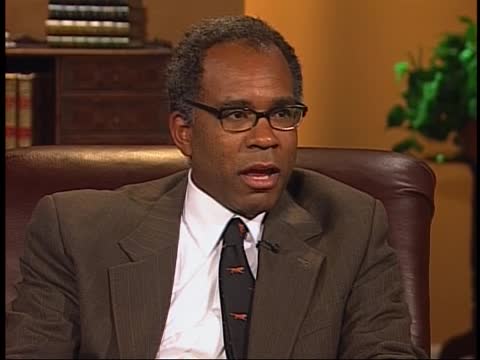
Hello, I'm John Siggand, all I once again welcome to a word on words. I guess is Randall Kennedy, Professor Kennedy, welcome to a word on words. Thank you very much. It's great to have you to talk about this book, Nigger, the strange career of a troublesome word. Our audience can see the cover of your book with that troublesome word, that offensive word, that word that maybe political correctness was created for. You deal with its history, its past and its present in a very candid and open way, and I'm fascinated by where the
idea came from to write this book. Well, I structure many of my lectures around words, teach a course on race relations law, and there's certain key words that are very complicated words. We use them all the time, but we don't know a whole lot about them, words like racism, words like discrimination, and so one day I was thinking of this word Nigger. It's a word that I've encountered throughout my life. It's a word that everybody knows about, and I thought well where'd that word come from? Who first used it? What's its history? So I put on the, I turned on my computer, and I called up a computer program and gave the directions for I typed in NIGGER, and I told this program to give me
every court case where Nigger appears. I got over 4,000 citations, and I started reading court cases, and after a couple of days of reading I knew I was on to something, because what was striking was the number of times courts have had to deal with Nigger in legal controversies. Well, you know, it's interesting. We get some of those cases in the book, and you deal with the etymology of it, and we get a sense of how it has affected the lives of a whole variety of people. You quote Hosea Extin, is it? Easton. Hosea Easton. He said it was an approprivious term, and then he said something like, it would be a harmless word, but for its intent, which is to
injure. That's a paraphrase, but it's close to what he said. I'm not sure he's right about that. I think it would not be a harmless word, even if the intent would not be a harm, because I think the impact of it harm. When I remember this man, Hosea Easton, he was writing, and I believe, 1837. So when he was writing, he was writing at a period when the word was definitely a slur, but it did not have the long history that has been bequeathed to us. So I think it was a little bit maybe was a little bit easier for him to make that statement than it would be for somebody today to make that statement. I think you have a good point. I lay a lot of stress on intention in my book, but I think that someone could
rightly say to me, what about a person who's grown up in a setting where that's all they heard? So when they refer to black people as niggers, they're not trying to be hurtful. They just think that that's just the name. Is it no longer a problem just because somebody says something without the intent? So intent doesn't explain everything because of that problem, the problem of ignorance, or there's another problem which I think is big, and that's the problem of misunderstanding. Imagine two people, their friends, and a white person, a black person, the black person, the friend, doesn't object to the white person's use of the word nigger. Maybe they've worked out as their own little sort of understanding, their own little language, but then they go into a theater or in a park, and other people over here, them. There's the problem of mistake. So I think you're right. I don't think
intention carries the day, though I think it's still an important feature in trying to figure out what's really going on when somebody uses the word nigger. You use Richard Wright's writing about his own encounters with the word nigger, and I don't think anybody can read of those experiences which are presented pretty early in the book and not come to grips with the pain and the hurt. I mean he believed when you read what he endured. Well of course that's why I put in Richard Wright. The particular thing was his essay on the ethics of living Jim Crow. And I think of all the writers, I've encountered no one who more vividly shows the cruelty and hurtfulness of nigger as insult,
the calculated insult. And so that's why I put Richard Wright in there. And it is very powerful. And I wanted people to know more about the history of nigger as insult because a lot of younger people really don't know much about the history of the word nigger. They've heard it in a completely different context. They see it in movies, they see it in with comedians, they see it in these hip-hop videos. And to them it's a word that they know it has some degree of badness to it. They know it's a sort of a transgressive word that's why they sort of like to use it. But they don't know a lot about the history of it.
And so one purpose of writing this book was to acquaint younger people with the history of the word. You know in context it's still a problem for I think for white speakers to relate experiences to an African-American audience or a mixed audience without offending. Not long ago I was speaking to a group of students who included a number of African-American students. And I was relating that in my procule school upbringing my fifth grade teacher had told us that that slavery really didn't have anything to do with the war between the states. Sometimes the Civil War most often the war of Northern aggression. But what I said, she said to us that
the niggers were a lot better off on the plantation than they would have been in the Northern factories. That's what she said. That's what I said. But it offended. And I think coming to young black students coming from the mouth of a white person perhaps white southerner who knew nothing about me it was it was offensive and and that's why when I read the first review of your book I was fascinated by it. Well I think that's a problem that's the story that you just related. There are many stories like that. You know there have been school teachers who have been dismissed from their positions. Well yeah from and I mentioned. You relate that right. In the same sort of context I think that people have to recognize that this
word whatever you think of it whether you use it or don't use it this word is a key word in American history. If you don't know about this word then you don't know about American history. And so it's important for people to know about the word it's important for people to listen to others and understand what they were saying. I mean obviously you weren't endorsing the ideas being spoken. You were relating information that had been taught that had been brought to you. You were relating an attitude that had been brought to you and people have to listen and understand. And in a real sense I was explaining the outrage of of of a none. Not having the intelligence to know what she was what she was teaching. And I mean the interesting thing is on the one hand we say that we want to have more open thorough discussion.
But then we say that we don't want to hear certain things. Well you know you can't those two things don't go together. We're going to have an open thorough discussion. We're going to have to hear and see and say things which are tough. But I mean if if you're going to have a discussion you're an open a thorough discussion you're going to have to not in a sense have a thin skin. You're going to have to have an attitude that is willing to listen and understand that the world's a complicated place that words have all sorts of different meanings. In order to have a better conversation we're going to have to be better listeners. You know then the the great thing about the book is that you deal with the many
fascinated problems that come from the book. You mentioned the two teachers. I mean the coach who lost his job just dumb. I mean in my judgment it was sort of a misapplication of the word. It meant well probably didn't know harm really meant to do the best he could to make a point. But I thought it was I mean the professor on the classroom I mean is I mean there's a real injustice done to that man. This was the case of a professor in a community college in Louisville right who was teaching a course on communications and one section of it had to do with taboo expression and so he asked the class well give me some examples of taboo expression and various words came up and Nigger was one of them and a student objected to the mention of that word
and to make a long story short the students protest led to this professor being essentially being fired which created a lawsuit and by the way this professor died a few months ago I don't know what has become of the lawsuit but this was a context clearly where you could not really have a discussion about taboo expression in a college setting without facing and facing directly the taboo expression. That was a very unfortunate I think just a tragic example of essentially sensitivity run amok and I don't really even think that that was really sensitivity I think that that was simply not listening not being very attentive to what was going on. For those of you just
showing us I'm talking to Randall Kennedy about his new book Nigger the history of a very troublesome word. The other thing that I find fascinating in the book is that you don't miss a point that's been made in these last several years on this subject I mean Amos and Andy are there in the book Mark Twain and Huck Finn are there in the book. The multiple offenses even by judges presiding over courts there's a case in which the lawyer Black Lawyer his name I think was Benjamin Jefferson Davis I don't know what his mother had against him but anyway I mean the judge says oh well I don't know that's an offensive word or not but I'll tell the witness to call him Darky yeah I mean I mean you
wonder that's a very you mentioned Ben Davis it's a it's an interesting episode Ben Davis very highly educated man who's educated in Amos he goes to Harvard Law School he was so he was the lawyer for Angelo Herndon and in the middle of the trial he gets tired of the prosecutor referring to his client calling his client Nigger this and Nigger that and he objects and he tells the judge I object this is terrible you don't you don't you are not allowing this for any of the white witnesses the judge says well okay don't call him don't call him Nigger call him Darky Ben Davis was so radicalized by this experience that after the trial he became a communist and in fact in the 1940s he went to prison because along with the other leading communist leaders and this was a this this this episode shows the way in which this word this troublesome word has really had very concrete effects
on people's lives when I was writing the book I was at first I thought well gosh how can I make vivid the effect of this word on people's lives but as it turned out it was it was rather easy because what what I started doing was just getting biographies and autobiographies of black people and usually very early within the first 50 pages there would be a story involving Nigger did you have any difficulty with the publisher about the title of the book no I did not I should say that first of all the title the title is my title the number of journalists I wondered about that no it's my I told maybe with some marketing director thinking about selling it in Mississippi no no and in fact a number of people have written usually very disapprovingly and I've suggested that this was you know just a the publisher's marketing gimmick not true it's my title for good or for bad it's my title
the publisher did not say did not give me any grief or did you know they just wanted the title I gave him the title the subtitle took a little bit of doing was only at the very end of the book that I came up with the subtitle strange career of a troublesome yes and in fact I was tipping my hat a bit to the great historian C. van Woodward right strange career Jim Crow that's right and well he deserves a tip of that well he does indeed he does and but the publisher did not give me any problem one thing I did not know was that there was consternation within the publishing house oh was there yes I only learned about that later through press reports my editor was very insistent that the title be there and but there were some people within the publishing house who were made a little bit nervous by it for one thing they didn't know how stores bookstores booksellers react they did not know you know would they take it
would they if they took it would they you know put it under the counter I mean just how would they react as it turns out booksellers reacted very well there were some that did not take the book but that was the very unusual case and those by in any event were not the most influential booksellers the most influential the the biggest the the big chains handled this book by and large in a very good way the the book provides education some some of some of the most outlandish and outrageous incidents and I mean the story of Charlie digs going to Emmett Till's trial I mean there are an awful lot of young people out there that don't know that there was a 14-year-old Chicago lad who went down the money Mississippi one summer and was brutally murdered for
making what I think was a relatively unoffensive remark to a white woman it was a national story for those of you who don't know Congressman digs distinguished member of the House of Representatives goes down to witness this this this travesty the acquittal of two men who later were paid to confess the murder and and digs is suffers the indignity of southern law enforcement well he he goes to the courthouse and it's sacred it's totally segregated so in the courthouse it's the they had a little place for the black people and he comes in a little place for black reporters and a place for black reporters and and it was sort of crowded and so he comes in a black reporter takes one of the law enforcement officers aside and says this is this is a Congressman digs and the and the deputy
sheriff just shouts out completely just shouts out so and so here says that nigger is a Congressman and someone says what and they check into it and indeed he is and then they lead him to of course the segregated part of the courtroom and uh... yeah and i remember and that wasn't that long ago no we're not talking about absolutely no no no no i mean we're yeah that's right i mean we're talking about we're talking in the you know in the fifties mid fifties right yeah well and then there there is uh... i mean the rap trap brown trial is included i mean it's it's easy to to dislike rap brown if you knew what he was about and many people did but that anecdote yeah that was the case where there's a different spin on it yeah he's he's being tried and the judge who's presiding over his case
says to a complete stranger i'm going to get that nigger now this is an interesting episode though i i don't i did not get i did not get in touch with the lawyer who brought this to rap brown's attorneys attention but that lawyer deserves a lot of credit oh boy sure does i mean here's a lawyer i'm sure that i mean this is a federal district judge i'm sure this lawyer was taken a lot of chances and uh... and brought this this miscarriage of justice to the attention of the defense attorneys and um... and fortunately uh... he the the the the court system tried to rectify the air was worse than air tried to rectify this this travesty um... but it is a tip off it is a tip off that nigger is insult is not only is not only been part of the lower orders of
society very important people have expressed their bigotry through the use of uh... nigger is insult and that was another one of the points that i was trying to drive home in this book you also called bill cosby as discouraging african american comedians yes from the use of the word which is sort of raises the question of black on black use uh... other word nigger and and and it's various formulations uh... as i say you don't miss a single area of controversy uh... talk about cause be a little bit because i think it's interesting that he would bill cause be whom i respect a great deal is what i call in the book an eradication he just he he's so appalled by this word that he doesn't want anybody to use it ever and i understand why he's saying what he's saying because of course this word
has been used in a very terrible way on the other hand words are complicated things you can do a lot even with a word that has been used in a terrible way and look look at what mark twain was able to do with as you demonstrate your own in the book and so uh... uh... bill cause be has been very critical of uh... black entertainers who've used a nigger in in in their acts and what i say is well we we have to look at what somebody is doing with the word uh... i think that some black entertainers uh... especially the comedians especially the satirists people like chris rock people like uh... uh... Richard prior at one point in his career i think that what they do with this word is actually quite enlightening quite revealing you you you you laugh and then you cry
they're doing a lot of things with this word and so i don't i i don't think you can just with a broad eraser to sort of get rid of this word and uh... and and call it a day the fact of the matter is that in many of the most important documents in our culture you find this word uh... martin Luther King letter from a Birmingham jail talks about the meaning of nigger and so if you just got rid of this word you'd be getting rid of too much as far as i'm concerned not long ago i was uh... moderating a panel uh... at our first moment center and uh... had a teacher suggests that huckleberry fin should never be taught to high school students that in context it might be acceptable to present to um... college students but only by our professor who had been trained with a great deal of sensitivity
i raised the question uh... with her about uh... about the character to whom twain plies the word nigger jim and explained as you explain so well in the book that he is a heroic figure and if there is person in that book really is to be admired it is this person became really a father figure to hook it i couldn't sell it and didn't really try very hard because i understand exactly where she's coming from she's offended by it but but it but it's a great work of literature not only is a great work of literature but mark twain mark twain who as a youngster was a confederate grew up you know in a racist society was racist uh...
is a person who was transformed and wrote anti-slavery anti-racist work not only huckleberry fin but other work as well i quote him you do uh... in one of his great anti-linching it's beautiful one of his great anti-linching polemics he uses the word nigger but he's using it in an anti-racist way and so you can't you again on the question of listening on the question of drawing distinctions uh... i think people have to become more more attuned at drawing distinctions recognizing recognizing what satire is about not being so literal minded recognizing that any word can be used in any sort of way i can insult you right now if i call you sir
in a certain sort of way again indeed i can call you sir in a way that would be dripping with contempt and uh... so words are not self-defining they only take on their meaning through the overall context that's one of the big points i try to make in the book well we've run out of time we've been talking to randall kennedy about uh... his new book nigger uh... thank you so much thank you for joining us thank all of you for being with us on a word on words i'm john sing and dollar keep reading you
you hello i'm john sing and dollar once again welcome to a word on words new stories from the south and shannon ravenel welcome to a word on words thank you i'm so glad to be here new stories from the south two thousand two the years best this is a wonderful collection of new stories from the south
believe it or not but notice we don't say best no but who knows his best but but the title sort of implies well it does have best in the sub-title i used to edit as a series editor the best american short stories and it used to made me very nervous that we were always you know they were really supposed to be the twenty best stories of the year so when we've cloned this book we put the best in a set of a subliminal sub-title so we want bragging too much before we get inside the book let me just talk a little bit about you as a general routine for thirty years i've had authors sitting in that chair and i've talked to them about their work and most often but had heard with
- Series
- A Word on Words
- Episode Number
- 3118
- Episode
- Randall Kennedy
- Producing Organization
- Nashville Public Television
- Contributing Organization
- Nashville Public Television (Nashville, Tennessee)
- AAPB ID
- cpb-aacip/524-wh2d796j58
If you have more information about this item than what is given here, or if you have concerns about this record, we want to know! Contact us, indicating the AAPB ID (cpb-aacip/524-wh2d796j58).
- Description
- Episode Description
- Nigger
- Created Date
- 2002-10-11
- Asset type
- Episode
- Genres
- Talk Show
- Topics
- Literature
- Media type
- Moving Image
- Duration
- 00:30:00
- Credits
-
-
Producing Organization: Nashville Public Television
- AAPB Contributor Holdings
-
Nashville Public Television
Identifier: AM-AWOW3118 (Digital File)
Duration: 27:46
-
Nashville Public Television
Identifier: cpb-aacip-524-wh2d796j58.mp4 (mediainfo)
Format: video/mp4
Generation: Proxy
Duration: 00:30:00
If you have a copy of this asset and would like us to add it to our catalog, please contact us.
- Citations
- Chicago: “A Word on Words; 3118; Randall Kennedy,” 2002-10-11, Nashville Public Television, American Archive of Public Broadcasting (GBH and the Library of Congress), Boston, MA and Washington, DC, accessed April 1, 2026, http://americanarchive.org/catalog/cpb-aacip-524-wh2d796j58.
- MLA: “A Word on Words; 3118; Randall Kennedy.” 2002-10-11. Nashville Public Television, American Archive of Public Broadcasting (GBH and the Library of Congress), Boston, MA and Washington, DC. Web. April 1, 2026. <http://americanarchive.org/catalog/cpb-aacip-524-wh2d796j58>.
- APA: A Word on Words; 3118; Randall Kennedy. Boston, MA: Nashville Public Television, American Archive of Public Broadcasting (GBH and the Library of Congress), Boston, MA and Washington, DC. Retrieved from http://americanarchive.org/catalog/cpb-aacip-524-wh2d796j58