The Stoler Report: New York's Business Report; Real Estate Lenders' Perspective For 2004
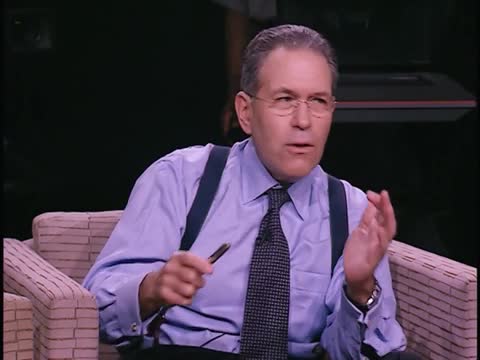
- Transcript
Funding for the Stola Report is made possible by a grant from the first American Title Insurance Company of New York. The first American corporation is the nation's leading diversified provider of business information products and services that impact the major events of people's lives. Hello, my name is Michael Stolar, the host of the Stola Report Real Estate Trends in the Tri-State Region. The topic of today's program is real estate lenders perspective for 2004. My guests include Douglas Durst, co-president of the Durst Organization, over Yardini, managing partner, and co-founder of Stone
Edge Partners Inc. Michael Pomerance, a principal at the Thompson Hotels, Chuck Rosenswag, managing director of real estate finance at RBS Greenwich Capital Financial. And last, but definitely not least, Steven Siegel, Chairman of Global Broke Ridge of CB Richard Ellis. Welcome. Thank you Michael. It was an article in one of your competitors, even though there aren't any competitors to CB Richard Ellis and Steve Siegel aspiring. Okay, saying that the New York barometer of real estate market is still in bed with Wall Street. It says, as Wall Street goes, so does the New York real estate market. I think that's significantly true, but not entirely true, or as true as it used to be. I think that as the economy in New York City, the real estate economy shifted to a service environment. There were a lot other components that went into whether it was in good health or not. We all saw the dot com, the
telecom booms, the new industry that fuel the terrific amount of growth. We have the entertainment industry, which helps. We have the service sector, our law firms and accounting firms. But at the end of the day, to have a truly vibrant New York City, I believe you need a vibrant and healthy financial sector. So, last year, the market went up by 20%, bonuses were up 25%. And, you know, tonight we have this really good group. We have a residential, a leaving commercial developer of office buildings who's going to be building probably one of the nicest towers on the corner of 42nd Street and 6th Avenue Douglas, who's also a residential developer, who's building on 31st Street in New Tower, and also hopefully opening up in July, or August, a new tower, a residential town of 57th Street. We have over Yardini, who is a residential owner of many properties all over the city. And then, to round it about because of our topic, hopefully here, you know, we have Michael Palmerins, Michael Palmerins, the
Thompson Hotels, who has a variety of hotels all over the city, including 60 Thompson Street. And, you know, you can't have a good show without having the man who gives you the money, okay? And he has to give us some advice. And, you know, he thinks that, as Wall Street goes, but he's part of Wall Street. We have Chuck Rosen's wife, who's with Greenwich Capital, who last year put out a mere four and a half million dollars. And then we have a very interesting individual here, okay? Steve Siegel, who is the chairman of global brokerage for the largest brokerage company, but Steve, in addition to that, is an owner of residential, has some interest in some commercial property. And he's our restaurant tour. You know, he is one of the principals with George Stambren, or at the P.J. Clocks. And he's one of our partners. He's one of your partners. Does he ever come there? Yes, he does. Okay. So, my question to everyone, okay, and you know, feel free because a dinner everybody was talking,
you know, now everybody's quiet, you know, do you think that Wall Street is filtering this business, okay? Our rentals up offer. It's not a trend to buzzer up or down. And I don't agree, 100%, we've got Steve said, because it's not just... I don't agree with Steve. Come on, come on. The way I look at it, I have more global view than just Wall Street, maybe coming from overseas, spending time in Europe, and I look at what's going on over the world, and in terms of investments, and what's going in the Middle East, what's going in Europe, and where people are looking to invest money. So maybe Wall Street is down or up, but it's very important to see who invested in New York in the last two years after 9-11, and my feelings are that most of the investments that were done here were not done by local Americans. But my question is to everyone, okay. Have we seen the turnaround? You know, when I started my show on radio a couple
years ago. Well, that's interesting. Of course you realize that. I'd like to disagree with five little thoughts. Yeah, absolutely. I think on a dollar value basis, most of the investment in New York in the last two years was done by local investors. 399 Park was Boston Properties. The General Motors Building was Harry Macklow at all. The 45% interest in the McGraw Hill building was S. L. Green. You're talking right there somewhere in the neighborhood of three billion dollars worth of money. 11 Madison was David Werner and tell me you're superior. But I'm just a pure for example. I would not call here. I'm American. The fact that he is a read. We don't know who is fueling the money to the read. So it's an American-based public. It's American-based. I'm considered as an American base, but most of the money that I ring to this country is foreign base. So I know one of your major investors is case the de-poise, the retirement fund of Quebec. Right. So they don't like Canada. They want to come here with the money. I mean, there's been a lot of German
equity that's coming down. There's been a lot of German equity that's coming down. There's a lot of German company in Canada. James Hown and the city bank and two German banks together. The two threes have them. I only want to say that the instability in Europe and the Middle East brings capital to New York because it's still the safest and the easiest place to do business in the world. So I, and regarding to your question, I think that we had our downtime and right now we are, the market is changing. In my mind, 2003, January 2003, in the residential market. Absolutely. I'm speaking about the residential and retail. And in terms of traffic to New York City, January 2003, I remember coming to the office and suddenly from having a portfolio of 1200 units and I realized that I have maybe 35 or 40 units vacant, I panicked because I never, I was never used to it. I used to have one or two units vacant in my portfolio and suddenly the market
changed and I didn't know if it's going to continue and I was not even ready how to handle it because I was never used to it. So January 2003, for my point of view, I had some nights that I didn't sleep because now you're sleeping though. Now I sleep like a baby. I sleep for two hours. I cry for two hours but it's definitely the market change. Let's follow the question to our hotel here. I think if I remember the question, it was whether or not the effects of the market have anything to do with what Wall Street is or is not there. I think the question really is how do you see the hotel industry in 2004? I think the lead-in on the Wall Street was some competitor, okay, at some small brokerage company putting their comments. I want it was to bring in the point of view of all of you. I think as far as hotel is concerned and this
gentleman can attest to what I'm saying. It's always good to have a lender who didn't know you'd be here. I think if you're talking about commercial hotels, rule of thumb will sort of prevail but if you're talking about unique properties, the times will help good properties but if the properties are very good, I think the times are less important and the market is less important because to fill up a hundred rooms of a boutique property if it's run properly is really a drop in the bucket. I think when you were on the radio show and we brought the subject up of a boutique hotel, someone said there's not really boutique. We consider ourselves operators of small luxury hotels and they're going to be destination hotels are going to be
more resort-oriented, somebody coming into the city for a visit from a tourist perspective. They're not going to be dependent on the economy as much to some degree but not as much. A vibrant economy here, the Merit Marquis, the heights of the world are the ones that are going to be back. Let's talk about a destination hotel. On December 1st this hotel opened up on the corner of 60th Street and Columbus Circle and a very, I think the room rate is about starting in 495, 495, and they have those suites that offer when his friends come in that they haven't moved in yet. It's 13,000 is the most expensive suite. It's the Las Vegas suite. How do you think they're doing in this time? I don't know how they're doing because I think that depending on who you ask you'll hear every answer differently. I believe that they may do well for the
upper-end luxury market. They have their own competitive set. It's a four seasons. It's Central Park South and I think for that they have a new interesting product. I think their rates will be adjusted in so far as the adjusted upward? No, I don't know. But definitely adjusted as per the market conditions. They have their own competitive set. It's an interesting project without a doubt the face of that project has changed the corner of New York Forever and I believe it's no less significant than maybe Rockefeller Center was at a certain time. You know, Jeff Blau in December was honored by American Oit and at the at the luncheon he said that Jeff Blau for our audience who doesn't know Jeff Blau is the president of related properties. Jeff said that one of the developers with Apollo. Jeff said that he thinks that the Time Warner Center, which is the hotel is part of the
Time Warner Center, will be the Rockefeller Center of the 21st century. Unfortunately, Rockefeller Center where Douglas has a number of properties rather close by on 6th Avenue and Steve has leased and brokered and everything else and Chuck is financed over there in the area is more than one location. The Time Warner Center, you can't build behind it. There's a residential building. You can't build on the side of it because there are other properties that are not going to go down. I think Rockefeller Center will be the Rockefeller Center of the 21st century. I think what you said is correct. The significance of that development in creating a whole new neighborhood if you will and it's and it's significance by itself is the Rockefeller Center of the 21st century. The equivalent of what happened in 1920. No, but I think what Jeff was saying. Jeff wasn't saying that. Jeff was saying that this is going to be a development of a future Rockefeller Center. I don't forget me because I'm in
the service business but you're wrong. Douglas, right now we were talking at dinner. You're going to be demolishing these stores on a property that the Durst family has owned just for 1967 for 37 years on the 42th Street. In an area that at one time Brian Park people would say I don't want to be in Brian Park but Brian Park is really developed. There's a hotel near Brian Park. It's really spectacular and you own a lot of properties before if you didn't have Bank of America agreeing to rent 54% of the property. What have you built another tower over there? Not now. Before 9-11 we were planning to build a smaller building on the part of the site that we owned but the things
have changed so much that I think has been a long time before anybody builds anything speculative office building. Purely unexpected. In New York. With Reglot to that do you think that the Times Tower, Raton is Times Tower and this is for the entire group here will be built. I mean he has times as a partner in that property. I think Steve can speak to that very nice. I think it says sure to be built as Douglas's project. I do think it's okay. I think it will get built. The Times is actively marketing their building for sale so if it doesn't get built then New York Times will be in Chicago. Maybe they'll move along. But I really believe it will be built. They have put up a tremendous amount of money with the state and the Times has a requirement to build their portion of the tower. So maybe Bruce will build a stadium there?
No I understand. You're working on leases. There are several active leases but as you know falls too well as we all know. It's a long way from getting signed. Yeah but that's true. Can it's getting incentives? They have incentives. They have incentives. What are the incentives? They have a very low tax rate. Real estate tax base. Okay. At dinner we were talking that in the early 80s Times Square was not a neighborhood that people wanted to be. George Klein was a visionary. Prudential was a visionary so finding financing it and you in the Durst organization when you built the first building over there you thought you took over you were going to build you started thinking about in 1987 and it really didn't get into the ground until one. Well in 1987 when Prudential came in we were opposing the project because they changed it from
developing the entire site to just developing the four office towers. Then when they were about to abandon the project in her foot it put it up into temporary retail in 1995 we approached Prudential and said that we would build if they didn't have the courage to build at that time. Speculatively and we negotiated with them for about a year and a half or almost a year and a half. In the meantime Steve's help we procured a tenant and by the time Prudential was able to put together a deal with us. We were very close to signing a lease with Conde Nast before we actually owned a property which wasn't something we
wanted to do. So you had the tenant in the hand and you didn't have the ownership. Well but to Douglas has cried I'd like to interject here and if I'm wrong you can correct me. He was moving. He was moving ahead. He was moving ahead aggressively and publicly with commitments and firm statements that he was prepared to build this building and he did it in every public forum. He was a visionary because in 1995-96 while we were in the throes of a gradual recovery which actually peaked somewhat significantly in 2000 nobody was sure that and nobody was building anything on spec so the fact that he got a tenant was because of his clear commitment this was going to get done and his tenant took comfort in that. So I think Douglas was a visionary because he got the site for $80 a foot and Prudential in the George Klein who spent a lot of years on it got but you know I don't know what they got out of it but you certainly get that. Prudential didn't get their money out and George Klein didn't get the towers and you know the properties worth three times and a land value now. It's amazing because that's a visionary definitely a visionary but some people forget
that John my partner and the case of the poor in 1996 and it's a story that you should all hear we bought the rich plaza that is on a foreclosure. It's a 500,000 square feet rental apartment on 48 between 8 and Broadway and there was a mortgage of 150 million and we bought it at 77 million and people thought we are crazy because in 1996 even crazy because there's 150 million. But that's given as a construction before but the amazing part is that when we bought it all cash and I'll never forget that we went to City Bank in 1997 and we asked them we bought it very quickly we asked for them for a mortgage for 50 million dollars and City Bank looked at us in the meeting and said you must be nuts. There is no way inhaled that we are going to give you a mortgage of 50 million dollar in Times Square. There is no way and they just lost and 300 million. You went to the wrong place. We met when we were
compilers and we couldn't get more than 50 million. And I really believe that in order really to be very successful sometimes you see the foreigners are coming and they have faith in this country and this place a lot more than the people that live here because a lot of times we take it for granted and for me it's very important every once in a while to live the country so I can get a different perspective. Because in those days if my memory serves me correct the dollar was very weak overseas and usually when that happens foreigners tend to flock to the United States to invest their dollars and that helps start again the cycle. But it's weak but it's also the fact that foreigners come and they realize what this country is all about. The opportunity very easy to make business. And so we came here and case that the poor came with us and helped us financially and we were able to buy it and people and this property was
available and people for that we are completely nuts when we did it. And today it's true city lost on two buildings on Broadway and Times Square area in probably within months of each other. 1585 and 1540 I think. Which is recently solved. 1540 to power my group for a pretty penny. But I think what you're saying about foreigners coming in when the market is down the dollar is weak. In my experience we've seen it over and over again in the 70s and in the 80s. It's really been a saviour of New York. A couple of times. When you look in New York City though there's really no reason why New York cap rates in New York City shouldn't be the same as London in Paris in my mind. It's truly an international city. What a capital it's what a capital that's what a capital. What a capital in London. There are lower than there are lower than there. There are lower than Manhattan. Here people cry at seven and eight there. Sixes. And so when you look at the capital. And they operate for our audiences. The return that you get based on your best check. What's amazing it's not
that the cap there are lower. The financing there is a lot higher. In England you can buy in London. The office building you will get. You'll get 95% financing of which is unheard of here. Wait a second. Yes in London. No, no. You can get. And today's market in New York. 90 to 95% financing. No, no, no. You can get it with a man's which is costly. They give you a first, a second and I'll give you a man's which is a higher one. You have to give the man like the GM building. They had about 48 different tranches, okay. There was a lot of equity. I'm talking about the normal transaction. The $50 million equity on a billion for a billion purchases. I think it's a slight increase in Western Europe over the last 10 years when returns here were expected to be in the eight nine percent range. People were buying property at four and five percent. But yet their interest rates were still pretty high. Over here however, today you have low interest rates as well as low returns. Yes, but you know since we have a
lender, a professional who came from I don't want to call it a place where the individual who ran it, okay, they do a part of he made a lot of risks and he had risk reward and more, okay. But RBS granted last year increased the amount the business you did from two and a half to four and a half and the year before from about a billion seven, okay. So, you've exponentially, you've done a 300%. Where have you seen it and why have you, what's the reason for lending so much money today? Well, I mean, interest rates are low. There's a lot of demand for capital and it's clearly, you know, a big factor. I mean, the other factor is, you know, granted change the management team and brought in a group that is now much more competitive in the market with a lot of the other Wall Street firms. But, you know, we think the lending opportunities over the past few years have been a great risk reward for us. I mean, we're doing high leverage fixed rate financing
where the return on the bottom of our debt stack is higher than a lot of the equity returns where people are buying buildings at seven, eight percent cap rates and we're giving pretty full leverage but we're able to price the bottom of our debt at a very, very healthy yield. And there's significant demand right now for me, there are probably a hundred different mezzanine funds out there. So there's a lot of money. There is a lot of liquidity for what we're doing. So we like the business that we're in, you know, right now. And we don't think there's great opportunities on that. But the money that you gave out, you would give that money out to an office building developer, okay? You gave out money two years ago on Jamaica Center, which is retail. Four years ago you gave money out to probably one of the nicest specialty we didn't call it a boutique specialty house. Small luxury hotel at 60 Thompson Street. But today you're not, would you give money out to our friend Mr. Yardini for
me? I don't know if I'll take. I don't know if you would. The agencies are way too competitive on financing right now. The Fannie Mae for any max. But there's no reason for an owner of residential apartments in New York City to go to the Greenwich Lehman CS First Boston to those because they're approval the process until they will give an application. You deal with the local banks. The local banks here and like M&T know for community bank and they'll give you 75% financing in their close that didn't for 30 days. And they will give you a vehicle that anytime you increase the value of the property, they'll give you more money. And it's a friendly because you're dealing with the same lender. It's not like for example, I will never in my life and you please hold me to disclose, I will never securitize any property ever in my life because I
want to sit with the lender and to talk to me. But that's a big you know fallacy because that's why that's a big fallacy. Every single insurance company in bank is structuring. Unless you have a covenant in your loan documents that says they can never sell their loan. We buy loans from insurance companies all the time. We buy loans from banks. They sell loans to us. We sell loans to them. And all of them in insurance companies in particular are structuring their loans so they can securitize a senior piece or sometimes they want to keep a senior piece. And you keep the junior piece sell off the senior piece. There's no there is no lender out there right now. Maybe some banks that that will maybe unsure term deals but a long term deals. Not one lender will think that's holding this one's penalty. That I'm dealing with them. They are very easy to work. The prepayment penalty are very easy and maybe they'll securitize but I feel that my relationship is with such an idea. But you're too short of term. No five to ten years. Five to ten years. But I have to Douglas you have
property mostly in Midtown. Avenue of the Americas and you have property on third Avenue. Substantial holdings. Have you refinanced any of your properties? Yes. Okay. Who have you done? I mean I'm not asking. It should be Greenwich or some other guests that we've had. But have you done it with the Greenwich's of the world or have you done them with like Arthur was saying with the M&T's or the North Fork's or the commercial banks? We've done it with UBS. Okay so basically UBS which is similar to Greenwich. The same thing. I think you're also talking on all the mechanisms that you're talking about. A refi of Douglas's. I think North Fork and Community Bank. The reality is $120,000. Residential. Residential. Residential. Residential is not very big of an anti-residential product. You get it to the banks here. In 40 days they were ready to close the deal and they understand the market. It's not like you have to appraise it and to educate them.
It's it's a completely. We're banks have made a commitment. The local banks in particular to finance the residential. They're very competitive. Across the country our business is very national. It's not only in New York business. I think those clinical businesses of the Green Age. We don't do a lot of residential. It's a very and we make a concerted effort not to. And the reason we do is we think we're adversely selected to the worst residential projects. Because guys like you in New York and guys like you know everybody else that's doing residential deals long term in the rest of the country. They can go to the agencies and get very cheap financing at high advance rates with additional advances. And we're not going to do it. So the only way we'll get a deal is if it's a deal it doesn't fit their criteria. So we don't want that. You will come and you will give more money and you'll get equity into these versus the local banks are not going to do it. It will be occasionally on a bridge loan but well for a long term financing it's Wall Street is not the best place for the residential guys. And it's because I don't know if you saw the article on the Wall Street Journal today.
Greenspan is very concerned about Fannie Mae and Freddie. They're very aggressive. When was your opinion of his statement? Do you agree with him? I don't know exactly. I do think that it's a place to watch. Because it's interest rate sensitive. There are a lot of derivative products. They're very very leveraged. So it's something that should be watched. I don't know enough about it to say whether I agree or disagree. But I figure out that many of you read the Wall Street Journal today. Also on the front page of the Wall Street Journal was an article about Larry Silverstein and his partners getting their entire return back on the world trade center. I'd like to shift our market a little bit right now to lower them and happen. What's your opinion about the commercial space in Lower Manhattan, Mr. Silver? I think there's a lot of it, although there's also a significant amount of activity right now. There's a particular transaction about to be signed, which would be very positive from an absorption standpoint.
Major law firm is taking about a half a million square feet in the World Financial Center, which is about 80,000 square feet of growth. But more importantly, they're building that they're in now as being sold and will be a residential conversion. So the net effect is 100% absorption. Are we talking about Cadwater? I was. No, no. It's public knowledge. No, Cadwater is public knowledge that they sold their building. Right, but they sold their building as planned to be converted. The question comes in, are there too many new residential going there? Okay, and it's also, the question is, are there too many new residential? Because every building is being converted. 63 brought 63 walls. 90 West Street is being converted. The hotel operators who are building... No, we tend to forget that interest rates are basically half of what they were 10 years ago. And you all sound so surprised and shocked that the per foot prices are so high in lenders and running to make loans on these buildings.
I think we got to recognize the fact that New York City is an interesting, how shall I say, steadfast market. But undoubtedly, if you look at New York's peripheral areas, as interest rates go down and these prices go up per foot, residential projects are having a harder time than they did the day before. That has to do with the boroughs. It has to do with New Jersey, rental projects have seen more turnover than they'd ever seen. And I would say in the last decade. So when you talk about absorption, keep in mind that if interest rates do move up substantially, I think you'll see a direct effect, a direct change on these conversions and these absorptions. And they're there 15,000 units. 10 to the last couple of years. Yeah, but it's 10 on a drawing board right now. I personally don't like very much what's going on downtown.
I think the administration is playing like Robin Hood. He's taking from Midtown and he's giving to downtown. And the incentives that they're giving for the commercial owners or to the residential for tenants to move from downtown, from Midtown to downtown, it's not helping the economy. Probably, I would say they can the math of $13 to $15 a foot difference. And it doesn't make sense. Because there's already a great difference between downtown rents and Midtown rents and the downtown incentives could add another $6 foot, not $13 to $15. Yeah, they're ending shortly. Yeah, but there's a great significant conversation that they'll be extended. I don't know if they will or not. But the whole concept doesn't make sense for me. Because if they want to give incentives, I rather than give incentives for tenants that are moving from Chicago, Los Angeles, from outside of New York City or from New Jersey. But really, what they're doing is that we're moving tenants from. To another building. But taking out a theory.
Yes, not a theory. If you don't have a balanced Manhattan, for example, there are people that take a beyond that and think the region is important. And it's just important to allow a Jersey city to exist or a Chase Manhattan who put a million square feet there, might have gone to Dallas instead of staying in the region. But forget that for the moment. You don't have a balanced Manhattan and you have a downtown that's absolutely empty. Virtually empty. And rents drop into the teams or below. Sooner or later, that's going to be incentive enough to draw people downtown in an extended fashion. Much more so than the occasional tenant that will make that move. Because there are a lot of things that prohibit that move. The quality of life issues, transportation issues would have been resolved. There's no link to the Long Island Railroad and a whole variety of other things. And if you have a vacant downtown, Douglas is still going to be at risk with a tenant. Or he's going to compete for that same tenant. But much lower. In a completely different market. Because I never heard about the tenant that says, wow, I'm in downtown. I'm very, very happy to be in downtown. This is because you have a different labor force. Yeah.
You know, people. My wife's in this. This is a really great capital is your labor force for downtown. They live in Staten Island and Brooklyn. In midtown, they live anywhere else. Okay. But downtown people are Staten Island. People from Staten Island do not work in midtown to many people. Okay. But that's changing. It's changing. It's creating its own labor pool with the residential development. It also draws people from Brooklyn, from Jersey. The ferry service has changed it. The face of that. Part of the ferry service. That's due to our friend, Douglas. The face of downtown was changing dramatically on September 10th, 2001. And it's beginning to change back. The school was just announced. You all saw it in the downtown. The old downtown. I've let a club building. They're going to put 100,000 square foot private school. The equivalent of the Claremont school up town. There are schools coming. There's a tenant retail coming. The World Trade Center revitalization may take 10 or 12 years. But it's a more fair retail. I'm not against downtown. I'm not against downtown. And I don't want to know a morning called the owners from downtown to pick up my building. I'm in favor of in downtown.
The way it's done by the administration. I agree. I think what happens when you, after 9-11, I think there was a good reason to have some subsidies. But I think if you continue it as Steve says, they could be doing what you have to do, or what the effect is going to be, is to lower values in midtowns. You're going to put out money to public money to bring people downtown, lower the values in midtown, which are going to lower the real estate taxes in midtown. And you're going to have it. You're going to negatively affect the city. How about the incentives that always existed north of 96th Street and the out of boroughs, Brooklyn Metro Tech coming to an extent. That's not different. You've lost millions of square feet. Not lost. Manhattan has a lot of money. It's different. 96th Street is different. It's for the community. It's to Brooklyn versus Manhattan. That's still impacts Douglas's buildings in midtowns. I don't think so. I don't think it's the same tenants. And I don't think it's the same. Well, we're best there. Bank in New York, best there. I disagree with that. Okay. Significantly in that one. And the tenants that go to Jersey City are incentivized beyond your wildest comprehension of the disparity between net operating costs to Jersey City and that.
You know what it will create? It will create maybe prices of down midtown will go down and it will be this will be the market of which supply and demand. And this is the beautiful thing because we are creating here a market that is not the real market. I want to ask you. I want to ask the lender about his appetite on financing. Let's say commercial building downtown. Because as we said, residential, you're not going to get most of the downtown money for a lot of the conversions now came through Liberty bonds. And the Liberty bonds for residential. It's the version and new development. Right. The Glenwood is building three buildings now in fact. He's building through buildings. Okay. That he's got approval. There has been a number of transaction. Well, his board of property, it's 60 broad. Kent Squeak, board 44 wall and one five hat over. Okay. We've done a significant amount of financing in midtown and not a lot downtown.
I think from a lender's perspective, there's a lot more risk down there. There's a lot. The vacancy is higher. It's not a desirable place. People don't say, you know, come outside. I work downtown and I'm really proud of it. I'm really proud of that. I work in the rural country for three years. I think it's interesting. A lot better in the city. Because it was all financial. It was all financial. It was fucking. I think it's not that he pockets. It's not that it's not that he pockets. To me, that's a step down from the Rural Central Center because that was Merrill Lynch Lehman Brothers. It was a financial. No mirror. It was all financial institutions. It was a Class A trophy property that law firms really did not fit into the genre of rural financial centers. Even that's taking a step down. I think that's good value right now because I think those are the best properties downtown by far. It's good value. It's good value. I think that's good value for tenants. I think those buildings at some point will be worth a lot more than what they were trade for right now if they trade it.
I think there was a lot of obsolete buildings downtown, which is the problem downtown. And that's most. Most buildings. But there is an evolution to downtown. I mean, it is just after 9-11 that downtown is rebuilt. It is just that Liberty Bonds are available for downtown. Now, if it just so happens that many of those office buildings floor plates were not conducive to the new tenants as we know them and those buildings were being converted to residential I think that's tremendous. I think it's wonderful now. You can see that takes supply from a commercial perspective. To me, the ideal world and maybe Douglas will disagree. But if we have an 8% vacancy or less, then hat and white. And Douglas is happy. The downtown is happy. Everybody is on his own position. That's what we had. We had 3% of mid down, 8% downtown in 2000. But that's equilibrium. You don't get that without downtown. I think downtown is full and downtown is 32% vacant. It's got to still drag down.
You know what I mean? You know what I mean? You want in basketball that all the teams will play the same. And in baseball, everybody will be equal. This is what I mean. That's a different competition. Okay. But this is not problematic. Let's get a hotel stand. How standpoint? Well, we do our numbers on downtown. We do as if we were in Chicago. I mean, the separate market, we know the kind of person who asked to be down there. We know how many days a week he's going to be there. And we do our numbers. Of course we know. You have a special weekend, right? Because you don't have that. Absolutely. I would assume that stays the same or similar for the office market. For the new hotel. The new hotel. The new hotel. That's the reason. The region. The region just closed down. The region was a conversion. It was a beautiful place. But again, you know, and this is a separate conversation. You know, what hotels can survive in a market that's not seven days a week. It has to be analyzed because we talked a little bit about Harlem over dinner, this new Marriott.
That's going to be across the 252 unit by the Marriott. Correct. And the question arose, do I believe the Marriott and Harlem will do well? And the answer I gave really is it has nothing to do with, you know, the fact that it's a Marriott. It has to do with the fact that if you don't have the infrastructure in a marketplace that's not a seven-day a week marketplace, you cannot survive. You can't survive in Wall Street. Have you seen the buses doing down by, you know, Barry Port City? The embassy suites. But they had some four-day a week market. We've got to remember, and that's tough, and you have to price things accordingly. Right. And they lost a lot of rooms. Right. The marriage is great. Hersher hospitality is opening up a 65 room facility called the Manhattan C port financial district down there. The 65 rooms is not 250 rooms. Correct. And maybe that can work if they piggyback off a different hotel because you still need a general manager, and you still need a chief housekeeper, and you still need security. And you need all those things. On a stand-alone basis. It's like saying that you're going to build a 30,000-foot office building where I need
almost the same infrastructure as 150,000-foot office building. Okay. You know, we heard about office space, and we're talking about downtown, and we're talking about a vacancy of, let's say, 13% in the market tonight? Overall. Overall. Overall. Overall. Overall. Okay. And now we have a comment that we should build in 60 million square feet of office space on the west side. That's what the Schumann's report in 2000 said that we need 60. That's the next rock. 60. 60. Okay. And none of us will be alive to see it because it's going to take time. But that relates to the question. Should you see a need, okay? That was just going to have a building, which is going to have 50% occupied opening up, let's say, in 2006, 2006, 2007. He's hoping it would be 100%. No, no. I'm talking today, at least. Okay.
Okay. Okay. 2008. You have other buildings. Do we have a need for 20 million square feet, which is the plans for the west side in the next 10 years, Schumann? Not today, no. Okay. Do we have a need for all my head? No money. No money. No money. No money. No money. I'm going to respect this proposed development. What's that? But send us Schumann's plans. That is the plan. Well, wait a second. It's the doctor growth. But Schumann's not a real estate owner and Schumann doesn't put up his own money to finance buildings. So you could say whatever he wants, but the bottom one is, we'll just don't get built in the list. And this will tell you, this was not, it was Schumann's report, but there were 35 real estate mavens. Okay. I wasn't among them. We know that. Okay. Who said that we should do that? No. Okay. But the big question is... But it's the right place, by the way. Yes. And how many years? It doesn't matter. That's a good question. Twenty years. Social, we build the infrastructure now. Should we build the infrastructure now? I think you need the infrastructure.
If they can sell the bonds, people are willing to buy the bonds, so that I have seen come back. I have seen millions of reasons for the new stadium. I happen to be a big proponent of the stadium for the Jets, which is also, or if you're one of the PJ clocks in there or no, it's not as no conflict in this statement. Not yet, anyway. I'm a proponent of that stadium, not just for the stadium, which will have the Jets for eight days, and if they make the playoffs for nine or ten, but because of the convention aspects of it and the convertibility of it, and what that does, I've seen the numbers, they seem... I'll be reputable and compelling. And I believe in that. And I believe in that. And that's... So you support someone and... One point in the rest will come when it gives you the sectors for the Jets stadium? I don't know if we should give incentive to the Jets stadium, but at least we will see what kind of return the Jets is going to generate because... Because it has a payback. Because you see what it's going to do to jab its center, and I saw the presentation. And I was quite impressed. And even if the numbers are going to be 50% of what they are forecasting, that's a major
success. Second, I believe in New York City. If we want to be the capital city in the world, of which I believe we are, we need to have any stadium. We need to buy one if we need to get to the Jets stadium in the middle. So... If we're not... Even if we're not... If we don't get all the reasons for that, stadium slash convention. What is a very big thing here? And if it's going to be... You mean... It's not... The Netherlands? Yeah. It's a different country. OK, let's talk about sports. It's rather than going to be building a stadium in Brooklyn. I think you have to ask him. I'm asking your opinion. Are you certainly intense too? Yeah. I spoke with him, he's very ego. He's a very, very... He's a very, very... This is not an option on the nets. He's very, very humble. I don't know if he's the only team. OK. He owns a team. Don't find the location. He didn't buy them to leave them in New Jersey, so he gets his approvals, he intends to build it. And it's... Let's try it. It's a terrific real estate plan.
On the West side, you know, West side, what I was saying was 40 seconds straight to 28th Street. Douglass is completing a building right now on 57th, off 11th Avenue. Do they call it 11th or do they call it the West 11th? 11th. Still 11th. It's still 11th. It's still 11th. One block over it's West 11th Avenue. OK. How did you, OK, a commercial developer, OK, decide to build a big residential tower or was originally a cyber station? Originally we were building a data processing center in the mid-book. We control the entire block. And we have a lease with a requirement to build, which, and originally we were going to fulfill that requirement with the cyber center. After 9-11, you were no longer were permitted to have data processing on Manhattan and all the financial institutions were forced to take it off, take new installations out of the city, so there was no demand for it.
And we still had a requirement to build, and so we are building a residential tower. OK. And what residential tower, what size of part are you doing, is it, who do you think is going to rent it? OK, because it relates to a little bit maybe to offers, properties, and the Steve's properties on your other side. Same people that offers renting to it. And those people are, if you have the age and the type of... They're in their 20s and 30s, and so you're building a lot of studios and one bedrooms? One bedrooms. Yes, one bedrooms. Most of the one bedrooms. Some two bedrooms. Which is what Lenny Litt when it's building downtown and what... First thing I think that his site is a perfect location. I love the location. I think he's going to be very well, and I heard that he's projecting $42 a square foot, of which I believe you'll get at least $2 to $3 more than that, because I see what I'm getting in my properties.
People want to be in midtown. They want to walk to work. They... People are here very slow, so they don't want to... If they don't have to take the subway, they rather not take the subway. You know, with regard to midtown, that was just also building, a building on 31st Street. Michael owns a hotel in 35th Street, not too far away, a petric at a Pennsylvania. One day built this building on a parking lot on 33rd Street next to the Empire State building that's leased at about $42 a foot. For our audience, $42 a foot means that a one bedroom starts at the $2,400. Okay. I just want to give it an idea. Depends on the size. Okay. So you're saying midtown. Okay. But you have properties all over the city. You have... And you bought a property on a 109th Street in 5th Avenue. Yes. And you have properties in Soho. Yes. I have properties in Soho Upper West Side. I sold my East Side properties because I saw the shift in the city that I... The rents in the West Side are a lot higher.
Young people want to live in the West Side. It's more exciting. It's more fun. And right now, we're running it around. I have two kinds of properties. The luxury, like the one that does, is going to build. It's going... I'm running it 98, 99% occupancy. The rest of my portfolio I'm running it, 100% occupancy. Because those are regulated apartment building in very good location. So I... Every opportunity that I'll have to buy on the West Side, if it's Greenwich Village. Soho, Columbia University. All this corridor. I'll pay the price because I'm beginning... You're talking about West Side. Douglas is on 57th, between 11th and 12th. You're over there on the West Side. Michael is going to be opening up a new hotel called Six Columbus, right on the circle. Where is it? On the circle. On the circle. Okay. As close to on the circle as you can get with that. Okay.
I'll be with the Hudson. No. We're going to try to bring in that small luxury hotel concept to that area, which we believe there's a strong need for. Absolutely. Can we get to that small new building that was built in that area, you know, that the complex time, water, you know, and the shops at, you know, at time, water. We certainly can. What's your opinion of the shops and the complex? And I'd like... I'm not addressing it to you. I'm addressing it. I think everybody has a lot of opinions about this because, you know, let's face it, it's something very new and unique for New York. A mall. A mall of this magnitude and size and quality. I know there's been attempts in midtown to do some vertical malls. The times were different. The density around it was different. You didn't have too many malls that had apartment buildings, office buildings and hotels within that structure.
From Tower 57th Street, Fifth Avenue, apartments, retail, office. Office. Okay. This is location. New York City. New York City. New York City. New York City is location, location, location. Okay. What's there? I basically think that there is nothing special there. In fact, I went there one time, not the deal opening, even though I was invited. I was not invited, I purposely didn't go when I was invited because I heard what kind of a zoo it was, but I went there to see it and I didn't like it because, and I don't think it works in New York City, I think in New York City people are very, very busy. They want to go in and out phone stores and at least in my schedule, I don't have time to go first of all to get inside it takes a while until you find the entrance and to go to spend an hour or an hour and a half shopping between the stores, it's not something that we have the time.
You know what? In addition, when you get there to get in to go to one store, it's a day, you need a day. And what I like about New York City is that you walk on the street and if it's medicine having you, Columbus having you, you stop, you're going to the store, it takes you five minutes, if it takes you more than five minutes, people get annoyed because they want to do other things. Okay. But even tourists are coming to New York, tourists are coming to New York, New York, New York, New York, New York, New York, New York, New York, New York, New York. But when we go to the mall, we're ever there coming from here. But you know what's else like saying that 10 years ago, the Upper East Side was the place to be there for, I will not look at any property on the West Side. When we hear, as Arthur has said, that today he got out of his east side portfolio because the West Side is commanding the numbers and the rents, and that's why he's there. You have a concept that in the past didn't work as well. You know, Christmas in New Year's is a time when sales in stores amount to almost 40% of the sales of a certain store or a particular store for the whole year. When you have something of this magnitude, if weekends are busy, if dinner is busy, which
it should be because of the density of the surrounding areas, you could do enough business in 40% of the year and we're assuming that at 40% of the year they're doing unbelievable business to cover and make a lot of money and make this thing a success. I do if you're not very wide. If it's not going to be busy, 365 days of the year, people will not come to that place to shop in Christmas. You know what Steve said? It's a schlep. Yes. You know, if you're a fifth avenue, you can walk. This is not no one thing to draw people in. There's not a destination where you have a board to make a screw. Maybe the mix is not as exclusive as it should have been. And I don't say they won't be turned over, but I think it's inevitable that in a city like New York, especially Manhattan, where second-story retail already becomes an idea of the future. If you look at Lexington Avenue, you know, all of a sudden you have two-story retail everywhere. That's two-story retail for the store, okay?
It's not two-story retail. The gap is two-story. It's been out of republic, there's two stories. They have a ground entrance. You have to take an escalator up, okay, or you have to find the elevator, which is in the back, okay? And then you have these very fancy restaurants, okay, you know, which certain people will go to. But if someone's going to that very expensive restaurant, they are not planning to go to board this to buy a book, we'll catch a cup of coffee at the end of the Luka, which is in borders. We'll go to Jay Crew. You, a couple of years ago, your company, finance should make a something, okay? And I don't want to put you on the hook. That's a different type of retail. Well, it's very different because there was no retail like it in that whole area. And there was a huge need, and the parking was good, and it's by the, you know, the major long island railroad in subway lines. Tons of people walking through it, same thing with Harlem, USA, which we financed. There's a lot of retail in Harlem on 125th Street now, but there is, was and is a need
for that. You know, I agree with Steven in New York to cross over to Columbus Circle is that's a big commute. For people on the Upper West Side, you can go to Fairway, you can go to Zabars, or you're going to go to Whole Foods when you live on 70th Street. And you know, you're going to go to Whole Foods on 26th Street, you go to the gym there where you go to the one on Broadway that's two blocks from your house. It could take you 30 minutes to go from the east side to the location from uptown on the east side. I agree with you. One of the other things historically, none of the vertical malls in New York have worked. I agree that it is very different. It is higher end. It's got other things going on like the hotel, which is a nice, you know, the bar is a great destination up on top. And the buildings were done very well. I think it's a great, these are two great buildings in the house. The central thing you talk about, interesting bars, and I was up there at the, I was there at the catering hall at the bottom. And the mandarin, which is beautiful. But I still remember when the Marriott opened up. And the Marriott had this restaurant or bar on the top, which is still there.
And they still do. Okay. And, you know, they had also had 1,500 groups over there. Well, that's a convention hotel. The mandarin Oriental is not a convention hotel. And people from New York will go to the theater. It's the mandarin will be usually successful from a catering stamp. Right. And the book for the next three years, I mean, and the question is, is it the structure and type of building that we believe doesn't work, or is it the mix of what's there? That may not work. I don't believe vertical malls work. I mean, that's my opinion. And they historically have it. Retail works. And in urban centers, retail works at street level. And I don't care if it's here, if it's in Europe, it's any street in the world. You don't know what it's, it's, I'll tell you how I look at it. First of all, I agree with Steve, it's vertical more, it doesn't work. And I think to get into it, it's an effort. And in my mind, it's the same thing that it's going to what will happen in the meat market. People are talking meat market, meat market. But if you have to go to the meat market to shop, you need an effort.
You need baking in the meat market. So, you have a new hotel opening up in the meat market. Right. That's a different bucket. A lot of retailers that are moving to the meat market, when they will have after a year and a half to sales, they'll realize that they're not meeting their sales, because it's a schlep, who can go to the shop. All for sales is schlep too. No, but the transportation is very, very good. The subway system is very good. You've got an experience when you go to the shop, you've got an experience, you've got an experience. You've got an experience when you go to the shop. It's beautiful. It's not just square blocks. It's completely different. It's different. It's different. It's different. It's different. It's different. It's different. That was a visionary. I knew it ten years ago. I went on one round for my job. Well, although I didn't know it ten years ago. My first came to New York, and I developed something. I was first looking down in Soho. I said, who would want to live down here? You took about Soho. Tony Goldman was on my radio show last year, and Tony was the visionary.
Nobody said, what are you doing? So, this isn't an area, but New York anywhere in New York is hot today, okay? Prices are as Rick Clark said at the Deutsche Bank meeting in January. Prices are a little irrational, and we can see what's happening. I'd like to thank my guests of the stairs for your Deanie, Michael Palmer, and Chuck Rosenswag, and Steve Segal next month, the topic of we're going to Long Island City. I thank all of you, and I'll see you next month. Thank you. Thank you, Mike. Funding for the Stolo Report is made possible by a grant from the first American title insurance company of New York.
The first American corporation is the nation's leading diversified provider of business information products and services that impact the major events of people's lives.
- Contributing Organization
- CUNY TV (New York, New York)
- AAPB ID
- cpb-aacip/522-pv6b27qw1r
- NOLA Code
- STRP 000073
If you have more information about this item than what is given here, or if you have concerns about this record, we want to know! Contact us, indicating the AAPB ID (cpb-aacip/522-pv6b27qw1r).
- Description
- Series Description
- The Stoler Report-New York's Business Report, New York's only television broadcast featuring real estate and business leaders, began its first season on television and on CUNY TV in September, 2003 (the series has enjoyed two previous seasons on radio.) Hosted by Michael R. Stoler, the weekly program features lively round-table discussions of topical issues in the world of real estate.
- Description
- Host Michael Stoler interviews a panel of New York area real estate experts. Panel: Stephen Siegel, CB Richard Ellis; Michael Pomeranc, The Thompson Hotels; Ofer Yardeni, Stonehenge Partners, Inc.; Chuck Rosenzweig, RBS Greenwich Capital Financial Products; Douglas Durst, The Durst Organization. Taped February 25, 2004.
- Broadcast Date
- 2004-02-25
- Asset type
- Episode
- Media type
- Moving Image
- Duration
- 00:58:52
- Credits
-
- AAPB Contributor Holdings
-
CUNY TV
Identifier: 15863 (li_serial)
Duration: 00:58:52:19
If you have a copy of this asset and would like us to add it to our catalog, please contact us.
- Citations
- Chicago: “The Stoler Report: New York's Business Report; Real Estate Lenders' Perspective For 2004,” 2004-02-25, CUNY TV, American Archive of Public Broadcasting (GBH and the Library of Congress), Boston, MA and Washington, DC, accessed April 4, 2026, http://americanarchive.org/catalog/cpb-aacip-522-pv6b27qw1r.
- MLA: “The Stoler Report: New York's Business Report; Real Estate Lenders' Perspective For 2004.” 2004-02-25. CUNY TV, American Archive of Public Broadcasting (GBH and the Library of Congress), Boston, MA and Washington, DC. Web. April 4, 2026. <http://americanarchive.org/catalog/cpb-aacip-522-pv6b27qw1r>.
- APA: The Stoler Report: New York's Business Report; Real Estate Lenders' Perspective For 2004. Boston, MA: CUNY TV, American Archive of Public Broadcasting (GBH and the Library of Congress), Boston, MA and Washington, DC. Retrieved from http://americanarchive.org/catalog/cpb-aacip-522-pv6b27qw1r