Heritage; 118; Mortimer J. Adler. Part 4: The Future of Philosophy
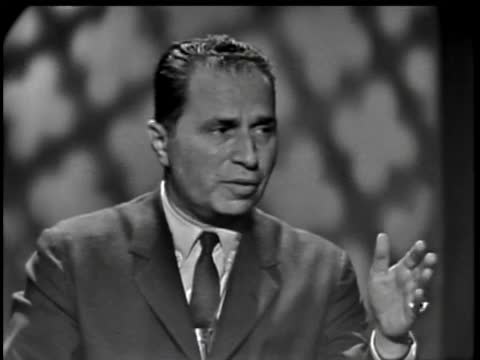
- Transcript
heritage time twenty nine minutes age twenty six alone number four take one final pay etc saying last november the sixth nineteen sixty the culture that is dominated by science most of those think that science can answer all of our questions solve all of our problems with the truth is that the most important questions or speculative lee and practically all the questions that science can answer and the philosophy has dried answer and must continue to try to and see in the future is it used for national educational television
the director of the institute for philosophical reasons the future of the law is the subject of the interviewers are thomas as all the college of liberal arts washington university st louis and the reverend walker jr associate professor of english at st louis university mr adler i gather that lasted until that you would say that while the girls a little education as to produce a population of philosophers getaway its aims and i sighed a philosophy is receiving less and less emphasis science more mark want to do it begin by saying what philosophy is and what it can there at science camp
well i first make one inundation on your last statement i think that we live in a society which emphasizes science more and more color rates or steam philosophy lot less and less i don't think i would quite say that the liberal education should make everybody a philosopher who i do think it should equip everybody to think about the common perennial problems of mankind most of which are philosophical problems and that that was going to do which was discussed science science has compared with philosophy consists of the quite a large variety of missions of inquiry for solving questions about the phenomenal world a world of philosophy i think goes much deeper than that and ask questions about the alma mater reality the causes and the line principles of
thing and particularly it was concerned with the basic questions of right and wrong good and bad which constitute a variety of ways the problems of ethics in politics and even economics us think what science can do what philosophy can do let me to tell you what i learned as a teacher of many as i was in college and after the beginning of really cause some very price to recover it's a professor all of this is very interesting very interesting but what use is it and as a young teacher i would sort of an all about that my grandchildren to say no use at all in your meaning of the word is a gambling that what most contemporary skins mean by news is the kind of used that science has a technological years the application of knowledge for the control of nature and the production effects artist accuser used in in in the manufacture of making a thing
not that i would say that another kind of use that knowledge can have knowledge and direct usually ends you should say it can give you some sense of judgment about the order of names in the order of goods in the pursuit of those eh and so i would say that the utility of philosophy and sons as a higher utility mutually of science science gives us control over the means philosophy gives this direction to the ends and some measure or judgment of the way through the means to you realistic this size is this the politics to kill and kill doesn't tell us whether we should kill your science is the park to create to continue to handle atomic energy but it doesn't tell us how to use it is the marlins' the state's been a political philosopher that the color would be required to think about the used to which these heartless which we put the skin of every case the serious problem is the philosophical problem the
easier problem the scientific one mr abbott would you want to say something about the methodologies of science and philosopher and the way in which the scientist and philosopher gets to get their recent starts i would like very much you know the expression armchair think that there is a complication and scientists use it because they are not on just because no self respecting scientists would think it's already problems city amount of marchers gotten narrow philosopher so we're all on episodes are a mathematician and a mathematician faced with his problems in song without pencil paper but the most tvs without writers listening to scribble it's a problem entirely of analysis and thought he doesn't have to increase his experience on get new data by experimentation research the philosophy like mathematics sort of islam respects is armchair thinking the only experience the philosopher needs is the common
experience of mankind the experience you and i have by keeping our eyes open why were a way there is no eyes open for example the question would be the one concrete example right if you see a leaf fall or stone for as they do in nature you can as the philosophical question that allah asks about motion mainly what is it what is the nature of any local militia how do you define a local love what our be indispensable conditions and something's moving from place to place that galileo can answer a cowardly aside his cancer has kind of questioned by looking at a stone for this question is not what is the nature of motion what is the velocity of a friendly foreign body what what is its exoneration how does it change its peak a velocity from moment to moment with the light sensor that kind of question he has to invent an inclined plane use a water clock make measurements by mathematics to the measurements without without research without investigation without data that no
common experience provided an innovative signs on the other hand doesn't seem based in some cases most of philosophy we'll grow out of data which our other than those which man has by common experience i can give you an example of what i mean they're since the discovery of evolution it would saying that certain philosophical questions have come into existence which did not exist before they're questioned for instance would say well and we know that god created the universe until evolution was discovered we didn't know that when god created material things that evolve now this would seem to be something relevant to the nature of the material right so i would i think i would have met on of the philosopher does have certain problems in commenting on the results are discoveries of science in relation to come and experiment but two things hit me there's a common experience and and scientific knowledge of all of our common heritage of lost about that that he sometimes have to
criticize in the the the conclusion inside a sprawling metropolis off and legends from citing evidence that the edges of science scientists have lost as einstein friends or for example i'll do about lead the operation the law of contradiction in subatomic physics they are seasoned because they can't sell their problem they can sit by experimentation research on the edges of science philosophical questions begin to appear with philosophers and scientists become mixed in conversation i think i write about the philosopher or the scientists receiving philosophically never proceeds by experimenters certainly by four it goes beyond gloucester girl who uses the book before we we go any more deeply and about it it's very important for you to say again exactly why certain important problem now and what was its relevance to the idea started out about democracy and that's about education well
i think my sense of its importance is farms i would say that if you look at the cultural history of the west you assume that these in the ancient world philosophy was the dominant component of the civilization and philosophy contained religion and science in college leant itself to los silva and the local of the asphalt for example that religious questions and suddenly in fact you've been a philosophy in the middle ages the dominant science was theology and theology vote rather that's a philosophy subordinate to be properly supported and philosophy then in its own poetry include signs the thing that's happened a lot in world what extraordinary things happen regarding to advance all these areas is we now i think on the petition to distinguish the questions which science can answer the questions with along the philosophy hasn't quite a lot of religion and
ruthless our questions but science cannot answers our most important questions today for example i would say that the three great speculator questions that they can't mention the question about the existence of god the immortality of the soul and the freedom of the well off are among the most important speculative guesses the migrants in the practical question about human happiness about the characters about narrow duty obligation among the most important that all that they just society economically of that but these are not scientific questions science will never happen now but never by it's not that as aggressively sought on that in a society that is content to have all of the questions that science can answer answer and says if science as as the positive is often the positive to say if a question can't be answered by science is more attention because only actual by opinion of speculation and conjecture i say a society that rejects the questions that science can answer is closing his mind of most important concerns about evenly i agree with this some
in trouble my little city now scientist in our discipline our consolation this means we have this sad so on the basis of dryer we gradually progress you have a little feeling about philosophy that it's still discussing an inconclusive or a song that first thing that ever discussed is it is a grind can grow this is a hard question and i take two step ventures that one i would say you have to think is on the side of science that are admirable and that make philosophy look weak or sick by comparison one they do make steady progress last two hundred years there's a history of magnificent prague but that might have presented as a navy vet
volunteers and secondly don't you have a sensor in any field of research you can expect the green at the edges were among the top ten philosophers and seemed to see no progress and as this a ghost was always a regional agreement on the answer both ways than that i think if one expects a philosopher the same kind of progress that you haven't signed the new venue on the judge or if you look at the same kind of agreement in the last visits it in your pie and i think what's happened by the waves of people love it mission of las vegas come from applying to philosophy the standards of the reason in judging side scientific successes i think that i think for example of that is much agreement in philosophy as there isn't science only in the following way and when that in science occurs among contemporary scientists of the last ten years was when science hundred
years ago and that was we were there for that in philosophy agreement is not contemporary among the events most competent in the field that agreement across the ages aquinas with us though night ten with a quite as for example do we will lock law say that it really is there is this disagreement and it's great in the long tradition of las vegas i guess as an impression that you not get a bullet hit song west is true insects yeah i would think at the way which made a lot of progress in philosophy is someone's fallen and the cost of that centuries new theory is new ideas new analyses new insights i developed the crew over the chord progression of hypotheses of view or philosophical explanations and theories now some way in that broadly spoke with philosophical analysis more and more truth is
b and long warm on air and the problem is that too which we haven't begun to do yet is to sift the truth i would like this idea that i think the failure of philosophy and make progress in the last twenty five hundred years is the most serious charge against him and i think there's a way of making progress in the future that hasn't been a lot of their young lee this is just what i was going to ask you earlier you attended that there might be some hope of progress not what is this horrible parsons an econometric or procedure well i suppose i mean characters as anything like experimentation and i think there is something like experimentation and the point is that philosophy has begun to use this technique yet you know science goes back to the great but that we could not return to upping experimental the medieval size was only slightly experimental and the great progress in science when the experimental method became the
center of the side of against the second lesson and you know i say that as experimental research is jimmy empirical exploration so philosophical debate is to be a discussion now by that i mean the highest most rational use of the mine with men oppose debate really different amish and generous agree with that with all the agreements understanding of it why are a quiet dinners when it made one in the vote for several positions the seventy each other an odd to rationally coherently dispassionately meeting on with our units of that you have the fullest exploration of the difference of this actually know we talk about the great philosophical debates or philosophical controversy and the lockerbie incident philosophical researchers answers with unless his atheism freedom i think when two bombs became the second one that now the passive income has
come out it is directed weapons that there's been almost no controversy at all about but i've got a city will john emissions as opposed to the paris agreement and whether really is real johnny an issue genuine debate almost non roma mr albert this point you seem to be saying that their philosophy will make progress if there's a clarification of issues and then they have an agenda they haven't but they're rather paradoxical using to be talking all like the logical positive so these are green you know the phrase there to cover the reason why i do professor the positive as it doesn't say where it with them where i disagree the positive it's our group of contemporary think and most of
them i think is calling themselves philosophers who follow you maintain the scientific method or mathematical analysis on the only ways answering questions about the validity of the question is not answerable in this way is not a genuine question of an answerable a significant question the same nonsense on the internet not here i think there are and i disagree with them and dismissing the whole range of additional philosophical question this is that negative ads now i agree with an oven thinking that that the great history and western philosophy is is rigor and other devices and in fact users have not been shopping at the philosophers at not engage one another in a route running lines to debate the issue now they know that they don't think that criticism they simply think that the that the history of western thought so far the imprecise fade away and i think it has been one that they i think the philosophical and a price tag on it and
the middle classes we're going to be doing is it's more like working on a poetry than the work of scientists and i think because of that when the price is as much a collaborative cooperative team were kind of thing as silence is a different plan there's a very strong similarity though which to mae does not mean you're suggesting that philosophy is just out of i just i don't know which is they have a common ethic which exists in science the expletive have it when you when you have an idea what expose a light and it's if you disagree with and i dare you must oppose it would and this is really a while awaiting of sciences world and you're suggesting that something similar reforms that the group to try to do the great scandal is that the outstanding philosophers like it may not have not addressed themselves to one another they made their criticisms of apprentices get really glancing reverend wright each one lives in his self and cage were loans is divided and satisfied to present his own as eloquent
reinforced with possible and often fans recognize the audience's opponents or the parts which is an issue of the other words that difficult painstaking long drawn out process of intellectual confrontation debate which is the philosophical thought had not been done as a connection because says they said two things first that lost is not playing the role of a dog to be applying is not appreciated but secondly we've also found they observe and he's to be the times and both those things i think civil and without a loss on the one hand i think a culture is a poor country that doesn't place a high value on the philosophical pursue examination most fundamental ideas about say think secondly that that beset with the carrot and the better way that has been the best novels and consistency i'm struck by wonder from speaking another an additional difference between you and no logical positive us and on the score they tend to consider the clarification of
issues in terms of some kind of abstract operation analysts wonder does indeed begun to the picture you make it a matter of personal confrontation between living person all individuals you attach any particular importance to the us it made up a confrontation on in personal address to be writing so to have it a few extraordinary the changes in history of philosophy in the field of the requests of free will hobson bishop brand will argue back for priestly and chrysler owned a sealer the debate between the scots philosopher ca campbell and these positive mr analyst phil smith and even as little bit which is very good but the way it is very likely that what could be done if if losses are willing patiently to address themselves to a common question and one that was like this is selling out ahmed romel think the kind of work
that we're doing at the institute is i think a proper date to this visit to what we've done interview freedom's to say can we take stock i want to see if we can find out whether our brains whether our disagreements state the disagreement is real disagreements with both the problems carefully and precisely as possible find out if any arguments thank them and say you know is this is what has been done the rest of it much repetition much waste much missing the point with passing ships and i think if i would be correct on that i understood you correctly and that your difference with a logical positive the us if i say this that both of you would agree that one of our big tasks is to clarify the issue they would tend to say that when you clarify it a lot of questions disappear perhaps all when you say when you clarify out the important question shall decisive a day
of eliminating problems and i think you cannot be eliminated and they do it because by this resort to analysis of common speech and everything obese all by finding the people meaning comes because i think it's on my instrument of clarification i'm really saying that if they paid attention william woodward that cemented linguistic techniques to the great discourses of the law says that as an independent they were they actually for the most part i must charge them of the vatican's most of them on not rest will read most of them are simply ignorant of it really working for the competition they discussed them with a wave of anger and the struggle would you want to say something about the which you consider the particular value of philosophy in a technological civilizations such as we find ourselves and that's how i would think it is of greater value in a
technological civilization as a portion of the reasons i make using two simple point there a technological civilization is one in which men have more and more and more how at their disposal how if you have a more powerful cars it is more important to know the direction in the control of a wreck an awesome but even bigger than was safely than it we have tremendous power and the actions the philosopher mara liasson our society means we have the power without a sense of direction without a sense of control a sense of the values which administer that part so i think the philosophical with that or curable or any degree is more and more necessary in the highly technological society which person with power lines of the winter that that's the joy it would seem to me that there's technological society is also actually provided some some philosophical assets for instance i wonder if our
increased ability and communicating hasn't is it going to mean a lot for a philosophy that a program such as this are people are brought together all over the country from all over the country frequently for philosophical or other confrontation in the public sort of way that you think that there's any future for for philosophy a list of all of the free exchange of ideas cynthia to one of the desk during the middle ages but you know the lessons some remarkable disputes took place he received passively receive up that with maybe a thousand to two thousand students per now suppose would've created i think they let the television is seldom used to debate it hasn't been used for real debate even this last political campaign ad that they have a real sense of terror suppose educational television on television we used to present to all the thinking people of islam are a lot of them really find debates the basic question we're the best minds we can
summon moral the world faced another and over a sustained period of time in modern one hour but in several hours of ten out tag on the most careful argument back and forth i i can't think of anything more education to one candidate at the moment if i were interested as i'm interested in the existence of god there is nothing i would rather hear wrong carefully planned immigration debate was questioned by an atheist on the one hand the fetus on the other and apparently from the things that would make my mind more on the other hand we have to face the question that to clarify a philosophical issue is a much more difficult problem of terrifying a scientific revival failed sciences child like that lots of the producers of the state and the reason why science's and then somewhat for a different philosophy is a philosophy somewhat more difficult but so much of what that requires idea much i'm more disciplined about another
reason for the philosophical question to more closely connect the passions passions and our information's only the fourth now this brings and i'd suggest for that intrigues me about your thoughts your id of the dayton confrontation the debate is an exchange or there's a certain a certain hostility perhaps but it's not necessary and philosophical discussion are actually be a certain degree of law absolutely does require does require an astronaut i'm answering as i wonder if you would finish their hero by saying what you think we have to go and how hopeful you are i do greatly impressed by following five hundred and his picture of the man's progress in the last eighty thousand is our primeval slime it's come to the point where where we can carry on some kind of conversation but to me about it is i think a level of human conversation debate is still very low and very poor paul
i think perhaps another ten to fifteen thousand years men will begin to achieve some of the promises rash and how they and the twenty five thousand years now the lawsuit the work is not yet a known it's been uniquely greek this is an eighty national educational television
fb
- Series
- Heritage
- Episode Number
- 118
- Producing Organization
- KETC-TV (Television station : Saint Louis, Mo.)
- AAPB ID
- cpb-aacip/516-c24qj78t82
- NOLA Code
- HERG
If you have more information about this item than what is given here, or if you have concerns about this record, we want to know! Contact us, indicating the AAPB ID (cpb-aacip/516-c24qj78t82).
- Description
- Episode Description
- Episodes 115 - 118 of Heritage feature Mortimer J. Adler, director of the Institute for Philosophical Research in San Francisco, where he is guiding an extensive program of research in an attempt to organize a topical history of Western philosophy. Host for all four programs is Dean Thomas S. Hall of the College of Liberal Arts of Washington University in St. Louis. Dean Hall also teaches in the college's department of zoology. In this episode, Dr. Adler discusses the importance of philosophy with Dean Hall and the Reverend Walter J. Ong, SJ, professor of English at St. Louis University. He states his own philosophical tenets and reaffirms his belief that philosophy is everyone's concern, because it is an essential tool for understanding all the things that cannot be explained simply by science. Philosophy is, and should be, concerned with the problems and puzzles that plague mankind - and philosophers, should do everything possible to understand one another, so that they can work with one another to develop answers that will help man cope with these problems. (Description adapted from documents in the NET Microfiche)
- Series Description
- Through "Heritage," a selected group of prominent persons individually address themselves to broad areas of subject matter in fields where they are particularly qualified to speak. Rather than being a simple series of conventional pattern, this is a "series of series," where each guest appears on several episode in several formats (i.e. straight talk, interview, talk with small group, conversation). This series totaling 131 half-hour episodes was originally recorded on various formats including film and videotape. (Description adapted from documents in the NET Microfiche)
- Broadcast Date
- 1961-00-00
- Asset type
- Episode
- Media type
- Moving Image
- Duration
- 00:31:25
- Credits
-
-
Guest:
Adler, Mortimer J.
Guest: Ong, Walter J.
Host: Hall, Thomas S.
Producing Organization: KETC-TV (Television station : Saint Louis, Mo.)
- AAPB Contributor Holdings
-
Identifier: cpb-aacip-516-c24qj78t82.mp4.mp4 (mediainfo)
Format: video/mp4
Generation: Proxy
Duration: 00:31:25
If you have a copy of this asset and would like us to add it to our catalog, please contact us.
- Citations
- Chicago: “Heritage; 118; Mortimer J. Adler. Part 4: The Future of Philosophy,” 1961-00-00, American Archive of Public Broadcasting (GBH and the Library of Congress), Boston, MA and Washington, DC, accessed June 19, 2026, http://americanarchive.org/catalog/cpb-aacip-516-c24qj78t82.
- MLA: “Heritage; 118; Mortimer J. Adler. Part 4: The Future of Philosophy.” 1961-00-00. American Archive of Public Broadcasting (GBH and the Library of Congress), Boston, MA and Washington, DC. Web. June 19, 2026. <http://americanarchive.org/catalog/cpb-aacip-516-c24qj78t82>.
- APA: Heritage; 118; Mortimer J. Adler. Part 4: The Future of Philosophy. Boston, MA: American Archive of Public Broadcasting (GBH and the Library of Congress), Boston, MA and Washington, DC. Retrieved from http://americanarchive.org/catalog/cpb-aacip-516-c24qj78t82