NET Festival; 55; The Film Generation: The Way We See it
- Transcript
and and First, there were the machines. They put them in studios and created an industry. Now, the young filmmakers are reclaiming the camera for the individual. To them, it is an artist's tool. Through it, they see us in a new way. With it, they are creating a revolution in the way we see. Artists and audience, we are all a film generation. This is a scene from a film called The End.
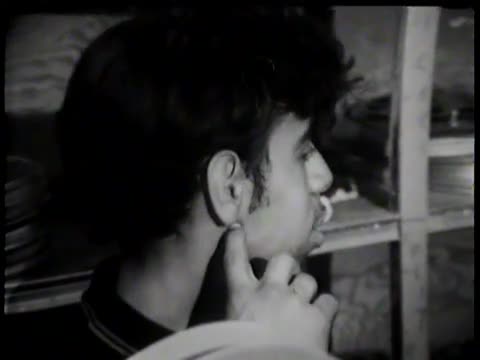
It was made by a Puerto Rican teenager on the Lower East side of New York City. He and many other ghetto teenagers are now making films and community film workshops across America. These are scenes from some of the films you will see in the next hour. Though the films they make are often technically unsophisticated, all are intensely visual. These films from the ghetto are attracting national attention because the teenagers who make them have found a new medium in which to express their feelings, their ideas, their protest. The film club on the Lower East side of New York was started several years ago by a young art teacher, Roger Larson. Since then, over 30 films have been made there by neighborhood teenagers. Jamie Barrios, a young Chilean filmmaker, is there to instruct, organize and counsel. And when no other friend can do the part, he even acts in their films.
Some months ago, two months ago I went up to Pittsburgh. I was very weird day. In the morning I gave a lecturer a bunch of nuns and people like that that were going to work. They gave us some to work in the inner city. They like to call it. In the ghetto of Pittsburgh and I showed films like a thief and don't mess with it. And they were absolutely horrified. Perfectly horrified of the film. And they thought that once they went into a ghetto that's where they thought they were going to find this violence. And they thought they were going to find this violence.
And they thought they were going to find this violence. And they thought they were going to find this violence. And they thought they were going to find this violence. And they thought they were going to find this violence. And they thought they were going to find this violence.
And they thought they were going to find this violence. And they thought they were going to find this violence. And they thought they were going to find this violence.
And they thought they were going to find this violence. And they thought they were going to find this violence. And they thought they were going to find this violence.
And they thought they were going to find this violence. And they thought they were going to find this violence. And they thought they were going to find this violence.
And they thought they were going to find this violence. And they thought they were going to find this violence. And they thought they were going to find this violence.
And they thought they were going to find this violence. And they thought they were going to find this violence. And they thought they were going to find this violence.
And they thought they were going to find this violence. And they thought they were going to find this violence. And they thought they were going to find this violence.
And they thought they were going to find this violence. And they thought they were going to find this violence. And they thought they were going to find this violence.
And they thought they were going to find this violence. And they thought they were going to find this violence. And they thought they were going to find this violence.
And they thought they were going to find this violence. And they thought they were going to find this violence. And they thought they were going to find this violence.
And they thought they were going to find this violence. And they thought they were going to find this violence. And they thought they were going to find this violence.
And they thought they were going to find this violence. And they thought they were going to find this violence. And they thought they were going to find this violence.
And they thought they were going to find this violence. And they thought they were going to find this violence. And they thought they were going to find this violence.
And they thought they were going to find this violence. And they thought they were going to find this violence. And they thought they were going to find this violence.
And they thought they were going to find this violence. And they thought they were going to find this violence. And they thought they were going to find this violence.
And they thought they were going to find this violence. And they thought they were going to find this violence. And they thought they were going to find this violence.
And they thought they were going to find this violence. And they thought they were saying. And they thought they were going to find this violence.
And they thought they were going to find this violence. And they thought they were going to find this violence. And they thought they were going to find this violence.
And they thought they were going to find this violence. And they thought they were going to find this violence. And they thought they were going to find this violence.
And they thought they were going to find this violence. And they thought they were going to find this violence. And they thought they were going to find this violence.
The end was a film made last year at the film club. It has been widely acclaimed as one of the best films to come out of a community workshop to date. And they thought they were going to find this violence.
And they thought they were going to find this violence. And they thought they were going to find this violence. And they thought they were going to find this violence.
And they thought they were going to find this violence. And they thought they were going to find this violence. And they thought they were going to find this violence.
And they thought they were going to find this violence. And they thought they were going to find this violence. And they thought they were going to find this violence.
And they thought they were going to find this violence. And they thought they were going to find this violence. And they thought they were going to find this violence.
And they thought they were going to find this violence. And they thought they were going to find this violence. And they thought they were going to find this violence.
And they thought they were going to find this violence. And they thought they were going to find this violence. And they thought they were going to find this violence.
And they thought they were going to find this violence. And they thought they were going to find this violence. And they thought they were going to find this violence.
And they thought they were going to find this violence. And they thought they were going to find this violence. And they thought they were going to find this violence.
And they thought they were going to find this violence. And they thought they were going to find this violence. And they thought they were going to find this violence.
And they thought they were going to find this violence. And they thought they were going to find this violence. And they thought they were going to find this violence.
And they thought they were going to find this violence. And they thought they were going to find this violence. And they thought they were going to find this violence.
And they thought they were going to find this violence. And they thought they were going to find this violence. And they thought they were going to find this violence.
And they thought they were going to find this violence. And they thought they were going to find this violence. And they thought they were going to find this violence.
And they thought they were going to find this violence. And they thought they were going to find this violence. A memory of John Earl recreates an actual experience from the life of the filmmaker.
And they thought they were going to find this violence. And they thought they were going to find this violence. And they thought they were going to find this violence.
And they thought they were going to find this violence. And they thought they were going to find this violence. And they thought they were going to find this violence.
And they thought they were going to find this violence. And they thought they were going to find this violence. And they thought they were going to find this violence.
And they thought they were going to find this violence. And they thought they were going to find this violence. And they thought they were going to find this violence.
We'll get you later. Thank you. Come on boy, I better get you to a doctor.
The 20th century's most powerful tool of communication, the film, is now being used by the generation. Thank you.
Thank you. Thank you. Thank you.
Thank you. Thank you.
- Series
- NET Festival
- Episode Number
- 55
- Producing Organization
- National Educational Television and Radio Center
- Contributing Organization
- Library of Congress (Washington, District of Columbia)
- AAPB ID
- cpb-aacip/512-n872v2dc5d
- NOLA Code
- FLMG
If you have more information about this item than what is given here, or if you have concerns about this record, we want to know! Contact us, indicating the AAPB ID (cpb-aacip/512-n872v2dc5d).
- Description
- Episode Description
- Teenagers from poverty areas across the United States are now utilizing filmmaking to recreate and reorganize their lives. These film workshops are having a significant effect on boys and girls from the ages of thirteen to the early twenties. Often the workshop is the only area of their lives in which they can directly express and deal with - in a constructive and meaningful way - their hopes and frustrations, attitudes and aspirations. This program, combining documentary and workshop films, shows the different directions in which the workshop idea has developed. "The Twelfth Street and Oxford Corporation" in Philadelphia, PA, is one such group. It originated when Harold Haskins a Negro social worker with teenage gangs, was commissioned by the Brooks Foundation of Santa Barbara, California, to make a film in the Philadelphia ghetto as one of four pilot projects designed to reach school dropouts and reawaken the interest in learning. Working with the Twelfth and Oxford Street Gang of North Philadelphia, he immediately recognized the talent and energy of its members. But even he could not have predicted the effect which making their own films - "The Jungle" - would have on the boys. The film, a grim description of gang warfare in which death puts a temporary end to the street battles, was made for $7,000 by the dropouts and felons of a once powerful gang. The gang has since become a corporation, producing and distributing its own films, involved in other business ventures, and has already started to improve the appearance and spirit of the slum neighborhood. The Film Club, formerly the University Teen Film Workshop, on New York's Lower East Side, is run by former art teacher Roger Larson. The Club has to date produced over thirty films. The films were made entirely by the Puerto Rican youngsters of the group themselves - photography, direction, lighting, script, acting, editing and sound. Roger Larson feels that the enrichment and development of each youngster is his workshop's primary accomplishment. The creative experience and sense of achievement which these youths have gained enable them for the first time to communicate with "The outside" - with people different from themselves. Among their films to be shown, is "The End," by nineteen-year-old Alfonso Sanchez, Jr., in which the white clad "good guy" is the dispenser of drugs, and the "bad guy" is a Bible toter wearing black. "Upward Bound," Wesleyan University, Middletown, Connecticut, provides after school activities for high school children, including filmmaking. "A Memory of John Earl," by John Earl McFadden will be shown in the program. This film is a dramatization of a real incident in the boy's life: what happened when he went to a store to buy something, and became a bit "uppity" with the storekeeper. A new development in the film workshop idea is emphasis on making films to serve community needs. The films made by such groups as Southern Media in Jackson, Mississippi, and two groups in North Richmond, California, both headed by Dan Robbins (the North Richmond Community Center and Watts Happening Film Workshop) have as their aim the improvement of their communities' social awareness. Shown will be "The First Step," a description of Southern Media's own activities, and a fantasy "The Dream Blowers," produced by the North Richmond Community Center group. NET Festival - "The Film Generation: The Way We See It" was made for National Educational Television by Ed Pincus and David Neuman. Their film "Black Natchez" was shown on NET Journal, and "One Step Away" on PBL. (Description adapted from documents in the NET Microfiche)
- Series Description
- Film is the chosen art of the twentieth century. Born with the century, the motion picture swiftly became the world's preferred form of entertainment. But while the feature movies of Hollywood and Europe enthralled us and permeated our lives, there secretly grew, side by side with its glamorous sister but hidden from public notice, another kind of film. From the earliest days there has existed a whole "other world" of film. These films have been called by many names - independent, experimental, documentary, art-film, avant-garde. Their forms and styles are as diverse as their subjects - short dramas, animation, documentaries, comic fantasy, and film poetry. All, however, have this in common - each is the personal vision of an independent creative artist - the filmmaker. Unhampered by the restrictions and demands of the commercial motion picture industry, these creative artists explored the possibilities of this new and exciting medium. This freedom has always attracted gifted people and resulted in some of the most significant innovations and new directions in filmmaking. But although a treasure of masterpieces has slowly grown, they remain virtually unknown to the larger part of the public. Apart from brief exposure at festivals or "art houses," the infamous economics of short film distribution have effectively prevented the public from seeing these films. They are "films in search of an audience. A phenomena of the second half of the twentieth-century is that cinema has become the preferred art of youth, both for expression and appreciation, distinct from its former status as "popular entertainment." The sudden proliferation of film courses at universities, both in production and appreciation, the numerous independent films by young filmmakers submitted to festivals, the hundreds of film societies which now include every campus and innumerable small towns, the mounting circulation of "serious" cinema magazines, and above all, the numbers that line up at the "art-house" cinemas - all these attest to the emergence of "the film generation." "The Film Generation" is a series of hour-long programs. Each program will contain several complete films, varying in length from five to thirty minutes. Excerpts from films will also be included. The essential purpose of the series is to show significant films, but filmmakers are seen and heard at work and expressing their ideas about their films. The diversity of filmmaker's styles will be dramatized by contrasting on each program films all dealing with the same theme. NET Festival - "The Film Generation" is a National Educational Television production. (Description adapted from documents in the NET Microfiche)
- Broadcast Date
- 1969-01-28
- Asset type
- Episode
- Topics
- Film and Television
- Media type
- Moving Image
- Duration
- 01:00:29
- Credits
-
-
Narrator:
Duncan, Andrew
Producer: Venza, Jac
Producer: Pincus, Edward
Producer: Neuman, David A.
Producer: Adato, Perry Miller
Producing Organization: National Educational Television and Radio Center
- AAPB Contributor Holdings
-
Library of Congress
Identifier: 1845558-2 (MAVIS Item ID)
Format: 1 inch videotape: SMPTE Type C
Generation: Master
Color: B&W
Duration: 0:58:52
-
Library of Congress
Identifier: 1845558-1 (MAVIS Item ID)
Format: 2 inch videotape
Generation: Master
Color: B&W
Duration: 0:58:52
-
Library of Congress
Identifier: 1845558-3 (MAVIS Item ID)
Format: U-matic
Generation: Copy: Access
Color: B&W
Duration: 0:58:52
-
Library of Congress
Identifier: 1845558-5 (MAVIS Item ID)
Generation: Copy: Access
Color: Color
-
Library of Congress
Identifier: 1845558-4 (MAVIS Item ID)
Generation: Master
Color: Color
If you have a copy of this asset and would like us to add it to our catalog, please contact us.
- Citations
- Chicago: “NET Festival; 55; The Film Generation: The Way We See it,” 1969-01-28, Library of Congress, American Archive of Public Broadcasting (GBH and the Library of Congress), Boston, MA and Washington, DC, accessed May 12, 2026, http://americanarchive.org/catalog/cpb-aacip-512-n872v2dc5d.
- MLA: “NET Festival; 55; The Film Generation: The Way We See it.” 1969-01-28. Library of Congress, American Archive of Public Broadcasting (GBH and the Library of Congress), Boston, MA and Washington, DC. Web. May 12, 2026. <http://americanarchive.org/catalog/cpb-aacip-512-n872v2dc5d>.
- APA: NET Festival; 55; The Film Generation: The Way We See it. Boston, MA: Library of Congress, American Archive of Public Broadcasting (GBH and the Library of Congress), Boston, MA and Washington, DC. Retrieved from http://americanarchive.org/catalog/cpb-aacip-512-n872v2dc5d