On Hearing Music; 11; Hinshaw Plays Ives. Part 4
- Transcript
. . . . . . . . .
. . . . . . . .
. . . . . . .
. . . . . . . . . . . . . . . .
. . . . . . . . . . . . .
. . . . . . . . . . . . . . . . . .
. Conscious that this blends more and more with the harmony of her solitude. It tells him that his search for freedom in that day at least lies in his submission to her. For nature is as relentless as she has been ignorant. He remains in this mood and while outwardly still he seems to move with the slow, almost monotonous swaying beat of this autumnal day. He is more contented with a homely burden and more assured of the broad margin to his life. He sits in his sunny doorway, wrapped in reverie, amidst golden rod, sancery and sumac, in undisturbed solitude. At times the more definite personal strivings for the ideal freedom, the former more active speculations come over him, as if he would trace a certain intensity even in his submission. . . He grew in those seasons
like corn in the night and they were better than any works of the hands. They were not times subtracted from his life but so much over and above the usual allowance. He realized what the orientals meant by contemplation and forsaking of works. The day advanced as if to light some work of his. It was morning and low, now it is evening and nothing memorable is accomplished. The evening train has gone by and all the restless world with it. The fish is in the pond no longer feel it's rumbling and he is more alone than ever. . . . The sound of
the conquered bell. . It is prayer meeting night in the village, a melody as it were imported into the wilderness. At a distance over the woods the sound acquires a certain vibratory hum as if the pine needles in the horizon were the strings of a harp which it swept. A vibration of the universal lyre. Just as the intervening atmosphere makes a distant ridge of earth interesting to the eyes by the azure tint it imparts. Part of the echo may be the voice of the wood, the same trivial words and notes sung by the wood nymph. It is darker, the poet's flute is heard out over the pond. And Walden hears the swan song of that day and faintly echoes. Is it a
transcendental tune of conquered? It is an evening when the whole body is one sense. And before ending his day he looks out over the clear crystal and water of the pond and catches a glimpse of the shadow thought he saw in the morning mist and haze. . He knows that by his final submission he possesses the freedom of the night. He goes up the pleasant hillside of pines, hickories and moonlight to his cabin, with a strange liberty in nature, a part of herself.
. There are two melodies in this movement which occur also in other movements of the sonata. One is the descending notes figure, usually a descending five note figure. The Thoreau movement uses the descending figure in several different forms, nearly always associated with Thoreau's sense of union with nature. One of the forms of this theme is really a quotation from Stephen Foster's masses in the cold cold ground. It is the line that goes down in the cornfield. As to its use in the Thoreau movement, Ives writes, sometimes
an old elm tree may feel like humming a phrase from down in the cornfield, but usually very slowly, perhaps a quarter note goes down to 50 even lower or thereabouts, as the weather vain in the old red barn may direct. The other melody, which is common to all the four movements of the sonata, is the one beginning and leading into the Beethoven theme, and Beethoven theme being one which Ives consciously quotes from the fifth symphony, and he even made the remark once that he thought every composer should have a whack at using that theme sometime. Beethoven didn't write it himself actually, it's a very simple phrase, and many composers have used it. Beethoven didn't originate it, I mean. Anyway, this concrete theme leading to the Beethoven theme is used
in this movement in only one way. In the other movements, in the preceding movements, such as Emerson and Hawthorne, this melody was given complex treatment, such as this. In the third movement, the all -cuts this melody received its plainest and its grandest treatment. Now in the last movement, Thoreau, this melody, which might be called the theme song of the whole concrete sonata, becomes the little melody which Thoreau plays on the flute in the evening by Walden Pond.
At this point, after writing 63 pages of piano solo, Ives the composer decides he wants us to bring in a flute to play with the piano during the last two pages of the sonata. Ives writes in the directions that you can play this passage in a piano solo arrangement if you want to, but he says Thoreau much prefers to hear the flute over Walden. So we have with us Professor Donald Lentz, flutist of the University of Nebraska Music Department in order that we may perform this music as the composer intended. This is Thoreau, the last movement of Ives Concord Sonata. You will see some actual pictures of the Walden Pond area. You will see some pictures of the Walden Pond in the evening by Walden Pond.
You will see some pictures of the Walden Pond in the evening by Walden Pond. You will see some pictures of the Walden Pond.
You will see some pictures of the Walden Pond. You will see some pictures of the Walden Pond.
You will see some pictures of the Walden Pond in the evening by Walden Pond. Thank you very much.
Thank you very much. Thank you very much. Thank
you very much. Thank you very much. Thank you.
Thank you very much. Thank you very much.
Thank you very much. Thank you very much. Thank you very much.
Thank you very much. Thank you. Thank you very much.
And so at the end of the piece, for all goes up the pleasant hillside of the pines, hickories, and moonlight to his cabin, with a
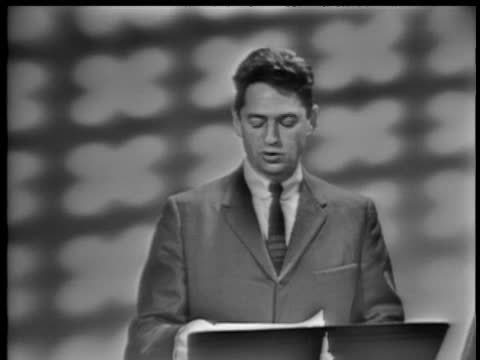
strange liberty in nature, a pot of herself. This was the last movement entitled Thoreau in the Concord Sonata by Charles Ives. This has been the last in a series of programs devoted to the 20th century American composer, Charles Ives. Featured at the piano was Harvey Hingel, assistant professor in the music department of the University
of Nebraska. Assisting in the narration was Leon Lishner, associate professor in the music department of the University of Nebraska. This program was produced and directed for University of Nebraska Television by Ron
- Series
- On Hearing Music
- Episode Number
- 11
- Episode
- Hinshaw Plays Ives. Part 4
- Producing Organization
- KUON (Television station : Lincoln, Neb.)
- Contributing Organization
- Library of Congress (Washington, District of Columbia)
- AAPB ID
- cpb-aacip-512-n29p26r20x
- NOLA Code
- ONHM
If you have more information about this item than what is given here, or if you have concerns about this record, we want to know! Contact us, indicating the AAPB ID (cpb-aacip-512-n29p26r20x).
- Description
- Episode Description
- Through photographs, newspaper clippings, performances of his works, and pithy, often humorous narration, the four-episode segment Henshaw Plays Ives traces the unique career of Charles Ives, Americas combination of musical prophet and insurance tycoon. Co-hosts for the four episodes are pianist Harvey Hinshaw and Leon Lishner, both of the University of Nebraska music faculty. Born near the turn of the century, Ives spent the greater part of his life in New England. His understanding of and love for that section of the country are the basis of his New England Symphony, his Concord Sonata and many of his violin sonatas. Composer Ives experimented with modernisms early in his career, making use of polytonal and atonal systems, exotic scales, quarter tone effects, cross rhythms, and jazz rhythms before Schonberg and Stravinsky. Largely ignored during his music career, he has since been recognized widely as a truly original American composer. Harold C. Schonberg, music critic of the New York Times, has called Ives Americas greatest composer. In this episode Mr. Hinshaw performs Thoreau, the last movement of Ives Second Piano Sonata. The music recalls a day in Thoreaus life at Walden Pond. It is accompanied by Ives program notes and pictures of the Walden Pond area.Hinshaw Plays Ives was produced in 1960 by KUON-TV, Lincoln. (Description adapted from documents in the NET Microfiche)
- Series Description
- This panorama of music consists of five segments: The Composer and His Craft (Episodes 1 to 3), The Viola (Episodes 4 to 7), Hinshaw Plays Ives (Episodes 8 to 11), The Works of Roger Sessions (Episodes 12 to 15), and The Voice of the Violin (Episodes 16 to 19). The Composer and his Craft features the American composer Daniel Pinkham, who explains and performs several of his works and comments on the creative techniques and aims of the composer. The Viola presents four lecture-recitals on the growth and development of the viola as a solo instrument, with Paul Doktor, viola soloist, and Miss Yaltah Menuhin, pianist. Hinshaw Plays Ives describes the unique works and narration by Harvey Hinshaw, well-known American pianist. The Works of Roger Sessions consists of performances of Sessions works by members of the Northwestern University School of Music, with introductions of specific works and general comments on techniques of composition by Mr. Sessions himself. The Voice of the Violin is a history of the violin from the seventeenth to the twentieth century, with host-performer Robert Koff, formerly a member of the Juilliard Quartet and director of performing arts at Brandeis University. The 19 half-hour episodes that comprise this series were originally recorded on videotape. (Description adapted from documents in the NET Microfiche)
- Broadcast Date
- 1963
- Asset type
- Episode
- Genres
- Performance
- Media type
- Moving Image
- Duration
- 00:29:31.770
- Credits
-
-
Composer:
Ives, Charles, 1874-1954
Director: Hull, Ron
Host: Hinshaw, Harvey
Host: Lishner, Leon
Performer: Hinshaw, Harvey
Producer: Hull, Ron
Producing Organization: KUON (Television station : Lincoln, Neb.)
- AAPB Contributor Holdings
-
Library of Congress
Identifier: cpb-aacip-5fa2d8aa8ef (Filename)
Format: 2 inch videotape
Generation: Master
If you have a copy of this asset and would like us to add it to our catalog, please contact us.
- Citations
- Chicago: “On Hearing Music; 11; Hinshaw Plays Ives. Part 4,” 1963, Library of Congress, American Archive of Public Broadcasting (GBH and the Library of Congress), Boston, MA and Washington, DC, accessed June 2, 2026, http://americanarchive.org/catalog/cpb-aacip-512-n29p26r20x.
- MLA: “On Hearing Music; 11; Hinshaw Plays Ives. Part 4.” 1963. Library of Congress, American Archive of Public Broadcasting (GBH and the Library of Congress), Boston, MA and Washington, DC. Web. June 2, 2026. <http://americanarchive.org/catalog/cpb-aacip-512-n29p26r20x>.
- APA: On Hearing Music; 11; Hinshaw Plays Ives. Part 4. Boston, MA: Library of Congress, American Archive of Public Broadcasting (GBH and the Library of Congress), Boston, MA and Washington, DC. Retrieved from http://americanarchive.org/catalog/cpb-aacip-512-n29p26r20x