The World of Music; 18; Agnes Demille and Morton Gould: The Story of a Collaboration
- Transcript
I don't know if it's true or not, but it's true or not, but it's true or not, but it's true or not, but it's true or not, but it's true or not, but it's true or not, but it's true or not, but it's true or not, but it's true or not, but it's true or not, but it's true or not, but it's true or not, but it's true or not, but it's true or not, but it's true or not, but it's true or not, but it's true or not, but it's true or not, but it's true or not, but it's true or not, but it's true or not, but it's true or not, but it's true or not, but it's true or not, but it's true or not, but it's true or not, but it's true or not, but it's true or not, but it's true or not, but it's true or not, but it is true or not, but it's true or not, but it's true or not, but it's true or not, but it's true or not, but it's true or not, but it's true or not, but it's true or not, but it's true or not, but it's true or not, but it's true or not, but it's true or not, but it's true or not, but it's true or not, but it's true or not, but it's true or not, but it's true or not, but it's true or not, but it's true or not, but it's true or not, but it's true or not, but it's true or not, but it's true or not, but it's true or not, but it's true or not, but it's true or not, but it's true or not, but it's true or not, but it's true or not, but it's true or not, but it's true or not, but it's true or not but it's true or not, but it's true or not, but it's true or not, but it's true or not, but it's true or not, but it's true or not, but it's true or not, but it's true or not, but it's true or not, but it's true or not, but it's true or not, but it's true or not, but it's true or not, but it's true or not, but it's true or not, but it's true or not, but it's true or not, but it's true or not, but it's true or not, but it's true or not, but it's true or not, but it's true or not, but it's true or not, but it's true or not, but it's true or not, but it's true or not, but it's true or not, but it's true or not, but it's true or not, but it's true or not, but it's true
or not, but it's true or not, but it's true or not, but it's true or not, but it's true or not, but it's true or not, but it's true or not, but it's true or not, but it's true or not, but it's true or not, but it's true or not, but it's true or not, but it's true or not, but it's true or not, but it's true or not, but it's true or not, but it's true or not, but it's true or not, but it's true or not, but it's true or not The following program is from NET, the National Educational Television Network Well, welcome to the World of Music, I'm Morton Gould. In 1947 the brilliant and distinguished choreographer Agnes Demille invited me to compose the music for a new ballet she
had in mind. The subject was the famous Lizzie Borden -Merticase and the name of the ballet for River Legend. Ballet theatre commissioned the work from both Miss Demille and myself who sets by Oliver Smith and the work was first performed in 1948 at the Metropolitan Opera House in New York City. Now what are the elements that go into making up a ballet, specifically a murder ballet such as for River? Well, there are many elements. There is music and of course the instruments and players to perform it in orchestra. And naturally dances, sets, costumes in the key to it all the choreographer Miss Agnes Demille. They don't
look very much like ballet dancers today but then what really is a ballet? A ballet I believe is a statement of emotion achieved through music, through musical decor and through dance. The basis of our ballet is a legend preserved for us by law records, newspaper accounts and whispered accusations never stilled. In the last part of the 19th century, in the 90s, a New England spinster was accused of the double murder of her father and her stepmother who were found one bright sunny morning, horribly mutilated and hacked in their home. Circumstantial evidence pointed to her overwhelmingly but she was nevertheless acquitted. No one else was ever suspected and although she lived to be an old woman, most people considered her guilty. The neighborhood indeed the country at large never
got over its horror or its curiosity. To this day people have never stopped talking. The translation of all this legal material and gossip into dance steps has not been easy because dancing of its nature is emotional and law is intellectual. Of course murder and the causes of murder are nearly always emotional. But law, the sifting and examination of evidence, the giving of testimony, the meeting out of justice and punishment, this has to be judicial and intellectual. It must not be emotional. Well that was one problem. That was another. Lizzy Borden was acquitted. So that gave us a done -defined tragedy with no resolution. Every step of the drama led up to what? To puzzlement. We can't have that in drama. This tickling and teasing of the mind is all
very well in law but in art, in drama, in music and ballet, there must be a statement. Oh I worried a lot. So did you, I think. Yes, it was a mutual worry. We had a mutual worry. We had lunches too and teas and drinks. That was nice. And dismay, some of those were nice but most of them were not. Well anyway, finally I thought if we couldn't, if we couldn't end the ballet satisfactorily, we could at least begin it and you know in the middle of a practice one day in ballet class I suddenly saw how to start and I was so excited I fell off balance. We must begin in the shadow of death when Lizzy stands in jeopardy for her life at the foot of the gallows. Yes, of course the gallows is not a very intellectual idea, is it? Well the gallows is self -explanatory certainly. Got any gallows music? Well, when we decided to start with the gallows, I thought that
this would sound something like gallows music. That's very shuddery. That will do. That's fine. By the way Martin, did you use any actual American tunes? Did you use literal American musical material? No, it was my feeling. I guess that we should not use literal tunes as such. But I did, or I hope I did, evoke hymnal tunes even in some sections of the ballet, popular tunes. Of course we're only doing excerpts today but there are certain places where you will hear things that might sound like the kind of music that might have been written or played or sung at that time, at that period. Well, yes. But I don't recall any acts music of that
period. I've got some acts tunes. Well, of course acts music can be many things. It depends on the acts, you know. Or how sharp the acts is. You could have, of course, the obvious kind of sharp, sharp effects, or... You know Martin, I don't think that's up to your standard. Well, I should hope not. But you know, I think what we must bear in mind is what the acts meant to, in Lizzie's life, what the simple acts. What the acts meant. It meant, of course, her means of escape, her hope for happiness, her way out from an intolerable situation. It meant, Martin, it should be tender. Yes, lyrical. That brutal, ugly instrument, tender music. That's it. How longing,
her sadness, her lost hope. That's it. You know, you know that this is the way it was done. I would suggest a situation, and he would just sit down and play, like that. Of course, he took the music home, the themes, and perfected them and worked them over and developed them. But nearly always, he knew somehow instinctively what he wanted to do. And at different times in the collaboration, he just played, right off, as at the finale. In 12 minutes, he did the whole finale, which you will hear, while I was overwhelmed. You have it all scored, of course, since. Yes. And I suppose they were rehearsed. Yes. So then, Maestro, let us go on with the excerpts, and we will begin, as we thought at first, at the foot of the gallows. Lazylings on the
arm of her minister. The jurors on their oath present that the accused of fall river in the county of Bristol, at fall river in the county of Bristol, on the fourth day of August in the year 1892, in and upon her stepmother and upon her father, falloniously, willfully, and of her malice of thought and assault did make. And with a certain weapon to wit and axe, did strike, cut, beat, and bruise in and upon the heads of them, giving to them divers to wit 20 mortal wounds, of which said mortal wounds they then and there instantly died. And so the jurors of force said, upon their altar force said, do say that the accused did kill and murder against the peace of the commonwealth.
The gallows, the gallows, here we see them in all of a Smith's wonderful first set, and here on the left built into Lizzie's house, because they are a part of her roof tree. She lived with death permanently, death and doom were of the very essence of her life. Now what drives a decent church -going young woman to striking down her stepmother with an axe? She never committed another crime before or after just this one, but that one was a real beaut. For one hour on a hot summer's morning, she became a fury out of Greek tragedy. What led her on to this? Boredom. Boredom, growing monotony and hate. The curtailment of all her passions,
wishes instincts and feelings, the smashing down of her will, that would drive any young creature to desperation. But how do we show boredom and growing hate? A repeated phrase of music, a compulsive repeated gesture, three chairs locked in an ugly small cramped room. This is Lizzie's dreadful daily life. Here is Lizzie after her father's remarriage to an unloving woman, freezing into a monster of hate and suspicion. So what do you think of her, Lizzie? What do you think of her, Lizzie?
What do you think of her, Lizzie? What do you think of her, Lizzie? What do you think of her, Lizzie? What do you think of her, Lizzie? What do you think of her, Lizzie? What do you think of her, Lizzie? What do you think of her, Lizzie? What do
you think of her, Lizzie? What do you think of her, Lizzie? What do you think of her, Lizzie? Oh, oh, oh, oh, oh, oh, oh, oh, oh, oh, oh, oh, oh, oh, oh, oh, oh, oh, oh, oh, oh, oh, oh, oh, oh, oh, oh, oh, oh, oh, oh, oh, oh, oh, oh, oh, oh, oh, oh, oh, oh, oh, oh, oh, oh, oh,
oh, oh, oh, oh, oh, oh, oh, oh, oh, oh, oh, oh, oh, oh, oh, oh, oh, oh, oh, oh, oh, oh, oh, oh, oh, oh, oh, oh, oh, oh, oh, oh, oh, oh, oh, oh, oh, oh, oh, oh, oh, oh, oh, oh, oh, oh, oh, oh, oh, oh, oh, oh, oh, oh, oh, oh, oh, oh, oh, oh, oh, oh, oh, oh, oh, oh But bottom isn't enough. A considerable number of people go through lifeboard without taking to access. Well, that's true. But you see, the stepmother keeps telling Lizzie that she's going crazy. So that she begins to doubt her own mind. And just when she finds someone to choose to trust and love her minister, the stepmother poisons the minister's mind, but doubts about the girl's sanity. She'd kill. In this case, she'd be driven to. She'd kill. Now the ax assumes terrible possibilities in her life. It is her one means of escape. It is her hope of romance. In a sense, it becomes the symbol of her husband, a love object. She is drawn to it irresistibly. It puts a spell upon her. It is at once life and death to
her. Lizzie sits on her yard and sees the young couples walking out on a summer night. Leaf shadows, lamp light, a piano down the block. The heat, the heat, the soft voices, the shadows, the comings and goings, the retreats, and the sound of laughter through the gardens. So,
Lizzie sits on her yard and sees the young couples walking out on a summer night. So, Lizzie sits on her yard and sees the young couples walking out on a summer night. So,
Lizzie sits on her yard and sees the young couples walking out on a summer night. So, So, Lizzie sits on her yard and sees the young couples walking out on a summer night.
So, Lizzie sits on her yard and sees the young couples walking out on a summer night. So, Lizzie sits on her yard and sees the young couples walking out on a summer night. So,
Lizzie sits on her yard and sees the young couples walking out on a summer night. So, Lizzie sits on her yard and sees the young couples walking out on a summer night. So, Lizzie sits on her yard and sees the young couples walking out on a summer night.
The pathetic part of this story, as we tell it, is that Lizzie nearly saves herself. She comes within that of having a happy normal life. She would have had one, too, but for the cruel and wicked intervention of her stepmother. Lizzie wasn't in saying, not at any time was she in saying, not at any time was she in saying, not at any time was she in saying, not at any time was she in saying, not at any time was she in saying, not at any time was she in saying, not at any time was she in saying, not at any time was she in saying, not at any time was she in saying, not at any time was she in saying, not at any time was she in saying. So, Lizzie and Lizzie are the essence of tragedy. So,
Lizzie and Lizzie are the essence of tragedy. So, she killed and was acquitted. How do we justify this miscarriage of justice in our ballet? How do we explain dramatically this ending? Well, Agnes, I think here's an instance where we can exercise that right called theatrical or dramatic license. We must hang her. Hang her. Yes.
Yes, of course. That's inevitable. But what about libel? Well, under American law, you cannot libel at that dead person. Is that true? Yes, that's a fact. Well, then in that case, this brings us back to where we started at the foot of the gallows. This is the summation. Here all the themes, musical and dramatic, are fused in a great fugue, like a grand final peroration. Lizzie stands where her life is brought her at the threshold of death, with the one fact of her life, her guilt. In a flash, she sees all the people of her life pass by her. They judge her. They condemn her. They leave her. She is alone. Every action of her life has brought her to this. She has built the
gallows with her own living. It is an awful moment, but there is a kind of grand achievement in recognizing God's justice, even through one's own death. In a flash, she sees all the people of her life pass by her.
In a flash, she sees all the people of her life pass by her. In a flash, she sees all the people of her life pass by her. In
a flash, she sees all the people of her life pass by her. In a flash, she sees all the people of her life pass by her. This is
NET, the National Educational Television Network.
- Series
- The World of Music
- Episode Number
- 18
- Producing Organization
- National Educational Television and Radio Center
- WNDT (Television station : Newark, N.J.)
- Contributing Organization
- Library of Congress (Washington, District of Columbia)
- AAPB ID
- cpb-aacip-512-h707w6849h
- NOLA Code
- WDOM
If you have more information about this item than what is given here, or if you have concerns about this record, we want to know! Contact us, indicating the AAPB ID (cpb-aacip-512-h707w6849h).
- Description
- Episode Description
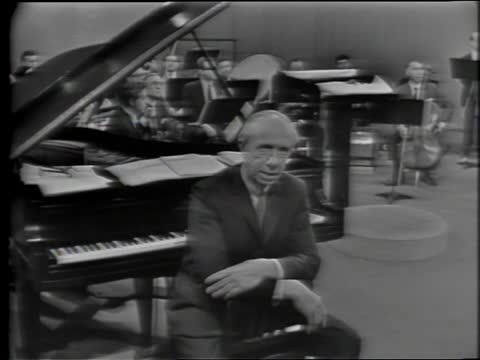
- Choreographer Agnes deMille and World of Music host, composer Morton Gould, were?the collaborators for one of the most celebrated American ballets -- "Fall River Legend." The ballet is based on the famous Lizzie Borden case of the 1890's in which New England spinster Miss Lizabeth Andrew Borden was charged with, and then finally acquitted of the murder of her parents. She is the Lizzie of the popular children's rhyme: Lizzie Borden took an axe/Gave her mother 40 whacks/And when she saw what she had done/She gave her father 41.?On this episode Miss de Mille and Mr. Gould talk about the genesis of "Fall River Legend." Members of the American Ballet Theatre perform portions of the ballet, which was part of the company's repertoire for the current Spring 1965 season at Lincoln Center's New York State Theatre. Episode Running Time: 29:12 (Description adapted from documents in the NET Microfiche)
- Series Description
- This series is designed to illuminate The World of Music through imaginative and informative contact with musical compositions and the artists and instruments that interpret them. The episodes encompass a wide spectrum of styles from the musical past and present -- from the keyboard music of Bach and the madrigals of Gesualdo to the avant garde compositions of Edgar Varese, the protest songs of the civil rights movement, and the "third stream" jazz of Billy Taylor. And some well-known contemporary musicians represent, in performance and discussion, their special fields of interest in conversations with series host, Morton Gould. In general, each episode offers discussion and comment, concerning specific musical subjects, by the host and guest artist; a visual exploration of the "tools" of music, whether it be a precious instrument, the equipment which makes and repairs it, or a composer's score; and performance by the singer or instrumentalist of the music itself. The concentration of each of these components varies with the subject of each episode. The World of Music is a 1964-65 production of National Educational Television, produced through the facilities of Channel 13/WNDT, New York. The 22 half-hour episodes that comprise the series were originally recorded on videotape. (Description adapted from documents in the NET Microfiche)
- Broadcast Date
- 1965-05-02
- Asset type
- Episode
- Genres
- Talk Show
- Performance
- Topics
- Music
- Performing Arts
- Dance
- Media type
- Moving Image
- Duration
- 00:31:44.937
- Credits
-
-
Assistant to the Producer:
Pernstein, Harriet
Assistant to the Producer: Bowman, Sandra
Director: Jones, Clark, 1920-2002
Guest: deMille, Agnes
Host: Gould, Morton
Performing Group: American Ballet Theatre
Producer: Toobin, Jerome, 1919-1984
Producing Organization: National Educational Television and Radio Center
Producing Organization: WNDT (Television station : Newark, N.J.)
Set Designer: Gurlitz, Eugene
- AAPB Contributor Holdings
-
Library of Congress
Identifier: cpb-aacip-b7786c8da47 (Filename)
Format: 2 inch videotape
Generation: Master
Color: B&W
If you have a copy of this asset and would like us to add it to our catalog, please contact us.
- Citations
- Chicago: “The World of Music; 18; Agnes Demille and Morton Gould: The Story of a Collaboration,” 1965-05-02, Library of Congress, American Archive of Public Broadcasting (GBH and the Library of Congress), Boston, MA and Washington, DC, accessed September 12, 2026, http://americanarchive.org/catalog/cpb-aacip-512-h707w6849h.
- MLA: “The World of Music; 18; Agnes Demille and Morton Gould: The Story of a Collaboration.” 1965-05-02. Library of Congress, American Archive of Public Broadcasting (GBH and the Library of Congress), Boston, MA and Washington, DC. Web. September 12, 2026. <http://americanarchive.org/catalog/cpb-aacip-512-h707w6849h>.
- APA: The World of Music; 18; Agnes Demille and Morton Gould: The Story of a Collaboration. Boston, MA: Library of Congress, American Archive of Public Broadcasting (GBH and the Library of Congress), Boston, MA and Washington, DC. Retrieved from http://americanarchive.org/catalog/cpb-aacip-512-h707w6849h