The Art of Singing; 1; Basic Physical Facts: Explanations and Demonstrations
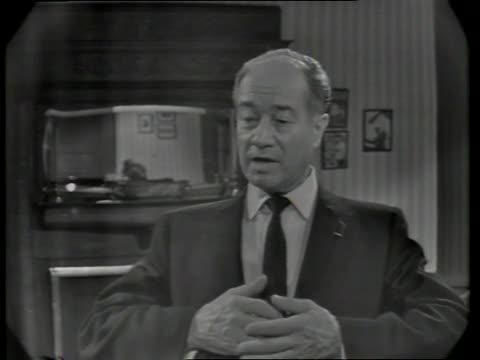
- Transcript
I don't know if it's true or not, but it's not true, it's not true, it's not true, it's not true, it's not true, it's not true, it's not true, it's not true, it's not true, it's not true, it's not true, it's not true, it's not true, it's not true, it's not true, it's not true, it's not true, it's not true, it's not true, it's not true, it's not true, it's not true, it's not true, it's not true, it's not true, it's not true, it's not true, it's not true, it's not true, it's not true, it's not true, it's not true, it's not true, it's not true, it's not true, it's not true, it's not true, it's not true, it's not true, it's not true, it's not true, it's not true, is not true, it's not true, it's not true, it's not true, it's not true, it's not true, it's not true it's not true, it's not true, it's not true, it's not true, it's not true, it's not true, it's not true, it's not true, it's not true, it's not true, it's not true, it's not true, it's not true, it's not true, it's not true, it's not true, it's not true, it's not true, it's not true, it's not true, it's not true, it's not true, it's not true, it's not true, it's not true, it's not true, it's not true, it's not true, it's not true, it's not true, it's not true, it's not true, it's not true, it's not true, it's not true, it's not true, it's not true, it's not true, it's not true, it's not true,
it's not true, it's not true, it's not true, it's not true, it It's not true, it's not true, it's not true, it's not true, it's not true, it's not true, it's not true, it's not true, it's not true to come down where you ought to be, and when we find ourselves in the place just right, it will be in the valley of love and delight, when true simplicity is gained, to bow and to bend, we shant, we
ashamed, to turn, turn, we'll be our delight to by turning, turning we come round, right Well, don't stop now, you seem to be enjoying your singing very much, so go on singing some more, for more enjoyment Here's the gift to be simple, here's the gift to be free, here's the gift to come down where you ought to be, and when we find ourselves in the place just right, it will be in the valley of love and delight Marcelle Sanguerre has had a distinguished career as a concert and
operatic singer. Years ago, when he was a member of the Paris Opera, he was also gaining a reputation for himself as a song recitalist with numerous concerts on the continent. Later, he toured South America in this capacity, gaining further recognition and honors, and since 1943, he has become a familiar and respected artist in the United States on the concert stage and at the Metropolitan Opera. In recital, Mr. Sanguerre is known as a perceptive interpreter of diverse song literature, and as an expert in the art of program planning, two distinctions which aid him in his present position as voice instructor and director of the Opera Department at the Curtis Institute of Music in Philadelphia That was a nice song you were singing, Ville, yes, but I'm very eager to get to work on more dramatic things that will come, as a matter of fact, I had in mind for you their doppelganger by Franz Schubert
and I had even planned to sing it for you today, but as the music is written on the German poem, I will translate it for you The night is silent, the streets are quiet, in this house across the street my beloved used to live. She had left the city long ago, but the house still stands at the same spot, and a man in standing there too, who looks upward and rings his hands in the strands of his sorrow. I shiver when I see his face, for the moonlight shows me my own features. You, my double, you pale fellow, why do you ape my pains of
love which tortured me on the same spot so many night in distant times? So just sit down. The night is silent, the streets are quiet,
in this house across the street my beloved used to live. The night is silent, the streets are quiet, in this house across the street my beloved used to live. She had left the city long ago, but the house still stands at the same spot so many night in distant times. The night is silent, the streets are quiet, in this house across the street my beloved used to live. The night is
silent, the streets are quiet, in this house across the street my beloved used to live. I shiver when I see his face, for the moonlight shows me my own features. You,
my double, you pale fellow, why do you ape my pains of love which tortured me on the same spot so many night in distant times? So just sit down. That's a very moving song, sir.
Should I try to do it the same way? Well, there will be a number of permanent elements in the song. Of course, as I have tried to do, you must convey the meaning of the poem, the sense of the drama and the feeling of the music. But you have to do it with your own nature and your own voice. You'll have to work with your intelligence and your sensitivity and your own voice. I would welcome this morning the possibility to check with you on our concept of voice and singing. But first tell me how long have you been up this morning? About three hours. That's correct. After a good night's sleep, I hope. Yes. That's well, because the rest of the body will sing better. And have you had a good breakfast? Yes. Fine. Did you come working all the way to the studio? Well, I walked partway. That's better than nothing. Did you watch your posture while walking? Yes, and did some deep breathing and short breaths too. Good.
You know, of course, why I am asking you all those questions. To be sure that my body is awake and alert and ready for singing up to its demands. That's right. So will you please make ready for practice and maybe take off your coat and be sure that your color is loose and that no part of your clothing is too tight on you? Well, in our past work, we have always adopted as a principle. The idea that singing is a very natural action. Not something which has to be dealt with as if it were difficult, hard and complicated. We have a grid too, I suppose, with anybody else. That human voice is a vibration. Very well. A vibration is a manifestation of sonorous energy. And at school, we have learned that we cannot create energy. That a certain energy is always the transformation of another
energy. So what type of energy are you going to transform into sonorous energy for singing? Well, it would have to be physical energy just what I can make with my own body. Certainly, there is no other place to take it but from our own body. And how do you think you will make a certain amount of energy available in order to sing? Well, I must prepare my body, put it on a firm foundation with my feet well planted on the floor and my legs firm and strong beneath me. And then allow my torso to rest in my pelvic girdle very firmly and very relaxed. Oh, that is very good. I would add, too, that you must have the sensation that your spine is quite straight. The result would be that there would be the sensation of an open chest which would be very pleasant. The shoulders would not raise. The generally impression about our own body when built up that way is that we are broad -chested and
narrow -waisted. And that the whole thing is a feeling of happy comfort. There is nothing in it which should create a tension or resistance to anything. It's a way of being. Fine. Now we can add another source of energy to this muscle tone energy. What would it be? Well, it would be prayer, of course. It goes without saying but it's better with saying. And what energy do you expect to come from the breath? Well, perhaps two types. I have the physical energy of breath for singing, for actually vibrating chords and also have the energy that's obtained when the oxygen burns in my body. That's right. We will constantly renew our energy by making intakes of oxygen which will be burning. This combination of the muscular power of the body made available for singing and the energy coming from the intake of air is generally known
as support. And we will call it this way if you wish, but not without having explained it the way I say. Besides that the presence of the air inside us will give us the feeling that our intercostal muscles and the muscles of the upper abdomen can stay well knit together around this supply of air. And that will make the final touch to this feeling of a happy power and a happy vitality inside our body. Fine. Now we have thus created the power to sing. I believe with all strength that then for singing we have only to desire to sing. I do not believe that we have to make a certain fabrication, this type of thing which is suggested by
the world production so often used. I believe that if we have the power for singing and the desire to sing and we make no resistance to it, we will have a voice. Let's see whether it will work. But there are a few more concepts. Now we said that the voice is a vibration. How do you conceive or if I may say visualize a vibration? Well I remember the elementary school description of a pebble being thrown into a pond and subsequently we see concentric circles going outward until they meet some obstruction. I couldn't conceive a better explanation of it. In this case what strikes me is that a vibration needs a free propagation all the time. You said yourself if something for instance the bank of the pond stops the vibration it dies. Then we have quite a problem. How are we to handle a vibration which has
to propagate itself? After all the voice rings somewhere in my mouth or somewhere above my body anyway. And if we try to make it ring to locate it or as it is said sometimes to place it in some particular spot for instance in the back of the nose or in the lower mouth. Also we are bound to destroy that vibration. Here we will have to find help in another idea. I will assimilate somehow the vibration to a fluid, to a liquid for instance. I cannot handle running water unless I have a container. In the same way I will try to think that if I have the proper containers I will be able to handle the vibration of my voice. But I don't want those containers to be anything like my nose or no I will want the words to
be the container for my voice. And in this way the voice will be that elusive material which fills the words when we are speaking or singing. Now can you conceive a simpler element than the words themselves as containers? Well vowels that's right. Let's see whether we can pay attention only in this first try you will make to sing an exercise for us to the vowel. I will want you to sing the vowel up. I will not want you to produce your voice. I will not want you to place your voice. I will want you to acquire the power of singing. And then I will want you to sing the vowel up. Would you be kind enough Larry to give him the chord of B flat for instance and you will sing the scale of nine notes.
You are really thinking of succession of vowels. Now is there a certain place in your mouth where you feel that the vowel requires a particularly obvious existence? I think so. It seems to begin just behind my upper teeth and then to sort of cover the palate. Well of course I have the same sensation. I may be responsible responsible for having suggested the one you have. But I nevertheless believe that it is a true one. See I feel it exactly as you do. And if I concern myself with thinking of a vowel I
am sure to sing. I don't have to produce, I don't have to start. Now will this be the same with other vowels for instance? I believe so. Try the vowel O. Give a C for instance if you like. We are going to be here a more precise succession of vowels. Does it work? Yes. Now if we are to entrust so much importance in our singing to the vowels we should acquire a very precise notion of what they are. And I have come to actually see my vowels when I sing and see the shape they have inside me. Would you mind giving me the cardboard please Larry? Thank you. Look if I
draw a certain human profile and I concern myself only with the part we have been mentioning now in our mouth I would say that we have described the vowel R as being about this way. You told me that you felt it was ringing strongly behind the front teeth and on the bone of the palate. Is that correct? So that would be about the shape I feel for the vowel R. Now the vowel O I have acquired the knowledge that it has about this shape and this location. You see it's very convenient. It is as if the vowels had the shape that we have somehow given to them in long hand writing. The vowel O you tried. Now the vowel E is a very peculiar one. To me it rings as if
it were an elongated little tube like that. Or it starts ringing in the back of the teeth like the others but it acquires a very high resonance. Let's suppose that we practice for a few seconds on each of those vowels. Will you give us an A flat please? Open your mouth please. Then sing O O I sound your self only with the shaping of those vowels. u1i u3i u3i
u2i u3, salt u3e E, E, E, E, E, E, E, E, E, E, E and down five notes. E, E, E, E, E, E, E, E, E, E very well. So you see, if we would make a study of all vowels and try to give them this kind of a concrete existence in ourselves, we would have learned very much about singing without having a recourse to any abstract and mysterious notions. So we can say already that if we have this possibility to build up our support the way we
have described and if we can sing well non -vowels we have already achieved quite something. Now of course there are many other notions to acquire. First how to transfer this idea of vowels into words but after all words are a collection of vowels in between of course the consonants. But too we want to believe that the consonants are not separating the vowels. We want to believe that the consonants are tying the vowels together and the notion which is highly important in singing is the notion of continuity. Well now all the notions that we have to acquire. We sing the vowels for themselves, for their own sake but of course we have to sing them on different range, on a long range if we want to cover all the demands of singing. And we have to acquire the notion that
what changes when we sing a long range is not the vowel or the voice in itself but the resonance of the voice. For instance the lower part of the range seems to me to be ringing in the lower part and the front part of the mouth. While the upper resonance is felt very much towards the top of the head while always singing the vowel here. Will you try to show us this with a vowel on a long arpeggio? Would you mind giving him a flat, for instance? I'm sure we can start better a second arpeggio by starting it here. Very well. This
way you see we have this natural notion that the voice is one. It's not divided into registers or anything of the kind. It behaves like any other function of the body without interaction. Now there is a notion of forte and piano. What is forte? A big vowel. Can you say better? What is piano? A small vowel. Yes, I'm not joking. A is forte. A is piano. And again there is no mystery in this change between forte and piano. Give us please a natural chord and sing this smaller arpeggio. Consider the very very small vowel or you will sing piano. Very
well. Now another notion we have to acquire is the notion of dark and bright. Sometimes to there is some confusion in speaking of singing dark and singing bright. If I want to sing a dark vowel I'll sing like a yago that way. If I want to sing bright like some young hero I'll use bright vowels. All that is only I could say that those concepts are very much like poor sands and divided of mysteries. Now what will help very much the quality and the variety of the voice is the expression of the face. A smiling face will create a bright voice. An elongated face will help creating a dark voice. The expression when you sing will be an enormous help to the creation of the voice. Don't ever try to separate the voice
from the expression of what you sing. Well we have made quite a bit of a review of our essential principles this morning. It's good to do once in a while. Now how long would you say you would practice every day? Well I could begin practicing and say 20 minute intervals in practice several times that way. It would be ideal at my point of you if you could practice 20 minutes in the morning, 20 minutes in the early afternoon and 20 minutes in the late afternoon but of course this is possible only if you are dedicating yourself to studying singing but as you are a student in voice I think that you can do it easily. I am against tiring long practice. So if we remind ourselves of the essential we will say that studying voice would be a study of what must be done so that the voice
does what it wants to do. I do not want to impose upon my voice any concept which would be contrary to the spontaneous production of the voice and this is essential. Now I am under the impression that the song you were singing at the beginning of this session was stating some similar principles don't you think so? So maybe for concluding our work today it would not be a bad idea if you would repeat it once more and maybe maybe having the benefit of the work we have just done so take the second verse for instance. is the gift to be simple, is the
gift to be free, is the gift to calm down where we ought to be and when we find ourselves in the place just right.
- Series
- The Art of Singing
- Episode Number
- 1
- Producing Organization
- WSMB
- Contributing Organization
- Library of Congress (Washington, District of Columbia)
- AAPB ID
- cpb-aacip-512-dn3zs2m62w
- NOLA Code
- AOSG
If you have more information about this item than what is given here, or if you have concerns about this record, we want to know! Contact us, indicating the AAPB ID (cpb-aacip-512-dn3zs2m62w).
- Description
- Episode Description
- This class is an introduction to voice training and a summary of Martial Singhers concepts of what the singing voice is. William Workman is the student. In this presentation Mr. Singher signs Der Doppelganger by Franz Schubert; and William Workman performs Simple Gifts from Old American Songs by Aaron Copland. Lawrence Smith is the accompanist. Running Time: 29:09 (Description adapted from documents in the NET Microfiche)
- Series Description
- This series looks at the problems of discipline and insight which a singer must face in concert and opera, and discovers how the voice is trained and how the singer tackles the preparation of a given work. During the series a young student works toward the proper interpretation of a classical piece of music; a young artist out of school performs operatic selections requiring more advanced training; and finally, Martial Singher, the teacher in the series, sings some of the most significant songs from his repertoire and comments on the interpretation of concert music. The Art of Singing is a production of WSMB, Michigan State University, East Lansing. The 4 half-hour episodes that comprise the series were originally recorded on videotape. Martial Singher, the distinguished French-American baritone, is voice instructor and director of the opera department at the Curtis Institute of Music in Philadelphia and voice teacher at the Mannes College of Music in New York City. For a number of years he has also been associated with leading summer schools including Juilliard; Aspen, Colorado; and Marlboro, Vermont; and has now succeeded Lotte Lehmann at the Music Academy of the West, Santa Barbara, California. Mr. Singher was born in the Basque country in the south of France. He made his operatic debut years ago in Amsterdam in Glucks Iphigenie en Tauried, with Pierre Monteux conducting the Concertgebouw Orchestra. Subsequently, he became a leading baritone of the Paris Opera and the Opera Comique, and at the same time gained recognition as a distinguished recitalist on the Continent. During this period he sang with the Teatro Colon in Buenos Aires and gave recitals extensively in South America. He made his debut with the Metropolitan Opera in 1943 in the title role of Claude Debussys Pelleas and Melisande. From that time he has been a favorite and highly respected artist in America. William Workman, baritone, who appears on the first and second programs, is presently a student at the Cultural Institute of Music. A native of North Carolina, he made his operative debut at the age of eighteen with the Charlotte Opera Company as Morales in George Bizets Carmen. In addition to his studies at the Curtis Institute of Music, Mr. Workman is compiling his AB degree in English at Davidson College in North Carolina. Benita Valente, soprano, who appears on the third program, won the 1960 Metropolitan Opera Auditions and has been a member of the Metropolitan Opera Studio. This fall (162) she begins a season with the Freiburg (Germany) Opera. She has also made appearances at the Marlboro Music Festival, devoting some of her time there recording with the world renowned pianist, Rudolph Serkin. Lawrence Smith, pianist and accompanist for these programs, holds his BS in Music (summa cum laude) from the Mannes College of Music. He has appeared extensively as piano soloist, chamber music pianist, and accompanist. (Description adapted from documents in the NET Microfiche)
- Broadcast Date
- 1962
- Asset type
- Episode
- Genres
- Performance
- Media type
- Moving Image
- Duration
- 00:31:06:10
- Credits
-
-
Producing Organization:
WSMB
- AAPB Contributor Holdings
-
Library of Congress
Identifier: cpb-aacip-fe456800d63 (Filename)
Format: 2 inch videotape
Generation: Master
If you have a copy of this asset and would like us to add it to our catalog, please contact us.
- Citations
- Chicago: “The Art of Singing; 1; Basic Physical Facts: Explanations and Demonstrations,” 1962, Library of Congress, American Archive of Public Broadcasting (GBH and the Library of Congress), Boston, MA and Washington, DC, accessed June 8, 2026, http://americanarchive.org/catalog/cpb-aacip-512-dn3zs2m62w.
- MLA: “The Art of Singing; 1; Basic Physical Facts: Explanations and Demonstrations.” 1962. Library of Congress, American Archive of Public Broadcasting (GBH and the Library of Congress), Boston, MA and Washington, DC. Web. June 8, 2026. <http://americanarchive.org/catalog/cpb-aacip-512-dn3zs2m62w>.
- APA: The Art of Singing; 1; Basic Physical Facts: Explanations and Demonstrations. Boston, MA: Library of Congress, American Archive of Public Broadcasting (GBH and the Library of Congress), Boston, MA and Washington, DC. Retrieved from http://americanarchive.org/catalog/cpb-aacip-512-dn3zs2m62w