The Criminal Man; 4; The Ethnological Criminal
- Transcript
Does one race or nationality produce more criminals than another? Here are answers to questions about criminality. The criminal man, the series of television studies of how and why people behave criminally and of what to do about it. Your guide for these studies of the criminal man is Dr. Douglas M. Kelly, professor of criminology at the University of California. In this session of our series, Dr. Kelly will study the relationship of race and national origin to criminality. He calls the study the ethnological criminal.
Why? Irish extraction. Why? Mexican. Why? Irish scotch. Negro. White Italian descent, white Spanish American. You know, every wanted circular, every piece of description about a criminal, every record card, a report from a penitentiary, carries a racial designation, goes along with hair color, eye color, height, weight, scars and other marks. It's considered to be very important information, but is it really very pertinent? Is it important to no race in order to identify a person to apprehend him? What's its relation to crime?
Let's look at some of these things. If we look at the average wanted flyer or statistical card, we find white Italian American or Negro. Wouldn't it be better to have skin color because it varies, take this Negro, for example? He's very light-complexed, and after all, if you were thinking of an individual Negro, you might think of dark, light, shades of chocolate. This might be a lot more important than the word Negro. Well, this one, Italian descent, that doesn't mean a thing. Wanted to be a letter to describe his face structure, wanted to be better to describe his complexion? Who we find it? White, Swedish. White, American descent. Oh, here's one. So this is from Washington. That really is no great help. I don't suppose Washington's are any more spectacular than Oregonians or Californians. Why do we have this sort of thing?
Actually, it stems primarily from an ocean that's handed down from an idea that many Americans had. But there was an Anglo-Saxon superiority, and strangers coming in were looked at as being potentially evil and crumbling at every time. The American Indian, the Chinese, the Japanese, the Dutch, the Irish, the Jews, the Negroes, the Mexicans. These people at some time have been considered potentially criminal. It's important, I think, to recognize the fact that this hand-me-down sort of thing still continues. Some people still insist that there are these basic racial differences, that these racial differences promote criminality. They put out a barrage of propaganda, which makes other people believe, for example, in this cabinet, where we've collected thousands of illustrations of racial propaganda.
We find a sign like this. It's self-explanatory. It indicates a feeling of inferiority for this particular group, or another little sign. It's a little more subtle, but it still conveys the notion of racial difference. It is not only in the signs, of course, our newspapers, unfortunately, do it. Some of the screaming headline types worse than others. For example, here's a couple of papers, in which the word Negro is headline unmercifully without any reason, and certainly without any advantage of apprehension is what one wants. It isn't only limited to the United States, in the country, in which this particular flag was at one time held in honor, we find some of the most horrible examples of racial intolerance.
For example, their persecution of the Jews, highlighted by this very fancy book, published by Julius Stryker, the Royal Jew or wealthy Jew, in which slurs were thrown at the Jewish person because he had money. There weren't just irritated at German Jews. They published an interesting little track about the Jew in the United States. You'll find the remarks are far from complimentary. Of course, not all racial bigots have access to printing presses, but they have the same result. For example, his book, taken out of one of the local libraries, on race by money, a scholarly study, and some individual, in reading the book, didn't agree with it, and so he wrote in his own peculiar practice.
We don't just find it library books, here's one of our most priceless documents, the Bill of Rights. And we find it on the bottom of it. Some individual has crudely sprawled the evidence of his racial differences. Or they don't have access to libraries of printing presses or anything else, it still creeps out on the boards and fences and gateposts of our land where people write crude obscenities about persons who happen to be different from race or cultural viewpoint. That's what we see. We turn on this tape recorder, we have a recording here of what we hear. They do a killiest father for a few bucks. Only good Indians at daddy. The only good chap is a dead chap. All niggers are lazy. Most of them are criminals. Are you rich men? Well, they're copter gangsters.
Either way, they're rich. You can't trust the Jew. They'll rob you blind. God invented man, but the devil invented German. A Mexican adjust assume kill you look at you. Frenchman? He has to have sex and he doesn't care how he gets a greek. Well, let me. We're going to let the tape run. It's filled with hundreds of other statements like this. Statements which attribute evil and criminality, the boogies and shines, to specs and Mexicans, to chinks and japs, to niggers, to Greeks. This sort of thing is ugly, representing ignorance, bread and superstition and folklore. People do this sort of thing, I think, because for one thing, they simply get mixed up on the difference between race and culture. A great many individuals when they talk about race, really mean culture. For example, the Greeks or the Germans. If we take a globe and take a look at some of the racial patterns, we find people that don't like the Germans, they're not a race, they're simply a cultural group.
When we find arguments about race between the people that dove straight into English area and in the French area, oddly enough, these people come from essentially the same racial stop. Yet, we find, over and over again, that people will tell you the Normandy coast individuals are completely different in their origin from the British. So we find that these curious things, the Spaniards, the Italians, the Irish, the Irish name, which actually are reasonably similar in origin, to a degree that you won't be able to get an Irishman to admit that one. We find, then, that really the cultural pattern is the difference in many people's ideas, not race, and they'll say, ah, they're a cultural crime. For example, in here, we've got a typical one, the symbolic black hand of the mafia. And here, people say, ah, mafia are Sicilians, Sicilians are criminals.
This isn't true. I wonder how many of you, when you think of Sicilians as being a criminal, never stop and think of the fact that people outside the country think of Americans as gangsters because Chicago gangsters are as well known in other countries as mafia as Sicilians are here. And so we find a very curious thing, the notion that cultures cause crime, and when investigated, we find cultures have no relation to crime, but there are criminals in all cultures that may give the culture a bad name, other cultures. What about this racial thing? If we take any book, even the simplest kind, a little pocketbook, we'll find a pretty adequate description of different classifications of race. For example, in here is one from the famous classifier, Leneas, who classifies Americanos. He adds that's the American Indian, they're tenacious, Europius.
He's lively and inventive, eziaticus, he's stern and stingy, and afro-African, he's cunning, stupid, and negligent. This is interesting, you see, Leneas made a classification on a basis of skin color, and then adds his own opinionated adjectives. Lots of people fall into that trap, if they don't, they might classify like another one here, Caucasian or white, Mongolian or yellow, Ethiopian or black, American or red, and Malayan or brown. This is a five-fold classification, pretty frequently used, although ordinarily today most people figure it in a three-fold classification. The first one of these classifications is the Mongolian classification. Here they have taken the Oriental or Mongol type, and added in, of course, the American Indian as a result of his origin, and some of the browns.
Then, of course, the next classification is the African or Negro, and finally, the last classification is the Caucasian or white type. In considering these types, then you'll see skin color has been used as a fundamental basis, and when we consider this superficial characteristic, we immediately find that people of different skin colors frequently look on other differently skin colored people as inferior. They do this, basically, because they still are tied up with a notion of the old Darwinian idea of evolution. You know, the notion that you spring sort of directly from the Great Apes. As a matter of fact, nowadays we know that's not at all true. Man and Great Apes, perhaps, had some common source of origin. Man developing along one line, the Great Apes along the other. Many people, particularly the uninformed, still feel that if you take, for example, a skull of a Great Apes, and you hold it up alongside a person and look at him, you then try to
figure out in what way does he resemble the Great Apes. And if you can find any resemblances, then you say, well, he looks apish, so he's act apt, act apish, and in that way he's apt to be more potentially a criminal. Well, as a matter of fact, if you consider this problem, and it's been well done in a book The Human Animal by Western La Bar, you'll find a very fascinating discussion. He starts out by defining a typical human as just a person who has two hands, two stereoscopic eyes, two double arched feet. This is a better description. It doesn't get caught in this problem of skin color. And then he points out the Caucasian may have white skin, blue eyes, and vertical faces, and these are pretty far away from apish types, so maybe considered advanced or specialized, as opposed to the Negro, who has dark skin and has a somewhat prognathic or sticking
out jaw. And right away, whites will say that shows that we're further along the evolutionary scale, but if you consider a couple of other factors. For example, the length of the thigh bone and the type of heel. These are two evolutionary characteristics, the longer the bone, the better developed the heel, the more advanced, theoretically, away from the ape, we find that these are predominantly characteristics of the Negroes, who have the longest thigh bones and the best developed heels of anybody. And of course, while the Negro does have the dark color of the skin, his hair is curly. And we know that apes, if you've ever looked at apes in a zoo, have long, silky straight hair, so the Negro actually probably represents the highest evolutionary point from the view of his bones and his hair. And if we take our Mongolian group, our Chinese and Japanese friends, and we look at his
nose, which is somewhat saucer-shank, this of course is pretty typical of the animal or ape-ish type, so he isn't very well advanced here. But if we move just a half inch up to his eye, his epicanthal eye fold, this is probably one of the most specialized features. And in this area, he's way ahead of all other humans. Then of course, if we look at his chest, we find he's essentially hairless, and remember apes are covered with hair, so the persons who are most hairless essentially are the furthest advanced. We continue this theory a little further as Labar does. We find out the Eskimos, our hairless, their Mongoline, and in addition they have bigger brains than other people, which is meaningless, of course, except to ignorant people. We consider the idea then in general, we find that each particular group, each particular group has certain specific characteristics, which if taken alone, would make it seem
that he was outstanding. On the other hand, if we take other groups, then other so-called race stocks are obviously superior. Basically, it boils down to the fact that nobody really is superior or inferior. It boils down to the fact that all races, fundamentally in structure, are essentially equal. We also know from psychological studies that all races are equivalently capable from an intellectual and functional viewpoint. Finally, we know from long studies on criminality that individuals in different races have no relation whatsoever to criminal behavior. There are, of course, a lot of people who simply ignore these scientific findings and will by offering statistics of a sort attempt to prove their point. Actually, what they really do is to cheat the statistics by only giving it half of them.
For example, here is a set of arrest records from the small Michigan town, the arrest for day. The name is Zapataski, Silenski, Lodziewicz, Patton, Synco-Witz, Zofia, Anderson, Riley, Kossak, Wisnowski, and so on. Now, you might consider from this set of cards that the polls commit more crimes than the non-poles. But as it so happens in this particular little town in Michigan, the polls fundamentally outnumber the non-poles in a large degree. So, really, in perorate, they probably don't commit as many crimes. You see this all over. For example, if we go to a town in the southwest, here is a set of arrest records, orchids, Tyler, Garcia, Sanchez, Williams, Rodriguez, Campbell, Delgado, and an IE person might
consider that here, the Mexicans commit more crimes than the non- Mexicans. I suppose if he came from that little town from Michigan, he'd be delighted to discover that the polls don't commit crimes in southwest cities. They're getting perhaps there aren't any polls down there. Again, it happens with other factors. Take arrest cards by race. Negro. Negro. White. Negro. White. Negro. Negro. And again, you might say this shows Negro's commit more crimes, but practically, this could be the arrest card file for any city with a large colored population. Again, if you use statistics taken from jails, we find that just because you find a lot of people of one race or one cultural group in jail, it doesn't mean that they commit more crimes, it may mean they're poor economically or oppressed by a majority. So they're arrested more often and convicted more frequently.
These things are not new. They have gone on in history for many, many years. If we go back over the history of this sort of thing, we find, and in this cabinet, we've collected hundreds of examples of the problem of history in relation to this thing. Here, for example, is a Kineiform tablet. And on this Kineiform tablet written many years before Christ, in the Kineiform areas of Mesopotamia, we find a nice description, which is a very deleterious one of neighboring races. Of course, you can't read Kineiform, you don't have to worry, you get yourself a Bible and read some fascinating descriptions of how the Israel tribes didn't like their neighbors, or you go to ancient Greece. And here, for example, is a nice picture of Aristotle and his pupil, Alexander, discussing a problem, which is very common in those days, the problem of the Egyptians as a poor group
of people. The history of racism in our country is pretty obvious. Most people don't realize that in the early 1700s, the Negro, while he was a slave, was not considered as a lower human type. He was not segregated. He lived with a family, he got along quite well, and a great many people were opposed to slavery. As a matter of fact, there was a trend towards abolition way, way before the Revolutionary War. During this time, the slave lived as a sort of part of the family. He was considered an equal, although economically, on a little lower scale. No, we have an interesting thing, a couple of bowls of cotton. Probably most people wouldn't relate cotton bowls to racial prejudice, but when Eli Whitney invented the cotton gin and found out how to get the seeds out of cotton, then we suddenly found a tremendous demand for slave labor.
Labor that could be worked day and night, constantly, cheap. That away the Negro was pushed from his status of equality to a status of slave and shackled and legied. Of course, the white person had to account for this sudden shift in his treatment. He had to rationalize him. And so, to rationalize it, he simply ascribed to the Negro, characteristics of stupidity, laziness, criminality, dirtiness, bad smell, and this then permitted him to treat him in a subhuman way. This pattern of racism isn't limited to our culture. For example, hair is an interesting article published in Germany, showing the various kinds of slavery allegedly taking place under the British imperial rule. And if you take a look at the books, you find all sorts of them around the world. For example, here's one English Frenchman in Spaniards written by a Spaniard, which is very complimentary to the other two.
Here's the Dandy. The English, are they human? This, of course, was written by a Dutchman. And another one, I think most interesting, published in 1904, a book by a very well-educated Chinese, as a Chinaman saws, which the Chinaman complains bitterly about our body-odders, and he also points out he doesn't think we'll ever make it as a culture. Let's say, a comforting thing, I think, for Americans to recognize that there are many other countries, which are just as good at slinging slurs as are we in the United States. For example, here's one, trust a snake before a Jew, a Jew before a Greek, but never trust an Armenian. Here's another one, the Germans gorge and swill themselves to poverty, zees, and hell. Trust a German as you would a dog. And here's the final one, Phoebe Sheson-American, Drunk as a Pole, Vindictive as a Corsican, tricky as a Greek.
This whole book is a dictionary of such slurs. This brings us to a remote link between race and national origin, or actually the problem in relation of prejudice in relation to crime. To give us some understanding of this background and link, I'd like to have our announcer, Bill Triass, describe some pictures we took of typical American scenes. This is a typical street in one area of a major west coast city. Some people call it Boogie Town, others call it more politely, the Negro section. A few call it a disgrace. Here on streets like this live most of the Negroes of the city, locked in by invisible but clearly defined boundaries. Most every city in America is dotted by such sections, areas populated by people of a particular race or national origin. Every city has its nigger town, china town, degotown, spick town. Segregation of this thought has been declared unconstitutional by the Supreme Court of the
United States, but it persists. Finding its strength and cultural and economic patterns. The members of the minority groups are helpless. Their fight against segregation has brought few concrete results. Despite the plainly word of decisions of the Supreme Court against discrimination in employment, in voting, in housing, the practice continues. Children are deprived of opportunities afforded to children of the majority groups. They're forced to find their fun where they can, quite often in substandard conditions and without a chance to mix with youngsters from other racial or national origin groups. Frequently, there is little or no intercourse with children of other skin color or with different sounding names. In their schools, they meet and mix with children like themselves, seldom of ever do they work with or play with, or learn something about the other kind of kid. Their world becomes a narrow world, bounded by the color of skin or the sound of names. Their formal education is generally good, but their social education is limited by rigid
and neighborhood patterns. And when they grow to adulthood, that social education isn't broadened. Their employment, their recreation, even their everyday chores such as shopping are marked by varying kinds of discrimination, invisible perhaps, but ever present. This picture shows a very important thing. While race has no direct relation to criminal behavior, sometimes in a sort of second handway, it does, and this is because the majority, very frequently, oppressed the minority. They keep them in a straight, jacketed groove and sometimes the minority person overcompensates and flares back and commits a crime, and so we get a second hand, the kind of crime.
A result not of the basic race or nationality, but a result of the bigoted, narrow-minded treatment of the minority by the majority, and then second, of course, if an individual from one culture has a different pattern of behavior, frequently this is called criminal by the other majority culture. Something important can be done this way to do away with crime by doing away with prejudice. One simple start might be, for example, to reorganize wanted cards, but a simple process of scratching out the place where it says race and putting in the blood type, baby or old. This idea was suggested by Boyd in his book, genetics and the races of man, and Boyd's basic point was that the important thing, if you must have racial separation technically, is to use blood types because they can only be told in the laboratory, they can't be told by looking.
This would do away with the idea of skin color, it would do away with the idea of saying he's different, so he's inferior, so he must be a criminal. There's no relation between race and criminality, and there's no relation between culture and criminality. And if we use blood types, types we can't see to indicate this sort of thing, then we would be able to do away with the fundamental idea of differences in people, differences in criminality as a result of racial differences. We would be able to recognize the fact you can't tell by looking. The Criminal Man, a series of television studies on the nature and patterns of criminality. Your guide for these studies is Dr. Douglas M. Kelly, professor of criminology at the University of California.
Philman certs by Robert Katz, Dr. Kelly's next study will be a folklore and superstition which have created erroneous concepts of criminal behavior. He calls it left hands, red hair, and crime. This is National Educational Television. Thank you, Dr. Douglas M. Kelly, Dr. Douglas M. Kelly, Dr. Douglas M. Kelly, Dr. Douglas M. Dr. Douglas M. Kelly, Dr. Douglas M. Kelly, Dr. Douglas M. Kelly.
- Series
- The Criminal Man
- Episode Number
- 4
- Episode
- The Ethnological Criminal
- Producing Organization
- KQED-TV (Television station : San Francisco, Calif.)
- Contributing Organization
- Library of Congress (Washington, District of Columbia)
- AAPB ID
- cpb-aacip-512-513tt4gg9v
- NOLA Code
- CMLM
If you have more information about this item than what is given here, or if you have concerns about this record, we want to know! Contact us, indicating the AAPB ID (cpb-aacip-512-513tt4gg9v).
- Description
- Episode Description
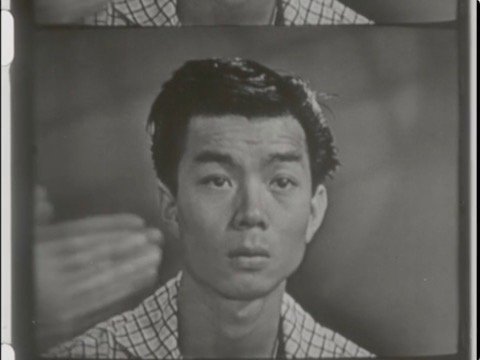
- The facts about the relationship of crime to race, national origin, and minority groups are presented in clear fashion. With Caucasian, Negro, and Oriental guests, Dr. Kelley cites the patterns that have existed and the misconceptions that have arisen. He relates living conditions and geographical distribution to crime and shows that the basic matter of race is irrelevant to the matter of crime. (Description adapted from documents in the NET Microfiche)
- Series Description
- The Criminal Man is a definitive study of the cause, prevention and treatment of crime by the late Dr. Douglas M. Kelley, police consultant, psychiatrist and professor of criminology at the University of California. The series, which takes its title from Lombrosos original work in the last century, incorporates a great number of dramatic re-enactments using highly skilled actors and films as illustrations. Dr. Kelley uses the first six episodes to define crime and criminals and to destroy the myth, folklore and common superstitions which have long surrounded crime. The second group of episodes analyzes the true causes of crime and posts guides to the prevention of these causes. The two final episodes look at current penal policies and their weaknesses regarding rehabilitation. Dr. Kelley indicates the lines of penological progress which he thinks would provide the greatest benefit to society. The 20 half-hour episodes that comprise this series were originally recorded on videotape. Dr. Douglas M. Kelley, police consultant, psychiatrist and professor of criminology at the University of California, gained national reputation as a brilliant theoretical and practical criminologist at the time of his work as consulting psychiatrist at the Nuremberg Trials. The public also remembers his testimony in the Stephanie Bryant kidnap-murder case. Dr. Kelley was a Rockefeller Fellow at the New York State Psychiatric Institute, and at that time (1940-41), he compiled clinical contributions for Dr. Bruno Klopfers book, The Rorschach Technique. His studies at the University of California led to his receiving and AB in 1933, his MD in 1937 and to his residency in psychiatry from 1937 to 1938. he studied also at Columbia University. He was married in 1940 and was the father of three children. During World War II he was a lieutenant colonel. (Description adapted from documents in the NET Microfiche)
- Broadcast Date
- 1958
- Asset type
- Episode
- Rights
- Published Work: This work was offered for sale and/or rent in 1960.
- Media type
- Moving Image
- Duration
- 00:29:23.709
- Credits
-
-
Host:
Kelley, Douglas M.
Producing Organization: KQED-TV (Television station : San Francisco, Calif.)
- AAPB Contributor Holdings
-
Library of Congress
Identifier: cpb-aacip-3cc40c617e7 (Filename)
Format: 16mm film
Generation: Copy: Access
Color: B&W
-
Indiana University Libraries Moving Image Archive
Identifier: cpb-aacip-4517ae0bef1 (Filename)
Format: 16mm film
If you have a copy of this asset and would like us to add it to our catalog, please contact us.
- Citations
- Chicago: “The Criminal Man; 4; The Ethnological Criminal,” 1958, Library of Congress, American Archive of Public Broadcasting (GBH and the Library of Congress), Boston, MA and Washington, DC, accessed September 21, 2026, http://americanarchive.org/catalog/cpb-aacip-512-513tt4gg9v.
- MLA: “The Criminal Man; 4; The Ethnological Criminal.” 1958. Library of Congress, American Archive of Public Broadcasting (GBH and the Library of Congress), Boston, MA and Washington, DC. Web. September 21, 2026. <http://americanarchive.org/catalog/cpb-aacip-512-513tt4gg9v>.
- APA: The Criminal Man; 4; The Ethnological Criminal. Boston, MA: Library of Congress, American Archive of Public Broadcasting (GBH and the Library of Congress), Boston, MA and Washington, DC. Retrieved from http://americanarchive.org/catalog/cpb-aacip-512-513tt4gg9v