Here & Now; 308
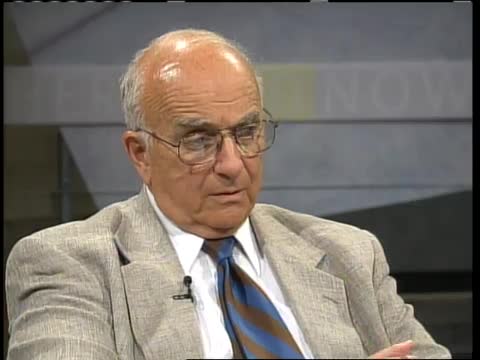
- Transcript
... And welcome to here and now I'm Frederica Fryberg. The University of Wisconsin regions began the contentious process this week of putting together the next years budget for the UW System. We'll talk with Regent President Toby Markovich. We also continue our series of profiles on the candidates for U.S. Senate. Tonight, Robert Gerald Lord, and as U.S. Olympians compete a half a world away, we'll tell you about one athlete who has Wisconsin water in her blood. But first, history was made this week as Governor Jim Doyle appointed Milwaukee County Circuit Court Judge Louis Butler to the Wisconsin Supreme Court. Wisconsin is an increasingly diverse state and our justice system must reflect that diversity. Our high school should embody our highest ideals and our best hopes. Judge Butler, I know you will serve us with courage, judgment, integrity and dedication. It is not only the first African American to serve on the Wisconsin Supreme Court, but the first appointee by a Democratic governor since 1976.
Judge Butler joins us now from Milwaukee and thanks very much for doing so. Thank you. Good evening. Congratulations to you. Well, thank you very much. It's a very exciting time in our lives right now. It's a very hectic period as well as you can imagine. What's it like to be making history? Well, it's an awesome responsibility. A lot of confidence has been placed in me by the governor of our state. And I know a lot of people are expecting good things from this appointment, and I have a lot to live up to when I understand that. How does your experience as a Milwaukee County Circuit Court Judge shape decisions that you will be making on the Supreme Court? Well, I don't know that the experience is a circuit judge necessarily shapes decisions. I think the benefit of coming from Milwaukee County Circuit Court is that we are confronted with a variety of issues in our jurisdiction that may not be seen as much in other parts of the state. We also have the largest administrative body within the court system in terms of the number of judges.
We have 47 judges in Milwaukee County. And so there's a lot that we have to be cognizant of in dealing with the issues that come out of Milwaukee County. There are also a number of cases that come out of Milwaukee County. So I think it's helpful to have someone who's experienced the courtroom who is experienced living in an urban area, particularly in urban area. I think that's important. What about your experience as a public defender? My experience as a public defender, I think, will be invaluable in a number of ways. One, I was an appellate attorney for nine years. I've actually argued before the State Supreme Court many times. I've argued before the United States Supreme Court. And you do a lot of writing as an appellate lawyer. So to the extent that I'll be doing a lot of writing now as a Supreme Court justice, that's excellent preparation. I also did trial work. I was in the trenches. And I think that's very beneficial. And I also had an opportunity to deal with a lot of people who were not only charged with criminal offenses, but who may have been down on their luck. As you know, a public defender only represents those individuals who are indigent under the law and cannot afford an attorney.
So it gives you a perspective in terms of dealing with people on a day-to-day basis that people who go out and hire lawyers, those lawyers might have a different type of experience. Will it be difficult for you to be more removed from the immediacy of being in a circuit courtroom being there on the lofty Supreme Court? Well, there'll be some definite changes in my life. I mean, I am a people person. I enjoy interacting with the public. I like the hustle and bustle of a trial court setting. I liked it when I was in practice. I like it as a judge. But I also like and enjoy really getting into the nuts and the bolts of the case and really being able to take the time and analyze the decision and make sure that you do it right. And you have the ability to do that in the pellet level. It's going to be an entirely different type of judicial style and judicial life that I will be living. It is more cloistered. I'll be in my office a lot doing work, writing decisions, making administrative decisions with the rest of the court.
It's going to be a change, but it's one that I look forward to. When you were growing up, did you ever believe that you would reach so high? Well, I've always taught my children and I really do believe this that one must set one's goals high in life if one is to succeed. I've got this theory. I don't know if it's right or not. But my theory is that regardless of where your goal is, you always end up just short. So if you set your goals really low, you're not going to go very far. If you set your goals high, even if you don't attain them, you've done so much that you don't worry about it. And you do a lot of good. And I've always set my goals high, teach my children to set their goals high. I try to teach other children to set their goals high. Just set that today at another event to some young people. Make sure that you reach for the stars and don't let anybody tell you you can't do it. Who were your role models? Well, I've had a number of role models in life. The person who really inspired me to public service was when I was eight years old, John Kennedy.
And when I heard his inaugural speech, and my father used to joke with me until he passed away. He joked about that speech all the time. He said, Lewis, these are politicians. They make speeches all the time. They don't mean them. But for me, it was a call of arms. I listened very carefully to him in, you know, exhorting us to go out and do for our country. And from that moment on, I decided that I was going to do something in the public service. I didn't necessarily know I would take me to the State Supreme Court. But I knew I was going to be active in public life in some form or at least I wanted to. Martin Luther King, another big role model in the big hero in my life, the fact that he could stand up to discrimination and stand up to injustice and prejudice and try to fight for what was right and actually gave his life to do that. Thurgood Marshall from the United States Supreme Court, along with William Brennan, two legal giants, in my opinion, in the United States history. Those are people that I look up to. There's my mentor from Lawrence University, Chung Do Ha, who was my government professor and who really taught me how to think in outline form.
And of course, my parents, who gave me some solid, strong values and a belief in self and a belief in family that I think has carried me a long way. And my own family here. I've got a wonderful wife, two lovely daughters, grand daughter, who is probably going to scream at some point and interrupt this. Some might ask whether or not you are the justice that the people of Wisconsin want, given the fact that you did run for an elective bid to the high court and were not successful there. How do you respond to that? Oh, if you really go back and you look at the history of how one gets to the Supreme Court. There's only been one justice in Wisconsin history, the minority who lost a race, one incumbent. And he had the unfortunate task of writing the decision that allowed the Milwaukee Braves to leave Milwaukee. Other than that, most justice, all the justices of one re-elective bids, when they have been challenged.
At the same time, if you look at the justices who have sent it to the court, Justice Pat Crooks lost his first race, he's now on the court, Justice Pat Rogansack lost her first race, he's now on the court. I think it helps to develop a base state wide. I think people get to know you. They get to understand your capabilities and your value system. And they get to determine for themselves whether or not they believe you have the ability to render the decisions that need to be made at the Supreme Court level. And I received wonderful support from throughout the state, from a number of organizations, unions, from newspapers and whatnot, endorsements throughout. I think that the support base was helped by having done the run. And quite honestly, I'm not sure I would be sitting in the seat today if I hadn't done the run. Okay, Judge Butler, congratulations again. Thanks very much.
Thank you very much. Thank you for having me. Thank you very much. Leaders of the University of Wisconsin system are asking for more money over the next two years to fund items including pay hikes, increases in benefits, and an expanded financial aid program. The UW Board of Regents approved a 2005-2007 budget proposal Thursday, a budget for the entire UW system, which includes UW Extension and Wisconsin Public Broadcasting. The budget request proposes a spending increase of more than $210 million. This includes $54 million that would go toward 3% annual raises for faculty and staff, and nearly $18 million for funding expanded financial aid for families who earn less than $46,000.
The Regents are requesting an average tuition hike of 4.3%, or about $225 a year here at UW Madison to help cover the costs. The Board also wants to see a more than 7% increase per year in state funding to go toward the university system. The budget request will head to the governor. We spoke with UW Board of Regent President Toby Markovich just after the Board approved the request. Regent President Toby Markovich, thanks very much for being here. Oh, you're welcome. Happy to be here. The Regents budget proposal calls for a 3% pay raise for faculty and staff in each year of the 2005-2007 budget. How realistic is that? Well, it's a catch-up pay plan that does not bring our faculty up to anywhere except where they would have been two years ago.
How do you think that's going to go over? Well, I hope it goes over the job of the Regents in the statutory job is to be advocates for higher education in Wisconsin, and that obviously includes keeping good faculty members. We have demonstrated lots of top faculty because of pay issues at the budget session today that we just finished a few minutes ago. We had professors and students before us telling us anecdotal stories about the loss of top professors because of pay issues. Well, we've got to stop that bleeding if we're going to continue to provide our quality education for Wisconsin students. Because I've looked at some of the charts and enrollment is going up and faculty numbers are going down. What does that do for the quality of the education here in the system? This speaks for itself. I mean, it either requires fewer course offerings, larger classes, or lack of access to credits on time so that students can graduate in a reasonable length of time.
If you've got to wait an extra semester to get a required course, we can graduate because we don't have the people to teach that course. That's not a very happy situation. Where does the money for that pay raise come from? Well, it comes both from GPR and tuition. It comes from both sources. Now, the students just got hit with a pretty major tuition hike. The last budget, what kind of numbers would we be looking at this time? Well, the proposal that we passed today to present to the governor and the legislature was a split of 7.2% GPR for that budget and 4.3% tuition. That would cover that 3 and 3% pay increase, but would not cover any pay increases for the next biennium. Not to get too heavy into the specific millions of dollars, but the GPR money, the state tax dollars that would go toward this kind of pay plan.
What is the figure there, the ballpark figure? Well, for this package, for each year of the two year biennium, it's about 105 plus 106 million. Am I right in my understanding that the Department of Administration is still out there requesting a 10% cut in operations? It's a 10% cut of our administrative costs. It isn't across the board 10% cut. There was a misunderstanding about that originally, but they're asking us to cut our overhead by 10%. Is there stuff to cut? Well, that's a very good question right now. And for some years, the UW system has been the most efficient system in the United States for overhead, for operation of the system. Excuse me. And then to further cut something that's down, that pretty bare bones is not going to be an easy thing to do.
Have you had any reaction yet from the legislature or the governor about this proposal? No, we just passed it as they say literally minutes ago, and so we've had no reaction yet. It's been out there kind of for a couple of days at least. People have been talking about it. It has been, and I'm sure that they need time to really analyze it. I think they are going to need to know what all of the components of that budget are. For example, one critically important thing in there is the 100% financing for student needs. That was the number one priority to board today. So you would, it's a financial aid package that would help the lowest income students. They wouldn't have to pay any tuition increases. Correct. It would be the lowest to quintiles, which would be the lowest 40% of students on the income scale, would have financial aids, which would equal any tuition increase.
Okay. Well, Regent President Toby Moorkevitch, thanks very much for being here. I'm sure we'll be hearing a lot more about this as the months go by. Well, thanks a lot. Thank you. Good night. I'd like to come to places where people are entrepreneurial. Where people are willing to expand the job base. That's what's all about in this country to elevate the entrepreneurial spirit. And the KELS represent that spirit. The KEL Container Corporation was among the stops, President George W. Bush made in Wisconsin this week. Meanwhile, veterans supporting his opponent, John Kerry, are now touring the state supporting Kerry's wartime record. Kerry is also starting to run new ads in Wisconsin, responding to the swift boat veterans for truth commercials that are critical of his wartime service.
The swift boat group is a so-called 527 group flying under the radar of campaign laws by pouring unlimited amounts of money into partisan ads. Democrats are doing it too. Senator John McCain, who authored campaign finance reform legislation, is outraged by what he calls a violation of the law and spoke with me about it earlier this week. Now, you know, it has been said this year that with the emergence of the 527 groups, and I don't pretend to be an expert on this, but it has been said that big money persists. Well, it does. First of all, the good news is that more Americans have contributed to political campaigns than ever before in history. A lot of that has to do with the internet, but it's something that we sought. But the 527s, which for the benefit of our audience who don't follow this very closely, are organizations that are set up for partisan political purposes, and they are taking unlimited amounts of money on both sides. Those are clearly illegal, and the Federal Election Commission, which was set up to enforce the law, refuses to enforce the law.
We'll win. We'll win in court because it is clearly illegal, but they have refused to rule, so we haven't been able to take them to court. The Federal Election Commission is guilty of not carrying out their constitutional responsibilities, and they must be abolished or reformed. Obviously, a large chunk of the money spent by candidates is on political advertising. Beginning next week, we'll critique some of those ads in our reality check series. But tonight, we continue our personal profile reports on the Wisconsin Candidates for U.S. Senate. In these reports, we take a step back from the campaign trail and the issue statements to get to know the candidates a little more personally. We hear from people close to the candidates, but not the candidates themselves. Tonight, Republican Robert Gerald Lorge, who is a Bear Creek attorney, married with no children. When Robert Gerald Lorge graduated from Clintonville High School in 1977, the number one song on the radio that June was titled Rich Girl.
Back then, Lorge, the oldest of five, had a broad smile and an even broader knowledge of politics. After all, he was born into it. His father, attorney Gerald Lorge, served in the state legislature for 34 years. And it was a family affair. When their dad left the family home in Bear Creek for work, Robert and his younger brother William went along. We went down to Madison all the time, never missed a day until Bob started first grade. So they grew up in the capital in the Lorraine Hotel. That's where we stayed. Robert's mother Tina calls politics a rough life, once she didn't want for her children. But first Bill and then her oldest were drawn to it. Most kids, you know, you talk about sports and packers and the brewers. Carl Brogank was a teacher at Clintonville High, but also taught hundreds of kids how to drive.
It was a lot of fun, actually, and I really enjoyed teaching dry bread because I got like, Bob, you get to know him. He spent 12 hours in the car. But Bob, he liked to talk politics and be being a history major. I like to talk politics. He just had a good grasp. I mean, sometimes, you know, he had some knowledge. You could get into an in depth conversation. Bob was one of those that, you know, he had done his homework myself as a history teacher. You know, I enjoyed that. Now nearly three decades later, Carl Brogank says despite Lorge's longstanding grasp of the issues, he was still surprised when his former student threw his head in the ring for US Senate. I was almost Florida. Wow. He's stepping high. So I was a little surprised. And you need people to be able to say, this is where I am without you really knowing who I am. Why is this guy doing this? Does he really have a chance? Well, why shouldn't he do it? And isn't it great that he will just do it? I mean, think about it. He spends 24 hours a day dreaming about this and driving to here and going and giving his speech and hoping it comes out right.
You got a miracle like that. That's what makes this country good because there are guys like that and some of them get there. I mean, everything counts. Fellow attorney James Long calls Lorge thorough, dedicated and principled, fighting for his clients like a pit bull. He does a very good job of understanding just what's going on of understanding more than maybe he need to, according to some of the rest of us who practice with him, think, Bob, it's just really taking easy, but he's very good. Robert Lorge, come to us at it. Long says Lorge aspires to public office because he's a patriot. It's certain Robert Lorge is archery anti-communist like his father before him. I'm sure that Jerry Lorge and Joe McCarthy and all these people were friends. In fact, the senior Lorge organized a Republican club for Joseph McCarthy. But that was long ago, and Lorge Country, in and around out of Gamie County, is McCarthy Country. About any connection to McCarthy, Lorge says the U.S. Senator who was censured for his zealotry was an extremist. Lorge says he is not an extremist.
Lorge says his own policies derive from current trade policies because he says those policies promote what he calls communist Chinese slave labor. Lorge also rails against career politicians and millionaires in the U.S. Senate. Two of his Republican arrivals are millionaires. People have spent lots of money, give the media lots of money, then they're better. And I think there's way too much money being spent on these campaigns. Tina Lorge says the family is pouring a lot of emotional capital into Robert's race. It's hard for you to see as a mother I bet, this uphill battle. Yeah, it is. It's disheartening. It's disheartening. Now that you know a little more about Robert Gerald Lorge, the man, here's where he stands as a candidate on the issues.
On jobs, Robert Lorge's big issue is trade. He would impose tariffs on what he calls sweatshop and slave labor imports. He supports cutting regulations for domestic small business owners and supports tax cuts to create more jobs and proposes to wishing credits, saying job creation begins with a sound education. On health care, Lorge favors the new Medicare changes. He proposes a system that would be similar to medical savings accounts to help offset the cost of health care, but his would be actual private insurance plans. And on national security, Lorge supports the U.S. war effort in Iraq, saying it's a necessary war we have to fight in order to fight the war on terror. Next week, we bring you our profile of Bob Welch. You can see other election year related reports like this on the news magazine program in Wisconsin. It airs Thursdays at 7 p.m. beginning in September right here on Wisconsin Public Television. In the meantime, you can find more information on all Wisconsin candidates by going to our online election year resource, Wisconsin Vote.
And later tonight at 8 o'clock, the Wisconsin Broadcasters Association, Milwaukee Public Television, and WisconsinPolitics.com are sponsoring a primary debate with the Republican candidates for U.S. Senate. Rustero, Tim Michaels, and Bob Welch will participate. Robert Gerald Lorge did not meet the criteria mandated by the WBA. The debate will be carried by stations throughout the state, including Wisconsin Public Television. Finally, early next month, Wisconsin Public Television will feature the We The People primary debate with all four Republican candidates for U.S. Senate. That happens on Friday, September 10th at 7 p.m. Olympic athletes with ties to Wisconsin are having a very good week in Athens. Most everyone knows Paul and Morgan Ham of Waukeshaw are part of the U.S. men's gymnastics team that picked up a silver medal. And Paul also snagged the gold in the men's all around the first gold medal ever won by an American in this event.
But Paul Ham and his twin brother Morgan aren't the only medal winning Olympians from the dairy state. As of early Friday, six medals have been won by athletes who are either born or now live in our state. Carly Piper, a UW swimmer, won a gold in the U.S. women's 800-meter freestyle relay team. Milwaukee native, D.D. Barry won a silver in the women's individual cycling event. Verona native, Neil Walker picked up a bronze as part of the men's 400-meter freestyle relay. And Rebecca Giddens, a green bay native, took a silver in the K1 women's kayak slalom. Giddens is no stranger to us here at Wisconsin Public Television. 11 years ago, we profiled her training and competing in kayak races. She was known as Rebecca Bennett back then, and while she was young, she already had big dreams. I've been paddling seriously for about two years now. Everything's important. Practice your whole surfing, turning, going to the gates, paddling your hardest, trying to make each stroke count.
After a while, it comes to naturally. I just get a really big high off of going down big waterfalls. It's a rush. You have to know you're going to win in order to win, and that's the only way you're going to make it. Your bronze medalist from Green Bay, Wisconsin, Rebecca Bennett. In paddling, there's an A team and a B team. The B team is a development team, and I was on the development team last year.
And this is my first year being on the A team, and it's a really excitement for me, because there was a lot of hard competition out there. What I want you to do is go out there and hit it with the more of an acceleration as you go through the gate, and then quickly sweep so that you're going to win. Praise very important. I mean, he's always there for me, always cheering me on, and when I do bad, helping me through it and saying this isn't the end. Did it four times? Good job, Becca. Good job. Go for it. Maybe I can make it for the 96 or 2000 Olympics. That's why I keep on training as hard as I do. And she made it. She's definitely on the A team. That's our program for tonight. Remember to stay tuned for the US Senate Republican primary debate tonight at 8 o'clock. For here and now, I'm Frederica Fryberg. Good night. Good night.
Good night. Good night. Good night.
- Series
- Here & Now
- Episode
- 308
- Contributing Organization
- PBS Wisconsin (Madison, Wisconsin)
- AAPB ID
- cpb-aacip-29-2683bqjc
If you have more information about this item than what is given here, or if you have concerns about this record, we want to know! Contact us, indicating the AAPB ID (cpb-aacip-29-2683bqjc).
- Description
- Episode Description
- Here and Now, TAPE of Governor Doyle appointing Louis Butler to Supreme Court,History was made as Governor Jim Doyle appointed Milwaukee County circuit court Judge Louis Butler to the Wisconsin Supreme Court. , Butler appointed to Wisconsin Supreme court, Milwaukee County circuit court Judge Louis Butler is not only the first African-American to serve on the Wisconsin Supreme Court, but the first appointee by a Democratic governor since 1976. Judge Butler joins us now from Milwaukee. , UW system board of regents budget request, Leaders of the University of Wisconsin System are asking for more money over the next two years to fund items including pay hikes, increases in benefits and expanded financial aid program. The U.W. Board of Regents approved a 2005-2007 budget proposal Thursday, a budget for the entire U.W. System, which includes U.W. Extension and Wisconsin Public Broadcasting. The budget request proposed requests a spending increase of more than $210 million. This includes $54 million which will go to three percent annual raises for faculty and staff and nearly $18 million for funding expanded financial aid for families who earn less than $46 thousand dollars. The regents are requesting an average tuition hike of 4.3% or about $225 a year here at U.W. Madison to help cover the costs. The Board wants to see a more than 7% increase per year in state funding to go toward the University System. The budget request will head to the Governor. We spoke with U.W. Board of Regent President Toby Marcovich just after the Board approved the request. , Tape of George Bush rally in Chippewa Falls,Tape of George Bush rally in Chippewa Falls at The Kell Container Corporation was among the stops President George W. Bush made in Wisconsin this week. , 527 group, campaign finance , Veteran supporting his opponents are supporting Kerry's war record. Kerry is starting to run ads in Wisconsin responding to the swift boat veterans for truth commercials that are critical of his war time service. The swift boat group is a so-called 527 group flying under the radar of campaign laws by pouring unlimited amounts of money into partisan ads. Democrats are doing it, too. Senator John McCain who authored campaign finance reform legislation is outraged by what he calls a violation of the law. And spoke with me about it earlier this week. , U.S. Senate Profiles - Robert Gerald Lorge, Personal profile reports on the candidates for U.S. Senate. As you'll see, these reports bring a look at the men who want to be Wisconsin's next senator from the people closest to them, but not the candidates themselves. Our third profile, Republican Robert Gerald Lorge, a Bear Creek attorney, married with no children. , wisconsin olympic athletes, Olympic athletes with ties to Wisconsin are having a very good week in Athens. Most everyone knows Paul and Morgan Hamm of Waukesha are part of the U.S. Men's Gymnastic Team that picked up a silver medal and Paul snagged the gold in the men's all around, the first gold medal won by an American in this event. But Paul Hamm and his twin brother, Morgan, aren't the only medal-winning olympians from the Dairy State. As of early Friday, six medals have been won by athletes either born or now live in our state. Carly Piper, a U.W. swimmer won a gold in the U.S. Women's 800 Meter Freestyle Relay team. Milwaukee native Dede Barry won a silver in the Women's Individual Cycling event. Verona native Neil Walker picked up a bronze as part of the Men's 400 Meter Freestyle Relay. And Rebecca Diddens, a Green Bay native, took a silver in the Kayak Slalom. She is no stranger to us here at Wisconsin Public Television. Eleven years ago we profiled her. She was known as Rebecca Bennett back then. While she was young she already had big dreams. (show stills of athletes and video of Rebecca Diddens training and competing)
- Created Date
- 2004-08-20
- Rights
- Content provided from the media collection of Wisconsin Public Broadcasting, a service of the Board of Regents of the University of Wisconsin System and the Wisconsin Educational Communications Board. All rights reserved by the particular owner of content provided. For more information, please contact 1-800-422-9707
- Media type
- Moving Image
- Duration
- 00:31:30
- Credits
-
- AAPB Contributor Holdings
-
Wisconsin Public Television (WHA-TV)
Identifier: cpb-aacip-cc7ccae9946 (Filename)
Format: Betacam: SP
Generation: Master
Duration: 00:27:46
If you have a copy of this asset and would like us to add it to our catalog, please contact us.
- Citations
- Chicago: “Here & Now; 308,” 2004-08-20, PBS Wisconsin, American Archive of Public Broadcasting (GBH and the Library of Congress), Boston, MA and Washington, DC, accessed June 17, 2026, http://americanarchive.org/catalog/cpb-aacip-29-2683bqjc.
- MLA: “Here & Now; 308.” 2004-08-20. PBS Wisconsin, American Archive of Public Broadcasting (GBH and the Library of Congress), Boston, MA and Washington, DC. Web. June 17, 2026. <http://americanarchive.org/catalog/cpb-aacip-29-2683bqjc>.
- APA: Here & Now; 308. Boston, MA: PBS Wisconsin, American Archive of Public Broadcasting (GBH and the Library of Congress), Boston, MA and Washington, DC. Retrieved from http://americanarchive.org/catalog/cpb-aacip-29-2683bqjc