The Rochester I Know; 214; Domingo Garcia
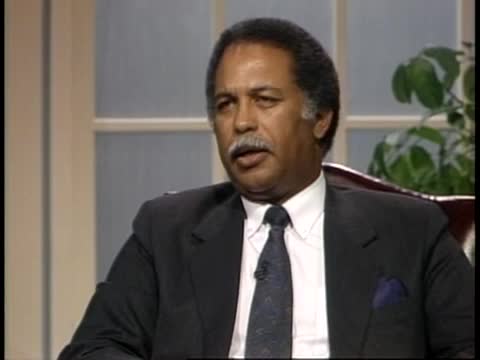
- Transcript
You know. He came to Rochester unable to speak even a word of English. It looked past racism and bigotry in service to his country and community. In the midst of a business career that has taken him from Rochester to the Caribbean he has brought and kept alive American actually. Today Bill Piers talks with the mango Garcia about the Rochester he knows. Domingo guy CA it's wonderful they have you here and this is a little be lated But welcome back to Rochester I know you've been back a couple of years now and I go to head a bureau.
But let's go back to. To your first your visit here to Rochester. Or maybe your parents first visit. Did your father come to Rochester first. When my father came in 1948 to a migrant camp in Marion New York Marion which is just over here in Wayne County and rightmost and he was a migrant labor was a migrant make a massive migrant worker all alone. Well actually. He wasn't a migrant worker. I recall he wore for the sugar cane. But the sugar came in our little town closed. And so he was out of a job and. Going to Puerto Rico a side by Tyson for people who wanted to come to the United States the war in farms. So he signed up and he was shipped a lot of the people are 45 of them to Marion New York.
What was the farm work there in Marion. I think they were picking tomatoes. I was on their way to pick tomatoes. He stayed out two or three months. I couldn't put up with the living conditions at the camp. This is 1948. This is before there was any effort at all to clean up migrant camps. None none none at all to go in a RICO always try to work on a contract basis with growers on the mainland but they were kind on enforceable contracts Raylan was just kind of a gentleman's agreement I'll send you some money but and you promise to treat them well. But no follow up was done. He couldn't put up with the living conditions and decided he has some relatives in New York City so he was going to go to New York City. So when he came to Rochester he came to Rochester on a bus to get a Bostonian Greyhound station and the
St.. There he ran into a friend of his that had come the previous year. Some iron workers couldn't put up with the living conditions moved into Rochester and was able to find a job. They are Seneca hotel. I said this washer that was the also to go tell was what on Clinton it was. Clinton Avenue the entrance to the kitchen was on Chestnut Street I think. But their front of the hotel was on Clinton Avenue I always remember the back entrance because my father used to go in. Strangely you know of the guy that was sheer accident that he ran into so it was an accident in the bus station right there. The man at the bus station was there waiting for his wife who had taken a bus from New York City because people never flew to Rochester in those days. They land there in New York City and then took a bus to Rochester or somebody went to the airport to pick them up and then drove back
on the same day to Rochester. That's how you know I mean you know in those days but the many invited my father to his home and then it's they took him to the Seneca hotel. To save they would give him a job they gave him a job as this washer or so he stayed. Then a year later he saved money for a year and a year later he sent for it half of the family my brother my older brother and I came to Rochester. And then one half the family Ewan and older brother right. And how old are you at that time. Domingo I was. I was 9 years or years old. Did you fly to New York City also and take a bus. It's funny we flew to New York City. And when we landed in your story my father and a friend who
drove the car that took him there while they're waiting for us. And so we got our your father drove to New York City to meet you. That must have been quite a reunion. You remember it well I remember that or any other but I then realize that they have driven so far. So well. New York was New York. Yeah I figured New York you know like you couldn't go more than two hours in a straight line otherwise you would run into the ocean I mean that's wiped out. So anyway we got into the car and after a couple of hours or so I said what are we there yet. They said no we still got six hours to go and I said in a straight line I just couldn't believe you could drive many hours in a straight line and I thought there was an earlier island somewhere. I wasn't really about geography I
had no idea. I remember that it was cold to be driving very very cold my father had jackets for us at the airport. We had already gotten into a snowstorm and 96 that goes up anything goes. You have to go up here and I wouldn't go anywhere towards 3:00 in the morning. So we just sat there for hours and not able to go anywhere we couldn't go back down the road and go up to here so we were kind of stuck on the side of the road. And then my truck one of those snow showers came by and pulled us out of the side of the road and asked us to follow him up the hill and we were able to continue. I will for a while there I thought we were going to freeze we had no idea we didn't know anybody. Nobody in the
car because we couldn't tell anybody where the problem was you know it was really really reception in the new country right. Must have wondered whether it was you did the right thing. Well I was wondering whether my father made the right station. You know I. I had no idea that it was so cold I didn't realize that that you needed to dress warm and that you have to have here saying oh nothing it was quite a it was a cultural shock but a culture shock. So you arrive here in February this is one thousand nine hundred forty nine thousand nine hundred forty nine. And then where did you go and where you live and where did you go. We moved. Into a house on George St. George used to be when my Hatton Square Park there were litter
streets. George throw away Broadway run the other way George was on the wrong museum. Ry just stricken at that but out way and chestnut but anyway it was raced over in my head and scored. Demand that that. Brother my father really kept my father in Rochester lived in that building and family and Irish family that lived downstairs that moved out and they owner of the House promised my father the apartment so when we came we had an apartment waiting for us and my father was able to move out of his friend's house in the apartment with us. I went to St. Joseph school soon after that. St. Joseph was over by Sibley. Right. He said what would used to be symbolised department store on Main Street was a short walk really. If you think about it from Chestnut to St. Joseph Wes
did you know it. Did you speak any English at that time. No we didn't we spoke no English at all. I was able to get into school because when my father went to register me in school the priest and the parish priest at the time and I don't recall his name. I spoke a little bit of Spanish so my father was able to tell him that you know that that I was just coming from what I recall and he had to put me in a school so I wasn't. I recall that. I was put in the first grade even though I was 9 years old. And because I couldn't communicate at all I was made to sit in a corner and back of the room. You must have been the biggest kid in first grade. Not only the biggest kid but I was totally isolated. I and I sat there for almost six months. Were you the only Hispanic in the class. No.
There was one other person in the school. I was the only Hispanic in my class but there was one other Hispanic girl. The daughter of the man that brought my father who was in the school as well and she spoke a little bit of English. How many Hispanics for this in 1950 how many Hispanic families are there in Rochester. Around 50 50 Hispanic families. Here we are 14 yrs later here we are 40 years later what is the Hispanic population. They the census us in the city there are twenty thousand people and in the surrounding areas in the county there are another 6000 so by census counts there are twenty six thousand people but we know that traditionally the census counts on that count as the Hispanic population by as much as 40 percent by that nation. So with that said they admitted that in the 90 census on that count that their minority communities of 30000 or more
at least 30000. We estimate from 50 families families or 50 people from the faith the people Israeli people. So you're really your father and you are really pioneers in terms of Hispanics moving to Rochester I would say. We knew everybody we knew every every single person in this area would you still know every Hispanic person. Not not anymore. And what I know quite a few of them I would say are you. You've seen the graduate. Did did you ever think in your wildest dreams in 1950 that that populate the Hispanic population of Rochester environs would be 30000 or more. No frankly they're not. However. I can tell you. By my experiences then. That I can say why fast people were
brought with them. Certain respects of how life was in Puerto Rico. That made it easy to take people in. I mean you expect that. To take somebody in even though you may not enough familiar with them you don't know them. They may have been from another city and they needed someplace to stay and you have a spare bed. Just ask them to come to your house and people did that. One question only you did it. You and your family did my family that died and I remember many many times throughout the years when my father used to drive there in the summer months to the migrant camps in the area. We used to go to Marion Albani Brock four. I mean all day camps and every trip every trip that we made to the migrant camp we always brought back people with us so they
don't want to stay in the camps any longer. We always brought somebody back and there were many people who did. And we used to take food and clothing. You know we used to take people who could write letters because some of the people couldn't read and write and we and we would write letters to our family back home and things like that. But we always brought somebody back. We know we're jumping ahead a little bit but later on you became active in doing something about the conditions in the migrant camps where us way way ahead. From the 50s that was in the mid 60s. Let's go back to Saint Joseph which now unfortunately St. John's down has burned down but they've they've kept part of the structure. I think the steeple and the and the and the front part there for so you know the maid is sort of a shrine of some sort.
Yeah. They they have I'm not familiar what the purpose of keeping it was but I know that they have a music program there from time to time I think. Sibley was instrumental in preserving what was left of St. Joseph's and and making it a landmark. So that seems to be a focus for the community now. But now you're at St. Joseph you're in first grade sitting back in the corner of the room. Took me about seven months to get through that bad experience but I I remembered that early on. We used to have to bring our lunch to school. And the school would provide milk or chocolate milk or angels. There were three selections that you had and it cost you a dime to buy one of one of the three. But you have to bring your own lunch. And my father always made my lunch. You know he would make sandwiches or he would cook something in. I would take it to school. But one day he had to work overtime and he forgot to make lunch. But there was
some leftover chicken in that of radiator so I just wrapped it up and put in my lunch bag and went to school. And. You know when everybody started pulling out their lunch and eating then I pulled out my chicken and I just got in my chicken. And. Then when she looked at me and I was saying a drumstick chicken cream was something that I got on the stand opened her eyes wide and rush over to me and said it's not my chicken my chicken out of my hands you know. And throw it in the garbage can and then she opened my lunchbox and took the other piece of chicken and threw it in the garbage can. Really why. I have no I had no idea at the time. I was shocked. So when I got home from where I couldn't eat I was so nervous I already know what was going on and she didn't explain or you couldn't I couldn't understand what she was saying.
When I got home and I. Told my father what happened and then there my father was so angry and then the next day he decided to go with me to school. So we went and we sought out the priest. Who have register me in school and that my father told the priest the incident so he called then on over to his office. And she explained to him what happened. The priest asked me if I knew I happened I said where I guess she doesn't like chicken. You know what had actually happened was that it was Friday and it was me and I had no idea it was. Well that was a tough lesson. How long did you say it's St. Joseph. We stayed in St. Joseph. On. The six other states gray 6 0 7 Grace it's of seventh grade
I remember that the reason that we I got out of St. Joseph was that my father. I. Found a job by Gabbers brother company Boulevard. And he needed he needed to be able to. To find a place closer to work and on a major bus route so he fahn in an apartment on Adams Street. And he used to take the bus from Teresa to Maine and then they take the boss over to the mine rate. So then I got out of St. Joseph and went into Number three is going on three months straight. Another experience because. Of course in those days was mostly black. We're in the Third Ward I really much of it on Adam's side lived on Adams but the school was on
Trayvon was mostly black and. The school population in St. Joseph was. All white. I think there may have been told three black students in the whole school and then my neighborhood was all white. So I was and I was experiencing living in a black community a. Very interesting episodes there of war. I remember the first few weeks at number three school. I for every day you're in seventh grade and seventh grade seventh grade there was a fight every day with every day with the black kids. How would the fight start. Well first the. First day they kind of say that I had an attitude. And second and I wasn't sure what that meant but second
the way Hispanic. Puerto Rican child I should say not familiar what how old are Hispanic. We'll. But to a child to say anything about your mother are fighting wars and black kids use that word against your mother everywhere. Just a matter of conversation America Ferrera well that that was said you know if you were insulted I was there and one thing led to the other and I would but then were you a tough kid. I became tough quickly let me tell you there's nothing like an environment like that. But but he was but he was a good environment I tell you. I I learned I learned to live and I learned a lot about the American way of life and how people who are generally view by the minority community.
And even though I had not experienced any regulars really up to the when I moved to the third war. The kids in the neighborhood and I got on very well to this day to this day. I have a lot of my friends people that I met. In those earlier years. You know and some of them you know are people that you know will Lightfoot for example and I went to high school together and most Gilbert I went to high school to go to the leadership of this primarily a lot of the leadership went to Madison and medicine high schools where you went after school and after a number of I I was in number three. Only I remember two or three years and then I went I went to Madison I went into high school throughout high school you didn't experience any you know any instances of prejudice.
I. Don't know I tell you why. There was a woman in high school. Younger. My name was Marium Bianca never I never forget marrying Bianca and Italian. She's still around today. Well I haven't seen her. I haven't seen her since high school but I remember an incident where she'll call you up after this interview. I hope so. One day one day. The kids. Who knew this woman. I was younger then. I kind of pushed me into saying things that Mary and then like. You know they kind of led me that way and they wanted to see the results of course while their entirely was that this could survive. And I say to her if I were a woman. Before I knew if she had given
me the biggest beating you just stood there took a look at I say I couldn't do anything I could. She was a very strong young woman. I remember I was the joke of the school for Mary and then how did you get started with. Well there you are with a bureau. When I came out of the service when I went to the service the other two other times because of the billing crisis I was recalled and then because of the Cuban crisis I was record. But the last time I was recorded in the Cuban crisis I came home on a leave. Because a friend of mine was going to get married and. We decided after the wedding to go to a cafe I always Italian food was a big Italian restaurant going to have any at the time. What I was what I was there waiting for my friends to get there we all drove in
separate cars. A policeman asked me to move and I told him I wasn't doing anything and he got out of the car and he punched me and knocked me to the ground. And I got up and I punched him bag and I came to the ground and he got up got into his car and left. I you know my friend by that time had gotten there has seen the incident and asked me what happened I said I don't know he told me to move I wasn't doing anything got out he hit me and I hit him back and I was sad and we wanted to arrest her and I ran like a friend. When we went in and told me Look this is a very serious thing you know he might come back and I said what if he comes back let me know and I'll run out of Baghdad or. Well 20 minutes later or so came running back and the place is surrounded by cabs. You know I tried to get out the back door. I couldn't.
They had back over so they picked me up and took me to. A change Street where the police station used to be. And instead of going up to be booked they took me to a basement and. Four policemen one stood at the door one at each arm and then this one that hit me the first time to beat me. People were holding me. And then I think I knew I was I was in jail or beaten up and bruises all over my body and I. You know I they have they had to charge me with. They're not harassed struck in the sidewalk and a million and other things I didn't have a lawyer I'd remember you know my my parents couldn't afford a lawyer and I didn't have any money. Been in the service because I was there very much but I remember when I went to court and the judge asked me if I had a lawyer and I said No I don't have a lawyer.
This. Young guy got up and defending your honor. And this is somebody who's sitting in the Colorado state in the courtroom. I don't know where he came from. I'll defend them. And I said I can pay you if you don't have to pay me and then he proceeded to defend me and the case last for a while and he showed up to court with me every time I had to go and then we had a trial and the judge threw out all the charges. Ridiculous I have never seen anything like it. I mean who was the lawyer. We've got Pattillo who just died recently. And this led you to believe that there ought to be something done in this community. We've kind of restored my faith in people and I decided that if they happened to me here I was sort of in my country I thought not doing anything. If it happened to me then it must be happening to a lot of other people. And I just had to do something about it. So that is how I got aboard.
Domingo You obviously went on to contribute an awful lot to this community to make sure that that didn't happen to a lot of other people. Well I hope so and we thank you for that. I regret this half hour went so rapidly. But you and I Barrow have become synonymous now and good luck and continue excellent work. We owe you a lot of this community. Thank you I Bill Piers. See you next time on the Rochester I know. For a VHS copy of this program send one thousand ninety five plus three dollars and fifty cents shipping and handling to the Rochester I know tape off or post office box 21 Rochester New York 1 4 6 0 1. Include a note with the name of our guest and the program number shown at the bottom of the screen.
- Series
- The Rochester I Know
- Episode Number
- 214
- Episode
- Domingo Garcia
- Contributing Organization
- WXXI Public Broadcasting (Rochester, New York)
- AAPB ID
- cpb-aacip/189-10jsxmx6
If you have more information about this item than what is given here, or if you have concerns about this record, we want to know! Contact us, indicating the AAPB ID (cpb-aacip/189-10jsxmx6).
- Description
- Episode Description
- In this episode, host Bill Pearce interviews Domingo Garcia, a businessman and active community member from Rochester. Garcia speaks about his move from Puerto Rico to Rochester when he was a child and the struggles he encountered in the United States. He was a victim of police brutality when he was younger and describes how this incident led him to take action for social change.
- Series Description
- The Rochester I Know is a talk show featuring in-depth conversations with local Rochester figures, who share their recollections of the Rochester community.
- Created Date
- 1991-06-12
- Asset type
- Episode
- Genres
- Talk Show
- Rights
- 1991 WXXI Public Broadcasting Council
- Media type
- Moving Image
- Duration
- 00:28:39
- Credits
-
-
Guest:
Domingo Garcia
Host: William Pearce
Publisher: WXXI-TV
- AAPB Contributor Holdings
-
WXXI Public Broadcasting (WXXI-TV)
Identifier: LAC-1011 (WXXI)
Format: U-matic
Generation: Copy
Duration: 1800.0
If you have a copy of this asset and would like us to add it to our catalog, please contact us.
- Citations
- Chicago: “The Rochester I Know; 214; Domingo Garcia,” 1991-06-12, WXXI Public Broadcasting, American Archive of Public Broadcasting (GBH and the Library of Congress), Boston, MA and Washington, DC, accessed June 16, 2026, http://americanarchive.org/catalog/cpb-aacip-189-10jsxmx6.
- MLA: “The Rochester I Know; 214; Domingo Garcia.” 1991-06-12. WXXI Public Broadcasting, American Archive of Public Broadcasting (GBH and the Library of Congress), Boston, MA and Washington, DC. Web. June 16, 2026. <http://americanarchive.org/catalog/cpb-aacip-189-10jsxmx6>.
- APA: The Rochester I Know; 214; Domingo Garcia. Boston, MA: WXXI Public Broadcasting, American Archive of Public Broadcasting (GBH and the Library of Congress), Boston, MA and Washington, DC. Retrieved from http://americanarchive.org/catalog/cpb-aacip-189-10jsxmx6