Louisiana: The State We're In; 712
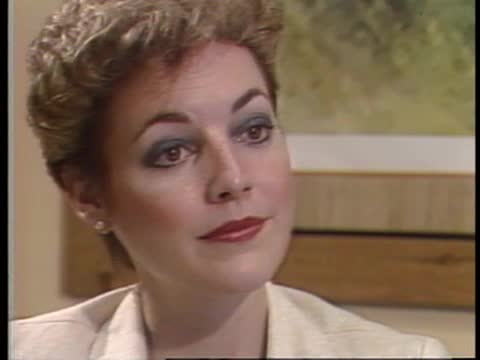
- Transcript
Funding for the production of Louisiana: The State We're In is provided in part by the Zigler Foundation of Jennings; Gulf States Utilities, helping Louisiana bridge the gap to our energy future; and the Kaiser Aluminum and Chemical Corporation. The man that's running my campaign is Marion Edwards and I don't think anyone would call Marion Edwards big labor. Well, obviously, he belongs to him lock, stock and barrel. Is it incumbent Lieutenant Governor Bobby Freeman against former Lieutenant Governor Jimmy Fitzmorris or big business against big labor? As campaign '83 comes to a close, the charges are flying back and forth. Tomorrow the voters decide. A month ago in the primary election, voters decided overwhelmingly in favor of Edwin Edwards as governor. And he is wasting little time preparing for his takeover of state government, filling nearly half his cabinet with women and minorities. I'm going to... Also tonight an in-depth look at how Edwards, fast becoming a political legend in Louisiana, plans to turn around the state's fortunes.
Good evening. I'm Beth George Courtney. And I'm Ken Johnson. Thanks for joining us for this edition of Louisiana: The State We're In. Well, tomorrow is election day, bringing to an end one of the longest and costliest political campaigns in Louisiana history. Voters will be going to the polls to elect a new lieutenant governor and commissioner of insurance, 25 state representatives and four state senators. Tonight we'll have reports on the two remaining statewide races as well, as an in-depth interview with Governor-elect Edwin Edwards and a new look at his cabinet. Beth, with the hotly contested governor's race now history, Secretary of State Jim Brown says voter turnout statewide probably won't exceed 45 percent. That's significantly lower than the
75.6 percent turnout for the primary election. Saturday's weather around the state is forecast to be windy and warm, with scattered thunderstorms. Clearly the big race in the ballot pits incumbent Lieutenant Governor Bobby Freeman against his predecessor Jimmy Fitzmorris. But there are also some spirited legislative races to be decided tomorrow. In Shreveport in Senate District 39, incumbent Bill Keith faces Greg Tarver while in House District 2, incumbent Alphonse Jackson faces Roy Lester. In West Carroll Parish, House District 18 incumbent Archie Crosby is pitted against Ralph W. Coleman. While in Claiborne Parish, House District 11, the seat left vacant by Representative Loy Weaver, Louise Johnson and Jimmy Long are the two candidates. In Alexandria Senate District 29, it's incumbent Ned Randolph against Joe McPherson. Over in Lafayette in House District 45, the seat left vacant by Representative Luke LeBlanc, it's Jan Haven against Kathleen Babineaux Blanco. While in Baton Rouge in House District 61, a new district, the two candidates are Walter Dumas and Lewis Jefferson.
In House District 63, the seat left vacant by Representative Richard Turnley, it's Melvin "Kip" Holden and Jewel Newman. In other races in South Louisiana, Senate District 20 incumbent Leonard Chabert faces Glenn Voisin and while in House District 105 the incumbent Frank Peatty (sp?) faces Greg Rouas (sp?). In New Orleans there are several races. House District 96 pits incumbent Louis Charbonnet against Charles R. Jones. In House District 95 two incumbents are thrown into the same district by reapportionment: Leo Watermeier and Eddie Heaton. In House District 103, it's incumbent Eddie Bopp against Edward Budripple. In all, 25 House seats and four Senate seats will be decided on Election Day. Insurance is a multi-billion dollar business in Louisiana, and for the last dozen years one man has been at the helm of the insurance commission: Sherman Bernard. But now challenger Dave Brennan argues it's time someone new had a chance to make the insurance industry more responsive to the people of Louisiana. Dave Brennan, 27 years old, a political newcomer and the state
Republican Party's last hope for a major victory this election year. Sherman Bernard, the incumbent, seeking an unprecedented fourth term as insurance commissioner. The issue in this race: money. Brennan says Louisiana residents pay far too much for insurance. He promises a plan to lower rates. Bernard responds, that's impossible. Insurance rates in Louisiana are decided by the Insurance Rating Commission and not the insurance commissioner. That's not one of his powers. He can't lower rates. If he could lower rates in Louisiana as insurance commissioner, then we would need him to lower our utility rates. We would need him to lower the rates of, you know, the cost of food. He would be in demand all over the world to lower everything down. And he does not have that power. Because he's failed. He has got to say that nothing can be done about it. Because once he admits that insurance rates could've been lowered, that legislatively he could have done something to bypass this rating commission, he is admitting that his 12 years in office have been a complete failure. Brennan, a Metairie insurance agent, garnered 26 percent of the primary vote out of a
field of four candidates. That's close enough to the incumbent's 47 percent, he asserts, to indicate the people want a change. I think we're going to win for one solid reason: People in this state are more motivated by hope than a message of despair that Mr. Bernard has given them. Mr. Bernard continues to say that nothing can be done about the terrible plight that people find themselves in with the insurance in this state, expensive insurance. He's been there 12 years. People are intelligent enough, even those who have never voted for a Republican before, are intelligent enough to know that they've got to vote for their pocketbook. Sherman Bernard takes his opponent's challenge seriously, but he says he isn't overly threatened. He sees himself as the consumers' champion. And if he's been dubbed a somewhat controversial figure during his tenure, he believes it's only because he's stepped on a few toes defending the public's interest. Anytime you try to do a job, particularly in Louisiana, like regulate insurance.
When you have this Insurance Rating Commission, a lot of these insurance people want to keep that rating commission. And as a result of that, when you try to do something you have this rating Commission that's always fighting you. I think it's unfortunate. We don't need an insurance rating commission in Louisiana. Thirty-six, I mean 46, other states in the Union don't have anything at all like this. Unfortunately in Louisiana we do have that, and I think that's the reason why. Both men have spent plenty on their campaigns: fliers, telephone calls, letters and an extensive media blitz that culminated this week when Bernard took Brennan to court, claiming one of the Republican's television commercials was false. A compromise settled the matter when a few words were juggled and Bernard agreed to pull one of his commercials that Brennan objected to. But the biggest contention between the two doesn't offer any compromise. That will be decided when the voters hold court on Election Day. Well, the race for lieutenant governor heated up this week when challenger and underdog Jimmy Fitzmorris came out swinging. He said his main opponent in Saturday's runoff election is not incumbent Bobby Freeman,
but rather big labor bosses who are trying to win the race for Freeman. Well, obviously he belongs to them lock, stock and barrel, and I want to tell you I have the greatest respect for the labor people of this state. I carried a union card myself. I don't think any public official should be locked or owned lock, stock and barrel by anybody. That's not true at all. The man that's running my campaign is Marion Edwards and I don't think the media would call Marion Edwards big labor. They're running all of his phone banks for him. They're doing all of his talking. He's continuing to hide behind political machines and bosses. I have great support in the labor community, but I also have great support in the business community. I understand when a man has no record that he should be silent. But he certainly should not be elected lieutenant governor. Jimmy Fitzmorris admits he's behind on the scorecards of most political analysts. But if he loses this bitter fight, he plans to go down swinging. Like an ex heavyweight champ trying to regain his old crown and his old glory, Fitz, as he's called by so many, may be fighting the last round of his last fight. The former two-
term lieutenant governor trailed incumbent Lieutenant Governor Bobby Freeman by more than 100,000 votes in the primary. His strategy this time: Go for the knockout punch. Fitzmorris is constantly hammering away at what he calls Freeman's shameful record, his ties with so-called labor bosses and his unwillingness to square off in a face-to- face debate. But Freeman, who says he's a street fighter himself, isn't about to just hand back the title he's held for four years. He knows that the duties of the lieutenant governor, the traditional duties, were taken away from me and given to him by Treen. He was, actually I think, Governor Treen's self-appointed lieutenant governor in the state. The first thing he did was to take my office in New Orleans and he gave it to Jimmy Fitzmorris and he staffed the office for him and gave him a considerable amount of money to run that office. I can't understand why a lot of our friends in labor don't really understand that if Bobby Freeman was interested in people, he'd be concerned about jobs and employment.
His record is absolutely terrible when it comes to that area. Well he knows that's not true. Of course you want to say anything you can in a campaign. When a man is seven or eight points behind and 100,000 plus votes behind, he's going to attack. And attack, Fitzmorris has. But the question is: Will his tough talking tactics help him or hurt him on election day? No one knows better than I that I have an uphill battle. Bobby Freeman continues to throw the name of Edwin Edwards around as supporting him and it's difficult. And Edwin Edwards has never uttered an unkind word against Jimmy Fitzmorris and he has no reason to. Only the good Lord knows by calling commission of elections up there and I think he's the only one that really knows what's going to happen. I feel good about it now. I think that things have developed as we wanted them to develop. I would like to see a heavy turnout, but I'm going to be practical. Again I think the voter turnout is going to be about 40 to 42 percent. I would believe that those would be loyal, dedicated people. Hopefully, Jimmy Fitzmorris people. I'm not so
naive as to believe that Labor isn't going to do everything possible to try to get their vote out. I think the election is going to be extremely close. In less than four months, a new administration will take over state government. Last month's primary election gave Governor-elect Edwin Edwards a landslide victory over incumbent Dave Treen. This will be Edwards' third term in the state's highest office. No other Louisiana politician has ever been elected to serve as governor more than twice. Not only is Edwards making history by returning to serve another term, he's also scoring some firsts with some of his cabinet appointments. The governor-elect made a campaign promise to give women and minorities more power in state government. With his cabinet nearly complete, correspondent Robyn Ekings reports the best man for the job in several cases has been a woman. For the public at least, the people who've been chosen to hold some of state government's most powerful positions for the next four years presented a united front this week. Standing shoulder to shoulder, the men and women Governor-elect Edwin Edwards will depend on to make his administration work were congratulated as a team and
advised not to forget who will be captain. I am the governor. You work for me. We work for the people. I will set the policy. It will be your job to implement it. At such time as you do not feel you are comfortable with the policy which I set, in keeping with the Legislature and legislative mandates, of course, the course of action which you have to follow is well defined. It's call resignation. With his cabinet nearly complete, Governor-elect Edwards announced his choices for two of four remaining top posts. Robert Graves, a former director of public works for the city of Baton Rouge and former director of maintenance for the State Department of Transportation and Development, will take over as secretary of that department. Dudley Patin, assistant director of unemployment insurance in the Labor Department, will be the new secretary of labor. Still unnamed are top positions in the Department of Public Safety and the new Department of Environmental Quality. As the Governor-elect completes his cabinet, the focus of attention
shifts from who will be named to who has been named. Living up to a campaign promise, Edwards is changing the complexion of state government. More women and minorities have been named to key posts. The new look starts at the top. The position that's traditionally been reserved for the governor's right-hand man has gone to a woman. As Louisiana's new commissioner of administration, Stephanie Alexander will hold the number two spot in state government. The commissioner of administration is responsible for a wide range of areas involving state money, from drawing up an annual budget for all of state government to reviewing contracts for state projects. Past commissioners have included names well known in Louisiana political circles: businessman Charles Roemer, former House Speaker Bubba Henry. Thirty-year-old Stephanie Alexander is not new to politics. She worked for Governor-elect Edwards in his last administration and she handled finances for his campaign. But she is well aware of the interest her appointment has generated.
I certainly feel it would be easier on both of us if he had been able to find someone with my qualifications and working relationship with him who was also male and 65 and a member of the political group that's been around for a long time. Apparently he did not see any such person around. You're young and you are a woman and you're not the man many expected to see appointed to this job. Do you expect to be tested by legislators, state officials and contributors? Probably for a while and I think, I think I will spend a lot of time and a lot of energy uselessly for a while, perhaps the first year or two, saying the same thing to the same people over and over again. And I think until it is said and proven by my actions, the hundredth time, that I will continue to have to say the same thing over and over again. I think if an expected male, one of the people who have been
around for a long time on the political scene for a long time had been appointed then probably they would not have the same problem. I find that anyone young, anyone without a political working history and anyone female, has some of that working against them. I have all three. Dr. Sandra Robinson is another key appointment that will fulfill Governor-elect Edwards' campaign pledge. She will head the state's largest agency, the Department of Health and Human Resources. With approximately 30,000 employees, the department administers a wide range of services from the state's massive charity hospital system to public assistance programs for the poor and the elderly. Dr. Robinson has worked in the charity hospital system and will be leaving an administrative position at New Orleans Children's Hospital. Governor- elect Edwards admitted competition for the Secretary of Health and Human Resources was fierce, that the final decision was not easy to make. You're black and you're a woman. What do you say to those people who say that you are appointed in
large part because of a campaign pledge that Governor Edwards made to have minorities and women better represented in his administration, that that weighted your selection maybe more than than others. I don't think so. I think that Governor Edwards has made it perfectly clear that he would not appoint a person who was not capable and ready for the position that he has appointed them to. And I tend to think with my background that he has, that he has gone through my qualifications. I'm sure he's matched me against many, many people. I would hope that they feel that I'm bringing a special sensitivity to the job with qualifications. And so I feel very good about that. Both Dr. Robinson and Stephanie Alexander say their first and most difficult task in office will be addressing the state's money problems. With predictions of a budget deficit this year topping $200 million dollars, it's a job the most experienced state
officials will find difficult to handle. But even with stern warnings to his cabinet earlier this week to toe the administration line, new Commissioner of Administration Alexander says the work of the next four years will be a team effort. All of the appointed positions in state government are employees, if you will, of Edwin Edwards. My decisions will be impacted by him as much as the definitive decisions of the secretary of the Department of Transportation and the secretary of the Department of Labor will be impacted by him. Certainly we will consult with him on major decisions. Certainly he has a voice and ultimately veto power over any decision that we would make. But as far as the day-to-day workings of the office, they will be made by his political appointees. Governor-elect Edwards' first full cabinet meeting will be in March. It appears that four months from the inauguration, in the public view at least, the new administration is united and ready to get to work.
Having made most of his major appointments, Edwin Edwards must now wait until March 12th to assume the office of governor. But already the subtle shifting of power is evident at the Edwards' transition office. The waiting rooms are packed with people wanting to see the governor-elect, some looking for jobs. Others to discuss projects and many simply touching base with those now in power. Edwards is already making clear his position on a variety of issues such as the presidential primary, the workmen's compensation law and the state's financial difficulties. This week Beth talked with the governor- elect about his plans for the future and the national attention he has received following his election. Governor Edwards, you've been in campaign mode for a long time. You've been campaigning almost since Dave Treen got in office. How difficult is it to shift from campaigning into the actual day-to-day of thinking about running government and that transition. Is it a difficult transition? It's about the same thing, except more. And the reason being, during a campaign one involves himself with friends and supporters. You are their candidate.
But after the election you're everyone's governor, even people who didn't want you to be governor. And you also have responsibility for programs and planning, which you did not have in a campaign. So it just magnifies and amplifies the workload. A lot of news is coming out that it doesn't look very good for right now and you've said, Dave Treen, it's your problem. It's your problem, it's your problem about what to do about giving you a balanced budget. What are you going to do now with declining revenues? Are you to sort of chomping at the bit and wanting to get in there and do something? Well, the Governor called me about 10 days ago and acknowledged, of course, as I knew he would that it was his responsibility and that he did not feel comfortable with the idea of leaving office with the budget out of balance and assured me that he would get it in balance. And of course that made me feel very good and very happy, and I offered to support him any way I could to do that. He did not tell me how he proposes to do it. I suppose he will try to work that out in the special session, but whatever method he devises as getting that done would be acceptable to me. I think the main thing for his sake, as well as
mine and as well as the state's, is that he leave office with the budget in balance. This week there was an account in the newspaper that verified that you spent more than any man to run for the office of governor in the history of the United States, more than Jay Rockefeller. How did that make you feel? Well, that's really inaccurate. Jay Rockefeller spent $12 million of his own money getting elected in a state which has half the population of Louisiana. So by comparison, he spent twice as much as I did. But it is a tremendous amount of money and, again, I'm sorry that Governor Treen did not accept my proposal last January to run this campaign without contributions. But since he elected to go by the existing situation, I did the same thing. We spent as we collected. We spent as we saw needs. We did not want to leave any program undone or any effort unmade because no one knew what the ultimate outcome of the election would be. As it turns out,
in retrospect as I had predicted last January, I think I would have won the election had I simply announced and not made any effort to get elected. It certainly would not have been by the tremendous majority that I received, but I believe that it was pretty well in the cards all along that I was going to win the election. But you can't take that for granted. You certainly have had a lot of attention focused on you during this election, national attention in the news media. 60 Minutes is going to be doing a story on you. Are you apprehensive about what direction that story might take? They're going to naturally, I think, try to be fair, but they have a propensity and a desire to kind of picture Louisiana politicians as being outside the realm of the norm, flamboyant, a little more a little more bizarre than than most other areas. But you know if one looks at the governor's race in Mississippi, it's easy to see that
things are not all that bad down here. And what has happened in Arizona and in Maryland and some other states in the nation. It's just that we're more, I think, focused on it here since we have intense media coverage and, second, ever since the days of Huey Long, we've always had a very intense high-spirited election campaign. Besides, I like to remind national people that people in Louisiana generally are more involved in politics and state government than people are in most other states. The pay for teachers, pay for bus drivers, supplemental pay for firemen, policemen, deputy sheriffs, education programs, hospital programs, care for the elderly and the handicapped. All of that comes directly out of Baton Rouge. And it it it amplifies the number of people who are directly involved in programs that come out of Baton Rouge and therefore increases their individual concern. A lot of people would be nervous if 60 Minutes were coming to interview them because in some ways they can, they can. not necessarily do a very flattering portrait. In many ways they can. Well, what were...
Were you concerned or you've been on it before? Oh, I've been on 60 Minutes several times before. I was not concerned. The only thing that concerned me was that I was going to try to do everything possible to keep them from giving the state a bad image. I know they have a desire to do that. I mean, they're certainly not going to spend their time trying to make us look good. It isn't in the nature of 60 Minutes. Like a businessman said, when you get a call from 60 Minutes you know they're not coming to advertise your products. It's for another purpose because the whole program is channeled on the critical aspect in order to capture attention. And that's the way they survive. But I was very careful and four hours that I spent with them of which they will probably only excerpt about five or six minutes to repeatedly say, "Look, you can't say that about Louisiana. That's not so. That's an erroneous impression. You might, you might view us that way from where you come from, but that just isn't correct." You appointed your cabinet. Was the rush to appoint your quick appointment having anything to do with the national publicity?
Oh, no, we needed to do that so that they would begin to work with their counterparts in the present administration to provide for a smooth transition, number one. Number two, begin to look at the budget as far as it applies to their various categories and see where we can trim or change or hone up the budget to accommodate the needs. And finally, so that we can begin putting together a legislative program because all of these people at the cabinet level will be involved in that from a policy-making standpoint. Are you still committed to giving a pay increase? Oh, yes, I think that teachers and school bus drivers, lunchroom workers, custodial workers, state workers, those depend upon state government for emoluments of salary have been pretty well patient, and I don't think we can expect them to remain much more patient, patient much longer. Are you going to tell people that are planning budgets and everything that it's going to be a cutback time or are you are going to come in with a totally new program and they should just wait for you? We have to take the budget that will be presented to the Legislature by the Treen Administration and then work
from that as a base. Basically speaking, with the exception of the pay raises, we propose to keep the budgets in line and to avoid any additional personnel within departments ??? and I told all these people that are coming on board that their salaries are now fixed by law and they cannot expect additional raises. They have to understand it's going to be that way for four years. They will have to operate their departments within the budgetary limitations of the fiscal policies. And they have come on board knowing that and accepting that as a condition of their employment. Governor, are you concerned about making your mark in the history books this time? Sure. I say that I'm trying to make a mark this time, but I want to emphasize that I think I've already made a mark. If I had not done a good job as a governor for eight years, I don't think I would have won the election. And I like to tell my critics, and I have my critics, that at least the people of Louisiana by a large majority support the kind of governor that I was and the kind of government that I brought.
I'm going to do things somewhat differently, of course. I'm an older person. I've matured more. I have eight years' experience behind me. I'm less susceptible to being used by people improperly. I don't mind being used properly, but I don't like to be misused. And I had some of that and it was my own fault. I had a blind side in me in that I was sometimes too supportive and too loyal to friends who were illegitimate in their intents. But and, you know, you grow into that and I understand that. But I certainly think that I can be a better governor now because I have had eight years' experience, and I think anybody who's done anything for eight years ought to be better in the ninth year than he was in the first year. If not, he's a slow learner. Well, I don't think Governor-elect Edwards is a slow learner certainly, and he is concerned about his place in the history books. And this Saturday we will conclude a page of history as voters go to the polls in the final elections of '83. And, Beth, we certainly encourage everyone who is registered to vote.
I'm Ken Johnson. And I'm Beth George Courtney. Thank you for joining us. Good evening. Funding for the production of Louisiana: The State We're In is provided in part by the Zigler Foundation of Jennings; Gulf States Utilities, helping Louisiana bridge the gap to our energy future; and the Kaiser Aluminum and Chemical Corporation.
- Episode Number
- 712
- Producing Organization
- Louisiana Public Broadcasting
- Contributing Organization
- Louisiana Public Broadcasting (Baton Rouge, Louisiana)
- AAPB ID
- cpb-aacip/17-33rv231m
If you have more information about this item than what is given here, or if you have concerns about this record, we want to know! Contact us, indicating the AAPB ID (cpb-aacip/17-33rv231m).
- Description
- Credits
-
-
Copyright Holder:
Louisiana Educational Television Authority
Producing Organization: Louisiana Public Broadcasting
- AAPB Contributor Holdings
-
Louisiana Public Broadcasting
Identifier: LSWI-19831118 (Louisiana Public Broadcasting Archives)
Format: U-matic
Generation: Master
Duration: 00:28:22
If you have a copy of this asset and would like us to add it to our catalog, please contact us.
- Citations
- Chicago: “Louisiana: The State We're In; 712,” 1983-11-18, Louisiana Public Broadcasting, American Archive of Public Broadcasting (GBH and the Library of Congress), Boston, MA and Washington, DC, accessed June 28, 2026, http://americanarchive.org/catalog/cpb-aacip-17-33rv231m.
- MLA: “Louisiana: The State We're In; 712.” 1983-11-18. Louisiana Public Broadcasting, American Archive of Public Broadcasting (GBH and the Library of Congress), Boston, MA and Washington, DC. Web. June 28, 2026. <http://americanarchive.org/catalog/cpb-aacip-17-33rv231m>.
- APA: Louisiana: The State We're In; 712. Boston, MA: Louisiana Public Broadcasting, American Archive of Public Broadcasting (GBH and the Library of Congress), Boston, MA and Washington, DC. Retrieved from http://americanarchive.org/catalog/cpb-aacip-17-33rv231m