NOVA; Becoming Human Part 3: Last Human Standing; 3615
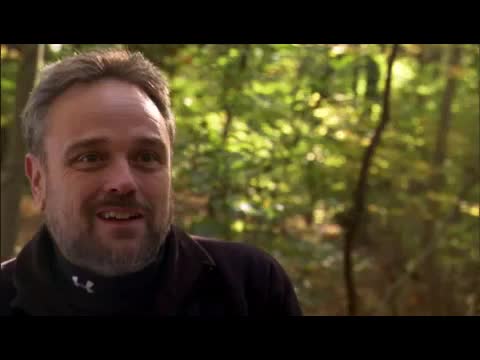
- Transcript
Human without a doubt the smartest guy on earth yet we're unmistakably tied to our origin. Millions of years ago we were living a lie enough. So how did we get from that to this. What has what set us on the path to humanity. The questions are human but at last there are answers. More than six million years ago we took the first step to separate from the ape. Since then there have been at least 20 years of human ancestors in our family tree. Some of them were on their way to being us others. Were evolutionary dead end as recently as 50000 years ago there were probably four different kinds of humans living at the same time. Yet today we are a species alone. Why didn't we survive and all the others disappeared.
New discoveries are shining light on the final stage of our evolution. We're finding out where our species homo save came from. The genetic record shows us that all modern humans are descended from a small population of approximately 600 breeding individuals and we are discovering how they spread through the world pushing out other ancient human. Like the Neanderthal Neanderthals were very successful humans. They have lived in Europe for maybe 300 400 thousand years but eventually they were replaced by modern humans. But why were they placed by modern humans. The mystery of the Neanderthal disappearance is finally being solved as the secrets of their genetic code are more we're discovering exactly what made them different from us and how we also join us as we
explore the origins of our own species. Find out why with a last stand. White now. Major funding for Nova is provided by the following natural gas as a cleaner burning fuel. Yet a lot of natural gas has impurities like CO2 and it controlled free zone is a new technology being developed by ExxonMobil to remove the CO2 from the natural gas so we can safely store it where it won't get into the atmosphere. Exxon Mobil is spending more than 100 million dollars to build a plant that will demonstrate this process. I'm very optimistic about it because this technology could be used to produce greenhouse gas emissions significantly. And by Pacific life the power to help you succeed offering insurance annuities and investments
and baby coping and discovering your 18 and by the Corporation for Public Broadcasting and viewers like you. Thank you. Imagine a world with only a tiny number of us and perhaps just a few thousand. A recently evolved species we are completely at the mercy of the natural forces around one hundred forty thousand years ago homo sapiens teetering on the brink of extinction. New discoveries are revealing how
from these humble beginnings we took over the planet eventually replacing the other ancient humans who are already living. Homo erectus and the neanderthal humans have a very intensive way of using the environment. Humans were the Middle East. They are directed starts going extinct when humans move into Europe. The Neanderthals go extinct for almost four hundred thousand years. The Neanderthals lived in I.S. Europe superb hunters they had brains bigger than ours and a record of survival twice as long. They were the most advanced humans on Earth until we arrived and then they vanished. Finally we're unearthing the answer. The remains of a 100000 year old child are revealing what we had that they didn't essential to figure
out what are the differences between the Neanderthals and us too to figure out which is special about us. Was it some new physical ability or was it a new way of thinking. These questions go to the heart of what makes us human. The answer we must travel back in time to the beginning of our human story. Imagine the entire span of recorded human history taking us back to the Egyptian pyramid five thousand years or ten thousand. When plants were domesticated and agriculture begins double it again to the time when ice age hunters had stunning images on cave walls and keep doubling. Six more times and we are finally entering the world. Homo erectus. The remarkable ancestor who pioneered what it means to be human.
Homo erectus appeared on the African plains almost 2 million years ago. They were the first ancestors who had bodies like ours. They were hunter gatherers to make beings who lived in social groups and cared for each other. The most famous Homo erectus is the fossil called took on a pole vaulter called a boy and his ancestors are they represent a threshold. They represent that that point in our evolution when we were we weren't quite fully human but we are no longer an ape paleo artist Victor Di specializes in creating scientifically based
scopes of ancient humans from their fossil remains as he reconstructs took on a boys and ape like features emerge every brow ridges a patrolling lower face a skull still smaller than our own. But despite these differences Turkana Boy is definitely starting to look like a human being and behind those eyes his mind was becoming human too. I suspect that complex feelings in and the aviators had their beginnings with two convoys car ride. Bad Boy it is to truly be a human had its bubbling Zab at that point. It was probably homoerotic almost 2 million years ago who first started to leave Africa.
Ever since Africa has been the engine of our evolution pumping out wave after wave of ancient humans who populated Europe in Asia settling in far off places they developed in their own special way. An early wave gave rise in Indonesia to the extraordinary Hobbit perhaps a type of dwarf form or another wave took Homo erectus all the way to China where fossil remains have been dated to over seven hundred thousand years ago. Soon after another wave left Africa this time heading for Europe. This was the species that would one day give rise to the Neanderthal. Ever since the first skull was discovered in Heidelberg Germany they have been called Homo heidelbergensis. But almost nothing was known about
it until one extraordinary find was made. At a park in northern Spain. These rolling hills have turned out to be an archaeological goldmine. When a railway was built over a hundred years ago. It cut right through the hill. Archaeologists later discovered this it exposed over a million years of ancient human habitation. Including the oldest human remains in Europe. Nearby on the crest of one of the hills they also found the entrance to some caves. To explore that. Took years. But it has been worth it. They have discovered a labyrinth of chambers and corridors reaching far
inside the hill. At the end of the labyrinth is one of the most inaccessible archaeological sites in the world. A treasure trove of human fossils. They call it of bones. This is the entrance to the whole system. That beat itself is very far from here. Is the way it is some places that have to crawl. He said difficult place to work. Today it takes half an hour of walking crawling and scrambling in the dark to reach the 50 foot vertical shaft. The drops into the pit. But it took almost ten years for the site to give up. Secret. Was told that the fire is small. This is a film a most
difficult to recognize in the beginning because they were very fragmentary but so many tiny fragments made them think they were on to something big. Even without talking it's all that. We as started to think that maybe there were other a skeleton was. As bone after bone came out of the pit. They realized they had not one but many complete skeletons. We have our own felt the complete story of those half a million years. All of this is absolutely unique. These are the skeletons of the ancestors called Homo heidelbergensis. One of the earliest to populate Europe. But why were so many complete skeletons collected in one place. One of the ways arse walkup believes they were put there intentionally by their kin.
Half a million years ago the pit of bone Naum deep underground at an opening to the surface. Perhaps Homo heidelbergensis dropped the bodies into the pit in a sort of primitive burial. And there is evidence it may have been soon. Along with the bones. One the WIESS found a single artifact. And X made of pink quartz. A mineral which must have been brought a long long way away. The team called Excalibur. After King authors a mystery. They believe it was an off. The first sim. Ever found. If this is right. Here we're beings with complex minds.
Capable of symbolism and believe. How the millions years ago in this European population was. There was plenty and there was just less. There was a human mind. Where there was no source in body behavior. We used to think these qualities belonged only to us Homo sapiens. But the earliest evidence for them was in the painted caves southern France just thirty thousand years ago. But the extraordinary finds at a poor cut may have pushed the beginnings of that mental evolution back almost half a million years. Homo heidelbergensis would continue to evolve. Eventually becoming the species would populate Europe. The Neanderthals.
Of all ancient humans the Neanderthals were the closest to us. Their brains were slightly larger than ours. Their short heavyset bodies helped them survive repeated. I see. They were hunters living off the big game that roamed the edges of the great ice. Covering Europe and Central Asia. When Neanderthal fossils were first discovered. Darwin had yet to publish his theory of evolution. The idea that modern humans had descended from more primitive form. Would generate furious controversy. He says you do condo's dual citizen of Angus Dhu. It is a first non-death or fossil ever found on Earth. It was discovered at the end of it June 29 who debated me. But back then people were not happy with the ID that could be a human being like us.
Many claim that the Neanderthals were just deceased. Then. As evolutionary ideas took hold people wondered if they were the missing link between us and the apes. If we go back to the beginning of the 20th century Neanderthals were seen as sort of ape like creatures. But since then hundreds of fossil finds every wiil there are physical similarities to us. After the seventies. There was this so-called rehabilitation of the Neanderthals so we tend to see them in a more a human way. But did they think and act like us. Today the remains of a young boy who died 100000 years ago. Are helping researchers penetrate the mysteries. Of the Neanderthal mind. The murder's Valley in Belgium.
It was caves in rock shelters here they gave up the very first Neanderthal fossil 150 years ago. Today they are revealing deeper secrets of the Neanderthal world. For over 20 years Michelle Tucson and Dominic Beauchamp have been excavating a cave called Slovenia. One millimeter at a time. They've been sifting through the debris that once filled the cave. Their painstaking work paid off. I've had the chance to be present when one of my students has discovered the youngest child. And when we have to be there and see that. Disputes what. We were so surprised we couldn't believe
what they uncovered was the jawbone of a young boy 100000 years old. Nearby they found more fresh teeth until they had almost a complete match. Since then they've been trying to reconstruct the life the boy displayed. They know the woodlands and caves of the moz Valley where his home. He probably lived here with his extended family. Already. He would have been learning from his father and his skills to become a hunter. But what else can we infer about his way of life. His bones are full of clues and new techniques are allowing scientists to decipher them.
Michele is taking a piece of the jaw to one of the few places in the world where the Test scene needs can be done. At. The Max Planck Institute in Leipzig Germany is one of the world's foremost centers for human evolutionary studies. Here. The jawbone of the child from Slovenia is put through a high powered CDC. This allows researchers to peer into the internal structure and the teeth and bone. So this is the mandible that was scanned yesterday just in you know mendable and we have built up what we call a sew face model which is basically a virtual word presentation of the mandible in a computer. We can separate all duties from the book into
specimen. The features the tree can explore as sure as how Neanderthal or assume you are to us in many aspects but also how they are different. The teeth of children are among the most prized of all archaeological finds. Because only they can tell us how fast those children were growing up. If Renuka the pattern of erection often tease the display be not the child. By modern standards should be about 11 12 years old. That Saigon more or is is almost completely erected. But when we look at the into nor structures of the enamel and then Sheen It has been shown that it's in fact much younger. We know that this child died eight years old.
Although the boy from splitting out would have looked like. He probably grew up much more quickly. That means he had much less time for brain development and learning. But is it safe to assume the Neanderthals were less intelligent than we are. The crucial evidence comes from skull. Ando casts impressions taken from the inside of Neanderthal skulls have revealed brains with many similarities to ours. When we look at the Neanderthal and a cast we find a frontal lobe that we can't really differentiate from modern Homo sapiens. The Brocas caps that have to do with the motor control motor aspects of speech are thoroughly human and serves other forms. So if the front of the Neanderthal brain is similar to ours. What about the rest of.
Us. Today scientists like Catarina hardbody are trying to measure fossil skulls with new precision. She uses a special instrument to digitize the skulls. And create a perfect three dimensional image. We've known for a long time that mantles look different from other humans ever since they were first discovered and described. But the question then becomes what does this difference actually mean. This is a digitized 3D image of our own skull with its characteristic I don't. By contrast the Neanderthal skull is low and the long game. Possibly indicating a different brain shape. The parts of the Neanderthal brain called the parietal and temporal lobes may have been slightly small. That small difference could have had a large impact on their mental ability.
There are regions of the primal lobes and the temporal lobes that are very important cognition particularly in terms of language and memory and remembering spatial locations. The reduced size of those regions of Neanderthal brains might be a sign of limited thinking power. But the boy from school Dina's jawbone has more to tell us about other limitations. Back at the Max Planck Institute might Richards is delving even deeper into the micro structure to the bone to find out about his diet. The food we eat leaves a chemical signature in our bodies. These signatures are incorporated into the protein of our bones. So what we do is get the bone and we take the protein out and measure the signatures. We can work backwards and say this is the food that this human ate over their lifetime. He's discovering that Neanderthals were almost exclusively meat eaters
although there were many fruits berries and edible roots in their environment. We don't see any evidence that plant protein was at all important in their diet and it doesn't look like they have marine food at all. They were hunting large herbivores like bison or reindeer and things like that. They were carnal. With a diet closer to that of a predator. Like home. And they showed few signs of change. No matter where they live. So far we measure the type specimen from Germany to the Neanderthals from Slatina from France and from a show over about a hundred thousand years and in every case in all these different environments the Neanderthals do the same thing. So the bones of the boy from school Athena and his people are revealing important clues to Neanderthal behavior. They did one thing. Hunting large game and they just kept on doing. It for hundreds of thousands of years.
Their technology. Tells a similar story. There's also acknowledges there's quick and dirty. It's simple. There's very few tools at their thoughts but the one can't copy in a few seconds three minutes although they hunted large animals. They didn't have throwing spears or arrows. None of the stone tools of the Nats always made or the size and shape it was sufficient to be a projectile point they're all too big. Which suggests they're either knives or the types of thrusting Spears. That meant Neanderthal hunters had to get close to their prey to kill them. Which made hunting a risky business. Most Neanderthal male skeletons have multiple fractures. Neanderthal lives were tough. And in. Short. Their skeletons tell us the very few who lived beyond the age of 30.
But as a species the Neanderthals were long lived. They lasted for almost 400000 years. That's twice as long as we have. But one day their time on earth would come to an end. By twenty five thousand years ago. They vanished from the fossil record. So what happened. To find out. We have to return. To have. The Great Rift Valley. The stage on which so much human evolution has played out. It was here millions of years ago that nature began its grand experiment. With creatures like Lucy who walked upright.
It was here just over a million years ago. The took on a boy. And his cock. With their bigger brains his body. Formed the first hunter gatherer society. And it was here about two hundred thousand years ago that the skulls of a new species started to have the last human to evolve. Homo sapiens. They are still not completely us. Their brow ridges are a little heavier. Their faces a little bigger and their technology is still simple. But you have stone tools made by near Earth also stone tools made by homo sapiens and identical. You can't tell which one made the stone tools because if they're making the same kinds of tools. So what. Change what made us into the versatile beings we are today. All the evidence points to claim an appeal.
We honor one of the longest coldest glacial stages on record. Around 200000 years ago vast i Sheetz descent. In Africa mega drought has turned much of the continent into a desert. And so basically you've got this double whammy of a mattock challenges of slamming the African population and the people doing the. Geneticist Spencer Wells believes that ancient population crashes have left a footprint in our genes. It's called the bottleneck effect. Humans although on the surface we seem to be so different from each other actually have remarkably little genetic diversity. We're ninety nine point nine percent identical. Look at other apes like chimps are real as are ranked 10th. They have between four and ten times as much diversity. At the DNA level.
The lack of diversity in human DNA. Is a clue to a crisis that may have wiped out whole populations. Reason that we have so little diversity at the genetic level is because we've lost. Something like. Magic in that this bottle of jelly beans as the initial population. You've got so much diversity in here. What happens during a bottleneck when you go through the bottleneck only a few of the lineages survive. So that's the drop in population size right there. Everyone alive today is a descendant of these individuals and you can see that we're missing many of the colors that you see in the initial population. That's how a bottleneck birds. And everybody alive today is a descendant of that small number of individuals who made it through the bottom. Ancient climate data shows that around 140 thousand years ago most of tropical Africa became uninhabitable. Our ancestors. Were forced to seek refuge on coasts.
And Highland. It looks like four to six potential locations in Africa that would still be supportive of hunter gatherer populations. Despite the refuge. There is evidence our ancestors. Were pushed to the brink of extinction. The genetic record shows us that all modern humans are descended from a small population of approximately 600 breeding individuals. There's disagreement about the numbers and timing. But it does seem that all people on earth are descended from a very small original population in Africa. Curtis Mary believes they live on the South African coast. And that it was life by the sea. Of course that could change. At Pinnacle Point South Africa. He has found caves used by early Homo
sapiens ancestors during the mega drought period. They're full of clues that hint at new ways thinking and behave here. He has found some of the earliest evidence that humans were living off the sea. This darkish material here is his ashes from a fireplace. And the vast majority of this material as is burnt shell. So clearly there is quite a bit of of cooking of shellfish that was taking place at this this exact spot. Seventy six thousand years ago somebody had a nice shellfish dinner there. Here was a population that was broadening its diet away from me. Requiring engine new A-T unknown among early her ancestors. You go out to collect shellfish at the wrong time you're dead. You have to be able to time
your access to the coastline so that you are here when the tides are right to collect the shellfish. The best time to collect shellfish is at extremely low time and to predict those. It helps to understand the cycles of the moon. Those are the times that you want to be collecting shellfish all the shellfish are exposed so this water which you see here is out there at that point where that rock is. So the smart coastal hunter gatherer knows how to use the moon to signal to them when to come to the coastline to collect the shellfish. The people of Pinnacle Point were not just harvesting shellfish. They were also hunting on the plains behind the coast and gathering berries and roots. Their way of life reflected. A new versatility.
The systematic use of coastal resources does suggest a cognitive complexity. Our ancestors occupied these caves for over one hundred forty thousand years. Leaving behind an amazing record of their transformation. This site documents a change in the way that people made stone tools at the bottom of the sequence they made stone tools with this rough court site material and then write about seventy one thousand years ago which occurs just about there in the sequence. They make a shift to making the stone tools on this sill create in the form of long thin blades before flaking it. The people here were heating this material in the fire and through heating it improved its like ability and that was at about seventy one thousand years ago about forty thousand years older than that has been found anywhere else in the world. The technology of our ancestors was expanding from the single all
purpose and that takes. To a variety of lighter specialized tools. Then you start to make these kinds of things. They made tools with special little points for perforating tasks. This they made others with special chisel ends for carving tasks. Specialized tools allowed our ancestors to get more out of their environment. But this wasn't the only change. At this point we begin to see people treating soldiers all the symbols making them more complex than they need to be to accomplish a particular cutting task. So at this point stone tools are no longer just choice for cutting things they're instruments of turning social information about their owners. A new type of symbolic consciousness was emerging the first evidence of decorative are made from a naturally occurring mineral called Red Oak has been found a bomb. Another came along the South
African company. The escalator in Mauritius. In this area you can see over here we follow a chunk of Oka. And when we brushed up the surface of the Oka. We realized that there was actually a design on the one side. And. Once we looked at it more detail held up to the light. We could see the crosshatch pattern. That. Had lines zigzag across the surface of this flat. Grown surface. And also had lines across the top to the little. Little. But. You can imagine there was enormous excitement because we did not expect to find. Something that might represent symbolic image. In this $75000 level so this really
was an enormous enormous applause for us at Colombo's. They've also found shells with holes drilled and believed to have been used for necklaces. So our ancestors were now wearing ornaments and probably painting their bodies as well. For me what is really important is here. For the first time really ever we have evidence that people can store information or side of the human brain. You can see it is the birth of a new type of human culture. More complex but easier to pass on from generation to generation. Sixty thousand years ago. Our ancestors emerged with new technology a new culture.
Thousands of years of drought that forced them to change. They were ready to explore the world as the climate improved. They started to stream out of Iraq. They might have been surprised to discover continents already populated by other human. Remnants of earlier more primitive migration. As they moved into Asia. They might have come across Homo erectus or the tiny Hobbit. There's no evidence for such a meeting. But there is one encounter we can be more certain about. As a separate wave slowly moved through the Middle East into Europe they must have met the Neanderthal. What were those meetings life.
For many years scientists speculated that the early Homo sapiens populations absorbed the Neanderthals through interbreeding. If they did there would be traces of Neanderthal DNA in our genes today. But there was no way to detect Neanderthal DNA. Until researchers at the Max Planck Institute set out on a daring scientific Odyssey. The quest to sequence the Neanderthal genome. The human genome contains approximately three billion chemical base. The A's t's C's in genes that make up our gene. Mapping that was hard enough. The idea of mapping the genome of a long extinct species seemed pure fantasy.
But that didn't stop spondee paba from dreaming about. The first problem was to get DNA from Neanderthal bones. Over thirty thousand years old. In most cases DNA degrades steadily over time leaving only minute fragments. My group this involved is over 20 here snow and developing techniques to retrieve ancient DNA from false Olsson old bowls. Of course always adrenals to do the elder told our closest relatives. But finally taking great care not to contaminate with their own. They isolated the first Neanderthal DNA. Day's dream is now a reality. He and his team have made a draft of the entire Neanderthal genome. Now scientists all over the world can compare key parts to the
human genome. And one such comparison is already giving us deeper insight into the Neanderthal brain. The genes called. Fox P2. It's the only game in the world today that's involved in speaking to language development in humans we know that because they want to call Pierce lost in a human due to a mutation. We have a severe speech problems. When first discovered. Fox need to create a lot of excitement. Although many animals have the fox P2 Gene the human version is unique. Some thought it was the gene for language. We now know that complex traits like language are controlled by many. Yet researchers agree the human version of Fox P2 is closely tied to some of the basic motor skills necessary to speak. And the big question was of course is that shattering Neanderthals or the ox.
And when we now look at it the Neanderthal indeed it looks to be identical with us. It's tantalizing evidence that despite their mental limitations the boy from school Dana and his people may have been able to speak. It. If we share the capacity for language with the Neanderthal. Could we both have inherited from the same source. A common ancestor who gave rise to both species. Who was it. With a technique called the molecular clock scientists can now find out. That's because DNA mutates or changes at a surprisingly regular rate by counting the differences in the genetic code of Neanderthals. And ourselves. Simply comparing the A's season G's in our DNA. Scientists can calculate. How long the two
species. Have been diverging. We can then estimate when there was a Coleman obsessed or population where solve individual's frontal to become modern. You lose someone thinking on to become the other calls this in order of say 300000 400000 years ago. The timing points straight to the intriguing ancestors who left Africa half a million years ago and buried their dead in the hills of northern Spain leaving in distinctive ink an X at the spine. This is Homo heidelbergensis. Who we now know is our ancestor to. Us. In Europe. They evolved into the Neanderthal. In Africa. Groups that had not yet migrated evolved into homo
sapiens. So DNA is revealing We share a common ancestor with the Neanderthal. The do we carry some vestige of Neanderthal DNA in our genes. Proof that we observe. In our breeding. Some people claim that they are some I breeds of the underdogs and modern humans endure in the genetical recalled We don't see a clear evidence of that. The big story is that there were Neanderthals that were replaced by other people and after a rather short time we don't see any trace of the Neanderthals in Europe and certainly today we don't see really traces of Neanderthal genes. Was no evidence of interbreeding in El seems more likely that as our population grew. We simply pushed the Neanderthal out of their environments. Humans have a very intensive way of using the environment. We seem to have the
ability to pump out lots of babies and our babies some with a high probability of surviving. So population growth is a really important part of that of the human nature. The arrival of homo sapiens was not the only thing the Neanderthals had to contend with. Europe was whipped by a wild. Limits. The Neanderthals were already struggling to survive. Nobody did dances he offed Neanderthals in the in the landscape it was very loud. And there was a good reason. Neanderthal technology was limited. Their energy. It's. A HUGE. They had these big body as big brains living in a rather cold and dying once a week. We have estimates of their. Energy consumption every day it's about 5000 kilo corrodes it's about what what someone
racing to tour the falls is spending every day. But with slimmer taller bodies. Modern humans have lower energy demands and an ever improving until. They now develop yet another breakthrough technology. Projectile weapon. Throwing speed. These are two very different kinds of spears. This is a big heavy when the spears that Neanderthals their ancestors used is a lighter bone chip Spears that homo sapiens used. These weapons have different kind of performance characteristics than the heavy spears are effective but they are effective in a very short range and they're heavy if you go I carry so many of them in one hand that the bone chips spears are lighter they're more durable. They have a longer effective range. In essence the the bone tips Spears that our ancestors ears allowed them to hunt will wider range of animals more safely and therefore to have a broader ecological niche.
The big heavy Spears with their you know their weight. They're relatively short range it's like hunting with a pistol whereas using these things is like hunting with a semi-automatic rifle one has more than one shot one has greater range. It's a more effective weapon. Throwing spears allowed our ancestors to go after a wider range of game with less risk to themselves. The modern humans have this trend of intensifying their exploitation of the environment to sort of squeezing out everything possible from the environment. That trend already established and I. Would become more pronounced as our ancestors spread around the world. Archaeologists have been able to track their movements by the extinction. Of large towns. In Europe and Asia. The arrival of homo sapiens coincides with the disappearance of the
hairy man. The cave and other large mammals. In Australia. Most animals weighing over 100 pounds vanish within a few thousand years of our lives. The effects of Homo Sapiens on large animal communities become more profound as you will further further from Africa. So very few major extinctions in Africa. A few of them few extinctions associated with a what's safe as moving into Eurasia and then when they hit when they hit Australia the new world. It's a wipe out. The Neanderthals were just one of many species that disappeared when we arrived. Gradually. We were pushed into marginal areas of Europe. Their last refuge. Seems to have been the rock of Gibraltar twenty eight thousand years ago. Then they vanished leaving no legacy but their fossilized bones.
For the first time there was only one type of human. On the planet. But these issues it covered the whole planet in twenty two places where hunger homonyms lived and led them to extinction actually. They went to a strung out they went to America went to the moon and then you go to Mars and this is very peculiar because the way the species intensified its exploitation of the environment. Is really unique. In the beginning. Climate just made us what we are. They taught us a new inventiveness which has led to a cascade of technological advances but exactly what made us different. He's still an enigma. Soon we'll discover the genetic changes unique to our species. The genes. Are what makes us special. The
other. Is that mysterious creations. Unique to humans. Homo sapiens is the most adaptable specious in the human career meaning that no matter what happens in the world we have a way of adapting to it today. That way is called culture. If glaciers came to Arizona where I live we wouldn't be growing sick fur thick skin. We would be building more fireplaces and heating systems. Culture is the storehouse of our complex ways of thinking and perceive. And we pass it on to our children as surely as we pass on our genes. The ways in which cultural evolution and genetic evolution interact. Will be at the forefront. Of the research of tomorrow. Because one thing's for sure. Evolution is not stopped.
The rate of evolution of the genomic level has increased over the last ten years. Smith probably will continue over the next few thousand years. Where it will take. Nobody. But we're still young species. There is a long future. The exploration continues on no this is the website where you can watch this and other Nova programs. Experience worlds you can scarcely imagine from the bottom of the ocean to the outer reaches of the universe. Go back in time and witness turning points in history to see what the future holds on the front tiers of science with expert interviews interactive teacher resources and more. You can also follow the above on Facebook and Twitter. Find us online at PBS dot org. And the standing variety of 9000 species of birds.
Three hundred fifty thousand kinds of beetles. Twenty eight thousand types of fish. Two million living species and counting. Creatures that don't look anything at all like each other. And actually deeply connect. How does evolution really work. What Darwin NEVER news. Next time. On nobody. Major funding for an overhaul is provided by the fall we will your savings be enough to fund your retirement. What will happen if your spouse outlived you by many years. What will happen if you outlive your savings. Pacific life knows that tomorrow's questions require planning today. With Financial Solutions and strength. Pacific Life can help you and your financial professional develop a plan. For civic life. The power to help you succeed.
I've been growing algae for 35 years most of which I get rid of algae we're trying to grow algae is very beautiful. We cover blue or red gold and green algae could be converted into biofuels that we could someday run our cars off and using algae to form biofuels. We're not competing with the food supply. They absorb CO2. So that helps solve the greenhouse problem as well. We're making a big commitment to finding out just how much else you can help to meet the fuel demands of the world. And be bitterly cold. And. This governor. And by the Corporation for Public Broadcasting and viewers like you. Thank you. Frontline provides me with information that makes me sing first to shout at the Television Academy as anywhere else. The stories he loves to shoot is a very valuable commodity. There are no
compromise. I want to do so I want to take action to change the way I actually live my life. It lets me make up my mind I trust it when I watch from life it makes me angry and it makes me want to voice it. I want to make a difference we can make a difference. These guys might. Know of a program is available on DVD and Blu-Ray PBS dot org or call 1 800 play PBS. I in. The
morning. Yes. You are. Thanks. Thanks. No there's the secret life for scientists and engineers.
- Series
- NOVA
- Episode Number
- 3615
- Contributing Organization
- WGBH (Boston, Massachusetts)
- AAPB ID
- cpb-aacip/15-k649p2wf4m
If you have more information about this item than what is given here, or if you have concerns about this record, we want to know! Contact us, indicating the AAPB ID (cpb-aacip/15-k649p2wf4m).
- Description
- Episode Description
- NOVA presents a comprehensive three-part, three-hour special?investigating explosive new discoveries that are transforming the picture of how we became human. The first program explores fresh clues about our earliest ancestors in Africa, including the stunningly complete fossil nicknamed ?Lucy?s Child.? These three-million-year-old bones from Ethiopia reveal humanity?s oldest and most telltale trait?upright walking rather than a big brain. The second program tackles the mysteries of how our ancestors managed to survive in a savannah teeming with vicious predators, and when and why we first left our African cradle to colonize every corner of the Earth. In the final program, NOVA probes a wave of dramatic new evidence, based partly on cutting-edge DNA analysis, that reveals new insights into how we became the creative and "behaviorally modern" humans of today, and what really happened to the enigmatic Neanderthals who faded into extinction. Shot ?in the trenches? as discoveries were unearthed throughout Africa and Europe, each hour of Becoming Human unfolds with a forensic investigation into the life and death of a specific hominid ancestor, such as Lucy?s Child. Dry bones spring back to vivid life with stunning animation, the product of a unique NOVA collaboration between top anthropologists and a talented team of movie animators.
- Topics
- Science
- Media type
- Moving Image
- Duration
- 00:57:00
- Credits
-
- AAPB Contributor Holdings
-
WGBH
Identifier: 157c3ca830c9935b8d56b69af8edb8349c1e6dee (ArtesiaDAM UOI_ID)
Format: video/quicktime
Duration: 00:00:00
If you have a copy of this asset and would like us to add it to our catalog, please contact us.
- Citations
- Chicago: “NOVA; Becoming Human Part 3: Last Human Standing; 3615,” WGBH, American Archive of Public Broadcasting (GBH and the Library of Congress), Boston, MA and Washington, DC, accessed April 3, 2026, http://americanarchive.org/catalog/cpb-aacip-15-k649p2wf4m.
- MLA: “NOVA; Becoming Human Part 3: Last Human Standing; 3615.” WGBH, American Archive of Public Broadcasting (GBH and the Library of Congress), Boston, MA and Washington, DC. Web. April 3, 2026. <http://americanarchive.org/catalog/cpb-aacip-15-k649p2wf4m>.
- APA: NOVA; Becoming Human Part 3: Last Human Standing; 3615. Boston, MA: WGBH, American Archive of Public Broadcasting (GBH and the Library of Congress), Boston, MA and Washington, DC. Retrieved from http://americanarchive.org/catalog/cpb-aacip-15-k649p2wf4m