Roger Welsch &…; 327; Jacinto Corona
- Transcript
You You This program
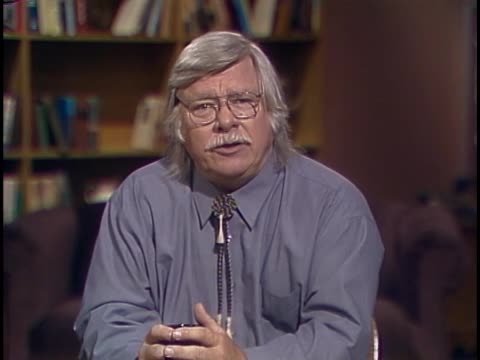
is funded in part by viewers like you, who are members of Nebraska's Public Television. Local funding for Roger Welsh and is provided in part by Read all about it bookstores. Nebraska owned and operated bookstores with four metro area locations and locations in Fremont, Columbus, Grand Island and Carney, Nebraska, dedicated to Nebraska's book lovers, communities and schools. Joining Roger this evening is Jacinto Corona, Disjockey at KMMJ Radio in Grand Island. Good evening and welcome. Jacinto Corona is a disc jockey at Radio KMMJ in Grand Island. I met Jacinto while I was doing a report for CBS News on the fact that KMMJ, an old Nebraska farm station, was going totally Spanish language, stunning news for a lot of folks. But that's the reality in the new America and the new Nebraska.
The more I talked with Jacinto, the more impressed I was by his approach to his work, to Nebraska and to America. So I've invited him to join me here this evening so you can meet him too. Welcome Jacinto, I appreciate very much you coming in. How did you wind up in Grand Island, Nebraska? Well, first thing, Roger, I want to say thank you so much for inviting me to your program, a nice show. I want to say hi everybody. Roger, I just, you know, my history in Nebraska, I come November 94 from California. I'm a stay in the country for 20 years ago. So I come to Nebraska 94 November. I'm a star, work in Turkey's business and give in Nebraska. Turkey's process company. As a laborer there? Yeah, I just work for two years and have over there. And, you know, just
somebody invited me to come to Nebraska, myself and all my family. And just told me, you know, Nebraska is a good living state, good opportunities, good jobs, good schools for the kids. So, that's my enthusiasm for come to Nebraska 94 February. I think I'm starting that November I come to Nebraska, November 94. Were you born in Mexico? Yes, I'm born in Halesco, Mexico, 58 November, 58. I was 16 years old. I live in a big city in Halesco, Wadalajara city. And I come to California in 76 the first time. I'm in 60 years old. I just come to work and
I remember my first job in the United States is picking up flowers, daisies and tulips, you know, nice flowers. So, I work in farms. Actually, all my life, September and Green Island, I work in farms in California, farms and nurseries, you know, I grow flowers, plants, everything like that. So, probably that's why I really like living in Nebraska because I'm really happy here. You have an agricultural base to begin with? Where? In flowers. Yeah. It's a big jump from a field worker with harvesting flowers, then working, processing turkeys in Lexington to being a disc jockey in Grand Island. How did you make that leap? Yeah, wow. Let me tell you, when I'm a child, I think six or seven years old and the school and my small village can come
from Mexico. A teacher told me, Jacinto, you have a great power in yourself. And I think you'll be starring in movies or singing, music, whatever you want to do it. And I just, you know, just live in there because I do something in school. But I just thinking about all time and home, and then in my jobs, I make poems for my wife and my family, and that kind of stuff. But nothing like thinking about radio. You know, the radio just start with me in Nebraska, 70, I'm sorry, 96. Yeah, that's a star in Grand Island, Nebraska. How did it start? I remember Pastor Rojas, he has a program in Kim and Jade radio station, AIM, Saturdays, two hours show, and he's a religion
program. So he need somebody talk about sports and that kind of stuff, just five minutes in a show, five minutes each hour. So that's 10 minutes in a show. So he invited me because I'm really involved in the community about, I'm a coach that time in soccer team, Grand Island. So he's invited me and say, I think you do a really good job with me, say, okay, I help him for a couple months. And then I just, I really enjoy in that program and say, wow, I really like it. We really stand in how important is this country for us and how important the people grow this country really strong and
we really stand in how really hard these people were for us before. And don't know nothing about Corona's families come to this country to live and take a bandage for good schools, good churches, good rules and community. So we really stand in what, what's important is if you involved in the community and held somebody else, that's why I believe in that. That's why these countries are really strong and the number one and you know. KMJ, KMJ is a business. It's not round for social services, it's intention is not simply to do good deeds, although it does that to it, it's Sheriff Public Service too. The 10 minutes that you were doing with the short religious programming in Spanish on Sundays must have made an incredible
impression on someone that now KMJ, it's full time Spanish. It's total. What happened at KMJ that somebody looked at this and said, we've got an audience big enough, we have talent enough, we're going to go Spanish. How did that happen? Well, I think Roger, you're right in the cheese and the Spanish community, the people grow, I mean it's more population now and also the business coming, you know, the Spanish businesses coming and grow and go bigger and bigger. So you're right, KMJ radio station is not a public organization, it's a business. So I think it does the important thing, but also, you know, like I say, KMJ is businesses and so we got the opportunity to go and take announcements for the radio in there, you know. The small
Spanish businesses, but also the big companies like Meet Processes and Nebraska, you know, whatever need a service and radio, but also in a Spanish radio, but about the really good part in the radio on a TV, on a newspaper. The Spanish community now and before needed information about weather, news, sports, we really like sports. I mean, we'd like to know what happened in Nebraska, but also in the rest of the country, you know, in Mexico, Europe, whatever. So this is another really good part in the radio. I think Mr. John Keith, his owner in the radio and also Sean, Slife, Chris Lowry, it's a good, a people has that vision, you know, has a both parts, take a business, but also help the community
to teach this community, specific, specific the Spanish community, listen to the radio, teach the people. So about rules in this country, but also in Nebraska state, and also Green Island, CDN, each series, listen the radio, we try go to the listeners and teach these people about rules, like, you know, police rules, fire department, tornadoes. How can you need to do it if the tornado tornado is coming? We don't know nothing about that. When we come to Nebraska, like my family in 94, we don't know nothing about eyes. I'm really scared, let me tell you, I'm really scared when I'm a drive. We all are. All my goodness. That's, you know, Nebraska is one of those states has everything. Probably that's why you, you people in Nebraska call the good life,
Nebraska state. Because if you need it, if you want to, you got it. If you got a strong emotions, you got it too. Because when you drive your car and it's a freezer, the freeway, I think everybody's here. So that's why I think it's really important that radio. When you teach the community, say, hey, if you don't know, we can have the information for you. And we be there, you know, and homes and cars, whatever you listen to radio is really easy to, you know, to take the information. Your story is strikingly like mine. My grandparents came here, Germans from Russia. They worked first of all in the sugar beet fields, doing stoop labor in western Nebraska, Wyoming, Kansas, doing fieldwork and agriculture. Then they went to the factories, as you did to the turkey plant in Lexington. In Lexington, my
people went to the railroads very often and my father worked in shoveling coal at the university powerhouse and then good year. And then finally, they wind up working their way up as you have your story, your story as a migrant to this country is a typical migrant story. I mean, this is what probably every American just about has gone through at one time or another. And I know that my people encountered an awful lot of resistance, bigotry. They were low class for a long time. So I hear a lot of questions, comments, remarks about the Mexican population. And I always have my answers, but I know what you feel about these things too. And I wonder how you deal with them. You must especially in your job here. I hesitate to say Americans because you're an American after all, but you know what I
mean? Mainstream white American people who haven't encountered probably very much in the way of Mexican culture language before saying, look, if you're going to live in America, why don't you speak American? They'll say rather than English. Why don't you speak American? The last time I loved it when I heard this complaint one time in Grand in my little town of Danubrog, the guy came in and he was saying, isn't it a shame? Nobody in Danubrog speaks Danish anymore. It was always so nice to come into town here Danish. Five minutes later, he was saying, those Mexicans want to live here. Why don't they speak English? How do you put those things together? What do you say when people say that? Why are you encouraging people to speak Spanish when they ought to be learning English? That's a question of the million dollars I think. I don't know, I don't, I see, I listen many, many answers about that. And I don't know, I don't really like those answers. And I don't know if I have an answer
for that. But that's my opinion. If my grandmother, she loved this country and she never came to this country, never she died four years ago. And she told me, she watched movies, I think that's why she explained me that. She said, Jacinto, my son, United States has the most beautiful family values. Then Mexico and then Russia and then Europe. Why? I just don't understand that. She just explained me and don't, I mean, she don't explain me why she told me that. When I come to California, I don't believe that. Say, I think she's wrong. When I come to Nebraska in 94, I really believe in that. But let me tell you about
the language. If my mom or somebody else told me, Jacinto, when you were 16 years old, you moved from Mexico to California. So you better prepare yourself. You better go and watch school and try learn English because you need over there. And you don't need to go there and work in the farms. And those jobs don't need to speak any language. You need to work really hard. My hands really, I work really hard for this country when I'm 16 years old. And I stay in work really hard. Not with my hands. I work with my mouths now. But I think if you parents or somebody else know you moved from another country, I think you need to prepare by yourself. And I really believe that people we live in this country, we need to speak
English. You need to speak really good English. But also if you forgot your language, you forgot part of yourself. And I don't want to lose my language. No. No. There's no reason at all. My major in college was languages. There's no reason why people can't speak two languages. Far from discouraging the Mexican community, not just Mexicans, but anybody from a Spanish speaking country, to forget their language and learn English, I would like to see more people who speak only English learn another language. It's not that hard. It's exciting. It's interesting. It opens your world. I would like to see everybody have to have two languages. Now Roger, I believe I can see some programs in a TV and then watch news or books sometimes. And I believe in Europe, for example, the people learn more than two languages.
Nothing wrong happened. If those Japanese is now open to the languages, why? Because these people sell computers and cars for everybody. I mean, Spanish countries and English, whatever. So why, you know, I really stand in that. And I think the point is, if you live in this country, you need a learn English. No question about. But, you know, I don't think it's good idea to say, okay, you come to this country, don't speak your language. I think, you know, I respect everybody, you know, if you think that's okay, you know, it's your opinion. But I, yeah. Another question that comes up a lot, I'm almost embarrassed to ask you this, but it is a question that people bring up. Just before I left Lincoln here recently, I mean, left Dan
Abrog in the Grand Island newspaper, there was an incident which for Hispanic males robbed a pizza guy. It seems like when we look down the crime reports in Grand Island, there is an unusually high number of Hispanic names. How do we tell people about why that is? Why are there so many Hispanic names involved with small crime in our area? I don't really know why those names come in and, you know, on the newsletters or, you know, Royer, I, I think, more Hispanic families come to Nebraska. And of course, you know, you have never, never before, that's 1000 people come and new people like my family. We come 94, 94 to Nebraska.
And I think at that time to now, I can see double than, you know, 94. So I think that's why it's like if you go to Los Angeles, for example, you can see many of those names and, you know, on the news. And I think it's a shame that those are the names that, that's one of the reasons you're here. Those are the names that we have our attention call to. When for every guy who's robbing a pizza deliverer, there's 100 guys like you and women who are out there working hard. And as you say, making America a greater place. Yeah, you're right. I think I don't know how many percent the people, especially in the Hispanic community, work really hard for this country. But I believe that's many. I mean, I don't know, I, I haven't all those numbers, but I think I can talk with my
friends and families, parents. Most of the people talking about this country, like, like I, like I say right now for myself and my, my family. I have a 22 years in this country. I never broke the rules. I never broke the rules in this country. I'm hasinto Corona. And I have my family here. And I never broke the rules in this country except, you know, some speed in a freeway because I'm a driver in California. But, you know, I never broke those, those rules. I really like it. But also, now, I be a citizen. And I know if I jump, you question that because I think of you, you're looking for that question. And I be a citizen now. I have a few minutes, few months, I think three or four. And I wait for that event happen to say this country.
USA, Nebraska, I'm here. And I work for you. This is my hands. This is my head. I'm here. I mean, all my body is for you. This country need my, my help to, like, like you help, like everybody, you know, a citizen or not. This country need a help all time because it's no bigger just because somebody say, you know, magic, you say you're bigger. No, this is a bigger because the people live here work really hard before. So we don't need to stop that. So I'm really happy, live here. And I also, I'm a citizen now. And I work for this country. And I say, I want to pay you how much you gave it to me now. And also my family. Husinto, that's probably the biggest reason you're here. It's, it hit me really hard. And the first time I met you and talked with you about the joy you took in your citizenship,
the pride, tears came to your eyes when you talked about being an American citizen. And I went home and told my wife, Linda, I wish every American citizen were like that. I wish every American citizen knew what you had to learn to pass the citizenship exam, who had the kind of love in your heart for this country, not just superficial waving the flag, but I could see with you. It was a lot more than that. You are a dedicated American. Well, let me tell you before that, Royal, I'd be a first class Mexican citizen because I never told nothing about my country. I love my country. I love my past. The people, you know, my grandmother's, she told me this is the country has the best good family values. You know, so I believe in that, but I love that I'm a first class Mexican citizen
before, but now I don't want to be a just American citizen. I don't want to be there. I want to go be a first class American citizen. I don't know how can I do that, but I try my best to go be there. I love Mexico too. I think one of the problems with so many people is when they think of Mexico, they think of Mexico City perhaps, they think of Tijuana perhaps, Nogales someplace like that, which is like trying to judge America from New York City or Tampa Florida. I mean, that's not what America is about, Lincoln, Nebraska, and Dana Braug and Grand Islander, what America is about America is about. And I know when I've spent time in the smaller villages and stintowns of Mexico away from the tourist dives,
good, hardworking, honest people, wonderful food. You can tell I love food. And I wonder how people in the Mexican community in Grand Island feel about those of us who are attracted to your culture and your food. But I always feel a little uncomfortable. I go to the Mexican restaurant, which I love great food. I go to some of the grocery stores in Grand Island. Is that the right thing to do? When I'm enthusiastic about it, I simply eat the food and I go into places and buy the things. Is that enough? What can those of us in mainstream American culture do to show that we appreciate what the Mexican community does? I think the food is a part of the culture and in Mexico. I think you're right. It's a delicious food. My wife cook better cook than some of those restaurants, believe me. But also those restaurants, we have
really good food and you taste one of those restaurants. I think this is a part of the ask culture. We have sports. We have dancing events. Part of the ask religion is a culture too. Is it okay for those of us who are non -Mexican to come to these kinds of events? I think it is. I think this is a contribution for this country too. If I lose my good things, I don't think I go first class citizen in this country. If you lose some of those things and I believe it's really good ones, like religion, family, values, I don't know, those many things we have when
you're a child and myself, when I'm a child in my country, my mom and my grandparents told me about respect for another ones. Jacinto, I wish we had another half an hour. I love talking with you. You make me proud to be an American citizen. I've been talking with Jacinto Corona who was a disc jockey at Spanish speaking KMMJ in Grand Island, Nebraska. I appreciate you being here and I appreciate you being here too. I hope you'll join me here again next week when I'll introduce you to another fascinating person from this wonderful place called Nebraska. Local funding for Roger Welsh and has been provided in part by Read All Abouted Bookstores. Nebraska owned and operated bookstores with four metro area locations and locations in Fremont, Columbus, Grand Island and Carney, Nebraska, dedicated to Nebraska's book lovers, communities and schools. .
- Series
- Roger Welsch &…
- Episode Number
- 327
- Episode
- Jacinto Corona
- Producing Organization
- Nebraska Public Media
- Contributing Organization
- Nebraska Public Media (Lincoln, Nebraska)
- AAPB ID
- cpb-aacip-ff36471c048
If you have more information about this item than what is given here, or if you have concerns about this record, we want to know! Contact us, indicating the AAPB ID (cpb-aacip-ff36471c048).
- Description
- Episode Description
- Original description provided by host Roger Welsch: Jacinto Corona is a Spanish-language disc-jockey with KMMJ Spanish-language radio in Grand Island. There was a lot of uneasiness when I booked Jacinto for my show. Who wants to hear the opinions of a disc jockey?! Well, I knew Jacinto, and I knew what he had to say. His views on Nebraska, America, and our growing Hispanic community will stun you. And it will be a long time before you will take your American citizenship as casually as you do now. This is perhaps the best interview I have ever done. Don't miss it.
- Series Description
- The weekly television series features humorist and author Welsch in discussion with a variety of Nebraskans -- from authors and educators to historians and prominent citizens -- whose contributions to the good life in Nebraska make for interesting conversation.
- Broadcast Date
- 1999-03-05
- Asset type
- Episode
- Genres
- Interview
- Media type
- Moving Image
- Duration
- 00:29:27;06
- Credits
-
-
Host: Welsch, Roger
Interviewee: Corona, Jacinto
Producing Organization: Nebraska Public Media
- AAPB Contributor Holdings
-
Nebraska Public Media
Identifier: cpb-aacip-cc8c601d369 (Filename)
Format: Digital Betacam
Duration: 00:27:37
If you have a copy of this asset and would like us to add it to our catalog, please contact us.
- Citations
- Chicago: “Roger Welsch &…; 327; Jacinto Corona,” 1999-03-05, Nebraska Public Media, American Archive of Public Broadcasting (GBH and the Library of Congress), Boston, MA and Washington, DC, accessed April 4, 2026, http://americanarchive.org/catalog/cpb-aacip-ff36471c048.
- MLA: “Roger Welsch &…; 327; Jacinto Corona.” 1999-03-05. Nebraska Public Media, American Archive of Public Broadcasting (GBH and the Library of Congress), Boston, MA and Washington, DC. Web. April 4, 2026. <http://americanarchive.org/catalog/cpb-aacip-ff36471c048>.
- APA: Roger Welsch &…; 327; Jacinto Corona. Boston, MA: Nebraska Public Media, American Archive of Public Broadcasting (GBH and the Library of Congress), Boston, MA and Washington, DC. Retrieved from http://americanarchive.org/catalog/cpb-aacip-ff36471c048