Frontline: The Dallas Drug War and Follow-Up Discussion
- Transcript
Local acquisition and broadcast of Frontline are made possible in part by Talk Radio 570 KLIF, where you can hear Bob Ray Sanders from noon to three Monday through Friday. Frontline is made possible by the financial support of viewers like you and by the corporation for public broadcasting. Behind the gleaming face of Dallas lies a war zone. Police spend half a billion dollars a year fighting drugs, but they're losing the war. I believe I could do a better job. So the black community at odds with the mostly white police force is taking matters into its own hands, but what we're doing, no one else is there to do, we're challenging to push us and the drug houses directly.
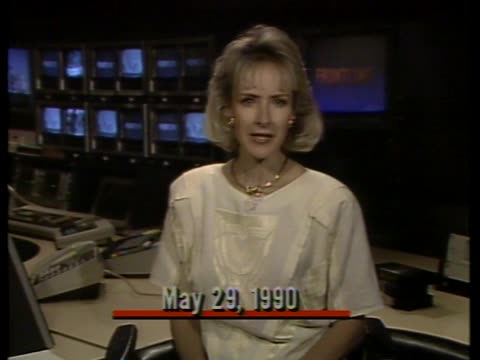
Tonight on Frontline, the Dallas Drug War. The Dallas Drug War is an encore presentation of Frontline. First produced in 1989, the documentary examines the city's rising drug problem at that time. Good evening. I'm Marjorie Ford. Tonight we'll take a fresh look at the issue in a studio discussion with some of the participants in the documentary immediately following Frontline. Stay with us. From the network with public television stations, a presentation of KCTS Seattle, WNET, New York, WPBT, Miami, WTBS, Detroit, and WGBH Boston. This is Frontline with Judy Woodruff. Good evening. A year after national drugs are, William Bennett declared Washington, DC a test case in the war on drugs.
He recently admitted that the battle isn't going as well as he had hoped. Bennett's strategy, there and in the rest of the country, has largely focused on expanding police forces and building more prisons, but cities across America are finding that fighting the drug war is more than fighting crime. They must also confront the social, economic, and political problems that plagued the community before drugs did. Tonight in a program we first broadcast a year ago, Frontline examines the drug war in one neighborhood in one American city, the Dallas Drug War. Our program was produced by Hector Galan. The correspondent is Bob Ray Sanders of Dallas Public Television Station, KERA. Dallas, Texas, March, 1988. The Dallas Police Tactical Unit confronts two suspected drug dealers in a supermarket
parking lot. Last year, the Dallas Police made over 10,000 drug arrests in a city that has quickly become a major drug trafficking center. Here in America's seventh largest city, drugs are everywhere. Former car salesman Steve Gerken was part of a $6 million a year cocaine ring that allegedly included a Dallas businessman and a lawyer. Last year, in a battle over Turb, Gerken killed another drug dealer with a car bomb. In the city's fashionable West End, police raided the Trendy Start Club arresting 37 people for buying and selling cocaine. Some of them were allegedly snorting it straight off the club's bar. And at last fall, a WT White High School in North Dallas, an undercover officer posing as a student, conducted a four-month drug investigation. The police then arrested 28 people, including nine students for selling marijuana, cocaine,
and LSD. I want to see them go to the can, where they belong. This is really serious matter about, you know, inside the street. People up here selling joints and stuff, smoking in the bathroom all the time, it's just terrible. It is really. Like all American cities, Dallas is trying to fight a war against drugs. But this is a city that is also at war with itself. Dallas is a divided city, divided by politics, by class, and by race. Demographically half of the city's 1 million residents are black or Hispanic. Geographically, the city is split by the Trinity River and the Interstate Highway System. Most whites live north of the line, almost all the blacks live here, on the black side of town. South Dallas is home to more than 100,000 people. Traditionally, it has been a stable and close-knit community. South Dallas has some of the city's oldest neighborhoods, and roots here are deep.
In the 40s, many black families began moving to Dallas from farms in East Texas. Many of their children were raised here in South Dallas. And today, this is a community full of people who don't want to live anywhere else. We bought here because this house was built in 1895, and my husband and I had enjoyed re-decorating it and painting it and making it look like a home. Dorothy Davis and her husband, Theodore, are both schoolteachers. They have lived in this house in South Dallas for 15 years. When you hear bullets all night, you're afraid for your life. You're just afraid. The Davis family has seen serious changes in their once-peaceful neighborhood.
In oil prices plummeted in the 80s, the recession hit Dallas hard and South Dallas even harder. The unemployment rate here is now twice as high as North Dallas. And as city leaders continued to neglect South Dallas, it became an inevitable breeding ground for drugs. Today, the police call it the war zone. They told me what to expect when I came home for the summer, they like to do the neighborhood change, and I thought, well, it can't be that bad, maybe a few mile changes here and there. But I worry, I value their safety. I really do worry about their, you know, are they going to be safe and nice? Someone's just going to break in and maybe, you know, take their lives. The Davis's have two daughters in college. Last summer, Jackie was away studying in Los Angeles. And Julie was home on break from Atlanta. It hasn't been peaceful since I've been home for the summer, not one night, it hasn't been
peaceful. It's gunshots every night, every single night. The Davis family invited frontline to spend a couple of nights with them to see for ourselves. Through their living room window, we watched using a camera equipped with a night viewing device. As night fell, activity picked up on the streets outside. Inside, Dorothy turned to a fresh page in her notebook where she keeps a log of the shootings each night. As the camera continued to roll, the Davis's and our crew huddled on the living room floor in the dark. And nobody really believes that this goes on in your neighborhood. This is almost like being in war.
It has come to the point that as a family, we need to do something about it. Because this is just getting to be ridiculous. The thing that bothers me about the crack houses and the drugs being sold in my neighborhoods is the shooting of the guns. Now that bothers me. It's frightening because you're like, I'm not good at this other shooting toward our house. Is it going to hit our house or the bullet's going to come through a window and it's just very nerve wrecking.
I think about my family, you know, true nothing number one. But I also think about just innocent people around. A 12-year-old innocent girl that was in the I Have a Dream program and it planned to go to college, it was innocent to kill. Just because someone was walking around with a high-powerful gun. Last summer, just half a block from Dorothy's home, six great and macheta mourns was shot to death that she stood on the steps of her friend's house. There have been more than 20 drug-related murders in the Davis's neighborhood. No, man. I said, you get out of my yard. Reverend Tom Thompson has lived in the same house in this neighborhood for 32 years. So somebody, I didn't see the man, come up the alley and then he made two shots. He shot one first time out there and the man ran up here on my porch. This is when he tried to get him coming up on my porch and see, but I never didn't see the man because I'm sitting here on my porch. Well, I can't get him to go to a new running and I'm like, he might shoot me. It's terrible, it's self-doubtless. There's a threat to the whole black community.
I teach my child drugs, it's not the way out. He has no chance when he come into the community. You can teach truth in the home, but if you don't come together in the streets, it's all useless. Don't have enough people won't stop it. It's too much money. It's so much money involved until the people that can actually handle it don't want to stop it. And little man can't do nothing about it. It's wide open, wide open. It's all in this community, every corner you turn, there it is. Back to me. I thought I was moving to a better location, better atmosphere for my children, but didn't really know what I was getting myself into. Like several times, I have been standing on my porch waiting for my ride and a couple of people have asked me if I knew where to get some cocaine in it. So you can't ride down the street without somebody almost getting hit by your car trying
to stop you because it's dangerous. I've gotten calls from the police chief that said we're doing something about it. I'll be out there in the next two weeks and things go on as they have normally gone. They should be more concerned about it. And this is the final weapons, it's not only in this neighborhood, it's just round about the city. The police know what's going on up here. When this shot, but they're right here, you say you have to be killed. You see what's going on? I say yeah. That's how come y'all can't do something about it. No answer. I am angry. Because I feel like that if you care for all of the citizens in a city, then you would do something about it. Dallas police officer Chris Hackbark has patrolled South Dallas for more than a year. It's still pretty bad down here.
They're going through the alleys here and they're all they do is back and forth, back and forth. And these drug dealers are taking the life blood right out of South Downs. Hello people sitting up there, there are a bunch of marked good eyes for the crack hose. They see a cop coming in, they yell a cold word and the time when you get there, the crack is already going. They've got one good eye in the front of the apartment complex, wooden good eye in the back. You drive up and there's no way that you'll be able to surprise them. Out of the owner put up fences around there, apartment complexes, but it takes a day or two and they repulse through them, turn them down, top floor there is a crack house. You're not operating it today because there's no lookouts. The city's primary response to the drug problem in South Dallas has been a show of force.
Last year, the police stays to well over a thousand drug raids in South Dallas. They estimate that there are now more than 400 major drug houses in this community, almost all of them selling crack. Back did you get some little rocks here with this crack, they just go easy, that's real good. What you can do is if you feel it, it's real mushy, you take it rolling into a ball and smoke it real easily. It's cheap, it's highly addictive, it is the primary factor and then a great portion of all the crimes that occur in this division. The man that Dallas Police Department assigned to protect South Dallas was deputy chief Ray Hawkins. The tremendous amount of profit to be made by the sale of crack, I've never seen any drug that had that kind of an impact on the community. The police estimate that the crack houses in South Dallas take in more than half a million
dollars a day. The drug trade here is controlled by Jamaican and Cuban gangs who moved in from New York and Miami. Police believe these gangs are responsible for 70 murders in the past two years. But despite the thousands of arrests, the police admit that they rarely capture the kingpen victims who control drugs in Dallas. City Hall, 9 a.m. Last August, Dorothy Davis brought her frustrations to Mayor Annette Strauss and the rest of the city council. It was the second time she had been here. I don't understand why Mayor Annette Strauss has not come at. I don't understand why all of the city council members don't walk these streets so they have no come out and spend the night and you will see what's going on. The city council has 11 members representing Dallas's 1 million residents.
But while half the city's population is black or Hispanic, the city council has only three minority members. Council members Al Lipscomb and Diane Ragstale represent South Dallas. So this has been a very strange place because usually the elite business leadership primarily white men dictate the direction of this given city. And now what's taken place is that people are trying to force those very people to share some of the economic power and to share some of the political power. Dorothy had expected to speak to the council in the morning. But by noon she was still waiting. These two council persons only have two votes out of 11 members of the city council. That doesn't give them what you would call a significant amount of power.
Dr. Paul Geisel is director of urban studies at the University of Texas at Arlington. For almost 20 years he has advised Dallas leaders on racial problems in the city. In Dallas we've historically had a business community that has brought forth most of the proposals for change in development in the city. If you want to get something done you went to that oligarchy. We want to make Dallas whatever is necessary to attract the next big company. That does not mean improving inner city neighborhoods. That means improving upper income neighborhoods and making them every so much more pleasant and protected. GM Tired. I've been here all day. Good afternoon. My name is Dorothy Davis. I live at 4.21. Finally. At 5.45, Dorothy got her three minutes in front of the council. Just this morning while speaking to a neighbor who was sweeping glass. I looked down into my amazement. I found this shiny bullet that I hold before you. I have constantly called the police department, I've called several council members, and
I have constant reported the shooting that goes on in my neighborhood. Miss Davis, two weeks ago you came and you showed me a number of them with the new ones. Yes. And I know Miss Hart spoke to you and someone was supposed to meet with you to try to help you. Whatever happened. They spoke, they came, they talked to me, but the shooting still goes on. Constantly, all night, just two days ago, two men have been shot. Thank you for your kindness. Thank you, Miss Davis. I hope we'll be able to help you. This type of environment can create a sense of powerlessness. This type of environment can create a sense of hopelessness. People ask me the question all the time, why is it that we hide these officers when they don't you reduce the crime and I commute? This is how the Dallas police are fighting drugs in their city. These officers are on their way to a crack house, where earlier an undercover agent had made
a drug buy. Now all that remains is to make the arrest and seize the drugs. In South Dallas, police make as many as ten rates like this a day. More than 40% of the drug raids in Dallas end up like this one. No dealers, no drugs. Increasingly, the police are confronted by heavily fortified crime housing.
And sometimes they are simply outsmarted by the dealers. You make a tremendous amount of arrest in that area. We see an awful lot of weapons. We see an awful lot of drugs and money. But as you can see, that has not arrested that particular problem. And the people of South Dallas are left wondering if the police have already lost the war on drugs. If they are going to do something, I have not seen evidence of that. It could be that I'm naive and I don't know how the police department fights crime. But I believe I could do a better job. She has a right to expect a better quality of life than what she's got in her neighborhood. She's one of those individuals that this is her home. She doesn't want to move. She wants the criminals to move. And we're going to do everything that we can to help her. You don't know the community. So that's another factor of stopping crime is getting to know the people in the community.
Know the people on your beat. Chief Hawkins has never come to meet me. So I was talking to you. I was giving you enough information anyway, based upon what was going on. The man the police do send to talk to the people of South Dallas is lead by Williams. The department's civilian director of community affairs. I can think of this one incident where we had a crack house. And because the people in the area said, well, these people never have been busted. And because we go in and try to crack the old going on, and the advice makes the body bust them. And then we check the records. They've been busted four times. Now they're not in the same house, but they just move down the street. Or they just send in other people to work the area. So the people are frustrated. And once you get to here at that point, what are the police doing? And then you get the people and that's just fed up. And don't see the type of involvement that I've been looking at for some times.
I try to stay away from telling people where are we busted this guy six or seven times. They don't want to hear that. They want to see the police department doing something that's going to make a tremendous difference in that area. Can you tell me why these people would be out here on the street, especially right down here? No worries. No worries. And I'm going to sell them by drugs. Another major police drug enforcement strategy in South Dallas is to stop and question anyone who looks suspicious. But that's a problem. Because in this almost entirely black community, nearly 80% of the officers patrolling it are white. Get your hand out of your pocket. Get your hand out of your pocket. And there's a lot of people in the area that do not trust the police. What are you doing back here? You live here? No, sir.
I'm in the service. What business you got staying out here and back of a department complex? I thought he knew somebody. What are you doing back here? Just in his car. Which car is this? My mother. Okay. Can you all step out, please? Put everything on track. Thanks. After a thorough search of the car and its occupants, Officer Hackbarth would find no drugs and make no arrests. Okay. Drugs or anything on you? Oh. Okay. Okay. Okay. Okay. Last year, the city received almost 1,000 complaints about police harassment, abuse and brutality from the citizens of South Dallas. Okay. Now, in terms of the complaint, the officer has to write to pat you down when you got out of the car. Anytime that you have someone that's complaining about excessive force or not communicated with an officer that well, you've usually stored it in your memory bank. You will see the police as a suppressor because the police has to carry out the order, so to speak. But the most serious complaints against the police involve their use of deadly force.
Get up. Get up. Police. Get up. Hold on to his hands, man. He's awake. Go ahead and mess with him. Get your hands out from under that blanket now. In the last three years alone, Dallas police shot 67 people. Who else is in here? 22 of them died. One of the most shocking police killings happened in 1973 when a young burglary suspect was shot in the head while he said handcuffed in a police car. His name was Santos Rodriguez. He was 12 years old. Since that time, Dallas has fought a series of racial and political battles over an unending string of police shootings. Santos Rodriguez was clearly a watershed. It was an opportunity for change. What we didn't get here was an accountable system. And I think there were those who thought they would. City didn't take that opportunity because it didn't have to. Other kinds of priorities took on.
We're growing right now. We're booming. Things are good. Don't rock the boat. So on the final analysis, the minority members were told, we'll get to that later. The officer who killed Santos Rodriguez was eventually sentenced to five years. Daryl Cain served 18 months. But over the next 15 years, the Dallas police would shoot and kill more than 100 citizens, most of them black or Hispanic. A routine investigation appeared anything but routine. In 1986, the black community was outraged when police killed 70-year-old Eta Collins, who had called to report a burglary in progress. We declared an official day of mourning in the city of Dallas. It is just what everyone had feared. And Dallas, once again, a black victim is dead killed by a bullet. Then, less than a year later, 81-year-old crime watch volunteer David Horton was shot to death by the police as he chased a burglary suspect. After these killings, the black community demanded help from the federal government.
And in 1987, they got a congressional hearing to examine whether the Dallas police were using excessive force against minority citizens. Where does it police department contradict this set of facts? Where do we stand? As far as the details of the investigation and how those things came to life. After 18 hours of testimony, the committee strongly criticized the department's record and its policies, but never issued a formal report. The two black members of the city council, Diane Ragstale and Al Lipscomb, have been the most vocal critics of the police. It just doesn't make sense for us to keep on killing these people with some of these racist white policemen in these areas when they have been synthesized to deal with the cultural differences. Let's say, for instance, that you have a team of officers, and we say, well, we know, in this plot, two blocks, that there's nothing but crack houses. So we're going to go down there and crack his and kick-bits, right?
If they make one mistake, and you've already talking about a problem between police and communities, city that have already had a congressional hearing because of deadly force, they make one mistake. That one mistake is magnified ten times so the police have to handle this with key gloves. The climate in Dallas right now, as far as the things that really scare me the most, is if I ever have to use deadly force, I don't want to be crucified by, you know, some people, some powers to be in city leadership, you know, because there's always going to be 20, 20 hindsight, and people are going to second-guess you, but I don't want to have that effect my judgment that, you know, I don't act the way I should, I don't protect my partner, I don't protect myself, as far as using deadly force, or using a different type of force. You know, I don't want to have someone to get hurt because I hesitated that split-second because I was unsure if I'm going to get crucified in a press or get brought up on civil charges or lose my job.
When you criticize a given officer's behavior, it's amazing to me how most of those officers will take that personally, and how, you know, this whole fraternity and brotherhood, you know, is this really, yeah, see, they start circulating in, you know, the brotherhood of the fraternity makes it very difficult to isolate the bad apples, the sense of brotherhood, you know. You know, so that's the problem, it's the bad apples, some of those guys are rotten. In 1986, the police struck the back at their critics, angered about what they saw as a continued like of support for the officers in the field, that predominantly white Dallas Police Association marched on City Hall to demand action against Council members Ragsdale and Lipscomb. We feel that the City Council should, at the very least, censure these two Council members in order that both Mr. Lipscomb and Ms. Ragsdale publicly apologize to the citizens of Dallas and to the officers of the Dallas Police. The most proper action for Mr. Lipscomb and Ms. Ragsdale to take after their apology would
be for both the resign from the City Council of Dallas. Racial tensions reached a new peak in Dallas early last year, but this time the trigger was the murder of two police officers. In January, Officer James Joe was shot and killed as he confronted two burglars. Less than two weeks later, Officer John Chase was killed by a mentally disturbed black man in a downtown parking lot. An angry police chief, Billy Prince, placed part of a blame on Council members Ragsdale and Lipscomb. The atmosphere that's been created by the numerous critics, I think, has certainly contributed to a person who might be on the edge of something like this going forward with it. The friends and families of the predominantly white Dallas Police Association quickly organized a massive show of support for the police.
The marchers urged every driver in Dallas to turn on his headlights and many did. Police officers are your friends. But the black community saw these demonstrations as sympathy only for the slain white officer and those feelings bawled over at a dramatic City Council meeting as Diane Ragsdale accused the organizers of treating the black officer's death as an afterthought. You guys are not going off to vote. Rates is that you are awake, Jai Rates is getting fired up, right now. clearer answers, memory answer. That's why the strictly a better term goes on because it was an afterthought, Jai Rates says, you practice racism, no there wasn't have to vote, man! You're on tape! That painful confrontation last year seemed to sum up all that separated the two groups who have most of its stake in the Dallas Drug War.
The murder of five police officers split the white and black communities even further. And the racial tensions in this city have kept leaders of both sides away from the most pressing needs, the deep social and economic problems that sustain the drug crisis in South Dallas. In the war zone Dorothy Davis continued her nightly vigil, discouraged by the response from the police and city hall. Outside her living room window, for the drug pushers, it was business as usual. Yeah, I guess my goosebumps just thinking about it. I'm gonna give that away to caller number eight. Nobody sleeps. Everybody be out the crackheads, the prostitutes, the drug bills, the big money is fast, easy to get, very easy, very easy. If they have $50,000 worth of dope and that's what they'll make back, plus a little interest.
This young mother of three grew up in South Dallas. For the past three years, she has also been a crack dealer. Sometimes she says making over $100,000 a year while working for one of the drug gangs. I have workers that, a bodyguard me, watch me. I have workers that are sitting in apartments and sell drugs. I have workers that will bring customers to the place. I have workers that will watch for cops. Some places could make $1,000 a day, some could make $5,000, some can make $50,000 a week. It all depends on the quantity and if it's good, if it's $98 or $99% per, it'll go quick. Like a jack-in-a-box, you pop in with your money, give your money, you get what you want
to go. Most older men get involved in drugs because they can't find a job. They can't find no work, no work on the body on a hire. But the young kids get in for the gold, the money, the cars, the guns. I had a lot of kids where they would tell me they'd be 18, 19 years old, come to find out those kids before 10 years old. Most of my fire, most of them made me good money but I just get tired of looking at them and I find, go home, go to school. Most of the crack workers in South Dallas are teenagers recruited by gang leaders to serve as lookouts, runners, and street dealers. Over half the children in the war zone live below the poverty line and teenage unemployment in South Dallas has climbed to more than 40 percent.
One kid was pretending, he was the crack man, one kid was pretending, he was behind the crack and I said, Lord, how mercy, what a loss. Tyrone is 15 years old. Last year he finally decided to stop dealing drugs and go back to school. He says he had been selling crack since he was 11. The thing that you learn when you're young, it takes over as you get older and seeing the stuff that was around me, it just took over as I got older and I just thought that I
want to sell dope. When I was working for someone, we would make from like $1,000 to $1,200 a week working on a day. You want some money? You want some money? You said it's a gold, how much money you want to make? Mind these children's ears and what is it? You're making a world from 900 to $1,500 per day. On Thursday, Friday, Sunday, Sunday, you can make $10,000 to $11,000. Yes. Payday, you know? A bit of smoke's been pretty good tonight, huh? The best you're making is spinach. It's just spinach, it's spinach, it's spinach, it's spinach. You know what I was going to have for say, just leave it out while you can. You're going to take a real cool person
not to sit and think who the jurors go to. My mother could be getting this. My father could be buying this. The guy says, my child could have sitting by the rock and I don't know. You don't know who get it. It's like eating at your conscience after a while, you know? Seeing all these things and stuff, I think they're just killing themselves with this dope, you know? So, every way you look, it's a dope house, you know? Drugs. That's what it's all about, you know, it's all about. The drug pushes came into the community in a vacuum. They came in with no competition. They captured our youth without any competition. Faheen Minka has lived in South Dallas for 30 years. He and his wife, Marilyn, are trying to raise their four children in the middle of the war zone. Communities are here on the siege, and this is a form of terrorism. The people are terrorized.
Even if they're not directly face-to-face threatened by the pushers, just the shooting and automatic weapons and the knowledge of what they do to one another, psychologically, places to people in a state of fear. The God of the people who should have come. 20 years ago, when he was known as Fred Bell, Faheen was a member of the Black Panther Party and headed the Texas Chapter. Since 1968, I've fought for freedom of African-American people. I've fought for freedom of justice for all people, all oppressed people. And I didn't fight to look around the same neighborhoods where I waged battle, to be taken over by crooks and hulums and drug lords. My resolve is even stronger now since I'm a Muslim. Faheen now attends a mosque located in the heart of the war zone.
The Muslim community has historically been able to take that element of people and instill in them a sense of confidence, a sense of pride, a sense of real faith and belief in God. The weak men, the weak children, the weak men, Imam Yakia Abdullah is the spiritual leader of this mosque where the drug problem has become the critical issue. We're talking about this situation, Dallas, but we know it's pervasive in the whole American society. And it's almost a reverse kind of situation where the criminals are at liberty to roam free. And the good people are locking themselves up behind bars in their own homes. And I think that what we have to do as good conscientious American citizens, we have to say no, no more. That we are not going to lock ourselves up. The criminals should be locked up. The criminals should have fear on them. You're a Kephach, they have fear of the community. What if it was for? Last summer, the Muslims organized a new group called A Man,
African-American men against narcotics. Their goal was to arrest the drug dealers and force them to leave South Dallas. In the shadow of the crack houses, they began by warning the dealers, they were being watched. The unit was sitting on behind bars in this neighborhood. They have your future taken and your license number record. The information will be circulated in the community and also made available to the police. They'll actually sell drugs right down the stairs. So this is a good thing. A Man also began taking surveillance photos of suspected crack dealers, identifying them to the police and spreading their names throughout the community. He's definitely a drug funky. Nobody has a right to push poison to other people. The drug pusher has no more right doing what he's doing than someone who would put a strict nine in the community drinking water. That is not a right.
We're the ones who end the right. And we're doing what we have a right to do. Over one, honey. Over one, do you read us? We're just a group of citizens. Exercise not first and then the right to organize. And engage them, as I call, civil harassment of the pusher to expose them, make it uncomfortable for them, hopefully to drive them out of that neary and keep them moving and running until finally seek some other enterprise. After they identified a drug hotspot, A Man's strategy was to begin intensive patrols in that one area several days a week. We ain't keeping nobody alive. I'm going to put you in some position. Put me in there, man. Put me in there. Yeah, I'm going to put you in there. Fucking shit, mate. Look out, bro. He's talking about it. What was the best? It's quite dangerous to be honest with you. It's quite dangerous. And we never know what to expect. But we're not naive.
And we don't take these people for granted. We're very watchful and careful in what we're doing. I want to go reckless to a couple of rocks at us. When we're out there on the streets, our alertness instincts all geared up to fight. As we want to walk back through there. We have to worry about who's in that wonder, who's in that doorway, who's in this car coming down the street, who's sitting in that car to send this out of the street. I'm just praying that he don't walk out there and some of the head means, I want you to call him, the leaders, you know, be out there waiting on him, you know, to just prove that he can't stop it. You know, I try to go on him down or something. I just worry about him. As far he and the other members of a man patrol the war zone, they see themselves as a symbol for the rest of the community that something can be done.
I look at it as an organizing project. And not a bodyguard thing, even for after patrol three days a week for the next year or longer. In various areas to keep the example out there, I'm willing and feel obligated to do it. Change it, man, have you? Joe Johnson has been a landlord in South Dallas for the last five years. Tell Lee he needs to check them out close so they don't take our fridge right on stove. I'm highly against drugs. I don't lie drugs on my property period. Johnson owns several apartment buildings, and every day faces the threat they will be overrun by crack. So he fights back by immediately evicting any users or dealers who do move in. We check all indications of drugs being used. Most of the time when we put someone out, you can tell whether they own drugs or they sell drugs. You see these bags here? These packages in when they package the crack in. When a guy gets on this and he gets on a real heavy,
it's cheaper to move him out real quick because he's going to create a problem for everybody. People go to work, can't see. For these houses that drive down through here, they can't see. So anybody can hide, and it's so high. They want to go in, but I'll live. Johnson has also begun to lobby the city to tear down the vacant buildings that surround his properties before they, too, become drug houses. You need to hurry on out and go lease on the right hand. Yeah. As Johnson and Levi Williams inspected this abandoned house, they suddenly stumbled upon a man with a needle in his arm. All right. Yeah. I'm at the house. This is one of the reasons that we don't want to leave a building in this neighborhood, unbought it.
Yeah, there's a sun needs to be done about it. And Johnson has also begun to buy and rehab other abandoned buildings in South Dallas, hoping to create drug free housing for the people who live here. We're not going to ever be able to say, it's no more drugs. It's no way. The only thing we do is just slow it down. It's all the clean up day sound down. Because see, this is stop cram in your neighborhood. So we ought to say, let's see, clean up day, South Dallas neighborhood right after months of effort. Dorothy Davis was finally able to organize the first crime watch meeting ever in her neighborhood. You got to have someone that's going to have to have contact with the police department. Levi Williams conducted the meeting and blocked several police officers to meet with the residents. But most of Dorothy's neighbors were afraid to attend. They're unsure who to trust, simply because someone finds out that's in a drug arena, so to speak.
You can end up getting hurt. So people are pretty hesitant. That you've got to get at least 50 or more people that's going to get involved. I doubt it very seriously if the police department along is going to make a tremendous impact on a community without the community to support. It is time that we reclaim our right for roll as the leaders in the protection of our women and children. That's right. It's the road, it's the road, it's the road, it's the road. Over the summer, community support for a man grew. Now with over 70 active members, they stepped up their direct confrontations with the crag dealers in the war zone. But what we're doing, no one else is there to do. We're challenging the pushers and the drug houses directly. They're one and don't push us? � They're watching you?
They're watching you, why are she going to do it? Now, what's she going to do? ajud the pushers? You're gonna make an exam full, OK? That's right! That's right! And then touch one of the votes. It's right. You're gonna make an exam full, OK? How many days left? That's right! The community helped someone that's hurt an eon. Who's hurting them? The dope ain't hurt their names? You got no dope to love. You're doing all the stuff in there nigh. I don't have no do with the love. You working for it? Even that's what you're gonna need? You know what it means to put it down. I've been freakin' in low earth since then y'all. Let me ride and run. Run-ow! 18-year-old Cheryl Bella, is the youngest member of A-Mac The enemy, I can say, is silenced among the black people. Silence by ignoring the problem. Silence by not working as a unit to read of the problem.
We can see the government, it's not going to do it. Police force is not going to do it, so we need to actively as an African-American community join together. Hey man, hey man. Hey man, hey man. Hey man, hey man. Hey man, hey man. Hey man. Hey man. Hey man. Gerald was born in Dallas and has lived here all of his life. Growing up in South Dallas, you're usually going to be touched in some way by someone who's using drugs. I seen the effects, I brought up my friends. The majority of young blacks do engage in some type of drug usage, and you know, people do it as an escape. I seen some do it as a boredom, you know, not really aware of its effects of getting you hooked, you know. I had a lot of friends whose moms were on heroin, if their mom went on heroin, it was drugs to call tees and blues, I don't know what they are, but they were real popular then.
And we should sit around and talk about what we want to be when we grow up, how we're not going to be like this, and some of us made it, some of us didn't. I was doing high school, I hear things from coaches, from teachers, I just hear everything. He's a good student, he's excellent, you know, he's an excellent ball player, but they never knew Chris, really, they never knew Chris where it was, Chris was on addict. All your values change, all, you know, everything is you really love, doesn't matter anymore, but when you take that first hit, your mind is like program, just to keep feeding yourself more drugs. It's like, it's like something to tell you, you need another hit. It's just the heart, the taste, the heart, the smell, it's just the rust of the heart that it gives you, in order to drug you, that kind of, you know, instant hit.
Everything they say about crack is the truth, some things they just don't even know because they have his friend who's, they're not a user in heaven, been through it before they really can't tell you actually, you know, what was happening, but I'm a recovering addict, you know, drug user, and I know, you know, I've been there, I've seen it with my own eyes. Because crack is cheap, it is especially attractive to young people, and it has proven to be one of the toughest addictions to treat. This and Wayne are among an estimated 4,000 drug users in South Dallas, but few of them get the help they need because in South Dallas, there is only one treatment facility. It's capacity, 55. I saw one of my best friends die, behind drugs, you know, just to sit there and then, see somebody die behind a drug, it was hard, you know, it had actually changed a life, it
changed a life. Having a parent on heroin was hell. Gerald's experience with drugs began at home with his mother's heroin addiction. Occasionally, I would walk in the room unannounced and see a heroin needle and her fixing the heroin one time I recall at a very young age. She called me into the bathroom and asked me to inject the heroin in her because she was too shaky to do with herself. The drug users, drug abusive families, a lot of things, a normal child would expect we would apply to it.
Maybe coming home to some dinner, maybe being able to go to school with a pencil and paper, you always crave for a normal child who is good. Gerald's childhood was lost to drugs, and so he says he has never used them and never will. Someone has to take the role of leading our people, organizing our people, serving our people. It's time to take action. In the few months, a man has patroled South Dallas. Drug activity has decreased in the neighborhoods where the group has focused his efforts. It is also clear that the dealers have not left town. They have just moved. We applaud their efforts and that they want a drug free community for themselves, and that's certainly what we want for them. But everything is not real clear cut. If it began to edge toward the vigilanteism, I think our attitude might shift dramatically. Nobody would be permitted to stand on the street corners and flag down, call on the
sale drugs in a white community. In the atmosphere that would justify law enforcement officials as themselves calling an area, quote unquote the war zone, would not be permitted in the white community. It would not be permitted, it would not be tolerated. That's my argument. That's, I feel the fact. I have no evidence to the country. In recent months, there are signs that voices of South Dallas are beginning to be heard. Law enforcement in the United States, that of a Dallas police officer. City Hall responded to the increased racial tensions by hiring a new police chief, Mac Vines, an outsider from Florida, and gave him the mission of regaining the trust of the minority community. Vines moved quickly. He reassigned Ray Hawkins to another division and then promoted Sergeant Robert Jackson
to deputy chief and put him in charge of South Dallas. But many of the old problems persist. Vines recently fired two officers for beating a black man, and the shootings continue. And South Dallas is still waiting for the city to begin to take action to correct its deep economic and social problems. But a man continues to celebrate its small victories. In this one apartment complex, a man patrolled, the residents organized, and together, they pushed the pushers out. Collectively, we can solve this problem. At the Davis home, it's quieter now. The crack dealers who shot up this neighborhood have moved on to another part of South Dallas. It's a beautiful neighborhood.
It just needs a little nurturing and a little care. But if it comes to the point that we are fighting a losing valve, then I guess we do like other people have done. So I intend to give it my last shot. This spring at a White House luncheon, President Bush honored 28 heroes in the war on drugs. Dorothy Davis was one of them. The president called them all home town heroes, unconventional heroes in an unconventional war, who were proving that America could in fact win the war on drugs. Thank you for joining us. I'm Judy Woodruff. Good night. Good evening, I'm Archery Ford. Tonight, frontline focused on the local battle against illegal drugs in an uncore presentation
of the Dallas Drug War. The documentary first produced in 1989 examined the problems facing a South Dallas neighborhood. But the war on drugs is being waged in other neighborhoods and in other cities as well. Who's winning the battle? Has progress been made in the South Dallas neighborhood and in the city? Joining us tonight to answer those and other questions are some of the participants in the frontline documentary. Dorothy Davis is the school teacher whose community was terrorized by crack dealers. Momyak-yak-abdu-la is the leader of the Dallas Masjid of Al-Islam and a co-leader of the crime fighting group A-Man, African-American men against narcotics that took steps to drive the drug dealers out. Fahim Minka, formerly a co-leader of A-Man, now heads another community-based anti-drug group, A-Man Drug Fighters. Also joining us is Deputy Chief Rick Hatler of the Dallas Police Department. He heads the narcotics division.
If Bill Rathburn was scheduled to be here and we're sorry he's ill and could not join us tonight. I want to thank all of you for being here and Mrs. Davis, I'd like to start with you. Do you still live in the same community or have you given up and moved out? I have not given up and moved out, I still live in the same community. In the documentary, your community was referred to as the war zone. Is that still the description that fits today? Well, I don't prefer to call it the war zone, it was given that name. I think many Dallas communities are called war zones, so I think we need to work to make sure that none of our communities are called that. What about the gunfire? That was a major problem in your community. You were keeping a log. Does that gunfire still occur on a nightly basis and do you keep those nightly vigils? Well, I don't keep the nightly vigils like I once did. There is some gun shooting, not as much as there was during 1988. Okay.
Now, as far as your log, do you still maintain that log and have you tried to present that to any other city officials since? No, I'm still working with the Dallas Police Department, but not in that fashion. Okay. Well, you did present that log to the city council. Are you hopeful that there will be any change in the involvement of the city council? Are there other city officials in your community as a result of the work you tried to do starting in 1988-89? Well, we've gotten beyond that point. We've moved from point A to point B, so I'm happy that that's not necessary. Tell us about point B. Well, point B is just working with members of the city council and working with other city leaders to help build a better community. I've tried to contact leaders at banks, which I did here from one today, so I'm moving in that direction. I'd like to beautify the neighborhood. Okay. Is that your major goal now? That's my major goal.
To beautify the neighborhood. And how will the city leaders and say bank officials help you? Well, there are monies at the state level, at the city level, and banks do help communities improve neighborhoods. I just haven't been able to get thumbs up or thumbs down on the pulse of where that money really is. Well, if you are involved in that kind of activity now, can we assume that there has been some progress? Some progress, yes. Can you be more specific about what that is? Well, as far as city leaders are helping to clean up the neighborhood, but I try to stay in contact with people that are willing to help, and when we meet monthly at our crime watch meeting, we do meet with the police department and other city officials, such as the fire department and other leaders that will help us clean up the neighborhood. It's not an easy battle, but I just keep plugging along, hoping that one day there will be a lot of no sunshine than rain.
Do you see any real change in the drug trafficking in the neighborhood, have the drug dealers moved out? I see some change. I see some change, but I'm concerned about drug dealers, but I'm just concerned about living in a neighborhood where there's peace and happiness, and I think we all should be concerned about that, from the six stocking areas to the stock stocking areas. We all should be concerned about just living happily together. I know at one point in the documentary, you expressed disgust with city officials for what you seem to feel was a lack of caring. Do you still feel that there is a lack of caring, or is there more involvement? You've mentioned a few city officials that you might talk to. You haven't been specific as to who they are, but overall, do you feel there is a lack of caring about your community? Well, when you go to city council meetings, you start or don't refer to city council members by name. So, since that is ingrained in me, it's not necessary to mention names.
It's important to mention that we must learn to live together in a city, and city officials must learn to work with neighbors and with citizens, and if we don't learn to work together, as Dr. Martin Luther King has said, we will die together, and we are bad on that path, but as far as working with city organizers from the city hall to the police department, whom I consider some of my best friends. And I'd like to say hello to them this evening, such people as Marshall Landrum, Chief Radburn, Ed Spencer, and Officer Gilstrap, I just had to get that in. All right, but you see these people as being have so much being friends. So what I'm understanding you to say then is that there is a better relationship between the community and the police department. Yes. Okay, that's a perfect segue over to you, Deputy Chief. What do you believe is the key to creating an improved relationship and greater trust
between the police department and the city's minority communities? I think the greatest thing that we must do is to meet with the community, as minority community. We must have a willingness and an openness, an understanding. I think the through understanding, off time, we can clear up issues with that sometimes called misperceptions. I think it's important for police officers to interact with the community. It is also important for us to be responsive to the needs of the community. You know, in law enforcement, we have three different types of law enforcement. We talk about proactive law enforcement, where we go out and do active crime fighting missions. We talk about reactive crime fighting, reactive law enforcement proceedings, where we go out and we respond to calls, et cetera. We also talk about co-active policing. And co-active policing is the direction that we've gone in the city. We're doing a pilot project now in the southeastern part of the city, a community neighborhood policing concept, where we are encouraging our officers and encouraging systems to become more involved with one another.
How are you doing that specifically? How does the plan work? We have, we have increased the staffing level of the southeastern division. They have approximately 350 officers now assigned to that division. We've also divided responsibilities. We have all different types of calls that come out. Some calls are life-threatening calls, and some calls are, say, the barking dog type call, or call on investigating a matter of things of that nature. We have prioritized the type of calls that we dispatch. So we dispatch our life-threatening calls early. But we designate certain officers to be call-entering officer. We designate certain officers to be our proactive police officers. The officers who address the problems are identified with members of the community. Now, let me interrupt you here for just a minute and ask you, what kinds of training if any of these police officers given in order to interact with the minority community there because the issues of harassment and abuse have always been prevalent. So I think if you have more people on the job, they still have to know how to treat the community. Is there any sensitivity training that's been involved in this? Yes.
Yes, we have sensitivity training for officers who are hiring on. Also through an in-service program, we have sensitivity training to more familiarize officers with people in the community with different perspectives, and this is very important for us. I think we have realized a certain measure to access also. It was important for us to note that in 1991, we had 8 percent fewer external complaints lodged with the Internal Affairs Division. We see this being very positive, especially at a time when unlike any time in our history, the history of law enforcement, the eyes of the world have been focused on law enforcement to the abuse issues, to use the incidents that have occurred in L.A. and other places across the country. And so the reduction that we have seen in external complaints, we think, is very positive for our department, and it's an indicator that the sensitivity training and officers have gone through has, in fact, had any impact on the relationship between officers and the citizens. We think also that the officers interacting with citizens and meeting the citizens more often to discuss their problems. Oftentimes it gives citizens more understanding of how the police department does our business, how we do our business, how we react, and why we react like we do sometimes.
That's important, I think. Okay, I would say that is progress. Can we get on the issue of the drug ward itself? How's winning this war? Where do we stand in Dallas as far as the seriousness of the drug problem from the perspective of the documentary? We see the drug problem in Dallas as being very serious. We will not, I'm often asked if we're winning or losing the war on drugs, my position is that we will not win the war on drugs until nobody's using drugs, then we will have a one. There are different ways to evaluate the impact of drugs in the community and how much progress we're actually having. We do know and realize through research that we have done through documentaries, we do know there's a different relationship between drugs and crime. We know that since 1988, crime in Dallas has been reduced by 8%. We think this is important. We had a 1% reduction last year. This year we are only, we have a dramatic increase for the last two years in violent crime. This year for the first time, the first three months, January, February and March of this
year, compared to the same period of time last year, we've had no increase in violent crime. In fact, the first three weeks in March were down 7% in violent crime compared to the same period last year. These are positive indicators for us. Last year was really a pretty serious year with 500 homicides and a third of those being drug-related. So I guess that too does stress the seriousness of the problem. And I'm wondering what kind of tactics the police department is using is the idea of the drug rate, is that still your primary response to drug trafficking in Dallas? We've done several things to respond to the drug problem and I think it's important when we talk about the drug problem. We have to realize the drug problem is not a simple problem and there are no simple solutions. So we're trying to take a more holistic approach on addressing the drug problem. Last year we initiated our safe project, our safe unit in order to go in and bait properties that where we have repeated drug problems. We have also increased the number of officers working in our cuttings division. We have designated 43 officers, officers and supervisors.
Do work on nothing but the street dealers and also to target users. And users are very much a part of our enforcement strategy this time. We are focusing on users, arresting those persons who choose to buy drugs. Okay, but when you talk about the user, you have any plan in there for, I mean, we could talk about more jails, more arrest, but when you talk about users, you have to at some point talk about treatment or rehabilitation and in South Dallas there is not. And the relationship between the social and economic problems there and the prevalence of the crack and the people who see this as an economic means for them be right or wrong. I think probably the greatest failing in our society response to drug abuse. The greatest failing is that we have not taught people to refuse drugs. I think the second greatest failing is a lack of rehabilitation and the lack of efforts on prevention. That's the ultimate answer. Well, oftentimes folks, that's why we have drug problems in Dallas. We have drug problems in Dallas because both demand drugs.
If the demand were not here, the drugs would not be here. It's important for us that it's important that we have sufficient rehab resources, resources on demand for indigent persons. Those are the ones that need the most oftentimes and we need to have those resources. Who have you observed to be the chief users of drugs in Dallas? The chief users are primarily young people. I say, younger persons. I think the generation that say less than 16 years of age, if we believe stats that we have seen and researched on across the country, if we accept those stats as being valid, there tends to be an indication now that those persons younger than 16 are using drugs at a lower rate than say they counted parts five years ago. Some studies have shown us, it's already 25 percent fewer adolescents now using drugs than we're using drugs five years ago. What about going after the pusher? I think that's important. That's an important part of the process. What's the city's plan to try to tackle that problem? Right now from the Narcotics Division, we have, we're involving several task force efforts
that may that target the major dealers. I mentioned a while ago that we added additional officers in the Narcotics Division to work on the street level dealers. We also designated certain officers to work on mid and upper level dealers. Those who are the ones involved in importation, the ones who are dealing keto quantities, the ones who have 10 to 15 crack houses here in the city. At this moment, we have as many as six to eight major investigations ongoing in cooperation with federal agencies to attack those dealers who are the mid and upper level dealers within our community. Okay. So we feel like the approach must be a bounce approach. We must work on the street dealers, on the mid and upper level dealers and also on the users. Okay, can we talk a little bit about the police training and operating procedures, especially in light of the tragic deaths of two Narcotics officers in the line of duty this year. What changes are being made in the training and operating procedures? During the last three months, of course, we have looked quite a bit at our training and our procedures made certain modifications.
The panel came, the panel of outside experts came into the city in February and reviewed our procedures and our training also. We have found and looking at our procedures that we had good procedures before, that we had good training before, but this panel was very important for us and our own reviews important for us because it shows us things that we can do a little bit different. I would not go into the operational aspects to change it because of for security reasons for the future, but we have made some substantial changes in some of our policies. We have also gone in and evaluated our training, the training acts where you see now that we give our officers. We're looking at increasing that training and in fact, several officers have gone through training as much as say 40 hours training since the first of January, additional training. We are also going to more consistent training for our officers, increasing both the quality of training and the quantity of training that our officers receive. Mom, let me bring you into this conversation here. I'd like to ask you the question that I ask Mrs. Davis as far as progress in the South Dallas community.
Do you feel there has been progress in the past few years and if so, who's responsible for it? As a definite progress, as you know, we organized African-American men against narcotics in 1988 to specifically address what we saw as a proliferation of drug activities in the street level from the supply side, occasionally drive through these so-called war zone areas as they were labeled to see if there is any impact in the change in those particular areas. And I can say for a fact, tremendous change, tremendous decrease, that's not to say that drug activity doesn't still exist because it does, obviously. When you say who's responsible for that, I'd like to think that there were many dynamics, not any one particular group or one effort. African-American men against narcotics definitely, we'd like to believe that we had a lot to do with that effort.
But I'm also aware that the response by the Dallas Police Department played a major role in reducing the problem in that area and in an element that's often time overlooked is the media, the role of the media. One of the things that we found it was very effective in these communities was the exposure aspect of the drug traffickers, the users, the particular crack houses. The media played a very critical role in exposing the locations, the area, and I think it put pressure on a lot of people, political people, people in the establishment. I know it put pressure on elements of the Police Department that at that time was not under leadership, excellent leadership of Chief Rathburn to respond and do something about that. And the community itself had to come together, too. Well, that's true, but I think that the community that I'm familiar with, the southern sect of
Dallas that we work so well, you had a situation there where many of the residents that lived in those communities, they were basically single female head of households. They couldn't possibly take on the challenges of fighting drug dealers in that neighborhood. And I think that's where we, as African-American and against narcotics, felt the responsibility and filled a particular void. And I think we brought more sense of relief for those residents. And I've seen some few community projects that have developed the learning center, for example, that's on Jeffries and a couple of the activities, but that's an aspect we want to get into that in just a minute. I want to bring Fahime in because I'd like to know your opinion about the progress and who you feel is very responsible for. The little bit that has been made, Mrs. Davis gave credit to the crime watch group. Everybody's giving credit to the Police Department, which is a nice change.
And what is your feeling about it? There's been a combination of things. And one of the greatest victories is that the African-American men against narcotics can be properly credited with having raised the level of consciousness out of masses to the point where everyone saw that mass mobilization was the real ultimate answer to addressing this problem. And city officials even admitted that now they see, quote, unquote, a light at the end of the tunnel. And people who beforehand were saying, we don't really have answers, I know what to do, begin to say, hey, this is the answer. Just recently, Texas War on Drugs has instituted a proposal for a massive mass mobilization campaign. And the really ultimate goal, the strategy, general strategy, has not changed and shouldn't change because it's working.
And that is to do whatever is necessary to develop an attitude of complete intolerance among the masses. Once the masses get effectively fed up, then the users will be dealt with properly in their situations. And there has to be a two-edged forward. There has to be treatment and rehabilitation. But there has to be tough love practiced by the community. They say, we're just not going to take this anymore. You're not going to run around do this. Let me just interrupt for just a minute. Even though there's been all this progress, there still must be a long way to go in this struggle. See, in a situation like this, things get a little worse before you get better. Things has gotten worse. At first, there are isolated neighborhoods where there was a lot of discharge of firearms and most is firing into the air. Now, there's hardly a neighborhood, and I primarily not work South Oak Cliff. There's hardly a neighborhood south of the Trinity that does not have, cannot hear from their homes, repeated discharge of gunfire in the day and in the night, and this happened next
to our schools. And that's a whole different thing, and we kind of have a plan for some of that. All of it's not criminal activity, but a lot of it is criminality. Okay. Let me ask you something about the patrols. You did bring that up, and that was very key in the documentary. Is your group still patrol, and then I'd like you to answer if your group patrols? No, our group doesn't still patrol because we initially stated that we never intended. African-American men against narcotics, long-term objective, was never intended to be what we used to call a bodyguard for the community. Our efforts were designed to raise awareness of many groups in the community because to be quite honest with you, African-American men against narcotics or A-Man drug fighters or the other groups that arose as a result of that, it's not enough. You need the whole community involvement. So what we did was basically said to drug dealers and people in the community, listen.
We would take the initiative. We will show you how this can be done, and with God's help, we were very successful during that. I'm well aware, keenly aware, that in order to resolve the drug problem and the crime problem in this community, patrol units are not going to do it. If it was the answer, the police would have solved it a long time ago. As the deputy chief said, I think that at element needs to be there. I'm not dismissing that. I think that element needs to be there. But I'm a proponent of the long-term strategy that we have an undercurrent of causes, root causes of problems that we aren't looking at. Lack of adequate jobs, lack of employment opportunities, low self-esteem among people that use drugs and sell drugs. So we geared our efforts, and we're gearing our efforts now, at programming a facility and institution.
You have a resource center. Yes, that we're working on that will address the supply side. But work on the more long-term problems, the drug outpatient counseling program, the teenage counseling program, many different programs and aspects that are needed to give people a sense of self-worth. That's the solution. When will that facility be operative? I know it's under rehabilitation now. Yes, we've been working diligently for the past two and a half. That's what we've been doing for the past two and a half years. Starting out this two-story, approximately 15,000 square foot facility on South Boulevard and Google, we anticipate with the excellent community help and participation from Walter Blake of the Real Estate Council of the National Association's Remarlin Industries, John Chase Architects, Good Fair Fulton and Ferrell, I can't believe you're about early 1993. Okay, that sounds good. I want to move back over to Fahim for a moment and I'd like to ask you about the patrols. Your group labels itself as a community peacekeeping force, but there is always that issue and that criticism that you carry the firearms and that your tactics have changed.
Do you still patrol and do you find that it is necessary on occasion to arm yourselves and if so, why? Well, so there's a certain God-given right to self-preservation and self-defense and when you do some of the things that we have taken on ourselves as individual citizens in our community to do, you have to exercise good judgment and you'd be completely crazy to go in a war-like area where we have gone. We change from day patrols to night patrols from 10 to 11, 12 to 3 o'clock in the morning in the areas where we patrol it, to not have prepared yourself to help preserve yourself so you go back home to your family in one piece would be completely ludicrous. So there's God-given right, there's Constitution right, self-defense and I don't bite my tongue and promoting that. In fact, a lot of fear that exists among the masses would dissolve overnight if the masses prepare themselves and psychologically as well as we're going to go about this in a
diplomatic effort. But in the process, we're going to exercise our God-given right and a right to depend on coating everything as excepts to self-defense. We have always had several programs, the Eman drug fight is just one aspect of the Black United Front's program. We operate a son in the Prince Hall Village of Portness, the Prince Hall Community Center and it was set a fire in June by drug dealerships, some dealers that were there was an exchange of gunfire at a patrol about 12 that night. It set us back some but we'll actually end up ahead of that. We have youth. We've operated an economic development youth program. We've acquired two acres of property where we're going to develop a family and a time is setter and our new office is going to be there. In the meantime, we just write adjacent where we are. We got the property from the RTC. We're working now on a thorough youth program that would involve choosing a youth from seven to eighteen years of age called a Young Brothers Young Sister Corps.
It's going to involve effort and rights of passage, some scouting and things of this nature. It's incorporated into a thorough program. Prevention is going to, the prevention effort is going to pay off more than intervention efforts. We see that now. And when we do patrol, sometimes it's just maintenance. You can go in a particular area, you got to bring a level of discipline to the area before you can do the other little practical things like you don't call a community meeting. You got to actually be able to do this maintenance first. So we agree with the email and that we always agreed that we was not going to take up on ourselves to be the bodyguard of the community. And when we kept patrol and we had to always keep ourselves on guard, that the community doesn't look up on us like that because what happened, you get isolated. You get a small group, everybody tell you what a good job you're doing. But you out there by yourself. We saw we was that way when we had the exchange of gunfire in June and then the next night
our center was set afire. And we said, wait, the masses have got, it's got to come to the point where we're doing is no good unless the masses themselves take it up. So we take responsibility to keep the example out there. But we were, in fact, we wouldn't even want to illustrate a great big group like I was like that. That can be dangerous too. We have to ask the deputy chief when you know that there is a community group that may be armed. Is this kind of thing sanctioned by the police department or is this a problem? Of course, we think that anytime we have farms in the community that farms can be a problem. We think also from working out for work with the haves the last three years, have haves very effective in what he does is a good job. I think it's important to note that from reactions posted from talking to Ms. Davis, from her responses tonight, what she had to say. I think these are the groups that really get involved in the community. This is very encouraging to us as a police department to see groups, to see citizens who want to work to improve the community.
It encourages us. And we hope that we can encourage them also to be a partnership to work together, to work hand in, no hand in glove, to work together to improve the community. We think this is the only way it can be done. I think that the Iron Man group is a very courageous group, they've done some outstanding work. I think they have, they put it on the line, they do an outstanding job. We have added another three inch, and we always do things as a test to theory, you know. And beforehand, we didn't get directly involved in prosecution. But since then, we've tried to encourage, and we do it as an example, I've probably testified in about six drug cases. I'm going to testify in some more, I said right there, important with Fanger. This is trying to encourage the masses. Well, I'd be afraid of him. He's going to go to jail. That's a very good point. How bad are you sitting there? I'm sitting here again and try to take it to the next level because you all have done so much good work in the community. And I'm afraid we're going to have to end this conversation for tonight. Thank you all for being here. Tonight we focused on South Dallas, but the war on drugs is a citywide concern.
This is just one example of how people are attempting to reclaim their neighborhoods despite their fears and frustrations. Thank you for joining us. I'm Marjorie Ford. Good night. .
Frontline is produced for the documentary consortium by WGBH Boston, which is solely responsible for its content. Frontline is made possible by the financial support of viewers like you, and by the Corporation for Public Broadcasting. For video cassette information about this program, please write to this address. This is PBS.
For a printed transcript of this or any frontline program, send $5 to frontline transcripts. Journal graphics incorporated, 267 Broadway, New York, New York, 1.007. To order by credit card, call 212-227-READ. Please specify program subject and date.
- Producing Organization
- KERA
- Contributing Organization
- KERA (Dallas, Texas)
- AAPB ID
- cpb-aacip-d02bf8b1a77
If you have more information about this item than what is given here, or if you have concerns about this record, we want to know! Contact us, indicating the AAPB ID (cpb-aacip-d02bf8b1a77).
- Description
- Program Description
- One neighborhood in Dallas Texas combats the drugs and violence that threaten lives and the future of the community.
- Created Date
- 1992-03-26
- Asset type
- Program
- Media type
- Moving Image
- Duration
- 01:29:02.037
- Credits
-
-
Director:
Gunter, Curtis
Executive Producer: Garcia, Yolette
Executive Producer: Fanning, David
Host: Ford, Marjorie
Interviewer: Sanders, Bob Ray
Panelist: Abdullah, Yah Ya Imam
Panelist: Davis, Dorothy
Panelist: Hatler, Rick
Panelist: Minkah, Fahim
Producer: Ford, Marjorie
Producer: Galan, Hector
Producing Organization: KERA
- AAPB Contributor Holdings
-
KERA
Identifier: cpb-aacip-045c761bf37 (Filename)
Format: 1 inch videotape: SMPTE Type C
If you have a copy of this asset and would like us to add it to our catalog, please contact us.
- Citations
- Chicago: “Frontline: The Dallas Drug War and Follow-Up Discussion,” 1992-03-26, KERA, American Archive of Public Broadcasting (GBH and the Library of Congress), Boston, MA and Washington, DC, accessed September 20, 2026, http://americanarchive.org/catalog/cpb-aacip-d02bf8b1a77.
- MLA: “Frontline: The Dallas Drug War and Follow-Up Discussion.” 1992-03-26. KERA, American Archive of Public Broadcasting (GBH and the Library of Congress), Boston, MA and Washington, DC. Web. September 20, 2026. <http://americanarchive.org/catalog/cpb-aacip-d02bf8b1a77>.
- APA: Frontline: The Dallas Drug War and Follow-Up Discussion. Boston, MA: KERA, American Archive of Public Broadcasting (GBH and the Library of Congress), Boston, MA and Washington, DC. Retrieved from http://americanarchive.org/catalog/cpb-aacip-d02bf8b1a77