Edgerton and His Incredible Seeing Machines
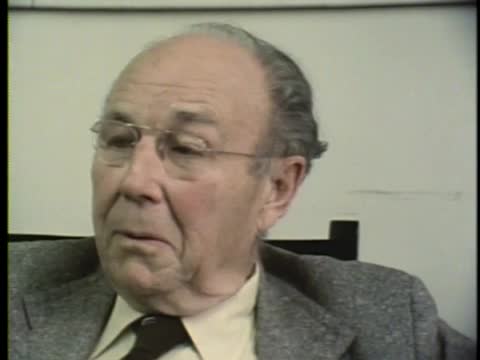
- Transcript
I don't know what I'm talking about, but I don't know what I'm talking about, but I don't know what I'm talking about, but I don't know what I'm talking about, but I don't know what I'm talking about, but I don't know what I'm talking about, but I don't know what I'm talking about, but I don't know what I'm talking about, but I don't know what I'm talking about, but I don't know what I'm talking about, but I don't know what I'm talking about, but I don't know what I'm talking about, but I don't know what I'm talking about, but I don't know what I'm talking about, but I don't know what I'm talking about, but I don't know what I'm talking about, but I don't know what I'm talking about, but I don't know what I'm talking about, but I don't know what I'm talking about, but I don't know what I'm talking about, but I don't know what I'm talking about, but I don't know what I'm talking about, but I don't know what I'm talking about, but I don't know what I'm talking about, but I don't know what I'm talking about, but I don't know what I'm talking about, but I don't know what I'm talking about, but I don't know what I'm talking about, but I don't know what I'm talking about, but I don't know what I'm talking about, but I don't know what I'm talking about, but I don't know what I'm talking about, but I don't know what I'm talking about, but I don't know what I'm talking about, but I don't know what I'm talking about, but I don't know what I'm talking about, but I don't know what I'm talking about, but I don't know what I'm talking about, but I don't know what I'm talking about, but I don't know what I'm talking about, but I don't know The
following program is made possible by a grant from the Mural S. and Bessie Evans' Mother Foundation Incorporated of Lincoln, Nebraska. Light from an electrical storm, brief, intense, and totally unpredictable. Imagine a piece of this light energy captured in a bottle to be released at the push of a button. That's precisely the power of the electronic strobe. And it was developed in 1927 by a young MIT professor. Introducing Dr. Harold E. Edgerton of the Massachusetts Institute of Technology. Historic scope light, my friends, is really something. It's used to one scramble engineering problems, and it's put the super in super speed photography.
Your eyes aren't designed for speed. You should've bought it through here. You won't even see it. You won't know anything about it, Tom. So you have to have strobe. Happy birthday to Johnny. Happy birthday to you. Okay, go out the candles. Yay! The electronic strobe. We use it daily to record personal memories. To freeze and analyze motion. As
a beacon of safety. And on occasion to capture sight's unseen. The human eye could never see a sight like this without the split second light of the strobe. To illustrate, Dr. Edgerton prepares his camera to take a high -speed photograph of a bullet at the very moment it splits a playing card in two. The sound waves of the speeding bullet will trigger the strobe. And the strobe's brief flash provides the exposure that takes the picture. Lights out. You have to have a strobe to see it. So why not call the magic lamp? What's magic lamp mean to you? It's something that you never saw before. That's
what it does. From a photographic standpoint. If you never use electronic flash lamp, you suddenly had one. You'd say, hey, this is terrific. Look at all the things that can do. Is this the fourth drop hit? Was it after the drop hit? After one drop. People like it because it puts the action into a form as frozen so you can recognize what's happening. There's also an aesthetic quality of beauty in motion. It's supposed to be real art. Well, I don't care. They want to call it art. They want to call it art. Well, I really think myself is a more electrical engineer. I don't want to get the message across the strobe. It's an educational experience. It's between the strobe one off and the time you can let go of the arrow. Well, I speak Taipei really started a long time. The first for Taipei was ever done. By the way, I thought in England they were in Fox -Talbot. To demonstrate that photographs could be made
of fast -moving objects, Talbot used the flash of an electric spark from a laden battery to freeze the image of the London Times, which had been fastened to a rapidly revolving wheel. The year was 1851. And this was the first unblurred stop -action photograph. 33 years later, Ernst Mach produced silhouette pictures of a bullet in flight, which showed the bullets' heat and sound waves. By the turn of the century, spark photography was well established. In his studies of splashes, physics professor A. M. Worthington made these photographs at one 100 ,000th of a second. While audiences were amazed by these results, the spark technique was impractical. The light emitted from the sparks was too dim and the apparatus was confined to the laboratory. It wasn't until the early
1930s that results, such as this one millionth of a second exposure of a milk drop, were achieved by an electronic strobe created by Dr. Edgerton. But it was not to freeze a splash of milk that Dr. Edgerton designed the strobe. Instead, it was to solve an engineering problem. In the mid -1920s, Edgerton went to MIT to study synchronous motors. He needed a way to observe parts that move so quickly that they were a blur. And it was for this purpose that he invented something new, an incredibly brief, controllable, and repeatable flash. Well, I had to have it to measure this motor, because it happened. The things happening so quickly that I couldn't record them. So this thing took pictures in 10 microseconds. It controlled intervals of time. And once you had it, it was everything's easy. I'd worked for three years on motors, and I suddenly realized, hey, there's a lot
of things in the world that move. I looked around, there was a faucet over there, it was right next to where I was wearing it. So I just moved the strobe over, took a picture of the water coming out of the faucet. That was the first picture I ever took, except for a motor. And Edgerton found that there were other ways to study motion. By repeatedly flashing a strobe, he could create multiple images on a single photograph. Hello, Sandy. Hi. Here's how it works. I want you to say hello to Ellen Dickson. Hi. Sandy Young, she's going to do some acrobatics for the motor flash. And be
sure to watch. You're going to run the camera for them. I'm going to run the light. We're going to make a team try to catch her in the air. Come over here. Be careful. We're getting you up in the air a little bit, so you get a picture from a low camera. And be sure to hit that corner over there. I didn't come down. And this light, I want to see you do it for it, just like you're going to do it so Ellen can judge it. All right, ready? One, two, three, go. Perfect. Ready? Now, this time I'm going to fly this light on you. And don't get excited when it flies when you're upside down here. Ignore the light. Ready? All right, go. Fine. Now, we're going to make it more difficult. We're going to turn out all the lights. And open the shutter when I say open, and then we'll take a series of pictures of her on the film. Get ready. One, two, three, four, five, six. Perfect. All right. So, that's all her. She's getting the right
light, the right subject, the right film, the right flash. It's all together, and you got a nice picture. All the high school kids use flash. Everybody uses flash. It's, uh, it comes free. It's like the sun. It's there. Shoot. On this fall day in his hometown of Aurora, Nebraska, Doc has chanced upon a photographer who is a fan of his work. What the flicking light you got on that thing? That's a stroke light. It's been a bag. That guy by the name of Edgarton, I think, way back in the 1800s, wasn't it? No, I don't remember when he did that, but it was a fantastic invention. Oh, that was his last week at the Beijing team. Is that right? Yeah, it was a stroke light. It was for modern. They are. They didn't have them in the old days. They were all made in Boston and Cambridge. I designed them and we built them, and I had the lamps made, and we were trying to get Eastman to sell them. Yeah. They had to work that pretty well. I don't remember who was 40 or 41, but I know that my dad bought one of the very first sets. It was right before the war. Yeah. And when the war
came on, I didn't know. 65 years earlier, Harold Edgerton was a high school student here in Aurora. He was born in Fremont, Nebraska. Later, his family moved to Washington, D .C. But they preferred small town life. So in 1916, Doc came back to Nebraska to Aurora. Then, as now, the courthouse was a landmark of the town. There were four 200 -wide lamps up there, and they used to burn out. And I had a job in the electric light plant, so I would have to come down and climb up the stairs and reach out. We out over the, unscrew that bulb. I can still remember it's a long way down. After I graduated from high school here, I went down to the University of Nebraska because I was interested in electricity. I intended to go back and work for the electric light people here.
And my father set out to go east and go to MIT. Well, I never heard of the place, but I asked a student from Aurora who had gone to Harvard where they'd heard of it, and he said, oh, yeah, he said, look me in the eye. I said, they only take smart people. I didn't take the hands. And it was a good thing, too, because it was during the course of his graduate studies in electrical engineering that Doc designed and developed the strobe. The first prototype was ready by 1931, and with the help of two former students, Herbert Greer and Kenneth Germeshausen, it wasn't long before there were a whole battery of magic lights for many specialized uses. Doc soon realized that strobes could be used to make high -speed movies. He designed a new type of camera, one that could whip film through at a thousand
frames per second in synchronization with a pulsing strobe. Once again, he drew upon every day life for his subject matter. The first prototype was designed to make high -speed movies. The first prototype was designed to make high -speed movies. The first prototype was designed to make high -speed movies. The first prototype was designed to make high -speed movies. The first prototype was designed to make high -speed movies. The first prototype was designed to make high -speed movies. The
first prototype was designed to make high -speed movies. People had never seen movies like these before. New spread far and wide about Doc's invention, and before long, a man from Hollywood came calling. He said, I worked for MGM, and I'd like to invite you to come to Hollywood and show this camera to all of our people, and we'll take some pictures with it, and maybe we'll make a short with Pete Smith, who was our comedian. The film was called Quicker in a Wink, and it won a 1936 Academy Award for MGM. First, Charlie Lacey will hit the ball through this telephone book, maybe. Here it comes. Wow, look at that. Charlie has ruined a lot of good names, and good phone numbers, too. I always thought that my cat, in lapping her milk, curled her tongue up, but now it's revealed that she curled her tongue
down. See? In other words, she brings the milk up on the underside of her tongue. Now, see how smart you get when you go to the movie? Most of you have heard, and perhaps have even felt, that cute little drill. Oh, wow, there it goes. And so it is with this happy thought that we reluctantly bid farewell to Scobasco and stay him into the setting sun. Years later, Doc and his colleagues added the finishing touch, matching slow -motion sound to high -speed pictures. This is the first time I've ever seen Scobasco. I've never seen Scobasco in my life.
I've never seen Scobasco in my life. These days, Doc uses a modern version of his early high -speed camera to film a slow -motion sequence of milk drops falling onto a plate. No, ready to fill up the driver. Well, we're going to try to make this milk drops flesh into a crown shape on a plate. So I'll put this plate on here, and then I'll let the drop come down. The first drop will give me some milk to work on. And then the second one will hit the first drop and make the crown. The second drop will give me some milk drops.
The second drop will give me some milk drops. The third drop will give me some milk drops. These appear to be a series of colored drops filmed in slow -motion. But the slow -motion is just an illusion. Actually, what we are seeing is a stream of water pumped in pulses, splashing onto a metallic plate at normal speed. The individual drops are revealed by a strobe flashing at the same rate as the pulsing of the pump. Doc calls it his fiddler machine. And he has
more than one. What it is is a pump pumping some water with a little dye in it. And it looks like a continuous stream. But if you shine a light on it, it's flashing 60 times a second. It shows that it's actually a series of drops because the pump is working intermittently. And you can make it appear to go either down or up by changing the frequency of the light. And the exhibit hall is two push buttons. And the visitors can push one gizmo ordinary light and push the other button gizmo strobe light. Or they can push the two buttons together. Doc has a portable piddler which he takes with him when he travels to demonstrate the strobe. Today, he visits a restaurant in his hometown of Aurora. Come on over a little closer. You've got to be close. You can't be stand
-offish in this business. You ready? Yes. Are you ready? Yes. Okay. Now watch it real close. Is that dirty? When you show the light on it. But your eyes can't tell it. Your eyes are real good. We're ready to move fast. I like to see people recognize they've seen something they've never saw before and they've learned something. Their eyes open up to me. They're so odd by what they see. It's a good educational shock. Now watch it. Hey, don't go away. You ready? Turn and off makes a difference. It was worth nothing to do it. Now you, you've got to follow the switch, you've been to the property, you've got a prize. Yeah. Oh, yeah. One for you. Thank you. Thank you. That's it. That's the way Apple saw us back here at MIT. But we don't recommend it.
Well, you can take a picture of a bullet. You go in a dark room, you put the camera on bulb. You open the camera up and the bullet comes through it. Sound hits the microphone, turns the light on for a minute of a second. Make sure exposure. Then you close the shutter and put chains of film. Ever since I've been here, I've been giving lecture demonstrations. I drag in all kinds of equipment and run it and let it to see it. My argument is that that's the way to get to the real world is to go out and work with it. And now I want to demonstrate this big struggle. Do you like to see a big one? Okay, here's a big one. And this is a strobe light. This is not a portable job. You don't attach this to the camera. But this was made in the war when we were having trouble with the Germans. We used to want to know what they were doing at night time.
Well, you fly over France and Germany and see what they're doing. Throughout World War II, tracking the progress of enemy troops in daytime was always difficult. But at night, it was almost impossible. The only method of observing the enemy at night was to take photographs from an airplane, using leftover flash powder bombs from World War I as the light source. But this technique was far from perfect. And in their search for something better, the Army contacted Edgerton. The year was 1938. Well, one Saturday afternoon, when we were down the lab, we were working on a fellow commencing. Where's that blinking light to take care about? And I said, it's all right there. The man was Colonel George W. Goddard of the Army Air Corps. He wanted Edgerton to create a new type of strobe, one that would be powerful enough to enable pictures to be taken from an airplane flying a
mile high. Doc and his associates went to work on the top secret project. The end result was a 57 ,000 watt second strobe package, powered by eight kilowatts and weighing 3 ,700 pounds. Its power was impressive. You ready to go, Bill? As Edgerton enjoys demonstrating. All right, get ready. One, two, three, push. We're not in my yardstick. Preliminary tests were made, and Doc went to war to assemble a squadron of night -photo pilots. But the pilots resisted. They would rather fight the war than take pictures of it. So we had a morale problem. Couldn't get anybody to fly. That's when I worked up that nudist camp story. I heard about this news camp out in New England. There's somewhere in there. I found the coordinates, so I know exactly where it was.
And I was told that volunteers want to take some pictures. Immediately, they perked right up. They flew so low that people on the ground were spelling out things with the towels to say, reporting you. It was a lot of fun. And they finally got interested in it, because it's a real challenge. The Americans had been won over. But he still had to convince the European pilots that strobes were better than flash bombs. And we had a big meeting up in one that's somewhere. Everybody sat around the table and drank coffee and finally said, hey, there's too much talk. You're not of action. Why don't we go out and take some target? And you try your no -good system, and we'll try ours, and we'll see if it's as bad. And they had a pill to them. So they said, well, we don't know what target to try. Well, I said, I can suggest one that nobody will complain about in the slightest. And they said, what's that? And it's Stone Age. I said, it's out in the country. There's no lights around it. And nobody lives out there. And
it's a nice big thing, and it's easy to photograph. We'll take night photos as Stone Age. The challenge was met. And this photograph of Stonehenge was taken from the air. At the same time, Edgerton got this shot from the ground by opening the shutter of his camera in time for the flash. It was clear that the strobe system was superior. The value of the aerial strobe was dramatically demonstrated, the night before the invasion of Normandy, June 6, 1944. The photos showed little or no movement of enemy troops, indicating that the Germans were unprepared for the invasion. The clouds were down about a thousand feet. And the flash bombs couldn't be used at all because they were designed to be working at 10 ,000 feet. So those pictures were useful. They were used all during the war.
The atomic bomb brought about an end to World War II, and it ushered in an era of nuclear research. This time, Edgerton was called upon for his expertise in high -speed photography. The Atomic Energy Commission began above ground testing of atomic explosions on Pacific islands, like Inuitok atoll. They asked Edgerton and his associates, Girmeshausen and Greer, to form a company, which later became EG &G, and to design a testing camera to analyze nuclear explosions. High -speed cameras capable of taking several million separate pictures per second are placed close to zero point. They will record the story of nuclear forces from a vantage point where man himself dares not stand. 9 -8 -7 -6
-5 -4 -3 -2 -1 -8 -0. Edgerton's cameras also revealed the devastating effects of atomic blasts on test structures. If you're working with anything, anything, and you want to understand it, you've got to see it and record it and learn all about it. If you blow up an atom bomb, it happens to instantly. Most shutters are way too slow, so we built some magneto -optic shutters that work in a minute to a second.
I had a long -focus telescope, and you want to know what's going on in the early stages. No more scientists working on the facts. Our role is to find out everything we can about the thing. And that was where it started. The EG &G Incorporated started right after the war as an in -house captive thing for the nuclear energy. And we hired a lot of people and we set off a lot of atom bombs and did a lot of experimental things. And then suddenly one day we had a agreement with the Russians not to have any more atom bombs. All my friends came around here and said, oh, it's too bad your company's going down the drain because the Russians and Americans are going to not do any more. And I said, oh, yeah, I learned a lot long ago, not to get excited when people panic. Well, that was the best year we ever had because all the people
got up early in the morning and started thinking about other things to do. And it was all kinds of things to do. One of those new projects was bird photography. All right, let him go. Terrific. Well, birds are often hard to catch. If you get them timed and get them in front of the camera, get them a photograph. And you have to have strobe to get real sharp, distinctly pictures of the wing tips that are going high velocity. But as spectacular as these photographs were, Doc had a hard time finding someone to publish them until one evening. I went to Rochester, New York to a cocktail party and there was a bunch of people up there in this old Eastman house. And over in the corner was an old gray -haired man standing all by himself drinking a ginger ale. So I went over and had a ginger ale and went over and talked to him. And I said, my name's Harold Edgerton. And he says, mine is Gilbert Growner. And I
said, Gilbert Growner. I said, aren't you the father that runs that yellow back magazine down here in Washington? Yeah, yeah. He said, well, I said, I'm glad to meet you because I've been writing letters to you for about two years now. And I get back these bed bug letters saying, you know, we don't, he said, what was it about? And I said, it's about bird photography. There's a new method of photography. There's going to photograph birds of the wing sharp and clear. He says, is that right? With us from now on, send all the letters marked to me personal. And from then on, I had a friend in the house. And geographic has been forward pictures. From the quick moving world of birds, Doc turned his strobe to the undersea world where movement was sometimes imperceptible. And I built three
units. And we were going to go on steady, the sediments in the harbor. Because every day the tides are going in, the tides coming out, and they're taking the mud, moving around. And I was going to put those down there and learn how that mud moves. Well, this shows that landlubber can't visualize what's going on in the sea, because the bottom doesn't move. It's the mud goes through. And the gravel stays. And it's covered by all kinds of wildlife down there. And lo and behold, these movies were okay. They showed starfish and all kinds of things walking around on the bottom. The human being is no good for looking at starfish. If you look at starfish on the sit on the bottom, he just sits there. That's because your time reference frame is no good. He's actually moving very slowly. And when you speed him up 200 times, he's going around doing all kinds of things. One thing just led
to another. Because I got a telephone call that said it was some unknown man who came in from France. A young Frenchman with a big nose and a name Jacques Cousteau, nobody ever heard of him, but he's here. And could he come up and talk to you about underwater photography? Well, I said, sure, I'll talk to anybody. So he came in. And I found out he'd invented the Aquaman. And he hadn't been in MIT more than a couple of hours before we had a tank on his back. And he was testing my latest underwater strobe in the swimming pool. And that led to, I don't know, many, many expeditions on the Clipstone and a lot of articles in the geographic. And you go out in the ocean, you look around, you see nothing in the water. And you know that down the bottom is all kind of things happening down there. We took pictures of the bottom of the sea, up that time, the very few pictures. But neither the bottom of the sea. Showing what's down there. But to explore the vastness of the ocean, proved difficult for strobe photography alone. Strobes could illuminate only
small areas. And if the water was murky, the pictures were no good at all. A new tool was needed. Enter Sonar. Sonar devices have long been used aboard ships to measure the water depth beneath them. They send out electronic signals which hit bottom and echo back again. Edgerton found that Sonar could be used to make pictures with sound. Just as photographs are made with light. At Boston's Charles River, he developed and tested a whole new array of Sonar devices. One called a boomer or a finger penetrates the underwater mud to reveal objects below. Okay, now the deer end goes
forward. Down to it, down about three feet. Things are in the water that deflects sound. Things that blow the bottom reflect sound. It doesn't seem to be any end to it. And once we developed this machine, this simple little invention is marvelous for helping everybody. Another of Edgerton's Sonar inventions, the fish, is a side scanner used to locate objects which project above the bottom of the sea. Doc and his assistant, Bill McRoberts, demonstrate. Now this sonar record should go closer and closer. We'll leave it up a little while. That's enough. We always do this test before we go out to sea. If it's working, we should be able to see the ceiling. If there's a ceiling, here's the bump. And when you check out, all we do is always wrap
it up and get ready to ship. So it's interpretation of these marks. When you put it in the sea, they'll tell you where the ship ranks. Are in rocks, muds, sand, other things. I was in Athens with Cousteau on the Clip Soul. And he came in one day and said, is that side scanner a good for picking up a ship that's a thousand feet long? Think you can find it? Well, I said, if I can't, we better go on. With this sonar, you're going to be able to find it in no time. Their target was the HMS Britannic, a sister ship of the famed Titanic. Launched just six months before World War I, it too was doomed, sunk by a German mine off the coast of Greece. Edgerton joined Cousteau and the Clip Soul in their filmed search for the Britannic.
Hour after hour, under the watchful eye of Dr. Harold Edgerton, famed electronics inventor, the sonar signals reveal a lengthening profile of the sea bottle. When we went out and looked, the next time we found it, there was a long way from where anybody ever thought. There it was. It was just as clear and sharp. And Cousteau dived on it and took a movie on it. It's one of these specially movies. Fantastic. He dived on with his little submarine. It was about 350 feet deep. With his submarine he could do it. And there were other wrecks to find. Closer to
home, Edgerton used his side scanner to search for the elusive USS Monitor. The Civil War battle between the USS Monitor and the Confederate Merrimack became legendary in maritime history. The two ironclad ships fought to a standoff, each claiming victory. But about a year later, the Monitor fell victim to a storm and sunk off the coast of Cape Hatteras, North Carolina. It remained there for more than 100 years. The Monitor was a civil warship. It was sunk long, long time ago. A very famous ship. It had a marvelous history. And the question was where is the Monitor? And lots of people had looked for it. And they claimed they found it. But when they went back, other people went back. There was nothing there. So it was like Loch Ness Monster. I mean, a lot of people have seen it. But you can't go back and pull the body out and exhibit it. So I knew that the Monitor had to be somewhere.
And the question was how to find it. We discovered the Monitor with a side scan sonner. And that's the sample of the side scan sonner. That's the kind that found it. This ship composes them long time because the turret is underneath it. And it dipped over in the turret then along. Finally, the archaeologist said, no, that ship's upside down. When we were down, it tipped over and went down, blowing on its tail end and broke the propeller off. This is a boiler. And then it fell down on top of the turret. That's all the sharp picture. And there it was, revealed for the first time by underwater cameras. Excellent shots, look at that. Two of those corals are really quite large, aren't they? They are. Well, that's a good shot of the gun for it. We really got it. Yeah, it looks really good, Richard. Looks good.
Edgerton's notebooks are full of the records of his success. But as every scientist knows, for each experiment that works, there are many failures. Every experiment is a success. And the ones that know work are really more important than the ones that do work. Because you can check them off. And I think that's one of the things that students need to learn. Most of the things you do in life are a failure. When you find out what the failures are, and then you don't do it that way next time. Right now, we're going to the raindrops. The student I'm working with and I want to know why aren't raindrops bigger in a certain size. Okay, you ready? I'm ready. Let's go. Okay, everything's on. Okay, go. Really? Looks like we've got it. Well, it's about the tone. The thing I really like about working with Doc is that he doesn't feel like he
needs to have a half million dollars worth of expensive equipment to do this sort of research that he likes to do. All the questions that he likes to answer, all the questions that he asks are fundamental questions about what occurs in nature. Things that people haven't seen before, things that people, you know, that at least he's interested in seeing. Turn on the lights, spirit. Each new role of film that we develop is a chance to learn something new about the thing that we're studying. We first started on this problem over the summer, and what we were doing was we were pouring water down a staircase in one of the buildings over here at MIT. It's just Doc downstairs with a camera, and me upstairs with a pump, and we're just bringing it over the edge of our railing. And as we got more and more involved with this, got more sophisticated. Oh, God, more uniform exposure with that heavier diffuser. He's putting scratches on the film. It's an exciting process for Doc, because for Doc, it's a chance to learn something. He hasn't learned yet. There we go. There we go. Oh, God. He wants to turn on the lights even before the film is fixed completely, just because he wants to see it already.
Even when the film hasn't cleared and is still white in the fixer, and I'm cringing because I'm thinking about, oh, no, the film's going to be ruined. He's got it up against the light, and he's looking at it with a scoop, and you're saying, hey, look at that. That's really great. Okay, so here comes the drop falling through the field. To bam. Beautiful. Look at that. I'm not breaking my hand with small drops. Right. He's got a lot of ideas that he wants to follow through with, and when he wants to do something, he says, well, come on, let's go. And when he doesn't want to do something, he says, well, I'm retired. And that's how he gets out of a lot of things, that gives him the free time. In a sense, he's more happy now that he's retired than when he would have to teach class, and had to go to faculty committee meetings, and stuff like that. I think you know that we're having an open house for our graduate students in September. You might want to log that into your... What's the date? What's the date? September. When I first came to MIT, I walked into Doc Edison's office, and I found his whole life work here displayed before me, and when I went out into our laboratory, I found all of the things that have interested him from high -speed
photography to the sonars. He's a many -faceted man, and many, many people that meet him are able to identify with him. And he gets the echoes back. Many students come here and think that there is nothing left to be done. Everything has been found, everything has been invented, and he doesn't believe that. And this particular bat took his own picture by flying through this beam of light, and I was really proud of this, and I took it into my class, and one kid in the back says, hey, why don't you try to get a picture of the bat catching a bug? And I said, well, that's impossible. It's enough trouble just to get the bat in the focus, but to get the bug in the bat. So the next class, this student came in with a worm shooting cannon. That's Dave Calder. And here's his worm shooting cannon.
So there's no problem to get a bat in the worm. See it, see it, no problem. All right, move it just a little bit, and just a trifle more. That's good. I worked with Doc for nearly 35 years. Doc is always the leader, and he knows what he wants to do, and he wants to do it quickly. Doc looks at time in terms of microseconds, and a student will come in, and he'll ask for some of Doc's time, and Doc will say, okay, I'll give you five microseconds. Well, I think having an interest in something is very important in
life. You have to get up in the morning and want to do it. And I used to tell me, if you don't wake up at three o 'clock in the morning, and you wanted to do something, or you're wasting your time. Time is very precious. We're wasting it right now. I got through to you tonight. We're wasting it right now.
We're wasting it right now. The preceding program was made possible by a grant from the Mural S. and Bessie Evans Matter Foundation Incorporated of Lincoln, Nebraska. Meet Dr. Harold Edgerton.
When he invented the electronic strobe in 1931, he made it possible for people to see things that happen in the blink of an eye, and photography has never been the same. It's all part of Edgerton, and he's incredible seeing machines. It's all part of Edgerton. Light from an electrical storm,
brief, intense, and totally unpredictable. Imagine a piece of this light energy captured in a bottle, to be released at the push of a button. That's precisely the power of the electronic strobe and it was developed in 1927 by a young MIT professor. Meet Dr. Harold Edgerton. When he invented the electronic strobe in 1931, he made it possible for people to see things that happen in the blink of an eye, and photography has never been the same. It's all part of Edgerton, and he's incredible seeing machines. Thank you.
- Producing Organization
- Nebraska Public Media
- Contributing Organization
- Nebraska Public Media (Lincoln, Nebraska)
- AAPB ID
- cpb-aacip-ca1b184d61f
If you have more information about this item than what is given here, or if you have concerns about this record, we want to know! Contact us, indicating the AAPB ID (cpb-aacip-ca1b184d61f).
- Description
- Program Description
- [Description from the original press release] Internationally renowned inventor and scientist Dr. Harold "Doc" Edgerton is the focus of the Nebraska Educational Television Network's award-winning documentary, Edgerton and His Incredible Seeing Machines, airing in an encore broadcast on NOVA, Tuesday, July 23, at 7 p.m. (8 MT), repeating Thursday, July 25, at 2 p.m on the Network. The 60-minute program—produced and directed by Nebraska ETV staff member Gary Hochman, with Christine Lesiak as cinematographer/editor— documents the activities of this inventor of the electronic strobe and pioneer in high speed photography and sonar research. For more than 50 years, Edgerton, a native Nebraskan and former Aurora, NE resident, has been fascinated with experimentation which some might consider mundane—what happens to water as it falls...how a balloon pops... what happens on the bottom of the ocean. Some of the topics featured in the documentary—made possible by funding from the Myrl S. and Bessie Evans Mather Foundation, Inc., of Lincoln, NE.—include Edgerton's work on strobe bullet photography; the first film of atomic blasts, and bird photography techniques; and development of underwater strobe and sonar gear for Jacques Cousteau. The program has received a Red Ribbon Award from the American Film Festival of New York City, a CINE Golden Eagle Certificate, and a Golden Gate Award from the San Francisco International Film Festival in the Local Station Documentary: Nature and Science category.
- Copyright Date
- 1983
- Asset type
- Program
- Genres
- Documentary
- Rights
- Access to material from Nebraska Public Media’s archival collection is for educational and research purposes only, and does not constitute permission to modify, reproduce, republish, exhibit, broadcast, distribute, or electronically disseminate these materials. Users must obtain permission for these activities in a separate agreement with Nebraska Public Media.
- Media type
- Moving Image
- Duration
- 00:51:29;00
- Credits
-
-
Producing Organization:
Nebraska Public Media
- AAPB Contributor Holdings
-
Nebraska Public Media
Identifier: cpb-aacip-35055349056 (Filename)
Format: 1 inch videotape
Duration: 00:46:25
If you have a copy of this asset and would like us to add it to our catalog, please contact us.
- Citations
- Chicago: “Edgerton and His Incredible Seeing Machines,” 1983, Nebraska Public Media, American Archive of Public Broadcasting (GBH and the Library of Congress), Boston, MA and Washington, DC, accessed September 23, 2026, http://americanarchive.org/catalog/cpb-aacip-ca1b184d61f.
- MLA: “Edgerton and His Incredible Seeing Machines.” 1983. Nebraska Public Media, American Archive of Public Broadcasting (GBH and the Library of Congress), Boston, MA and Washington, DC. Web. September 23, 2026. <http://americanarchive.org/catalog/cpb-aacip-ca1b184d61f>.
- APA: Edgerton and His Incredible Seeing Machines. Boston, MA: Nebraska Public Media, American Archive of Public Broadcasting (GBH and the Library of Congress), Boston, MA and Washington, DC. Retrieved from http://americanarchive.org/catalog/cpb-aacip-ca1b184d61f