Oregon Art Beat; #201; Ken Kesey
- Transcript
I know you never want these print sprays to happen, what did you do? You dabbed it off of the wine? But when he, you know, I were talking about Neal and his influence on not just us, but lots and lots of people. And the difference between people taking drugs now and taking drugs back then. You know, where are you going to get somebody talking about the lower endocrine glands, and the Kundalini to cut stuff at the back bone, and we're actually fourth dimensional being, and they're having a third dimensional world, and him running that off, it just became a constant waterfall all over us all the time. And philosophy, and we're going to put a little thing on the website about Neal, so I'm going to call Nealisms, because if we go through this stuff, we come across wonderful things. Like, the matter you get, the matter
you go. I mean, that applies to road rage and to our whole situation that we're faced with now with these kids shooting people into the schools. This is people who've gone mad, and they know it. But Clint Eastwood protects them. So let me ask you something. We may know who Neal Cassidy was. What was Neal Cassidy? He thought he was an avatar. He'd been given a life reading by Casey, Hugh Lynn Casey. Not at your case, but Hugh Lynn is his son, and was told in that life reading that it was his job to lead the young people of America. And he never doubted it. He worked very hard at it all the time, and with as much knowledge as he had. This is a guy that never completed the eighth grade. He's in there talking. He could quote
long pieces of swan's way. You know, a page after page by my heart. And this is a phenomenon you won't run into every day. Everybody who knew him was tremendously influenced by it. Without Neal, there wouldn't have been on the road. Without that character. And just Carol Wack, it wouldn't have happened. Burrows wouldn't have happened. The whole movement that took place in America in the 60s wouldn't have happened. You trace it back, and so much of it goes back to this guy. And the way he looks and his bill, the way he moves, the way his face looks, the stuff that he was saying, the enthusiasm. A lot of people thought of him. He just, this is drugs talking, but he read the stuff that he was writing from jail. It's the same stuff that he's saying. And he wasn't high on the speed in jail, this is just him.
Everyone that I know that was in contact with him, whether it's Larry or Jerry Garcia or any of us, everybody feels the same. This was an exceptional human being. And this happened to be his pulpit that he was preaching from, is that bus seat. And he appreciated it long before we did. And he knew what he was saying was important, but what he was doing was equally important. The movement, the lilt that he had and all this stuff he's doing. In the first episode, you see him get up out of the bus seat. The bus is wailing down the road, on the way to Texas, straight road. He comes back in the bus, gets in the refrigerator, he gets something to drink. He fools around with a girl, he kicks a bunch of boxes. And every stuff, he'll just reach up there and touch the steering wheel. And all of us are sitting there bouncing along this bus to stun and stone to do anything about it. And Cassie is up out of the seat
for minutes. And the bus just wails along. Okay. I'll let you ride to Texas, hang in there. I'll squirm on you. You're in or off. The bridge is not natural. It's a free bus. It's a free bus. What do you mean? What do they do? What do they do? You're a mixed crowd. I know, no, no. Are you a mixed crowd? They were wondering what was asking if we have black guys on enemy. But we should have happened to go by that black guy on the freeway at that time. That's the end. When his eyes saw him in the US, it's just the one and only one thing. You don't want to have to get in. That's what the warning's for. Because sometimes you don't think. He'd start to write my name. And I saw him born again. And I was in the portion. I don't even recall a little bit of chronologically. Okay. On the third movement, make it for him. Put it on point. Decision. That's the right name for you. And I fell. And I'll tell you why it went over. Because of my spine, it's a Kundalini. You get active
Kundalini as a purified, not the real Kundalini that meant sent to a living gentleman by the four lower centers of the infant land. The center supports the toughest plant, the sex splans, the gonads, and the so -called the findings in relo and thylates. Thyroidia and thylates. And if you need, I can do a beta of this and send it to you. In fact, if I were to set up right now, I can do it right now. But it's such a bitch to set up that beta you have. Yeah, it would also be really good if I could borrow one of those tapes to use in the story also. Yeah, you pick the one out that you need. Okay. All right. Close this project. We'll go over to the one where we've got us going into Millbrook. I think this is the new storytelling
media. We're able to do stuff now that Chaplin would marvel at. You know, everybody has the equipment. I was in a store last year and I saw this kid look about 14 and his folks there were in the video start, and he was buying a video mixer for $3 ,000. Now, what's he going to do with that? This is a sharp looking, nerd -like kid that has something in his mind. This isn't just to take pictures of Aunt Lattilda out on the porch eating hamburgers. This is something this guy has in his mind he's going to do. And just like Shakespeare, if you're going to be Shakespeare, at this time, you're not going to be writing with a Quill pen. You know, this thing here, this is the pen. And Shakespeare would be using it to write with. And what I'm talking is blasphemy,
you know, to New York. This is heresy. This is talking the worst kind of talk you could talk about it, but actually getting in there and you mean producing stuff and selling it yourself right over the internet. That's not legal, is it? And that you can feel New York and L .A. shuddering as this thing comes. That there is going to be new centers of communication, how finally there's not going to be any center of communication. On the bus, we have a FM transmitter that it's a one -lot transmitter, a transmitter, about a mile, and we bump it up to about 12 watts. And on the road, with people who come by and will hold up signs, it says, Dial 105 .7 K -Bas coming to you from the guts of nowhere. And people just see them rich over there and dial the little radios in and give you the thumbs up or blink their lights to
let you know that they're in a, and we're talking the usual gibberish and playing music. And then, by some miracle of electronics, the truck drivers begin to penetrate our thing and get into our system, even though we don't have a receiver, a CB receiver. They're sending it strong enough that we're picking it up over there and bouncing it back into the cars that are going by. So we got a little kind of puddle of communication, moving up the freeway. It's not pinned down anywhere. It is just communicating with itself and moving along. And our best audience is the green tortoise, man, when you see a green tortoise, you know you got your audience right there. We saw a green tortoise yesterday. Well, this hasn't replaced words on paper for you, hasn't it? It's changed the way I look at words on paper. There's certain things that you don't want to read on the internet because they're too long, they're too thick, too turgid, and too gray.
So it's changed the length of my sentences to where it comes across to the viewer as quickly as possible. That's why I don't think it will be just long, long drawn out novels. Because you don't need to describe her bedroom if you can show a picture up there. And so much of the writer's effort has gone into decorating the place to setting the scene, to getting the lighting just right, to putting the sofa over there, so it frames that one area of the room. And a lot of what we think of as storytelling is just window dressing. And I see it changing very fast, and for a very positive reason. Do you miss the art of description? No, I don't. The characters are so much more important. You
look at Shakespeare's stuff, because he described what anybody is wearing, what the place looks like, or how the air smells. He's got the character walks out there, does his number, and from that character, you get the idea of what Shakespeare wants. But he leaves you free to put that idea in. You go through and pick up any novel. You're going to see large pieces of it dedicated to describing the heave of her breast as he breathes cigarette, smelling message in her ear. And that's fun, but it's a novel. And a novel is a novel, it's where the word comes from. It's only three or four hundred years old that it's most. Storytelling has been around a lot longer than that. And a good storyteller. He draws this audience in around the campfire. The light comes from beneath his eyes, like footlights, and the bounce off to these kids, who are already
scared anyway about the stuff that goes on in the woods, and he brings them in here. He does a little magic number with them, and they learn something from it, and they go away from it. Their eyes big, and their heart's thumping, and that kind of storytelling means you have to live people there. With a novel, it's a one -to -one situation. Your novel is writing just you and the reader over there. That's always happening. On TV, it's a one -to -maybe -what, eight -situation when you do a piece, maybe at one time in one house or eight people. A movie, you go to a theater, and it's a one -to -a certain number of people, but when you've got something that is a real story and can really grab you, it's a one -to -this -people who are part of the story, right there, that it relates to it. I'm so glad we didn't do this before now, because we didn't understand it in the first place. The
other thing is that we would have done a job on it, just like it was seen on the sci -fi channel, the thing they call exposures, which is short films. This is Tim Burton and lots of young Turks. What they're doing is trying to get a job for Disney, and that's not what a real storyteller is doing. So is the Internet a campfire now? This is my metaphor. I think it is. I think it's important. And I think that also there's lots and lots of people roaming around in video. I've got a dish, and pretty soon you see just about everything they've got. They are showing John Wayne's the searchers just over and over, because they copyright lapsed on it, and it never has, let's see. It never has been put back together, so anybody can show John Wayne the
searchers. And you know the thing, the flap they're having about music over the Internet, I saw Barlow doing an interview about this, and he's saying, yeah, this is not going to hurt you. Let them go ahead and do their taping, a bootleg taping. Like Garcia said, when they started trying to stop people from taping a great format concert, she says, let them have it. You know, we're finished with music when we finish playing, and it didn't hurt them. And we're sending these tapes out with no credit card numbers, with no money. We're sending them out, and people get the tapes. They look at the tapes, they decide if they like it or not, and if they don't, they send it back. We've got two or three tapes back, as all, but everybody else is paying. That's the fact that we're acknowledging those people are out there and they're acknowledging we're here in a bond between us. It says, hey, we trust you guys, even if you are a prankster. Because the most untrusty thing you can do if you're a prankster is be trustworthy.
Now, this is another section that we're working on. This is the pulling in to if if there. One day the bell shouldn't have came in to the king's house. Oh, wait, wait. Now, it was a long time before I knew this, that there is an American setting and an European setting. I didn't know that. So, we have over here, it's now set on the PAL setting, to switch it over. Let's go over here and see if we can get a good clear picture. When it goes over here to this other setting, to our setting, look how much clear it is. So, I worked a couple of years without knowing this. It wasn't anybody's fault with my mind, but I sure wish I didn't know before. One day the bell shouldn't have came
in to the king's house. And he says, king, all the wheat has been blended. All the grain that we're going to be bringing in this year has been infected with a fungus that turns people crazy when they eat it. And the king says, that's terrible, that's terrible. If I'm going to be the king and know how these people in my province are feeling, shouldn't I go crazy with them? But, you and I will make a mark on each other's foreheads. So, when we see each other later, we will know that we chose to go crazy, whereas everybody else is just crazy. And I've got a lot of use out of that skeleton. Much better. You
get a much truer answer from the skeleton. I'll go to the back of the bus and told, we're going to take you kids out to see Tim Lurian, Dick Alper, about Mexico. Thank you, Pichacán. All we're supposed to do with him a year before, meet him down in Gihuatnejo, but by then, they didn't bust it, kicked out. So, I'll take you to the back of the bus. On the road, this meeting will be a strange meeting. You like quick, the last few shoots, the easier things are going to be. You were right, by the time we got this. And I was getting started because of the Cassidy, and, you know what, I think Peter Losski, there are two of them, and two of them, two of them, two of them, two of them, two of them, two of them,
two of them, two of them, two of them, two of them, two of them, two of them, two of them, two of them, two of them, two of them, two of them, two of them, two of them, two of them, two of them, I'm a great man, and it took a long time to know how great he was. He died so well.
See, it was my ambition to really liberate the world. Why not? I mean, why sell for anything less? Our bout A, and is, of course, to bring down - A lot of people don't understand. It's completely materialistic. It's completely - That he's Irish. The bottle of beer is intelligent. And once you understand that - It's still power, it's about the planet. The Harvard administration did not agree. Look and wrote it. In 1963, Larry was dismissed. It had been a century since he was - I mean, Larry had fired up a professor. The last being Ralph Waldo Emerson. Larry was determined to continue his psychedelic work outside the rigid halls of academia. In 1963, he founded the International Federation for Internal Freedom. In Milbrook, Milbrook. William Burrows. Alan Ginsburg. Jack Carillac. This is Babs' son. Everyone
came here to find answers to all the questions. Then, one day, a man came posing questions to all the answers. Beatnik Legend. Neil Cassidy. You heard the announcement that there is going to be a smoker name. Shut it off! When a trumpet child returns to the ancestral home, he lots of quiet arrival. Smoke bomb the light. Smoke bomb the light. As in traffic's making, now we're going to have to have a little help from the navigation department here at the ancestral mansion. We'll have been through the campaign of Wikiaugh. The fever at New Orleans. And I think you've been introduced all around. At the will, we have a speed limit. Now, so limit night at the other night. After coming down the Blue Ridge Parkway, never missing again. Oh, thank you. All right. Yes, I said that. Now, I have to reiterate all this business. You see, you at the ancestral mansion are not the same crew that were there the last trip that we came back to the house. And I have to inform you just what's exactly going on. We're high and they're coming down. Just what's going on. It was about 10 .30 in the morning. We just
reached our stride. They thought we were there for a 400 meter. And we were there for the 5 ,000. We were the yellow upstarts from the west coast. They're the established regions for the east coast. And it's time to stop by. We think it's better and better. We didn't take full advantage of each other. That's sad. But they did give us a chance to soak the stuff off of the stairs. But you can see, looking at these pictures there. How much effort has gone into our enterprise? You get this thing there. A more sprawl around here like Albania. You just leave the entire acknowledge and nibble in the insects. And finally, Dick Albert realizes it's a good idea to do the same thing than we did with Moonlight Sinatra. And dump them into the water. You can see if we could wash some of those fattened stuff off them. Where is the rock?
This is where Millbrook comes from. They... The Mill up there. And... This is Rich Mansion Estate. It was as pretty as you can get. This is a Yates Point. We used... ...performing in England. And it worked good for this restaurant. Now I'll go back through here and add water. And try to make the water move as this moving. Just a sound of water. It makes things so much real. We know it. That's Rich. A
sensuous song. And I last year a movie. It's Rich. Rich. Now, what I've done with this is I've jogged one of the sound tracks a few frames. To give it a natural echo. I haven't got it just right. It's jogged too many frames.
Rich. So after this event and the bus later on, we found we recovered with leeches. A quarter of an inch, eighth of an inch long, all over us. No matter how rich your mansion is, you may have leeches in your mill pond. Now this is the party that we had later that night. Up in the meditation chapel where we weren't supposed to go. And I want you to see if you can guess who is singing. We lucked out. We had the map for Normandy when we had Normandy right in the bus.
I think the whole scene should go in on the chapel. I saw a bad thing back there. By the crypt or the crypt, there was a hole with water and a trap for children. The radio. Well, kids don't even know that scene at all because that's the meditation house. Somebody in there, that's off limits for everybody. If they ain't there, ain't we got fun? Sweet little baby. If they ain't we got fun, don't you know? I've read the last two thing of Parallax letters. And Charters. It's so sad. It breaks your heart. Yeah, isn't that far? Hey, we got fun. The rich get richer and the
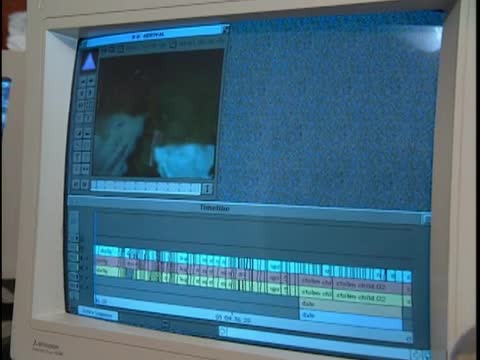
poor get poorer. Baby, hey, we got fun. Yeah, he was not amused at our antics. Ginny's 15. Right down my gutter. It's not just a kid for sex. Be slime. And meaning was goof. Dead already and dead again. You're a muttering bum and a brown beet suit. Obviously twins coming in your male pound equinell, my opa party. What touch up your mind like a wire? And you know, in the ocean, there's a very sad turtle. Is that good? Look on your face. Yeah, you learn very quick that pacing is one of the hardest things to achieve in editing.
Because you're having to cut chunks out. And then they have that empty space there. And use that as part of the way the story is delivered. Everybody can talk incessantly, but can you talk and have silence? It's just the right place. It's so hard. Because all of this stuff, you know, I need to take stuff out and take stuff out. Which brings sentences closer together, which is not the feeling. And you know, this is just about the extent of the carolite footage that we've got.
Almost none of it turned out. Four things is hard to shoot at night in a party scene. And so you can see that I've had to take those frames and slow it down as much as they can to spread carolite over a larger and larger area to be able to make these points about him. And that's how he says in the ocean, there's a very sad turtle in the picture of him with that beer can. That does it. And that's one of those things which you don't plan. You just put it there and suddenly it comes up and you realize, oh, the editing God is looking over my shoulder. Oh, thank you, editing God. Keep it up. Is the editing God different from the writing God? A lot. The writing God is you are by yourself and you're communicating with this one over other person out there that's going to read this stuff. The editing God is already dealing with more than one person. Because we
already know so much about editing rules because of all the movies that we watch. All these dissolves and cuts, that's the punctuation to the sentence. And it's much the same rules that you follow as a writer. With the exception that the guy can't go back and go over it. I think you have to get him cold onto him helping him through the parts where it's messed up and then deliver your punch every five or ten minutes. And you can't do that with writing. You build a long time and you deliver your punch. I mean, like, Kimmingway stuff. Certain lines and himmingway will come up and you'll know the piece of prose that he's working on. You'll know that he had that punch in his mind all in farewell arms. You can see them out there under the
trees and the snow and he's looking down on it. You know that himmingway is, this is not right off the top of his head. This is something he's playing and put together. And I love it. But I do magic. I used to do a lot of magic. I don't.
- Series
- Oregon Art Beat
- Episode Number
- #201
- Segment
- Ken Kesey
- Producing Organization
- Oregon Public Broadcasting
- Contributing Organization
- Oregon Public Broadcasting (Portland, Oregon)
- AAPB ID
- cpb-aacip-c61e307ba39
If you have more information about this item than what is given here, or if you have concerns about this record, we want to know! Contact us, indicating the AAPB ID (cpb-aacip-c61e307ba39).
- Description
- Raw Footage Description
- Interview with novelist Ken Kesey - 2 - Tom Dantoni - Bond Cam. 7
- Created Date
- 2000-07-17
- Media type
- Moving Image
- Duration
- 00:31:16;01
- Credits
-
-
Copyright Holder:
Oregon Public Broadcasting
Producing Organization: Oregon Public Broadcasting
- AAPB Contributor Holdings
-
Oregon Public Broadcasting (OPB)
Identifier: cpb-aacip-981baf0b3ca (Filename)
Format: Betacam
Generation: Original
Duration: 00:30:00
If you have a copy of this asset and would like us to add it to our catalog, please contact us.
- Citations
- Chicago: “Oregon Art Beat; #201; Ken Kesey,” 2000-07-17, Oregon Public Broadcasting, American Archive of Public Broadcasting (GBH and the Library of Congress), Boston, MA and Washington, DC, accessed September 7, 2026, http://americanarchive.org/catalog/cpb-aacip-c61e307ba39.
- MLA: “Oregon Art Beat; #201; Ken Kesey.” 2000-07-17. Oregon Public Broadcasting, American Archive of Public Broadcasting (GBH and the Library of Congress), Boston, MA and Washington, DC. Web. September 7, 2026. <http://americanarchive.org/catalog/cpb-aacip-c61e307ba39>.
- APA: Oregon Art Beat; #201; Ken Kesey. Boston, MA: Oregon Public Broadcasting, American Archive of Public Broadcasting (GBH and the Library of Congress), Boston, MA and Washington, DC. Retrieved from http://americanarchive.org/catalog/cpb-aacip-c61e307ba39