Biography Hawaiʻi; Harriet Bouslog; Interview with Eric Seitz 9/11/02 #2
- Transcript
So Eric, I'm going to ask you a question, but I'll just tell you what it is beforehand and then we couldn't ask you to answer it to Craig. But when you were talking about, you know, how the community... Something like that. Given that she had taken such other far-out positions with respect to, you know, other matters. Could you say that to Craig one more on the camera? Okay, all right. Actually... In the Palakiko Major's case, Harriet took on the case of a couple of people accused of murder and the murder of a very prominent white member of the community. Just talk for a minute about what kind of public compression you think that might have made on the community that Harriet took that case and maybe also situated to a degree in other similar cases where you had white lawyers taking on very, very unbalanced clients. Given the context in which Harriet was already perceived as sort of the radical lawyer, the person who would be expected to take on battles for social justice.
There really was nobody else. My sense is that probably many people would have said, oh, that's Harriet Baustog again, that's what she does, these are the kinds of things she does. The issue here is the death penalty. It's not the issue as to what these people did or didn't do, but whether or not the death penalty is something that's appropriate. And my best guess is that if people felt strongly about that for that purpose, they probably would have just shook their heads and said, ah, this is just Harriet Baustog again. Because I think that by that time she'd already established a reputation of more significance in circles having to do with working people and in particular the IOW. But I don't know that firsthand. I don't recall ever discussing that experience with her. I have worked in many situations with lawyers who've done death penalty cases and done them in circumstances where the cases and the crimes were very heinous and very controversial.
And actually, death penalty worked does not generally result in a lot of antagonism being directed back to the lawyers. It's not an arena in which we've experienced the same kinds of things in more controversial areas and especially in some of the labor organizing that took place in the 30s and 40s and 50s. What do you think it is about the labor cases that generate so much more, so many more antagonistic feelings than a case like that? The period in which lawyers were involved in the mainland with the CIO particularly with the mine unions and others, those were periods where there was outright war going on in some places. You may recall historically that the militias were called out to Detroit and to Ludlow, Colorado and other places.
And there were wars going on and the lawyers were advocating for one army which threatened to totally change society in those communities where the mining companies and the automobile companies and here where the big five were absolutely dominant. And so the threats that were perceived by the unions and the workers who were striking and organizing and demonstrating and demanding a better way of life, those threats were perceived to be undermining society entirely. You may recall that it's generally felt that because of the strength of the IOW here that statehood was delayed for a long time. And the IOW was perceived as a major, major threat to quote the American way of life, which was corporate control, howling or white control in this community of all of the means of power. And so that was a major threat and to be associated with that, to be advocating for that, to be a material part of bringing about basic social change in favor of working people was certainly perceived by those who held power to be something that was very dramatic.
And I think the hostilities that arose in that period that resulted in the red baiting and the horrible deportations of people who were citizens, the rounding up of people and criminal prosecutions that ensued in that period, I think that reflects the seriousness of the conflict that arose in that particular arena. Is following up on that, do you think there's any sense of what Harry would have had to deal with the sense of in some ways being a traitor to her own kind or with that kind of dynamic? Oh, I'm sure there was. I mean, at least in terms of being a traitor as a lawyer because you're advocating for people and in ways that are not widely and traditionally accepted by your peers, if your peers are lawyers. But if your peers are the clients who represent working people or minority groups or people who are fighting for social change, then there's a great deal of satisfaction in being able to help them achieve and articulate what it is they're fighting for.
How significant sort of in the history of not just civil liberties law but advocacy law is having been involved in the Smith Act cases. What's Harry's significance in life? You know, at the time, the Smith Act cases were all encompassing for those lawyers who did that and certainly the commitment to do a Smith Act case represented a threat that that was going to end their career because many lawyers who were engaged in Smith Act cases from the first of them that took place in New York to others that took place in Detroit and Los Angeles and here. Many of those lawyers were cited for contempt and were prosecuted in one way or another or lost their tickets to practice law. Richard Gladstein, who was our close family friend, who was the chief lawyer for the Communist Party leadership in the New York trial in the Dennis case, went to jail after that trial. And I remember as a young kid, I was about six or seven and I knew that Richard had gone to jail and I was just devastated by that. And I can imagine that being asked to do that kind of a case with the knowledge that you were putting your well-being and your professional career on the line represented an enormous decision to make.
And however, most of those lawyers who went into those cases and they were fabulous lawyers and I know most of them, I got to meet many of them, they were heroic. Literally, I would say they were of heroic proportions because they not only agreed to do those cases knowing the risks and the threats involved, but they did them with extraordinary skill and dedication. And some of the best lawyers in this country took place in my view in the Smith Act cases. We've talked about the sort of drawbacks and the amount of hate you can attract. What are the benefits? I mean, where did Harriet get her satisfaction working on this case? What really charged her up on these kinds of cases? Well, obviously there is overwhelming injustice in some of these cases and the opportunity to address that and to stand between the government and individuals who really are innocent and are being prosecuted for what they believe is, you know, for those of us who have commitments, it's the height of the professional challenge.
It's the reason we went to law school. It's the reason we do what we do. Now, you balance that against the risks and, you know, it sometimes represents a difficult decision. But on the other hand, it also provides a real rush of adrenaline. I'll tell you in terms of some of the cases that I've done. I mean, I can't imagine not having done those cases and being involved in those situations, even knowing the risks. I know that, you know, when Harriet would talk about some of those cases and some of those experiences, man, you would see that twinkle in her eye and she knew that that was the time of her life. And I say the same thing. I mean, some of the cases I've done, man, that was the time of my life. They were struggles. They were scary times.
There were physical threats and all kinds of things that you don't dwell upon and sort of chuckle about after the fact. But the fact of the matter is that that represents and brings out the best in people who were dedicated to doing that kind of work. Without a doubt, Harriet was dedicated to that and wanted to do that and got a great deal of personal and professional and political satisfaction from linking herself to people in whom she believed and whose causes she supported. That was an incredible sense. Any other questions? I can't really say that I do. I knew I go in and John Rhinecky very well. I got to know Jack Hall a little bit before he died.
I can't tell you with any sense that I have a personal feel for what it was like here other than what I've read. And so that's not really a good sense to rely upon. I was here when that happened. I met John and Iko Rhinecky almost immediately after I came here in 1973. I worked very closely with them on a number of things. It wasn't until after I met them that I began to understand and realize and appreciate their importance in this community as having been teachers and real intellectual leaders in the sense that they were very well read, they were articulate, and they were very able to express themselves about what they believed and about what was going on in the world.
Actually the best sense of John Rhinecky that I eventually got, I got from Art Rutledge. I represented and worked with Art for a while and in his office was a picture of John Rhinecky and I came to find out that when John lost his job as a teacher that Art was the only one who would hire him. And that was because Art also had the highest regard for John intellectually felt that he had the highest integrity and was very bright and was somebody who he absolutely felt he had to have on his staff working with him especially in times when he couldn't get a job elsewhere. It was like an expression of his opposition to what the government was doing to John and Iko.
And I think Harriet was loyal to them for a long time. Harriet also felt that these folks had been unfairly penalized for their beliefs and for their commitments and spent a lot of time attempting to alter the public perception of them of which of course one part of that was attempting to get them some damages for what had occurred. It wasn't just a question of getting money by any means. It was a question of vindicating these people because of the integrity that they had and because of the fact that they were just a couple of the finest people that any of us ever met. And I came to share those views of them. They were just wonderful, wonderful people and I think that this community was very lucky to have had them as part of all of the activities that took place in which they participated and I was very fortunate to have been able to know them and work closely with them and meet them even as late as in their lives as I had that chance. I think that if you could tell us maybe what you think is most important things are that we think people should remember and know about Harriet and what she did.
I think that the most impressive characteristics about Harriet Baselog are her dedication to her clients, her willingness at great personal sacrifice to utilize all of her intellect and all of her abilities to represent her clients and to fight for what they were doing to fight for their ability to do what they were doing. It wasn't merely a question of advocating for a client, lawyers do that every day. The thing that sets apart somebody like Harriet is the willingness to go to such lengths and to accept personal sacrifices to ensure that her clients were able to continue to do the political work, the union work, which she felt was so important.
That is a difference in terms of loyering. That's what sets apart civil liberties lawyers from the kind of political lawyers with whom I associate myself. We basically do what we do because we believe in our clients and our clients' rights to continue to do what they're doing and the necessity for them to say and do what they're doing. We're willing to interpose ourselves between them and the people who are attacking them, be that the government or be that any other economic forces in an attempt to assist them and support them in their efforts. Harriet did that with great eloquence and with great ability and, as I said, with some insecurity because of the seriousness of the threats that were occurring that were directed toward her.
I think that is really her legacy. In the state of Hawaii, at least, I think she's very unique in having done that over such a prolonged period in a critical historical era. Thank you. Thanks so much. That's great.
- Series
- Biography Hawaiʻi
- Episode
- Harriet Bouslog
- Raw Footage
- Interview with Eric Seitz 9/11/02 #2
- Contributing Organization
- 'Ulu'ulu: The Henry Ku'ualoha Guigni Moving Image Archive of Hawai'i (Kapolei, Hawaii)
- AAPB ID
- cpb-aacip-c46ebd2480d
If you have more information about this item than what is given here, or if you have concerns about this record, we want to know! Contact us, indicating the AAPB ID (cpb-aacip-c46ebd2480d).
- Description
- Raw Footage Description
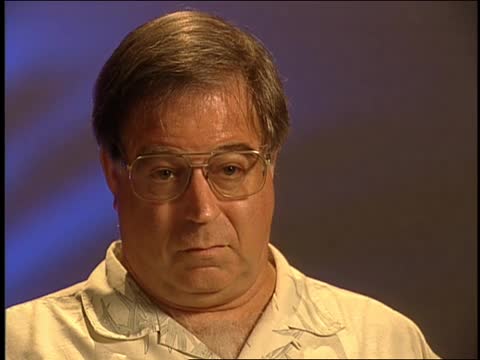
- Interview with Eric Seitz, Honolulu attorney and legal contemporary of Harriet Bouslog, recorded on August 15, 2002 for Biography Hawai'i: Harriet Bouslog. Topics include the impression made on the local community by Harriet's role in the Majors-Palakiko case; why labor law cases have historically generated so much antagonism; the notion that Harriet was perceived as a "traitor" by the larger Hawai'i legal community during the height of her civil rights legal activism; the significance of the Smith Act cases to civil rights law; the satisfaction & joy that Harriet derived from her legal advocacy; Seitz's relationship with John & Aiko Reinecke & the signficance of the legal case brought against them and what Seitz feels are overall Harriet's most impressive personal characterisics.
- Created Date
- 2002-09-11
- Asset type
- Raw Footage
- Subjects
- Labor lawyers -- Hawaii; Communism -- Hawaii; Labor movement -- Hawaii; Woman lawyers -- Hawaii; Labor and laboring classes -- Hawaii
- Media type
- Moving Image
- Duration
- 00:16:37.931
- Credits
-
- AAPB Contributor Holdings
-
'Ulu'ulu: The Henry Ku'ualoha Guigni Moving Image Archive of Hawai'i
Identifier: cpb-aacip-a8a07bfac87 (Filename)
Format: Betacam: SP
If you have a copy of this asset and would like us to add it to our catalog, please contact us.
- Citations
- Chicago: “Biography Hawaiʻi; Harriet Bouslog; Interview with Eric Seitz 9/11/02 #2,” 2002-09-11, 'Ulu'ulu: The Henry Ku'ualoha Guigni Moving Image Archive of Hawai'i, American Archive of Public Broadcasting (GBH and the Library of Congress), Boston, MA and Washington, DC, accessed September 21, 2026, http://americanarchive.org/catalog/cpb-aacip-c46ebd2480d.
- MLA: “Biography Hawaiʻi; Harriet Bouslog; Interview with Eric Seitz 9/11/02 #2.” 2002-09-11. 'Ulu'ulu: The Henry Ku'ualoha Guigni Moving Image Archive of Hawai'i, American Archive of Public Broadcasting (GBH and the Library of Congress), Boston, MA and Washington, DC. Web. September 21, 2026. <http://americanarchive.org/catalog/cpb-aacip-c46ebd2480d>.
- APA: Biography Hawaiʻi; Harriet Bouslog; Interview with Eric Seitz 9/11/02 #2. Boston, MA: 'Ulu'ulu: The Henry Ku'ualoha Guigni Moving Image Archive of Hawai'i, American Archive of Public Broadcasting (GBH and the Library of Congress), Boston, MA and Washington, DC. Retrieved from http://americanarchive.org/catalog/cpb-aacip-c46ebd2480d