Aware!; Hot Topics
- Transcript
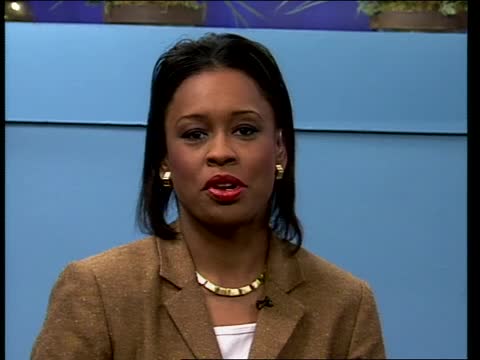
You You Happy New Year. I'm D.D. Sharp and welcome to Aware. As we begin a new year, we're still coming to grips with the terrorist attacks that hit our country. The events of last year have taught us that we as a nation can no longer take our future for granted.
We must work together to make a difference, to make it better and safer, a better and safer America for all of us to live for our communities. They're coming together and they're stepping up to the plate at this point and tackling some of the issues head on. And Pensacola is no exception. Tonight on Aware, where? Well, we're going to be examining three critical issues facing Pensacola. We'll tell you how the communities coming together to try to address them. The three critical issues have the potential to significantly impact the future and quality of life here in Pensacola and this can be accounted. Our first segment of the show will focus on two topics. Redistricting and its impact on our schools and our community. And the second one, we'll be talking about the future of AA Dixon Elementary School. Can it succeed as a charter school or will it have to be closed? Then coming up a little later on our show will be joined by some other guests who will be talking about some other issues here as we were mentioning. And one of the biggest issues right here that will be featured on the Aware Show tonight and it has been featured in the past as an update on Mount Dioxin, aka the Escambia Treating Company and the AggroCo Hazardous Toxic Superfund Way Sites.
Citizens against Toxic Exposure, Environmental Experts and our City Council will join us for the second half of our show as we explore Mount Dioxin, the polluting and contamination of Pensacola. Can this deadly site be cleaned up? First and foremost for our show, we began talking about redistricting and AA Dixon joining me in the first part of our program are City Councilman John Gerald and our Nail Sims, executive director of the Intervention Group Incorporated. We thank you so much gentlemen for joining us here on the Aware Show. I want to get into a little bit about the redistricting situation that we have here and we also want to talk about how that affects AA Dixon. So we'll begin with you, Councilman, you want to tell us a little bit. First of all, DD, thank you for having me on the show and the issues that are facing us with regard to redistricting as you know, the city has its responsibilities to redistrict following the sensors and that generally occurs every 10 years. In addition to that, the county has its redistricting requirements to fulfill and this is a bit different from what the school district does in that we're dealing primarily with student placement.
So therefore the Escambi County Commission, the school district as well as the ECUA goes through a redistricting or land drawing process but with those three agencies, those lines are generally become the same. And then in addition to that, there are the legislative reapportionment redistricting procedures that must be followed at the state level. And our concern primarily locally here in the Escambi County deals with the redistricting of students or student assignments within the Escambi County. That in some way will affect the number of students who attend AA Dixon and other schools throughout our county. But our primary concern was supposed to have been and I say supposed to have been with the desegregation efforts that were supposed to be court ordered and the district had some obligation to create a situation in which no school or fewer schools were more what we call racially identifiable in either case, either predominantly white or predominantly black. And what the student assignment efforts is intended to do the desire or the concern there would be to create some sort of a balance among students in the student attendance zones.
We're going to be talking about a little bit more of that and in fact we'll be opening up our lines in just a minute for just a few minutes on this particular topic to you so that you may have some questions for the councilman. And of course our other guests here we're going to give you a chance to get involved now and tell us a little bit about AA Dixon and it's applied at this point. Looks like it's going to be closed but there's a move right now to keep it open. Tell us a little bit about the update update us on this issue. Right. The schoolboy has voted to close Dixon based on a recommendation of the superintendent. The parents edit a Dixon contact with our organization in order to see if we can facilitate helping them become a charter school. We currently operate one charter school here in the Scamy County Gulf Coast High School and we agreed with the parents to help them to convert that to a charter school. There are two other schools that were scheduled to close or have been closed burned via elementary and post-gold beach elementary.
They both were allowed to submit charters and they were approved. The difference between those two in Dixon was the fact that they had a they were closed back in April which gave them an ample amount of time to submit a charter application before the deadline in October. Dixon was not voted on being closed until October which means deadline to submit a charter application that passed. It took a special vote from the schoolboy to extend that deadline to a lot of Dixon parents to do that and they did that on January and gave us the opportunity to submit a charter to keep that school there in the community. Now tell us what it means for someone who may or may not know about the charter school. Tell us what that means. The charter schools are public schools that are privately run. They receive the same funding mechanism as a regular public school and are based on FTE or full-time equivalents which is the number of students who are in school at a particular period time during the semester. Those funds can be used by that organization to run the school. Free from all the regulations and the bureaucratic retake, save for those issues dealing with health and safety and discrimination in public records.
So basically we're charter schools or public schools that are ran by private entities. Bring us up to date. Why did the schoolboy decide to close the school money issues? Money issues and when we talk about money issues that go back to redistricting again, I did sit on the school redistricting committee. It was a year-long process for us. We had to look at issues that involved school capacity, the issues dealing with desegricate desegregation. There were some guidelines about it guidelines that we were given to look at that issue while we were doing this. Dixon has a capacity of 600 students. They were only their own house and 300 students, about 350 at this particular time. So it was a decision, financial decision made to close because being so woefully under capacity, they also were operating at a deficit if you want to speak of keeping that school open so the decision was made to close it. This school sits in the middle of three different.
Yeah, it's in the geographical area of three housing projects. And those parents there have difficult difficulties getting there and being involved as parents as it is. And closing that school would split those kids up and send them to three other schools further away from their home. Therefore, making it almost almost impossible for a lot of people, those parents to be involved in this school, kids, school activities. How does all this fall in line with redistricting and the problems that? Well, I would say that to begin with, that it is a shameful disgrace that the students at that school have to suffer and continue to suffer the battering, the political and economic battering that they're taking. When, in fact, the, as you mentioned earlier, the housing areas that are located around that school certainly have enough students to fill it to capacity. And to have those students who are already assigned to the school, we are not convinced that the reasons that the district is giving in terms of savings is a valid one. I believe personally that it is a misguided decision to close the school and to remove it from its place within the community.
Redistricting, as I mentioned, although the housing projects or the areas that are adjacent to the school are predominantly inhabited by black people, which means that the school would be predominantly black if the schools within that attendance zone were allowed to attend that school. And I just feel that it is, it's time for the battering of the students to stop and that that school should be left in place to become a vital part of that community. And I will go further to say that I am convinced that there is enough blame in this situation to go around on the part of the district, as well as the part of the community at large, and that they, the community on the one half, have been negligent in terms of getting involved and supporting the school and the students. And on the other hand, the district has made little attempt to create an environment in which a relationship throughout the community would be developed between the school officials and the parents that would create a situation whereby the students can achieve. And the ultimate goal.
Now, I will have to ask you before you talk about that, and you're probably going to say it anyway, is that it sounds to me like you're saying that the two, the community and the system itself have failed each other. Absolutely. They both have some guilt. They have both been negligent. And so closing the school is not the answer. No, it's not. What we need to do is try to bring the two together now. We will have the same, I can anticipate the same situation in some of our other schools, and that if we don't go beyond the rhetoric of parental involvement, we need to take the parental involvement concept beyond rhetoric into reality. And until that happens, we're not going to have the kind of support we need in any of our schools. Now, let's talk about this. Now, you mentioned some of the parental involvement problems. Could be transportation right now. They can walk to the school. They had that option where they could walk to the school. They could have done that. What other problems, maybe with the system more with the parents that you think have led to ultimately the school closing, which we're hearing its finances, but you're making it sound as though there may be some other things there. Well, here we have to look at what we call, and the business, user friendly.
And there may be a perception that the staff at the school may not be user friendly in terms of working in a collaborative effort with the community. Those kinds of things can be addressed and can be solved, but it requires effort on both parts. And we've just not done some of the things that we need to do. What did the system do? I mean, it's trying to save money, right? What did the system do to cater to this? Well, when you talk about saving money, if you're talking about busing the children out of the community into three other schools, I don't think we will realize the kinds of savings that we have been led to believe might be possible. Why weren't our parents more involved? Well, you get to understand the environment that the parents live in, the cultural background. Like I said, if they're not user friendly, and user friendly means not expecting them to come to you, you go to them and say, we need you here. Okay.
Let's get you involved. What we need to do and what we plan on doing is to try to make that school the focal point of the community. Okay. Not only for the education of the kids there, but also to help that community and the parents in that community realize their potential as individuals. The school district says they can't be all things to all people. And what we're trying to say is, okay, we can agree with you on that. But please allow us to try to be a lot of things for some of these people to help them raise their children to be good productive citizens, get a good education, and go out there and be a good American. It's important for that community, for that school to stay there because that school has a unifying effect in the community. Grand Mars, Grand Mars, then I said on the porch, and they may say the young kids walking the bus, the streets, and they may say, you know, the kid may be doing something. They say, hey, you're straightening up now, so and so and so. Our school, the school was built in 1950, it's been there for 15 years. Yeah, well let's go back to how the school came into being. There was a, the school was deeded to the lambs deed to school board by the West Florida Baptist Association for the education.
And it's in the deed that says Negro children, that was in 1949. There are some other issues right there now with now that this issue of closeness came about that, you know, some organizations or individuals maybe looking at that deed and say, okay, what's in force? You know, what does children mean here doesn't mean adults, I mean teenagers or young kids. There again brings in another issue about how the district wants to utilize the building if the charter is not in there or if the young kids are not in there. There is an adult education program called Big Called Bays, which most of the community know about who's okay right now at the rental center, the old Pat Center. That's the adult basic education program. And they may, they're, they're, they're, they're, the desire is a little wish of some of these staff people in the district is to move that program into a Dixon, you know, so planting those young kids out of there. Because really the, the rental center will schedule to be closed and sold, you know, public auction. So, you know, we don't know how.
So, could it not be a hub for bringing the community together as an adult basic education, a building use for that as opposed to elementary school? Let's talk about who will be coming there. Okay. There will not be the kids in the community. There will be people come from outside the community to go there and then at the end of the day to leave out of there. Okay. Now, you have a building sitting there that's not, it's just a building for your adult education program where if that building stays at elementary school, where the people send their kids there, now we can turn into a family resource center to get those families involved with the kids in the education process, Monday through Saturday. And even Sunday if we want to. Why didn't we do that before? Goes back to? Well, you have to, you have to guidelines the restriction that the school district has. You know, they're, they're not free. And you have this box that they think inside of where the charter school goal is to think outside that box and come up with a better way or a different way to try to get parents and kids. And kids educated in the environment. Okay.
We're going to open up the phone lines now for 8, 4, 12, 23. You can give us a call just a few more minutes for this particular segment. If you have a question for our guests and we'll certainly like to entertain those. Again, just a few more minutes in this particular segment and we're going to move on to another topic talking about Mount Dioxin. So you want to ask us a question now on this particular subject of redistricting and AA Dixon Elementary School. Then we welcome those calls now. I want to bring you back into this councilman because I know you have some comments about all of this. Yes, I wanted to say that student achievement is a dual responsibility. It is one that is the responsibility of the district as well as the parents. And at no time will we dismiss the ultimate responsibility of a parent. And I don't think that single parent household is an excuse for not motivating your child supporting your child and helping your child to achieve in school. So it's a dual responsibility that the parents are going to have to get up and do what they are expected to and all to be required to do. Okay, very good. You're the parent of the child. Let's be responsible. Social responsibility. Roll up your sleeves, get out there and see that your child is receiving the kind of education at school that he is supposed to receive.
And that cannot be done by sending the child to school and leaving the child to be in charge of his own destiny. But if it was a restraint on them with the school there, then it's really going to be a restraint when the kids are away. Absolutely. And if we're talking about bringing them together now, we need to do it before we close the school. You're talking about the absence of going from the absence of involvement to no involvement. Exactly. Hi, Collar. Welcome to The Aware Show. You're on the air. Yes, my question deals with the desegregation issue that the county is faced with with the Augustus ruling. All of us realize that having a school in your community, in your neighborhood, is beneficial. I would be curious at the one gentleman's comments with regard to how do you accomplish that while at the same time deal with this issue of not having racially identifiable schools? Thank you, Collar.
Well, I can respond to that if I may. The situation in particular with the Charles Augustus desegregation case, that issue dealt specifically with school attendance with regard to color. Dr. Augustus daughter was denied admission to OJSIM's elementary school because she was black. Although they lived near 12th Avenue in that district, she heard attendance to that school was based on the fact that she was black. We here in Florida, in particular our public, our general public, need to understand that the Plessy versus Ferguson, as well as the Brown versus the Board of Education, were two separate issues. Plessy versus Ferguson dealt primarily with accommodations. It dealt with a gentleman whose name was Plessy, who entered a bus in Louisiana and was removed from that part of a rail car because of his race. The assumption made here in Florida and other places was that it included schools as school accommodations. That was a total error.
Brown versus the Board of Education, on the other hand, dealt with four cases, one in Virginia, South Carolina, Arkansas, and I think Pennsylvania, that dealt specifically with school attendance. What we tried to do here in the Scambia County was to create a situation whereby students would be able to attend school without regard to race. But to answer the gentleman's question, now that we have constructed our schools in the locations that they're located in and people have decided to develop communities where they are, we cannot move the school buildings, we cannot dictate to people where they should live. The only thing that we can do intelligently to desegregate our schools involves drawing attendant zones where people live and then busing the students to the appropriate schools. We're talking about AA Dixon here on the Aware Show this evening, but this isn't the first school that has happened to you. Absolutely. Tell us a little bit about this. We have more elementary schools in the county than are needed per student population. And when I said earlier that perhaps it may have been a misguided decision to close AA Dixon, I believe that the district moved to closer school where they felt they would meet less resistance. As you know, when this issue was up about a year ago, there was quite a bit of resistance from the north end.
And we don't want this situation to pit black against white or north end residents against south end residents. The board needs to make an intelligent decision about what it has, what the needs are, and then we go from there. Regardless of race, that should not be an issue at this point. We ought to be able in the year 2002 to grow beyond that and stop using that as an excuse for the things we do. Okay, very good. In closing of this particular segment, closing comments for you, Councilman, who we're going to drag you back for the second part. So you'll get a chance to talk. I've finished for now. Okay. How about you, Daniel? I'll just basically, the parents in that community have, like I said, came just to help them. We've had a large outcry or outpouring of support for this endeavor. And you know, the decision, the application is due January 31st and the decision is going to be made in February. And we're just asking that everybody who's concerned about this issue, show up at the school board meeting and make yourself, make yourself vocal, make your thoughts known. And talk to your local school board representative. Tell them how you feel.
That's how things get done. So we just encourage them to do that. Now, one last comment. This is an election year. Okay. And if the folks on the board are not doing what you think they ought to be doing with regard to you and your children, remember this is an election year. Power of a vote is incredible. Absolutely. I didn't get a chance to give you an opportunity to tell us a little bit about your particular organization. Can you just mention that briefly for a moment? Sure, the Intervention Group was organized in 1996. And our mission is to help the disadvantaged youth and citizens in the community. We have, like I said, the charter high school. We also have a youth bill program, which is for young people between ages of 16 and 21. We're actually going to build one house. And we're going to set a house to a first time home buyer. And in return for their building a house, they will gain those skills to go out and help them get the job. Okay. We also deal with the youth employment. We put kids to work in different areas than we pay them. And I understand you already have a charter school too that's successful. We already have one.
Yes, ma'am. Okay. Very good. All right. We're coming up in just a moment. We're going to talk a little bit more about what we're going to be talking about with the Mount Dioxin situation. Bring you up to date here on the Aware Show. For right now, we just want to give you a chance to take a break from this particular segment. Get your pen pad out. Because we're going to be talking about the raise-up concert a little bit later in the show. You're going to want to know where it's going to be, what time, how to get your tickets, and a whole lot more information. So I'm warning you now to get that. For now, here's some other announcements on how you can get in touch with one of these gentlemen. And if you should like to address your redistricting issue and AADixin, we'll be right back. For the lover.
For the lover. In this way. Means I'll always be true. Let's see. But we'll start now. Let's start. It's going to last forever. I'll be. For the lover. For the lover. In this way. Means I'll always be true. Let's see. But we'll start now. Let's start. I don't want to.
I don't want to get. For the lover. In this way. Means I'll always be true. Let's see. But we'll start now. Let's start. For the lover. For the lover. For the lover. For the lover. For the lover. Welcome back. Hope you got a chance to jot down some notes and if you do want more information, then you'll know the folks to contact talking about redistricting and also AADixin and its flight here in the Pensacola area. Changing gears here and moving on to another topic that is a critical issue here. And that is Mount Dioxin and here to tell you a little bit more about the history of the Superfund site here in the Pensacola area. And it's a fact that it has had here on this community and where we're headed now with the Environmental Protection Agency are a new panelist of guests that we're having here on the second half of the Aware Show this evening.
And we'll start now by introducing you to each of them. One of the faces you just saw just a few moments ago talking about our other issue. And that was we had Councilman Gerald, John Gerald, district five. We also have joining next to him, Margaret Williams, who's the president of the citizens against toxic exposure. To her immediate left, Francis Dunham, citizens against toxic exposure. And last but certainly not least, Keith Wilkins, neighborhood and environmental services of Escambia County. Thank each and every last one of you goes out to you for being here on the Aware Show this evening. We're going to just skip right over the Councilman and start, no, I'm just kidding. But Margaret, we will start with you and give you a chance to tell us a little bit about the citizens against toxic exposure. And then we'll go back into the little history here on the Superfund site, Mount Dioxin. Tell us a little bit about you.
Citizens against toxic exposure was organized in 1991. A few months after the Environmental Protection Agency came into our community and started digging. But what they stated was an emergency cleanup. It was groundwater contamination. When the digging started, people started experiencing eye irritation, skin rashes, nose bleeds and whatever. So we tried to stop them, our efforts, where we failed in our efforts to stop them. So then we decided we'll seek other sources and we contacted our elected officials at the local state and national level trying to get help. And it wasn't until 94 really that after trying for samples outside of the site to prove to them that it was affecting our citizens. We knew the contaminants were on the site and we didn't believe that they lingered there as they told us they didn't go beyond the railroad track nor the fence.
So after trying for a few years, we finally got at least 60 samples. And we tested the areas far north and south and east and west as we could go to determine the extent of the contamination. And our target advisor was the one who was going to analyze the testing and after that was done in 94. I think we received the results in 95 and we found that contaminants like arsenic, benzopirine, deodorant, pinoclorfrontal and dioxin. It was present in the yards of people who lived there at levels that exceeded the safe level. And of course our focus then was on relocation. It was in 1996 that we were told that we would be relocated. Of course there were several issues involved there.
But the relocation actually started in 1997. And as of today we've relocated 200 people who lived in the Scambiarms apartment. And there are several homes that have not been finalized yet. Some of them have problems with titles and whatever. But we're hoping that they will, that will soon be taken care of. After we had moved, we're successful in getting the people relocated. Then our focus was on health. And we got our state-to-fund health project for us. And what we are trying to do is locate people who have lived or worked in any of these areas, near the Scambiar side, the Agrico site, the Florida drum, the CSX Railroad, to see if there's a pattern of illnesses. And once we can get this information, then we're going to pursue health care for people who have been exposed. Now France is not as if Margaret hadn't really just filled us completely
in a very good job there Margaret. I understand that we're having some difficulties right now with the Environmental Protection Agency and working with them. Can you kind of bring us up to speed on? That's right. We have several projects going at once. As you mentioned, in addition to all the things that Mrs. Williams has just summarized, we're trying to achieve the highest level of cleanup for this site. We feel Pensacola deserves the highest level of cleanup. But besides that, this site is in the geographical center of Greater Pensacola. It has enormous quantities of highly toxic contaminants that are persistent. They won't break down readily on their own without treatment. And we are very concerned that the site is over the groundwater, which both serves as our source of drinking water and discharges into biochar and surface water. So the plume of contamination underground also is capable of spreading those contaminants to homes that aren't really close to the site geographically.
People might not come in contact with the dirt, but they might be exposed through the contaminated groundwater. So your whole point is, is that while it might have been just a problem isolated to this particular area, the potential for it to just spread is so great that the community could ultimately end up. Is that what you're saying? It is spreading, in fact. You know, the truth is, this was never a problem only for the Kate community, but it wasn't recognized as a problem for the greater Pensacola area. And now that's changing. There are a number of citizens groups involved. The city of Pensacola is taking this seriously. And for well two years now, the county, the Scambia County, has also been on record supporting a high level of cleanup. The things have changed. The communities come in together. That's absolutely. It's no longer a Kate's problem.
It's a wide issue. And there will be unity on this, which is extraordinarily important. And that Councilman Gerald's and also Keith Wilkins and the Scambia County both have important roles to play, along with all the citizens that are listening and their friends too. Okay, he's already raising a finger before I can get to you. I'll do that, and then you can get to you. But I wanted to congratulate the organization, such as Kate, the Bio-Tahar Foundation and the Gulf Coast Keepers, and that it's a great idea when citizens come together to assist politicians and other agencies in the identification of problems, as well as the identification of solutions. And because it's going to take a community effort, we now know that the migration of these plumes and other contaminants are not just in the area that was initially identified by Kate, but it's also threatening Bio-Tahar and it's migrating in all directions, actually.
There are sea pitch and it's a threat to our underground drinking source, and it will be a threat to our waterways. We live here, we play here, we work here, and as was mentioned earlier, there is an effort afoot that we want to develop not just a community effort, but also an interagency level where we're looking at, are we planning or developing a resolution that will have sign on by former Congressman Joe Scaro, current Congressman Jeff Miller, and others, the Scambia County and other agencies, who now want to come together because this is really a threat to Pensacola as Scambia County. And we need to work together on this so that we can achieve a cleanup level that will be safe for the citizens of our community. Very good. Phone lines are open here on the Aware Show, 4-8-4-12-23. You can give us a call and we can talk and try to address some of your questions or comments that you might have right now on the Superfund site known as Mount Dioxin,
the Scambia Treating Company, aka as well. I want to get you in on this discussion now, Keith, because your organization, I understand the neighborhood and environmental services of the Scambia County is actively involved in all of this as well. Yes, we have been. We have several different divisions in the department, and obviously the neighborhood issues and environmental issues merge on this site and with this property. The county and the city would very much like to redevelop this property, but not at the expense of the citizens and our health and the health of the environment. So you all are at this point doing what along with these other organizations to try to come turn to whatever we can do here? We've been tracking the situation liaison in between the citizens and EPA as best we can to try to convey those concerns to EPA. And we have technical staff which are able to do that and understand the technical issues with the contamination.
The date, I don't know that we've been very successful with convincing EPA of the level of cleanup that the community wants here, but the county has firmly resolved as is the city to see a thorough cleanup of this site. We've been very impressed with the fact that the city and the county have made strong statements to EPA. Keith had a very, very important comment to make to EPA on the 9th of January. We had a meeting in Tallahassee and he said we don't want contaminated property for redevelopment. We want it clean. This was the agency that was running the superfund program. It's their responsibility to clean it up to high standard. And we don't want to have second best, both in terms of the liability that the county or other entities might incur.
But most of all because of the health of the citizens of the area. And understand there's a clinic now going. And there's been some health screening and you've been trying to monitor some of the health related problems that may or may not be related to all of this. Tell us a little about the clinic. The clinic now, Kate has the road to find all of the people who have believed in that area, all work in that area. And so far we've located around 2,000 of them. And we've had about almost 3, 50 or 375 to complete the program. What we're trying to do now is collect data to see if there's a pattern of illnesses. And we're even trying to get data on, I mean, the information on people who have died in that area to see if there's a pattern. And the dad said, we're hoping that once that data is collected, our next step will be health care for people who have ever lived in that area. That's what you want now, is that to turn to the health care once you can identify how big of a health problem any of this may be.
And from our producer who early on in our briefing wanted us to add this footnote to this on the health issue. Is that here in Pensacola we have the highest rate of cancer than any other city this size in Florida. It is pretty much on the average. As I said, the highest is not only for Florida, but in the country for a city this size. And there's a lot of cause to be concerned at this point. It's not that there's been a correlation between cancer and this or the dioxide or anything like that. But certainly when you have something that big, the numbers are that big, then you have to look at it and you have to pay attention to it. And you're concerned, you know, and certainly so. So I can understand why you all are looking at the health issues and that sort of thing now and trying to keep track of that. I understand a relocation has been a bit of a problem too lately.
I guess it has and we're going to have a team coming here in March to sort of interview all the people who have been relocated and find out what some of the problems are and how well it went or if it did not go well for some people. I have to know that that's taken place. It will be around the second weekend March, second weekend March, that they will be here. And of course we don't have the exact place yet. What I've been trying to do is arrange to have them at the church where people are accustomed to meeting. And that way they can find out. There is a meeting coming up too with EPA. Yes, and one thing I'd like to mention. That meeting was canceled, but it will be rescheduled and there will be the customary legal notices. But one of the things that I wanted to mention, you know, a few weeks ago we had a meeting here at P.J.C. in the Hagler Center. And it was well attended, but it did not have the level of attendance that it should have based on the number of people who are affected.
And what we're trying to do, what the effort is, I think, is to educate people, the citizen's reap. If you drink water around here, you're kind of involved in this thing. If you're not right now, you will be a little bit later. That's something they think about. People might be thinking that bottled water is the solution, but we continue to cook with it, bathe in it and play in it. So we have to think about getting involved so that we can reduce the burden of the clinic running around trying to find people who may have been affected, who may have lived in the area. So shows like this give us an opportunity to share information with the general public and to invite them, hopefully to motivate them to become interested in their health and the state of affairs with regard to our environmental issues locally. You just did the next promo for a wear, you know, because that's what we do here on this show. That's exactly what we try to, we aim for. Senator Nelson was in Pensacola and he was appalled at what he saw and he went back and of course there's several grants have been issued to this area to expand, not only for Kate people, but to expand the area of people who can be, have health screenings and lab work and physical exams done.
And we might even be able to include people who lived around the American crystal because that's similar to the same kinds of those people have been exposed to the same kinds of things that people in a scam have been exposed to. To help, to bring people together and to understand how widespread of a problem may have been health wise or that it may be health wise is to keep people talking and to keep information coming in on their health related problems and that kind of thing. And we can't be afraid to talk about this sort of thing, we don't want to hide it under a bush.
If you are suffering from cancer, you have some of these other symptoms that you mentioned early on, the nose bleed, what are some of the other things that you talk about? Skin irritations. You know, I problem problems. Okay, it's not all, it may not be getting old and it may not be, you know, it might not be all these things that we think that it might be. So we might need, I think we need to come together and begin to talk and to keep the information flow there so that we can keep track. That's probably a very big problem for you in trying to keep control of the information because everybody is there separate way and like we're saying they don't really see it as a problem until it's a problem in my backyard. But we all have a stake. You can't say if you have a nose bleed that, oh yes, that was toxic. Right, right. But it certainly won't hurt you or your children or your neighbors to have less to have less of these toxic chemicals in your immediate environment. Speaking of those and some of the others may have some comments to make on this, the next meeting that will be held with the EPA and local officials will involve the level of cleanup that is desirable for this area.
As you know, the EPA has its regulations and guidelines and they're offering to do one thing, but what we've seen in their offer has been found to be unacceptable. We want the situation clean to an acceptable, a safe, acceptable level, not something that the EPA is offering and here again is an opportunity and an invitation for citizens to get involved so that we can state our concerns about the level of cleanup that will bring it to a safer level than it is now. We don't want them to just come in and take out a few buckets and bury it or cover it up and say it's okay. We want the kind of cleanup that will be safe for future generations. When we talk about those safe levels, they want to put them up on the screen and perhaps you can see them. And then you'll have some idea of what we're talking about in the councilman. Councilman Gerald is talking about these safe levels and that sort of thing and where we want to be in our community with this and other toxins out there.
There's one of the ways in which the differences between our community and what we want and what EPA thinks is good enough for us can be resolved is through, there's a person, an office within the EPA that's objective, it's run not from region four, which you know is giving us this low level of cleanup, but run out of Washington, D.C. It's a separate, separate entity. It's called the EPA ombudsman. And we need the ombudsman to come into this community and look at the science, look at the law and say what's fair and what's workable considering the conditions right here. Okay, we have a call in the line that been holding. Let's get to that call. Thank you, Colin. Welcome to the Aware Show. You're on the air. Yes, I was just wondering, can you hear me? Yes, we can.
You were talking about the areas of and the lady was saying that they wanted people that had lived in or near these areas. Is this Gambia Treatment Company one of the areas you're talking about? Yes, it is. It is one of the areas. And are you talking about somebody that lived there 45 years ago? Yes. Okay, is there some way I can get in touch with you to talk? The number is 5956403. 6403? Yes, it is. Okay. Alrighty, thank you. Thank you, Colin. At the end of the segment on the Aware Show, we usually give our guests a chance to give you a way to get in contact with them in case you do need to get in touch. So we do want you to be aware of that, Colin. Thank you for calling in, inquiring. Obviously, we're already beginning to see just in a few minutes here on the air that people are concerned they've even been in this area and probably didn't even know that they needed to be talking, you know, and finding out more about this particular site. Okay, all right.
Well, now let's talk about some other things here. We're talking about the expansion of your clinics and that kind of thing. Let's talk about where we go from here. We're talking about the EPA meeting with us. We're trying to do our clinics, trying to get a handle on some of the health situations for people that may or may not have been affected by some of these toxins. Make sure that we're up to date with all of this so that when we leave here on the Aware Show, we know where to go and where we need to be headed. Any of you, what do we need to be doing? Well, I think we need to, as a community, be prepared to respond strongly as the councilman said to EPA's preliminary plan for cleanup. They're going to come out with some numbers and we need to look at those cleanup standards and see if it's acceptable or not. And we're not anticipating that they're going to be acceptable. And we need to be prepared as a community to address that and address it strongly. And we should, we were expecting those this month. At this point, I'm not sure when they'll come out with those numbers. Obviously, we're seeing that their, the community is at issue with what they want and what they can get from EPA. That's, your job is a very challenging one in trying to be a liaison between the two and come to a happy medium because everybody wants what they want.
And, you know, they want it now. Yes, the EPA. They don't want it. EPA has some programmatic guidelines that they go by. And the state of Florida has represented us wonderfully, I think, through Department of Environmental Protection. And we need to give the Department of Environmental Protection the strength and the resolve, let them know the community is behind them to stand up for the Florida cleanup standards rather than EPA's cleanup standards. In fact, what we've asked for is stronger than than what DEP is asking for. But at least the state is moving in the right direction. And there's a very substantial difference now between the federal guidelines and the states stand on this. We're going to have also, I believe, to rely on both of our senators and especially our congressman. Congressman Jeff Miller, who's extremely interested in this and did appear at our meeting on the seventh and is working hard to defend the ombudsman on whom I think we can rely. There's another feature of all this, which is coming about at almost, almost exactly the right moment for us.
Dioxin, which has always been considered an extraordinarily toxic contaminant, has been reassessed by EPA. And we need to use that new science, which has found that it's even more dangerous than we thought. And ten times as carcinogenic as we thought. And that reassessment needs to be figured in. We don't want EPA doing this cleanup on their old standards. Because I can tell you that once they leave this site and they cover it up and say that's that, it would be almost impossible to get them back. And there's nobody else that has some money to do this cleanup. So we want to be sure that the most up-to-date scientific information is used. In addition to that, I think that the local agencies are doing an outstanding job in collecting the scientific data that we need to support our concerns. And that way we will be able to share that information with EPA. And hopefully it will strengthen our position.
And it puts us in a position of knowing and understanding what we're talking about, what our needs are. Now, you'd like to think that this was a matter of the community and EPA just coming together and going, okay, we've got to clean up the site. And we want to do it according to the standards today and that sort of thing and have them go out there and do it. But perhaps it's not, we know it's not as simple as that because once they get it, what do they do with it? That's the whole other problem. Once that in there, back yard, you know what? The money on right now is to take the contaminants and cement them together and then put them back in a hole on the site, put something over it, a kind of cap over it, and leave it there. We're worried about that. We think that many of those contaminants may continue to leach down through the sandy soil, you know, to the unprotected groundwater, as well as the amount that would just be left in the surrounding neighborhoods. And let's remember this site is still very close to homes and schools and churches. The church where we've met for years and you hope missionary Baptist Church on the corner of Palafox and Pearl is going to remain there.
I mean, you know, people are going to be in contact. Yes, they're church homes, they're life. And once you get the 358 families out, there's still lots of families, excuse me. Is Bramberch not in that past? Bramberch middle school. Bramberch middle school. Bramberch. Exactly. And then Brantwood Elementary is just right at the street. And there are a lot of workers in here. But hopefully it doesn't sound as though we're pushing the panic button. But there has been identified a north-south east-west migration. And unless we get in there and get this mess cleaned up, it can threaten our waterways as we've mentioned before. It can threaten our health. And it can involve a lot of people who may or may not think they're involved. Because it's invisible.
It's really invisible. No, it's a creepy crawler. To put it simply, it's a creepy crawler that's moving in all directions. And, you know, as I mentioned earlier, the level of participation that we get from the public, though it's good, it should be more widespread and more involvement. I'm just not sure that people realize the seriousness of it. And it's something that the effects are slowly, they sort of creep up on you. And it's not like an acute condition where a person becomes ill immediately. It's a sort of a creeping situation whereby when you realize you've been affected by it, it's a little too late. So what we need to do is to get people to make people aware of what's out there, what they can do to help. And it would be good if people might even bring in recommendations. Things that the groups haven't even thought about. They may have read about something or saw something on the internet that would help our efforts so that when we talk with EPA and others, you know, we'll have more information,
factual information about what's going on. And we really invite citizen participation in this effort. It's needed. Absolutely. And I know that no one can appreciate that more than you who have been dealing with this whole issue. For years and years. For years and years and years. And so I know that you're very passionate about what you're doing in your organization and trying to get the word out and educating people and that sort of thing. Tell us what, you know, obviously you need some mechanisms for continued education to educate people to get the word out. What else could this community get involved? You know, we try to get this information out to people through the media. And monthly, I have health workshops for our people. We're trying to give them information on how to take care of themselves. You know, on different illnesses. Another problem we have here in the Pensacola area is that we do not have doctors who know how to deal with environmental illnesses.
You know, and as we do research, do outreach rather. I'll know the people that we are trying to contact to bring into the clinic. We find people who are taking 10 and 11 medications, you know. And they're sitting down, you know, we kind of get discouraged when we don't see many of them come out. But when you go to their homes and see the conditions that they're in, taking all these medications because doctors don't know what to treat them for. And they give them something to sort of ease them or make them feel good. And it's just medicine on top of medicine. And it's pathetic. In closing, last few minutes here. I want to give each of you a chance to make some closing comments. We'll begin with you, Councilman Jerry. Well, I would just say that the City of Pensacola is committed to environmental issues. In fact, we've established a citizen's advisory board in addition to creating a new position for an environmental coordinator.
And we are, of course, hopefully being able to coordinate our efforts with the county and other agencies along with Kate, Biotar, and Gulf Coast keepers. Okay, Margaret, quickly. Just for our people to be informed of the things that are available to them, just like those persons who've been relocated, if they're having problems in their homes, they can contact me. Okay. And we can give them the right number to call to take care of those things if they have not been relocated in 18 months or so. How can they reach you? 595-6403, because some of the homes were not inspected properly, and they are having a lot of problems now. Okay. And I would say for people that are interested in this, that breathe air and drink water, stay in touch with us. Call the number that Margaret gave, 595-6403, and we'll inform you about meetings. Okay. We need your unity and your involvement. Okay, Keith.
The commission is in fact aware of 2000 past the resolution asking for a complete residential level clean up, and I think they're more prone to resolve now than they were then. Okay, thank you so much. Each of you for joining us here on the way. We're going to have closed just a moment. The first thing I want to give you an opportunity to get some information here on up-and-coming event raise-up, raise-up, sponsored here by the Aware Program here on WSRE Channel 23. So we'll go to that bulletin for you in just a moment and we'll have our clothes. Closing. Clearly we have some challenges that lie ahead of us. No longer can we just sit back and say it's not my problem, let the other guy get involved. The education of our children is a key issue facing all of us,
whether you have children in school or not. Quality first-class education system will impact not just the Scambia County, but the future of our nation. And also this other topic that we just talked about protecting the environment. What could be more important folks than just having a healthy toxic free planet where the future of mankind? Surely we must all realize that you can't sacrifice profit and dollars for human life. There's an old saying, it's too much like doing right. In this case, we know what the right thing is. The right thing is getting involved in contacting your legislators. Urge them to provide quality schools in your community. Urge them to clean up Mount Dioxin once and for all. Let's all do the right thing. After all, lives are at stake. You've been watching The Aware Show. I'm D.D. Sharp. Until next time, stay informed and stay aware. Good night. I can cast a spell.
See what you can tell. Meet the special group. But by our side, I love you. Anytime you feel safe.
- Series
- Aware!
- Episode
- Hot Topics
- Producing Organization
- WSRE
- Contributing Organization
- WSRE (Pensacola, Florida)
- AAPB ID
- cpb-aacip-b3f1535da1c
If you have more information about this item than what is given here, or if you have concerns about this record, we want to know! Contact us, indicating the AAPB ID (cpb-aacip-b3f1535da1c).
- Description
- Episode Description
- Redistricting, Future of AA Dixon Elementary (will Charter school close), & Escambia county toxins treatment company (Host: Dee Dee Sharp)- taper quality if poor. very dark at time even with adjustments
- Series Description
- AWARE! Explores the varied cultural interests of the many ethnic communities throughout Northwest Florida and parts of Alabama. Focusing on people and current issues, the series features guests who relate their encouraging, inspirational, and sometimes controversial but always entertaining stories.
- Broadcast Date
- 2002-01-25
- Asset type
- Episode
- Rights
- Licensed under a Creative Commons CC0 1.0 Universal License ("no rights reserved").
- Media type
- Moving Image
- Duration
- 00:58:44.021
- Credits
-
-
Producing Organization: WSRE
- AAPB Contributor Holdings
-
WSRE
Identifier: cpb-aacip-2ef41e6228f (Filename)
Format: Betacam: SP
Duration: 01:01:01
If you have a copy of this asset and would like us to add it to our catalog, please contact us.
- Citations
- Chicago: “Aware!; Hot Topics,” 2002-01-25, WSRE, American Archive of Public Broadcasting (GBH and the Library of Congress), Boston, MA and Washington, DC, accessed April 2, 2026, http://americanarchive.org/catalog/cpb-aacip-b3f1535da1c.
- MLA: “Aware!; Hot Topics.” 2002-01-25. WSRE, American Archive of Public Broadcasting (GBH and the Library of Congress), Boston, MA and Washington, DC. Web. April 2, 2026. <http://americanarchive.org/catalog/cpb-aacip-b3f1535da1c>.
- APA: Aware!; Hot Topics. Boston, MA: WSRE, American Archive of Public Broadcasting (GBH and the Library of Congress), Boston, MA and Washington, DC. Retrieved from http://americanarchive.org/catalog/cpb-aacip-b3f1535da1c