Black Horizons; 3128; Troopers
- Transcript
You You Welcome to Black Arises. I'm your host Chris Moore on tonight's show We'll talk to our friends from the Cotton Tree Association who continue their battle to improve the lives of the people of Sierra Leone and we'll have a preview of some great programs you can see
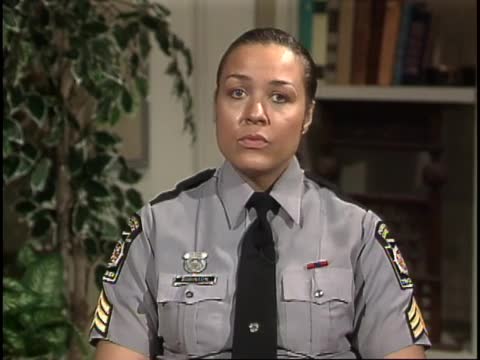
only here on WQED but before we do any of that for nearly a century the Pennsylvania State Police have been a model for policing for policing organization for policing organizations in fact across the entire country as part of their current recruiting drive they're looking for female and minority candidates to join their ranks and you could be just what the troop ordered here to tell us more is Sergeant Marcie Robinson and Lieutenant Steven McDaniel welcome to Black Arises thank you I understand this recruitment draft started in February February 1st and continues through June 19th that's the last state of applications that will be processed for this test period what does it take to be a state trooper well a minimum requirements are you must be a resident in the state of Pennsylvania at the time you apply and the time you're appointed as a cadet you have to have 60 college credits or an associate's degree obviously a high school diploma or GED and also we'd like you to be between the ages of 20 years old
and 40 you cannot have reached your 41st birthday when you enter the Academy I can just make the cut you can just make the cut and I have an application for you okay you're particularly looking for females and minority Sergeant Rooms yes we are particularly females currently in the state police there are approximately 150 females in the force of approximately 4 ,000 so it's very important because women can contribute considerably to this organization and to the community now I have to tell you you all look good in those uniforms you're cut a striking figure but you know how our young people between those ages that you describe might react to police do you find those same reactions when you're trying to recruit Sergeant yes we do what I'm hearing from young people that are interested or that may not be interested in simply not aware of what the state police has to offer is that they don't want to be police officers based on information that's been in the news such as police brutality and things of that nature the police are getting a bad name correct correct and I would encourage them to join the force and make a difference in the community and that's what they can
do well what is what has your career been like how long have you been on the force and what kinds of things have you done for said I say department I'm sorry Pennsylvania state police department is fine we refer to it as the department I've been with the Pennsylvania state police since November of 1983 actually joined the Academy in July of 1983 I've worked in True Bay Kiske Valley which is in West Moreland County for approximately eight years and during that time as a secondary function I was a part -time recruiter I've been with a member assistance program which is an employee assistance program with the Pennsylvania state police I then transferred to the Bureau of Research and Development which is located in Harrisburg Pennsylvania at the department headquarters and I was there for approximately two and a half years got promoted to the rank of corporal return to True Bay Kiske Valley as a patrol unit supervisor worked there for approximately four and a half years and transferred back to the Bureau of Research and Development so as you can see my career has primarily been patrol and the Bureau of Research and Development
now how is that as an administrator you've got offices under you troopers under you that you're telling getting a car and drive out over there to the bypass in park and watch for speeders and stuff how are they reacting to you and in a position of authority in a position of authority they react they respect my position of authority they respect me because I respect them I respect the department and as troopers on the job we learned through what we do that respect is very important for ourselves as well as for the community they respect the stripes well that makes a difference sometimes also okay what about for you lieutenant how has your career been my career has been excellent I've been quite fortunate I came on in December or excuse me June of 1988 graduated from the Academy in December of 1988 and I was stationed on the Turnpike in Plymouth meeting and then moved out to Newville Barracks and then into the county troop in True Bates Chambersburg area and then I went to the Academy to work in the physical fitness program and the members assistance program and then through the ranks
corporal sergeant and most recently promoted to lieutenant and now I'm the supervisor through recruitment section and department headquarters and Bureau of personnel this this is a career you think I'm 17 years 13 years something I got this is really a career for me we don't look at the state police as a job we look at it as a lifestyle it is a career opportunity a big part of who we are as individuals is what we do for a living it doesn't mean I run around with a gun strap to my hip when I'm getting the sandwich at two o 'clock in the morning after getting up in the middle of the night because I'm hungry but the idea of service the idea of respect for the community the idea of concern for one another and for the community is something that is a part of who we are what can a recruit expect when they go to the Academy is the training tough the training is very intense it's very important the Pennsylvania state police the Commonwealth invest a lot of money into the cadet training program they can expect it's a semi -military organization is what we are so it's very similar to being in the military actually you're up very early in the morning you you have your dorms you make up your room you go out jogging your back by breakfast
eight o 'clock in the morning you have breakfast you have classroom training you have physical fitness training self -defense training qualifications with respect to your firearm is that a master's pistol badge you have yes it is you can shoot some targets really when I got this pistol badge I did absolutely okay haven't had an opportunity to use it otherwise and hope that doesn't happen talk about that for a while because this police officers we watch TV and we think you guys are chasing people all the time putting sirens on and shooting and people it's just not police work isn't well that is part of the job that's something we trained for we call that the critical part of the job you train for criticality but you deal with the mundane in the routine and I've been in that situation and you train for it your training kicks in you react the department has a tremendous support program to assist our members when they're involved in situations like that both Sergeant Robinson and I both
work in that program and members assistance but the reality is our job is about helping other people and whenever you're doing your job you're helping other people let me ask you this we talked a little bit early about how young black people react to you but you know in this day of Johnny Gammage cases police brutality what the image must be in the community that you're trying to recruit from and I'm really wondering why anyone would want to be a police officer in this day and age when everyone seems so ungrateful for the work that you do to keep the entire community safe the highways the byways whatever and I like to tackle that with something that one of my recruiters who's very senior he has an excess of 25 years on the job and does an excellent job but he said this to me he's a black male and he said Steve when I'm asked that question I say to a young man or woman if that is going to happen do you think they're going to do that is that officer going to do that when I'm sitting next to him in the car he said well probably not he said do you think you have a better chance of changing the image of policing where you're standing or
I'm standing well as I said both of you are cut a figure in in in the uniforms specifically for women do you find the same kinds of things when you're recruiting with young black women that you want to get them in the department and they're kind of like a police officer I don't know they'd be good in uniform but do they say hey you look pretty good in that uniform with those sergeants right well I think it's important to get the information out to females is that there's more to this job than being in the patrol car and one of the things we have we have 16 troops across the state we have 17 18 bureaus in offices within the Pennsylvania state police and there are other functions to the Pennsylvania state police that women would be very interested in rather than just being out in the road on the road riding around in patrol vehicle for instance we have the Bureau of Research and Development which is where I worked primarily most of the bureau jobs are Monday through Friday jobs females have a concern with families they want to be home with their families in the evening so
forth and so on so I can understand that we also have the Bureau of Training and Education so there are some females that considers themselves as very good teachers or instructors with you I bet that's true when you were the Howard excuse me and you would stop someone where they ever surprised to see a female approaching yes both male and female very surprised what kind of reactions did you get well the reactions that I would get that their startle particularly when I start to speak because they just automatically assume that it's a it's a male trooper correct and but they get over it pretty quickly I guess of course okay what about you as a big black man over six feet tall you fit the description and you know working in a rural area most of Pennsylvania is rural and we work in predominantly rural areas occasionally you get that look like what what if those words generally don't come out because they respect the uniform they respect the uniform and I think they might fear the person who's wearing I'm not certain about that but when you're doing it that discussion okay quickly what are the qualifications what should someone who's young and look at
looks at this as a career one to do to become a state trooper well the first thing that they should definitely do is get the minimum educational requirements satisfied and that can be satisfied by either an associate's degree of the six to 60 college credits and it does not have to be in criminal justice matter of fact we encourage people in all majors the majority of people in our department do not have a background specifically in criminal justice engineers lawyers doctors teachers all these people are people are people are the best state trooper people who are willing to give of themselves to others and people who are looking for a good career opportunity and people who have the desire to make a difference all right and so since I fit in that age bracket I could probably pass the physical I guess I could come on you got an application over there on the side all right only one little thing what's that unless you're working undercover you might have to lose the mustache okay well I'll work on the cover anyway thank you for being here we do appreciate it and we hope people will pick up on this opportunity for an exciting and rewarding career to contact
the Pennsylvania State Police Recruitment Office give them a call at one eight seven seven PA cadet one eight seven seven PA cadet or email them at www .psp .state .pa .us just in case you're wondering tonight's program is being taped about a week before airtime so we're going to skip tonight's community calendar however since there are only a few more shows left in this season and you would like to have your event publicized why don't you send it along to us anyway and only horizon care of WQED 4802 Fifth Avenue Pittsburgh PA 15213 here in Pittsburgh summertime means Kenny would join us as we look back on some of our favorite Kenny Wood memories Kenny Wood Park has been a whirling screaming high -fly in part of Pittsburgh summers since 1899 people love the park and all its rides and everyone seems to remember what it used to be like come
with us we don't care if you're as tall as Henry or not we're going to share some Kenny Wood memories getting wood memories part of the Pittsburgh history series airs Monday June 12th at 10 p .m. here on WQED 13 in today's high -tech world of criminal investigation DNA evidence has affected the entire judicial system but can it really change the lives of those already doing time for men who claim they're innocent this is total system failure DNA could prove their innocence as far as work is served the case is closed why are prosecutors and judges across America reluctant to use this scientific test criminal justice system is the only place where innocence is irrelevant the case for innocence watch frontline frontline the case for innocence Tuesday June 13th at 10 here on WQED 13 since before Alex Hayley wrote roots people have been
obsessed with researching their own family trees PBS has a new series that shows you how ancestors connecting families through family history will start with family and compile records how to use a computer in genealogy and vital and religious records then we'll move on to census cemetery and military records finally will explore newspapers probate records and immigration and in our last episode we'll bring it all together and you'll learn how to write and publish a family history watch ancestors Saturday night at six starting June 17th here on WQED 13 recent developments in war torne Sierra Leone have once again focused worldwide attention on this troubled nation for our next guest that attention has never wavered here to tell us about their latest relief efforts are from the cotton tree association Ahmed Sharif and from the brother's brother foundation Luke Hingson welcome to our program glad to have you here okay this this is
in fact a war torne homeland of yours years ago you were trying to you appeared on black horizons you were trying to get aid things that were shipped back to the country and it's gotten much worse since that time recent headlines have talked about the fighting there what's going on in free time what can you tell us what do you hear from the home friend well Chris recent situation in the countries are just deteriorated because the rebel leader united another conflict that is dogs kidnapped 500 UN peacekeepers some of which have been released almost all of them have been released through the help of Charles Taylor who is also in one way the biggest benefactor of this war because he gets from the country through for example the diamonds of the country in fact that's how they finance the part of the war isn't that's how the war is finance because he takes diamonds
from Sierra Leone sell them through Liberia gets arms from Liberia and come to the country higher even Ukrainians as mercenaries to fight in this war that of course the lives of so many people it must be devastating to know what's going on in your home man like this it is very saddening and very disheartening to know once a country that was very peaceful today is torn about with people running nowhere with hopelessness look what's your role in all of this I'm with brothers brother foundation we're a Pittsburgh based international charity that helps people in other countries and we're working with the country association to provide needed goods relief supplies and educational materials for the future when you're looking for we're looking for additional logistical support the money to move the donated goods that we receive very work with the country association to send to
tractor trailer loads of help to the country one of which arrived I think just about a month ago and and what reports do you get back that the age or sending is doing good well we are working with local associations are local charities and they are reporting back on their distribution through the cotton tree association as to where the donated goods are going who's receiving them and what difficulties that they may have and getting help to the people I mean as you work on this problem and this was been going on what eight or nine years now this is the ninth year this is the ninth year as you as you work on this problem do you see any end in sight hopefully this might be the last straw for for this uncle because he has he's been captured now right he has been captured and recently they were talking discussing that they want to take him to a toward country to try him but before he's captured last year when they
signed the Lome Agreement Pistory they granted him amnesty from persecution you think there was a mistake it was a very big mistake because what they did was was done any place else in Africa it seems as though all over Africa in the Congo a number of African nations are getting involved on the different sides of that war with Lauren Kabila and all those people who were involved there it seems as though Africa is the new deaf ground not only for the combatants for the but for the civilians who are caught between all the fighting and that's the saddest part of it all because the civilians are the ones that pay the heaviest price like in Sierra Leone we have over 20 ,000 who have been amputated kids as young as two years old and houses destroyed hundreds of thousands killed now this is where the rebels would just amputate the joy going off just drop it off or they just stop it off because they say that's the way they send a message to a
democratically elected government that we are here and we are here to stay and if possible overthrow you nine years ago before this war what were the prospects like for Sierra Leone the prospects were very good you reach natural resources very much it was a very stable and peaceful country what happened it's just one individual who thought he has the idea how to change the society uneducated he never even finished primary school elementary school he was an army officer corporal a photographer in the army he was never even in the front line but why do people follow someone like that how do they grasp the minds and heart of followers to make them be so cruel in me because during the process while he was trying to gather his troops together he was able to make promises to them that if I become president I will do this for you I will do this for you is the same promise the same
deal that he had with Charles Taylor that in case he becomes president of Sierra Leone he was going to carve out the east and the southern part of Sierra Leone and give it to La Bure which is the richest diamond part of the country that is the deal that he has with Charles Taylor and that's why Charles Taylor he's fiercely defending him and supporting him from every country again a fossil and Libya also have hard in this world and they both benefited from it look this may beg the obvious but why are you involved why do you want to help out well brothers brother as a charity is designed our mission is to help people in other countries and we have historically in our time in Pittsburgh which has been 30 years worked with a variety of ethnic groups to help people who have an interest in the countries that they came from there'd be Eastern Europe or Asia or Latin America or parts of Africa so responding and working with the countries association which is consists largely of members of people born in Sierra
Leone or family connections there it's just a very natural way for us to go what should people here in America be concerned about what's going on in Sierra Leone in the Congo in many countries in Africa is these wars and border conflicts are breaking on which should people be why should we be concerned it's it's so far away it is so far away but it can break out to a larger conflict if the war in Congo cannot be brought to at least some control there are five countries that are involved in that conflict and you have one in Ethiopia and a country Sierra Leone eventually if child still is not checked there might be a war between Sierra Leone and Liberia and these are the things that the world the Western powers should take into consideration well Western powers have taken some things in the consideration the British as a former colony have gone back into sort of establish
a beachhead and some peace there has it been a good intervention in your opinion it has been the initial intent was to go in security airport to have the Western citizens who are there from the Western countries can be evacuated safely and during the time that they have been there they have at least security airport went on patrol but just yesterday I read in the internet that Tony Blair is promising that he's going to pull him out yes he is promising that he's going to pull him out within two weeks and if he does and that will bring the whole thing back to where it started in May is there any hope for peace we hope and we are very hopeful that there will be eventual peace currently the West African nations the echo was they're sending another 3 ,000 military officers to go there and help with the United Nations forces that is they already to make it to a 16 ,000 peacekeeping force is this a conflict all of these conflicts that we
talk about Eritrea Ethiopia the Congo the five or six nations that involve their Sierra Leone in Liberia is are these conflicts that can be solved by international peacekeeping forces whether they're from the UN or other countries or these conflicts that Africans must solve for themselves to a very large extent I believe with the help logistical help from the Western world Africa can at least maintain some relative peace or peacekeeping force in this conflict before the United Nations force came to Sierra Leone we had the Ego Mok which was under West African force that came there they had control over the situation but the the sooner the last Nigerian troops left the next day the rebels invaded the UN peacekeepers and kidnapped 500 of them as hostages they didn't do that when the Nigerians were
still there some forced the UN peacekeepers are when when we talk about Africa and all of its beauty its vast natural resource there's so much hope and promise there but it seems to almost always break down in conflict fighting death and destruction what could be done to avoid that I think in this new century that we are in we need new leadership in Africa leaders that actually have an interest on the people that they govern their nations to development progress them build more schools build more hospitals cheat them something to do instead of just having leaders who are here they don't know anything they all crooks they don't have any people the people elect them the people elect them they elect them with the hope that they will bring a change but the checks and balances are not there
also live on that that a change will come if what does hope live on that a change will yes we hope what do people what can people here do can they donate to brothers brother they and what should they donate they can't wish to if they people were to care to support us with financial contributions to move the donated goods that we receive we as a charity send each year about 240 tractor trailer loads of help to somebody through each tractor trailer has to be requested by the recipients they have to say this is what we really need to pay to get it and we have to pay to get it there so the issue for us is not getting donated goods the issue for us is getting the cash and then working with the right types of groups because the in addition to the crooks there are a lot of very honest people in each of these countries who care about their neighbors and some need to help well we want to thank you gentlemen for coming here and we hope those conflicts will be settled soon I know you'll keep your album in report back to us to contact the cotton tree association simply call they're meant for one two
three seven one five three three seven that's four one two three seven one five three three seven and to talk to the folks at the brothers brother foundation give them a call at four one two three two one three one six zero four one two three two one three one six zero well that brings us to the end of yet another addition of black horizons thanks for joining us and remember you can catch me on kdk a 10 20 on the amdow Saturday nights and seven and Sunday afternoons and fourth the buckles aren't playing I'm Chris Moore and for all of us here at black horizons have a good night back set pieces donated by macondo south creek street oakland I want to pay a hand out wait wait a minute groovy groovy jazzy funky bounce bounce dance as we dip on the melodic scene with them please throw away the drips at mc
sweet sugar pop sugar pop rocks pop you you you
you
- Series
- Black Horizons
- Episode Number
- 3128
- Episode
- Troopers
- Producing Organization
- WQED (Television station : Pittsburgh, Pa.)
- Contributing Organization
- WQED (Pittsburgh, Pennsylvania)
- AAPB ID
- cpb-aacip-a4d1b6d67b2
If you have more information about this item than what is given here, or if you have concerns about this record, we want to know! Contact us, indicating the AAPB ID (cpb-aacip-a4d1b6d67b2).
- Description
- Episode Description
- This episode includes an effort to recruit female and minority to serve as candidates for the Pennsylvania State Police through interviews with Lieutenant Steven McDonald and Sergeant Marcy Robinson. This episode includes a clip from and promo for "Kennywood Memories" a WQED production with Rick Seback. This episode includes a clip from and promo for a Frontline episode titled "The Case for Innocence" about DNA testing. This episode includes a clip and promo for a PBS production titled "Ancestors" about genealogy research. This episode includes a discussion of war-torn Sierra Leone through interviews with Ahmed Sheriff, President of the Cotton Tree Association, and Luke Hingson, President of Brother's Brother Fund which is a Pittsburgh-based international charity.
- Series Description
- WQED’s Black Horizons was launched in 1968 and was designed to address the concerns of African American audiences. More than just a forum for the community, the series served as a training ground for Black talent in front of and behind the camera. Through the decades, the program featured various hosts and producers until Emmy winning journalist Chris Moore took over the program in the 1980s. He was later joined by Emmy winning producer Minette Seate before the program evolved into WQED’s Horizons in the 2000s.
- Broadcast Date
- 2000-06-11
- Created Date
- 2000-06-01
- Asset type
- Episode
- Topics
- Public Affairs
- Media type
- Moving Image
- Duration
- 00:30:01;24
- Credits
-
-
Producing Organization: WQED (Television station : Pittsburgh, Pa.)
- AAPB Contributor Holdings
-
WQED-TV
Identifier: cpb-aacip-01d8a507c9d (Filename)
Format: Betacam: SP
Duration: 00:26:54
If you have a copy of this asset and would like us to add it to our catalog, please contact us.
- Citations
- Chicago: “Black Horizons; 3128; Troopers,” 2000-06-11, WQED, American Archive of Public Broadcasting (GBH and the Library of Congress), Boston, MA and Washington, DC, accessed April 5, 2026, http://americanarchive.org/catalog/cpb-aacip-a4d1b6d67b2.
- MLA: “Black Horizons; 3128; Troopers.” 2000-06-11. WQED, American Archive of Public Broadcasting (GBH and the Library of Congress), Boston, MA and Washington, DC. Web. April 5, 2026. <http://americanarchive.org/catalog/cpb-aacip-a4d1b6d67b2>.
- APA: Black Horizons; 3128; Troopers. Boston, MA: WQED, American Archive of Public Broadcasting (GBH and the Library of Congress), Boston, MA and Washington, DC. Retrieved from http://americanarchive.org/catalog/cpb-aacip-a4d1b6d67b2