Black Horizons; 3409; Good Schools
- Transcript
I'm sorry, I'm sorry, I'm sorry, I'm sorry, I'm sorry, I'm sorry, I'm sorry, I'm sorry, I'm sorry, I'm sorry, I'm sorry, I'm sorry, I'm sorry, I'm sorry, I'm sorry, I'm sorry, I'm sorry, I'm sorry, I'm sorry, I'm sorry, I'm sorry, I'm sorry, I'm sorry, I'm sorry, I'm sorry, I'm sorry, I'm sorry, I'm sorry, I'm sorry, I'm sorry, I'm sorry, I'm sorry, I'm sorry, I'm sorry, I'm sorry, I'm sorry, I'm sorry, I'm sorry, I'm sorry, I'm sorry, I'm sorry, I'm sorry, I'm sorry, I'm sorry, I'm sorry, I'm sorry, I'm sorry, I'm sorry, I'm sorry, I'm sorry, I'm sorry, I'm sorry, I'm sorry, I'm sorry, I'm sorry, I'm sorry I'm sorry, I'm sorry, I'm sorry, I'm sorry I'm sorry, I'm sorry, I'm sorry, I'm sorry, I'm sorry, I'm sorry, I'm sorry, I'm sorry, I'm sorry, I'm sorry, I'm sorry, I'm sorry, I'm sorry, I'm sorry, I'm sorry, I'm sorry, I'm sorry, I'm sorry, I'm sorry, I'm sorry, I'm sorry, I'm sorry, I'm sorry, I'm sorry, I'm sorry, I'm sorry, I'm sorry, I'm sorry, I'm sorry, I'm sorry, I'm sorry, I'm sorry, I'm sorry, I'm sorry, I'm sorry, I'm sorry, I'm sorry, I'm sorry, I'm sorry, I'm sorry, I'm sorry, I'm sorry, I'm sorry, I'm sorry, I'm sorry, I'm sorry, I'm sorry, I'm sorry, I'm sorry, I'm sorry, I'm sorry, I'm sorry, I'm sorry, I'm sorry, I'm sorry, I
I'm sorry, I'm sorry, I'm sorry, I'm sorry, I'm sorry, I'm sorry, I'm sorry, I'm sorry, I'm sorry, I'm sorry, I'm sorry, I'm sorry, I'm sorry, I'm sorry, I'm sorry, Wipe out your face, what was that.. public school system, you'll be interested in what our guests from Good School, Pennsylvania, have to say. But before we get to any of that, in October, two cleaning workers, one white, one black filed complaints with the Equal Employment Opportunity Commission claiming they've been subjected to discrimination and retaliation by their employer quality services. Tonight, one of those workers, Dan Bogus, joins us to talk about their case, along with Tom Hoffman, Deputy Trustee of the
Service Employees International Union. Before we start our interview, we'd like you to know that we did invite a representative from quality services to appear on today's taping. However, due to scheduling constraints, they were unable to appear. Mr. Bogus, let me just start with you. You sided with some black employees saying they were being discriminated against. What sort of discrimination did you witness, see, hear, or know about? My, our employer was quite fond of using racial slurs. He was openly racist with the other white employees. He made it a point to tell us not to associate with black employees. And if we did, we were harassed. And me and a couple of other white employees, you know, didn't bother. And we kept associating with the black employees. And the harassment got so bad, we filed charges with the EEOC. What sort of harassment did you suffer? He wouldn't leave us alone on our breaks. He'd fall us around. There were
unfair claims of bad work. Whenever one day, that one my work was fine. It was done really well. But other days, whenever he'd seen me associating with Anton, you know, my work was really, really bad. Anton Burgess is sick. He had a cold. He was scheduled to be here. He's one of the black employees that was discriminated against. But he couldn't be here today either. So that leaves you guys here to talk about. Mr. Hoffman, you represent the Union, the service employees union, which represents these gentlemen who have filed this suit and you're joining in with it, right? Right. Actually, we don't represent these workers. We represent many of the janitors downtown. We don't represent these specific workers. But we support them in these charges, less along with a lot of other community organizations. Yeah, I know the NAACP and many others have joined in with this claim of harassment, right? Why do you think the charges are substantiated? Well, we are, the workers are using the firm of Rothman Gordon. They're one of our premier law firm in
town and they've really, you know, they've looked at this very carefully and they think it's a very, very strong case. These lawyers did. Yes. And so you're going to support them and proceed with it. Right. And you believe with Mr. Bogus and Mr. Burgess are saying about their discrimination? Yeah, it's interesting because as I mentioned, we represent, you know, with the janitors union town, we represent a lot of janitors. And as we started to work with Dan and Antoine and try and get this issue out in the public, we would go to other places where we do represent workers. And we bring them up to date what's going on with the union. And we'd say we, you know, we're supporting these workers that have these charges. And they'd say, oh, yeah, I was, you know, people would say, yeah, I was harassed by quality services too. You know, so we've run into other people that we do represent that don't work in quality anymore, but that have been subjected to this kind of treatment. Now, I produce them and that's see, talk to some of the people at quality services. As we said at the top of the show, they couldn't be
here because of scheduling procedures and they just could not be here. But they say they don't have a prejudice bone in their body that all of your charges with apologies to Mr. Bogus are bogus and that they, they run a good shop. How do you answer that? I don't believe them. I think the charges are well -founded. We, in fact, one of the sites we represent is the Dantannas steel workers building. And quality services was in there. And we ran into similar charges of harassment of women over, you know, a gender -based discrimination. The employer there, the steel workers actually canceled their contract with quality over some of these issues. So, you know, it's something that we've run into before. In fact, quality told our producer, Menant Seed, again, that they lost that contract because of your charges or the workers
charges and that's a $350 ,000 contract that they don't have to clean the union building, the steel workers union building anymore. And now they're going to have to cut back on employees because you guys have made them lose a huge contract. But I mean, I just don't think, I mean, I think the real issue, I mean, you're talking, you know, his response has been to talk about the economics of the situation. But the real issue is the discrimination. And, you know, Pittsburgh, our union and all the other community groups that are supporting the Dan and Antoine are saying, you know, we don't want that in our town. You know, we don't want that kind of treatment of workers. You know, that's, you know, we're beyond that. Mr. Bogas, how are you going to prove these charges of discrimination that they use aftering slurs and all sorts of harassment? I've read in some newspaper articles that you charged that they said, to you, don't go in such and such a locker room, because that's where he ends hang out. That was a direct quote when I first started working there from my supervisor. He said on several occasions,
he's used the racial slurs of all, not just against black blacks, but also against anybody. I mean, I've learned whole new ethnic slurs. I never even knew before. And that's just not the kind of thing we should have to put up with. We're going to go as far as we can to put it into this. Now, there's another union involved. The Carpenter's Union, which represents some of the janitors downtown, and they seem to be siding with quality services and think this is just applauded by you and the service unions to get in there and represent more people. How do you answer that, and stuff? You know, they've been saying that that's what it's about, but it's never been about that. It's always been about the quality services, the racial discrimination there. And we see ourselves, we're the janitors union. And having an employer like this just sort of drags everybody's jobs down. And the union wants to make the janitors
jobs be good quality jobs that people can support a family with. And when those standards are broken by a company like quality, that drags everybody down. The Carpenter's Union representative and quality say these were good jobs. They paid a living wage. And they wonder why you're not out in some places in the suburbs trying to organize where there are unorganized janitors working. And those wages need to be lifted. Absolutely. I couldn't agree with them more. And in fact, we are doing that. We are, you know, we are looking at the suburbs. We are working there. Mr. Bogus, there have been other suits like this where white gentleman joined in on behalf of blacks who accused their employees of discrimination. The one I can remember is with national apartment leasing where two secretaries were taking calls and they had been coached on if someone sounds black. Don't try to rent it to them. That organization settled the suit. They changed their name and did a lot of other things. But those two women I recall reading articles about said they tried to do the right
thing where they saw some discrimination. And they felt that they were not thanked by the black community nor were they rewarded in the settlement for stepping forward and doing the right thing. What happens if that kind of thing happens to you? Will you lose your faith in human nature and people? No, no. This isn't a matter of getting credit from the black community or getting pinnative damages or whatever. This is really about doing the right thing. And a funny thing about the Carpenter's Union, we have the only time that they've ever really made a positive statement back to me or Anton about any of this was after media coverage after we had a rally in front of the all for building. You know, after there had been articles in the paper like today I got a letter from them saying they were going to have a meeting. It wasn't before when we filed grievances. It was when there was media coverage. Did you try to settle this before? Did you go to your employee and say, hey, I don't want to use those kind of stories and I don't want to hear them. Did you try it? We've all told him. You know, he said to me several ethnic slaves before and I told him, like I was living with a black guy at the time and I told him, hey, look, I don't
believe this is the 20th century. We shouldn't have to put up with this thing, this sort of thing. And, you know, he kind of backed off but still, whenever it was behind closed doors or it was just me or him, you know, it's disgusting. You know, like he's made it a point to hire white employees in place of black employees. In fact, the numbers of blacks have gone down. Oh, you're after this. I sort of working. Located. Yeah. And so you think he's discriminating and hiring too? Oh, of course. Like he's, when we had a couple black female employees, you know, he would always say, oh, it's not working out with this lady. It's not working out. And as soon as we got a white employee in there, oh, everything's great. Everything's just peachy keen. But everything wasn't great with you, you're white. Was it because you associated with the boys? Yeah. I don't see this kind of barriers. And he didn't like that. He made it a point to try and separate it. You know, if the blacks were in this room, everything was okay. And the whites were in this room. Everything was okay. But as soon as we started intermixing with each other, you know, he would come out of his way to harass us. And it was only the white employees that associated with the black employees. And the other white employees would not have
enough time. They were left fine. They were given actually special privileges. Okay. What's next? Where are you going to go with this next? Well, we held a rally at one of the quality services sites out in the suburbs. You know, I mean, one of the issues that the carpenters raised was that, you know, why are we always doing it where they are? And in fact, we're not. I mean, I mentioned the case of the Steelworkers building. We also did a rally at a suburban site this weekend. So, you know, wherever quality is, we're going to be raising this issue. Okay. There's a phone number you want to give for more information. Yes. People want to join in with you. Yeah. Hotline's been set up. The toll free number is 1 -888 -8986193. Would you repeat that, please? I would. 1 -888 -8986193. And the purpose of the hotline? The purpose of the hotline is to sort of what we said before. We've run into a number of cases of people where we represent them that were employees of quality that were the winners
in joining the suit. And this is a way for other people to fall to join as well. All right, gentlemen. We appreciate you coming on the program with us. I would point out to our viewing audience again. We invited the representatives of quality services to come on the program. But they told our producer, Menet Seat, that they were just too busy and their schedules would not allow it. We'll continue with our program now. Kwanza, the African -American Harvest Festival, is just one of the many ways the holiday season is celebrated here in Pittsburgh. And it's a part of Rick Sebeck's Happy Holidays in Pittsburgh. The day after Christmas is historically a big shopping day for lots of people. Take advantage of the after Christmas sales. December 26th is also the first day of the seven days of Kwanza. Early in December, at the Urban League of Pittsburgh's Charter School on North Negly Avenue, students are gathering to learn about Kwanza from a group known as Children's Window to Africa, led by Valerie Lawrence, whose African
name is Adeniji. Kwanza is a cultural holiday celebrating our family, our community, and culture and the strength and the legacy of our African ancestral roots. What did I say? How many candles did I say we had? Adeniji introduces the kids to the objects, the rituals, the principles, and the reasons for Kwanza. It is a harvest celebration and it means the first fruit of the harvest. And that's what Kwanza means for our celebration. The observance of Kwanza involves a mixture of social, cultural, and personal activities, like here at the home of Patricia Pew Mitchell. We'll begin now with our candlelighting ceremony. Tonight, we are celebrating the sixth principle of Kwanza, which is Kumba, creativity. And we are also coming together as family and friends and having our caramel feast. And we come together to serve the seven principles of Kwanza, the Inguzusaba.
And just a time of reflection. We also went over to the Cathedral of Learning at Pitt, where Professor Lawrence Glasgow from the History Department met us in the African Heritage Classroom. He knows some history of this relatively new celebration. It was started in 1966 by a man on the west coast, Los Angeles, by the name of Ron Carrenga, who was a cultural nationalist. He founded it right after the Watts riots of 1966. It started out as a way, an affirmation of black nationalism, black separatism. By the 80s, interesting things begin to happen to Kwanza. One, women take it over, turn it into a type of a family celebration, not a political cultural nationalist activity. The third principle, Ujima, represents collective work and responsibility. It changed in that as the women took it over, it became not so much
hostile to Christianity, but it was seen as supplementary to or complementary to sort of a soul Christmas, if you will. And Kwanza now has become a way of celebrating African American identity. It's not African, it's not American, it's a combination. It's sort of like a black Hanukkah, if you will. It's something that identifies one and maintains a racial identity, but it becomes part of the American mosaic at the same time. I pray for life. Well, Pat Mitchell used to be the executive director of the cultural organization called Kumba Trust, which worked on a special Kwanza event with the Carnegie Museum of Art. In the year 2000, we invited Dr. Melana Karenga to come and kick off our citywide Kwanza celebration. He gave a lecture at Carnegie Music Hall in Oakland, and we had over 700 people in attendance, you know, to have the actual founder of Kwanza in your hometown is no small feat. Some of the things we
have, we're giving to you just because at Kwanza, children always get gifts. Kwanza has principles and ideas that we can all use each and every day of our life, 365, not just during the seven days that we celebrate. And so whether or not you choose to observe it, there will be a moment in all of us where we pause and remember who helped us get to where we are, and we will say thank you to them. And we will teach our children to do the same thing, and that's Kwanza. And it's a good feeling, and it ties appropriately in with the other holidays, with Christmas and with Hanukkah, and it's all about family. For the creator, who provides all things great and small. This concludes our Kwanza observance for today. Well, now it's time we eat. Time to eat, I can get with that. Happy Holidays in Pittsburgh,
Arizona, November 23rd at 8 p .m., here on WQED channel 13. According to many parents, teachers and politicians, there is an ongoing crisis in Pennsylvania's public education system. A crisis so severe that it has earned the state a D -minus in education equity according to the publication Education Week. Good school's Pennsylvania is a non -profit organization that wants you to join the battle for improved public schools. Here to tell us more is Good School's Pennsylvania field director Celeste Taylor, and also here are Janelle Maddox and Jamie Trower, two students from Chenle High School, who participated in a recent student's march on Harrisburg. All three of you, welcome to the program, glad to have you here. So let's start with you D -minus. That's pretty poor, isn't it? Yeah, it's pretty bad. I'd get a weapon if I brought them. That's right, and that's what we talk to the young people about. How would your parents react if you received a D -minus? And what they understand is that that D -minus means
that our state is not doing what it needs to do, especially when it comes to poor children and African -American children and children that speak a different language than English. All right, let's get to those two concerns in a little bit. But first, let's talk about what needs to be done. You say in your literature that there are proven methods for improving schools for those categories you were just talking about. Absolutely, it's been shown so much research we certainly have had enough to know that smaller classroom sizes for very young children from kindergarten to third grade. And that means smaller than 20. And if you could get 15 in a classroom, that would be even better. That means more teachers, doesn't it? Yes, it does. Who translates to more money, doesn't it? Yes, it does. Well, how are you going to do that in those poor school districts that just don't have the tax base to provide that kind of teacher student ratio? That is the question, and especially for Allegheny County, where I'm the field director, what I had to look at is the capacity of communities to generate enough income.
If we look at funding for Pennsylvania school districts and we look at the history, we know that in the 70s, mid 70s, it was up above 50 percent, closer to 55 percent. And now, in the year 2002, that has gone down to 34 percent. And what we would like to do is to make sure that our educational system in Pennsylvania really loads out what the Constitution says it should do is provide a thorough and efficient school system. So that means that they do have to provide at least 50 percent of the money. And we feel that if this happens, this will have the burden be less on municipalities, especially like Wilkinsburg. I'm just going to get that money from. And they're going to have to look at different funding structures. And there may be a different way to tax our citizens. Right now, there is a special session in Harrisburg where they're looking at different bills legislation that look at the
different ways in which to generate money. Sales tax isn't the one tax that's promoted the most. They're looking at maybe increasing the personal income tax. Our new governor -elect, Ed Rendell, is looking at ways to actually get more money into the system without raising taxes. But in looking at the different sources as to how we will get money, we've got to look at the different ways we might be able to generate it and certainly looking at personal income tax, which is a statewide tax. Which would lessen the burden for people in areas such as Wilkinsburg. Okay, let's talk to two students who affected. Janelle and Jamie. Janelle and you and Jamie are both students at Shenley. Were you in the ninth grade? Yes. Is that right? I understand both of you attended this rally that was in Harrisburg. Janelle, let's start
with you. What was it like to go to this rally and start being a participant in something that might better your educational outcomes? Well, it was amazing. I really enjoyed our children coming together for the same cause. And you know, fucking someone, one man going, that is an equal opportunity for equal students, not more pay. This is the first time that you were able to go to a rally like that and see how things work and how important it is to put pressure on the people who make the decisions. Yes, it was actually, and I hope it won't be the last. Okay, well, we'll see about that. Jamie, what about you? What kind of experience was it for you? To me, it was exciting because it was the first rally that everyone went to and to see how all the students could come together and march for one thing, equal funding between school and that they really did care about their education. At Shenley High School, which is usually by the school board, especially said to be one of the better of the 12 high schools here within the city of Pittsburgh, what kinds of things, Jamie, would you like to see improved? More smaller class sizes, more teachers, because we don't have a teacher
in the sport and classics, no math teacher. And the Spartan Classics, no math teacher. Books, we don't have any civics books. And our teacher said that's the first year that they haven't been able to give us civics books. Just, I don't know, just... Those are some key things that you'd like to see. You agree, Janelle? Yes, I do. And those are some of the things that you would like to see as far as education. Not more pep rallies or stuff like that, but really things that would increase your educational opportunities like books and teachers. That kind of thing? Yes. It's kind of odd to hear students say that. Now, how much of this I wanted to come from Miss Taylor coaching you and how much is it a real desire to see better education? Let me know. She didn't coach us. No. Yeah, it's not at all. How did you get involved in good schools, Pennsylvania's student portion? Or a civics teacher. We got from him and then we went to the march and then he picked us to go with her down to get the program. What do you think you two were picked? Four.
Why did he pick the two of you, do you think? Good students. Yeah, and work hard. I think we would enjoy things like that. Okay. You want more young people to get involved. Is that right, Miss Taylor? Yes. We had 500 students from this area go to Harrisburg. 500, wow. That's a good deal. And we showed off. We had the largest number of kids from Pennsylvania to attend the march. Did you only have different chance and cheers out there? No, we had posters. Posters. What did they say? It was... Separate funding is not equal. Separate funding is not equal. We still fight in those battles, Celeste. Yes. And we got to continue to fight them until we win. Okay. Now, how are you going to get more adults and more young people involved as volunteers in good schools, Pennsylvania? Right now in Allegheny County, we have 20 groups. And we're trying to get 100 total. And the idea is if these groups meet monthly and learn more about public education. And we're talking from all sectors, whether it's parents, the faith community, community
groups. And they're knowledgeable. They become the best advocates for our children. And then they can be effective when they talk to their senator, their legislator, the governor. You got to be knowledgeable when you're doing this. You also got a proclamation from the city about your work? Yes, we got a proclamation from City Council. And we also got a proclamation from the mayor. And we'll be getting one also from County Council. And this is so important because this issue just isn't about Pittsburgh public schools. It's also about schools throughout the county. And also all the schools in Pennsylvania. And basically, what do these proclamations say? They're saying that our quest for equity and funding and adequate resources, improving methods and programs to help kids. And accountability that they agree with this movement and that they congratulate all the students for their activism and their civic engagement. Well, we congratulate the two of you, Jane L. and Jamie, for your activism. It's good to get started at an early age. It's ninth graders. I compliment you for being
involved in your own educational outcomes. All right. Thanks for being here. I really appreciate it. If you'd like to get involved with Good School's Pennsylvania, give them a call at 412 -687 -8628. That number again is 412 -687 -8628. Believe it or not, that wraps up another episode of Black Horizons. Thanks for tuning in. And don't forget to join us every Friday night at 10. And Sunday afternoons at 2 here on WQED. And don't forget I can also be heard on KTK Radio Saturday nights at 7. And Sunday's at 4. So if I don't see you here next week, I'll hear you there. I'm Chris Morse and have a good weekend, everybody. Good night. Set pieces donated by Macondo and by the History Store. Craig Street and Forbes Avenue. Yeah. Yeah. Yeah. Yeah. Pumpkin, pumpkin. I want a big hat now. Wait,
wait a minute. Groovy, groovy, jazzy, funky, bounce, bounce, dance, as we dip in the melodic scene. Biffin' things for when the trips to L .C. Sweet sugar pops, sugar pop, rocks, and pop. You don't stop till the sweet beat drops. I show improve if I stick and move. Biffy poems recite it on top of the pool. Smooth mind. Local like a butterfly. Instead of floating, something like a butterfly. Yeah.
- Series
- Black Horizons
- Episode Number
- 3409
- Episode
- Good Schools
- Producing Organization
- WQED (Television station : Pittsburgh, Pa.)
- Contributing Organization
- WQED (Pittsburgh, Pennsylvania)
- AAPB ID
- cpb-aacip-a21c12942e6
If you have more information about this item than what is given here, or if you have concerns about this record, we want to know! Contact us, indicating the AAPB ID (cpb-aacip-a21c12942e6).
- Description
- Episode Description
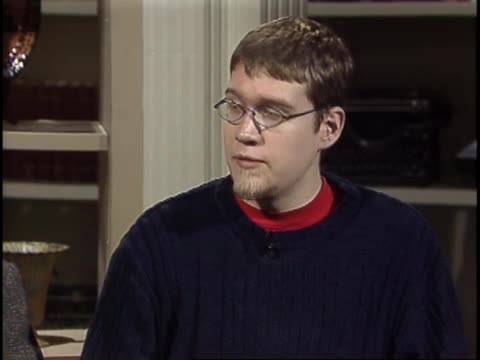
- In this episode Racial Discrimination Complainant, Dan Bogus and Trustee of the Service Employees International Union, Tom Hoffman discuss incidents of racial discrimination in the workforce. Rick Sebak special “Happy Holidays in Pittsburgh” promo, discussing Kwanza. In this segment Good Schools PA Field Director, Celeste Taylor; Schenley High School Student, Jainiel Mattox; Schenley High School Student Jaymie Trower discuss Good Schools Pennsylvania, a non profit organization that battles to improve public school systems.
- Series Description
- WQED’s Black Horizons was launched in 1968 and was designed to address the concerns of African American audiences. More than just a forum for the community, the series served as a training ground for Black talent in front of and behind the camera. Through the decades, the program featured various hosts and producers until Emmy winning journalist Chris Moore took over the program in the 1980s. He was later joined by Emmy winning producer Minette Seate before the program evolved into WQED’s Horizons in the 2000s.
- Broadcast Date
- 2002-11-22
- Created Date
- 2002-11-12
- Asset type
- Episode
- Topics
- Public Affairs
- Media type
- Moving Image
- Duration
- 00:29:01;24
- Credits
-
-
Producing Organization: WQED (Television station : Pittsburgh, Pa.)
- AAPB Contributor Holdings
-
WQED-TV
Identifier: cpb-aacip-d7980374004 (Filename)
Format: Betacam: SP
If you have a copy of this asset and would like us to add it to our catalog, please contact us.
- Citations
- Chicago: “Black Horizons; 3409; Good Schools,” 2002-11-22, WQED, American Archive of Public Broadcasting (GBH and the Library of Congress), Boston, MA and Washington, DC, accessed January 27, 2026, http://americanarchive.org/catalog/cpb-aacip-a21c12942e6.
- MLA: “Black Horizons; 3409; Good Schools.” 2002-11-22. WQED, American Archive of Public Broadcasting (GBH and the Library of Congress), Boston, MA and Washington, DC. Web. January 27, 2026. <http://americanarchive.org/catalog/cpb-aacip-a21c12942e6>.
- APA: Black Horizons; 3409; Good Schools. Boston, MA: WQED, American Archive of Public Broadcasting (GBH and the Library of Congress), Boston, MA and Washington, DC. Retrieved from http://americanarchive.org/catalog/cpb-aacip-a21c12942e6