Viewfinder; Little Manila: Filipinos in California Heartland; Tape 27
- Transcript
So you haven't read. It. OK. And it's not like you. And I start. Yeah. Help me please. And then you bring me to the hospital and everybody's around like. OK OK terrorist. OK so this is obviously just more conscious I just didn't realize it was there when I play.
OK. All. Right. All right. All right with me. Credit for your title. OK OK OK. Assistant Professor of History University. OK. I know I know what you know. Oh for some reason they want to just put Little Manila and all the other History Channel documentaries. I'm a real professor. I really have a doctorate and so I don't know what I think it is. It's a sense that people don't think that people can wear two hats. That either you're an academic expert or you're a community person. I think that's. OK. But yeah OK that's
right. I just wanted to write. So why have they come here. Right here they are. They write in San Francisco. I think I did and just look at their homes. And after a film star leaving Hawaii in the mid-1920s and they start leaving because of the poor wages because of be unsuccessful strikes for example problem in LA. It's nine hundred twenty four strike. That was largely unsuccessful and many Filipinos found themselves blacklisted from jobs and they began hearing from relatives who would come to the west coast and in the first decade of the 20th century and who had found jobs in the agricultural areas of the West Coast particularly the Central Valley. And Stockton is the major
city the major town in the sense within the Central Valley. And so word gets back to Filipinos in Hawaii that there are good jobs in Stockton and you have a number of families that start leaving in the mid-1920s and coming to the Central Valley and they find this really vibrant downtown area where Filipinos can go eat Chinese food they can at reasonable prices they can play pool they can go gamble and Chinese and Japanese gambling halls they can find cheap housing. And this is the Oriental quarter in downtown Stockton. And so there's a place for them to live you know a place where they're not limited by rigid segregation laws where they can find inexpensive housing. And then this is an area in California where they can find work year round. They can find really essentially good work work that they were able to find in Hawaii in asparagus and celery and sugar beets and a whole range of crops where cheap labor is needed where farmers really need Filipino
and Filipino agricultural work. And so they come to Stockton and they come in larger and larger numbers and I think the. Years in which we have the highest numbers of Filipino immigrants coming to the west coast from 1927 to about 1929 1930 and then you have thousands of Filipinos coming to the Central Valley coming to the San Joaquin Delta area finding work and in the in the crops meeting up with their town mates meeting up with their cousins and their relatives who had come before them and really finding community and stop them. And so word spread in Hawaii and then also in the Philippines and what you started to see in the late 1920s is that Filipinos and Filipinos started coming straight to Stockton from the Philippines. They were stopping in Hawaii first they were coming right to the San Joaquin Delta right to the Central Valley where they knew they were they were going to find good jobs and where they knew they were going to find their family. And so in a sense is a little bit of a kind of a snowball effect where you have a couple of Filipinos coming
for example in 1914. We have evidence of Filipinos who were studying at college of the Pacific and working in the asparagus fields on their summer breaks. And of you know their letters get sent home and so you have a number of Filipinos who have come before this large kind of wave in the 1920s and they just keep coming and they keep coming and you know they stop some stop in San Francisco some staying in Seattle for a while some stand Los Angeles but Stockton becomes this hub and a lot of old timers talk about Stockton being the city thats the most fun. Because this is the city where they're going to see most of their town mates are going to see their relatives in Lafayette in Eldorado street becomes crossroads of not just the Filipino community in Stockton but in a sense the Filipino community on the West Coast. If you are looking for your cousin and you just recently arrived you would come to Eldorado street because you knew there were thousands of Filipinos especially during asparagus season lining the streets.
Particularly in the late 1920s and through the 1930s Filipinos become particularly efficient at harvesting asparagus and asparagus is this multimillion dollar crop in the San Joaquin Delta. And so that's another reason why a lot of Filipinos start coming to Stockton because they're being recruited and they're highly in demand by farmers because of you know the way they're able to organize the kind of highly efficient work crews if they organize their very racist arguments that farmers make saying that Filipinos do this work because they're shorter and therefore closer to the ground. But I'd like to think you know the ways that workers were organized in terms of hometowns in terms of the provinces and the relationships that these men had with each other and the obligations that they had with each other really contributed to the efficiency of their work and their reputation for being extremely skilled workers as well as efficient workers. I mean where did their money go.
In the fields well most of these pioneers men and women come to the United States with the dream of being able to bring their family out of poverty. And it's the fact that thousands of them did come and made money more money than they would have ever made if they had stayed in the Philippines. You know is is I'm sorry that it was I started up a sentence that people often think that they spent their money. Yeah but what about where that money. The goal was to bring this money where. Yeah well. Filipinos and Filipinos come to the United States with the intent of bringing their family out of poverty and their American colonial teachers tell them they're going to come to the United States. But this is such a land of opportunity that they're going to pick up off of the street and the irony is that the Little Manila is centered around Eldorado street and so it's very literal you know that they're
coming to California and they're they're coming to you know this golden place so they get a pickled up out of the street. They're going to return in a few months as these extremely you know wealthy men who are coming back to save their families and bring their part of their provinces and their Barrios out of poverty. And that doesn't necessarily happen. There are a number of Filipinos who do become successful businessmen who. On a number of businesses in Seattle in Stockton being one of the few exceptions for the majority of Filipinos they come to the United States and they find that the only work open to them is in the fields. But it's not an entry level job. Working in the fields it is the only job that they can find whether or not they are from you know or they have a fifth grade education from their private school in the local scene or day or in the Visayas. And so the amount of money that they believe they're going to be able to send home of course you know it's not
going to be that much. We do have evidence that a number of them save money and send a lot of money back home. And a lot of the immigrants who have come after 1965 can look back and see that they are able to go to college. But there is a couple generations of Filipinos in the Philippines are able to go to college because their bachelor uncles and grandfathers and elder cousins have been sending money back home for years from the 1920s on. And so we know that there's that direct connection. And when we think about how many millions of dollars Filipinos worldwide send back home we can really trace it back to the 1920s and these Filipinos coming here and sending money back home trying to bring their families out of poverty trying to educate their younger brothers and sisters. You also though have stories are Filipinos with the best intentions of saving money you know losing all their money in the gambling halls or in the taxi dance halls or you know clothes and cars and one of things you have to remember is that when when
these young men and women are coming to the United States they're in their early teens. They're in their early 20s this is the first money they're ever earning in her entire lives. And this is also the birth of the consumer culture in the United States. And so they're buying records and record players and Tarzan and you see in diaries and letters Filipinos talking about some of their most prized possessions being in their record players and. There was one family a family that came over from Hawaii to Stockton and I kept a diary of her time and some of the things that they brought over with them included their suits and their record player records. And so these you know these items were very special to them as well because they represented the hard work that they had been doing in the United States and so you do have stories of. First time stories of some Filipinos who kind of disappeared in California families never heard from them again their families never got money from them again. And you wonder did they did
they go broke did they not want to talk to their families again because they were embarrassed that they were unable to send money. Some Filipinos were murdered in racist incidents and fights with other ethnicities with with other Filipinos and so you have all these different kinds of stories of where some of these Filipinos went. But for the most part we know that even if it was anywhere from a few dollars a week to several hundred dollars even several thousand dollars over decades we know that Filipinos have been sending money back home and and really trying to help their families. MR. From the violence that occurred in two races and wars you talk about maybe that is how our children will to understand racism and to understand the ways that Filipinos were treated. You have to really understand racism and the constructions
of race and race relations in the United States at the turn of the century. Filipinos are coming in in large numbers in the 1920s and by the 1920s most Asian immigrant groups had been excluded from entering the United States. The Chinese had been excluded in 1882 Japanese laborers were excluded 19 0 7. Every group that was considered racially unfit for citizenship. People who are not white are people who are not of African ancestry were barred from entering the United States by the 1924 Immigration Act. And so are the sense in a sense the immigrants entering at this time in which the United States essentially said we're closing our doors to anybody who does not fit our ideal racial it doesn't fit all of this racial stock that we imagine that Americans should be made up of which is white Anglo-Saxon Protestant racial stock. And so. Filipinos are also coming into an area that is populated by people who had
migrated from the Midwest and the south and brought with them to California their ideas of racial superiority rigid segregation and so Stockton is an extremely segregated city. They go to what is called the Oriental quarter Filipinos. And this is anywhere from a 6 to 10 block area in which Japanese and Chinese and South Asian immigrants are limited to these this is the only place that they can have businesses and lease businesses and and live. So Filipinos come to stopped and I find this is the only place besides the agricultural camps and the outlying areas that they can live. They also find that there is in a sense a Mason-Dixon line that separates Stockton that is white and Stockton that is brown and black and yellow and red and essentially non white and that's Main Street. And Filipinos find that police wait for them at Main Street with billy clubs or stories of Filipinos who dared to challenge this main street
north south line since North Stockton is white stopped and essentially people of color. Filipinos who dared to challenge that that border and were beaten so Filipinos couldn't buy you know land until after they were able to get citizens after World War Two. They couldn't even rent any properties north of Main Street they couldn't have any businesses they couldn't in sense have any kind of life in this very rigidly segregated city. And so you have signs like positively no Filipinos allowed in hotels and in bowling alleys and movie theaters in the north side of town and so this was the side of town that had the beautiful department stores and the large homes and beautiful neighborhoods and saw that they were excluded from these neighborhoods unless they were a house boy or a domestic. And one of these neighborhoods and we do have evidence that there are Filipinos who were able to cross over to the other side of Main Street but only because they were working you know in certain capacities you know as domestics for some
of the wealthier white families. And so you know racism for Filipinos in Stockton was kind of this you know I don't have this daily onslaught of of where you're not allowed to live where you're not allowed to go. Filipinos and then there attending are Filipinos going to taxi home back out. One of the reasons why there is incredible violence inflicted against Filipinos in the mid to late 1920s and up into the 1930s is that whites in Stockton are absolutely shocked and angered that Filipinos would dare can you know date white women or would dare to walk around the streets of downtown Stockton with white women on their arms and the places where Filipino men danced with white women or socialize with white women like at taxi dance halls. The result social club
being one of them on Lafayette Street there were a number of other. Taxi dance halls that had opened that had been closed by the police and by community pressure in the late 1920s and early 1930s these were places where working class white women and Filipino men socialised and danced. And again reminding you know that you know Filipinos are young they're in their late teens they're in their 20s they're prevented by anti-miscegenation laws from marrying whites. And the ratio of Filipino men to women is 14 to one woman. And most women who are coming over tonight at 6 in the world women who come over there about 10 percent of the entire immigrant population. Most of them who are coming over are already married. They come over with their husbands or their young girls there and they're you know they're born in Hawaii and came over with their parents or brought over or were born you know in the early 1920s and were still very young. And so these working class white women in the sense that the only women
who Filipinos could socialize with. But white Stockton has an incredible problem with these brown men with dancing with and socializing with white women and in many ways this reminds us of the ways that white womanhood is protected in the south. You know this is you know again reminding all of us that to think about Stockton as a place where Southerners have migrated to also and settled and those ideas of the purity of white womanhood being extremely powerful that ideology and white supremacist ideology really guiding you know race relations in Stockton. And so whites talk Tony and my God to the affront that that for these young Filipino men wearing these incredible suits that they worked so hard in the fields to buy you know you know walking around downtown Stockton of these white women on their arms really incited a lot of
you know racist anger. Filipinos being seen as biased by whites and stopped in as people who did not know their place. That here were Filipinos or here were these dark peoples you know who might as well you know were lumping everyone together who is not widely known stop being common practice. Here it is non-life peoples who dare to think that one that they can wear these incredible suits and drive nice cars and go around downtown as if they belong to their White Satin is an evil that they belong there and then to do it with a white woman on their arm you know and this was incredibly shocking for for whites in Stockton who had essentially it VERY their grandparents or their parents in the South had essentially created a situation in the south where blacks and whites were completely separate and meant to go to stopped in the city in the West and they see Filipinos dare challenge these rigid lines of segregation that had been you know very
ingrained in American culture was extremely shocking and you know why did Filipinos do this for a number of reasons why did they feel that they can wear these seeds in and drive these cars and date anybody they want to. Well thats what their American teachers tell them in the Philippines. You know it's it's important to remember that they grew up in an American colonial culture and they come to the United States in part because of the extreme poverty that capitalism American colonialism brings. That's for sure. But they also come the United States because of the movies that they see because of the stories that they hear because of the teachers who tell them that America is this land of opportunity. They don't tell them about racism in the United States. They don't tell them that they're not allowed to go certain places that they're not going to be able to become citizens. And so Filipinos come with this idea that they are occupying this. This is kind of in-between status called nationals that their colonial subjects of the United States become speaking English as good or better
than some Americans. You know they come with education better than some of the working class whites in Stockton. And if they if they've been told by their white teachers all this time that they're just as you know that they're just as their chances of success the United States are just as good as anybody else's. You know I'm going to come to Stockton have that shock that this is an extremely racist society. That even though they hate their teachers had been telling him it had such opportunities waiting for them. They really didn't and that there were racist laws like the anti miscegenation laws that would prevent them from marrying whites that there would be laws like the Alien and land law that would prevent them as non citizens from owning land that there would be no guarantee of civil rights the bit that their lives would be rigidly segregated. And so this I can only imagine what it would be like for Filipinos you know growing up in this colonial public school system and this rude shock of coming to Stockton and realizing that their their dreams of material success are going to be
extremely limited by the extreme racism. Did you want to relive them spinning give my mouth is dry. That's just answering a lot of those types. So let me know if there's anything else you want me to talk more about that. Is it tearing. Just OK. I'm glad you watch. OK. Ok ok to. You when you talk about little looked like I do. OK OK OK. Every building OK. But yet tell me what it looks like to you and it's interesting stuff and record. I've been going and looking and they refer to it all this time and.
I think that's really telling as well where you are right but please describe to me what it was like OK. Well there's a section in downtown Stockton and it's the late 19th century on it was known as the Oriental border. And this is where Chinatown was and as Japanese immigrants start coming to the Central Valley into Stockton they establish new one much nearby and this is anywhere from a 6 to 10 block area south of Main Street. And when the United States they find that the only places that will welcome them let them eat there let them rent there let them socialize there. You know are the people of the Oriental quarter. And you start seeing businesses established at Lafayette and Eldorado streets which is kind of the southern end of the Oriental quarter beginning in the early 1920s we know that in 1922 the US opened up a candy shop Eldorado street and
from the 1920s on you have more and more Filipinos opening up grocery stores and pool halls and dance halls and soda shops and restaurants and my grandfather problema Bolland came to Stockton. In 1930 I believe he'd gone to Seattle first came to Stockton and purchased a restaurant called the Lafayette lunch counter. And this was right at the heart of Little Manila streets and he ran this this restaurant for almost 50 years and it became one of the hubs of the community. Now from the outside because this was a very also mixed neighborhood. There are Chinese restaurants or chop suey houses that Filipinos love to go to to get a cheap hot meal and see their friends. Another Japanese-American photo studios there there are grocery stores it's an extremely diverse neighborhood from the outside though most white start Tony and kind of just generalized the area as Chinatown. And didn't really see how there were different ethnic groups you know within this larger kind of 10 block area
but it concentrated at different points within this larger 10 block area. Which is not to say that Lafayette all the other streets were completely only just Filipino businesses. What you see in the city directories and in other archival sources you have a Filipino grocery store next door to a Chinese poultry shop next door to even a Portuguese lunch counter next door to a Mexican Cafe. And so in terms of it being called Little Manila It wasn't just in terms of the all of the businesses were Filipino and everybody who was on the street was Filipino. But this was the largest concentration of Filipinos in the West Coast. And this is that Lafayette and Eldorado streets again from the outside. Everybody thinks Well its a lot of chop suey joints and things like that you know maybe its just Chinatown but its an incredibly diverse neighborhood and so what you also have a little manila are you know hotels that are owned by Japanese and grocery stores are owned by Japanese but are frequented by Filipinos. And so its not
just about who owns the businesses but its also about who lives there and who is who are the clients you know of these businesses. A change that you see in the oriental quarter comes during World War 2 with Japanese-American internment. And from the late 1920s until the early 1930s you see Filipino businesses really grow in the area and then the depression hits and then a lot of Filipino businessmen business women close up shop they may go and work in the fields you know for a couple of years and you see a lot of this class mobility Filipino business men and women when the economy gets difficult they go back into the fields with with you know every other Filipino and everybody else during the depression trying to scrape out an existence. But when Japanese-Americans are interned and are forced to leave stop them Filipino business ownership in the oriental quarters fire rockets and so World War 2 is a period in which you see little Manilla really in its
heyday. You see many more families coming in. Into the area you see a lot of these Japanese storefronts becoming businesses a lot of the Japanese hotels becoming Filipino hotels hotels or at least least most of the people who own the actual buildings are wipes or are Italian-Americans or German-Americans who would come in at the turn of the century bought these buildings and then lease to Japanese Chinese and Filipino immigrants and their families and so it's interested in string transformation if you follow the city directories. You can see Japanese hotels in 1941 becoming Filipino owned hotels in 1942 and 1943. You have Japanese and in a sense you can kind of see Filipino nationalism and could see world war two really reflected in the ways that business is business is changed. You have a Japanese-American hotel like the mirror poza hotel becoming a Filipino owned hotel. You have other Japanese hotels Becoming was one in
particular a Japanese hotel baths a real a one meter spot during World War Two and then named after the president of the Philippine Commonwealth manual. So Japanese hotel becomes because on hotels and so you can really see the impact of Japanese relocation forced evacuation from Stockton and then Filipino ascendancy in this little manila district where they are more than happy in a sense to take over these Japanese storefronts. And it's just really interesting. Case study and Filipino-American have nationalism and Japanese American nationalism. As soon as Japanese are interned in the camps Filipino leaders in Stockton begin lobbying Congress and lobbying the state legislature to allow them to take over Japanese farmland to allow them to take over Japanese businesses. And so you have Filipinos for the first time during World War 2 as they become citizens and as their their Japanese neighbors and farmers
have to leave taking over their businesses and really seeing it you know as an opportunity for them. And you know there was a lot of friction between Filipino Americans of Japanese Americans and Little Manila during the 1930s over wages over you know over the city streets and in the oriental quarter. You know and so you see a lot of Filipinos actually rejoicing Unfortunately at the forced evacuation of Japanese-Americans and really seeing this you know like I said as an opportunity to expand a little manila to take over these store fronts and and there are stories that Ive heard and interviews that Ive done with about Filipinos. Who you know stabbed her or beat Japanese right after Pearl Harbor and right after the invasion of the Philippines Little Manila there was a reported race riot between Filipinos and Japanese immediately after Pearl Harbor. In the Oriental quarter. And so I don't want to paint a picture of this.
This kind of happy community where everybody is you know living together in harmony I mean this is this is a city you know people are fighting over resources. People are trying to suspend businesses are trying to survive. Chinese businessmen are trying to to make sure that they you know capitalize on this influx of Filipino laborers coming in. Japanese businessmen are trying to do the same thing. You know there are number a number of stories that emerge in the 1930s where Filipino businessmen have to launch campaigns or minding Filipinos please patronize Filipino businesses don't go to Chinese business please don't go to Japanese business comes our grocery store come to our restaurants. You know so there's a lot of competition in the oriental quarter and you see that you know kind of up till today where they're still I think a lot of debate over was this majority Filipino area was this a majority Chinese area. And I think this is a holdover of these kinds of conflicts over resources in these conflicts over space that
happen you know from the 1920s on into redevelopment where you know the city comes in and essentially says Well you've been fighting over this all these years but it's really ours and we're just going to demolish everything and and kick you all out.
- Series
- Viewfinder
- Raw Footage
- Tape 27
- Producing Organization
- KVIE (Television station : Sacramento, Calif.)
- Contributing Organization
- KVIE (Sacramento, California)
- AAPB ID
- cpb-aacip/86-515mks1q
If you have more information about this item than what is given here, or if you have concerns about this record, we want to know! Contact us, indicating the AAPB ID (cpb-aacip/86-515mks1q).
- Description
- Episode Description
- Little Manila: Tape 27
- Episode Description
- This item is part of the Filipino Americans section of the AAPI special collection.
- Raw Footage Description
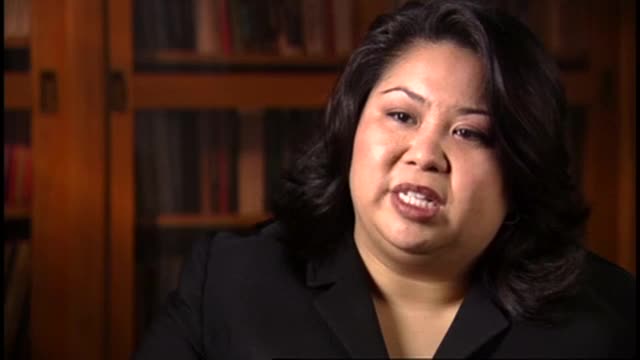
- Interview for the documentary Little Manila: Filipinos in California?s Heartland with Dawn Bohulano Mabalon, Assistant Professor of History at San Francisco State University.
- Created Date
- 2013-06-17
- Asset type
- Raw Footage
- Genres
- Magazine
- Topics
- History
- Race and Ethnicity
- Rights
- Unknown
- Media type
- Moving Image
- Duration
- 00:31:48
- Credits
-
-
Copyright Holder:
KVIE
Interviewee: Mabalon, Dawn Bohulano
Producing Organization: KVIE (Television station : Sacramento, Calif.)
- AAPB Contributor Holdings
-
KVIE
Identifier: AID 0003701 (KVIE Asset Barcode)
Format: DVCPRO: 50
Generation: Original
Duration: 00:30:00?
If you have a copy of this asset and would like us to add it to our catalog, please contact us.
- Citations
- Chicago: “Viewfinder; Little Manila: Filipinos in California Heartland; Tape 27,” 2013-06-17, KVIE, American Archive of Public Broadcasting (GBH and the Library of Congress), Boston, MA and Washington, DC, accessed May 2, 2026, http://americanarchive.org/catalog/cpb-aacip-86-515mks1q.
- MLA: “Viewfinder; Little Manila: Filipinos in California Heartland; Tape 27.” 2013-06-17. KVIE, American Archive of Public Broadcasting (GBH and the Library of Congress), Boston, MA and Washington, DC. Web. May 2, 2026. <http://americanarchive.org/catalog/cpb-aacip-86-515mks1q>.
- APA: Viewfinder; Little Manila: Filipinos in California Heartland; Tape 27. Boston, MA: KVIE, American Archive of Public Broadcasting (GBH and the Library of Congress), Boston, MA and Washington, DC. Retrieved from http://americanarchive.org/catalog/cpb-aacip-86-515mks1q