Oregon Art Beat; #217; Darkhorse Comics
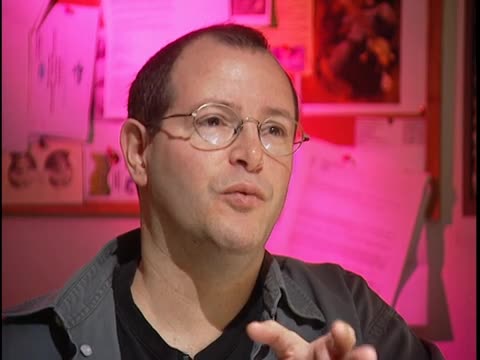
- Transcript
I have way more tips than we're going to need, but I'm bringing them. And we don't need time, and just talk to Mike, pretend I'm not here, and simple as that sounds. Okay. We'll just have a conversation about what I mean. I just want to know a little bit maybe a quick first of all. Sorry. I don't know. What part of I'm ready? Don't I understand? How are we ready? Have you ever heard of these things that are kind of cool? We're doing this little DB thing. Let's see if it will work out in a pretty cool camera. I know nothing about it. I'm the lowest tech guy on earth. I can barely use the phone. What do you do? What do you use for drawing comics? I need to use a pencil. I use a blue pencil and then a regular pencil and then ink. And is that the biggest part of it is inking them? No, that's the easiest. Because
I divide it up as if I were three guys. There's a guy who writes this stuff. The pencil that thinks he's an idiot but has to trust him. What takes the longest is drawing this stuff. Because I'm making up the next one. Well, I'm drawing, you know. Actually, I've made up like ten years with this stuff. An average shower I can make up about a year's worth of hell boy. That takes me forever to draw this stuff. And then drawing takes forever. And then inking I do real fast. Because it's all the work's done. And then the anchor comes in and he thinks the pencil is no good. The pencil is all, you know, he was good once upon a time. But now he stinks and the writers and idiot but the anchor just comes in and says, not my job to fix their stuff. I'll just ink it and hope for the best. So you're three different, you have three different aspects of doing it. And I read a few things that you get a lot of your stories from book tales. Yeah. Can you tell me a little bit about that? How it develops? Sit down and start reading.
It all comes about different ways. There are stories I've done where I came up with an idea for what I wanted. But I wanted more to it. So I said, well, I want to do a vampire thing. But I don't want to do Dracula. So let me let me start researching. And I would find looking for obscure stuff. And that would lead me to old Greek mythology. And then it would lead me to the goddess Hecate. And then it would lead me to these kind of harpy bird women and references to snakes in the moon. So I'd get all that stuff and I'd bring it all to the comic. But I don't connect it up. So you don't see how it's put together. It's just all this different imagery is in there. And if you're an authority on Greek mythology or whatever, you might go, Hey, he's mentioning this because of this because of this. But I don't want to spell it out to the reader. But there are other
stories that, you know, folktales I read, some of them, you know, I read 10, 20 years ago, that I always liked, I always wanted to do something with. And when I started doing hell with, I thought, hey, here's a way to do that story. Because I just adapt to folktale. Who's going to want it? You know, like when you always adaptations of whatever, you know, old English folktales. You know, who wants that? But if you put this big red monster guy as the central character, be well, cool, it's a hell of a story. So it's my way of getting to do what I want. Um, excuse me. Um, who is, I mean, like I said, you know, people are going to be watching this and wondering, who the heck, um, who the heck? Who's this big red guy? Um, I, I've been doing comics for about 15, 16 years or had been,
I don't know, I've been doing it for a long time since 82. And about seven years ago, I had done, everything I'd done, this movie adaptation of Dracula. And after that, there was such a weird experience that I said, you know, maybe I need to do something different. Because everything, everything in comics, I felt like I had done it. And not with any real success, but I'd done it. So it was a case of, well, do I do another one of these or another one of those? And I thought, well, what, what if I just took the chance and came up with my own thing? Because a lot of guys were doing their own stuff at that time. So I thought, well, I probably only get one crack at it, but I knew I could probably do it. So a bunch of people all hooked up, they were all going to be doing their own stuff. And we went to Dark Horse together. Some guys who were already working at Dark Horse, doing books with Dark Horse. So we kind of went in and as a package deal and said, listen, do you want all our stuff? You know, and we called this group Legend, which was a whole
other big fiasco. But anyway, there was this big group of guys. And I was kind of stuck in the middle of it. Because I wasn't one of the big guys, like some of these other guys were. But I was part of that package. So Dark Horse, to their credit, never even asked me what I was going to do. I said, and I'm going to do Hellboy. And I had done some work for Dark Horse before. And they said, that's fine, that's great. I never had to show the one I was doing, never had to explain to him what I was doing. I just got to do it. And Hellboy was basically a way for me to drive the time I've ever wanted to draw. I've always been a horror guy since I read Dracula and I was in sixth grade. So, and you know, old pulp magazines and Doc Savage and that kind of stuff. So I took all that kind of stuff and crammed it into one thing. And he's this sort of, what if you brought like a demon to Earth when he was a little kid and you raised him? You know, it's like a dog raised among
cats, thinks he's a cat. You know, you break this demon to Earth when he's young and you raise him and he just thinks he's one of the guys. And I really was just an excuse to always be able to draw a monster. Because I could draw a regular guy who investigated haunted houses and stuff. If I didn't want to draw a regular guy, I wouldn't draw a monster all the time. So, that's it. He's red. He's red because it's the most, graphically, reds really good because you can just see him all the time. And also, it's the most obvious. That's why I call him Hellboy. I could have come up with some pretentious, I mean, there's lots of demon names I could have used. But, you know, I'm 40 years old now. And I wanted to say, when people ask, you know, when you see the next time we have the plane, they say, what do you do? I don't want to say, I draw a axoram, you know, demon slayer. It's just too stupid. But Hellboy sounds funny. And these days, actually, there's a lot of humor in the comic. Because I just don't take it that seriously. I have a lot of fun with it. And I take it seriously
me when I'm working on it. But I want the reader to be aware of the fact that I know it's pretty silly. You'll reset this camera, I'll show you. It seems like a... Oh wait, so Chris, he's got his thing. Oh, okay. That's cool. So when this group of people, did you know them from Marvel or DC? I knew them from various places. Yeah, most of them had... Well, one of them was Frank Miller, who did Dark Knight Returns at DC. And he was the biggest guy. And another one's again in Jeff Darrow, who actually is the design guy in Matrix now. He'd work with Frank. Everybody was kind of connected. Dave Gibbons had done the watchman. And he'd also work with Frank Miller. And then, you know, Jeff Darrow was attached to Frank
Miller with another project. And a guy named Art Adams, who was one of the biggest guys in comics. I knew Arthur. And so everybody knew everybody. And we just ended up kind of comparing notes and swapping phone calls. And it just turned out that everybody was going to be doing creator on the same time. So what happened by Coblin's group together is we went into Dark Horse with an imprint name, Legend. So we weren't just some more Dark Horse comics. We carved out a separate niche. So suddenly, you know, it was a great marketing ploy. And, you know, people would go into stores and say, we want the Legend comics. So that was great. And it served me better than it served almost anybody else because I wasn't a big name guy. And if I had just done Hellboy without Legend, I suspect fewer people would have seen it. But with Legend kind of trying to spotlight on it. And
that was great. It didn't last long the whole Legend group. There's nothing like that, you know, those things just don't work out. But I reaped the benefits. It's really great for you. And you were saying that the Hellboy comics are, I mean, they take their scary monsters in these things. And they're scary paranormal things that happen. You were saying you don't take it too seriously. It doesn't seem like Hellboy to him. It seems like it's a day at work for him. Yeah, well, that's, you know, the guy is a, I don't know how tall he is. He's a big red guy who fights monsters. And he's like, you know, a character in Roadrunner cartoon. You can just beat the crap out of me and never really kills him or anything. So he just, he just, it's, yeah, it's a day at the office. Yeah, I don't know. It's just, it's silly. It's just a lot of fun to do.
What, I mean, when I was reading Hellboy for the first time, I thought, I mean, I was immensely entertained. And I went and got another one. And then Dark Horse gave me one of them. And I went and bought it. You know, bought it. Which one did I buy at Gene Coffin or something like that? That would be the best, probably one of the two best, yeah. It's awesome. I had Chris read, read him too before we came over here. It was pretty fun. I wanted to ask you a couple more things about Hellboy before we get to, you know, you. Could you just tell us, you know, we kind of touched on this before. But what's, what's Hellboy's job? He's an occulted, well, he was paranormal investigator, I guess. Which really is just, it sounds good to this title. World's greatest occult detective. I love that title. And he's the worst. Because I mean, I know what occult detectives do. We're paranormal investigators, you know, and they do, they set up cameras and they,
you know, take the temperature of rooms and they videotape things and they stretch string across windows and all these wonderful things that I find fascinating, but it would make a horrible comic. And so Hellboy's at the pro wrestler of paranormal investigators. Again, it's just an excuse to bring him into contact with as many monsters as humanly possible and make reference to as many of these things that I'm really into as humanly possible. Any, he kicks all their butts. Yeah, but usually I try, I try to make it not just an excuse to have guys beat the crap out of each other. There's always to be that element of it because I grew up playing with GI Joe. You know, that's that, I wanted something that would be, I thought about actually that a lot. You know, what was I doing with GI Joe and I was little, you know, they climbed up to top of the dresser and then a guy would hit him with a big hammer and then the beauty of it was he would fall off the dresser and he would look great when he hit the floor.
So I try to have a certain element of that in Hellboy, but also I do want to use the myths and the folktales and have something in there. I mean, there's not really a point to this story, but I do want the richness of that world mythology and folklore. And eventually what I would love to do is be able to cover folklore and fairy tales and mythology from, you know, the four corners of the globe. I've done a little, I've done England and Ireland, I've done Japan, which was tough. I've done a lot of Eastern European stuff, but I'm going to do Africa next. So Hellboy in Africa. Hellboy in Africa. Can't go far wrong with a title like that. Another thing that you do, I mean, besides your style, it's just the, you know, you do with
through folktales and stuff and you'll set them up in the novels. Is that what you call them, where the compilations of three or four graphic novels, that these things, you know, besides stylistically, you know, they put you into the place and the mood, but you do build tension. And before there's, you know, the big monster shows up, which I think is very effective. And you know, that's something, I won't say the only guy who does it, but there's not horror comics haven't traditionally been that. They've been, you know, guys fighting and comics in general are you explosions and guys jumping and fighting and that's kind of what comics do best. But I tried to slow down the pacing and to try to actually get mood and atmosphere and it just means I spend a lot more pages setting stuff up, you know, and doing reaction shots from things like statues
and you know, leaves blowing and stuff like that because I'm not a writer. I mean, a great writer can come in and give you two or three sentences about what the wind smells like, but I can't do that or I'm afraid to try. What I'll do is I'll spend three or four pages or panels or whatever it is drawing certain things that will hopefully give the same impression as the lines of dialogue would from a real writer. So I know my strengths are, you know, which is picture making. So I will use the pictures to try to evoke that kind of mood. And you should do. There are a lot of shots of the hellboy thinking and it says a lot. Well, that was one of the in the early hellboys we actually had kind of an internal monologue and I realized almost immediately because originally it was written
co -written with somebody else. And that was one of the things we came up with was to have this kind of pulp magazine, you know, old film noir kind of voiceover. I didn't work because I didn't want you to know what he was thinking. I want you to look at him when those silent shots of him just stand there and I want you to think what he might be thinking. But I don't want to spell it out to you. A lot of people have different opinions of how to do comics, but my feeling is I would rather be an element of mystery. I don't want to talk down to the reader and I don't want to spell everything out to him. I want them to figure it out themselves. And I've purposely done stuff with blitzer and characters. I use Rasputin in hellboy, but in the first graphic novel I never told you it was Rasputin. I told you how he died and I told you that he was in Russia
and I told you a few other things. But I didn't want to spell it out because I thought, well, it's not really important first time. You don't have to know it's Rasputin, but I wanted some kids somewhere to read it and go, that's Rasputin. Because they knew the kid next door wouldn't know it was Rasputin. I want some reward for somebody knowing something or figuring something out. There's a lot of stuff like that in hellboy that it's there. You don't need it. It's okay because it's a mystery horror kind of thing. It's okay if there's stuff that happens where you go, I don't know what the hell that was. But most of those things I do, you could figure them out. I know what they are and the clues are in there. But if you don't figure it out, it's not the end of the world. And again, doing something that involves a supernatural, my feeling is there should be that kind of stuff. Because as soon as everything is spelled out, as soon as you have rules that say, you know, to kill the vampire, you're going to do this, this or this. It's not really supernatural anymore. It's not really mysterious. It's just, well, I know what the rules are. And my feeling about the supernatural stuff is
there's no rules. What worked last week won't necessarily work this week. And so I kind of try to keep that element of things. And Hellboy takes it all in stride. I mean, Rasputin got chopped into 50 pieces and floated down the river and shot and hung. And we think he's dead and all of a sudden he shows up. Yeah, that's part of the gag in Hellboy is for there to be a sort of very casual thing about that kind of stuff. I mean, the new one I'm working on right now is going to, you know, Nazi head and a jar flying around. It's so big deal. There's never any comment about how he became a head and a jar. It's just, well, he's obviously some kind of scientist. He's a Nazi on top of that. So anything's possible. So sure, he's a head and a jar and sure there was a Nazi space program. Why not? Yeah, I just, it's all treated with a certain kind of just goofy,
probably goofy kind of clunky old charm to it. I don't, yeah, again, I just, I don't want to do a deadly serious comic. It's just not interesting to me. Nazi head and a jar. I love it. That's scary stuff. But also the thing is I, because I think about this stuff all the time, you know, it's just, it's like, it doesn't seem that ridiculous to me. You know, which the beauty of it is that other people don't think about this stuff. So I can't go. It's a sampled gag with the big giant Frankenstein kind of gorilla and a Nazi head and a jar and blah, blah, blah, blah, blah. For reading comics and from, you know, old pulp magazines and the kind of stuff I read and stuff. It's not that big a deal. But fortunately, most people haven't read the stuff I read. So they go, where the hell that come from? I go, just me. I mean, the beauty of Hellboy, I think, is that nobody else could come up with it because it took all my influences on all my interests, which are pretty
varied. And I poured them all into a comic that is, I think, hopefully uniquely me. And I think if more people could do that, you'd have a lot more interesting comics. Because I mean, I've drawn a lot of comics I couldn't give, you know, I couldn't care less about. Because I needed, you know, the job. And I know, you know, most people, that's how they have to work. But given a chance to do whatever you want to just say, here's all the stuff I care about. Here's the stuff I'm interested in. I'm going to put it on paper. That's how you're going to get the best thing. And that was great. And I thought I'd only be able to do it once. I didn't think anybody'd buy it. And I tried to come up with some commercial ideas for comics because there was this company image for a while. I guess they're still there. And everybody was making a billion dollars doing their own creator own stuff. And I thought, well, maybe I'll come up with a book like that.
But I knew Dan Well that if I did, it would take me forever to do it. I'd hate doing it. And at the end of the day, I'd be the first guy who didn't make a dime. So I thought, well, if I'm going to do my own stuff, I'm going to do exactly what I want. And even if I don't make a dime, at least I can sit back and say, well, but that's what I did. I've got it on paper, what I wanted to do. And then I'll have to go back to drawing with it, but I don't have to go back to drawing. But at least I can say once, once I got to put my stuff on paper. And it just turned out that people liked it. And nobody was more surprised than me. And people do like it. I know. They don't want me to do anything else. Which is fine. What kind of reactions do you get from fans? I get great ones. It really changes the whole business for me. Because now when I go to a convention or something, I actually have something to talk to these guys about. If you're drawing Wolverine or you're drawing Batman, oh, it's cool, you're doing Batman. I love that. I love the fact that you did it in a particular
way. Or they just love Batman. And you see, you know, some of the audience is not terribly discriminating. I love Wolverine. You're cool. But when they come, they say they love Hellboy. You can have a conversation with them because it's yours. And they're asking you where did you get this and where did you get that. And I actually have something to talk to them about. And I've been very pleased with, you know, meeting my audience because they tend to be much more literate. They tend to be just guys are in their, you know, are reading it for more than just watching. I'd beat the crap out of a monster. I mean, they like the more subtle stuff that I'm putting in. I find that an audience that appreciates that stuff. They want to hear about old ghost stories in these myths and folk tales. I get a lot of people asking, where did you get this story? Where did you get that story? Which is why when I do the trade paperbacks and I collect the short stories. If I'm adapting stuff from an old folk tale, I'll always mention where I'm getting that stuff. I'm trying to hide my sources. I
want to say that's an almost straight adaptation of a Japanese folk tale. Because nobody's reading those folk tales. But if I can kind of introduce them to a new audience, then I feel like I'm doing something. That's kind of nice. I just don't want them to go out and read all those folk tales. So they go, oh, he's just doing that. Sorry. No, no, no, no. Just a tale where I'm getting them. But you don't need to read them because eventually the good ones all end up working it down. But in those tales, there isn't a hell boy. No, it's true. There generally isn't. So there's an African story that I'm going to do that there's just a character that's pretty darn close. So that would be it makes it easier to adapt it to an old boy story. Is Hellboy a super hero with it? No. Having done superheroes, I don't like to think Hellboy is a superhero. But to me, he's not a superhero. To people
in comics, I don't think he's classed as a superhero. But certainly from the outside world looking in, he's a superhero. He's a big red guy, fights monsters, what the hell is what you call him? You know, he's not a guy who works in a drug store. It's not one of those kind of comic books. There's no very few masturbation references. So he's not one of those hipster young guy comics. So he's closer to being a superhero, I guess. But I certainly don't think of it like that. And there are stories I've done that are much more superhero -ish, but the stuff I'm planning on doing, some of the stuff I've done in the past and the stuff I'm doing in the future, where they rely much more on folk tales and all, you know, hauntings and things like that. I don't think of that stuff being superhero like at all. As soon as you go guys flying around, or I head into a jar flying around, or a big Frankenstein gorilla, it's pretty close to being superheroes. But he doesn't have a secret identity. He doesn't have any real powers. Yeah, he doesn't wear, you know, a suit and then jump into a telephone booth
and come out as a superhero. I've done that stuff. I don't even do that anymore. What does Hellboy think of himself as? Thinks himself just as a regular working stiff guy. Hellboy is a lot of him is my dad and a lot of him is me. He's just a guy. Well, there it is. What's the profile of your readers? Are they boys? Are they young men? Are they women? Are they old granny's? Well, granny's I don't know about. I have, you know, some things. I don't know that a lot of kids read it. Some do, obviously, as I've met them. But it tends to be... Oh, God. They tend to be... College age. Men and women, which is a huge, that's a thrill to me. To have,
actually, and it sounds very strange, but when I met a convention and women come up, and really like Hellboy, I'm just thrilled to death. Because so many years of drawn superhero stuff, where it's just aimed at teenage boys, it's just great to know that there's other people, you know, that you're reaching a teenage girl. And I've actually had... There was a girl who came up to me to show last year, and said that she'd written a paper explaining or was on the internet, or I don't know what it was, explaining why Hellboy was a chicks comic. I was like, that's great. I have no idea, it's not intentional, but I think because it isn't just, you know, guys just fighting, that there is the mystery stuff, and the mood stuff, and the... Hellboy, we're just going to have a broader audience. But, yeah, they tend to be a lot more literate. Well, you've got some strong chicks in the comic.
You know, I'm bad at drawing women. Or, I can do it, but it takes longer. You know, monsters are a lot easier. So they tend to not be a lot of women in the comic. And a lot of the monsters turn out to be a women. So I kind of go, what the hell is this about? Well, you know, I'm in a certain age right now. If it occurs to me to do it like this, I'm going to do it like that, and then we'll let the psychiatrist figure out what the hell my problem is. But I just do what I do. And I just hope I can do it as long as possible. Let's go back in time a little bit. How many Hellboy books have you done? There are four trade paperbacks right now. I mean, that's... I think I've probably done close to 20 actual Hellboy comics, but they're collected up as books. Tell me about what year did you start? I probably started in
93. I think the first stuff was published in 94. Did you have Hellboy and your drawings long before then, or did you just sit down at your table, or like you are now, and say, I'm going to think of my own character. Did he come out of different characters? I'd always had stories that I wanted to do. All right, subject matter, I always wanted to draw. What had happened for a couple years before drawing Hellboy? I would go to conventions, and people would ask me to draw stuff, and I'd be in bad men's soup, and whatever the hell they wanted. But a lot of people started asking me to draw what you would like to draw. And so I started drawing this kind of monster character. And it wasn't... I wasn't consciously developing a character, but I would just draw a manoeola monster. And there was a certain similarity, and there were certain aspects of the character I kind of liked that I kept repeating. And then I did it drawing for a convention, for a
program book. And it was just a big hulking monster guy, and he had horns, and to get a vulture sitting on his shoulder. And the way I had drawn him, he had this big shape, like a big irregular looking belt buckle. And it was just his big clarinet white thing in the drawing. And I needed something on that. And I just wrote Hellboy on it. And I thought it was hilarious. I said, what a stupid name. That's the funniest thing I ever came up with. And it's the closest I've ever come up with, you know, come up. It's the closest I've ever come to make an up a superhero name. And so when the idea of doing my own stuff came up, I thought, well, I'll have to do Hellboy, because it's the only name I've got. And I seemed to like drawing this particular kind of character. So let me, you know, just do that. But he wasn't, I mean, I know guys who, you know, had made up their own character when they were in high school, and they've always wanted to do them, but it was never anything like that. I never thought I'd do my own stuff. Okay.
- Series
- Oregon Art Beat
- Episode Number
- #217
- Segment
- Darkhorse Comics
- Producing Organization
- Oregon Public Broadcasting
- Contributing Organization
- Oregon Public Broadcasting (Portland, Oregon)
- AAPB ID
- cpb-aacip-6303ba53fe6
If you have more information about this item than what is given here, or if you have concerns about this record, we want to know! Contact us, indicating the AAPB ID (cpb-aacip-6303ba53fe6).
- Description
- Raw Footage Description
- Interview with Darkhorse #1, Mike Mignola
- Created Date
- 2001-01-11
- Media type
- Moving Image
- Duration
- 00:30:40;25
- Credits
-
-
Copyright Holder:
Oregon Public Broadcasting
Producing Organization: Oregon Public Broadcasting
- AAPB Contributor Holdings
-
Oregon Public Broadcasting (OPB)
Identifier: cpb-aacip-4b7080e5927 (Filename)
Format: Betacam
Generation: Original
Duration: 00:30:00
If you have a copy of this asset and would like us to add it to our catalog, please contact us.
- Citations
- Chicago: “Oregon Art Beat; #217; Darkhorse Comics,” 2001-01-11, Oregon Public Broadcasting, American Archive of Public Broadcasting (GBH and the Library of Congress), Boston, MA and Washington, DC, accessed September 20, 2026, http://americanarchive.org/catalog/cpb-aacip-6303ba53fe6.
- MLA: “Oregon Art Beat; #217; Darkhorse Comics.” 2001-01-11. Oregon Public Broadcasting, American Archive of Public Broadcasting (GBH and the Library of Congress), Boston, MA and Washington, DC. Web. September 20, 2026. <http://americanarchive.org/catalog/cpb-aacip-6303ba53fe6>.
- APA: Oregon Art Beat; #217; Darkhorse Comics. Boston, MA: Oregon Public Broadcasting, American Archive of Public Broadcasting (GBH and the Library of Congress), Boston, MA and Washington, DC. Retrieved from http://americanarchive.org/catalog/cpb-aacip-6303ba53fe6