Eye on Unalaska; Interview with Ben and Suzi Golodoff
- Transcript
You're going to hang on to your cup if you don't you're more secure. No you see I have to have even if i even if I don't have a mike that works without a court I usually have to hold one just so I have something to do. Hi this is K. deafen doll here for another segment I own on Alaska and this week we've really got a great interview for you and we're here with bin and Susie go with off. Hi I been I know that you were telling me before that I usually ask people how long they've lived in Alaska that tribe and I know that you told me that you lived here all your life is that right. Born raised right here right here to your right on this very spot right. And I might say a word. Yeah been there trying are here by the bay with a beautiful view that your original house was here. Yes it's an old house with four five six building down the three little and I think my mother bought the lot and I'm a dad.
Yeah they don't do a good back piece of one story OK. So you live on this Red Beach all your life. All my life. Yeah well I want to talk about whenever you were younger you were here during the the actual bombing of Dutch Harbor in Alaska. Right right. OK tell me a little bit about that I know we talked earlier about you as a young boy waking up and hearing the bombs and all that and that's what I'd like to talk about. Oh well you know I think one thousand forty two but nine years old and and somewhere June 4 think there's planes coming near early in the morning and they'll be daylight today and I hear that they were taking pictures that I don't really don't know what I read in their history and they dropped a few bombs and they're going to survey the place but the second day's when they came back to do
really good the bombing the very you know whatever. Yeah so the the first day you know I mean that must have been scary as a child going to know you had a lot of military presence here but there you had the action that type until the end. Right yeah right. So the second day what happened. Well what I can remember the second day they came back. I probably think trying but they were all the way they came in and I think they knew what they were going to do when their first troops were ready for him and when they came over they let go all the guns or whatever they had Yeah ships and then aircraft and machine guns. My God it was a loud noise. I bet it was yeah good. There were ships in the harbor that were firing at them and rightly so they were dropping ships in the harbor firing and then you said there were any aircraft guns. I'm
going to enlist. So yeah don't tell me about again about that. The guns on the second well you probably know reading that they they hit they all hospital be-I a hospital and it was located way are right down where the AFCA bunk of the butt occurred there. OK the closest building this way and the dive bomber came down what I hear from from the southwest and reached the bomb trying to hit and then the aircraft emplacement and the bomb overshot the hill and hit the Sultan. And where were you at that time. I try remember that I seem like the second day oh we were we had dug out their bare little dugout we had one thing behind our building there and stayed that
way. Yeah I can't imagine the noise that must have been going on when you young and all that racket I think you seem like they were shooting at us but they were shooting over the top already. Yeah. And the dust and all the stuff coming down. Yeah. And how scary that must have been for a young kid at that time his whole life now was disrupted. But there was there was a lot of troops here there were a lot of that I mean then as certainly after that but that as the silence started filling up out how did your daily life change with all of that happening. You know well. The troops came in I think in in the fog 40 41 maybe and they brought troop ships into this dock down here and and they marched up the road and of course we marched up with them to the kid. Yeah. And their trucks and their tractors and all the equipment tents and we do. Go up behind the mission up there and they don't know you or nothing up there in their tents
up there and we go there and you just visit them. Yeah I'm fat and I bet you guys were as much company for those guys. As they were and out of to your enjoyment with for you. Probably so yeah because there was a lot of lonely G.I. is if you're that family that right there I was so yeah. That's neat when they I know that you were taken to se So how did that happen you just wake up one day and your Mook said we're leaving. Well there well I guess I don't know how really how that happened I know. That I would continue all of my animals that live around will be going Yeah and I remember walking down. To the dock and getting on the ship. The oh that's us. Olution the steamship company and I'm. Leaving here and picking up an escort. A Navy escort store or whatever they were and stuff in Kodiak. And for stuff you not get that to bury some. Baby and
then wrangle. You know. Stuff and that's where we got off the camera angle was your destination right. OK. And from Wrangell I know you. You were separated for a while or the women were separated though right Ringle they took us to a school there. And your school of which they had their. Own high school and. We stayed there for oh maybe. A couple weeks or 10 days and then they loaded some. Barges a couple barges and. A couple a little boat and we climbed onto the barges and. They told us over to this burnt down or burnt down cannery. Burnett ended about 40 miles from Randolph and they put in there and then we went to shore north onto the docket doctor afloat in. The
outbuilding little cannery building and out of one big main bunk house for we ate it while we were getting fixing up the whole. Town rebuilding and maybe a week or so later women and indeed other kids. Can. Come back to new school. A new church. Yeah and so it became a regular village a regular value everything we've built over the water like SE is on pilings and you were there for how long 2 1/2 years. OK so you had actually individual houses you you didn't. Well yes well we did. My mother being sick I think they gave the house but most of the single or people that stayed in the bunker. OK it was all dormitories don't carry around. Yes. So I was as a young boy you know at that age and in the summer time. Se what what did you do.
Well to me of it at the meeting and said no it's just speaking for myself it was an adventure. Yeah. And. Something new a lot of different animals birds and fish trees of course you know it seemed. Well different and here stranger drugs you can't see nothing you know what you could get lost to get it and you have to you can see around the corner unless you walk right up there and like here where I see from my heart. That would be strange I guess really from here and specially as a kid and it was warm and it is very rich country far as food fiction where what do you do you know how many people actually went from here. I really don't. And they were just from. I don't ask and there are other villages on the other villages on the island here someone with two different camps I
think maybe had relatives there but as far the Unalaska people we all stand together. Now. The day came when they came and said war is over we're going home. What happened. Well I one day were I guess one day if I could remember playing around and and and all of a sudden everyone running around hollering we're going home. And so we sort of packing and then maybe three four days later. You ran don't grow dark we can look out. And there was this troop ship and they bought it and landing barges and you know. Climbed on them. Five days later we're here. And what a change when you got back here it would change you know that Rhodes restaurants had borrowed from their. Hundreds and hundreds of buildings. Yeah.
It was change yeah. What you left here it was a village when you came back it was a military installation right. Yeah. Yet you tell me you went into captains Bay and I think you're one of the captains very. Retired up there and stayed on the ship for a couple days and then they moved us up to where the church is right by the bridge behind the old piece you're building right. OK and they had a bunch of maybe half a dozen or maybe more cloth and hope. That we stayed in for a couple weeks until and they we ate up the building fill up their part of it. I think one of the Robinsons going right up. It's a housing there. OK. Yeah it was a triangle. Well like a four way building you know and that's all we ate there and got to dot whatever you had to gate up there and you had to go to the gate Barbarella down the beach and came to the county and
thorough cleaning up for our homes. Yeah. And had your spin room side as well. Oh yes everything I came down with my dad and we went into the building and there was. Everything stacked up the middle the floor and. You know. Down there. Yeah and I know the outlying villages that people never went back to that. They did not know. A cushion maybe but some people want back there but they didn't stay there very long maybe about five you're five years later although they all the men came back. And so. The troops left after a while and the troops left. Maybe a couple years later lots of men out maybe in 48 but they had detachment of Marines over in Dutch. And they stayed there then of course the Air Force came and they stayed and I think maybe in the 50s.
For the last oh. But they had a dance around us where a guy was just going to say interview Barbara just tell me that's right. Yeah better radio system here and there. He moved down there in that. Building. Down here with a great big I mean the red brick building. No no past Karlsson's. There was. That. I think feeling oh my god yeah. They had a. Telephone. Well then you life kind of get back to normal when you grew up and what you do then. Well I think it back in my life. I guess you call it normal. Yeah that's normal I did yeah. You want to meet in the Disrupt that think that they can back it. See Mark my God I've been disrupted. You know I just know that I am going the wrong place I think further south or east or west or wherever I think that's a myth. But it just. Worked out and natural harbor and you might pass. Yeah right you know European
tour is so there's always been traffic and all we've been driving since the Russians came over here since they were discovered. Well I know at some point Susie comes into the story and we really get that now where there's a little bit of history there I want to get to see how did you get up here. Oh. 76 I guess it was with the girlfriend. But she didn't come here right. No you washed. Your. Salmon fish. I just want to come up here and my girlfriend and I came up to my knees and found. Work. That we. Can. Well that crap when. You. Feel like. Yeah.
Then spring came and we got on a scene or two let's get on with things. We ended up with this little fleet singers that. Kept the boats in sampling in the winter but. Down around lunch there is no one up and down the peninsula. The Devils from any action that you know I want to hear that again because I don't know I know you're talking pretty loud and I want to make sure that we got that. Can we agree here that it was this group they call them the devils. And no I didn't I didn't know. Yeah let's look at the end. So you saw the beautiful country down in.
Yellow and. Come out here after this. Looking back now I think it was kind of a brave thing to do. What happened to the girlfriend where did she go. She got on a tender for a while and went back for a change. We're going to pass on in tendering. And then she went back south of you heard from yeah. Oh yeah yeah. Well so you came over here and I kind of the rest is history but then you've had some adventures since you've been over here. For six years then went back down there you. Were in the first of the one in Kerry and then we fish salmon run for a few years.
And you've done a lot of different things here in town and then the odd jobs market. You know a little bit of everything. But you were at school I know for a while. Yeah I worked for a while school worked in the library. Job and carpentry painting. And I guess the new luxury. Well I think you're right. About. And I want to talk about your other home that you've got here and all the work that you put in there. So tell me about this other home. Oh well it's just. By water from about 17 miles and as the crow flies about seven miles. We went over there in 78 and camped over there in the tent. Then we went back in 85 and we started 30 40 Charlie building down what was
left to him on the war we fellers lumber and saved for two three years and. One year old company came in they had a bunch of. Boxes they bought up plywood boxes four of our four she had in their staple and we went up there not some you can salvage that right. Go ahead take all you want in a few minutes or whatever. Showers all. Four by four sheets. 5 8 inch plywood and to cover. Piling in our lumber only lumber and plywood we put it on a boat. I made two or three different trips to third from the room and took the book two months to complete it. The shell. Station you know all fixed it. Yeah you have over there next to the guy. That was 10 years ago this year we celebrated that first pick up.
From there but we've been you know sometime in the week. Yeah. I mean you must have fish and berries and all kinds of stuff mess around the garden a little bit and you were tell me about the fun. Yeah yeah they're kind of class. They're fun they're very entertaining but the kind of the camp. What do you got in there. Yeah. So now tell me about. The Army had shipped in over there that they had an outpost I guess and it was back from the beach away. There's kind of a. It's a wide open and then there's. A. River kind of snakes back and forth and back. For a mile and a quarter right.
So there's a big ravine and water runs down from there and I think that's why the army there wanted back there they didn't have much but we were back there poking around in the brambles looking for boards and whatnot and they say sometimes you can't believe your eyes well they have. There was this huge cast iron but that temple where everybody kind of kept blinking out of it because we couldn't couldn't believe it and we started to think over it got to be some way we can get that back. So we went back in the winter and was about all we could do to get that thing roll over into pieces and the front of the tin up like a big push and managed to get over there and built a little house around it and then been rigged up by. 55 gallon drum on a stand and build a fire and filling the drum and the water through the wall and turned on the spigot you have a hot. Plate and so you've got you've got a house over there. And what else have you built.
And then. You said you had to get it right. That little bastion and your garden. That's nice. Yeah. And you're probably looking forward to getting back over there and today it looks like it might be a decent. Credit. Well yeah. So now you can you can hike over for morse code right here with that light takes about four hours to get. Back in the winter. My oh my goodness it must've gotten dark Will turning out that it was dark. Well yeah. All right your we have a raft really through portage probably a couple hours in the low dollar to go by skiff and go around the corner or on the Cape bought there through
wrong weather finally making a mark for the first few. Yeah that's ideal. Yeah get in there on the corner to get it. It's pretty open by the time you get up to prescribe. Yeah. That's kind of scary. We don't mind getting stuck on that. I didn't get stuck on this. I packed up and ready to go. Yeah yeah. You haven't had any close calls to you. Yeah good luck. You didn't intend to hike back in it would have been back there for a while and just nothing.
So we can get on the ridge of the world where the brake light was by the time we got a little. Now you're working on a project that I want you to talk about in Wildflower collection while. You just kind of started off taking pictures. They do kind of find they have a reference and like someone threw in mid-February. And one Christmas spend money and Flora laughed in a kind of intimidating description.
But it's been fun and I would like to turn to God and I've. Got 140 some flowering plants. Kind of yeah I learned a lot never took a botany class I kind of learned from the bottom up backwards and how everything I say really. Yeah that's been fun. I also started to meet so many plants have local names and now the names that I started to think about maybe I could find out more about the Holy Names and medicinal uses. What's edible and what not and so that kind opened up a whole nother. So it's kind of taken on a life of its own you know. But it's been fun and I had to learn to use a computer in the early. Different makes it easier a lot easier. Yeah. Friends help me through it. Maybe I'll get it. I'm trying to do some drawings of them as well as I
can. Now did you work on any of this with Ray Hudson was he a part of this or help you know when they asked him about references that he could point you in the right direction. And now you must miss them. They were. Yeah yeah. Big part of these communities. I thought last summer they hiked out there and you know that was when they got weather didn't really take a look at. Well you've had an interesting life here it's been really interesting. I'm sure you don't think of it as interesting as you know alive. Tell me the same thing. Yeah yeah lots of good stories. Yeah and you need to hang on to those writing down talented people. Let me talk to you more. I won't keep you on your knees then. Yeah yeah yeah this will be the first installment in the series I'd like that we can do a weekly series.
Think about that. I'm a good kid. Maybe we can do our next interview from out there. We're not being there. I love that. Well I know my son you're anxious to get going and I thank you for taking your time and being with us it's it's been really neat now I count it a real privilege to be able to come over and and talk with you and learn all these things. It's been really nice and thanks for taking your time and let us invade your house and all that. Well it's been fun and I'm glad that you let us do this so we'll do this again sometimes you keep thinking of stories and OK and this is a definite out here for another segment of my own in Alaska. Goodnight. OK. So all right. Perfect. Sounds good. OK because I was because you were talking.
- Series
- Eye on Unalaska
- Raw Footage
- Interview with Ben and Suzi Golodoff
- Contributing Organization
- KUCB (Unalaska, Alaska)
- AAPB ID
- cpb-aacip/59-15p8d19c
If you have more information about this item than what is given here, or if you have concerns about this record, we want to know! Contact us, indicating the AAPB ID (cpb-aacip/59-15p8d19c).
- Description
- Raw Footage Description
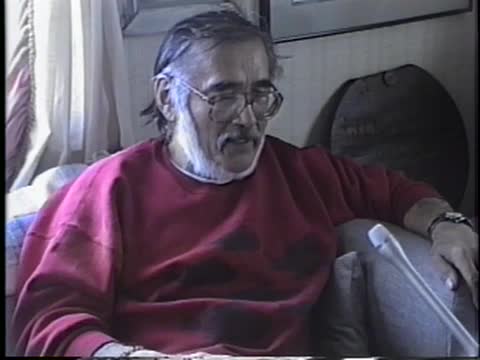
- Footage of an interview with Unalaska residents Ben and Suzi Golodoff, for an episode of Eye on Unalaska. Ben shares his recollections of the bombing of Dutch Harbor during World War II and his family's move to Southeast Alaska for the duration of the war. Suzi talks about how she arrived in Unalaska and how she and Ben met. Then they talk about the construction of their house.
- Asset type
- Raw Footage
- Rights
- No copyright statement in content.
- Media type
- Moving Image
- Duration
- 00:27:12
- Credits
-
-
Guest: Golodoff, Ben
Guest: Golodoff, Suzi
Host: Deffendal, Kay
- AAPB Contributor Holdings
-
KUCB (Unalaska Community Broadcasting/KIAL)
Identifier: E19950001 (E019)
Format: VHS
Duration: 00:45:00?
If you have a copy of this asset and would like us to add it to our catalog, please contact us.
- Citations
- Chicago: “Eye on Unalaska; Interview with Ben and Suzi Golodoff,” KUCB, American Archive of Public Broadcasting (GBH and the Library of Congress), Boston, MA and Washington, DC, accessed April 5, 2026, http://americanarchive.org/catalog/cpb-aacip-59-15p8d19c.
- MLA: “Eye on Unalaska; Interview with Ben and Suzi Golodoff.” KUCB, American Archive of Public Broadcasting (GBH and the Library of Congress), Boston, MA and Washington, DC. Web. April 5, 2026. <http://americanarchive.org/catalog/cpb-aacip-59-15p8d19c>.
- APA: Eye on Unalaska; Interview with Ben and Suzi Golodoff. Boston, MA: KUCB, American Archive of Public Broadcasting (GBH and the Library of Congress), Boston, MA and Washington, DC. Retrieved from http://americanarchive.org/catalog/cpb-aacip-59-15p8d19c