Black Horizons; 2516; Ygb
- Transcript
I hope you enjoyed this video, and I hope you enjoyed it, and I hope you enjoyed it, and I hope you enjoyed it, and I hope you enjoyed it, and I hope you enjoyed it, and I hope you enjoyed it, and I hope you enjoyed it, and I hope you enjoyed it, and I hope you enjoyed it, and I hope you enjoyed it, and I hope you enjoyed it, and I hope you enjoyed it, and I hope you enjoyed it, and I hope you enjoyed it, and I hope you enjoyed it, and I hope you enjoyed it, and I hope you enjoyed it, and I hope you enjoyed it, and I hope you enjoyed it, and I hope you enjoyed it, and I hope you enjoyed it, and I hope you enjoyed it, and I hope you enjoyed it, and I hope you enjoyed it, and I hope you enjoyed it, and I hope you enjoyed it, and I hope you enjoyed it, and I hope you enjoyed it, and I hope you enjoyed it, and I hope you enjoyed it, and I hope you enjoyed it and I hope you enjoyed it and I hope you enjoyed it and I hope you enjoyed it and I hope you enjoyed it and I hope you enjoyed it, and I hope you enjoyed itあの Well, this is Black Horizons, and I'm Chris Moore. Today the vocal
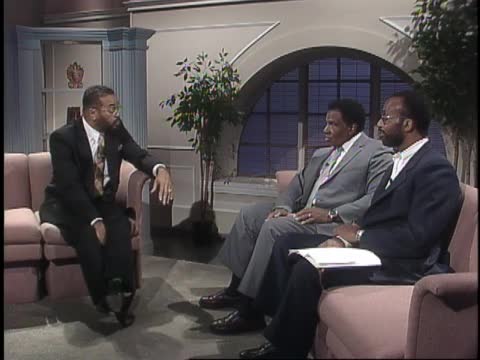
styleings of YGB, young, gifted in black. I think you'll enjoy them. Later we'll talk to some of the fine folks from the Bidwell Training Center about some changes they are making and what those changes may mean to you. Let's start our show today by talking to these two men. They are Imam Mustafa Hussein and Robert Islam, both of Pittsburgh's Mosque -Liamine. Welcome gentlemen. One of the things that you have as part of your duties at the Mosque is to look into education. And as such, a number of years ago, you established the Sister Clara Muhammad School, which is like many of the other Clara Muhammad schools that are across the nation. You feel that there is an important reason to have an alternative to public education, obviously. Is that correctness to you as long? Yes, sir. We look at the public school systems and as a set up today, we find that the fighting, the killing, the gangs, and the way it's set up to children have to have metal detectors come in and out of school. And that's a lot on the mind of a child who's trying to get education to have to be facing
that type of opposition. Wait a minute, wait a minute. Let's blow up some stereotypes right now. Your school is right on Kelly Street. That's right. In the middle of Homewood. Homewood in the majority of communities' eyes probably has some stereotypes about it that people would be afraid for those children to walk to school, to come in that school. You mean you don't have metal detectors there? No, we don't. None of that? No, we don't. And we don't plan on getting any. One of the things that we do in our school, one of our objectives is the primary objective of our school is to teach the children to have a respect for Almighty God. And if they have a respect for Almighty God, then they have a respect for all the things that God has provided, their parents, their teachers, the school property, and a sense of self -respect and self -esteem. So in providing the primary goal is to have a respect for God and in turn that internally, then they have a sense of appreciation. Appreciate it. How far does your school go? It starts at preschool, four years old, up to six grade. Up to six grade. That's presently in
Pittsburgh. Then what happens to the students? By that time, we feel that the children have a foundation. Hopefully, we will be able to move on further on up. We have over 150 schools, Sister Claire Muhammad, Preparatory Schools, throughout the nation, and some of them have high school levels. We're still in the developmental stages and hopefully we'll move on up further. Imam Hussein, you must be very happy to see that the mosque has been able and the people who attend have been able to develop education this far. And you really probably want to see it extended, is that correct? Yes. We understand that Sister Claire Muhammad, as you just mentioned, he is not a local, a private school, he's a school system. And we have schools established in the country and out of the country in Mexico and Bermuda. You have one in Canada, we have a school in England. And of course, the local school here, as you just mentioned, about the grade level, up to six
grade. Well, we did increase that this year, we're going to the seventh grade. We're going to the seventh grade, so step by step process. We're growing. And the students that we have, we feel that by the time they develop to that level, with the help and support and interest that we find today in that system, we'll be able to advance fast enough to hold those children through 12th grade and then, by that time, as we do have one college existing in Chicago Illinois, how do your students compare with other seventh graders as they enter the public school systems or wherever they tend to go? That's a good point. Even though we are private school and religiously based, we are fully credited with the state, county, and city regulations. We have the same curriculum, the only difference is that we have the religious base. And the, the, the,
the parents, students with those of public school, we feel that they are more advanced because the teachers there are not paid teachers that just seeking the job, you know, they have the interest in developing minds and they spend a lot of time with children, and just like, more or less like a parent. Is your curriculum at all African -centered in any way shape or form? We have the basic academic, we have a reading, writing, and mathematics, and then we also provide a language, an Arabic language. Is that right? Yes, we do. And we have a young man who was from Saudi Arabia, then we have another gentleman who was, I think he was from Turkey, he has his PhD, who's teaching English. Yes, yes. So, you know,
our basic academics or as the same as the public school system, but we provide that language, which is always an asset to any school. Well, it must be difficult to fund such a proposition and keep it going. It is. Private school, I hear tuition, cost and public and private education. It must be difficult to keep it going. Is it? Yes, it is. It's difficult, but with the interest that people have and the importance of having that type of school makes it a little easier, because the membership in our religious establishment, they realize their responsibility is to support the education of our children, because that children is our future. Absolutely. And one of the ways you're going to do that, you have an event that's coming up, is that true? One of the ways that we do this is through our tuition and through we do up, we have a banquet store, fundraising programs. So on September the
25th, we have a banquet scheduled, and that's it, 72, 22 Kelis Street in Pittsburgh, and this is a benefit for our sister Claire Muhammad Preparatory School. The theme of our program is, mothers and daughters, fathers and sons, the beginning of civilization and nation building. And we have an excellent keynote speaker, the Honorable Judge, Livingston M. Johnson, who has been in the family court for many years. And then we also have a special address, we have, we invited Imam Wartidim Muhammad to fly in from Chicago. We'll give a special address on the theme also. Okay, well that should be all encompassing about families and what two better people to deliver it in Imam Muhammad and also Judge Johnson with his experience in the family court. I would imagine the family is very strong, something that you really keep at the center of what you do in education, correct? Yes, I agree. That's one of the things in our school that the mothers and the fathers also participate. Not only do they just send the children to the school and say, do you teach them? No, but they regularly come and
they also volunteer a time and they come to meetings to find out, what the children is being taught, how they can participate, how they can help at home. And so it can be a unity. Imam Hussein, I know you knew Malcolm X. You were a friend of his, he came and stayed in your home in times that he came to Pittsburgh, you knew him in Detroit. I remember him saying that education and those who master it, the future will belong to those folks. You strongly believe in that, correct? Yes, I still believe in it. And that was a real boost toward the subject that we took in mother, daughter, father, and son. And in fact, the business that's an invitation to the family, directed to the family to come out on these programs. Now, let me just say a little bit about the program. I'm afraid we're out of time. We're going to have the end of there, but I'm sure that you are interested in having almost anyone who supports education to come and support what you're doing,
right? Oh, yeah, we're not prejudiced about those things. Okay. But I'm afraid I have to cut you off because we're out of time, but we appreciate you being here. And we hope the event is usually successful and that it will support the efforts that you have with the sister Claremont schools, okay? Yes, sir. All right, thank you. On September 25th, at 7 p .m., you can find out more about mothers, daughters, father, sons, the beginning of civilization and nation -building. This event will take place at Masjid Al -Ameen located 722 Kelly Street here in Pittsburgh. For more information, simply pick up your phone and call 2 -4 -1 -8850. At number n is 2 -4 -1 -8850. I first saw the singing group YGB, otherwise known as Young Gifted in Black when they performed at an event held in Westinghouse Park in Homewood. I was impressed with their sound and the intent of their music. Listen to their lyrics carefully. At the time, they only had two members and since then, they've doubled the size of the group. Let's see if
they've also doubled the quality of their sound. That comes to mind as well. It's a great song, it's a great song. It's a great song, it's a great song.
It's a great song, it's a great song, it's a great song. It's a great song, it's a great song. It's a
great song, it's a great song. It's a great song, it's a great song. It's a great song, it's a great song, it's a great song. It's a
great song, it's a great song. It's a great song, it's a great song. It's a great song, it's a great song, it's a great song.
It's a great song, it's a great song, it's a great song. It's a great song, we were in school together down at the Art Institute and I had some music and we got to know where he put the art institute. He put the words to the music and it just happened. Okay, Hutch, I mean, if you stand up to this mic a little bit too, so we can get you in this shot. What's your inspiration? What's your muse brother? Basically, seeing what's happening in our communities and wanting to make change. Yeah, you guys get any play right now? Anybody playing your music? Not as of yet, but anybody out there would like
to. Let me be fine with that. Who's doing most of the producing? Well, myself and my brother here, Anthony Cronkelton. This is Anthony Cronkelton. We're producing all the music ourselves. Okay, and just though here we cannot forget Sister Bonita. Is Bonita Thomas? Okay, well, I don't know if we get in the shot of it because you guys hear it about how bad it is. Bonita Thomas, and this makes up YGB and young gifted in black. Well, where you guys are going to go from here? What's up now? Well, we're trying to get our demo tape completed. We're looking forward to a concert that we have in Chicago next year in June, and we're getting ready for that. So wanting to do everything right, we have a lot of time to just take our time and get it prepared. What's your prior motivator? Who moves you most to do the kind of things that you're doing? The Lord. Lord Jesus Christ. It's all because of him. Young people are killing each other, especially our black people, and we're trying to do something to change. You think music can make a difference? Can an art form make a difference, you think?
Well, it makes a difference sometimes in a negative sense of why putting it in a positive sense. I don't think change the beat. I mean, just change the words, but take the beat to the street and take a positive message with you now. Okay, all of y 'all agree with that? Exactly. Yeah, and that's the reason you're doing this. Hutch, what's on your mind? What else are you going to be writing? Man, what can we look forward to? I'm just writing inspiration, too, as far as the heart of a black man as well as trying to reach out to those that need help. Okay, now you got a concert in Chicago. When is your concert in Pittsburgh going to be here? Because I'm going to pull this tape out. I'm going to run it. And y 'all have all kinds of outfits on and everything else. And I expect front row seats for me and my wife. Oh, you got them. Okay. You're going to keep moving on. You're going to keep doing this, right? As long as the Lord permits. All right. Well, let me tell you that I really admire what you're doing. I like what you're doing. I hope that you keep it up. And I hope that you get some other support. You find it hard for Pittsburgh
musicians to get support here at home. Yes, yes. As unanimous. Pittsburgh is not a solid, yes, not a solid industry yet. What can change that, Brian? Well, Bible says greater is he to send me than he's in the world. So my eyes aren't really on Pittsburgh or anything else. My eyes are on the gift that God has given me. And it's given the rest of us. And he will make sure that everything goes his way. And that's all we're looking for. You're all nodding your heads. You agree with that. Sure thing is definitely. Okay. Well, we like what you're doing. And we're glad to support you here at Black Horizons. I suppose people want to get in touch with you or anything like that. And you get in. You can call me Brian Sanders at Erica 241 -241 -2329. He thinks it's a national program. He's gonna fall down again. Right, go on. 241 -2329. You can talk to me for all bookings, Brian Sanders. Young gifted in black. That's it. All right. Thanks a lot for being here. A round of applause for me. Thank you. Okay. All right. Well, I like all sorts of music, as you can see. And I know that many of you feel
likewise. Are you ready to hear the big band sound of Lionel Hampton? Well, he's ready for you. And he's coming. You're way soon here on QED. Feel the vibes of Lionel Hampton in concert. From the lead center for performing arts in Lincoln, Nebraska. It's Lionel at lead. Lionel at lead heirs Monday, September 13th at 11 p .m. The Bidwell Training Center has for years made it its business to give people the kind of training that enables them to land a decent job. But there are some changes in the works. And here to tell us about them are Valerie Nji and Delores Seachaw. Welcome to our program. Valerie is good to see you again. Thanks. It's like you were here just a couple of weeks ago, huh?
What are some of these changes that in the works of Bidwell? Well, we recently received accreditation, so we're accredited by Career College Association. And what does that mean, Delores? Well, it means that we have an opportunity to work with populations that we have prior to this time not been able to work with. Up to this time, our population has been limited to people who are Title III eligible, which means they've been laid off and able to collect unemployment within the past 24 months. Displace workers. So if you didn't fall in that category, but you wanted training as a carpenter, a cook or a computer operator, whatever it was that you were offering, not saying you were offering any or all of the above, and certainly more, you couldn't go there because you wanted a displaced worker. That's correct. So this really extends our population. We're able to work with folks who are Title IV eligible, which means people who qualify for grants and loans through the federal and state
governments. So we're going to be able to train a lot more people and much wider population and much more diverse populations. That will also make Bidwell stronger because your base will be stronger. Yes, it certainly will. We're really very excited about the new opportunities that are coming to us in the greater population we can serve. What sort of training will you be offering? I'll give you a dig of the fields. The most recent or the newest programs we have in the next few weeks will be bringing in, Valerie will be bringing in information science program, a culinary arts training program, and those will be starting in October of this year. Now those classes were still going to be offered for dislocated workers and unemployed people. The changes with the accreditation will not be taking effect until July of 94. The culinary arts, I know the Black Media Federation is getting ready to have it's banquet over there at Manchester on the 18th. Students prepare all of that food or how does that work? Some of the students do get hired by Bidwell Food Services once they complete the program.
But primarily our students, while they're in the program, they work at the cafeteria. We have a cafeteria which will be serving students on a daily basis. So you feed your own population and generate jobs. You're doing training all in that self -contained unit and providing a service for the students and the staff that are there, right? That's correct. Some of the other programs that will be beginning early October are medical secretary and medical claims processing. Now in addition to those programs, we also have a chemical laboratory technologist program that will be beginning in September. And then we have our business travel counselor and we have a pharmacy technician program and our adult literacy. We have an adult literacy program where we teach individuals to read and we also have a GED program. So you can almost go from ground zero to actually getting trained for a profession that's going to provide a decent income for your family. But all these professions that you both mentioned, will they in fact provide a decent income for a family? Absolutely. Absolutely.
Most of our programs currently are in partnership with various corporations. The business travel is in partnership with the American Express Travel. The information sciences is in partnership with IBM. Chemical laboratory technologist. That's in partnership with eight chemical companies. So for the most part, companies come to us and express a need and we customize our job training. So our employment, our placement rate is quite high. I like to feel that anyone, everyone who finishes BID Wells training programs can go out and get a job. The jobs are there. Well, now that you've gotten this accreditation, are we going to start seeing ads for diesel Academy, truck drivers, school at BID Wells, and all these other things that we've seen late at night on TV? Well. Because the people who get those grants can now come. We will certainly come up with a marketing strategy to try to market ourselves better. Since we have a wider population, again, we're not focusing on the unemployment offices. We had in the past, because those were the only people qualified.
We will be widening the group of folks that we're advertising too. We may also start some new programs. We generally do start some new things each year. We're not. We try to stay market sensitive and that we're meeting the needs of the community area. Was it good news and bad news that maybe your population that you were drawing on, displaced workers was shrinking? In other words, you were fulfilling the goals. You were getting people trained. And so there were few and few people to train. So you have to expand, is that correct? More or less. We see it as negative and positive. We've enjoyed working with the displaced worker population. And we still will continue to do so for some part. But there are a lot of other people who we could not work with because they were long -term unemployed, because they had never been laid off. They were fired from a job. They quit their job. And those are people who also have needs for training. And we were unable to entertain those people. But what about the displaced talk show host? Can you have those talk shows? I think we can help everyone.
In fact, we're looking to hire some personnel right now. That's another thing that accreditation is done for us. We're currently looking for maintenance people for one part of time. Director of financial aid. We're looking for a medical clerical instructor, a adult basic literacy instructor. So already, the positions are surfacing. And if anyone is interested, I suggest that you contact us immediately because we're looking to hire in the next few weeks. Okay. Is there a number that people should call? Yes, you should call three, two, three, four thousand. Three, two, three, four thousand. And that's both, if you're interested in any of that training that you have talked about and the jobs that you have had bid with. That's right. We're also looking for chemical laboratory technologists instructor and director. Okay. Well, thanks for being here with us. We hope that the program grows with much success. Thank you. Before we go, let me tell you that coming soon to a public television station near you, namely WQED, the Black Horizons 25th Anniversary Show. It's going to be fabulous and we'll tell you more about it in the coming weeks. In the meantime, don't
forget to listen to my daily radio talk show called Black Talk. I can be heard on WCXJ radio, 1550 on the AM dial. Every weekday from 7 to 10 AM. If I don't see you here next week, I'll hear you there. Bye. You only see what you can hold in your head. Like the Lord of all. Like the Lord. Like the Lord. Like the
Lord. Like the Lord. Like the Lord. Like the Lord.
- Series
- Black Horizons
- Episode Number
- 2516
- Episode
- Ygb
- Producing Organization
- WQED (Television station : Pittsburgh, Pa.)
- Contributing Organization
- WQED (Pittsburgh, Pennsylvania)
- AAPB ID
- cpb-aacip-58633c464e5
If you have more information about this item than what is given here, or if you have concerns about this record, we want to know! Contact us, indicating the AAPB ID (cpb-aacip-58633c464e5).
- Description
- Episode Description
- This episode of Black Horizons is titled "YGB" and it first aired on September 11, 1993. The program number for this episode is 2516. It is hosted by Chris Moore and includes several segments. The first segment features a conversation with Robert Islam and Imam Mustafa Hossain, both from Pittsburgh Mosque El-Amin, who established the Sister Clara Muhammad School, an alternative education system to public and private schools. The second segment showcases a performance by the singing group YGB, also known as Young, Gifted, and Black. The performance is followed by a conversation with Brian Sanders, members of YGB, and others about their singing, lyrics, inspiration, and future. The third segment features a television promo for *Lionel at LIED*, which includes musician Lionel Hampton and his band in concert.
- Series Description
- WQED’s Black Horizons was launched in 1968 and was designed to address the concerns of African American audiences. More than just a forum for the community, the series served as a training ground for Black talent in front of and behind the camera. Through the decades, the program featured various hosts and producers until Emmy winning journalist Chris Moore took over the program in the 1980s. He was later joined by Emmy winning producer Minette Seate before the program evolved into WQED’s Horizons in the 2000s.
- Broadcast Date
- 1993-09-11
- Asset type
- Episode
- Topics
- Public Affairs
- Media type
- Moving Image
- Duration
- 00:29:35;24
- Credits
-
-
Producing Organization:
WQED (Television station : Pittsburgh, Pa.)
- AAPB Contributor Holdings
-
WQED-TV
Identifier: cpb-aacip-e025afdf8bf (Filename)
Format: Betacam: SP
Duration: 00:26:40
If you have a copy of this asset and would like us to add it to our catalog, please contact us.
- Citations
- Chicago: “Black Horizons; 2516; Ygb,” 1993-09-11, WQED, American Archive of Public Broadcasting (GBH and the Library of Congress), Boston, MA and Washington, DC, accessed June 5, 2026, http://americanarchive.org/catalog/cpb-aacip-58633c464e5.
- MLA: “Black Horizons; 2516; Ygb.” 1993-09-11. WQED, American Archive of Public Broadcasting (GBH and the Library of Congress), Boston, MA and Washington, DC. Web. June 5, 2026. <http://americanarchive.org/catalog/cpb-aacip-58633c464e5>.
- APA: Black Horizons; 2516; Ygb. Boston, MA: WQED, American Archive of Public Broadcasting (GBH and the Library of Congress), Boston, MA and Washington, DC. Retrieved from http://americanarchive.org/catalog/cpb-aacip-58633c464e5