Eldridge & Co.; Annia Ciezadlo (Pt. 2 Of 2)
- Transcript
. .. .. .. .. .. .. .. .. .. .. .. .. . .. .. .. .. .. .. .. .. . . . that are so besieged with terrorism and violence. And a little bit of that, they wrote, and you've talked a lot about a revolution in Beirut,
and that was when the Prime Minister was that, what did you call it, it was what revolution was it? Did it had a name? The Cedar Revolution, but that's actually that name was given by the U.S. State Department. In Beirut, in Lebanon, what they call it is the Independence in Tifada, which means uprising, you know, for independence. Some people, I think, have started calling it the Cedar Revolution, too, though. I think people, people, a lot of people liked that. And so what happened to that uprising? Well, it went on for a long time, the number of government figures resigned. It had a lot of effects, I think, in the beginning, and it definitely had a big ripple effect. And it changed the way a lot of people thought, I think, about their government, and it gave Lebanese people a sense that they could stand up to their government, they could protest. And it made them feel like they could change things. Unfortunately, what happened afterwards was that a lot of the sort of same old faces and
sort of usual suspects started coming in and reasserting control. And I think people were very disappointed by that. And the Speaker of the House is Nebuchadnezzar, whose name you may recognize from the Lebanese Civil War. He's the Speaker of Parliament. And he sort of came in and reasserted his control, and a number of the other sort of political, a lot of them old warlords from the Lebanese Civil War, came in and reasserted their control over the uprising. In fact, toward the end of the uprising, a lot of the flags that you saw on the little, you know, the nice little banners and stuff like that, a lot of those were paid for and produced by the political parties, even at the beginning, they sort of started coming in and saying, this is what you're going to say and this is what you're going to do. And so it wasn't very quickly, it went from being people power to being party power. And so are there people who belong to who participate in those uprisings that are really future leaders and are they sticking to it or is it something that just went away?
I think there are a lot of potential future leaders for Lebanon in that uprising. And I think that the real test of whether this was a real sort of watershed for Lebanon will be if they can break into the political system, which has always been very dominated by a few sort of, everyone always says, you know, they're 30 families that run Lebanon. It's very almost feudal system where these families have a tremendous amount of influence. And so they've historically a lot of times sort of passed their political office from one member of the family to another. You also mentioned the influence of Syria and we were starting to talk about Syria, but before we went to go, I just, I long for a picture of what life is really like, having never been basically to hear this, it, Lebanon or to Iraq. If you're walking down the street in Beirut and you want to buy a blouse, are there a lot of stores to buy in it?
Oh yeah. And do you feel as free as you do here? In some ways more. Yeah, why? It's more so. Beirut is really a cosmopolitan city, it's very open, women trust astoundingly in Beirut. I mean, I actually, it's funny, because now that I'm back here in New York, everyone's like, wow, you're wearing so much makeup, you look so glamorous in the Beirut, I'm totally friendly. A friend of mine, Lebanese friend of mine used to say that, you know, there was certain, he always felt at home in neighborhoods in New York where women dressed like really, you know, flashily, you know, is it comparable to Rome or Paris? Yeah. It is. Yeah, just in terms of, you know, you walk down the street, you hear a number of different languages. But in some neighborhoods, that's like in the downtown and then there's other parts of, other parts of town, you know, that are much more sort of village like and much sort of. And do we have some of our worldwide companies there, so you see the same stores? Body shop. Yeah. Starbucks. Bennett and all these different things. And in Baghdad, it's not as cosmopolitan.
Well, in Baghdad, it's funny because you see a lot of cigarette ads in Baghdad. The cigarette companies got in there right away because they wanted to establish the market and establish sort of brand loyalty right away. So it's the weirdest thing you're driving around and you've seen Ed for David off, which I don't think we have those here, but it's as far as sort of swav, James Bond looking guy and it says, the more you know, they're everywhere and you have a scene of like, you know, other long times. Other long times. I don't know why. I don't know. Something like that. Right. Is there a department of health in Baghdad? I do smoke when I'm in Baghdad. I do. Is there a department of health in Iraq or in Baghdad? Yeah. There's a health ministry. Yeah. Let's now let's shift to Syria, Syria has always been a controlling influence in Lebanon or not always in the last, how many years? Since the Civil War, which was in 1975 to 1990 roughly, and Syria intervened early, you know, right in 1976, and they essentially broke the peace agreement in part and have sort
of been a controlling interest in Syria ever since. And the really funny thing about it, and I was talking in the last show about Samir Kaseer, who's the Lebanese journalist for a courageous journalist, who was assassinated in the car bomb, and he always pointed out, as he always says, you know, if there's democracy here, it'll be despite America, not because of it. This gets back to what I was saying about people having long memories. The American government, actually at the time, supported Syria's sort of takeover of Lebanon because it was in our interest, because it would help promote regional stability. And so there's a long history there, you know, at the time, we essentially gave them the green light and said, okay, go ahead and do what you have to do. And ever since then, Syria was the controlling interest politically.
It was the main power broker in Lebanon. And so it controlled a lot of what, why are they interested in it, is it a center for banking and commerce? And it has always been a sort of, I think the phrase at Lebanese people uses cash cow for Syria. And they invest in different companies and things. Well, yeah, and there's also just sort of government contracts and government, in a lot of Middle Eastern countries, government itself is a sort of cash cow. And there's a lot of sort of tourism in Lebanon, and that's very lucrative. Taxes are really high, gasoline tax is 50% and a lot of it goes through to government. And so there's a lot of different ways of sort of skimming off. Now let's talk about Syria, describe Syria. Because actually I was shocked by how cosmopolitan, there's that word again, how cosmopolitan story was because I expected, it's a police state.
And it's a really bizarre mixture of a police state where you see Hafez El-Assad, who's the former dictator, and Bashar his son. You see portraits of them everywhere. You see sort of very concrete evidence of control everywhere you go. And I was talking to a lot of dissidents when I was in Syria, and you'd see the very obvious spies sort of sitting there at the next table, pretending to read the paper in some cases two or three. In some cases it wouldn't even pretend to read the paper. They would just sit there listening. So there's very overwhelming sort of evidence that you're being watched. What is the government in Syria? Yet at the same time, I'm just going to finish that. At the same time, you see a lot of Americans and a lot of foreigners. A lot of Americans they're studying Arabic, and it's a very tourist friendly city, strangely enough. So it's a bizarre mix of a dictatorship yet very tourist friendly and open to the rest of the world. So what's the form of government? Well, it's funny because I actually wrote a article about this.
It's in theory, it's a multi-party government. So they have multiple political parties, but they're all pretty much controlled by the main party, which is the bath, which has similar origins to the back party that was in Iraq, although they split and they've been hated each other. But the back party was founded by a Syrian Christian, Michel Afflock, and so they have a clause in their constitution that says that the bath will be the leading party in society and the state. And basically it means that they're in charge. Is there a parliament? There is a parliament. It's not very effective. Is there a prime minister? Yes. And, well, there's the president, I think there's a prime minister. It's kind of like Egypt where there's a prime minister, but nobody really knows his name or he doesn't really think it is the one that, yeah. Yeah. And the president is the one who really controls the state and controls everything. And there's Ben, he's Bashar Assad, who's the son of Hafez Al-Assad.
And there's been a big debate in recent years over how much he really controls, because there's a sort of inner circle of influential people whose names you might not even know who controlled the government in Syria. And there was always a sort of myth or a storyline that he wasn't really, but Shah wasn't really in control. That Hafez was really in charge of the government, then he passed it onto his son, and his son wasn't really equipped to control this old guard and this inner circle that really ran the country. And I think what we saw over the past several months, there was a big bath party Congress in Damascus a couple of months ago, and Bushar came in and fired a lot of the old guard and sort of shuffled them around and really reasserted control over the country. And so we don't really have that view anymore that he's not really in control. And so it's an interesting view. Is he a Christian or a Muslim? They're allowites. And what is that?
It's a sect. It's a sect of Islam. Whether or not it's an offshoot of Shiite Islam sort of depends on who you're talking to. But it's a minority, which is the important thing. Syria is a Sunni majority country ruled by this religious minority. It's very influential. And so the idea that you have to sort of control the society and control the Sunni sort of Sunni spirit in the country is a very good one. That's why we have the feeling of the very connection with the Sunnis and the rebellion, the Sunni terrorists. Absolutely. Absolutely. Absolutely. There's a lot of, I think a lot of people passing through Syria who then do go on to Iraq, which has been a big sticking point between Syria and the United States. And there's just a lot of, there's just a lot of sort of traffic back and forth there always has been. And there was an uprising among Sunnis in the 80s and the Muslim Brotherhood, which also
exists in Egypt, which was in Syria. This was in Syria. And Hafez al-Assad put it down in an absolutely savage manner, killing nobody really knows how many people, but probably about 10,000 in one particular town. And so in Syria, there's definitely always been a fear that will happen again. And with Iraq, next door, that fear, I think, has definitely been rekindled. So you see a lot of Iraqis believe that Syria is meddling very directly in Iraq, the American Government believes that as well. The Syrian Government denies it, but they, you know, in Syria it's very hard to tell what the truth is. In fact, I always ask people in Syria, well, how does your government work? And nobody really knew, you know, it's really... In a place in Syria, I don't mean the stance so ignorant, but oil. What's the role of oil in Syria?
Syria is under tremendous amount of economic pressure right now, because it has oil, but the oil is going to run out, and everyone knows it's going to run out, and it's going to run out in less than 10 years. And they're going to need another source of mankind. And another reason for their interest in Iraq. Exactly. Well, in Iraq and also in Lebanon, but yeah, definitely in Iraq and sort of me thinking, you know, and building economic ties in Iraq. Right. So you've been in this country during the hurricane, the train of hurricane. And when I watched it, I couldn't help but think about Iraq, because I'd just, with the electricity, but what do you think the impact has? Have you spoken to people about it, or do you... It's astounding to me. I mean, I'm just... I'm floored. I'm utterly, utterly shocked. I've really, you know, when you travel to other countries, you really get this appreciation for America, because you see relative lack of corruption, you know, day to day lives, you know, you can do things that you can't do.
I wanted to ask you about that, actually. Coming back here, let's just take a pause about Katrina. Coming back here, you feel what you're saying, you begin to have a different appreciation of the simplicity or directness of life. You can see what you mean, and Americans really do more or less speak their mind. Aside from George, it would be a bush. And then James speaks his mind, but... Yeah, but they don't say what they really mean, I don't think, I don't know what they do. I think Bush does, but yeah. Anyway. But you see that, and it's really, it's really, really, if that's the one thing that's really, really for you, sort of, you can immediately say what you think. Do you think we're really naive here? I always had the feeling when I came back, especially from Europe or other places, that there's a naivety about us here. Yeah. Well, we're always in a rock, people always would think that, you know, that the American would always say, ah, this is an American plot, and they're doing these suicide bombings and they're sponsoring the terrorism, and it's a way to make this happen, and then that happened.
And they always had some elaborate plot that they thought the Americans were up to, and I would always tell them, you know, really not that sophisticated. Well, we can't do that. We don't usually think that foreign advance, you know, and I think Katrina, and it's, it stones me because I always wonder what they're thinking if, if there's a good friend of mine here from Iraq, actually, he's on a Fulbright, and he's Curtis, he's from Kurdistan, and I think he was just really shocked to see how ineffective we were. Yeah, and I wonder if people in Baghdad who were so angry over America's inability to, you know, to get the lights on after two and a half years. I wonder if they're seeing this, and I wonder if they're a little less mystified now, because America, and this is a really serious problem in Iraq, you know, people in Iraq would always tell me, I'd hear this again and again, America, you know, if they're not turning on the electricity and the water, it's because they don't want to, because America is like this great country. It's a superpower that got rid of Saddam, they did all this stuff, and, you know, if there must be some plot, they must be doing it on purpose.
And I would always say, no, don't underestimate, you know, there's not a lot of troops on the ground, and yeah, well, don't underestimate, you know, the stupidity of the Republic. Well, in this case, I think it's don't, you know, don't overestimate what our government can do, and I think Katrina is really a case in point. That we haven't been able, and then we say how long, and I'll put it before, we put the electricity or any of these things on. And we, the thing is, we do have the capacity, we do have the capability, you know, we've built dams, we've done a lot of things. We put a man on the moon, and the sad thing is, we could have done it, and just in Iraq as in Louisiana, we could have done it. There was a plan, you know, and you see the same pattern with this administration, where, you know, everyone says the administration didn't have a plan in Iraq. That's not true. Actually, there were, there were a number of very good plans. You know, if you look at the future of Iraq report, we just put together by Iraqi exiles in the State Department. It's a very clear plan, there were, there were a number of plans, we just didn't follow them.
And it was the same thing in Louisiana, the Army Corps of Engineers had a very concrete plan. We just didn't follow it. Why didn't we follow the plan in Iraq? What was the plan in Iraq? I think, I think there were a number of plans in Iraq. I mean, I, I have some friends in the military, and, you know, when you talk to the military, their, their point of view is, you know, had we just put the military in charge, we would be in a lot better shape. Well, I think, I personally think they're right, but maybe I'm a pro-military in that way. But I mean, I think if you look at the American military does, it is, you know, it can do wonders when it just goes in there and builds things. And had we done that, maybe we would have been in a better shape. But, you know, you had a number of plans in the first days after the war. You sort of, you know, you had civilian plans, you had civil battalions of military units. You had sort of a number, and then he had Bernie Carrick showing up. And he's still around. He didn't stay for very long in Iraq at all. Was it, was his an witness of that obvious there? I, he, himself was really not that obvious there, I don't think, I don't think he actually
spent it. But he obviously didn't prove to be in it because then the President nominated him to be head of the Homeland Security Administration, which was beyond anything. And look at how secure our homeland is. And you see the network news still have him on as an expert and a commentator. Do they discuss in Iraq, and especially I guess after Katrina, and you haven't been there, but race and poverty, do they know about that existing here? No, people in Iraq have very weird ideas about America. People, the one prevalent idea that people have is that the Army, the people in the Army are all Jews. I heard that again and again. And, you know, they get, they get these ideas and they just, this country has been really shut off from the rest of the world for pretty much 20 years. Why did they think the Army is all Jewish, that is, that is such a funny concept. This was a Sunni, a Sunni Sheikh, and he had a lot of weird theories, that was the only one of them.
And he actually, it was an interesting exercise to do. Is he the Sheikh who talked about Maryland on Earth? No, that was a, that was a different goal. That was a different goal. I had a lot of interesting conversations in Iraq, but no, this guy, he had gotten that idea probably from, you know, some Arabic language media, or maybe from some other religious media, from some mosques somewhere. And what else do they think? Do they, they don't, they don't think anybody's poor? I think, I think they have a vague idea, you know, that there's sort of different classes and different levels. And they get a sort of very garbled view of things. They definitely, they're definitely hip to the whole idea that the Pentagon and the State Department were fighting. That's interesting. It is really interesting. I mean, you know, the thing is like they're not dumb, but they've been fed so much misinformation over the past 20 years that things come out in this very garbled form. A lot of people watched Fahrenheit 9-11. They got it on these little bootleg DVDs, actually quite quickly after it came out. And I think they had a bad translation because you would hear these weird versions of things
from people, like, you know, Bush's brother runs Fox News and things like that. Like sort of not really. And you hear that a lot. One guy who, so good friend of mine, he was a really sweet guy, he, he, he wanted to write to John Warner, who's the head of the Armed Services Committee, who's the ranking Republican Armed Services Committee. And I think people have this idea that business is done in this face-to-face way, that it is done that way in Iraq. It's very personal. It's all about your personal relationships and what pull you have and who you know. And so people would always ask me, as a reporter, they'd always ask me, well, do you know George Bush? And I would say, no, I haven't, you know, I haven't had the pleasure, you know, and it would say, tell George Bush that, you know, because I would, when I first got there, I would tell people I was American, I, I stopped, you know, I stopped doing that shortly, but they would pretty much usually figure it out. And they always think that, you know, journalists are sort of part of the government, because in Iraq, they are.
And do they speak, were you able to speak English to a lot of people? A lot of people spoke English in Iraq, I mean, it tends to be the, the older generations. And I speak a little Arabic, not enough to conduct interviews, but enough to sort of have like a polite conversation with people. So, but a lot of people like sort of older generation who were allowed to travel before Saddam really started cutting down on travel and contact with the rest of the world. A lot of those guys speak English. Now, there's an emerging cultural world, is there, and yeah. I think the cultural world sort of stuck its head out and started to emerge and then it very quickly sort of pulled it back in. And just the rampant assassinations, you know, it was really the, the really, it started to really take its toll in the beginning of last year and beginning of 2004, and it's just gotten worse and worse. You wrote it, you wrote a poem about a young man is doing a film. And the story about how he got the film, the film is how old. The film is something like 15 years old or something like that.
It was, it was, it was quite old and he had been looted from, from the telecommunication, from the information ministry, and then sold in the thieves market, and he just, he went and bought it, and people he would sell film actually for the silver, because it was actually old silver nitrate film, and, and so they would sell it, and he bought as much of it as he could, and it's very, very past the date. And so he, he's an amazing guy, he's very persistent, he emailed Kodak. He went face to face, right? He went face to face exactly, exactly, and, and, and for him it worked, which is amazing that it worked. It didn't work for my friend who was trying to email John Warner online, but he went face to face, and he, he found an email address, you know, I think probably for, you know, publicity person or something like that on the Kodak website, and he said, hey, can you help me? I'm in a rock, and I want to make this film, and I, the film's really old, and I don't know what to do, and, and so Kodak actually donated processing for the film, and, and that just, that shows you what a persistent guy he was, and he was amazing.
So is the film finished? I think he's, I think it is, because I, I just got an email that it had won a, a jury prize in a Singapore film festival, I haven't seen it yet, is it coming here? I hope so, yeah, I can't wait to see it. Yeah, and are there, they're writers, I mean, are there, is there, is there a free press? There, there is the beginnings of a free press, now it's, arguable how free it is because journalists keep getting killed, and the insurgency, you know, one of the sort of terrorist tactics that they've adopted is killing, you know, killing people who are prominent in sort of social and cultural life and political life. A lot of politicians have been killed, and it tends to be the ones on the sort of lower ranks, like the local, active and local government. Anybody who's cooperating or trying to create a, a stable kind of government, or anything, to kill people with pretty high levels of government as well, and killing journalists is part of that.
Talk about Al-Kazir, I don't understand that, what, what is Al-Kazir, isn't that, what you call it, the new service, Al-Kazir, what, what is that, Al-Jazir, what is that? Al-Jazir is, it means the island, and it's based on Qatar, and it was set up by people from, who used to work for BBC's Arabic service, which was discontinued, and so it was the first Arabic satellite channel that took a sort of news, newsy approach, which a lot of them had learned. And is it independent? Well, except when it comes to Qatar. And that's, that's sort of a lot of, a lot of, here's the problem with, with calling press and in the Arab world, independent, is it at all, is funded by somebody. And so you have a lot of beers funded by Saudi Arabia, and so, you know, you could say that it's independent, but you know, it's arguable how independent might be when it comes to covering Saudi Arabia.
And you have Arabic satellite channels based in, based in Iraq, and they're independent. And do we have any control over, I mean, it was fascinating to me with its role with the Republican Convention? Well, it, it's arguable how much control the American government can wield, but you can wield influence with the media, and I think the Bush administration has been quite skillful in wielding influence through access, and through sort of saying, well, we're not going to let you talk to, you know, X, Y, Z people, and the Iraqi government for a while cut them out of the loop and wouldn't let them operate from, from Iraq as well. And, and, and in part, I think that was because that they had become the network of choice for terrorists whenever they would do an attack, they would send them tapes. And I think there was an argument that, you know, by showing these tapes, they were encouraging people to do that, to do that sort of thing. And, and Arabia was doing that as well. And so you sort of had this thing where they would try to one up each other, and whenever somebody got a terrorist tape of, you know, somebody's head being cut off, they would play.
Yeah. Because it was considered quite a coup. And so. So we're at the end of the second program, I think, you very much, you said you started out not being interested in the Middle East, but it seems to me like you fall in the love with it. Is that true? Yes. And I would love to you on you, this is, this is Adlow. Thank you. Thank you for pronouncing my name right. Oh, good. Thank you. Thanks for having me. Is there any people you'd like to hear in topics you'd like to hear in topics you'd like us to explore? Please let me know. You can write to me at CUNY TV 365 Fifth Avenue, New York, New York 10016, or you can go to the website at cuny.tv and click on contact us.
I look forward to hearing from you.
- Series
- Eldridge & Co.
- Episode
- Annia Ciezadlo (Pt. 2 Of 2)
- Contributing Organization
- CUNY TV (New York, New York)
- AAPB ID
- cpb-aacip/522-ns0ks6k70t
- NOLA Code
- ELCO 000147
If you have more information about this item than what is given here, or if you have concerns about this record, we want to know! Contact us, indicating the AAPB ID (cpb-aacip/522-ns0ks6k70t).
- Description
- Series Description
- Ronnie M. Eldridge, articulate, outspoken, and passionate member of the New York City Council from 1989 to 2001, hosts this series which covers the issues and institutions, the people and politics of New York City.
- Description
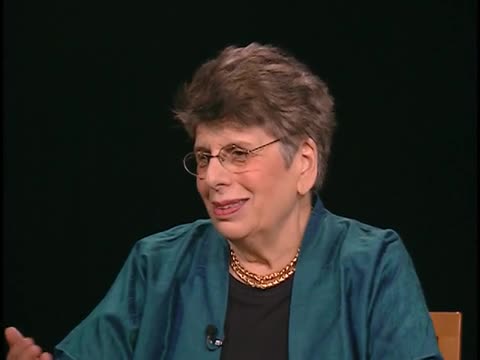
- In this second part of the interview, Ms. Ciezadlo discusses the Cedar Revolution in Beirut and the impact of that uprising on Lebanon. She also explains daily life in the major Middle Eastern cities and her surprise at the cosmopolitan atmosphere in these cities. She continues to discuss the "plans" of the United States government to rebuild Iraq and shares some odd perceptions of the US from the Iraqi people. Host: Ronnie Eldridge. Taped September 13, 2005.
- Description
- Taped September 13, 2005
- Created Date
- 2005-09-13
- Asset type
- Episode
- Media type
- Moving Image
- Duration
- 00:27:59
- Credits
-
- AAPB Contributor Holdings
-
CUNY TV
Identifier: 15902 (li_serial)
Duration: 00:28:05:22
If you have a copy of this asset and would like us to add it to our catalog, please contact us.
- Citations
- Chicago: “Eldridge & Co.; Annia Ciezadlo (Pt. 2 Of 2),” 2005-09-13, CUNY TV, American Archive of Public Broadcasting (GBH and the Library of Congress), Boston, MA and Washington, DC, accessed June 18, 2026, http://americanarchive.org/catalog/cpb-aacip-522-ns0ks6k70t.
- MLA: “Eldridge & Co.; Annia Ciezadlo (Pt. 2 Of 2).” 2005-09-13. CUNY TV, American Archive of Public Broadcasting (GBH and the Library of Congress), Boston, MA and Washington, DC. Web. June 18, 2026. <http://americanarchive.org/catalog/cpb-aacip-522-ns0ks6k70t>.
- APA: Eldridge & Co.; Annia Ciezadlo (Pt. 2 Of 2). Boston, MA: CUNY TV, American Archive of Public Broadcasting (GBH and the Library of Congress), Boston, MA and Washington, DC. Retrieved from http://americanarchive.org/catalog/cpb-aacip-522-ns0ks6k70t