Cinema Then, Cinema Now; The Marriage Circle
- Transcript
- . . . .. .. .. Hi, welcome to Cinema Then Cinema Now, the film series with lively discussion. I'm your host, Jerry Carlson, and I teach cinema studies at the College of Staten Island of the City University of New York. Today we continue our five-part series, Classics of the American Silent Cinema. We'll be seeing our first full-fledged comedy, the 1924 production, the marriage circle directed
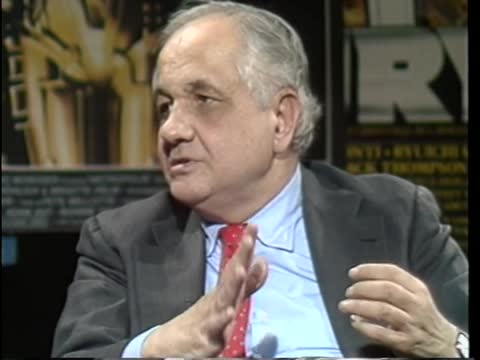
by Ernst Lubich. This film was a big hit in its day, both a popular success and a critical success. It put Lubich on his road to being one of the top comedy directors, perhaps of all time, in the American cinema, a career that spanned both the silent and the sound eras. We'll be talking about Lubich, American film comedy, and, of course, this film in particular after today's screening. We have as usual two guests, Professor John Belton of Rutgers University, and Professor Andrew Sarah's of Columbia University. Welcome back to Cinema Then Cinema Now, I hope you enjoyed the marriage circle.
It's a delightful and rather complicated, intricate, sophisticated comedy. We'll be talking about a number of aspects of the film in just a minute, but let me take this moment to introduce to you today's two guests. Sitting to my left is Andrew Serra, who many people know as Professor at Columbia University, but many other people know from his extensive writings. Andy is currently film critic for the New York Observer. Many, many people know a great deal about the American cinema because of his book, The American Cinema, and he's at the moment at work on a book called The American Sound Film, which we all look forward to seeing when it's published. Sitting to my right is Professor John Belton. John teaches at Rutgers University is the author of a number of books on the history of cinema. He's currently completing a study of the uses of the wide screen in the American cinema, which should be a big book, I can't say that.
The format should be appropriate. The format should be absolutely appropriate. John's also the co-editor of an anthology about the uses of sound in the cinema. That's why, of course, I had you on a silent film. Thank you. Andy, I'd like to actually start with you and ask you just a sort of general question about Loubich. Loubich is someone who was extremely famous for a very long period of time. He's known by film admirers and buffs now, but somehow it's not a name as well known. So who was Loubich and where does this film fit in with his career? Loubich was a very famous film director, who was very famous from about the 20s or the teens, really, through the 40s, and he died in the mid-40s, so that's about 40 years ago. So he really exemplified a style and a vision of the world that's more than 40 years old.
And he was even dying when his career came to an end through death. And I think he started out in Berlin with a group of – he was one of the great – one of the well-known Jewish comedians in that very pre-haulist-costal period right after the First World War, or during – even during the war in Berlin, he did a kind of Jewish buffoon character, but he became better known as the director, the acting after a while faded. He wasn't a great actor or a great comedian, but he became a great director. And one of the characteristics of his style – and I think you saw an evidence in the married circle – was his use of the frame of the film to create gags out of the very architecture of space, the way Marie Provosts, you know, saddles into the frame, and when
they're in the cab, how she falls against him, leans against him, he's these are gags of movement that are based on the geometry of the picture frame. But also, he also deals, and it's very significant that in 1925, in America, I love it's supposed to be the beginning of the flapper period, everything else, we're still in the grip of the Victorian era as far as American movies are concerned so that the action has to be set in Vienna, and people have to have far names there. So he's dealing with a world that he left behind when he left for German. Now he left in the early 20s, he left before the coming of sound. There were great men and German directors who followed him, but he was one of the first who came to this country. And what is interesting is that at Warner's, which was also the studio, is John reminded me before when we were talking of Rinton Tin, and he was a science scientist.
Yeah, I mean, a lot of movies were very heck movies, small town movies. America was still a small town country, despite prohibition and all that sort of thing. And Loubich represented a very cosmopolitan, a very sophisticated view of life and relationships and so forth. But also, it was a very precise society of manners, the gestures and the fetishes that he deals with, if you will, are very important. And one of the things, I think it's very hard for modern audiences to understand, particularly nowadays when comedy is so broad, that it's the raising of an eyebrow, a wink, a closed door, the art of suggestion of ellipsis, of understatement. Eight off Monge of examples, the quintessential Loubich actor, the one who plays the husband
in this film, he doesn't fly off the handle. He doesn't get to, he waits, he smiles, he plans, he's very, very methodical, that that scene with the hats is a classic scene. It's a scene of perfect manners, they're both very gracious with each other. And yet the scene unfolds with this deliberate and excurable slowness. Well, it might be, you're talking about the distance of that from us, it might be even going to go even further back that this seems almost more like restoration comedy than it is to sort of broad, physically based farce that are all the comedy of Mongea or the comedy where Ola Mongea is a little more robust in some ways, but there is always a sense that there is a proper way of doing things. And then you breach it but in a very delicate and very subtle way. In other words, it's a society that has rules.
And of course the ultimate Loubich comedy, perhaps, will come later in John Renoirs, La Regudizure, which is very much influenced by Loubich by Loubich's cinema. And Loubich had tremendous influence on a great many directors and he in turn was influenced by some of his predecessors, particularly Chaplin in the Woman of Paris. Now, Woman of Paris, let's just remind people, is the Chaplin film that he directed. One, that he was not in, he directed, and two, that is a serious drama, does not have the chamom. Yeah, it's very much a Victorian melodrama, but it has, again, Mongea was in that too. He's a very ironic character. And this is the big question. To this day, this question arises in movies in America. Can irony survive in America? And it's tough sledding all through the years, and it requires the greatest stylist, like Loubich, to bring it off. Yeah, yeah.
John, you know, we were just talking about Loubich in his own style, but how do you see him in relationship to the other great comic directors of the 20s? Yeah. Well, one of the things about the marriage circle, of course, is that it doesn't feature one of the major clowns, which accommodated slapstick comedy, nor is it slapstick in itself, because as we just mentioned, it's more like a restoration comedy. But one of the things that, I think, Sandy's pointed out, Loubich has in common with Chaplin is his sense of space, kind of theatrical presentation. And one of the things he has in common with Keaton, who we'd be seeing shortly in St. Beauville, Jr. in the series, is a sense, a really profound sense of the visual articulation of making a cut to an object at a precise moment to deliver a gag, and creating a kind of humor that comes across visually in which the titles, the intertitles, are really
not containers of gags at all, but the comedy comes out of the characters in their relationship to one another and the framing and the close-ups, so that you can say that there's a good deal of visual sophistication that Loubich introduces to American screen comedy, that the silent clowns as sort of centers of their own works really did not have a vested interest in achieving, that is, sophistication and telling a story in providing a situation that itself was funny no matter who was in it. Mongeo, of course, is a great deadpan, comedian figure, as is Marie Provost, who plays his wife, but their parts could have been as funny with other actors in them, I think, because of the Loubich's has created an atmosphere.
It's interesting that, of course, you're talking about the fact that the two we think of most colonies Keaton and Chaplin with Lloyd and Harry Langdon as the second rank as the clowns. One of the things that's true, I think, of their films is that you can always, in the best sense, tell when it's a Keaton film or when it's a Chaplin film. No matter what the character is named in the particular story in a Keaton film, you know it's Keaton, you know there's a certain persona or whatever. With Loubich, you wouldn't say, you almost say there's a Loubich style of drama or story, that the actors may change, but what shows up is the Loubich sensibility, the director's sensibility, but also the kinds of stories and actions and style that he finds most comfortable and brings into the American cinema, really. Yeah, in that respect, Loubich does look forward, I think, a good deal to the kinds of comedies you find in the late 20s and early 30s, in which actors were straight actors
and in other genres like Cary Grant or something, enters into a kind of comic situation, the screwball comedies, what I'm thinking of, in which they perform like clowns, but they're essentially, you know, scripted universe that is very funny. Yeah, and that's why Loubich film is a Loubich film, not a, you know, Monty Blue film or Adolf Mongeau film, even though I think audiences at the time, perhaps were more interested in the performers, but this is the beginning of Loubich's career, gradually I think Loubich emerged as a figure who audiences realize possessed a comic vision and that went beyond any one performer. Yeah, that's interesting. What do you think some of the other features of that vision are and what do you think? Well, one of the famous phrases that has been used, perhaps overused and it's misleading, that's the title of Herman G. Weinberg's book and Bill Paul has taken off after that
title because it oversimplifies with Loubich, but an example is that so-called Loubich touch and it runs all the way through the 20s, into the 30s, into the 40s. An example of the Loubich touch when Monty Blue tells Great and Hail to go and console his wife, tells him, you know, you know, he doesn't know that this guy is badly in love with his wife and he's dying for a glimpse of her, you know, and it makes his whole day. And so he's sending this man who's really in love with his wife, he doesn't know it, into console his wife, you know, to be alone with her, you know, perfect setup. And so you see Great and Hail go inside the door closes and the camera just stays on the door and you stay and you begin to wonder what's going on in there, you know, of course, you know, it's 25, perhaps not too much is going on.
Yeah, obviously not everything is going on that goes on today in the first real of movies today, but enough is going on that this guy is an ecstasy and seventh, they have an obvious place, he's been commissioned by the husband, you know, it's almost a more year scene, you know, of the unconscious cult called, you know, sending his best friend into advisor's wife and so forth. So that's an example of a, of a Lubid touch, you get the same thing in the Nachka, when Garbo, when the three commissars are living it up and you see these three cigarette girls go in and you can hear from behind with sound, you can hear behind everybody going, whoa, you know, but you see it here at the closed doors. Now everybody said that is Lubid's touch, the idea of suggestion, and that is a part of it, it's understatement, it's not, it's not, I will say one thing though about space,
chocolate kitten and Lloyd, all use space for very subtle side of gags. So it wasn't, it wasn't that wasn't the entire thing, but what, where I think what is characteristic of Lubid's maps of, of the, of the style is, is the time that he gives and it, and I'm very glad that this print or whatever problems it may have, otherwise is, is screened at the proper speed. So did you get the slow reaction, well the husband comes out of the office where he thinks the wife has been embracing the, the husband and then he sees that the wife is sitting out there, it must be another woman in there, he doesn't immediately react, he, he's puzzled for a while and then, and then gradually he gets that's Lubid's, that's a sense where that, that people do not rush, jump, rush to judgment.
I think part of this, Lubid's style, you talk about the closed door style, could be described as a metaphorical style that he's Lubid's constantly working with, with physical actors but it's to establish a kind of metaphorical level of, of activity. And I think in marriage circle, it's very, very interesting because we have kind of two different groups of characters, the, the, the professors stock and his, and his wife and the bronze and there's a, there's a, there's a, there's an ability I might say of Lubid's to use a metaphorical style, but also the characters themselves speak to one another through, through objects or through, through this metaphorical style. The whole, the whole, the whole sequence. The whole thing is the roses, the flowers drop, you know, and, and, and the camera lingers on the flowers, you know, they're very important. I mean, that, this is a society where, rituals where signs are very important. Yeah, Maju's always kissing someone's hand. This is, this is the society of manners, but one thing you have is the, the close up of the, the sock
with a hole in it at the beginning. This is the, it hit him, you have their marriage and it's just like, characteristic of silent comedy of this sophisticated mind where you encapsulate everything very economically. Right. But so these characters are, are, are the, the Maju and provost anyway are exist on a, on a, on a level of sophistication so that they can use these metaphors and signs with one another to actually have a discourse and then opening scene because he has his sock with a hole in it and she goes over opens a drawer and it's full of socks. His drawer has, those, those, those socks in it at all. And she wants to sit down on the chair, she takes his clothes off and throws them on the bed and she wants to sit on the bed, she takes his clothes and throws them on the chair. And this is, this is, might say the, the symbol of their, of their relationship is one of, of this kind of gags being thrown back and forth at one another. And they can, they can pull it off. When you get to the, the other couple, the doctor and his wife who are also bound up in the system of, of manners and, and metaphorical behavior, they're a little less in control of their own metaphors. I mean, they, you know, they speak a good, a good romantic comedy,
but they don't have the level of wit that the, the, you know, Maju and provost have. Now, no, no, there's also something a little smug about the Monty Blue character. There's a little, I was sitting with someone watching it and she, she objected at the end to his smugness, you know, about the other man that there's something unpleasant about that, that, that, that's left dangling that he really doesn't get his come up and he lives in the state of false security. It's the double standard. Now, in a sense, therefore, this, this film is not, is not completely liberated in the modern parlance or are enlightened in the modern parlance as far as the feminist certainly movement is concerned. But it, it's part of this rufal wisdom that he has that husbands are foolish. They live in a fool's paradise. It's, it's very much, it doesn't, it doesn't, it isn't, it isn't liberating, but it, but it isn't also, it, it isn't also patriarchal. It's that, that husbands have
to work at marriage. They can't just take it from granted. And, and I think the one, the character who is dominant in the end is, is the wife. I mean, she, even though she's, she does, she's not aware of the husband's smugness, the fully aware of it, at least she sort of dictates the final terms. I, I, I see it a little bit differently. We were talking about this, this earlier that, it is a film set in Vienna and all of this pinky pancake can go on because it's not taking place in America. I think that the, this, the doctor who's in charge of nervous disorders, Dr. Floyd here, Dr. Braun, is really, they're really an American couple. We identify with them as opposed to the otherworldly professor stock in his wife who are much more European in appearance and, and, and manner. So that when we do have a certain resistance to, to want to do a little because he's not, he's, because he's not as, as, as indicated in his wit. I must question one thing. Just one thing. I think your, your analysis is perfectly sound, but I think you're being disingenuous when
you say we, I mean, I, I identify the one person above what, no, I don't know if I may be able to watch you, but I, but the character that I adore is, for me, provost, I mean, she is a comic gem. She is hilarious. And, and, and I wish her the best. I mean, she, she is honest. She, she goes after what she wants. And she doesn't in his very witty way. I mean, when I say we, you and I, we, we really identify with the year, we're, we're European. That says I made it. We're talking about the people in all the hick towns who didn't like blue bitch movies. They, they are the ones who identify, I think, with the American couple who are there to keep up the, you know, standards of morality and, and happy marriage and so on. That comes back to what you, this notion of the film's metaphorical style, because when you, you say this is Vienna, it's, it's not Vienna, and it's also not a, not America. The Vienna here is not an historical Vienna. It's a Vienna, which is a metaphor of sophistication. It's where
people who have sophisticated problems, the Vienna in this film is the, is the place where people who have a sophisticated sensibility work out a new kind of set of marital problems that don't come up for less sophisticated people. And so it's where we, we can have, you can go to Vienna and experience this, but I don't think you get off the train station in Vienna and find this, I mean, you go into the theater and find this Vienna. But you made that good comment before about the censors, I think. Yeah, just, just explain this, the film does sort of raise some interesting issues that would trouble an American audience, certainly the, the, all the adulterous, you know, it's a Vienna, because it's the city of Schnitzler, you know, and the La Ronde is, is here in the marriage circle. Maryland censors actually insisted that all the kisses be cut between a wife and another other man, which would actually truncate the film. But this, the small town in America was, especially
in the 20s, as they're sort of facing the, the, the age of the flapper, the new sexual morality, they have, have scotch their old generation, is very leery of, of this. And I think it was a student, a religious part, to, to give a kind of solid moral base to this film of the, the happy couple who, who work out their problems without having to resort to detectives and divorce and so forth. But I, but I propose that I, I, I didn't remember the film, you know, I, and I got to confuse with something else, you know, I sometimes forget the actual plot details when I haven't seen it felt for a long time. And I, I wonder what happened to the Marie Provost character. I thought at the end she ran off with some, you know, some real aristocrat or something else. But then I, in this version, he, he seems to be resuming the relationship. He's running Creighton Hale. Was it Creighton Hale? At the, at the very end, yes, it's, it's, and it's perfectly appropriate because she's been trying to break up the marriage by luring away
Monty blue. And Creighton Hale has also been making a play for Florence Vidor. So at the end, the, the circles complete the husband and wife are back together. And he runs, he runs off to me after, after, uh, yeah, this, this vixen. Yeah, but, but, but there was this circularity finally, it is achieved. And, and I think, I think the, uh, the sympathy that's, that's established for the, uh, for the, uh, for the Marie Provost character and the wit really overbalances the movie in a way. I mean, because the, to me, the whole heart of the comic heart of the movie is when they go into that garden. And, and she flings that thing. And you know, and then, and he has the perfect camera angle, you know, the, the luplanamatic can, you know, he has it from the waist up so that they, you get the, you get the expression in her face, but you also get the unmistakable gesture, you know, he's a, er, er, aren't you cold? And then the legs of the thing, that, that is one of the funniest, uh, wittiest, uh, things in, uh, in the cinema, to that time. She's consistently
identified with theatricality. I mean, that's, that's the greatest moment. Aren't you going to be a little cold and she, the first, the first process away. You remember earlier, um, when she, after she just met the doctor, she comes home and feigns this illness. Oh, yes. And then she even sets the stage by moving a chair as far across the room as she can. So we have to sit next to her on the sofa and he immediately comes in and, and moves it away. But, but when she feigns suicide later on with this gun, yeah, which she then has to dispose of when her husband comes back and she has to push it under. But, but also the, the way it moves toward, it moves across the frame, moves out of the frame. You get this constant sense, this, this awareness of where the frame is. And that's, you know, nowadays you have a lot of directors who, who try to use these old gag, do old gags like this. And they always have the camera in the wrong place, you know, Lubich always had it in precisely the right place to, to get the maximum effect and clarity and lucidity for the gag. Now that is, that is the art that he, that he was, and he invented a lot of these, these devices and, and he
used them better. But he, but they wouldn't work as well as they do for all the ledger demand and all the skill. Right. If he didn't establish the world that they occur in and that's, he's very, and that's why you get this deliberate pacing, you have to build to them. And that's, that's something I miss in movies today, you know, this, that's, that's a rhythm. Yeah. Everything today is shocked, you know, and nobody builds things up, builds a context so the thing will work. And that's what all the great comedians did have. That is the, the ability to build up to a gag, to build up a context for it. And even though, even somebody like Keaton who, who uses a lot of climactic structures, as people will say, one of the great climactic sequences in America's out film and Steamboatville, June, October, you know, even, even with him, the, the, the, the rhythm is, is, it's slower at the beginning. There's an accumulation of detail so that the climax means something. The climax is not just. Well, I, well, I think, Steve, oh, Bill, June, you're
absolutely too, too brave of forthcoming film is probably, it's my favorite, Buster Keaton. And I think it's one of his deepest, because what one of the things that drives the gags forward is this fantastic feeling he has for his own father. And he's played by his own father. And, and that, that feeling for the father, that, that, that, that, that, that emotional thing fuels the gags, it, it gives the gags, the, the spores and this, and this, and this romantic extension. Well, that's what we, we touched a little bit on this earlier, any, but that's where, you know, Keaton and little bits are, are straight, the strange bedfellows, but they can be bedfellows, because Keaton is the one who develops such beautifully designed stories so that the gags as brilliant as they all may be. And it's really, really, in the executors they may be. They always have this particular place in this very carefully structured story. So they're not just the gags of a clown. No. They, they issue both from character and from very well developed story.
Well, people used to complain at the time. The Keaton wasn't all that funny. And I think, I think Keaton is not, to me, to me that what gets me with Keaton all the way. That's with little bit is the beauty of the, of the art. And, and somehow beauty, you don't get the biggest before, there's something lower about belly laughs, you know, and I think Chaplin and Lloyd too, what got more belly laughs than Keaton, but Keaton, you have this, this perpetual smile, this charm of, of perfect, you know, architecture and, and artistry. I mean, one of the things that I think distinguishes Keaton from, from Lubitch here is that, I mean, Keaton has this, Keaton has this marvelous visual inventiveness problem-solving. He has, his gags always deliver, deliver their point very, very efficiently. Yeah. Lubitch, on the other hand, constantly sets up gags through mis, misunderstandings and different perceptions. So the reactions quite often to what the characters are seeing are what's funny. Now, rather than having the comedy be, as I think it isn't Keaton,
partly based on our amazement at the action taking place. So that Lubitch is, is someone who sort of turns around and plays with reactions. Like the last scene has to be, has to be one in which it, it builds on three different points of view. The, the husband who thinks his wife is, is, is trying to scare him, the wife who's, who's, who's, who's trying to scare her husband. And this, this innocent guy who's telling the truth, did kiss her and, and into the room. And it's a, it's a compounding of, of economic moment because nobody understands anybody else, except the viewer. This is the irony that, that Keaton was talking about before. The Lubitch is, constantly keeping it. Also, it's very ingenious plotting the tactics, which are very, very intelligent, usually, you know, have broad things. But here, the, the, the, the, the, the, the cleverness with which he, she misleads the wife as to who the main threat is. And, and the switching of the, of the, of the cards and everybody is being confounded by that, that, that, that, that, that, that patience to
develop these, these elaborate stratagems, you know, to, to, to keep the wife off the set. Right, right. And, and this, this, this kind of thing is this requires a kind of delicacy of perception. And, you know, that, that it, it, it, nobody just goes bursting in, you know, in a, in a broad way. It does, I, I want your husband, you know, that kind of thing. I mean, she wants to keep the friendship. She wants to, there's this taste for intrigue, which, which is the, the essence of it. And that's European. That's more European than America. Well, we're going to have to end on this European, which is great American film, because we've come to the end of our, uh, 30 minutes. If you'd like more information about cinema then, cinema now, or about cinema studies, graduate or undergraduate, drop us a line. Drop it to cinema then, cinema now. The college of Staten Island, Staten Island, New York, 10301. Let me give you that information again, okay? Drop that, drop it to cinema then, cinema now. The college of Staten Island, Staten Island, New York,
10301. Well, this is an incredibly rich film in many ways. And Andy, I want to thank you in particular for bringing your knowledge of Lubitch, the American cinema, and your appreciation of the sophisticated. Oh, thank you. To us, uh, John, always a pleasure having you here with your knowledge of cinema style, the careers of so many people. And film sound. Oh, it sounds, and it sounds out. We've got to have, but I couldn't bring that to bear. Absolutely. We'll have to come back to that subject sometime. Well, in any case, I hope that our discussion here of sound in the silent picture, whatever leads you to thought and discussion at home that you enjoy. Thanks for joining us.
- Series
- Cinema Then, Cinema Now
- Episode
- The Marriage Circle
- Contributing Organization
- CUNY TV (New York, New York)
- AAPB ID
- cpb-aacip/522-ks6j09x57x
- NOLA Code
- CTCN 000080
If you have more information about this item than what is given here, or if you have concerns about this record, we want to know! Contact us, indicating the AAPB ID (cpb-aacip/522-ks6j09x57x).
- Description
- Series Description
- Cinema Then, Cinema Now is a film series with lively discussion hosted by Jerry Carlson, professor of Cinema Studies at the College of Staten Island of the City University of New York.
- Description
- Continuing his five-part series, "Classics of the American Silent Cinema," host Jerry Carlson discusses the 1924 comedy "The Marriage Circle" with guests Prof. John Belton of Rutgers University and Prof. Andrew Sarris of Columbia University.
- Description
- December 13, 1989
- Created Date
- 1989-12-13
- Asset type
- Episode
- Media type
- Moving Image
- Duration
- 00:33:09
- Credits
-
- AAPB Contributor Holdings
-
CUNY TV
Identifier: 15852 (li_serial)
Duration: 00:33:07:00
If you have a copy of this asset and would like us to add it to our catalog, please contact us.
- Citations
- Chicago: “Cinema Then, Cinema Now; The Marriage Circle,” 1989-12-13, CUNY TV, American Archive of Public Broadcasting (GBH and the Library of Congress), Boston, MA and Washington, DC, accessed October 12, 2026, http://americanarchive.org/catalog/cpb-aacip-522-ks6j09x57x.
- MLA: “Cinema Then, Cinema Now; The Marriage Circle.” 1989-12-13. CUNY TV, American Archive of Public Broadcasting (GBH and the Library of Congress), Boston, MA and Washington, DC. Web. October 12, 2026. <http://americanarchive.org/catalog/cpb-aacip-522-ks6j09x57x>.
- APA: Cinema Then, Cinema Now; The Marriage Circle. Boston, MA: CUNY TV, American Archive of Public Broadcasting (GBH and the Library of Congress), Boston, MA and Washington, DC. Retrieved from http://americanarchive.org/catalog/cpb-aacip-522-ks6j09x57x