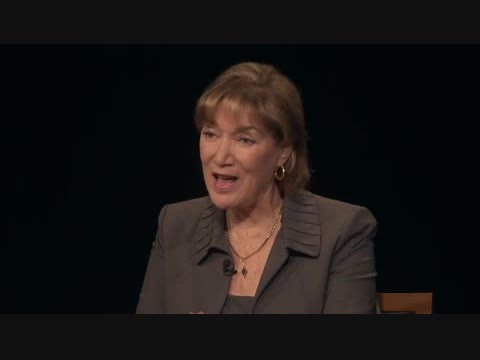
One To One; Guest: Lorraine Lotzof Abramson, Author
- Transcript
Hello. I'm Cheryl McCarthy at the City University of New York. Welcome to One to One. Each week we address issues of timely and timeless concern, with newsmakers and the journalists to report on them, with artists, writers, scientists, educators, social scientists, activist, government leaders. We speak with each one to one. Lorraine Lotseth Abramson is a child of South Africa and was the only Jewish girl in her all-white grammar school, and what an dichotomy she faced, belonging to a family that had immigrated to South Africa to escape racial and religious persecution, only to wind up on the side of the oppressors. Lorraine has written about those experiences, her career as an award-winning track star, and the romance that led her to move to United States.
Her book, My Race, A Jewish Girl Growing Up Under Apartheid in South Africa has just been published by DBM LC Press. Welcome. Thank you for having me. Lorraine, your mother grew up in Johannesburg and your father arrived there, arrived in South Africa in 1921, part of a Jewish immigration mostly from Eastern European, Latvian, Lithuania. Your father raised cattle on a farm in the Orange Free State, and you grew up in the tiny town of rates. What was it like growing up Jewish in a tiny South African town? Well, you know, as a young child, it was really an idyllic lifestyle. We, there were almost no cars in the streets, so we ran around barefoot, not that we couldn't afford shoes, but that's just what we did. You know, everybody just played out in the streets, and it was a very casual lifestyle. I remember it with fond memories and very little
anti-Semitism. Well, and you know, this is the thing. We, you know, when you started with the introduction, and you said we were on the side of the oppressors, we were on the side of the oppressors by virtue of our white skin. Right. Not because we necessarily subscribed to the apartheid philosophy. I just wanted to clarify that, but because the apartheid government had another big issue on their hands, the, because we were white, and I was an athlete, it was, you know, I somehow was accepted because of that. But you did, obviously. I mean, I would think observe the racism against black Africans. Yes. You know, I was reading about you writing about when you're in the fourth grade and your teacher walking around with the Bible and, you know, thanking God that I guess the students would pray thanking God that they've been born white. Yes. Yes. That was something that we were taught in school.
The apartheid, the racism was ingrained from a very young child, you know, and all my like in school, the teachers used to tell us that this was God's will, that the apartheid is God's will. And I know that my friends must have, they went home to parents who, you know, endorsed my teachers' philosophies. But fortunately for me, I went home to parents who felt differently. So I had that balance in my life. And there were other ways that the racial discrimination was manifested. The African workers had to look down when they were speaking to a white person, sort of like in the South, where I grew up. Every house in rates had bars on it. Yes. Because why was that? Well, I guess it was, it was the, the feeling was to, for safety, which I was, as I write in the book was and I was like a slur against,
you know, that it's not safe, not to have protection against the overwhelmingly large African population. And, you know, when I lived in South Africa, they were about, I'm talking about the 50s and the 60s. They were about three million whites and over 20 million Africans. So the apartheid government felt that the only way that they can maintain rule over such an overwhelmingly large majority is with an iron fist. And they did. We lived in a police state, which meant that the police had complete control over authority to do whatever they needed to do to maintain their control. And I want to just add in 1950, the government instituted an act known as the Suppression of Communism Act. And the wording on this document was so broad that a communist was anyone who spoke at openly against the apartheid government. They were considered a traitor to the country and a threat to
the regime. And they'd be jailed or put under house arrest indefinitely with no trial. So I learned from a very young age to be careful about what I said to whom outside of the four walls of my home. Did you know any whites who were actually arrested or jailed for what they said for the political activity? There were definitely people who did speak at and who definitely did go to jail or had to leave the country very quickly. There was one member in our family who had to leave and go to London and lived her life out there. I don't know too many others, but we had three choices in South Africa. We could either speak out against the government and go to jail or leave the country or live our lives. And a lot of people just, you know, live their lives. Your family had black servants because I guess they were paid so a little, the most
whites could afford to have, you know, black servants. Gracie in your house was the daughter of Thomas, the main farm. Yes. And like the manager on my father said, what was your relationship with Gracie? Gracie was almost like my second mother, the nannies and the help in the South African homes lived with the families, not in the home. They had a special structure that they had a bedroom and bathroom and so on, but because legally they were not allowed to sleep in the house. Not that. But Gracie lived with us for such a long time that she actually started keeping kosher. She wouldn't mix dairy and meet together. So she took on a lot of our customs. But I loved Gracie. And I talk about this in my book that now when I look back, I remember how she used to bake us birthday cakes on my birthday and so on. But I never knew when her birthday was. I didn't know what her last name was, as I think about it now as an adult.
There were so many things about her that I didn't know, even though I loved her so much. I wish I could have asked her now about how she felt about living in the part I'd South African. Having idea what happened to her, she eventually she developed hot condition and she had to go back to the farm. She couldn't do the physical work in the home anymore. But I think of her with great remorse because if I had spoken to her, I would have validated her as a human being by asking her questions. How much older was she than you? Oh, well, I was like a young child. I was in elementary school. She was like my mom's age. Okay. So she was, you know, mother figure. Okay. One of the most dramatic, compelling stories that you tell in your book was the incident with Pete, the gardener. I soon was a grown man at the time. You were 11. You were calling him one day. He ignored you. And your father went up
to him and punched him, punched him in the face, I guess several times and said, don't ever ignore my daughter again. What was that about? You know, I needed to put that in the book because first of all, I had a very close and wonderful relationship with my father. He was not a violent man. And the fact that he reacted that way and that incident had such a searing effect on my mind, you know, that I still remember it was so out of character. But I think that the reason that happened was because of our close relationship, I mean, anyone that disrespected his daughter triggered that reaction in him. It was never spoken about again. It was never discussed. And I think that he felt very humiliated to react to that way in front of me. But as I say, it was, if you've been living in Queens, and this had been the Black Garden Queens, and he had ignored you. Do you think he would have
reacted that way? With my father had? You know, this is a different world and a different environment. And when my parents came to this country, I was very proud of them at the adjustment that they made to the United States. It was a whole different set of rules. We didn't have to, we were all, you judged someone by the content of the character rather than which racial group they fitted into. And it would have been a very different scenario. I'm sure that would not have happened. It sounded to me like your father's way of enforcing the rules, you know, like, you know, we've got to enforce these rules if we're going to live here. And one of the things you do is that you've got to, you have to show a certain difference to white people, even if it was an 11 year old. Yes. Yes. That is true. We were all the product of our environment. We were taught to never, ever question authority. I know that I never, I would never question my parents. I would never question when I went to a strict all girls boarding school. I lived within
a strict number of values phase. Never. It never occurred to me because I knew that there was a stiff price to pay. And all this was within the context of a police state. So now your father, you, you, you, you write that your, your mother was openly critical of the apartheid state. Your father was more supportive of it. His view was that, you know, there's 20 million of them that's remie in a bus and unless we keep that in control they're going to take us out. How did this strike you? I took a little bit of each, you know, with my father, with my mom, she had one foot at the door of South Africa as long as I can remember. She always said how long do they think they can get away with it. She always used to quote, you know, the Jews in Germany thought it could never happen to them. And she, she just never had faith in, in the long survival of that country under their party regime. My father, on the other hand, it's not
that he supported it because he never voted for that government, but he felt that this, he's safety. It was a safety issue more, you know, in terms of this is where he lives. This is where he makes a living. This is his home. And under these circumstances, we sow in the minority that that's, you know, that's the way. So I kind of fell under both of them. It's difficult to explain, but, you know, you take a bit of, I mean, did one every year, I mean, one could take that position that, you know, it's us against them. And if, but I mean, did you hear people take the position that, okay, well, maybe we'll just sort of all share equally in the fruits of the country and there won't be an us against them. What happened when Nelson Mandela came into, to power? Because, you know, I had the opportunity, I just want to say this, I had the opportunity to go back to South Africa after the new, after Mandela taken over. I was now living here, but I went back, one of
my uncles wasn't well and I took my daughter and we went back. And I had an opportunity to go with one of my South African cousins to visit Soweto. And our driver was an African man and he took us into Soweto and that was, alone wasn't experienced for me because we were never allowed into any black areas either. So we toured Soweto and I saw Nelson Mandela's home and then we stopped and we had coffee in one of the cafes there. And it was the first opportunity that I ever had to speak to ask very important questions, honest questions to a black South African gentleman. And what I asked him was, how come, how does he explain that there was a peaceful transfer of power? Wasn't there anger and vengefulness and this was their opportunity to, you know, to take control kind of thing. And what he said to me was very interesting. He said that all the, that Nelson Mandela
was their God and their icon. They would do whatever he told them to do and they were ready. When he came into power, if he had said to all the blacks South Africans, you know what guys? This is our turn. We can now ask our chance to get revenge. We should go out and kill all the whites. He said they were ready to do that. But instead what he did say was, let's put the past behind us and let's all move forward together and I remember his words with something to the effect of, let's all share in the bounty of this beautiful land. And that's what they did. He was a remarkable leader in that respect. He was and he definitely avoided a major bloodbath. And while I give him all the credit, some credit, I also have to give credit to the white prime minister at the time, Declare, who saw the writing on the wall and took this big step. We're going to take a short break, but we'll be back with more with Lorraine Lachsoff, Abramson, after these messages.
Welcome back to One to One. I'm Cheryl McCarthy of the City University of New York, and I'm talking with Lorraine Lachsoff, Abramson, author of My Race, a Jewish girl growing up under partied in South Africa, which was published by DBM Press. When you were 12, your parents sent you off to boarding school, but three hours away to the UNICI school in Blumbantin. What was it like at the boarding school? It was a very strict environment. We wore uniforms every day. Our uniforms were inspected to make sure our tunics were not too short. As soon as our hair touched our collars, we
had to tie it back. Very strict framework. It was an academically wonderful school, and that's really the reason we went there. But in that environment, I was just so used to living under a lot of rules that for some reason we did as we were told. My escape at boarding school was my track running. When I was able to leave the school every day and go out for workouts at the track next door, it was an escape for me. The only time where I felt that I was really in control of my own destiny and felt the freedom was during when I was running. You had started running when you were a little girl. You ran your purse. You won your purse race at age five. Yes. It was just this feeling of freedom that you got when you ran. I didn't realize at the time, but when we did have our, as I write in the book, we played Olympics and all surrounding kids when I was five years old
in the little town of rates on the dirt roads with our bare feet. We all, the bare toes lined up along the line. They were boys ranging from 12 down to five boys and girls. And when the start is set on your marks, get set, go. And I shut out like a cannon and I beat everybody. And then they accused me of cheating that we had to rerun the race because how could I possibly, a five-year-old girl beat all the big boys. We reran the race and I won again. And I think I was more surprised than anybody else. And that was when I started running every year in the local track meets and eventually boarding school, I got my first coach and took it from there. And you got to, one thing you got to do, well, one thing, there were more Jewish girls, so a bunch of Jewish girls at the school. So that was different. And did you go to a synagogue in the town or did you? Yes. Okay. That was part of the reason my parents also wanted to send me. They wanted me to get the experience
of going to synagogues on Saturdays and establishing an identity and also, you know, having Jewish friends as well. So when you were 15, you got to go to Israel to compete. Is the Maccabee games? Yes. Tell me about the Maccabee games. The Maccabee games is an international competition that is held every four years in Israel the year after the Olympics. And it's mainly for Jewish athletes and opportunity for Jewish athletes together together there in friendly competition. It was the first time that I had left South Africa. And I was amazed to see Jewish people from all countries where I didn't even know Jews lived. I mean, and the Indian team, the uniform were turbans as they marched in. And it was just a wonderful experience for me meeting, you know, Jews from all over the world. Were those games started because to allow, were there Jews in various countries who were, might not
get a chance to race in their own countries? Was it a response to that that the games were started? In 1936, the first Maccabee games was held in Israel. And there were people from, during the Nazi, during the World War II, people came to Israel to compete. And one of them was my uncle from Poland who was a runner and came to Israel and stayed. So the games offered an opportunity for people to escape from oppression and come to Israel. And, of course, Hitler did not allow Jews to compete in the Olympics when they were held there. I guess no, I'm sure not. So in general, what did the experience of going away from boarding school do for you? It made me independent. It made me believe in myself. I couldn't go to my parents for every question. It definitely, and at the time I didn't realize, it definitely prepared me for a future time when I would make a longer trip, namely leaving South Africa to come and live in the United States after I met my husband at the Maccabee games.
He was on the American swimming team. I was on the South African track team. That was the four years later. Right. And I want to show you, you want a lot of medals at the Maccabee gold medals and a wonderful husband. So that is a very good, what was it like going to, was it in Tel Aviv? What was it like seeing Tel Aviv, seeing Israel? Well, for me, it was interesting having seen it four years before and to see the growth of the country and what that country has accomplished in terms of the desert environment, turning it around like that was, I think, very commendable and, you know, I felt very proud. Tell me about the meeting Richard, what that was like. He was a swimmer, American swimmer. He was, we met the last four days of the games. I don't, and we, after four days we decided we wanted to get married. And you were how old? 19. Okay. 19. He wasn't allowed to be married at the time. He was attending the Air Force Academy in Colorado and they weren't allowed
to be married until they graduated. So we had a three year long distance relationship before they was texting or emails or, you know, what do you call it? Skype. Right. So it took a, it led 10 days to get from Johannesburg to Colorado Springs and back. And then three years later he did come down to Johannesburg and we got married and then came back to start our lives here. In Boston, where he was stationed in the Air Force Base. Right. In the 60s, and what year did you come to the United States? 68. Okay. In the 60s, South Africa started being pressured by the international community to change his racial policies. It was banned from the Olympic Games in Tokyo in 1964. How did you feel about that? That was devastating. And I remember very clearly the, when the, my track coach came to our workout and he had the newspaper under his arm and he showed us the headlines at South Africa has been banned from the Olympics. At that time I was 18
and I remember feeling it's not fair. We worked so hard, you know, you train years and years for your one dream to be in the Olympics and then it gets taken away from you like that. And I remember saying that I'm not a politician, the politicians don't care and I didn't ask to be born in South Africa. I happened to be living here. And then one of my teammates said to me, you know, Lorraine, we are part of the fabric of the society. We do live in South Africa. We enjoy its bounty. We are part of the fabric of this country. And of course deep down I knew that he was right. It's just that my head was just so filled with the disappointment at the time. But as I look back now as an adult when I think about that time, I realized that, you know, the Olympic Games was a moment in my life, a big moment, but a moment, whereas apartheid was something that people had to endure every day of their lives. So, you know, you just look at things differently as time goes
on and when you're in a different setting. What was it like being in the United States, you know, following the civil right, the revolution back at home, the Civil Rights Mandela released, the violence, the calls for the investment from South Africa, the all kinds of announcements, you know, I get to get that kicked out of the soccer team was not allowed to compete. Mandela being released from prison and, you know, the free voting, what was it like following that from here? Following that from here. Well, I can tell you first of all, I felt very privileged to have been able to bring up my children in this country because I was able to give them a different set of values. You know, I remember my daughter saying to me going into, when she was four years old, we went into a supermarket and she said to me, mommy, how come that little girl has a brown face and brown hands? And I said to her, well, how come you
have a pink face and pink hands? And I have brown eyes and you have blue eyes. I said, you know, everybody's different, but everybody's special. So, I felt privileged to be able to give my child that message as opposed to what I needed to hear when I grew up. So, I was looking at it from an outside of point of view feeling fortunate that I'm not in Latin. We only have about a couple minutes left, but what made you write the book and what did you get out of writing the book? The idea of writing a book came to me after my twin grand orders were born. It was when I became a grandmother that I started to think more about my own grandparents who left Eastern Europe, Lithuania and Latvia and went to South Africa. And being that their world was so different from mine, I wish I had asked them more questions. But by the time I thought about it, it was too late. So, I decided that since I grew up in a police state in apartheid South Africa, I really wanted to tell my story to my children so that they don't have the same regrets. And as I started writing
it, my friends said to me, Lorraine, this is a bigger story than just for your family. You should get a publisher and publish it. And I've been very gratified at the response because South Africans have found it nostalgic and Americans have learned about a culture they didn't know about at all. And your grandchildren are going to get to. My grandchildren have given, they have already read about it, they've invited me to speak at their school and I've done many, many book talks. And it's been a wonderful book journey. Well, it's very interesting. And a part of the book we won't get to discuss is about when you take your father and your husband and children back to where he came from. So they have to read the book. That's right. We're out of time, but I want to thank Lorraine lots of apronson for joining me today. My race, a Jewish girl growing up under apartheid in South Africa, has been published by DBM Press LC for the City University of New York and one to one. I'm Cheryl McCarthy.
If there are any people you'd like to hear from or topics you'd like us to explore, please let us know. You can write to me at CUNY TV 365 Fifth Avenue, New York, New York, 10016. Are you can go to the website at cuny.tv and click on contact us. I look forward to hearing from you.
- Series
- One To One
- Contributing Organization
- CUNY TV (New York, New York)
- AAPB ID
- cpb-aacip/522-5x2599zz9m
- NOLA Code
- OTOO 006003
If you have more information about this item than what is given here, or if you have concerns about this record, we want to know! Contact us, indicating the AAPB ID (cpb-aacip/522-5x2599zz9m).
- Description
- Description
- Guest: Lorraine Lotzof Abramson, author, "My Race: A Jewish Girl Growing Up under Apartheid in South Africa." Taped Sept. 28, 2012.
- Broadcast Date
- 2012-10-01
- Created Date
- 2012-09-28
- Asset type
- Episode
- Media type
- Moving Image
- Duration
- 00:26:58
- Credits
-
- AAPB Contributor Holdings
-
CUNY TV
Identifier: 3756 (li_serial)
Duration: 00:26:58:27
If you have a copy of this asset and would like us to add it to our catalog, please contact us.
- Citations
- Chicago: “One To One; Guest: Lorraine Lotzof Abramson, Author,” 2012-10-01, CUNY TV, American Archive of Public Broadcasting (GBH and the Library of Congress), Boston, MA and Washington, DC, accessed April 4, 2026, http://americanarchive.org/catalog/cpb-aacip-522-5x2599zz9m.
- MLA: “One To One; Guest: Lorraine Lotzof Abramson, Author.” 2012-10-01. CUNY TV, American Archive of Public Broadcasting (GBH and the Library of Congress), Boston, MA and Washington, DC. Web. April 4, 2026. <http://americanarchive.org/catalog/cpb-aacip-522-5x2599zz9m>.
- APA: One To One; Guest: Lorraine Lotzof Abramson, Author. Boston, MA: CUNY TV, American Archive of Public Broadcasting (GBH and the Library of Congress), Boston, MA and Washington, DC. Retrieved from http://americanarchive.org/catalog/cpb-aacip-522-5x2599zz9m