Smith & Muse
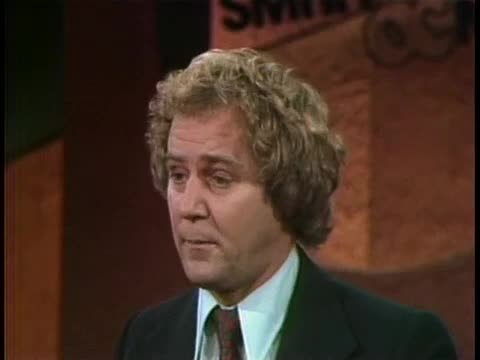
- Transcript
[Announcer] "Funding for Smith and Muse was made possible in part by the CA Norgren Company, Colorado National Banks, Adolph Coors Foundation, and the Council for Public Television." [Harry Smith] "Good evening and welcome to Smith and Muse. I'm Harry Smith. Here's Reynelda Muse and our guest tonight is Dr. Neils Lauersen. When I first started reading "It's Your Body," Dr. Lauersen's book, I was shocked at how much I didn't know about normal, everyday bodily functions in females. As I read more and and more, and became more enlightened, I got on the horn last night and I started asking women about what their relationships were like with their gynecologist. And I couldn't believe the number of horror stories that I was told. We're going to talk about how a woman's body works. We're going to talk about also women and their relationship with their gynecologist tonight." [Reynelda Muse] "Harry's right, I mean one of the things that I picked up in reading this book was a very startling
statistic. Just this one statistic if nothing else. That one in five women are prone to having breast tumors and that 85 percent of them are non-cancerous. That was appalling to me. I had never heard it. And there are many such facts that came out in this book and we're going to be discussing it, "It's Your Body," When Smith and Muse continues. And one of the things that I've been trying to figure out since reading this book is, how is it? How is it possible that I, I consider myself a fairly educated woman, had never heard that
statistic. I'd never heard the word fibrocystic breast disease. How is it that women have gotten so ignorant? Whose fault is it that we know so little about our bodies?" [Dr. Neils Lauersen] "It is everyone's fault. I think it's unbelievable how little is known about the woman's body, by women themselves and by men also. It is frightening, because do you realize what's happening to you? You don't get the care you need. You are mistreated often, and often women walk around with pain in their breast, pain in other places, thinking it's cancer, and it's simply maybe just a disease or part of a menstral cycle or something not to worry about. I think it's so important that you do your homework. Know your own body, know how it functions. Start to understand what happened inside yourself. That way you could demystify your own body. You could feel better. Find a doctor you can talk to and start to feel better about yourself. Know what's going on. And it is about time now we talk. We talk to our friends. We talk to our husbands, our
boyfriends. And everyone should start to do that. By doing that I think you'll feel better and I think the past, a few years ago, one didn't talk about menstrual bleeding. Men would just say, "Here she goes again, complaining, that's her excuse." And it's all really bad because a menstrual period is a normal function. It's a cleaning period, where if a woman is not pregnant or do not want to get pregnant, to clean herself. And if a woman understood their menstrual cycle from one menstruation to another, you would understand so much about your body. You will understand your moods, you'll understand conception, contraception, infertility, menopause, just by listening and reading. And it's amazing." [Muse] "Yours is a remarkably lucid book. How, I mean, when did you decide to do this? Did you just survey the situation and you were appalled at the ignorance and you decided something has got to be done and I'm going to do it?" [Lauersen] "Partly, yeah. I did training in Europe, as you could hear, I was trained in Copenhagen partly, but trained in many
universities in Europe and there, also, great, I saw some women suffering someplace. I mean someplace in Greece, people had diabetes, for example, and didn't come down to the hospital before their legs fell off. I mean I started to realize that it was bad. When it came to me in New York, in the United States, realizing this is the country of the future. Everyone ought to know everything here. And realized it was much worse. No education. Women were brought in. Now, I was educated in New York, Hospital Medical Center in New York. We got a lot of referrals. Women there have been missed up, mistreated given ?kobold when it should not COBOL? and it all came to me that someone ought to be a spokesperson about women. Someone ought to open the consciousness. The book is called "It's Your Body" because that's what it is. Stand up for it, know it, talk back. That's all it is." [Smith] "One of the things you talk about in the book is how to go about finding a good gynecologist. And as I mentioned in the outset of the show, I
couldn't believe the horror stories that I heard. I talked to a woman who said, "I literally dread that 30 minutes that I spend with a gynecologist once a year." She says, "I can survive anything." And that one 30 minute period is the one period she dreads more than anything else. Why is there a natural adversary relationship between women and their gynecologists?" [Lauersen] "Sometimes, and it's just it shouldn't happen. Let me tell you. I mean why should you be so upset? And if you are so upset, why go back to the doctor? Now, how do you find a good doctor? We have a large audience here and I'm sure asking the audience, many have a doctor they like. So, sometime it's laziness. I heard here about some Christmas parties this woman said, "Well, I know this doctor is bad, he charges too much money." I say, I could tell you horror story about this doctor, how he mistreated people, kill a woman. I said to her, "Why do you go back to him? What? Is it about time?" She said, "Well, it takes some doing." It does take doing, because I believe that there are fine, fine doctors there. There are many, many. I'm not here saying they're not. There are a great number of
doctors who care. We are now teaching a newer breed of doctors. They have, 40 percent of medical students are now women in our training program. We have approximately, I would say seven, seven out of... I mean 70 percent allow women in training gynecology right now are women. So you will see a great influx of women in next few years." [Smith] "Because, as it is right now, only six percent." [Lauersen] "It's gone up. I just checked that, it's about eight point one percent now. So that very few women, now, but I there are more women coming. Now I want to say, we'll talk about it later. It doesn't mean that that's necessarily going to be better. It is the feeling ?among? people. It is the younger breed that want to care more And I think if some, some of you left the doctors today that were not good, and start to look for a better doctor. Well, then the doctor that are losing a patient will say, "Hey, why did I do that?" Now, the other day, a patient left my office for some reason and I got a little concerned. Said, what did I do wrong? And I learn from that. So it's very important. This is
United States. It's a free competition. So it's important. We all have the right, we can do whatever we want to do. And it's important." [Smith] "Do other doctors feel the same way you do?" [Lauersen] "Well, they probably do because a lot of many, many fine doctors. And we are now teaching our residents and our students and everyone that gynecologist today should be primary physicians for women. They should be the only doctor you go to. You should be able to talk to this person about problems that are existing and if the doctor cannot do that, well, obviously he is not following the standard they are given by the college." [Muse] "Are you saying that you think that, you are saying that women should have the primary, the one doctor? One physician..." [Lauersen] "Well they say today, they found that, in general, women in their menstrual years, in their fertile years, I should say, are going to one doctor only except if they have major problems, heart problems, diabetes and so on. And then later, they might go to another doctor. So, this, we are now teaching our residents, our doctors, to know about general medicine. Take ????????
care. Now I will get calls in New York City from woman that broke her leg in Aspen maybe. What I, it's my problem, I'll try to find a doctor in Aspen." [Muse] "Well, that's true, I only have one doctor. I call on my gynecologist for everything." [Lauersen] "That's true. That is the same, that is the teaching today. So and I know there will be doctors listening to this program and they'll say, "Sure, that's what it is. It is public education. It is a part of what we want. We want, really, I mean I'm doing publicity right now for gynecologists. We want gynecology to be better. We don't want you to say they're so terrible." [Smith] "How do you differentiate between a good doctor and one that is also can . . . because one of the things you talk about in the book is developing a good relationship, all right. Sometimes you may have a good relationship with your doctor, but he may not be a very good doctor." [Lauersen] "That is true. Well, it's like marriage. Sometime you have a good marriage, sometimes you have a bad marriage, and how do you really know?
Let me tell you what you do is, you never really know, but there are certain rules you can have. Firstly, there are many fine medical centers. Like in Denver, Denver has many fine medical centers, fine research. And you know the better centers, the better hospitals, do supervise the doctors. So what they do do is, they assure that they do not do unnecessary surgery as much as they can. Whereby, you know, sometimes smaller hospitals and believe me, some of the smaller hospitals are owned by the doctors, so there they can bring a patient in and do what they want to do. So obviously, start to find out. Where does a doctor practice medicine? What does he do there? What's really going on? Go to the library. Look up, there is a director for medical specialists. Is this person really a gynecologist? You'll be surprised how many people call themselves obstetrician or gynecologist and not being it. I saw a woman two weeks ago, she had gone to a doctor in New Jersey, and she had a major problem. And she only, and she was in New York City, started to bleed heavily and was admitted under my care. And later on she realized that her own
doctor didn't even know how to do a cesarean section. So I'm saying, do your home work. Try to find out." [Muse] "Okay, it's one thing to be armed with knowledge, but how do you actually create a dialogue with your doctor? You've got this man sitting across the desk who's got 22, 23, 24 years of education, and you're just this woman. You've come in here and you want to challenge the doctor, you may not agree with what he says, but the fact is the doctor is intimidating. How do you deal with that?" [Lauersen] "Well let me tell you what you do. The point is, let me point out first that we are again, I'm not saying things that's just like I'm the only one saying, we are training, we are hearing on our meetings when we go to our national meetings that we must try to be more different. We can no longer, and I'm saying that in meetings, I can, we can no longer push treatment on women. You know, maybe in Texas they can say little girl how are you? We can ??? not do that in many other places. So it is what's happening really now is that we can no longer say, "You must take that birth control pill
because that's the best for you. Because I don't have time to fit a diaphragm for you." We can only say, this is the options. What do you want? See, and that's what is what's happening now. We are asking you, all of you, to participate in your health care. Make a decision." [Muse] "But what about the doctor who isn't asking?" [Lauersen] "Well, he's going to lose patients" [Muse] "He's telling. [Muse] How do you deal with him? How do you counter that? [Lauersen] "Let me tell you. If go to the doctor and you're really nervous, if you feel like you really, as you said before, hate those 30 minutes, bring someone with you. I encourage you all to bring your husband, bring your friend, girlfriend, or or someone else with you. It's very important, because if there's someone else there, sit down and ask questions. Write down all your questions on a piece in the papers so you don't forget them, and ask them one by one. If the doctor says, "I'm too busy, I have to leave." Well then maybe you shouldn't pay the bill because you didn't get the treatment you were there for. And I think that's one of the ways. If your husband cannot go, bring your lawyer, someone else." [Muse] "Bring your lawyer, that makes sense, that makes sense.
Harry, we've got lots of questions in the audience, I'm sure." [Smith] "I'm sure. Maybe we go ahead and start with some questions first, and, "Hi, can you stand up, please?" [audience member, female 1] "Yes. I was wondering, what type of training does a gynecologist go through to be more sensitive to women's needs, or is there no training other than just the medical stuff?" [Lauersen] "There's no training, there's no real training for that. You either have it or you don't. But the training is that doing the education we're having now, doing much more intensive case work with much more women in the classes. It's sort of felt natural. Now before folks [inaudible] we give a lecture. Like in our place and other places, try to tell them how sensitive this issue is, and this is a part of it. But you can never say to a person, "Do that." You can only try to let them live with it. Let them try to understand it. And rest is up to you. You ought to, as the consumer, if you don't get the care you think you should have Well are not proud as gynecologists because we want this field to be the finest. The
best field, because we are the most important form of doctors, we feel, because we are taking care of women so they get the proper contraception, so they can have children when they want. We are taking care of them so the children have the best possible chance to be born healthy and normal and so on. So it is very important. Like in a country like Russia where they of course have 70 percent women in medicine. That is the main area the ???? growth in field and in child development. So I must say there's no real sensitivity. A part of it is combined movement, what's happening now." [audience female 1] "But, to bring about the changes that you're talking about in the attitudes of gynecologists, there has to be some training during their medical years. Otherwise, you know, they're not going to have that Dr Welby technique that we want." [Lauersen] "Well, maybe, you know, maybe Dr. Welby is helping, because I'm saying in meetings I go to, I feel that sensitivity in more and more doctors. Even some doctors that I assume would be very chauvinistic, I see have changed a lot. And it's a whole movement. It's coming
from you, it's coming from a book like my own, its coming from person like myself, but also in our classes. But that again is like health sex education. It varies from place to place." [Muse] "You're saying that the old insensitive doctors in short are going to die off and a whole new breed is coming along that will be sensitive." [Lauersen] "Right, but some of the older doctors, I mean, remember the family practitioners? They were wonderful. And there are many young students now that want to be primary physicians, they want to be a general practitioners, there's a whole new thing we're going into. And in a few years they'll be a surplus of doctors, there'll be plenty of doctors to choose for and there'll be more competition which is very good." [Smith] "Okay. How many of you are happy with your gynecologists right now? Applause. [applause] How many of you just think he's the worst thing in the universe? Yeah, can you stand up a second?" [audience female 2] "Yeah, I was just thinking about this. I've had four children and the first OB I had out in Oakland, was,he gave me a pelvic every time I went in. I didn't know, I just assumed. The one I have now or the one I had with my
last child. Uh he examined me to see if I was pregnant, and then I saw a nurse practitioner, and I saw him in the delivery room." [Smith] "And that was it. That was the last time." [female 2] "That was it. And I also weighed a hundred, or two twenty-six twenty six, when I got pregnant. And he, you know, that was the first time I had met him and he said, you know he's giving me these horror stories about the babies dying and the fat women dying on the table and the whole thing. Well I've always had easy pregnancies, but you know I mean that I was not happy about being pregnant for the fourth time, let me put it that way. But he was just very insensitive and just..." [Smith] "Did you feel like walking out on the guy or did you feel like you really had that option?" [female 2] "Yeah, I really did." [Smith] "Did you feel like you had that option?" [female 2] "Not really, because we're in a geographically mountain area and he was the closest one. And I have babies real fast, and I thought, you know, it's better than nothing. But I mean I liked the nurse practitioner. I mean nothing against her, but, you know, to see this man, you know, for my initial exam and then in the delivery room, I thought that was a little strange."
[Smith] "Do you talk to your doctor. I mean when he's doing a pelvic, for instance, does he explain to you what's happening?" [female 2] "No." [Lauersen] "Why don't you, for example, bring your husband one time. I know it's too late now, maybe you would have more children, I know it's up to you." [female 2] "I haven't gone back to him, you know." I have a general doctor that I see." [Lauersen] "Because if that happened to anyone, I would say bring someone with you. And there's nothing wrong that the husband will come up and say, "My wife is a little tense during pregnancy, please, I know she's a little difficult" ...and so on. And that happened, you know. I mean childbearing is..is..is a very sensitive, important time. We know so much more about it now, and a good healthy pregnancy, feeling happy, has a great influence and im..im..importance on the child's later life. So it's very important and I... she'll go into labor, it's not always, even with natural childbirth, the easiest. Sometimes the true personality in people come up because it's a very stressful situation. So it is you know, and not happen often, but if you have a relationship with your patient, you know your patient, it should be like a partnership. There should be the husband, there should be the wife ,
and there should be the doctor, and there should be you all talking about things. You all know what you're going through, and there's no reason why the husband can't say, "She's getting a little tense during this because this and this. Don't worry if she called you bad words." That's normal, that's the sensitivity you're looking for today." [Smith] "But well, you bring up a good point. You're talking about men going along to see the gynecologist or whatever. My own, I didn't know anything that was in that book practically. Do you think your husbands have any idea what's happening in your bodies? Clap if you think yes. Nah, not really. Who has a question? Who has a question they want to ask? Here we go." [audience female 3] "About the relationship with the doctor, I think everything you said is true about needing to shop around, and in fact I had to as well. But my question is what about ... " [Smith] "How much did you have to shop around?" [female 3] "I went to about six doctors." [Smith] "Six gynecologists before you found the right one?" [female 3] "Um hm." [Smith] "Okay, now what process? Did you ask your friends or...?" [female 3] "That's exactly. I'm, I started with the phone book, had two horrible experiences, so then I began
asking people. And even people that, you know, that referred doctors weren't any better than ..." [Smith] "The ones out of the phone book." [female 3] "Picking them out of the phone book." [Smith] "It's like throwing darts almost. So what...?" [female 3] "But my question is, what about the poor woman, or the woman in a..in a geographically isolated area, that really doesn't have the opportunity to shop around?" [Lauersen] "Well let me tell you, I think that some of the, some poor woman in some clinics, at least in some areas, are getting maybe even better care because there we have a whole many areas, not every place, counseling system with many women, much counseling and we're trying to do as much we can. We're trying to educate in many places. Again we need a long way to go. One of the main things we're going to look for the next few years is the government is pushing to increase, you know, pregnancy. I mean increase the care during pregnancy and decrease the what we call ?prenatal? mortality problem and stuff around it. So a part of that is like in countries like, like in Denmark where I was born,
part of the ?winter? it was namely we must be sure that women as soon as they are pregnant, pregnant even before they're pregnant, take care of themselves. A recent study from Great Britain showed that if women were in good condition, uh they removed themselves from any dope, drugs, or whatever they take, from alcohol, and take vitamins before pregnancy, then there are less problems, they're less congenital malformations, less miscarriage. So I cannot as, urge you to do that, see the physicians as soon as you are pregnant, or a nurse, or nurse midwife and so on, you see more than. I must say though, you know, I believe it's the whole move that are happening, but I don't necessarily think that a woman always is better than a man. It depends on the person because there are wonderful men and wonderful women out there, many fine physicians. It is just that we always hear about the bad ones and the Congress have done studies showing that a great percentage of doctors are really not up to par. So you have to do your homework. You have to know what's going on.
And the more women in medicine is certainly, for me, what I would say is welcome." [Smith] "Okay. You didn't have a very good experience, is that right? Could you stand up, do you mind, to share with us a little bit about what that was like?" [audience female 4] "Right. When I was either 21 or 22, my gynecologist found out that my mother had taken DES. And so he started following me for that. And at that time, had been studying under a doctor in Detroit who recommended that in order to avoid getting cancer, the best thing to do would be to perform a hysterectomy so you would be sure that you wouldn't get it. And when it's ..." [Smith] "God, that's unbelievable. We need to talk about it because we've seen a lot about it on 60 Minutes. then it's not DES, but I think you ought explain what it is." [Lauersen] "I mean DES is the estrogen hormones that were given to some women to prevent miscarriage. Now this was not pushed by a drug company, but there was simply a few researchers in, in the Boston area that did research found that if a woman was about to miscarry, maybe she needed
hormones. She probably did need some hormones, but she didn't need female hormone estrogen. She might need progesterone, but any type of hormone can be problems. Later on it was found that mothers to have taken this hormone, some of the daughters got cancer of the vagina, but it wasn't a uterus. Now it is true that it is an abnormality of the cervix and it's important that women are followed for that, but I think the majority of the woman, of the mothers that took DES, was so long time ago, so we see less and less cancer now. The cancer was seen usually before before 20. So in your case it was, it was malpractice. There was no even call for that. And please, you know if it happened to you, if a doctor suggests things like that, do like, you know in your case, stand up for your rights. Be sure you get a second opinion. I'm very much for that. And when you do have that second opinion, bring someone with you so you understand what the doctor is saying because that's...I've heard it much, but never like this. Let me tell you though, in areas like in Seattle, Washington, I recently
was uh was there and I was on the lecture, and I found out that 30 percent of women or one third of women over 30 had had a hysterectomy. Now I cannot believe that because I believe in keeping the organs because the uterus is there for a reason . You know, and the ovaries are, too. You know, show me the man that like to have his testicle removed just because they're hurting when he's jogging." [Smith] "I'd like to know that. Okay. Who has another question? We have another question, right." [audience female 5] "I've heard some controversy recently over how often a pap smear should be had by a woman. I think it was American Cancer Society and Medical Association that disagree. How often do you feel a woman should have one?" [Smith] "Well the standard procedure was what, once a year?" [female 5] "Yeah, but then they said once every three years. They changed it." [Smith] "All right." [Lauersen] "Well the small print said that you need a pap smear every three years. That was the Cancer Society that said that. If you, the 3 previous year, had normal pap smears. So if you had normal paps smears for 3 years, never had any abnormality, then you only need it maybe every two years. Let me tell you though, that it
is unbelievably frightening what I see in my office. Six months ago everything was normal, now it get abnormal. So if you have several sex partners, if you fool around more than the average early in life, you could get cancer easy and you should have it at least once a year. And you know if you even more high risk, even more so than that. Surely if you are 65 now, you only got married when you were 31, you only had one sex partner, and only had sex once a month, you might not need it because I'm saying cancer of the cervix, {????}, it's something us men give to women. If it's a sperm or if it's the semen, or whatever it is, there's something, and I'm saying is that, well the person that was the chairman, the chairman the American Cancer Society is my chief and when he announced the last year Dr. Gusberg {?} he wasn't too welcome there. So I know a lot about what you're asking." [Smith] "We have time for one more quick question. Who has a comment or question? Okay." [audience female 6] "I was wondering if you think the American Medical Association was going to do more
informative symposiums or try to inform the public better about women's bodies." [Lauersen] "Well they are hopefully they are. I mean I don't know if the AMA are, I think in general they are. For example, ?Art Ulene? on the NBC show in the morning, got an award last year for the American College of Obstetricians and Gynecologists, for being informative to women. So I do see more and more of this happening. And I'm saying is, what I'm saying we see is in big centers, in big cities, there's a great move for that. And the only way we get that move even farther, is that women like you, women that listen, try to talk each other, form groups. You know I don't know if it's your tennis group or you whatever group you have, get together, have organization, go to hospitals and demand that fathers in the delivery room, that fathers are during cesarean section. It has to come from you because, listen to this, I believe that women, I know that women are brighter than men, women stand behind men in many decisions, that studies have been done showing that women have higher IQ than men in general. It does
not mean, why didn't women then, why is man then running the world? Well partly upbringing and partly because men have more go get 'em. A guy get down, get up again, whereby women some time, you know, are bright and take it easy. And I'm saying that because studies show that. So I think that it's not enough you're bright, you also have to be positive and pushy. So I think it's because the change has to come from you and I do believe that AMA and organizations are doing that. We see announcements that we have a great number of women because women in medicine. They're pushing what's going on so a lot of thing is happening for example in areas like, at least in New York City, but also in other places. So we will see new things and a part of it is today." [Muse] "An important point to close on, I think, because it is our responsibility." [Smith] "And, once again, we only got around to scratching the surface. But for a change, we're going to follow up on this show and we will do another show with Dr. Lauersen, and that will air at a later date which we'll make you aware of. Thank you, Dr. Neils Lauersen. The book is "It's
Your Body: A Woman's Guide to Gynecology." For my money, maybe one of the most important books that I think I have personally read in the last two or three years." [Muse] "And certainly one of the ones I've ever read." [Smith] "Okay, thank you for joining us. [Muse] "Thank you." [Smith] "Audience, thank you and the crew for Smith and Muse. Thank you for joining us." [Muse] "Thank you." [Announcer] "Funding for Smith and Muse is made possible in part by the CA Norgren Company, Colorado National Banks, Adolph Coors Foundation, and the Council for Public Television."
- Series
- Smith & Muse
- Contributing Organization
- Rocky Mountain PBS (Denver, Colorado)
- AAPB ID
- cpb-aacip/52-407wm75m
If you have more information about this item than what is given here, or if you have concerns about this record, we want to know! Contact us, indicating the AAPB ID (cpb-aacip/52-407wm75m).
- Description
- Description
- Smith and Muse #127
- Broadcast Date
- 1981-04-16
- Topics
- Public Affairs
- Media type
- Moving Image
- Duration
- 00:29:09
- Credits
-
- AAPB Contributor Holdings
-
Rocky Mountain PBS (KRMA)
Identifier: 001.75.2011.2092 (Stations Archived Memories (SAM))
Format: U-matic
Generation: Master
Duration: 00:30:00?
If you have a copy of this asset and would like us to add it to our catalog, please contact us.
- Citations
- Chicago: “Smith & Muse,” 1981-04-16, Rocky Mountain PBS, American Archive of Public Broadcasting (GBH and the Library of Congress), Boston, MA and Washington, DC, accessed June 5, 2026, http://americanarchive.org/catalog/cpb-aacip-52-407wm75m.
- MLA: “Smith & Muse.” 1981-04-16. Rocky Mountain PBS, American Archive of Public Broadcasting (GBH and the Library of Congress), Boston, MA and Washington, DC. Web. June 5, 2026. <http://americanarchive.org/catalog/cpb-aacip-52-407wm75m>.
- APA: Smith & Muse. Boston, MA: Rocky Mountain PBS, American Archive of Public Broadcasting (GBH and the Library of Congress), Boston, MA and Washington, DC. Retrieved from http://americanarchive.org/catalog/cpb-aacip-52-407wm75m