Bill Cosby
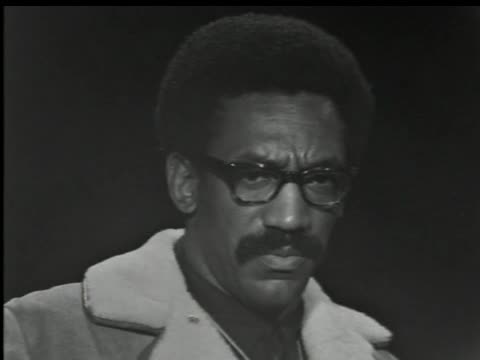
- Transcript
Bill Cosby is an ex-high school dropout who has twice won Emmy Awards for his television role as a spy, a spy with who is a Rhodes scholar and who speaks seven languages. Of his high school years at Drummond Town High in Philadelphia, William Henry Cosby Jr. has said, I never studied or cared about school. The biggest thing was being able to throw a football, so he dropped out and joined the Navy. It was during his years in the service that he realized the value of an education, so he applied for a high school program and earned his diploma. Then, after four years' duty, he enrolled at Temple University, where he became a physical education major and a football star. With a natural gift for storytelling and humor, Bill Cosby was lured to drop out of school again this time in his junior year for what became a
lucrative career as a comedian and show business. The next few years, Bill Cosby gained a fame through nightclub and television appearances as well as for his record albums. When the TV series I Spy was in the planning stages, producer Sheldon Leonard cast Bill Cosby as Alex Scott, sidekick of the already established actor Robert Culp. Cosby started out unsure of his acting abilities and wound up winning TV's equivalent of the Oscar, the Emmy, two years in a row as the best actor in a continuing series. He's married and is the father of two small daughters. Bill, it's generally thought that your cast being cast in the role in I Spy as I think you've put it this way yourself as a person, not a problem, was a big step forward. Yet Harry Belafonte, writing The New York Times, doesn't feel it's a big enough step. He says, and I quote him directly, the Negro artist on TV is not free to reflect the world from which he comes with its particular
richness, cultural values and problems. For the shuffling, simple-minded, Amos Nandy type of Negro TV has substituted a new, one-dimensional Negro without reality on shows like Mission Impossible I Spy and Iron Sides. You feel that in any way this step is not big enough that has been taken? Well, certainly what Harry says is quite true. However, Harry left out certain things, the involvement and the reality of facing or trying to solve this particular problem. And that is the problem with racism and the bigotry that exists is labeled and it's laid upon the black people. It's laid on top of the Mexican people. I think the Oriental's probably have the least problem because they haven't said anything about it. Jewish people have a problem
also. And on down the line, depending upon whatever group happens to be the majority, they'll attack the minority. Now, of course, Amos and Andy had a great amount of acceptance. I thought they were funny and I still think they're funny. But like a racial joke today, I don't want to tell it to white people. And I don't want white people telling jokes about black people to me because today they're not funny, you see. It happens to be with the times. So from the Amos and Andes with their funny, funny mess up of the English language and just taking words and you know, just fooling around with them. And of course, the way they talked and all of the
stereotypes laid in, we went from that to pardon me. The other end of the spectrum, which is they have a man who was so brilliant, you couldn't question his being a spy. New all the languages there had to be a reason for us being there. He wasn't a taunt towards you've said. Right. That you had to accept this man, you see. And this was supposed to erase all the Amos and Andes that had happened. In order to come to the middle of the road, you see, we have to have the two extremes, which has happened here. Harry's come out and said, yeah, but that isn't it, man. What we want to see is come on in and, you know, and show it like it is. Well, you're going to run into a fantastic amount of problems here as if we run into problems before. Well, problems like
a network who will blame it on the sponsors, the sponsors who will blame it on the people. Pass it on down. You see, without ever letting the people judge for themselves whether they like it or not, or without even letting a series just stay on because it's something that will give a message to the people, to the American people. It's yanked off immediately, you see. So, I think that even with I spy, we could have done a fantastic amount of stories which had to do with America and bigotry and how to fight it and how to try and rid the country of racism. You didn't think this was important to do that, though. No, it wasn't that I didn't think it was important. It was just that the networks or the network itself felt that it is important and as a matter of fact, it's too important. It's so important that they might just lose whatever
particular parts of the country they're trying to gain. Many people make a step or they take a step in a certain direction. Sheldon Leonard's step was hiring a Negro. But then at times, I would have to go to the casting director and say, listen, there are 25 people in this nightclub scene and they're all white. Can't we see a couple of, you know, black people in the nightclub? And the guy would look at me and say, well, but how many black people did you see in Hong Kong? And I said, well, what am I doing here? You see. And he, you know, he would say, okay. So, we made a little pact for every five white people in the nightclub. I would get one black person. Kind of a ratio. You see. Some kind of a ratio. And so it started with having black people in our party scene and so forth and so on. And, and of course, you have to, like I said before,
go to the other end of the spectrum. So you can see it coming back to the middle. I can see it slowly coming back to the middle. But before, before that, there are an awful lot of things that have to be done. You see, I don't, I'm very pessimistic about the scene ever really being shown, the ratio thing being shown the way it really is. I think the only way it can happen is through the documentaries. Even in the form of a dramatization, you see. I think it shows it always as a problem. Yes, it always shows it as a problem because that's the only way the writer feels he can get the point across, which is something that I agree with. But there are certain ways to attack a problem. When a scientist goes in to try and find a vaccine to cure or to stop polio, he doesn't go out at saying, this is a terrible, terrible disease.
And he doesn't go in depressed about it. He goes in with an open mind and he goes in to attack this thing. And I think that if we can do this, if we can learn to accept the fact that a bigotry and racism exists in this country, let us join and let us listen to certain values and ideas and let us try to, one for once in our lives, try and understand what the black man's problem is. Not even understand, I disagree with myself. I think it is to accept the fact that it exists because I think that most of your bigots understand the problem. They just don't want to accept it. Now you play an ice bar, you play a man, not a black man. Have you ever been circumscribed within the scripts? And what can and cannot be done in that context? Well, sure. In the beginning, simple things like a woman saying goodbye, who is a close friend of
Bob's, she would kiss me on a cheek. Well, that scene would be cut out. My kissing and the white woman on the cheek. Again, going down the scale, talking to the audience, saying the audience won't accept it. Yes, the audience won't accept it. The take it upon themselves. My taking a white woman by the arm and perhaps helping her, of this any sort of contact, any contact on Bob's part would be cut out. Any reference to attacking a bigot or something would be cut out. Any sort of reference to that had racial overtones of any sort of militancy, not violence, but just militancy cut out. That kind of thing. This all had to do with sponsors and people who smoked. And even I smoked cigars. I wasn't allowed to smoke cigars. Why not cigars? Because we had cigarette sponsors.
Oh, I see. And so another kind of prejudice. Yes, you know, they all run the whole game. I wasn't allowed to to meet a girl and keep her. You see, I wasn't allowed to meet a girl and just snatch her and take her right to bed. Because the producers felt that this would be a bad image for a black man. To just meet a woman and say, Hey, how you doing? And she and I would go up to the old sack together. You know, this was a white man. This was nothing. It's horrible white man. He can run around there and just jump on anything, you know, but didn't want it to happen. So therefore, I found my character really not having any girlfriends at all, you know. And since I'm living in the same room with this guy, we got an awful lot of letters from other fellas who kind of dug us. And that's the start to a lot of parties. So how does you feel about taking this role? You were a
comedian. Stand up comedian at the point at that point. You hadn't done acting, had you? No. How do you feel about it? I was frightened. I was frightened, not necessarily for my people. I was frightened for Bill Cosby, you know. And I went on and I was really shook. You know, acting's a different thing. If I do my routines, I know what I'm doing and I know how to control it. If I talk for four hours, I know where I'm going. And of course, comedy is just a matter of errors and to exaggerate or to play on the familiar. And it was just a whole new thing for me. And quite silly. Because here I am as an individual, I can talk to 5,000, 10,000, 14,000 people live, not be afraid. I can be talking to you and I go, I see you're on and I'll go on and pop. But here I was in the studio just cameraman. And I had to say a few lines. That's a harder idea. That was running for days. And when I was so happy to get those lines out, it was
like, it was just a bad sore inside of my body. Just get them out. And that's all I cared about. Get them out. Sam. And one article about you, you're quoted as saying that you didn't try too hard in the beginning, so to have an excuse in case you failed. Yes. Well, I think that's true, you know, a lot of people do. Yes it is. You say, come on man, give it a shot. And you say, oh no, I know I can do it. I just wrote it. I don't know. You know. Much of your comedy is, as you pointed out, exaggeration. But exaggeration of your own childhood or what I assume is your own childhood. Was this a point of view you took at the time you were a child, like any child, you obviously had your problems and perhaps more than some? Was it a point of view you had to take or you accommodated yourself to of looking at life that way? Was this the beginning of your comedy? For some reason, I took on a philosophy. And if a certain thing happened to me, and it brought about a strong emotional response, I would sort of photograph
that particular situation. Remember it and the next time try to control my reaction in such a way by remembering what had happened before, you see. I do not have total recall. However, I think it's quite easy and retrospect to think about something that has happened. It will key off a certain thing. We could have six or seven people sitting around and I would say, I would start it off. When I was seven years old, we had these little lollipops, you know, and I talk about something. Well, while you're listening, you start to identify with and that particular lollipop story may bring something on that you remember and so forth and so as we go along the line. Now, when you talk about this just about every day and each and every day you're always searching for something new, it's bound to pop up. It's bound to happen. I have six albums out and I think on each album,
you may get something like 45 minutes. And in that 45 minutes, I've put a lot of, you know, the childhood in there. But if you remember, the childhood starts from, let us say, you can remember as far back as four and you go up to like 13. Well, that's 10 years. It's not all on the record. There's a lot happening in those years. Oh, yes. When you were quite young, about 11, you had to become the head of the household when your father left. I was the head of the household long before then. Were you? Well, my father left. You had two brothers. Yeah, my father left in and out. He was, he was, he was very cool about everything. He would come back whenever the bills were all paid. They make some and then he'd leave again. So my mother brought us up really. And the beautiful thing about my mother is that she never became a man. You see, she was always a woman. Whenever we goofed, she always cried. And no spankings, no beatings, you know,
just her tears alone, you know, would like shake us up. And, uh, well, you were the oldest of the three brothers. So the people fell upon you too. And if there was to be a father in a sense, I suppose you became that. And I think my mother suffered more than anybody else from that, because I used to get up Sunday mornings and cook. See, and she worked like six days a week for eight dollars a day in Carfare. And I used to make these waffles. But I got tired of looking at the same old waffles. Sort of put food coloring in the batter. And she really didn't dig a man. You know, I got to bring her a purple waffle. You know, she went crazy, man. She threw the waffle. Get these waffles out of it. You know, I dug them. I love purple waffles. Green, orange, you know, red waffles. I loved them, man, for some reason. And I couldn't understand why my mom never dug them. You went to work as a shoe shine boy at one point. Yeah,
oh, sure. Kind of a stereotype, isn't it? Well, we lived in a ghetto. What else was there? You know, there was no white men to, or black men to walk up and say, listen, I got a little factory. I want you to come on around here. And I'll teach you how to run this late. Nobody did that. We all went down to the marketplace and we would take the empty orange crates. And we'd hammer out the nails and everything and straighten the nails out on the cement. And each and every kid, maybe 20 kids in the block, all doing the same thing. I don't know if it ever happened with you, but each and every kid did the same thing. Every Christmas kids had the same toys just about. If the thing was somebody said, roller skates are cool. Boom, that Christmas. 20 kids with roller skates. And we never, I want to tell you a story. And I think this will give you an idea of what the kids are like or what the guys I grew up with were like. One day we were down on a city dump. And we should go down to the city dump because we lived in the projects. We should go down to the city dump and hunt for rats because there were no rats
in the housing project at that time. It was a brand new housing project and the rats hadn't yet come from the outlying districts to attack our place and besides our place is all made out of brick and steel and everything. So it's quite difficult to get the rats to come in there and live at that time. So we used to take, one kid had a BB gun and we'd get rocks and cans and we'd go around making noises. Like the Indians and the Africans would beat the bush to bring out the lion and boom, up with jumper rat. And one kid, he'd take a shot at him with his BB gun and we'd throw rocks and we'd hit the rat and we'd beat him up and we'd dance all around him and everything. And then we'd get a can and we'd realize that a rat was dirty and everything. We didn't know anything about bubonic plague or anything but we knew he was dirty and we'd carry him home in a box and say, hey look over here. Well one day somebody kicked over this rock and it was about size of this ash tray here and it was, it looked like glass but it had a little cloudiness in it, you see. And it was shaped all jacket and everything.
It wasn't broken or anything but it looked like something that had fallen out of the sky maybe or something that you would find in Colorado or one of those weird places where we'd never been before. And somebody said it was about seven of us and man, so this is a diamond. And we said, how much do you think it's worth? How much can we get for it? And the guy said, well, I don't know man, this must be about ten million dollars man. So somebody said, that ain't no diamond so we threw him out. You go home but this is the diamond. Yeah. Now we all sit down, we forget about the rat and we all sit down and we start, we just look at this thing and as we look at it we start talking about money and everything and here are the values right here. If this is a real diamond what will you do with your money? Because we're going to split it up evenly. Every kid
said, first I'm going to buy my mother a house. Every kid said this. Yes, first I'm going to buy my mother a house, give my mother a big house and she's not going to work no more for the rest of her life. She's just living at house and cook for us. Secondly, I'm going to take what's left from the house and I'm going to buy that bicycle. Now each kid had a different thing he wanted to buy. If it was a bicycle or if it was a real gun to shoot the rats with, one, you know, it had to do with a bicycle, gun, skates, so forth and so on. You know, whatever they saw on television, it was really out of reach. Whether it was five dollars or whether it cost two dollars. The last person mentioned after all the money was spent and maybe out of all of the million dollars that the kid had, the last person mentioned was the father. The father. He said, and then with the rest of the money,
I get my father a car so he can go to work. Now the mother has a home and she's not going to work any more. The kid's got his bicycle and his baby gun and his brother's got the suits or whatever. He's starting to take care of the pain pleasure principle. I'm going to buy my brothers some shoes so he doesn't have to wear mine and so on and then the last person was the father who had to have a car so he could keep his responsibility going. You see. Conscious of the need to keep that responsibility. Very much so. Very much so. So, you know, along with that, we all made our little shoe shine boxes and we'd all go downtown. We go downtown and we go down to shine shoes. Some kids felt they could make more money selling shopping bags so they make this contact with a fellow who would give them 25 shopping bags. They'd sell it for a nickel and a fellow would give them a penny of bag. I always stopped after I had made two dollars regardless of what time of day. Why too?
Two dollars was a lot of money and I'd take it home and I'd give my mother something like a dollar 75 and keep the big quarter for myself and she always took it and used it. I can remember when Christmas when we had no Christmas tree which was a fantastic kind of blow. I remember one Christmas when we had a tree but no money and my mother gave me a five dollar bill and I cried. I cried because it was Christmas time and I felt that just giving me a five dollar bill meant nothing. You know, where was my present? Present. And that's what I said to her with tears in my eyes and just babbling like a baby. Like you could have given me anything. It could have been an old Hershey bar but I just wanted it wrapped up as something. I wanted a gift, not just
an old bill. Selfish of course but this is a child pride because he didn't get a present. You dropped out of school and joined the Navy but in the Navy you decided to get your high school diploma. What happened in the Navy that the education became important? Well, first of all, regardless of my mistakes and my bad values growing up, of course my mother couldn't do everything and my complete disregard for an education, formal education, thinking that I could make it as a professional football player or a professional basketball player and that was it. I just kind of I didn't like having to answer to people who my felt were just dumb but it's the only way I can express it. Dumb. Second class, third class, first class, Corman saying clean this up. Why?
Because I said so but so forth and so on. This is already done and you know because of his seniority I had to answer to him and I felt that I didn't want to stay in the Navy and listen to people like this. I wanted to get out and get myself an education and I realized that you know without a formal education I could find myself working at some cafeteria busting down tables that sort of thing so I made an effort. Thank goodness I'm an intelligent human being and I graduated from high school with the GED course and thank goodness I was accepted at Temple University on an athletic scholarship for track and field. You have no idea how groovy I felt then and it was an open relief because I could see like for the rest of my life me working
on tables and then I entered Temple University of frighten 23 year old freshmen. I played four sports and made the deans list and you show how ignorant I was you know I didn't even know what the deans list was and I said well you made the deans list that's what I do wrong you know and he said no you know like really groovy and an A in of all things English you know success has come fairly rapidly since then for you you know since got it made now with in terms of what you make money record no let's but money I think is really gone because Sam tears you out he tears me out it's 90 cents out of a bit established anyway what about the future do you want to go on with a kind of life you're leading now which must be pretty rigorous in terms of its demands do you want to be in showbiz I used to be quite gregarious really walked out of the street and say hello you know took quite a few people if I knew the surroundings you know but now I kind of detest
doing that sort of thing because now I know that if I stop to say hello to one then it means five and they want something from me you see that's the thing that hurts sign this paper so privacy becomes very important to you know yes because it isn't that they want to say hey how you're doing you know it's like do something for me sign this paper so there's no rest that's work you know and American people are rather they're rather funny they're rather funny people they you you work hard you you make them laugh they forget their troubles they enjoy your acting but then if you don't sign a piece of paper for them they they dislike you they're not going to watch you anymore you see so it's as if when they do like you you really owe them something because they like you because they like you but that's not real friendship bill i'm sorry your
person to working in an hour long format our time is up i'm sure one thing i'm certain whether they make demands upon you or not they're going to continue to like you and hope that you'll continue to entertain us as you've done for the past few years thank you so much for being thank you thank you thank you thank you
- Series
- Kaleidoscope
- Series
- Conversations 1968
- Episode Number
- 1
- Episode
- Bill Cosby
- Producing Organization
- KQED-TV (Television station : San Francisco, Calif.)
- Contributing Organization
- Library of Congress (Washington, District of Columbia)
- AAPB ID
- cpb-aacip/516-r785h7d04x
- NOLA Code
- KALD
If you have more information about this item than what is given here, or if you have concerns about this record, we want to know! Contact us, indicating the AAPB ID (cpb-aacip/516-r785h7d04x).
- Description
- Episode Description
- Conversation 1968 - "Bill Cosby:" Two-time Emmy award-winning Negro comedian Bill Cosby discusses his role in the discontinued NBC "I Spy" series, his comedy style, his belated education, his childhood struggles, and his success in show business. In deploring the roles of black actors in television and radio, Bill Cosby says he is very pessimistic about the racial situation being shown as it really is and believes that documentaries, even in the form of dramatization, offer the only hope. He believes documentaries show it as a problem "because that's the only way the writer feels he can get the point across." Cosby added, "And I think that we can gain a lot if we learn to accept the fact that the problems of bigotry and racism exist in this country. I think most bigots understand the problem. They just don't want to accept it." Explaining how his comedy is based on an exaggeration of events from his childhood, he said that this father left his mother and he became head of the household at an early age. One of his duties was making waffles every morning, and he became so tired of looking at the same old waffles that he started adding food coloring to the better. "I love purple waffles --- green, orange, red waffles. I loved them for some reason, and I could never understand why my mom never dug them," he added. He dropped out of school and joined the Navy but decided to complete his education he grew tired of taking orders from men whom he considered "dumb." He was admitted to Temple University as "a frightened, twenty-three-year-old freshman" on an athletic scholarship and ended up on the Dean's list. Cosby detests one feature about being a well-known star - loss of anonymity and the chance for personal contact. Conversation 1968 - "Bill Cosby" is a National Educational Television presentation, produced by KQED, San Francisco. (Description adapted from documents in the NET Microfiche)
- Series Description
- Kaleidoscope consists of at least 9 half-hour episodes produced in 1963 by KQED, which were originally shot on videotape.
- Broadcast Date
- 1963-09-01
- Asset type
- Episode
- Genres
- Talk Show
- Media type
- Moving Image
- Duration
- 00:30:46
- Credits
-
-
Director:
Murphy, Winifred
Guest: Cosby, Bill
Host: Day, James
Producer: Kassel, Virginia
Producer: Murphy, Winifred
Producing Organization: KQED-TV (Television station : San Francisco, Calif.)
- AAPB Contributor Holdings
-
Library of Congress
Identifier: 1162986-1 (MAVIS Item ID)
Format: 1 inch videotape: SMPTE Type C
Generation: Master
Color: B&W
Duration: 0:29:05
-
Library of Congress
Identifier: 1162986-6 (MAVIS Item ID)
Format: 2 inch videotape: Quad
Generation: Master
Color: B&W
Duration: 0:29:05
-
Library of Congress
Identifier: 1162986-2 (MAVIS Item ID)
Format: U-matic
Generation: Copy: Access
Color: B&W
Duration: 0:29:05
-
Library of Congress
Identifier: 1162986-4 (MAVIS Item ID)
Generation: Copy: Access
Color: Color
-
Library of Congress
Identifier: 1162986-5 (MAVIS Item ID)
Generation: Copy: Access
Color: Color
-
Library of Congress
Identifier: 1162986-3 (MAVIS Item ID)
Generation: Master
Color: Color
If you have a copy of this asset and would like us to add it to our catalog, please contact us.
- Citations
- Chicago: “Bill Cosby,” 1963-09-01, Library of Congress, American Archive of Public Broadcasting (GBH and the Library of Congress), Boston, MA and Washington, DC, accessed September 30, 2026, http://americanarchive.org/catalog/cpb-aacip-516-r785h7d04x.
- MLA: “Bill Cosby.” 1963-09-01. Library of Congress, American Archive of Public Broadcasting (GBH and the Library of Congress), Boston, MA and Washington, DC. Web. September 30, 2026. <http://americanarchive.org/catalog/cpb-aacip-516-r785h7d04x>.
- APA: Bill Cosby. Boston, MA: Library of Congress, American Archive of Public Broadcasting (GBH and the Library of Congress), Boston, MA and Washington, DC. Retrieved from http://americanarchive.org/catalog/cpb-aacip-516-r785h7d04x