USA: Writers; 6; Science Fiction
- Transcript
the usa writer somerset science fiction reported one of the april sixth there you there you there you we financed also i'm a biochemist of the research i teach perhaps in some small way the fact that i became a scientist who was greatly influenced by the wonderful world of science fiction that i enjoyed and still enjoy reading we have gathered with the same group of science writers science fiction writers i should say that what finally won the science writing critics and historians to discuss early aspects of science fiction we hope to explore it half dozen to peer into the crystal ball to see the future of science fiction in the world of literature
the ad that are also i'm well on from three writers of science fiction at the age of the space for theodore sturgeon humans one of its most well known works unicorn
avenue last year anthologies science fiction writer and founder and editor of the magazine of fantasy and science fiction also witnesses said professor bruce franklin from stanford university english professor who has taken this form of writing mainly of science fiction and fantasy and has just published a wonderful book on the history and background of science fiction called future perfect rows i wonder if you wouldn't sort of set the stage for science fiction in the world today and give us a brief historical background this to its origin and evolution more discussions of science fiction start bargain by definition an end up even greater argument i think the simplest definition of the most useful thing is simply that science fiction of that kind of fiction which extrapolate from the actual to the possible it's a fictional possibility different from realistic fiction which deals with actual audis and
fantasy which deals with an impossibility now most people's opinion is that science fiction is a kind of fat and the history of literature i myself think that it's realistic fiction which is the fire the fiction of possibilities of a much longer and i think much more distinguished history modern science fiction we can say having a substantial tradition in the seventeenth century following they had the great voyages of the fifteenth and sixteenth century and the seventeenth century that began to develop a great mass of literature about momma's voyages on the face so the earth and off the face of the earth to the moon and for the clients oh one of the only tablet may one of his great the scientific speculations insomnia and in the seventies and concern of the birthright voyage of the moon was an extremely interesting book which fines on the moon solar energy convert is talking machines and so for
mama's boys tradition culminated one culmination go of his travels in the eighteenth century before science fiction could take a form that week but we say to now something had happened to the basic concepts are all many people like to think of science fiction as that fiction which to the future that was in the seventeenth and eighteenth century that people began to think one historical time as basically different from another historical time that the future would probably be better another would be influenced by the technological changes that were taking place particularly of the industrial revolution and that in the end of the seventeenth century and into the eighteenth century to the nineteenth century in america for instance one of the major traditions and writing was science fiction there is hardly won major american author the nineteenth century who did not write some science fiction and five
the dominant form a nineteenth century american fiction of the romance which is a long which often include science fiction very similar to it and it sent ripples to burn great popularizer of the very end of the century at the world's great synthesize not something happened at the end of the nineteenth century not something as well as what we're hearing now is the rise of resource which came as a reaction to the romance and one in spain science fiction began to be looked down upon arrival we now posada can begin to be looked down upon and was submerged to set this ending and so the don marvels of the eighty nine the answer the first science fiction magazines of the forum at ninety and that's up from which it was resurrected largely in the twentieth century in the first in one wave in the nineteen twenties another at the end of the nineteen thirties and another i think a very great way of starting a sometime around nineteen fifty this marvelous background i'd like to hear about the resurrection since no image of theology that the
biology of the organisms science fiction that they are want to tell us about how you would be fine science fiction the derided as opposed to other forms of written communication well i'll have to say first that may have not most leading science fiction geek who began with the question of defining it and with the west and the quiet and they got themselves visibly during like trying to define know we've never really had the deficit sounds like and start taking apart the terms and or then you turn again about though what so you have to make it is telling a story he only understandable problems and giving him a humanly understandable solution in this makeshift kitchen but getting all that in a narrative which could not appear without the science and that to me is what science fiction is
the way you write a yes and there it be actually amazed how many people enjoy this many of them wouldn't be seen dead media science fiction because biological clock right for example they go by the millions to say things like dr strangelove and they'll say and that even i love the flies which is i think sociological say it say it in my definition i say it could not occur without the science asked that i do in my thirties and social sciences in this year of people that i think things are called scientific and therefore people happily go into the process big discovery about giants wrapped up in the corner there are about you know the elections come afterwards for me to the discovery that there was such a thing of geologic time the discovery that
that things had scientific meetings which i found out when i miss certain types of popularized versions of science and mikey insulin these alive my horizon very considerably in that i read in the science fiction which still enormously that presently i became fascinated by royalty and their through the world of science fiction and the president play one day i was motivated to either side story myself afterwards i could look back and say well the reason for this is the second set of that that certainly defines science fiction this way science fiction was an enlargement of the universe that i've lived in prior to discovery when i think of the word expansion might think it's in this expanding element of science fiction that they the army can offer the creative writer's
something that mainstream fiction does not the ability to take the reader with an expanding the reader's own concepts and understanding you there until late asked realms of space that we have not yet or perhaps more importantly as mr jonathan money with the stories into the yet more on long depths of space in the interior of the reader and so you know the boats are developing i'm against that the identification but there was a something expensive and when you read signs that read one when tony says here that is still true in many ways because the early science fiction was a very scientific and make sure that the writers have been built too much science fiction writing and then there came a period where i i'm glad to have been a part of a witch i'm glad to have the kind of religious died in what the story and the sign
said to be woven in through the through the text but we went forward in a number of the story that have mold and that had dr tiller and that never stopped moving into last line and then came another more sophisticated version where why we had more characterization and telomeres be as you might say one of the farms and florida's of that particular idea in the magazine and then since i was that nineteen fifty breakthrough was mentioned earlier when car magazine and also in our sports galaxy which we try to go hear john expanded in the direction of entertainment fiction here came from only the dry scientific si almost into genuine of entertainment fiction up we try to bring it closer to leave no vacation meeting
or third definition of the necessity of fiction that could stand on its own as seriously consider conviction because the status of not always succeed but i think that well that is voters that are awkwardly microcosm repeats the macrocosm that as with anything specialized like science fiction you'll have as many levels of quality as you deal with in the pottery production as a whole and if you have some bread or bread you also have some important contemporary american literature are cast in this form as sad as an anthologist funny why don't you name a few of these sort of high points there you see the man and science fiction and fantasy writing i think would be important for the critics one such we've known it would certainly be leading all someone whom i admire name of law certainly as disparaging himself as one of the
prime examples of science fiction as serious literature are some early work of women in the field has been very interesting particularly a narrow was received a great deal seriously and recognition for work of the mainstream has i'm doubly adequately recognized ray bradbury well that is precisely a science fiction writer i'm not sure but he is that i'd imagined at all appointing profitable future why why is i haven't had enough time getting into the fraternity i think that they're as i read as the fight of the bottom of the letter let on literature he disliked somebody science this is there has to be accepted but we did you don't want to be around me it is possibly party his philosophy i suppose of this anti psychotic nature always
changing that respect himself to some extent it is also the fact that he is not concerned with scientific facts of feet up it is making a fabled political are it is an art the core element in the science fiction for county which rather resentful of the fact that he's not interested in actions and reactions mechanical sense but he will not starve extrapolate some brilliantly new device and then explain how it works and so ray's not concerned with this so you want you really want to the fantasy of writing i'll say i was going to say you know i do not because the station where one drop climate science fiction fantasies all right will i know since i'm on top of the magazine which contain both and readers and critics were never able to agree on which stories were quickly as maj never said that the spectrum is an enormous spectrum at one of the
spectrum you have some very hard core science fiction like a work of art you have some neon art will harcourt that it's a sense of the story is that all right and in between you have a lot of stories in which this matter of definition is known for important as important as what they are trying to say and in this respect i think it should be noted as mr prakken stresses so much in his anthology but also the science fiction writer it and hero usually pertains to be writing about the future is almost always writing primarily about his own time and using this future meant that as a matter of casting light on his own time in a way that realistic fiction would not permit i wanted his vision of the future is very much a part of his present and that is that the science fiction or
may have a role a profit within society profits or the president they were written for adventure for example as those called me a strictly an adventure story writer i didn't exactly accept that because of the things that i used in science fiction like general some antiques and various other things like that but to tell me just say be a little while ago about the iraq pulp fiction now on another level that there's a certain part of his pulp fiction era that is called the golden age of science fiction now what what is this thing that you're referring to what's the difference between a pulp fiction the golden age fiction and end the fiction all of its of advanced type that you yourself who will be here again with distinctions is not going to do much good and again it is a matter of great patience and sharing all of this i
mean it's all since i think that not to be in science fiction by think that some of a really significant american approach your twentieth century appear in may detective where judgments about in opposition despite an effort by one you write that for example do you pitch to a particular audience i invented that we hear the right thing for a pope versus the pocketbook verses of hardcover version of i don't know what life magazine or playboy other is with the ex a certain extent out of control and that i keep her from launching into that my my writing technique because this to me the very important thing and the answer is yes i do very deftly directed at somebody eye prices briefly as possible oh all my story for letters to somebody and as i write i have that somebody across the desk from me and a lot of space and he's interested i go are these board i stop and go back is jani audience in the world will let you do that eleven times in a row and still be disinterested when you go back
eleven times but you say the technique and in writing all the skill involved in writing to an audience really lies in the fact finding out who it is you're writing about it and he'd better be representative you can't be somebody who's uniquely it to that person yesterday somebody whose work like you do and like most of you that had a very successful episode we learn that lunch that is the most widely and thought god living author in the english lines so there's no doubt that the appeal of science fiction has enormous now but let me ask you question is there because science fiction still remains relatively close circles along with his label science fiction of it when other people will sometimes accept a brave new world or something like that has a tremendous general popular success but they will say that isn't science fiction because it's good so long as it has a label you're aiming over the audience lead highest circulation a science fiction magazine
and hope for is somewhere around a hundred thousand whereas a good cry magazine would circulate hundred and fifty four hundred thousand up the paperback sales are up a paperback books science fiction out but they cannot none of them have individual extraordinary sales were still aiming really reaching an audience of or maybe half a million at the outside businesses and i'm going to come here though because over the last forty years and still eat each little period of time has had this hundred thousand dollars or five hundred pound missile persons and these people have sort of grown out of science fiction i meet them all the time they used to read science fiction there now they're not totally out of it they kick it they pick up a paperback or a book or a magazine every once in a while but they're no longer regular readers over forty
years some twenty million americans have read science which and so that'll be the you know you might say they get out is permeated with this deal right it would've immediately recognizable about the economics of them are in about the nature of the primary is that science fiction has very largely of didactic one you do have of course the years billy although myspace operan so what about science fiction is very didactic and it is a form of the white for teaching that hasn't fulfilled the oldest criterion about about fiction literature and i sit right here which is not very fashionable this idea that that's one of the problems on fiction not that it's not so much that it's that is job one that it would that it's very serious in teaching leave intense own definition the first part of that was that at present solutions to human prop which is which is quite confident
that most mainstream this especially today is the right some a rising quite satisfied they'll bring to shareholders that the problem exists and then more often leave you with it we didn't discuss another aspect of the problem of or not probably not a lot of science fiction writing because as i write for journals to but you never read my stuff you know they're stashed away in the journal biological chemistry of the american chemical society and we write for a very special audience but we're also very concerned as scientists about what science fiction writers write about science proper end about the scientists because on the one hand the imagery of scientists has created in the comic book and science fiction oftentimes of the deleterious him and i trust that you will so that now that scientists know that the war went out some thirty years ago that time again
how much do you as writers of science fiction sort of read the literature of science which is so low not not not necessarily known symbols lives including that theoretical journal scientific exploration lives amid i find it very provocative and that they are somebody once defined in various kinds of science fiction as what we have and if this goes on and what was a very lonely and only and when i read about something in a technical journal some new breakthrough a new device or a new material or something like that i immediately think of the many applications that might have another home or in business or in industry and slower and that it's time to go for the long process of introducing this thing to an industry will say what if the
whole industry already had and it was a big industry like government itself and that so when you do you in hindsight you can say things and with plastic plastic or more widely used in on what will happen as this kind of thing is very provocative tripoli stories come out of that do try to at all times keep your science scientific is this that this i gather is part of your group so when i mean i would say yes that era and this group is an attempt in that direction because we don't dare not say the you know my own background in science is strictly one of reading but i'm a jack of all sciences in that i've read the entire spectrum of scientific you know various scientists like i don't hand when i'm writing a story to concentrate on that take
your ideas set of ideas and the rest begins to fade away and have to be dredged up and let you know if i'm going to do something like that again it'll kind of dreaded up with someone i would ask me a lot about such inserted you about like tennis fanatic i'd have to think you know twice or what if you know some a lot of them but it's all in there somewhere that will come up but the title of reading that that i did when i was in my teens and early twenties was there though generalized popularize side of the story of course drawing of chemistry the story of physics and then the books that were devoted to all the sciences including years the early stages it has in progress fairly substantial sea except perhaps an analog magazine but suddenly a scientific element to it is it has an extrapolation i used to write the editor campbell and ask him for information
on subjects that i didn't know and he would write somebody if you didn't know like for example on one occasion he wrote after our as richardson was an astronomer for some information or me that doesn't mean that but my point as scientifically accurate as i can still make you go but they were intended as you say of them all of us here are eager on the point of a circle outside the responsibility but this does not characterize the entire thing i can testifying as an editor that the there are a fair number of science fiction authors or scientifically illiterate and i can testify as a reviewer a number of voters who don't care what doma time is short as you realize we should go on for a four hour series but i wonder if bruce do it sort of having bacon is back through time and science fiction we've heard about are present were europe's double
agent for the future in terms of how you do a little crystal ball so for you to get your science fiction and the leaders of the world oh i frankly feel at science fiction as such as reach us on a dead end and that what's going to happen is that it's going to get back more into the mainstream i think that but more and more there are mainstream writers who are who are recognizing that there are science fictional material methods subjects' motives of looking at experience and so forth which are available to them so that what emerges arrival like william golding hear the birds or i don't like kurt vonnegut plunges into science fiction by now the guard over or go of a job i think i think our interests or signals of song summer change in the direction of mainstream i did take lisa's missionary in general has broken away a great deal from the arm given allocations of early nineties early twentieth century new rule is
becoming fantastic while somebody help me now at the same time i think that their their island on what we didn't press has really get out of english and american fiction and in the soviet union by science fiction has been an official form of literature at least since nineteen thirty nine augment and there we have quite a different kind of science fiction which is very utopian in nature with a kind of agreed upon future much less diversity i think that as this science fiction becomes available here is our science fiction becomes available there was another kind of enrichment process going on if i were trying to make your while prediction i would say that in twenty thirty forty years were going to have a hard time finding many releasing even mainstream work that i'd be one where another influence on the film and thank you very much for a wonderful discussion as a scientist i hope that you're writing spring many students the pleasure that i had as a child and
ultimately bring together the scientist in the science fiction writer in every meaningful form of fiction thank you ooh ooh ooh we were real crowded and you know this is in the national educational television network cross it
- Series
- USA: Writers
- Episode Number
- 6
- Episode
- Science Fiction
- Producing Organization
- National Educational Television and Radio Center
- Contributing Organization
- Library of Congress (Washington, District of Columbia)
- AAPB ID
- cpb-aacip/516-5d8nc5t60t
- NOLA Code
- UWRT
If you have more information about this item than what is given here, or if you have concerns about this record, we want to know! Contact us, indicating the AAPB ID (cpb-aacip/516-5d8nc5t60t).
- Description
- Episode Description
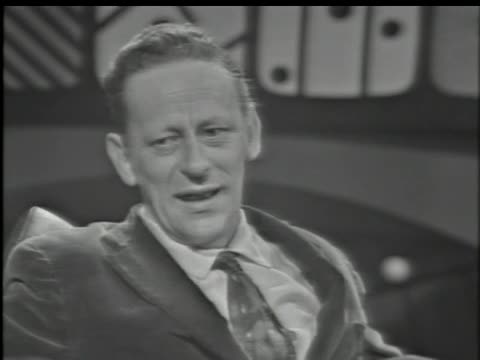
- So you would not be caught dead reading science fiction? Yet for all you know you may. The difficulty of defining science fiction and the literature included by the term are among the interesting topics that arise in in this episode. A panel of science fiction doyens comprising Anthony Boucher, science fiction writer and anthologist; Theodore Sturgeon, science fiction and fantasy writer; A.E. Van Vogt, science fiction writer; Dr. Bruce Franklin, associate professor of English at Stanford University; and Dr. Paul Saltman, bio-chemist at the University of Southern California, who moderates, discusses this form of literature, what accounts for its popularity, and what its literary value is. Both Sturgeon and Van Vogt have produced several science fiction novels that have been acclaimed as "mainstream" literary works. Both are now working on non-science fiction novels and plays, but they intend to continue in science fiction because of the rewarding freedom, both of style and concept. Boucher, back in the early forties, the Golden Age of science fiction, started perhaps the most successful science fiction magazine, "The Magazine of Fantasy and Science Fiction," and as such was largely responsible for the evolution of science fiction out of the monster school and into the perceptive and often poetic presentation today. Dr. Bruce Franklin has just published a book of literary criticism on science fiction called "Future Perfect." With four science fiction shows included in the upcoming television season [in 1966] (e.g. "Voyage to the Bottom of the Sea," "Time Tunnel," "Lost in Space") major science fiction movies currently being produced (e.g. "Fahrenheit 451"), the resurrection of Edgar Rice Burroughs' books and hundreds of new science fiction paperback titles appearing each month, this episode is particularly pertinent and the lively discussion provides insight into that specialized form of fiction which is outside the mainstream, yet highly influenced by the society in which it thrives. USA Writers #6 - Science Fiction is a production of National Educational Television and KCET, Los Angeles. (Description adapted from documents in the NET Microfiche)
- Series Description
- USA: Writers is part of an assessment of the state of the literary arts in the United States, which concentrates on contemporary prose writers across many genres. The half-hour episodes that comprise the series were originally recorded on videotape.
- Broadcast Date
- 1966-06-26
- Asset type
- Episode
- Genres
- Talk Show
- Topics
- Literature
- Rights
- Published Work: This work was offered for sale and/or rent in 1972.
- Media type
- Moving Image
- Duration
- 00:30:19
- Credits
-
-
Consultant:
Prowitt, David
Executive Producer: Sameth, Jack
Moderator: Saltman, Paul
Panelist: Sturgeon, Theodore
Panelist: Boucher, Anthony
Panelist: Van Vogt, A. E.
Panelist: Franklin, Bruce
Producer: Mossman, Tom
Producing Organization: National Educational Television and Radio Center
- AAPB Contributor Holdings
-
Library of Congress
Identifier: 1163023-1 (MAVIS Item ID)
Format: 2 inch videotape
Generation: Master
-
Library of Congress
Identifier: 1163023-2 (MAVIS Item ID)
Format: 1 inch videotape: SMPTE Type C
Generation: Master
-
Library of Congress
Identifier: 1163023-3 (MAVIS Item ID)
Format: U-matic
Generation: Copy: Access
-
Library of Congress
Identifier: 1163023-4 (MAVIS Item ID)
Generation: Master
-
Library of Congress
Identifier: 1163023-5 (MAVIS Item ID)
Generation: Copy: Access
-
Library of Congress
Identifier: 1163023-6 (MAVIS Item ID)
Generation: Copy: Access
-
Indiana University Libraries Moving Image Archive
Identifier: [request film based on title] (Indiana University)
Format: 16mm film
If you have a copy of this asset and would like us to add it to our catalog, please contact us.
- Citations
- Chicago: “USA: Writers; 6; Science Fiction,” 1966-06-26, Library of Congress, American Archive of Public Broadcasting (GBH and the Library of Congress), Boston, MA and Washington, DC, accessed August 20, 2026, http://americanarchive.org/catalog/cpb-aacip-516-5d8nc5t60t.
- MLA: “USA: Writers; 6; Science Fiction.” 1966-06-26. Library of Congress, American Archive of Public Broadcasting (GBH and the Library of Congress), Boston, MA and Washington, DC. Web. August 20, 2026. <http://americanarchive.org/catalog/cpb-aacip-516-5d8nc5t60t>.
- APA: USA: Writers; 6; Science Fiction. Boston, MA: Library of Congress, American Archive of Public Broadcasting (GBH and the Library of Congress), Boston, MA and Washington, DC. Retrieved from http://americanarchive.org/catalog/cpb-aacip-516-5d8nc5t60t