Searchlights on Delinquency; 11; Emotionally Disturbed
- Transcript
The following program is being filmed for coast-to-coast distribution to stations of the National Educational Television Network. His parents had love, understanding, and privileges for everyone but him. The result an emotionally disturbed child. You will witness as we put our search lights on delinquency. Search lights on delinquency are blueprint for action, produced for the Educational Television and Radio Center under the supervision of the Sheriff's Office of Cook County, Illinois, featuring the nationally known criminologist and sheriff of Cook County, Joseph D. Lomond. Tonight's guest, Dr. Winston-I-Bresslon, practicing psychiatrist on the staff of the
Michael Rees Hospital in Chicago, and now Sheriff Lomond. There's a considerable difference of opinion as to the relevant significance of environment or of individual psychological factors in explaining the behavior of individuals. Indeed, the union of these two is for the most part the way in which people address in comprehensive terms the problem of the development of personality and of behavior in particular. If whether one emphasizes one outside of the problem, more than the other, the fact remains that nearly everywhere there is agreement that these two unite in creating within the individual, a condition that focuses on disturbed emotion, feeling a heightened sensitivity that relates to the behavior of the individual as he acts out his needs in the world about him.
In other words, we are concerned with the fact that by and large, all delinquents have a heightened tenseness about them. They are, so to speak, emotionally disturbed. Two noted psychiatrists, Dr. William Healy and Dr. Augusta Bronner, some years ago, made some comparative studies of delinquents and non-delinquents who came from the same families. They found, for example, in a report of 143 youngsters who lived in families with brothers and sisters who were not delinquents, but as many as 131 of them were actually emotionally disturbed in the exact meaning of that phrase. What did they mean by that phrase? They meant that they found considerable amounts of insecurity amongst them. For example, in 53 cases, there was a feeling of rejection, of insecurity, of being unloved. Again, in 43 cases, and many of these happened repeatedly in the same youngsters, there were
brothers and sisters who were in rivalry with one another. They were jealous of one another. Some were more favored by their parents than others, and others were rejected by their parents. In 45 of the instances, the youngsters gave evidence that they had been thwarted in their desire to express themselves, to gain response or recognition from the people about them. They had been denied self-expression. In 62 of the 131 cases, there were pronounced feelings of inferiority, definite feelings of personal inadequacy, developed in them as a result of the way in which they were treated and related to members of their family and the immediate world about them. And in 43 of the cases, they were disturbed, mightily disturbed, personally disturbed because of family disharmony, because there was something in the family that drove them from it that
was perhaps inconsistency, one with a heavy hand, the other with a lavish show of affection, between the two the youngsters was lost. In 131 of 143 cases of delinquency, emotionally disturbed, internal conflict, anxious, harassed, and as a consequence, hostility toward the world about them, toward people in the world about them. Let's turn now to some illustrations of familiar scenes in the lives of most of us, where the anxiety at which I speak is produced is the result of the disharmony in the family situation, instances of these relationships to which we have referred. Here's a young man at home, relaxed, and apparently at ease, and here comes his father to find him not at ease, but in the way orders him off the couch, makes of his relaxation
a state of tension, makes of him an object of attack rather than an object of affection. The home transformed into a hated place, and then he goes into the other room and here is the mother, an indulgent mother, who overdoses the act of cooling his hair, pinning up his short, adjusting his clothes, treating him in coddling fashion as if he were still an infant, on one hand a firm, aggressive father, on the other a coddling, overly affectionate mother. And here's some self-same parents with another child, a younger child, one that has become the focus of their love and affection, and here he sees this child, in competition with him for what he would get as a child, equally from parents, and he asks in this instance
for some money, somewhere with all to go out and enjoy himself in the community to have shower upon him through such money, some portion of the love and the attention which others in the family get. And here before his very eyes, another brother has his piggy bank filled with pennies, nickels, while he asks for a quarter to go his way. No, no, you can't have it. Chelsea, rivalry, a hateful situation, what arises within this boy's mind, within his heart, as he leaves the home, leaves the surroundings where he finds through jealous eyes others love more than he. This youngster, younger than he, got that which he, reasonably in his mind, asked for. And he goes into the other room again to himself, but again followed by
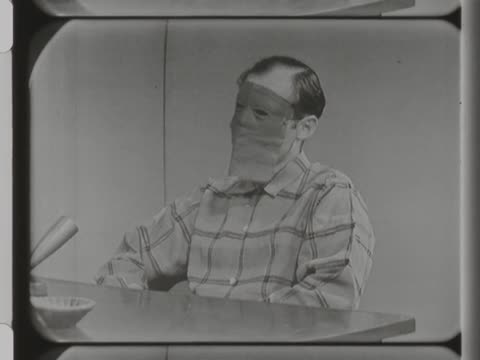
an oppressive father, one who becomes for him a symbol of hate, of antagonism, of oppression. Pushed aside, and then inconsistently defended by the other extreme attitude of the mother. The war between the parents, yes, seen, experienced by the boy, and even unwitting too, the boy himself internalized, thought about creating fantasy, but out into the street he goes to seek in the world about him some solution of the mysteries that move within him as a consequence of the difficulty that he has experienced within this nursery of human nature, the home, the family. Let's listen now and hear from the lips of a young man who experienced troubles, emotional difficulties in his life, as he is interviewed by Captain Richard Boone of the
Sheriff's Juvenile Bureau. Do you remember much about the home that you came from? I mean, when you were a tot, sort of speak? Sure, I can remember something. Yes, some brothers and sisters, brothers and sisters. Were everybody living together? Was everybody there? Now, we all lived together with the folks. Was it a happy place? Well, at first, but things weren't going so well. The authorities took my brothers and sisters and placed them in foster homes. Were you allowed to stay there at home? Yes, I was the youngest, and I guess my mother wanted me to stay home, and they let me stay. My folks weren't able to take care of the other. My brothers and sisters. That's pretty personal, but when youngsters are placed in foster homes,
something is usually wrong at home. Was that true or you were? Well, things were all right some of the time, but there were times when my father would drink and my mother would kiss him of gambling, and she would swear at him, and they would faint. My father would go away, he'd stay away two, three days, maybe a week before he came back, and nobody knew where he was. The idea of what the problem was, how it started? Well, things weren't going so good in those days, and I guess my father was having a bad time, and he used to, he used to drink a lot, and never get really a bad fight. I can remember one time. My father had been away for three or four days, and I was at home with mother, and suddenly
he returned, and he was drunk. She swore at him, she said he was gambling, and he was drinking with some bombs, and then he, he wasn't doing what he was supposed to do. My, my father again got angry, he lunged across the table at her. He made a grab for, but he missed her, and she started screaming, and she ran, she ran out, and he, I got scared and I ran and hit under the bed, and he practically tore up the place looking for me. When he found me, he grabbed me, and he shook me, and he said, your mother's no damn good. What did you do? I got away, I ran out. Where'd you go? I went to live with a lady up the street. How long did you stay there? Two or three days, and my mother came and
took me back home. How often did you run away? How often did that sort of thing happen? It got so that it happened a lot, and whenever it happened, I went to live with the lady up the street or somewhere else. Like a one summer, I slept in a garage. He were out on the streets quite a bit of the time, though, is that right? That's right, I, did you have any friends? I made some friends in the neighborhood. What sort of neighborhood was it? Was it a rough neighborhood or not? It was a pretty rough neighborhood. How did you make friends? Were there any gays you got into? These falls, at first they didn't want to have anything to do with me. After I got to talking to them, I found out that they had the same kind of trouble, but they're folks. They had the same kind of trouble at home
that I did. I felt that I wanted to be just as good as them, and I was their equal. Have they trouble getting into a gays? Not, well, at first they wouldn't have anything to do with me. Well, like one day, we were standing outside the store, so they did me to go in there and steal something. So I, I know, I knew they were testing me, and I'd never be able to look them in the face unless I didn't. So I went in, I took a wallet and I ran out. Would you take the wallet? I gave it to, I gave it to the biggest guy, and he, well, he shoved me away and like that, but later, it got to the R.I. Should we go to a reformatory? Well, you see, we took small things at first, when somebody got a hold of some money, and one of the fellas got a car, and while we got, it's one time
we took some things from the garage. Well, one time when we took some quite a bit of things, I got caught, they sent me to a reformatory. I would just stay there about two years. What about home during that time? It had been a terrible experience to say the least. What do you think about home? He, I, I, I thought about it almost all the time. Like when I was back, and with the fellas, and we were doing things, I felt good. Like, especially when, uh, if dad was away, I'd be alone with mother and things were quieter, and I remember, than times. Did you go home after you left the restitution? Yes, I went back home. How was it? How was it for you? Well, I thought it was, it would be better like what, what had happened, and I'd been away, but it was worse when I got back. What do you mean worse?
What was, what was wrong, but wasn't wrong before? My mother had started drinking. She had started drinking? Yes. Did you know what her suspected? I suspected it. But like, not long after I got back, one night I came home, and I saw her sitting there and she was drunk. And I, I stood, I just stood in the door and I, I stared at her. She, she screamed. She choked up my name, and she put her face in her hands, and she, she started bawling, and she told me, he told me to get out and never come back. Did you ever come back? Where do you go? I got myself a room. Did you ever go back home to live? I didn't go back home to live. I, I would visit, but I would always go back to my room, and my,
my visits became fewer. What was it like living in a room? Well, I was like, when I first moved in, I, I don't think I went out of there once in two months. What about your friends? Do you have any? My, my friends have all, that I have, like, before it happened. In the same friends that you had when you were in trouble, why them? Yeah, my friends, we, we were through, we went through this together. There, we, we stuck it together. Memories of home. What was it like? Are these the pictures that you and I and ordinary youngsters carry around in their heads about home? And with these pictures, what ideas are associated? What kind of fantasy? What kind of feeling? What emotional condition evolves out of experiences
like these? How adequate is one to face the world in the light of a memory, a store of memory, such as this? And indeed, that which most of us can never appreciate, more than memory, the fantasy, the involvement, the internalizing, the attitudes, and the hate in the feelings. This is the stuff that makes emotions. This is the stuff that disturbs the normal emotions. And let's turn now to one who lives with emotions like these as an expert. Dr. Winston I. Breslin, practic psychiatrist on the staff of the Michael Rees Hospital of the City of Chicago, and also a psychiatric consultant to the Young Men's Jewish Council, which
operates some of the leading boys and girls clubs of Chicago. Dr. Breslin is one who lives with emotions like these, confounding, and conflicting. How do these emotions and feelings like these enter into delinquency? Well, I was rather surprised at Helian Bronner's figures to note that there were some 12 or 13 who were not emotionally disturbed. My own experience is that one can take for granted that in the situation that is described as delinquency, there is emotion of disturbance. My own experience with it has been predominantly in the Army, and the story is distressingly again and again and again, similar to the unfortunate story of the Young Men we just heard. There are all kinds of variations, but the theme is always on the same basic principles and attitudes of parental discord, rejection, not being loved and free already, all the things that you listed before. Well, Dr. Breslin, maybe
we can get at this problem and reverse. I'm thinking here of some instances of youngsters well-behaved, normal youngsters who live in communities of considerable disorganization and delinquency. What about these non-delinquent youngsters in these delinquent areas? Well, I think the non-delinquent youngsters in the delinquent areas prove the point that if the home situation is a reasonably healthy one, that there can derive from this an immunity against whatever temptations the delinquent area may afford. What do I mean by reasonably healthy? There are always some fights between husband and wife, there is always some kind of inconsistency, there is always something going on, but the underlying attitude of affection of love with whatever the vicissitudes may be is sensed by the child.
And if they're there and if some reasonably decent behavior on the part of the parents is available for the child to build on, then chances are that the child can make his own way with that and not have to become delinquent, neurotic or whatever the symptom may be. Well, your language points toward regarding delinquency and the act is merely symptomatic as a symptom. And if so, what is it a symptom of? Well, I suppose fundamentally it is, if not invariably, almost so, a symptom of anxiety. And again, the things that were described in the movie, recited in the interview or cataloged in the charts are the factors that are productive of anxiety, common to all of these things, underlying all of these things and as a consequence of them is anxiety. Every child has some degree of anxiety and every adult for that matter too, I am sure. Again, we are dealing with
intensities and degrees. And with delinquency, I think we see a particular form that the child takes to defend himself against anxiety. We see it very vividly and graphically in the story that the young man brought to us tonight. There was nothing for him at home, but he found someone on the street. At first it was hard to get into the gang, but finally an act of what was for them, the thing to do, what was for us, of course, socially reprehensible and he was admitted. And these were his friends, these were the guys that stuck by him. This real experience that he was reporting, perhaps could be generalized, could it not Dr. Bruslin, and something I'd like to have you comment on, he gets a concept, an image, a kind of a fanciful notion out of these fantastic experiences, so to speak, which are the reality of his future behavior, are they not? By and large, yes, and that is why it is in clinical practice a long job to get to the
root of these things, because they are fantastic. It would require, for instance, no stretch of the imagination if we go back to the movie, to see how this young boy who has been whacked around by his father and has witnessed the open favoritism of the young children would want to be a powerful guy who doesn't have to go to anybody for money, and if there's an opportunity on the street, I'm sure it would be very tempting to him. This term, anxiety, intrigues me. We see so much of it, not only in the realm of delinquency, but in other aspects of the world about us today. In fact, it's almost a central theme or note in modern life. People are remarking amongst adults, amongst young people, amongst teenagers, that we are anxious. We are anxious in the international scene. We're anxious, nice, don't be anxious. Locally, we're anxious in our families. What are we going to do about anxiety, Dr. Brezen? Well, that's a big, big question, and I'm afraid I can't give you a big, big answer. I think that if there is a massive effort on the part of those things
which would reduce the external circumstances of slums, bad housing, et cetera, so that the internal situation could be improved, and then we work on what is known as mental hygiene principles, whatever they are, but they are reasonably well defined, and perhaps the problem can be liked. Thank you, Dr. Brezen. Anxious youngsters. Worried, distressed, reflecting in their own fantasies and notions, the unhappy home environments, the oppressive communities, the limited resources that parents, friends, and neighbors may be able to make available to them. And out of these, this bad water, these inadequate bricks, these tense relationships, out of these, the youngsters must make a life, and he makes a life. But it is a life that is acted out in the form of aggressions, in the form of hostility toward places or toward
things. Let's recapitulate for just a moment here. Look again at these 143 delinquents of Dr. Healy and Dr. Prong. 143 of them, and in 131 instances, emotional disturbances of one kind or another. 53 of them, feeling rejected, insecure, and unloved. Again, 43 of them, where brothers and sisters are jealous and are in intense rivalry, one with the other. And as a result, again, welling up within them bitterness, feelings of unjustness and antagonism that follows upon it. 45 thwarted denied in expressing themselves, eager to find a stage on which to act their roles in life, but not available in their families, in their homes,
or in the immediate neighborhoods about them. 62 of them, feeling of inferiority or of inadequacy, personally fond wanting, not just by others, but in their relationship to others, they take on that judgment and find themselves wanting. And 43 disturbed because of family disharmonies. Families that are not families at all, families such as the young man in his memory reported to us. He spoke of mother, he spoke of father, he spoke of dad, terms that have connotations of affection, of security, of responsibility, and yet these terms for him referred actually to those sorted scenes that he described for us. And the scenes are not themselves the story. For they, in turn, create fantastic notions, fantasies which
become organizing principles of behavior. And in acting out this fantasy, he finds himself at odds with the world about him, a delinquent, at odds with the law. Emotionally disturbed, stressed, anxious, harassed, and our target again, not the act, not the individual, but the anxiety. And back of that anxiety, the conditions which produce it, and only as we address realistically those conditions, only as we create harmony in social life, only as we create adequate families can we arrest delinquency and crime. Come with us on another occasion, when we shall examine narcotic addiction amongst teenagers under the search light on delinquency. Searchlights on delinquency, a blueprint for action, was produced for the educational television
and radio center under the supervision of the sheriff's office of Cook County, Illinois. Searchlights on delinquency features Joseph D. Lohman, nationally non-criminalist and the sheriff of Cook County. Tonight's guest, Dr. Winston High-Breslin, practicing psychiatrist on staff of the Michael Reast Hospital in Chicago. Film sequences by Stephen Lasker. Searchlights on delinquency is directed by Thomas Aldrich, produced by Alan Sweetow. Searchlights on delinquency originated in the studios of station WTTW Chicago.
This is National Educational Television.
- Series
- Searchlights on Delinquency
- Episode Number
- 11
- Episode
- Emotionally Disturbed
- Producing Organization
- WTTW (Television station : Chicago, Ill.)
- Contributing Organization
- Library of Congress (Washington, District of Columbia)
- AAPB ID
- cpb-aacip/512-v97zk56m8x
- NOLA Code
- SLOD
If you have more information about this item than what is given here, or if you have concerns about this record, we want to know! Contact us, indicating the AAPB ID (cpb-aacip/512-v97zk56m8x).
- Description
- Episode Description
- In showing the role that inner conflict can play in inducing delinquent behavior in a child, the Sheriff shows a film illustrating the problems of the emotionally disturbed. Another case study is presented. Dr. Winston I. Breslin, distinguished practicing psychiatrists, discusses the mental patterns that characterize delinquent behavior. (Description adapted from documents in the NET Microfiche)
- Series Description
- Searchlights on Delinquency was conceived and developed by the Office of the Sheriff of Cook Country (Chicago) as a means of portraying to the general public information regarding the many myths and false notions concerning delinquency. These episodes are sociological studies of the various kinds of delinquency, their conditions and causes. Sheriff Joseph D. Lohman narrates all the episodes and discusses various phases of delinquency with guest experts on psychology and sociology. Lohman is assisted by Captain Richard Boone of the Juvenile Bureau who interviews delinquents masked for anonymity and gives their case histories. The episodes go further than pointing out what is wrong with the youngsters; they show the whys. The series suggests positive measures for dealing with them rather than the negative qualities of arrest and detention. The series was produced for the National Educational Television and Radio Center by WTTW, Chicago in cooperation with Sheriff Lohmans office. The 13 half-hour episodes that comprise the series were originally recorded on kinescope. (Description adapted from documents in the NET Microfiche)
- Broadcast Date
- 1957-00-00
- Asset type
- Episode
- Genres
- Talk Show
- Rights
- Published Work: This work was offered for sale and/or rent in 1960.
- Media type
- Moving Image
- Duration
- 00:29:42
- Credits
-
-
Guest: Breslin, Winston I.
Host: Lohman, Joseph D.
Producing Organization: WTTW (Television station : Chicago, Ill.)
- AAPB Contributor Holdings
-
Library of Congress
Identifier: 2305004-1 (MAVIS Item ID)
Format: 16mm film
Generation: Copy: Access
Color: B&W
-
Library of Congress
Identifier: 2305004-2 (MAVIS Item ID)
Format: 16mm film
Generation: Copy: Access
Color: B&W
If you have a copy of this asset and would like us to add it to our catalog, please contact us.
- Citations
- Chicago: “Searchlights on Delinquency; 11; Emotionally Disturbed,” 1957-00-00, Library of Congress, American Archive of Public Broadcasting (GBH and the Library of Congress), Boston, MA and Washington, DC, accessed April 2, 2026, http://americanarchive.org/catalog/cpb-aacip-512-v97zk56m8x.
- MLA: “Searchlights on Delinquency; 11; Emotionally Disturbed.” 1957-00-00. Library of Congress, American Archive of Public Broadcasting (GBH and the Library of Congress), Boston, MA and Washington, DC. Web. April 2, 2026. <http://americanarchive.org/catalog/cpb-aacip-512-v97zk56m8x>.
- APA: Searchlights on Delinquency; 11; Emotionally Disturbed. Boston, MA: Library of Congress, American Archive of Public Broadcasting (GBH and the Library of Congress), Boston, MA and Washington, DC. Retrieved from http://americanarchive.org/catalog/cpb-aacip-512-v97zk56m8x