Grassroots Voter 1960; 3; Social Security; Extension of Social Security
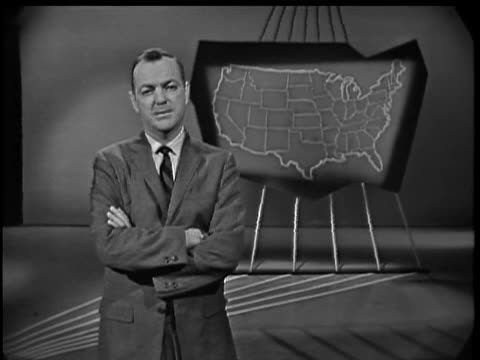
- Transcript
Here in San Francisco there is a special mayor's committee studying the problems of the agent and the question of extending social security benefits and providing medical care for our senior citizens has become a hot political issue. Claude Jankerson, a union official, is in favor of extending our social security system to provide medical care for our senior citizens. Cap Weinberger, the San Francisco Attorney, is opposed to any legislation that would provide for compulsory health insurance for the agent. Here in Milwaukee, extension of social security and welfare is an important issue. This is Miss Louise Newman. It seems to her that social security, as it stands now, is satisfactory. She likes the fact that it is contributory. It might be possible to improve its acceptance of a better name could be found for her.
And Mr. J.F. Friedrich, he believes social security should now be improved by a greater coverage of people and by improving the benefits so that they will keep pace with the rising costs of living. This is Ted Higgins at National Educational Television. The issue of social security is a relatively new one for American voters to contend with. What was earlier a personal problem has become a national concern. The vote is national, but the issues are local. And wherever you live, they apply to you the grassroots voter in 1960. N-E-T. National Educational Television. Presents Grass Roots Voter, 1960. An evaluation of issues facing the American electorate between now and November 8th. This program, on the
extension of social security, originates in San Francisco at KQED and at WMVS TV, Milwaukee. Now speaking for National Educational Television, TFX Higgins. Most of the issues the grassroots voter and this series of programs deal with have been with us since the birth of our nation. Foreign policy, civil rights, national defense, these were important in the days of George Washington. But as America developed, so did some new issues. One of the newest of these is social security, the way we handle the agent. The early days of America didn't have the problem we have today. Men didn't live so long. Retirement, as we know it, was not very widespread. And families were closer. The old people could live with their children. And then the Industrial Revolution came to America and after it, a revolution in communications. Children left the family home. Industry demanded
a pace of performance that the old couldn't always handle. And human life was extended by better medical care. By the early 1930s, the problem was acute. 1935 saw the establishment of social security, a system of government insurance for pensions for the old. This recognition that a personal problem had become a national problem is now national policy. Both political parties accepted as a part of our way of life. And the cynical say that both parties recognize that there are 16 million people over 65 and they all have a boat. For a look at grassroots sentiment in California, on this question of social security, we switched to NET affiliate KQED in San Francisco. Our correspondent there, Richard Moore. Ed here in San Francisco, the fifth international congress of gerontology recently concluded its sessions. And practically every meeting at that congress served to point out the acute
political importance of this question of medical care for the agent. Now, of course, I realize that California is rather well known as the home of various famous and perhaps infamous pension plans and schemes. But in the presidential primaries, we had some reason to observe the considerable political power through the vote of our senior citizens. Now, I have three very friendly. We'll find out more about that as we go along. They're friendly now. People to talk with us about this question of health care for the agent and extended social security benefits. They are Mr. Emerson Midget, who is a member of the advisory council of the Providence Senior Center here in San Francisco. And well, he describes himself as senior citizen at large. Next, Mr. Claude Jinkerson, who is Secretary of the Grocery Clerks Union, he's also president of the San Francisco labor council. Mr. Jankerson is a Democrat. And Cap Weinberger, a prominent San Francisco attorney, former member of the
California State Legislature and Vice Chairman of the Republican State Central Committee. Now, Mr. Midget, I think I'll begin with you because I would like to hear in your own words just how important you think this question of care for the agent is. I think the problem of the care medical care for the agent is one of the most important before the public today. I think there is a very definite need for a medical plan to care for the needs of the retired aging. And I think this plan should not be one based upon the ability of any state or subdivision thereof to give or withhold at its will. And I don't think it should ever be based on a condition of extreme poverty. Well, now tell me, would you agree with the observation I made a moment ago that our senior citizens have considerable voting strength? In short, there are a political factor that every politician should take into account.
Well, the recent vote in the just past primary election in this state showed that some 650,000 votes of protest against existing conditions were cast. How many is that 650,000? 650,000. I am certain from my contacts and investigations throughout the state that had this ticket been on the other party's ballot also that another 250 or 300,000 votes of protest would have been cast. Now, you call this a protest vote. What were these voters protesting against? They were protesting the fact that out of all the conferences and meetings that have been held upon the questions of the aging, we've had a great deal of advice and a great deal of things said about what we need and what should be done, but up to now very little of any importance to the aging has been accomplished. In short, there's been a lot of talk, but not nearly enough action. All right. Well, let's try to find out some of the other political realities about this. Mr. Jenkinson, do you agree that the senior citizens' constitute a considerable vote? Yes, I think the number nationwide is growing every year.
Present time, we have between 17 and 18 million people for over 65 and you have a larger group who are looking forward to retirement. You are a political force. You would then say that the question of care for the aged and extension of social security benefits is, has pretty high priority among political prisoners. Oh, very definitely. We've been debating it for two years, but doing nothing about it. All right. Now, everybody so far tells me that nothing has been done. Let's hear from Cap Weinberger on this. Do you think this is a critically important political question? Well, I think it's a very important question. From all points of view, I don't think we should just concentrate on the political strength of the age. I think that is certainly there, though I would disagree with Mr. Midget that all of the 600,000 who voted for Mr. McLean's pension ticket were protesting against lack of action in the field of legislation to the age. That was the sole outlet that they had to protest against the activities of the Democratic governor that we have had here. And I think that was at least a portion
of what they had. All right. Now, this word, democratic, is come in here. Let's find out about the Republicans. Are you implying that there's a real difference between the Democrats and the Republicans in this issue? Definitely there is. And we've had you spoke a moment ago of the two years of inaction. I think we should do a little bit to clear that up because nationally we've had, at the moment, there are about 14 million people on social security. Whereas in 1952, there are only about five million people on social security. And the total benefit payments are now a little over 10 million a year as compared with about two and a half billion in 1952. I don't think these are evidences of inaction. I certainly think there's more that can and should be done. Well, are these payments generally considered to be adequate? Well, I don't know whether they're considered to be adequate or not, but everything is relevant. And this is a tremendous increase to have come about within this seven and a half year. I'd like to hear from Mr. Midget on this. Do you think they're the social security payments are adequate?
No, I do not think they're adequate. I think they should be brought more in line with the cost of living under the inflationary conditions of today. I also would like to say to Captain Kapp Weinberger that are asking if this increase in the payments to the social security holders and the increase in number haven't been a result of legislation passed by Democratic Congress. Well, I don't think we should get into any of this kind of discussion because I would prefer to kid to confine this to the presidential campaign. I will say this that there have been democratic congresses and there have been republic and congresses during this period. There's been a republican president during this entire period. And I think that as far as credit is concerned, there is certainly a large portion of the credit that is properly assignable to the republican administration. But I think these are our matters of detail. I think the important thing is that there has not been in action during this eight year period. There's been major action. Whether it's been
enough or not is another question. I personally think that it has been about all that we possibly could afford during this period and it represents substantial progress. When I'll cap a moment ago, you said that there were real differences between the Democrats and the Republicans on this. I'd like to try and tie this down to the platforms. Mr. Jenkinson, what is your opinion of the democratic plank in their platform on this question of care for the agent? Well, I think the democratic approach is a sound approach. It's one that's going to supply a medical plan that will actually be paid for by employees as they work. And they will draw benefits when they're retired. Let's get down to the hard plan that they pay for and it's not charity and they don't have to take the means test or they don't have to sell their property to get it. When you say that they are going to pay for it, the employees and their working years will pay for it so that they can have this plan during their retired years. This is an approach comparable to that that was spelled out in the foreign bill. This is correct. The democratic approach is on the foreign type legislation, which would
be supported by one quarter one percent, contribution by the employee and a quarter one percent by the employer. Now we're perfectly aware that planks and political platforms are sometimes the very last thing that a politician wants to set his foot on, let alone walk for very far. I think you've described the democratic plank. Cap, how does the Republican plank stack up? Well, the Republican plank is very different. The Republican plank recognizes that such a proposal as Claude Jacobson has described here and as is contained in the democratic platform, provides an effect for compulsory health insurance for the agent. It's required contribution and it covers people whether they need it or not, whether they want it or not. Furthermore, it does not cover the people who most need it because it leaves uncovered the four million people who are still not on social security. I think the Republican plank which provides for a contributory system for the agent who need it is a far better system. Now, also, what is this contributory system?
Well, this is a system under which a person is offered the opportunity. First of all, of buying through federal assistance by grants to the states, private health plans, which he would contribute to himself. And secondly, encouragement to the states to put into effect plans under which the individual or the individual and groups to which he belongs would also contribute. Now, with the emphasis on the private health insurance plans and the opportunity to purchase these, leave intact the patient physician relationship. And they don't do anything that, in my opinion, is a very serious weakness with the compulsory health insurance. They don't do anything that would tend to lower the quality of the medical care we have now. I think there's been a lot said about whether it's adequate enough and I would agree that it doesn't cover all the people it showed. But the quality of the medical care that we have now, without any question, I think, is the best in the world. And are you people have already said that you think this is a pretty hot political issue and a lot of arguments will go on back and forth? Let's see if I can describe the issue
and get your agreement on it. Is the basic question as to how, not what? We agree that there is a need, is that right? I would certainly agree there is a need because I think there's about 60% of the people over 65 who have incomes of only about $1,000 a year. Now the difference would be then whether this is to be done through social security under the federal government or through private means with federal support. Yeah, exactly. I would agree that there's a need. I don't agree with Mr. Weinberger on many points that he has made about the Republican platform, but I can agree that there is a need. All right, suppose you take up the Democratic platform and advance it further here. Oh, frankly, I'd like to comment first upon his compulsory approach. The Republican platform, as I call, look at it, spells out a tax program. We all know that taxes are compulsory. So I think they are using a gimmick approach and trying to explain their approach to the public. You're saying in other words that the plan is proposed by the Republicans is going to cost the tax fair money. This
is compulsory. Is anything else is proposed? And I don't think that they should use this gimmick type of approach and explaining a health plan. What we're trying to do and what the older citizens want is care during their period of time that they can't pay for themselves. The average pensioner is receiving $72 in social security benefits per month. So on $72 a month, he can't purchase his own private plan. There are some that are being offered, but those that are reasonable enough are inadequate in benefits. And those that provide enough benefits are beyond his reach as far as finance is concerned. The approach of having him pay for during his working years, such as just like social security, is the best approach. I think it's the approach to generally accepted by the older citizens themselves. Well, now before Cap kicks me underneath the table, I'll give him a chance to defend his position. And then let's find out from Mr. Middiet what he thinks about this. Well, I think the fact is that there are now a tremendous number, an increasing number,
of people being covered while they work by private health plans, which they take out themselves and which their employers contribute and which they decide they want themselves, which they're free to take or not to take. And I think that as this group increases, as it is every month, every day, this whole problem is going to level out. At the moment, however, there are a great many people aged 65 and over who are not covered. Some of these people don't want compulsory health insurance and don't need it. Others do. And for those who actually need it and who are unable to get it otherwise, the Republican platform does have the plan for the provision of this care. Furthermore, it's a provision for all people over 65 who do need it. And again, I emphasize that they foreand bill a social security approach, which only covers those people on social security, leaves at least four million of the people in this category that need it most completely uncovered. Mr. Middiet, I'd very much like to hear your comments on this. We've had two approaches
described here. What do you think about it? Well, there are bills before Congress, the McNamara bill, for instance, which does take in that millions that Captain Wainberger mentioned. The four million not presently covered by social security. By including them in the bill at a cost of about $350 million from which should be subtracted $238 million now being paid to the states for medical care, leaving a net cost of present time until it does level out of probably $70 million, which is not any great extravagance sum in this day and time of billions and millions. Well, you are sort of our delegate at large from the senior citizens. Would you care to give me some assessment as to how the senior citizens are thinking along these lines? Do they prefer, in your opinion, one approach to the other? Well, I would say that in my appearance before many groups of the aging and senior centers
recreation centers and so forth, that 99 percent of them do favor the social security approach to it. They recognize their needs. We do once in a while have one that raised up his voice and says, I don't want socialized medicine, but I always answer them by telling them that our president, his family, his cabinet, all the our high brass of the Army and Navy are using the water to read hospital and Bethesda Maryland hospital, which are paid for at 100 percent by the taxpayer's money. And if that is socialized medicine, we want some of it. I see. You want some of it. Well, let me go into this a little bit further. Those two words socialized medicine make many noble American institutions sort of quiver like a willow in the wind. Mr. Weinberger, do you have any comments to make in terms of this approach through social security vis-à-vis the problem of socialized medicine? Well, yes. I think that it's inevitable that if we cover all the health needs of people
over 65, very shortly, all the people under 65 who are paying taxes to contribute to the system are going to be asked to be covered too, as they are in England. And of course that is the complete step toward complete state operated medicine. Now you can call it socialized medicine or you can call it anything you want. But the simple fact of the matter is that very shortly it would be a full compulsory medical health insurance plan for everybody, government paid for, government sponsored. And in a very short time, your doctors become an effect government employees. And I can't help but feel that this would reduce materially the quality of medical care. Our quality of our medical care is recognized, I think, to be the highest in the civilized world today. And I just don't want to do anything that would destroy this. It's not the term socialized medicine that frightens me. It's what you get when you have socialized medicine that I'm so much opposed to. Well, at this point, Mr. Jigerson is just about to kick me underneath the table. I was surprised that Cap using the term tax because that's the Republican program. And it probably has a point. But on the Democratic program, where the employee and the employer
will be paying for frantyped coverage, extension of those security benefits, they'd have free choice of doctors, hospitals, the same as they're doing now. And a doctor who is willing to serve people, I don't think is concerned where his money comes from. He doesn't care whether the employee saves it in advance or whether he pays him as it goes in or whether some organization pays him. But the freedom of choice would remain. So we don't have socialized medicine. We have prepaid medical care when you retire through a plan. Now, it isn't supported by people who are not under social security. They've been the large group that we want to include and haven't been able to include would not be contributing. They would have no reason to say, well, I'm helping supporting this program because it would be a program supported by employee and employer. The same is our present medical coverage for the worker. Incidentally, is there anything in the Democratic platform which would provide for these people not covered by social security? Yes, we want to extend.
You want to extend social security coverage to others? We want to include groups in who are not now covered. Very deaf. Would you tell me what kinds of assistance are most needed? We've been talking in rather general terms about medical care for the age. What are we talking about in terms of dollars for the individual, how much medical care and so on? Well, recent studies by study groups in this matter feel that we need between 225 a month, 250 a month per couple. 225, 250 a month per couple. And the Social Security payments are averaging per couple about $114 a month, so we're very much below that. We can gain relief by getting employment for the senior citizen, so he doesn't have to retire as early as he's doing now and can have an active life. We can get cheaper and better housing for him, medical care. We can have social planning, many things we can do.
I don't want to say that this effort to secure employment for people over 65 or even people over 45 who work out of work, it's very difficult for them to get new jobs. This is an effort which has been carried on by the Secretary of Labor and the Department of Labor in the last few months at a most intensive level. To try to explode this myth that people over 65 have no useful employment life left. It is a myth, and once we are able to convince most employers of that, I think we can do a great deal to our community. Are you suggesting that this might eventually solve the problem? I think it can solve the problem coupled with the addition to private health plans that are being taken by workers of a much younger age now. I think our principal problem is going to be in the next 10 to 12 years, and that once we're past that period, and it seems to me our proposals take care of that period, that then the provision of private health insurance and the encouragement of work over 65, which is going on now, will solve this to a great extent. I think that that is one of the things we have to do. That's
why I'm so glad our platform urges that no one be required to retire at any given age, because I think that's one of the real tragedies in America today, forcing a man to quit when he's just getting to be reached his best years. I'd like to refer to our senior delegate on this question. Mr. Midget, do you have a comment to make on this? From the point of employment for the aging, I think statistics show that about 55 percent of all the people over 65 are definitely limited by severe physical disability, either through chronic sickness or disability of some type, and therefore they would not, under any circumstance, be subject for rehabilitation with employment in view. Also, we have an oncoming, hundreds of thousands of youngsters who are crowding into the employment field. We have men at the age of 49, 50, 55 being forced out of employment that can't find employment. You're saying the problem is increasing rather than decreasing?
Absolutely. But the point I wanted to make, Dick, was in Iraq, I agree with the facts that Mr. Midget has presented. The point I wanted to make was that there are 45 percent of the people in this group who are not only able, but very anxious to work, and this compulsory retirement puts them in exactly the same category as someone who isn't well and who is unable to work out. Is there a current federal legislation which requires retirement in a certain age? Well, no, but the whole tendency, both public and private, has been in this direction, and this is one of the things that has to be reversed by government encouragement, not government support. Mr. Jameson, I'd like to hear your opinion on this. Well, I think there's common ground, and then we can agree on here, I think. We have common ground, wonderful. I think that there's a recognition that the coolest thing that can happen to a senior citizen is to tell him that you have to retire, and many of them are not suited to retire. They have no hobbies or anything else, and the kindest thing would allow him to continue to work. So I don't think there's any disagreement. I still don't disagree with Mr. Midget, one of you, that many cannot work. I agree with you.
And that's a different circumstance entirely. We're talking about the fellow who was active and should remain active for his own health, both physical and mental. May I? Yes, Mr. Midget. Go ahead here. Mr. Weinberger, I'm 75 years old. I've had many years of business experience. I was a salesman for many years, but I've been out of the business world for the past ten or twelve years. During that time, techniques, techniques, business methods have changed very radically. It would take me probably a year to go into a firm and become acclimated and used to their methods of doing business under the present conditions. Do you think any employer is going to hire me at my age to come in and give me that kind of instruction and training to hope to get maybe two or three years service out of me? Mr. Midget, he may not train you to do work that you were doing twenty years ago, but I think an employer would be awfully foolish not to hire you to debate and present and argue who appoints such as you're doing here today.
I think you're very skilled at that. Gentlemen, thank you very much. I think one other point to join that is that a person who's so mentally alert should not be proud to retire. Well, there is an open jump of field there. Among these older people, there is a great deal of ability experience that can be turned into fields of recreation, volunteer work, and so forth. And once again, we come to a problem of making it possible for them to reach these places where they can use their ability and skills. There's a desire there to be useful, be helpful. The only thing I would like to say additional is that to my mind, further neglect in attacking these problems, the aging, are going to lead to some irresponsible person promoting a program that will appeal to these people and so mislead them with unworkable, unwise programs that we can absolutely wreck the economy of the nation and the cities. Would you, gentlemen, agree that this is a good cautionary word here?
It's not only good cautionary word, it's actually happened in California, and we hope that people like Mr. Midget and others will be able to see its dangers and warn us against it. I don't think that we face this, frankly, with the leadership in the Democratic Party, and those who join us in the Republican Party, such as Mr. Rockefeller. I really think we should come forward with a medical care program. A medical care program will undoubtedly come forward from whoever is the next president of the United States. This also is a debate that will go on so long as there are people old and young. And I'd like to thank our three participants today, Cap Weinberger, San Francisco Attorney, former member of the state legislature and vice chairman of the Republican Central Committee. Mr. Emerson Midget, member of the advisory council of the Providence Senior Center in San Francisco and Claude Jinkerson Secretary of the Grocery Clerks Union and president of the San Francisco Labor Council. And I'll Ted, this is Richard Moore in San Francisco, and I'll back to you Ted Higgins at National Educational Television.
San Francisco voters are in a special position to see the political meaning of this issue. Our state has been a haven for a great many of the retired from all over the country. The climate of California attracts the agent. In the June primary in California, one of the candidates ran on a platform that really had only one plank. He was going to do something for the old. He ignored all other issues and 650,000 California voters cast their ballots for him. Mr. Midget, a California elder citizen at large, called this a protest vote. A big enough protest that every political leader in the country heard it and will try to come to grips with it. A threat of agreement ran through the San Francisco conversation. Something is going to be done for health care for the agent. The tight pension income that the agent have just doesn't leave room in the budget for a serious illness. When a person on pension gets sick, he may never recover financially. Many insurance plans cut off the agent when they reach 65 or 70, and new insurance is
hard to get. It's in the details of how the federal government can help to provide insurance that the parties disagree, and the voters in California know those differences. They told two of an attitude that has become a part of our way of thinking. It seems that from the time Social Security began 25 years ago, we regarded 65 as an age when a man ceases to be a working member of society. Positions tell us this can destroy a man's meaning in life, cut his will to live. It is wasteful of wisdom. Wisdom in the agent have acquired through the years, and as medicine and public health add to the length of life of each of us, becomes more critical each year, but this attitude be changed. The political parties recognize the need for change. Each party favors allowing the agent to work well after what used to be the retirement age, 65. But for now, the agent are people groping for a way out, out of the fear of how to care for themselves in a time of illness.
When you count this group, count every person as a voter. They're gathered in the sunshine areas, Florida, California. They're dotted through the rest of the country. For many of the agent, this is the compelling issue, the one that will decide the way they cast their ballots. California's closing caution is worth pondering. Any further neglect in meeting the problems of the agent, and some irresponsible person will mislead them with unworkable and unwise programs that can absolutely wreck the economy of the nation. This is one of the most personal of all the issues in the election. You or perhaps your parents may well be directly involved. If you're not involved now, it won't be too long before you are. How to deal with the problems of the agent is also a problem of how to express yourself on an issue. It's been a national issue for a generation, but the voter affects the outcome only if he votes, and election day is November 8th.
Between the conventions and November 8th, there's a good deal of discussion on this issue. To hear grassroots voters discuss the problems of social security in another part of the country, we switch to Milwaukee and NET Affiliate WNVSTB. Our correspondent there, Paul Taff. Ted here in Milwaukee, $5 million per month comes into the area from social security payments. Whether or not that amount continues to come in, whether it's altered in any way, certainly is an issue that is of prime importance to the people in this area. We have with us four fine people to discuss this particular topic, Ms. Louise Newman, formerly personnel officer, Northwestern Mutual Life Insurance Company, Milwaukee, Kermit N. Caves, Assistant Secretary, Snap-On Tool Corporation, Kenosha, Wisconsin, J.F. Friedrich, President, Milwaukee County Labor Council, and Professor Martin J. Clancy, Professor
of Political Science, Marquette University. Ms. Newman and gentlemen, I made the statement that $5 million is a lot of money, and whether this is altered in any way would affect this community. Do you think it should be altered in any way, Ms. Newman? The far as I know, and up to this point, social security, is doing what it was supposed to do. Personally, I'd want to do a lot of study before I voted to have it changed. Well, I happen to feel that it ought to be improved first by extending it to cover people that are not now covered, secondly to adjust the benefits so that they will keep pace with the increased cost of living. And thirdly, I believe there is dire need to do something for the older people in the way of taking care of their health needs.
Mr. Kave, one of the big problems in what Mr. Friedrich proposes is that the financial arrangements for social security have been predicated and calculated upon the coverage of the past. And actuarially, the money that's in the program will not provide for additional benefits. So immediately, we must look to our finances where we will draw the money for any additional benefits. Actually, there are some serious doubts that the present funds in the program will even take care of the obligations of the program at the moment. Mr. Clancy? Well, Mr. Friedrich, how would you estimate the need for health insurance for the agent? How great do you think that need is?
Well, I think there are some statistics, not particularly for Milwaukee, but for the State of Wisconsin, the number of people over 65 has increased considerably in the last decade percentage-wise. There are now some 395,000 people over 65 in the State of Wisconsin. The health needs of these people might be, to some extent, at least measured by the fact, that while in 1950, the amount of old age assistance, which is paid by the State, going to social, going for medical costs was only about 18 percent. At the present time, it's close to 50 percent, and the State pays out $1,500,000 a month for medical benefits for old persons. Would you say that so far as any elderly person goes that he would have been able to receive a medical care, the community programs, and so on, are arranged for that, as you know?
Oh, yes. I don't mean to imply at all that a man cannot get medical care even though he has no health insurance or has no money. The only trouble with that is that he has to declare himself to be an indigent. And that, to my way of thinking, is a solidifying experience for an old person who has worked all of his life, to now have to apply for charity and declare himself in order to get this medical aid. The whole is always as an indigent person. But I know that there's been a very rapid increase in private health insurance programs. I think there's something like 125 private health insurance programs for the injured now. This is quite different than the situation in 35, for example, when Social Security was an active there. There were not nearly as many pension plans, and it would seem to me that, whereas in 35, there was a need for an overall Social Security program.
Here today, we have the beginnings of a very promising program to cover almost everybody who has financed privately. If you suddenly inject the federal government in there in the Social Security law, you may blast the foundation right out from underneath these programs. It seemed to me a kind of a sound social principle to allow what can be done locally and privately. And so on first, before you move up to the national federal government level. Well, I, a professor, I would, of course say that I have no objection to private insurance plans. However, you must take this into consideration at these aged people. At the time they retire, their income is considerably diminished. It is cut substantially. Unless they, at that point, already have a health and welfare plan which covers them as a group with their employees.
And in many cases, it does not. When they sever their employment, they end their, their then existing health and welfare plan. Sure, they can take it on an individual basis, but the cost of their insurance at that point rises very steeply. So you have, on the one hand, a diminishing of income, and on the second hand, the proposition of increased costs if you want to carry health insurance. Mr. Key, do you think that we can afford this? Where's the money going to come from? The number of people requiring this aid seems to increase, but the number of people that are going to be around to pay for this, maybe the proportion isn't just right. That's one of the considerations that bothers me and they most. We have historically in other countries, notably your case histories of social welfare legislation of this nature, social security and national health plans are not new. They have been tried and men used to the ultimate end regarding benefits in many countries
and without exception have failed when they have been extended to the ultimate end. I think that maybe a health plan, such as Mr. Friedrich, is talking about, is one of the steps in that direction, and as in Italy, we may come to a point where 40% of the average man's income must go to this welfare program. Thereby taking most of the earnings, certainly any surplus earnings, which might be diverted to private enterprise so the man could better himself or have some savings. We all know that at the present, our taxes are, at least from an individual standpoint, pretty high, and they are not necessarily meeting the needs that have been legislated, but I'm afraid that some of these are legislated needs rather than actual needs.
I know many people who could very well get along without social security benefits even though they are getting them and are entitled to them. I think the individual freedoms and freedom of action should be tampered with as little as possible. And I'm afraid we're tampering too much. Working with people as you have had to do in your job as a personnel officer, would you agree with these statements, do you think there is need for social security, extension of benefits, medical insurance and so on? I think there is a need. I'm not sure that social security, extending social security is the way to meet it. I think that it's probably spreading it too far that there may be some other method, some way of providing some of this security against unexpected and prolonged illness. Should this be done by government, or by someone else?
To a degree by government, but at this moment, putting it into social security is going a little too far for me. Gentlemen, do you think that this is something that is really needed or is this, as some people have indicated, a sort of smoke screen, as we talk about the aged and that they need help and we can't very well argue about that point. But some have said maybe this is a creeping socialistic way of doing things, a pretty soon they'll be involved in other phases of our life, would you care to comment on that? Well, I personally think that it is something that is vitally needed. We are in the peculiar situation that people who are presently retiring are retiring on either a private pension and a social security base, which has not kept pace with the cost of living. And when these people then retire and they have some illness, that is a tremendous thing on top of their lack of income that they have from their pensions and their social security.
And I think it's a gap that ought to be filled. And I think it can be filled by the extension of social security, the payments that are coming in now. It is true that these old retired people haven't made any contribution for that. And the contribution will have to be carried by the people now working and by the employer who employs them. But in time, that will adjust itself, too, as more people come, older people retire, newer people come in. They will have paid for their added benefits in the way of health benefits. Somewhere sometime you have to make a start on it. Don't you think, Mr. Friedrich, that with all these various and sundry plans for taking care of people, which are sort of shotgun approaches, they take care of everybody when they become agent, such as you propose?
Don't you think that this is destroying some of the initiative? For instance, I'm thinking about the day when I might retire, if my medical expenses are taken care of, why should I lay any money aside for anything like that? If I have a business, is it really important that I try to make it as good a business as possible to take care of me in my old age if everything is taken care of? I wonder if we are destroying some of that initiative that is inherent in our way of life? I very much doubt that. I have gone through a lot of these phases of social security legislation in warm form or another workman's compensation, unemployment compensation. All of them were, the great fear was that they would take away the liberties of the people, they would cut their incentive and so on.
It doesn't prove itself that way. People still, not all people are alike, surely there are some people who have no ambition. They wouldn't have any ambition whether they had insurance or not. There are other people who have ambition and they will be ambitious even though you give them security. All of these fears that this will take away the incentive and the liberties of the people I don't believe have worked out at all. Certainly a worker today does not feel himself less free than I did in 1909 when I went to work without workman's compensation, without unemployment compensation. He may not feel less free but does he still feel as much responsibility to take care of his future as you did? Yes, I think he does. Of course, we also must remember this, that the worker today or anybody today has a great deal of pressure put on him to spend and spend
and spend. Well, I should the government provide it for him. That's the question. Well, Jake, you raised the issue of rising cost of living and I think perhaps we ought to discuss that point as well in connection with these programs. For example, workman's compensation, which Wisconsin can take a good deal of pride in, works on it for somewhat different premise there. In other words, the private insurance companies that handled that program received the funds from the employer, the employer required to contribute and then the funds are available for investment. Whereas, Social Security, the funds are put into the treasury and bonds are purchased, but many observers feel that that's rather an inflationary approach. Now, I'm wondering if you increase that Social Security approach and your health insurance, for example, whether that will not be an inflationary kick and make this cost of living probably even more acute? Well, of course,
I suppose any governmental spending, any governmental bond debt program is inflationary. I am willing to admit that, but the Social Security part of it is a very small part of all of the bond of the indebtedness of the United States. And if you're going to look at that, then we ought to be against all of these other programs that are done on the basis of a spending of a borrowing program. What I meant was it might be possible if these private plans develop satisfactorily and their costs go down. The funds there would be invested and would be a growth fund, you might say, insofar as a development of industry and capital and less inflationary than this other approach. Well, yes, that may be true. On the other hand, you also, I think, have to admit the fact that government spending also means a great deal of work and the need of capital, private capital, to be employed. If there, if, for example, you were able to cut your defense budget right at the present
time, what would happen to industry? Well, of course, we might cut our taxes the same time. We might have a tremendous tax cut that you would have funds available to actually, I think we're getting away. Very interesting, though, but I think Mr. Kays has been sitting here taking a look at that. I'm not a financial expert at all, and particularly not in the government field, but I do know that locally in the Wisconsin communities, and Jake has mentioned this, we have very fine welfare programs, which include medical care to the aged and the dependent children. Certainly, none of us will talk about the badly about the aged or the children. They're dear to all of this. But I do think that states like ours and the communities and states have proven that this work can be done locally and
very well, and we can take care of our own. We spend, as Jake said, millions of dollars every year for this program, and the amount we spend fluctuates with our local economies. But we as local taxpayers pay it, and at the same time, we watch dog it. You would advocate that the local people take care of their local problems, and we do that. And it works very well. And when we have unemployment in our communities, the local taxpayer pays more to take care of the medical needs, social needs of the people who are temporarily or permanently without funds. Do you feel that this is something that is creeping into the government of government getting big and big and taking away some of your freedoms, Mr. Keve? Yes, I would like to be close to it so that if I think a public health program in the courthouse of my county is being abused, I can go down and say something about it and
get some results. I also would like to take a look to see how much of each dollar I put in the people who need it are getting out. I know that many times it's been pointed out we can send four dollars to Washington to only get one back. I don't like that, particularly when it comes out of my pocket. Don't you think that in discussing this and some other things that are discussed for the aging that we are a little bit less detached than we are with some other questions because none of us is going to be presumably mentally retarded or a forgotten child, but we're all going to get old. I think that in all these discussions there's quite a little bit of the, well, it's just a difficulty in detaching oneself from the question. I mean, a young good looking fellow like myself doesn't worry about that. Well, no, I think we do. I think that it becomes fairly sentimental when we picture ourselves a few years ahead and getting the benefits.
What priority should a topic and issue such as this have in our federal governments as long as it is in the federal government at the present time compared with defense or the needs of education? Is this above beneath those or where does it fit? Well, I feel that defense and foreign policy questions are really acute at this point and I would give them the priority as contrast with this. Well, I would agree that defense is, of course, in the present world situation very important and that we cannot curtail our defense spending except insofar as we may be able to get better use of the money than we are now getting. But I do believe that the idea of a government helping people who are in need at the time of their retirement, the older people, they're after all, they're the people who have helped
make this country. They're the people who have worked for a long time and helped to build this economy that we should not just let them go. I think that this should have, while not the highest priority yet nevertheless, a pretty high priority insofar as domestic problems are concerned, it should be pretty nearly well up to the top. You agree, Mr. Keyes? Well, I think that there is far too much sentimentality in this. I think it's a campaign issue because it's something that people are reluctant to talk up in opposition. Both parties have seized on it as a sentimental campaign issue. In our company, like many, we're not an exception. We provide means for retired people to continue their group insurance if they wish at a very reasonable cost. I think statistics are available which indicate that between 50 and 60 percent of people over 65 have a privately
or purchased health program for themselves. Health insurance. That's healthy. Do you think what is said during this campaign about this particular topic is going to very greatly influence which way the election will go? I don't. You don't think so. You don't think this topic? No, not by contrast. I think when the issue is finally get down and the real good debate starts in that this won't be the biggest one. Do you agree that this is going to help determine which way this election goes? It will have a good deal of influence. Of course, it isn't the only issue, certainly. But I think it will have a good deal of influence because most of the more recently, all of the states have held so-called conferences on the aging in preparation for a White House conference which is to be held in Washington
next year. There's been a good deal of talk about this whole question. In the state of Wisconsin, just recently, the governor held such a conference which was very well attended. And there was a lot of talk about it. Do you think it is going to have some effect? Mr. Caves, did you? I think there will be a great deal of talk about it, but I doubt if there will be a great deal of difference between what the two parties offer. Do you think the people will actually try to look at these platforms and analyze them and determine this is the one that I'm going to vote for because of this? You won't think it will come down to me. I think both will be very attractive depending on the individual circumstances, the individual. And so there will be very little effect on changing a person's mind as a political scientist. Would you agree, Mr. Clancy? I can't argue with that. It seems to be a pretty good analysis. It seems to me that the thing was sort of shut gunned out under the political arena. For example, the Foran Bill was in the hopper for four or five
years and it never was even considered in committee very long and all of a sudden in 1960 it boomed out. Well, we could continue this crackerbarrel discussion for quite some time and this grass roots thinking about this whole topic. We're going to have to go right along. You've had with you, Ms. Louise Newman, formerly personnel officer Northwestern Mutual Life Insurance Company, Kermit M. Kays, assistant secretary snap on two corporation, J. F. Friedrich, president of Milwaukee Labor Council, professor Martin J. Clancy, professor of political science, Marquette University. And this is Paul Taff and Milwaukee, now back to Ted Higgins, a national educational television. Milwaukee political scientist, professor Clancy noticed all of a sudden in 1960 it boomed out. Social security legislation has a way of doing that. Social security's role often forgotten. Putting money into the local economy is important
to Milwaukee, $60 million a year and for Wisconsin like California, the question of how to pay for social security arises. This goes to the difference between the parties, how to deal with cost of the care for the agent. The democratic platform proposes to use the contributory machinery of the social security system for insurance covering hospital bills and other high cost medical services. The Republican platform offers a government plan with the option of purchasing private health insurance and includes state participation. In a sense, this goes directly to the philosophy of the parties. The Democrats want to make sure that a government plan is a right of every citizen. The Republicans want no one required to join the government plan. The issue of inflation was raised for the aged R victims of inflation. The dollars they saved in the 1930s and 40s and even the 50s have diminished in value. A man who planned in the 30s to retire in the 60s on $150 a month
will find his money won't stretch far enough. Yet in the 30s the average American didn't earn $150 a month. During inflationary times the money a man earns in his working years loses much of its meaning in his lean retirement years. Every day there's a new pressure to face this problem of the older Americans. We build small houses and it's not easy to find room for older people. America's younger people follow a pattern of getting away from their parents. Some say this is what has given America its great creative push. Each generation has had the greatest of freedom from the generation that preceded it. Each generation has tried to do a little bit better than its parents. In the process, perhaps we have forgotten those parents. This is an issue on which the parties can be expected to deliver very close to what their platforms offer. It touches so many of us and so personally that we watch
their performance on these promises. The old and the children of the old are a potent force at the polls. You can influence the decision on this issue only if you vote and election day is November 8th. Produced for the National Educational Television and Radio Center. This grassroots voter program on the issue of Social Security originated in San Francisco at KQED and in Milwaukee at WMVS TV. Committing for National Educational Television was TFX Higgins. This is National Educational Television.
This is National Educational Television and Radio Center.
- Series
- Grassroots Voter 1960
- Episode Number
- 3
- Episode
- Social Security
- Producing Organization
- University of Michigan
- Contributing Organization
- Library of Congress (Washington, District of Columbia)
- AAPB ID
- cpb-aacip/512-q814m92d9g
- NOLA Code
- GRVO
If you have more information about this item than what is given here, or if you have concerns about this record, we want to know! Contact us, indicating the AAPB ID (cpb-aacip/512-q814m92d9g).
- Description
- Episode Description
- One of the newest problems to confront the voter is the "senior citizen." In 1935, the social security system was established, thus guaranteeing pensions for the aged. Since that time social security has become national policy. San Francisco voters are in a special position to view the problems connected with social security in the current campaign: 1. the California climate attracts the aged and 2: 650,000 California voters cast ballots for a candidate who ignored all issues except additional aid for the aged this year. From San Francisco, Roger Moore, public affairs director of KQED, directs a discussion of the extension of social security with the following persons: Claude Jinkerson, secretary of the Grocery Clerks Union in San Francisco, president of the San Francisco Labor Council and a Democrat; Caspar W. (Cap) Weinberger, San Francisco attorney, former member of the State Legislature and vice-chairman of the Republican State Central Committee: and Emerson Midyett, member of the advisory Council of the Providence Senior Center in the city and "Senior Citizen at Large." Mr. Jinkerson says that the Democratic approach, a medical plan for retired persons paid by employees while they work -- an extension of social security -- is the best plan. Mr. Weinberger retorts that the Republican contributory plan for the aged is a far better system. He does not want social security extended for medical care for the aged. Mr. Midyett says that ninety nine percent of those he has talked to prefer the social security approach. He himself feels it is the best possible approach. Besides the discussion centering about the approaches to medical aid for the aged presented by both major parties, the considerable voter strength of senior citizens was emphasized. In Milwaukee, Paul K. Taff, station manager of WMVS-TV, talks with Mr. JF Friedrick, president of the Milwaukee County Labor Council, Mr. Kermit M. Caves, assistant secretary and counsel for an industrial firm, Professor Martin J. Clancy, professor of political science at Marquette University, and Miss Louise Newman, formerly a personnel officer. In addition to discussing the two approaches to caring for the aged, this panel also examines the importance of social security monies to a local economy and the meaning of inflation in a man's retirement income. Miss Newman, who feels that social security is doing what it is supposed to do, is not sure that extending its benefits is the best way of solving the aged person's medical problems. However, the medical plan for the aged should be carried on by government, she maintains. Mr. Friedrick feels that present social security standards must be changed to cover those not now covered, to increase benefits and to do something about aged health needs. Mr. Caves maintains that the financial arrangements for social security have been predicated and calculated upon the coverage of the past. He says there is serious doubt that funds now in the program will take care of the program's present obligations. Immediately, the nation must look to its finances to find money for traditional benefits if the social security approach is used. Professor Clancy, in noting that there has been a very rapid increase in private health insurance programs, feels it would be a sound social principle to consider local and private solutions before moving to the federal government level. The panel discusses private and state plans for medical aid, the rising cost of living, and defense and foreign policy. (Description adapted from documents in the NET Microfiche)
- Series Description
- Grassroots Voter 1960 puts before the American people a series of seven one-hour episodes designed to encourage the voter to clarify his thinking so that he can vote intelligently on the seven most important issues of the campaign. Each episode defines the issue and then switches to groups discussing the problem in two cities particularly concerned with that issue. The moderators and guests are not personalities. The issue under discussion is each episodes hero. Through the unfolding of the relationship between the issue and each of the persons on the panel chosen to represent various viewpoints, the viewer becomes involved. Because there is no political axe being ground painfully before the viewers eyes, because there is no authority analyzing and spooning his interpretation to the viewer, the result is a series in which the viewer is stimulated to agree or disagree with the ideas put before him. Each half-hour segment is joined into a one-hour episode. Each one-hour episode is coordinated with introductory, joining and concluding remarks by the host for NET, TFX Higgins. TFX (Ted) Higgins is a member of the Pittsburgh Foreign Policy Association and the moderator of a Pittsburgh telecast Focus on World Affairs. The series is sponsored by the Foreign Policy Association. The 7 episodes that comprise this series were originally recorded on videotape. (Description adapted from documents in the NET Microfiche)
- Broadcast Date
- 1960-00-00
- Asset type
- Episode
- Genres
- Talk Show
- Media type
- Moving Image
- Duration
- 00:59:30
- Credits
-
-
Host:
Higgins, TFX
Moderator: Moore, Roger
Moderator: Taff, Paul K.
Panelist: Weinberger, Caspar W.
Panelist: Caves, Kermit M.
Panelist: Midyett, Emerson
Panelist: Friedrick, J. F.
Panelist: Clancy, Martin J.
Panelist: Newman, Louise
Panelist: Jinkerson, Claude
Producing Organization: University of Michigan
- AAPB Contributor Holdings
-
Library of Congress
Identifier: 2079906-2 (MAVIS Item ID)
Format: 1 inch videotape: SMPTE Type C
Generation: Master
Color: B&W
Duration: 0:58:44
-
Library of Congress
Identifier: 2079906-1 (MAVIS Item ID)
Format: 2 inch videotape
Generation: Master
Color: B&W
Duration: 0:58:44
-
Library of Congress
Identifier: 2079906-3 (MAVIS Item ID)
Format: U-matic
Generation: Copy: Access
Color: B&W
Duration: 0:58:44
-
Library of Congress
Identifier: 2079906-5 (MAVIS Item ID)
Generation: Copy: Access
Color: Color
-
Library of Congress
Identifier: 2079906-4 (MAVIS Item ID)
Generation: Master
Color: Color
If you have a copy of this asset and would like us to add it to our catalog, please contact us.
- Citations
- Chicago: “Grassroots Voter 1960; 3; Social Security; Extension of Social Security,” 1960-00-00, Library of Congress, American Archive of Public Broadcasting (GBH and the Library of Congress), Boston, MA and Washington, DC, accessed August 20, 2026, http://americanarchive.org/catalog/cpb-aacip-512-q814m92d9g.
- MLA: “Grassroots Voter 1960; 3; Social Security; Extension of Social Security.” 1960-00-00. Library of Congress, American Archive of Public Broadcasting (GBH and the Library of Congress), Boston, MA and Washington, DC. Web. August 20, 2026. <http://americanarchive.org/catalog/cpb-aacip-512-q814m92d9g>.
- APA: Grassroots Voter 1960; 3; Social Security; Extension of Social Security. Boston, MA: Library of Congress, American Archive of Public Broadcasting (GBH and the Library of Congress), Boston, MA and Washington, DC. Retrieved from http://americanarchive.org/catalog/cpb-aacip-512-q814m92d9g