NET Festival; 34; Rise and Fall of Wolfgang Amadeus Mozart
- Transcript
This is St. Mark's Cemetery in Vienna. In December 1791, they came here to bury a young man who had died in great poverty, and only the fog and the grave digger were witnesses when the cheap coffin was tossed into a nameless grave. The man was Wolfgang Amadeus Mozart. Later, the Viennese put up the simple and beautiful gravestone near where it was presumed Mozart lies. Amadeus, loved by the guards, but those whom the guards love, they gather quickly to themselves. This is Vienna, 10 years earlier, in 1781.
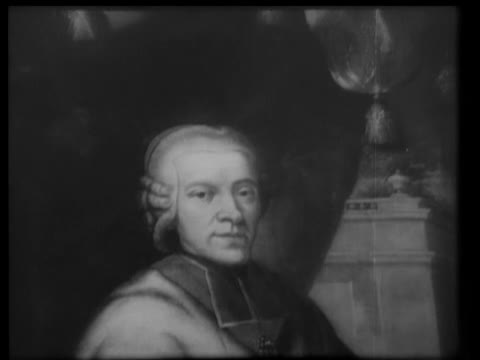
In the shadow of St. Stefan's Cathedral, there stands the ancient palace of the Teutonic Knights. Staying there was the Prince Archbishop of Salzburg, Hieronymus Colorado, with his huge retinue of servants among the Mozart. Relations between the Horté Archbishop and his hot -headed young composer were already strained. Despite his father Leopold's anguished protests from Salzburg, Mozart had decided to leave the Archbishop's service. An appalling interview with Colorado brought things to a head. Throughout, he addressed Mozart in the third person as if he had been a kitchen skivvy. He called me a lout, a clot, a fool. Oh, I don't want to write you all of it. Finally, my blood began to boil, and I
said, so your grace is not satisfied with me? He? What? He threatens me? He? That lout? Oh, that lout? There's the door. Does he see it? I won't deal with such a miserable brat. And I said, nor I with you. He? Then go. And I, as I left, we shall stick to it. You shall have it in writing from me tomorrow. Instead of Count Arco accepting my petition or getting an audience for me, or advising me to send the thing, enfin, no. He threw me out the door and gave me a kick in my behind. Well, to put it in a nutshell, that means that Salzburg is no longer for me unless I find a good opportunity to kick Count Arco and his arse, even if it happens right on the street. And so Wolfgang Amadeus Mozart was kicked down the stairs out of the Archbishop's service and into immortality. This is the courtyard of the Deutsch
Ordenshaus, the order of Teutonic knights, where Mozart landed after he'd been kicked down the stairs by Count Arco. It put him in a very special position in music history, you see, because he was the first composer to try to make a living without any ecclesiastical or aristocratic patron. Haydn had his princesses, and even all Sebastian Bach was responsible to the city fathers of Leipzig for his job at the St. Thomas School and the St. Thomas Church. But Mozart thought he could exist as a freelance composer. Well, he had his freedom, but as we shall see, he paid a very high price for it. He moved from the Deutsch Ordenshaus to lodgings in the painter's plots. In the past weeks before his dismissal, he had already secured many friends among the Viennese, and he now began a spectacular career as a pianist and composer. He played violin, too, in quartets, and he soon had pupils from fashionable society. In the salons of the great palaces of the Austrian nobility, Mozart
contributed to the glittering elegance of 18th century Vienna. In that house on the painter's plots, Mozart was living with friends of his, his friends,
not his father's friends, the Weber's cousins of the composer, Carl Maria von Weber, who wasn't yet born then. Now, when Mozart had gone to Paris a few years before, in 1778, he had stopped in Mannheim and fallen in love with Aloysia Weber, a brilliant coloratura soprano. And when he returned from Paris, waiting to find his happy Aloysia, he found Aloysia, but Aloysia had lost complete interest in him. Meanwhile, the Weber's had moved to Vienna, and Mozart was living with them, and Mozart proceeded promptly to fall in love with Constanze, who was the next daughter. Leopold, who had foamed at the mouth when he'd heard about Mozart wanting to marry Aloysia, was equally prejudiced against Constanze, whom we'd never met in his life. It
was in the summer of this year that Mozart was commissioned to write his first Viennese opera, Dian Führung aus dem Sarai, the Elopon from the Saralho. Not surprisingly, perhaps, the heroine was called Constanze. Despite Leopold's bitter and continuing opposition, Wolfgang married his Constanze here in St. Stephans Cathedral on the 4th of August 1782, and he loved Adioli all the rest of his life. For some time, we have been going together to attend mess and confess and take communion, and I found that I never prayed so fervently or confessed or took communion so devoutly as by her side, and she felt the same. In short, we are
made for each other, and God, who orders all things and consequently has ordained this too, will not forsake us. We thank you most humbly for your fatherly blessing. Mozart wanted to take Constanze, his bride, to Salzburg to introduce her to his father
and his sister, Nanow. But the trip had to be postponed several times, not least because Constanze was soon pregnant, and so more than a year went past before the two Mozarts arrived here in Salzburg. It's July 1783. Salzburg was an unlucky place for Mozart. His little son
Raimond died of a fever back in Vienna, and predictably the visit to Leopold was not a success, for his father and his sister Nanow did not really warm the Constanze. Mozart too felt ill at ease. The mood of the visit is caught by a curious episode that Constanze told many years later to an English woman, Mary Novello. Constanze told me how they're singing round the piano of the great act three quartet from Edomoneo, in which the young Edomante faces exile and disaster, had brought upon Mozart a wave of overwhelming and unaccountable emotion. He was so overcome that he burst into tears and quitted the chamber, and it was some time before she could console him. It was as if he had had a sudden premonition of the coming years. But one
great achievement emerged. When Mozart had planned to marry Constanze, he promised to write a votive mass. It was first performed here at the Abbey Church of Sanctipata in October 1783. Constanze sang the soprano part, and over a kind of draft for the mass, he wrote, Pella mia cara con sorte, for my dear wife. Ah ah
ah ah ah ah ah ah ah ah ah ah ah ah ah ah ah ah ah ah ah ah ah ah ah ah ah ah ah ah ah ah ah ah ah ah ah ah ah ah ah ah ah ah ah ah ah ah ah ah ah ah ah ah
ah ah ah ah ah ah ah ah ah ah ah ah ah ah ah ah and huh This is the
Judenplatz, the square of the Jews, and, as its name tells you, it was once part of the form of ghetto. But of course, when Mozart came to live here, in the late autumn of 1783, after he returned from Salzburg, the ghetto had long since disappeared, and this was the view that he had from his window. Subscribers flocked to his concerts. Leopold Mozart paid a return visit to his son early in 1785. In a letter to his daughter, he describes Mozart's enormous popularity and affluence at this time. Last Friday evening at six o 'clock, we went to his first subscription concert, where there was an elegant and very numerous company. It took
place at the mail -go -way. The concert was wonderful. I was two boxes away from the beautiful Princess of Württemberg, and I could hear all the interplay of the various instruments so clearly that there were tears of joy in my eyes. When your brother left the stage, the ampere with his head in his hand leaned over his box and shouted, Bravo Mozart! Your brother made 559 gulden in this concert. Every day concerts, all his music being studied, copied, played. Your brother's big fort piano has been wrecked out of here at least twelve times since I have been here, to the theater or to another house. I think my son, if he has no debts, could bank 2000 gulden. Here, in this flat, right there,
very comfortable it was too, Mozart brought possibly the most famous opera in the world's history, Lenoxity Figuero, the marriage of Figuero. And it was here too that Leopold Mozart's father came to visit him in 1785. And during that visit, there was a famous quartet party where Mozart played Haydn, his elder friend, the new quartet that he'd written for him, and which he subsequently dedicated to him. And after they were finished, Haydn got up from the sofa and he went to Leopold Mozart and he said, I tell you, before God, and as an honest man, with your son, is the greatest composer I know, either personally or by reputation. And somehow this house is symbolic of the happiest time of Mozart's life. And in each day you can call it the Figuero House. On 1st May 1786, all the roads in
Vienna led to the Micheleplatz, where carriage after carriage deposited the flower of Viennese aristocracy at the Buldtheater for the premiere of Le Nozzi di Figuero. Figuero was a brilliant success. At the third performance, some numbers were repeated, a duetino thrice. The emperors of the second had to give orders to stop all arias from being encored. But Figuero was also the beginning of that slight aura of scandal, which
gradually began to surround and engulf Mozart. You see, Beaumarché's comedy, Le mariage de Figuero, was a hot political piece at that time. The play had been forbidden by the court senses, in fact. The great librettist Lorenzo D 'Aponte was himself a famous d 'Iborci and carried with him his own aura of scandal. The alliance of D 'Aponte and Mozart was, of course, crucial to the development of opera, but fatal to Mozart's social reputation. Vienna is still a city much given to scandal -mongering, and every D 'Aponte libretto caused a furore. The Viennese newspapers wrote about Figuero, what you can't say nowadays you can hear some. The aristocracy were getting slightly nervous about Mozart. After all, Figuero lampooned them. Count Sincendorf, a typically vacuous representative of the Austrian nobility, wrote at one of the performances Mozart's music's strange and without purpose. This declining popularity affected Mozart in a very basic way. Fewer subscribers,
fewer concerts, less money. Also, people were bewildered by the adventurousness of his musical style. There's a story about an Italian Count rehearsing the so -called dissonant string quartet and finally in despair, ripping up the parts. Mozart's friends now had to defend him, something they'd never had to do before. Someone said the dissonant quartet was a very odd piece and hired and replied, if Mozart wrote it, he knew what he was doing. There was one place where he was still, to quote the local papers, our great
and beloved composer. The middle class burgers of this city adored Figuero for musical and political reasons. For them, he wrote a magnificent symphony, still called today after the city which inspired it, Prague. This This Early in 1787, came back to Vienna and back to his troubles. Leopold Mozart was seriously ill. But now
I hear that you are really ill. I needn't tell you how urgently I wait for good news from you personally. Although, I've made it a habit to expect the worst in everything. Since death, when one considers the matter objectively, is the real goal of our lives. For the past few years, I have come to know this tried and true friend of mankind so well, that his visit is not only no longer terrifying to me, but on the contrary, rather calming and comforting. I never lie down to sleep without thinking that, young as I am, I may perhaps never live to see the next day. On May 28, his father died. A few days later, the starling, which he taught to whistle the theme from one of his piano concertos, also died. And sorrowfully, Mozart buried it in his garden. Acceptance of the fact of death becomes an
increasingly frequent theme in Mozart's life. A theme fostered perhaps by his ardent membership in the brotherhood of Freemasons. In Freemasonry too, he sought refuge from a society that was beginning to close its doors on him. In In In
The great period of the piano concerto was over. Mozart found he could no longer organize subscription concerts as before. There was one last triumph awaiting him. In October 1787, he set off for his beloved Prague. Music Music Music
Music Music Don Giovanni was what one would call today a smash hit. Casanova,
who happened to be in Prague, was very interested and made a few suggestions of a technical nature to the librettista Ponte. Prague would have loved Mozart the stay forever, but only an imperial capital could provide that potential revenue he so desperately needed. So far, he had managed to survive as a freelance composer and pianist, but now he was ready to compromise and looked for a regular source of income. On 1st December 1787, the embryos of the second finally engaged Mozart as his bolt -capel meister. But it soon turned out that Mozart's official duties for the court consisted only in writing dance music for the official court bores, which were held right here in the Radoopensal. Music Music Music
Music Music Mozart's salary for this post was 800 gold in a year. Gluck just before him had received 2 ,000 gold, and Mozart's successor, the third -rate Kozhelou, Beethoven called him that miserabilis, got 1 ,500. On one receipt for his salary, Mozart wrote, too much for what I did, too little for what I could do.
Music Music Music By 1788, Mozart was sinking into debt, and he was never a very good manager of his own affairs anyway. Opera performances brought him in very little, and there were fewer and fewer aristocratic piano pupils. If he earned 100 gold, he'd probably spend 150. In
April, the composer announced a subscription for his new series of string quintets, but a little later, he was forced to announce publicly. Since the number of subscribers is still very small, I'm forced to postpone the delivery of my three quintets till the 1st January 1789. He was now forced to beg for money. Here he writes to his good friend the banker Michael Puchberg, also a Freemason by the way. Dear and best friend, my God, I'm in a position that I wouldn't even wished on my worst enemy. And if you, dear friend and brother, desert me, then I and my poor sick wife and child are lost, and through no thought of our own. But I must tell you that despite my appalling situation, I decided to give subscription concerts here, and not even that is possible. Fate is alas, but only in Vienna, though against me that I can't make money even if I want to. I send a list round for fortnight, back it came with one single name on it,
Sweden. Now it's entirely up to you whether you can and will lend me 500 gold, dear friend. Dear God, I almost can't bring myself to send this letter, but I must. The misfortune is only temporary. Good will win out when the misfortune is past. Adieu. Forgive me, for God's sake, forgive me, please, and adieu. And on almost every letter, Puchberg would write, answered, and sent 200 golden. It now seems as if Haydn and Puchberg were Mozart's only friends. I invite you, but just you, for a little opera rehearsal at my place ten o 'clock. I've invited only you and Haydn. Corsifan Tute,
performed in 1790, was not a political scandal, but it certainly must have been a social scandal, because it made, at least a fashionable, elegant thing out of wife's swapping. Corsifan Tute, performed in 1790, not Conservative opera audiences were obviously disturbed by Mozart's violently sensuous and richly orchestrated music. In August 1790, Corsifan withdrawn from the repertoire and not performed again in the composer's lifetime. Shortly after the
premiere of Corsifan Tute, the Emperor Josith II died. He'd been critical of Mozart at times, but in a sense loyal to him as well. His successor, Leopold II, was on the contrary deeply suspicious of the composer, and any hopes of regaining favour with the court must have gone forever. Tute type, the Imperial Court boycotted Mozart's concert at the Frankfurt Coronation of Leopold, and in the next year did their best to sabotage the new coronation opera, La Clemenza di Tito, by arriving an hour too late for the first performance in Prague. The Emperor said of the opera, e una porqueria tresca, a German swinishness. By 1791,
Mozart was deeply, indeed inextricably in debt. He was borrowing songs like A Thousand Golden, which was Haydn's yearly pension from the Easter Houses. This page from one of his sketchbooks tells the whole story. Musical ideas have been swamped by a series of frantic financial calculations. It's hardly surprising that despite the success of the magic flute, Mozart was falling prey to hysteria and despair. A mysterious stranger commissioned a rectum, and though in fact the stranger was only the servant of a count who wished to pass off
the work as his own, Mozart was terrified. He talked constantly of death. All the anguish of his life came out during a carriage ride one autumn day in the Prata with Constanze. Someone is poisoning me with Akva Tofana. I feel a great pain in my loins. One of my enemies has succeeded in giving me poison, and I've already calculated the exact time of my death. I'm writing that rectum for myself, but I don't want to die. Life is so dear to me. Music By November
1791, he was really very ill. Soon, his hands and his feet became so swollen that he could barely move. Time and again, he fainted. They put him to bed. Music Music
Constanze's sister Sophie remembered the end like a nightmare. Oh God, how shocked I was when my sister half -desperate, but trying to keep herself under control, met me and said, Thank God you are here, dear Sophie. Last night he was so sick that I thought
he wouldn't live to see the day. Do please stay here, because if he's that bad again, he'll die this night. Go and see how he is. I tried to pull myself together and went to his bedside and he called to me. Ah, dear Sophie, good that you are here. You must stay here tonight. You must see me die. I tried to make myself strong and talk him out of it, but he said to me, I've already the taste of death in my mouth. Music Music Music Music Music Music Music Music Music Music Music Music Music
Music Music Music Music Constanza crawled into his bed and put her arms around him in the hopes of catching the dread fever herself. The next
day his remains were blessed at the crucifix cappella on the north side of St. Stephans Cathedral. It was damp and foggy. There was almost nobody there and Mozart's body finally went unesquoted through the streets to a pauper's grave in St. Mark's Cemetery. Later, all the grave digger could remember was the delay somewhere near a flowering bush. Music Music Music
Music Music Music
Music Music Music
Music Music Music
Music Music Music
Music Music Music
Music Music Music
Music Music Music
Music Music Music
This is NET, the public television network.
- Series
- NET Festival
- Episode Number
- 34
- Producing Organization
- British Broadcasting Corporation
- Office de radiodiffusion-tlvision franaise
- Contributing Organization
- Library of Congress (Washington, District of Columbia)
- AAPB ID
- cpb-aacip-512-hx15m6369p
- NOLA Code
- NFRF
If you have more information about this item than what is given here, or if you have concerns about this record, we want to know! Contact us, indicating the AAPB ID (cpb-aacip-512-hx15m6369p).
- Description
- Episode Description
- Utilizing film footage of the locales in which Mozart lived and worked, his letters and the letters of those close to him, sketches, paintings, music manuscripts and other archival material, as well as brief excerpts from his music, this program tells the tragic life story of the composer Wolfgang Amadeus Mozart from the time he left the service of the Archbishop of Salzburg in 1781 until his death at the age of 35 ten years later. Already a prolific and experienced composer by the time he left the service of the Archbishop, Mozart embarked on a successful freelance career as a pianist, composer, and fashionable teacher in Vienna. He was, in fact, the first composer in the eighteenth century to move outside the normal sphere of aristocratic patronage and carve out an independent career for himself. But the experiment, after a period of hectic influence, was a failure, and Mozart died destitute and ignored. From the day of his marriage to Constanze Weber, sister of his first love Aloysia, to that of his premature death, Mozart was always in financial difficulties. His opera Le Nozze di Figaro, with its political implications, did not help his career, though in the city of Prague it was received with acclaim, and led to commissions for his Prague Symphony and later the opera Don Giovanni. The next few years were highlighted by his operas Cosi Fan Tutti and La Clemenza di Tito, this last to celebrate the coronation of the new emperor Leopold II at Prague but Mozart remained penniless. About this time there appeared a mysterious stranger who commissioned Mozart to write a Requiem for an anonymous patron. Mozart died before the work, a strange portend, was completed. NET Festival The Rise and Fall of Mozart is a National Educational Television presentation. A co-production of the British Broadcasting Corporation and ORF. Produced by Barry Gavin. Narrator and scriptwriter is H.C. Robbins Landon, the American musicologist. NET producer: Tom Slevin. FILLER INFORMATION: Jacques Loussiers Play Bach trio in a jazz version of Johann Sebastian Bachs Chorale Sleepers Awake. (7 minutes, 25 seconds) (Description adapted from documents in the NET Microfiche)
- Episode Description
- Hour-long program produced in black and white on videotape.
- Series Description
- NET Festival is an anthology series of performing arts programming.
- Broadcast Date
- 1968-08-04
- Asset type
- Episode
- Media type
- Moving Image
- Duration
- 00:57:45.262
- Credits
-
-
Producing Organization: British Broadcasting Corporation
Producing Organization: Office de radiodiffusion-tlvision franaise
- AAPB Contributor Holdings
-
Library of Congress
Identifier: cpb-aacip-12a33c07f8f (Filename)
Format: 1 inch videotape: SMPTE Type C
Generation: Master
Color: B&W
-
Library of Congress
Identifier: cpb-aacip-411d082b078 (Filename)
Format: U-matic
Generation: Copy: Access
Color: B&W
-
Library of Congress
Identifier: cpb-aacip-4092d934a25 (Filename)
Format: 2 inch videotape
Generation: Master
Color: B&W
If you have a copy of this asset and would like us to add it to our catalog, please contact us.
- Citations
- Chicago: “NET Festival; 34; Rise and Fall of Wolfgang Amadeus Mozart,” 1968-08-04, Library of Congress, American Archive of Public Broadcasting (GBH and the Library of Congress), Boston, MA and Washington, DC, accessed April 4, 2026, http://americanarchive.org/catalog/cpb-aacip-512-hx15m6369p.
- MLA: “NET Festival; 34; Rise and Fall of Wolfgang Amadeus Mozart.” 1968-08-04. Library of Congress, American Archive of Public Broadcasting (GBH and the Library of Congress), Boston, MA and Washington, DC. Web. April 4, 2026. <http://americanarchive.org/catalog/cpb-aacip-512-hx15m6369p>.
- APA: NET Festival; 34; Rise and Fall of Wolfgang Amadeus Mozart. Boston, MA: Library of Congress, American Archive of Public Broadcasting (GBH and the Library of Congress), Boston, MA and Washington, DC. Retrieved from http://americanarchive.org/catalog/cpb-aacip-512-hx15m6369p