Great Decisions 1965; 5; Eastern Europe
- Transcript
become a at the national educational television network and that is politically at least in your leading into one memory sometimes you need to leave the menace for the fortieth president is at both countries in eastern europe not turn and be reconciled
reading i'm dong on this program is connected with a great decision series being conducted around the country by the foreign policy association tonight we take a hard look at eastern europe are we coming to the end of the satellite era of course is should the united states charged in the days ahead later we have a special interview but the man who was instrumental in forming our policy toward the soviet bloc countries that are you a real hair with an introduction to eastern europe he's a former assistant secretary of state law professor of
government at columbia university roger hills at the end of the second world war the soviet union square where congress now in government and under the protection of soviet occupation forces then in romania and hungary the soviets used to seed and terror to impose calmness governments or were unwilling population is one rule in albania and they were sloppier where economists partisans had successfully harass the nazis during the war in communism have any popular support by february nineteen forty eight and that was who was in congress the satellite formed of silent up or on the last for the soviet union from the messy to the adriatic this was the beginning of the iron curtain in response to soviet expansionism they developed a policy of containment unit this very
sad but you'll go your father since then west has not lost another inch of ground to communism in europe day and the situation goes with increased globalization the soviet union since the death of stalin eastern europe has turned to the west to some degree let's take a look at this group of countries and review the path which international communism has travelled in the last two decades it would sometimes seen as the leaders of communist countries were filled only with low for each other they think they have a
dollar and albania's and the chinese and again and again and again remember the communist world wants a though he is not the world war two were years of uniformity and deprivation thing to do between nineteen forty eight to nineteen fifty three in eastern europe one could not
laugh joe saying without fear of the authorities are behind this uniformity through all the communist world and eastern europe one man joseph he's still am in it kept a tight grip on the soviet union and international communism democratic senator claiborne pell of rhode island a member of the senate foreign relations committee was a foreign service officer in eastern europe during the post war years no matter what and how hard that will go to jail or at one that we're going to have
that baby that deal with all the people and about the question of oil within the eu gustav came to bar in nineteen fifty five and this audience attempted to re impose tight unfold throughout eastern europe this lead or involved in budapest and throughout the entire countryside of hungary or it was put down by soviet tanks job for the us which had been talking about liberation did not intervene the soviet presence did not disappear
republican senator frank carlson of kansas a key member of the senate foreign relations committee recalls what he felt about the ongoing revolt i think that's great liberty loving people and i think we might all about that mowing your mother think you tuition who are in the war when the international or at a rate there was but one exception to this general pattern yugoslavia and marshall tito he declared his independent films still in forging in which the money is only
for teens long it will really move into the schools as this well apart cleveland are to keep in contact with the country about war and we can get out of that and of the nation or not we're not willing to negotiate but you can contact the people on the movement of those in between the countries and try to maybe other way to put it in nineteen fifty eight should us policy should be you should the
us increase its ties with eastern europe and on what basis the communist countries of eastern europe today followed different paths in the economic field at least there have been dramatic changes and trigger once the bulk of eastern european traders with the soviet union today that no longer holds true for example one third of homes trailers with russia and two thirds with the rest of the world including rising trade with the united states romania hungary and czechoslovakia in eastern germany are heading in the same direction as they become less dependent economically they can more easily pursue an independent political path diversity is spreading through the once tightly controlled nations of eastern europe in early nineteen sixty five the warsaw pact nations met in poland they reaffirmed their allegiances to each other
and to international competition but this meeting could not hide the fact that each of these countries is going is individualistic way today's soviet leaders seem no longer to control the monolith they once did nine years ago in romania trade with the west as well as with the ease is bringing prosperity at least for the communist elite since nineteen fifty six enjoyed a reputation as the prius it's about training and cultural ties with the united states would
like mingle freely with her people who would do us part of affection for a backup burns deep in the only people that do when he was discovered quickly enough they have in america for me
thank you all that i have is that they say we have the kind of perception and they were the family in particular young people in what we were doing or where they can moderate probably one of our economy and they were like he's is in the process of more goods are becoming available but people are europeans they are less than it is mr hellman has a rare knowledge of the soviet union and the soviet bloc
of former ambassador to russia of former undersecretary of state a former governor of new york now ambassador at large he was instrumental in farming his nation's policy for the soviet union and the satellite nations there have been there's a long history to work what happened in eastern europe to developments there and you have to spend most of that history what is your feeling about how it all came about was a lot of talk for example about the north and agreements remain where we were there isn't and of that poses no subject that talks about the stalin about militant us on the interim parliament on systems that coalition of arrivals of germination their government of their own choosing of gaza an agreement between the major subject to drive again independence of the areas with the lid on the word occupied there the
flavors is by the fact that obama would not withdraw and so stalin and notably free and unfettered legends in poland on all of the other areas of the show and which are the red army would would occupy an effect he failed to carry out that agreement the fact that his congress party's to those countries of a fact he wrote those agreements is the reason why we will have the so called iron curtain a new satellite domination by moscow visiting was because the red army was there though eastern europe and became kind of the next stage and this was a period when it was the iron curtain for winston churchill referred to is for the missouri speech but then on the first break the first change are drifting a way of breaking out of this monolithic understood empire came with vertigo and as lawyer you were involved in some of those policies to do this i was in the us a detail someone different from the other children that he was an indigenous contest is a resistance movement took
control of the country rather alone and so when he had aroused on stalin wanted to nominate him to become our satellites and he refused numbers in the end of june nineteen forty eight nominate your time actually think the fourth of july my clothes is the second wallop the time we sent a telegram to washington saying this is real and that we must do what we can to help to tell who was good word to know that if you need some help were added to consider helping him on that time they thought that the a macho fellow supply like do something to root it go to his knees and later on i saw the glow so ok we recognize that the time and then still latino was a promise that was our policy american policy to discriminate it must i was having trouble with a columnist and indeed he knew how we were going to drop in and in order to maximize these differences were on one of those are breaking laws say the structure of the ocean comes
and broken away to live in a country that has led it the show that leads obama has won a lot of governments when they don't like a lot of houses with a light of another world policeman but what we cannot live with is this aggressive international communism that most undermine other free countries not to tell when he declared his infamous nascar adopted a boston i'm going to develop my own economic philosophy he got away from some of the region to do so bart that if at the center that the essence of war love with their own land they got rid of the culture and they're getting more independence and individual industries essential workers are councils of work with large there are not suggesting that's a good system a lot out of it but they're coming along on
that direction because that was when i would say in nineteen fifty one president truman sequester spent a day with him he said the day he was used to spending twenty five percent of the gross national product on the fence and i said well and he was afraid that unleashed three lied on his own oh sure and though of course serve you weather the storm them the question of inviting him back lawrence wright co writers understand that he maintained all those independents whether the economic narrative notes or social or ideological number of others have enormous influence because the other countries of europe and one way or another are all trying to assert their own national objectives
i'm reminded of a communist joe you know and it's it's frequently political jokes of the country is concerned about a lot of insights but this one was a few years ago the differences between czechoslovakia then that was prosperous and more more industrialized than in poland what the polls had a freer attitude to push congress and a check on those who are versed on this in the state what are on the eastern capital of times couples were it was of two dogs a each of which defected that check dog affected the poem reports on the pet detective projects of our internet the border the story goes unchecked dog was that sweet and well fed in the polish dogs ribs were showing no formal and the year polish or two while the world and one of the facts you're fat and i'm starving checkpoints and i one of our fifty five and was crazy world of economic improvement in the mail about our policies well i think that
president johnson's a standard the roof lay and ryan stone when the language is he understands and so clearly the only people used to europa of coastal consumes tempo but russia itself crave more than anything else access to other countries is that this disease control's in law of all things and told students in moscow's at this a thumping love travel i would read what the feel like to discuss what this election there was a the fact that can go out you know the trade is a way through immigration or cultural relations the exchange of people americans millions of voters coming out i was not a factor western european powers much for the wrong runway others six billion dollar trade from western europe eastern europe including russia three millions roughly each huge wave was ours is only a couple hundred million
dollars which shows a job and those who say that we can influence over policy a riot or lack of trade we have done a lot of trade with no wait a minute long passes they get messed with that one from europe and i was the one that second promise to put in the controls of what we call the strategic guidance we don't want to help them but a well established scientific and the only other ways but we have that list now with the european countries and the roads but beyond that like selling grail seven flew seven selling industrial products off well normally measured europeans are going through european countries are very anxious to trade with us because it is uncertain the speech isn't revealing way to independence and as long as we close the door to the plays of moscow's hands because if we slaughtered on them and they will come to the west why they'll have to
look to the massacre but we made an arrangement which owns with remains to give them the right to come to this country and why certain plants which the interests of one of his international crew in moscow's was going to keep rolling out a new general natural food journalism economics so then of course they won wisdom recession and we have a song on the show announcer someone more advanced than that and but not lately and now they want to have the prestige of by american religious say this survive those one point that was purchased from the united states this is isaac came from europe and this has had a tremendous effect on the words may they liked the work of among american tools i have a feeling the working american there isn't a sense of independence and is a psychological question when most of the star and i'm always used to european
countries have ties with the united states or hundreds of thousands of their citizens over here that right in the long term content and so the spouses of johnson's and shows us really thought through the masses when if you don't want to know and because your tour going official option but would you like to see this extended to include politically is no reason for my question is that idea i notice the other day that an american reporter interviewing danger remaining of asking the question would you visit the united states have invited and the romanian leader said yes he worked out veteran who will want to know why i think that out of a cat has studied not to talk and this correction now those low and aaron's of those are heroes lovers a post it and then like a porno menstruation senate career of illinois i think you've got a way out if you've got to discuss it with the remaining
fig is he i find out whether they want him were they would welcome them all were these representatives of the governments are not done with the people of this country citizens would know and straight against it these are things which it got to be considered a key issue maybe and people along with our many people would like to have them come here alive and before that i had and disgusted with them i know there's an average of polls well they're in a very real sense some of these events that we've been talking about some of these developments and engineer it seems to me are the fruits of a policy of the policy of containment with the eisenhower administration where there was the talk of liberation and roll back as opposed to containment was awfully hard to argue that
containment would would have beneficial results other than just the negative ones of stopping them the commonest expansionism but don't you think that that some of these robots can be attributed to the success of the content post yes i don't like these are phrases i'll saddam like immigration policy debate about public view john foster dulles who subsequently said to stay alive to be misunderstood what we should always put your visit to stop the times moving out at the same time becomes one to join the rest of world and the way they're part of freedom of countries and self promotion lack of them though we can do the general in overall policy that we have followed as a nation basically and the one that the president has fallen today is this this policy of containment but also flexibility flexibility and giving and making possible for these governments and peoples of
one of them from moscow to achieve that and that in the pans and this is an evolution which i will got it is that the one that happens and motivations then they live their lives normally don't like this system of internal affairs of other the same time with the trend emerged joan de centralization there will be a bit of good news it's mr cleo the eastern europe situation by saying that the that it's so the model is breaking up each are going at separate ways though still communist and you can solve our policy by president johnson signing of what was that then keep your guard up as an autism but i found that out some say we should take a harder line toward eastern europe others like governor helmand say no we should be increasingly flexible it is evident that change is taking place in eastern europe the question is how we should exploit this
change this is don goddard goody you are next weekend big decisions i'm a
blues band at the national educational television network in new zion fb
- Series
- Great Decisions 1965
- Episode Number
- 5
- Episode
- Eastern Europe
- Producing Organization
- WNDT (Television station : Newark, N.J.)
- Contributing Organization
- Library of Congress (Washington, District of Columbia)
- AAPB ID
- cpb-aacip/512-0z70v8b97p
- NOLA Code
- GRTC
If you have more information about this item than what is given here, or if you have concerns about this record, we want to know! Contact us, indicating the AAPB ID (cpb-aacip/512-0z70v8b97p).
- Description
- Episode Description
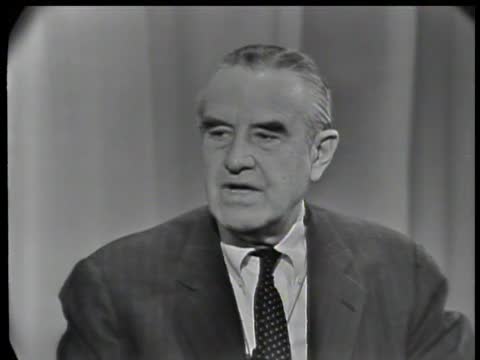
- U.S. Ambassador-at-Large W. Averell Harriman predicted tonight (Tuesday, march 9) on the national Educational Television network that other eastern European nations will follow Yugoslavia's path of independence from Moscow. Mr. Harriman's prediction was made on NET's "Great Decisions : 1965," broadcast across the country on the NET network of 90 affiliated non-commercial stations. (In New York City, WNDT/Channel 13, 7:30 p.m., Tuesday, March 9). Also appearing on the program which assessed U.S. policy in Eastern Europe were U.S. Senators Frank Carlson (R. - Kan.) and Claiborne Pell (D. - R.I.), both members of the Senate Foreign Relations Committee. In his discussion with series moderator Roger Hilsman, former assistant secretary of state, Mr. Harriman said, "I will predict that all of the eastern European countries will attempt to get the same kind of independence that Tito has in Yugoslavia, and that's inevitably going to happen." Mr. Harriman said that when that when that happens, "they're no longer dangerous, because then they want to live their own lives. Although we don't like their system of internal affairs, with the trend to greater initiative, decentralization, there will be greater freedom." The U.S. statesman elaborated on the various ways our country can build bridges to these nations. "now trade is a way to build the bridge, cultural relations, exchange of people, Americans going in and these other countries coming out. As a matter of fact, Western Europe, you know, is much further along than we are. There's a six billion dollar trade between western and eastern Europe including Russia, three billion roughly each way, whereas ours is only a couple of hundred million dollars. It shows the absurdity of those who say that we influence Soviet policy by holding back our trade. "They can get along without us, they can get most of what they want from Europe. As long as we close the door to them, it caters into Moscow's hands; if we shut the door on them and they want to come to us, why they'll have to look to Moscow," the former ambassador to Russia said. Appearing in separate interview, Senators Carlson and Pell viewed the United States' response to the 1956 Hungarian revolution as a let-down to the Hungarians. Senator Carlson said, "personally I felt at that time, and I still think we let down a great people. They are a liberty loving people, and I think we might well have interfered." Senator Pell, who was a foreign service officer in Europe during the aborted revolution, said, "the trouble there was that the Hungarians rose, I've always believed, somewhat in response to the American propaganda, and they found themselves let down by the free world." "Great Decisions : 1965: is being produced for national Educational Television by WNDT/Channel 13, New York City's educational television station. (Description adapted from documents in the NET Microfiche)
- Series Description
- The series of eight half-hour episodes, featuring distinguished foreign policy experts and observers, consists of topics corresponding to those chosen by the Foreign policy Associations annual nationwide discussion program. The issues to be examined are Red China, Germany, Trade, South Africa, Eastern Europe, the United Nations, Vietnam, and the population problem. Roger Hilsman, former Assistant Secretary of State, who is now professor of government at Columbia University, moderates Great Decision 1965. Don Goddard, noted broadcasting reporter, is the narrator. Great Decisions 1965 is being produced for National Educational Television by WNDT, New York Citys educational television station. The 8 episodes that comprise this series were originally recorded on videotape. (Description adapted from documents in the NET Microfiche)
- Broadcast Date
- 1965-03-09
- Asset type
- Episode
- Genres
- Talk Show
- Topics
- Global Affairs
- Public Affairs
- Media type
- Moving Image
- Duration
- 00:31:29
- Credits
-
-
Guest: Harriman, W. Averell
Guest: Carlson, Frank
Guest: Pell, Claiborne
Host: Hilsman, Roger
Producer: Krosney, Herbert
Producer: Lukas, Christopher
Producing Organization: WNDT (Television station : Newark, N.J.)
- AAPB Contributor Holdings
-
Library of Congress
Identifier: 2080240-2 (MAVIS Item ID)
Format: 1 inch videotape: SMPTE Type C
Generation: Master
Color: B&W
Duration: 0:28:51
-
Library of Congress
Identifier: 2080240-1 (MAVIS Item ID)
Format: 2 inch videotape
Generation: Master
Color: B&W
Duration: 0:28:51
-
Library of Congress
Identifier: 2080240-3 (MAVIS Item ID)
Format: U-matic
Generation: Copy: Access
Color: B&W
Duration: 0:28:51
-
Library of Congress
Identifier: 2080240-5 (MAVIS Item ID)
Generation: Copy: Access
Color: Color
-
Library of Congress
Identifier: 2080240-4 (MAVIS Item ID)
Generation: Master
Color: Color
If you have a copy of this asset and would like us to add it to our catalog, please contact us.
- Citations
- Chicago: “Great Decisions 1965; 5; Eastern Europe,” 1965-03-09, Library of Congress, American Archive of Public Broadcasting (GBH and the Library of Congress), Boston, MA and Washington, DC, accessed April 2, 2026, http://americanarchive.org/catalog/cpb-aacip-512-0z70v8b97p.
- MLA: “Great Decisions 1965; 5; Eastern Europe.” 1965-03-09. Library of Congress, American Archive of Public Broadcasting (GBH and the Library of Congress), Boston, MA and Washington, DC. Web. April 2, 2026. <http://americanarchive.org/catalog/cpb-aacip-512-0z70v8b97p>.
- APA: Great Decisions 1965; 5; Eastern Europe. Boston, MA: Library of Congress, American Archive of Public Broadcasting (GBH and the Library of Congress), Boston, MA and Washington, DC. Retrieved from http://americanarchive.org/catalog/cpb-aacip-512-0z70v8b97p