News Addition; 432
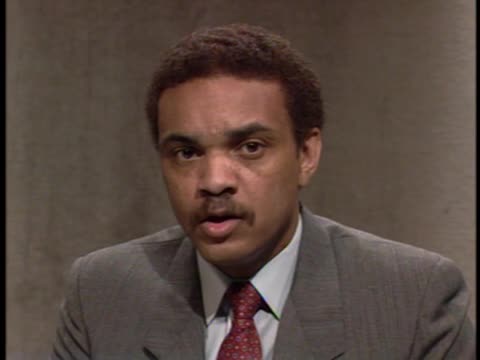
- Transcript
. . . . . . . . . .
. . . . . . . .
. Good evening and welcome to news edition, I'm Bob Ray Sanders. And I'm Rosalind Solis. The State House of Representatives, Thursday past its version of flyability insurance reform. The House version makes it tougher for plaintiff to recover damages. With a week left for the regular legislative session, tonight we'll take a look at two of the thornier issues facing the legislature. We'll see how the cost of insurance is forcing some medical professionals to quit. They will look at how proposed changes in Medicaid would make the elderly suffer. We'll talk to a state senator and representative about the budget, taxes and a special session. And we'll hear from commentator Mike Shannon about one solution to prison overcrowding. Rosalind has the first story tonight, the insurance crisis, Rosalind. Bob Ray, the count stands at 10. 10 days left and the regular legislative session and lawmakers are still haggling over what to do to curb the high cost of liability insurance. The House came up with its solutions on Thursday. But for one group of health care professionals, it all may be too little, too late.
The lack of liability insurance and the expensive liability insurance is changing the very way that we live in this country. It's changing the way that we practice medicine, the way that you practice nursing, and the way that the entire country operates, it's changing our economy. Lawyer Walt Awville's words hit home with 300 nurses meeting this month in Dallas. Their nurse anesthetist, registered nurses, trained to administer anesthesia. They make $30,000 to $40,000 a year. But some of them spend 20% of their income on medical malpractice insurance. What are you doing here, full lane? I'm doing a job at Charlotte. Okay, I'm at Charlotte Strait. Do you remember me? Yes, I do. Charlotte Strait works at Colonial Hospital in Terrell, a small town east of Dallas. Straits insurance has increased dramatically. This year it jumped like from 1,000 to around 6,000. And it's supposed to go up the next four years.
Of course, it really upset me. It was very frightening. I was angry. But in the end, it was either pay the price if you wanted to keep the insurance. There's no other alternative. There is one alternative, quit. The way it's affecting me personally is being responsible for a small hospital 24 hours a day, seven days a week. Already two of the people that would help me cover call have quit because they're not going to renew their insurance. Thank you. Even Strait wonders how much longer she can afford to work as a nurse anesthetist. Every since I was a little girl, this is what I wanted to do. I had to have an emergency appendectomy and it was in a small town by a nurse anesthetist. And at that time I was very frightened of needles. And she seemed like an angel to me. And from that moment on, that was what I wanted to do. It was to be a nurse anesthetist. I like the inner reaction with the patient.
I try really to alleviate their fears. And I really enjoy working with them in the whole medical state. No, I like what you do. It's a nice big, big risk. What we do is you can. I also like what you think is something real pleasant. Nurse anesthetists are vital in small town hospitals that can't afford an anesthesiologist, a doctor trained in anesthesia. Of course, we do not charge as much as an anesthesiologist. So that helps keep the costs down. And medical costs keep rising every day. It's very, very expensive to come to the hospital. I'm going to put a little mask over your face and let you breathe a little oxygen. The insurance crisis could affect hospital services if more nurse anesthetists quit. Of course, they wouldn't be able to do surgery. So certainly the emergency things we do would not be able to be done are the elective procedures.
So it would put a hardship on a lot of people in this community. It's sort of a tragedy because a lot of the very good people are being driven out of the field. Clay Lancaster and insurance broker sees both sides of the insurance crisis. He helps those who need insurance and those who sell insurance find each other. This does not bode well for the consumer of their services. If you run the good season people out of an industry, what's left may well not be the best for the consumer. We don't have to do a whole lot of conversation here. The state legislature is supposed to come up with some answers to the insurance problem. Consumers say premiums are exorbitant because insurance companies are greedy. Insurance companies blame skyrocketing rates on high awards and lawsuits.
So earlier this month, the state Senate passed a compromise reform package that, among other things, limits some awards and liability. Republican State Senator Icarus of Dallas is an architect of the reform package. Confirmize is the art of the possible. But the old cliche is if both sides are unhappy, we have a good bill. And I think both sides are sufficiently unhappy. But the members of the legislature work this out. And I think we've done a good job under the circumstances and would recommend this for passage. Strong legislative action two years ago would have been a more appropriate response to the problem than a relatively weak version of the same potential law two years later. But by the same token, considering the makeup of the legislature, getting something through will be a whole lot better than nothing. But insurance companies will be slow to react.
No insurance carrier is going to take this package seriously until it's been tested and upheld in the courts. And with our past history where it was not upheld, the last time a package was enacted, they're very skeptical about it. So they're not going to give any immediate credits for this type of legislative action. Did you know we're all finished? We are. So lower malpractice insurance may be five to six years away. Maybe too late for some nurse anesthetists. Mr. Mitchell, three, if you got to keep breathing on your own. I spent my whole life in the medical profession and I love it. And it's what I would like to keep doing it for the rest of my professional career. We can't of course afford to work or afford to pay the insurance we can't work. And it's very frightening to all of us. Rosalind, what happens now to tort reform?
Well, it's hope that the reform package will go to a House and a conference committee. And the hope is that the conference committee will come up with a solution before the end of the session. If not, Governor Clemens has hinted he may call a special session to deal specifically with tort reform. Thanks. They are old and they are sick. They cannot provide for nor take care of themselves. They are the elderly who live in nursing homes. And many of them are there by the grace of Medicaid, which puts the bill. Well, the state's budget crisis and proposed budget cuts may change all that. Assistant producer LaRoy Hudson prepared this report. Music Catherine groom is 77 years old.
She lives at the Brookhaven nursing home in Carrollton. Children's like this help the residents break up the monotony of nursing home life. Okay, Edmondson and wife Mildredn are the only relatives Mrs. groom has. Mrs. groom is a widow and she had no children and I'm her only living relative and she depends on me for everything. We realize that she needs care and we've spent many years looking after her and her husband before his death. And it's just an answer to prayer that she got on Medicaid because we've strived for years to save some money for our future when we get too old to take care of ourselves. So if that has to be spent to take care of her then I don't know what will happen for us.
Mrs. Edmondson's concern began when she heard that the legislature in an effort to cut the budget had come up with a plan that would make it more difficult to obtain Medicaid benefits. Eligibility for Medicaid coverage for nursing home expenses depends on one's income. To qualify a person must make less than $650 a month and that's the second lowest in the nation. Texas now wants to lower the income level to $609 a month by September and to $509 a month by next year. Sarah Spites is the information officer for the Texas Health Care Association, a group that represents nursing homes. Traditionally Texas was one of the states that had the greatest respect for their elderly and actually took good care of them. We had an old age pension before any other state. But over the years that commitment has degenerated. I think it's a desperate, desperate effort to try and fund state government without a tax increase.
And this is what it comes to. It comes to throwing old people out of nursing homes. It comes to cutting back on the quality of care they can get. And I just think Texans have to really evaluate whether they are willing to treat their old people that way. You have to remember nothing has been done yet for sure. The House has made a proposal. The Senate has made a proposal. And the appropriations bill is still sitting in the conference committee. So you can't really make a judgment until you see what's in the final bill. Well, I think all of us are willing to go in a direction that will come up with some kind of a happy compromise. But on the other hand, there are many of us who believe that enough is enough. When you look at what we've done to the taxpayer in the last three and a half years, increased taxes 11 and a half billion dollars. That maybe that's enough on the taxpayer, particularly a taxpayer. The taxpayers, many of whom are out of work, or have not had an increase in salary in the last five years, or in fact, have taken cuts in salary. I think the state has to be realistic just as a private enterprise business or a home would be. It is places such as these that are the homes to our elderly. Many of the residents of these homes have severe medical problems, problems such as those suffered by Gladys Liles.
Gladys is paralyzed. She alt completely on her right side. Her left side, she can move her arm. She cannot swallow. Consequently, she has to be too fat, and she can't do anything for herself. She is completely dependent upon the nurses. Cliff and Anita Harrison have been visiting there on several times a week for years. Gladys lived a very frugal life because she had no children, and she was always worried that she couldn't take care of herself. In the first about 26 months, she had saved enough money to be able to be on a self-paid basis, but her money ran out, and she kept living, so we had to ask the Medicaid for help. She has a brother that is 84, and my mother, who is 89, neither of those could take care of her. My wife, Anita, and I both are retired.
We're on a fixed income, as are they. Should her Medicaid benefits be cut out? There is absolutely...it's just an impossible situation. There is no worry that she can be taken care of anywhere. There is no worry to send her. The Texas Health Care Association understands the problems as well as anyone, and Sarah Spite says there is a solution. Realistically, I think they're going to have to raise taxes, and not just for Medicaid, but because you can't dismantle a state. We'd never recover from the damage we would do to our self-image and everything else if we just abandoned services like the elderly. We can't do that. The final decision on how much to cut for Medicaid has yet to be ironed out between the House and the Senate. But stay tuned.
With me now to talk about the budget cuts and the new taxes, the special session, the Governor's leadership, our State Senator Ray Fariby, who is Chairman of the State Affairs Committee, and a member of the Finance Administration and Criminal Justice Committees, and Representative Charles Evans, who is Chairman of the Government Organization Committee, and sits on the Public Education and the Calendar Committees. Good evening, and thank you for coming here. Flat tire, plain, and all. Let me go straight to a couple of those questions that have been raised in the stories that we've done. Number one, you just left the House a representative, Mr. Evans. What was happening with tort reform? As in the process, when I left the House floor about 5, 15 this afternoon, we were in the process of passing it out of the House or passing it to third reading, which in effect would put it in the Conference Committee to go to the Senate and probably would request a conference committee. Senator Fariby, what's going to happen in Conference Committee, and what can we expect?
Well, the votes are a little different in the Senate. I think part of it is procedure, and there is frankly more resistance to tort reform right now in the makeup of the Senate. So it will, I think, go to conference as Representative Evans indicated. I think that it's more likely to move back if it's to be approved in this regular session to closer to what the Senate bill came out. It was very lengthy negotiation, very difficult, and I think at this late date could be subject to a filibuster, which would then move the whole issue into the special session. Okay, I want to come in there, but what were we talking about is putting a lid on the amount of judgment that a defendant could get once he filed? Is that what were we talking about? Well, that was one of the original proposals. I think that the limitations didn't go nearly that far when they came out of the Senate. Okay, are we talking about a special session? We are, aren't we? So I see as far as the budgetary problems that are we having in the state, we're going to be talking about a special session. I think everyone is resigning themselves with the fact that we will be back this summer to a special session.
Is everybody also resigned to the fact that we're going to have higher taxes, Senator? I think there's some difference with opinion about that, particularly between leaders. Though, frankly, if you put a pencil to just the numbers and you see what the needs are as we saw earlier on this program, for example, Medicaid, which is a federal match, but you do have to put the state dollar up to get another federal dollar. But it seems to me it'll be near impossible to maintain the colleges and Medicaid programs for elderly and other programs unless we do have some new taxes. I think the question is how much and where does it come from? And that's the question. Let me put that to you since you got by on the other one. Representative, where is the money going to come from? What are we getting used to? Well, of course, the House primary is looking at where we're spending our money rather than where the money is going to be coming from. And during special session last fall, we looked at the various ways and we really scrubbed the budget last when we had two special sessions last fall. There are some other areas that we can look at as far as income into the state rather than taxes.
We had the lottery, and of course it went down in the House, but there's still a possibility that it could come back. And that would raise approximately $607 million dollars the figures that they have. We could also look at how we're spending our money and higher education with the proliferation of the various campuses that we have in things of this nature. But that's still in the answer. What about raising taxes, though? Well, I think eventually if we cannot find, and I say if we cannot find, other ways, then you have no choice except to increase taxes in some way. Are we talking about sales tax? Are we talking about broadening the sales tax? What are we talking about, Senator? I think we're talking probably about broadening the sales tax base, picking up some areas where we don't presently don't have a sales tax, for example on certain services. There's been some talk of looking at the franchise tax. The state controller has pointed out that we've had some changes in forms of business organization for tax, federal tax and other reasons. And that we should look at a new formula for the franchise tax, which is a business corporation tax that we have in Texas.
Every year we come up with a special session. In fact, in the last 20 years we've had more special sessions and we've had regular sessions. Is it time to go to annual sessions of the legislature? Oh, I think so. As far as budgetary matters, we cannot. We're spending $39 billion, $38 billion, pure guesstimate. I don't run my business that way. No one else runs their business that way. We need to realistically look at state government and the tremendous amount of effect it has upon the people in the system of state of Texas. And I think that we can no longer guess as to how much money we're going to have this week. We would be voting on an appropriations bill to guess how much money we're going to have in August of 1989. That's incredible. And so what are we doing about getting to special, I mean regular sessions? Well, there are two, at least two different proposals. Senator Hugh Palmer of Fort Worth has proposed constitutional amendment that's passed out of the Senate. And is now pending in committee in the House. And then one of the state representatives, who is Mr. Kubiak?
Representative Kubiak has a proposed constitutional amendment that takes a little different approach and it's pending in the House. So the proposal is quite franklier being more seriously considered now that I've seen in the 12 years that I've been in the legislature. Let me turn to another subject. That is the governor of this state. Mr. Davis, you were a Democrat. You're now Republican. I don't know how you feel personally about Bill Clements. But in terms of his leadership, how has he been in this session? Has the leadership been there? In summary, as I found that has been there, I think in summary is we who work in government know that compromise you have to give and take. And sometimes some statements that Governor Clements makes are very dogmatic and he gives you a tendency that he's not going to be flexible in any way. But I found him to be flexible and very compromising in some areas that I've worked in. Other areas, he's in a learning process rather than... But he's the one with experience as I recall from his ads.
He's the one who says he's experienced, but we all have learning processes. Now, how have you had the same question, Senator? And particularly, I'm wondering since the governor, I think, is blaming Bill Habby and then the Senate for some of the problems facing the state? Well, first, Representative Evans made the wise observation that people in the legislative branch never have these problems of making dogmatic statements. I think in the political process, there is an adversary aspect to it and we see some of that and we've seen that between our leaders. I think that there's a very genuine difference of opinion. But a part of it, I think, Charlie has identified and that is the knowledge, the detail of the day-to-day work of state government. Whether it's a college or whether it's a Medicaid that delivers the services and the nursing homes like we saw earlier in the program. Whether it's certain aspects of the medical program, people seriously ill that don't have insurance. You have to have some kind of a system or program. So, we are, I think, going to have to come up with some taxes. The question is how much?
We're in an adversarial or argumenting situation now in Governor Clemens. I think we'll have some impact and effect on seeing some cut back, a closer examination of the budget, though it isn't the first time it's happened. As Charlie indicated, we kind of went through it pretty closely just a few months ago. But, of course, as Governor, he has the right to say what goes in the special session. Quickly, what do you think will be tort reform for one? Well, if we don't do something during this regular session, surely I'm sure he'll bring us tort reform. What else? All the abortion issue may come up. It could, if it's not a trust. There's been some discussion or suggestion of that. Fortunately, we've finished most of the sunset issues, which not infrequently become a part of the special session agenda. And certainly the budget, and we're working along on the budget. We'll be working this weekend to try to resolve some of the difference, just do the homework. I know you've got to go back to Austin, and you all flew up here just just for this, and you have to change your tire trying to get here.
You're in here another time, man. Thank you very much for joining us. We appreciate it. Thank you very much. Go to be with you. Thank you very much. Commentator Michael Shannon has been giving some thought to the prison overcrowding problem and has come up with a novel solution.
For the past few months, we've been watching and reading stories about the homeless. And to put it mildly, life has gone on for the rest of us. But there's a new class of victims that's managed to capture the attention and sometimes even the pocketbook of Dallas residents. I'm referring to the convicts who've been prematurely evicted from the Texas Department of Corrections. Fortunately, the ideal location for these inmates is available for immediate occupancy. Dallas real estate developers are currently in the process of eating about 29 million square feet of vacant office space. Developers who are personally thinking about booking a room with the Salvation Army would no doubt welcome a tenant like the Texas Department of Corrections. Here's an outfit that won't be quibbling over art in the anti-room. What's more, demand for their services is booming. Occupancy currently exceeds 100%.
Placing inmates in vacant downtown office buildings eliminates most of the problems that but devil new prison construction. Everybody's in favor of more prisons, but nobody wants to live near them. This is not a factor downtown. There are no homeowners to complain about ruining the neighborhood and lowering property values. Safety's another non-issue. People are already nervous downtown without the inmates. So a few more criminals won't substantially alter the area's image. And other than the 100 yard dash to the parking lot, there's no nightlife to interfere with either. What's more, many of these buildings are real punishment. Anyone who's been sentenced to work weekend and week out in some windowless cubicle knows it's just like being in prison, only the sentences are longer. But look on the bright side. Downtown prisons are on all the bus lines, so the relatives won't have to drive to Huntsville to visit. The only interest group who could possibly complain might be tenants already in the building.
They may not be overjoyed at the prospect of sharing an elevator with a three-time loser. But on second thought, aren't all those buildings full of lawyers? I'm glad I wore your friends' lift before that one. Well, that's it for this weekend. Actually, for the next two weeks, we'll be off the air so all of you can bid high at the Channel 13 auction. We close with a look at Scarborough affair in Waxahatchee. For all of us here at News Edition, good night and have a safe Memorial Day weekend. I hit the fan. What are you doing? Get me it up! Oh! Get me at you! No! Get me up! G! Did you break what does that spell I'm sorry I can't hear you What did you say Hey
Oh Oh Oh Oh Oh Oh Oh Oh Oh Oh
- Series
- News Addition
- Episode Number
- 432
- Producing Organization
- KERA
- Contributing Organization
- KERA (Dallas, Texas)
- AAPB ID
- cpb-aacip-4ff862c7b3e
If you have more information about this item than what is given here, or if you have concerns about this record, we want to know! Contact us, indicating the AAPB ID (cpb-aacip-4ff862c7b3e).
- Description
- Episode Description
- Stories range from a piece by Rosalind Soliz about the medical professionals' insurance crisis, a piece by LeRoy Hudson about proposed changes in Medicaid and Bob Ray Sanders' interview with State Rep. Charles Evans (R-Hurst) and State Sen. Ray Farabee (D-Wichita Falls) about budget cuts, new taxes, special session, and the Governor's leadership.
- Series Description
- A look back at the news stories of the week with reporters, Bob Ray Sanders and Rosalind Soliz.
- Broadcast Date
- 1987-05-22
- Created Date
- 1987-05-22
- Asset type
- Episode
- Genres
- News Report
- Magazine
- News
- Topics
- News
- News
- Politics and Government
- Subjects
- Medical Insurance expense, Medicaid, and the National Budget; News and Public Affairs
- Media type
- Moving Image
- Duration
- 00:31:55.147
- Credits
-
-
Interviewee: Farabee, Ray
Interviewee: Evans, Charles
Producing Organization: KERA
Reporter: Sanders, Bob Ray
Reporter: Soliz, Rosalind
Reporter: Hudson, LeRoy
Reporter: Shannon, Michael
- AAPB Contributor Holdings
-
KERA
Identifier: cpb-aacip-d31b6eb9c7c (Filename)
Format: 1 inch videotape: SMPTE Type C
If you have a copy of this asset and would like us to add it to our catalog, please contact us.
- Citations
- Chicago: “News Addition; 432,” 1987-05-22, KERA, American Archive of Public Broadcasting (GBH and the Library of Congress), Boston, MA and Washington, DC, accessed March 17, 2026, http://americanarchive.org/catalog/cpb-aacip-4ff862c7b3e.
- MLA: “News Addition; 432.” 1987-05-22. KERA, American Archive of Public Broadcasting (GBH and the Library of Congress), Boston, MA and Washington, DC. Web. March 17, 2026. <http://americanarchive.org/catalog/cpb-aacip-4ff862c7b3e>.
- APA: News Addition; 432. Boston, MA: KERA, American Archive of Public Broadcasting (GBH and the Library of Congress), Boston, MA and Washington, DC. Retrieved from http://americanarchive.org/catalog/cpb-aacip-4ff862c7b3e